Country · South America
Paraguay
Every profile recorded in Paraguay, native or introduced.
- Species
- 25
- Families
- 11
- Genera
- 18
- Found only here
- 0
- Photographed
- 25 of 25
Where it isSouth America
Shares its fishes withspecies recorded in both
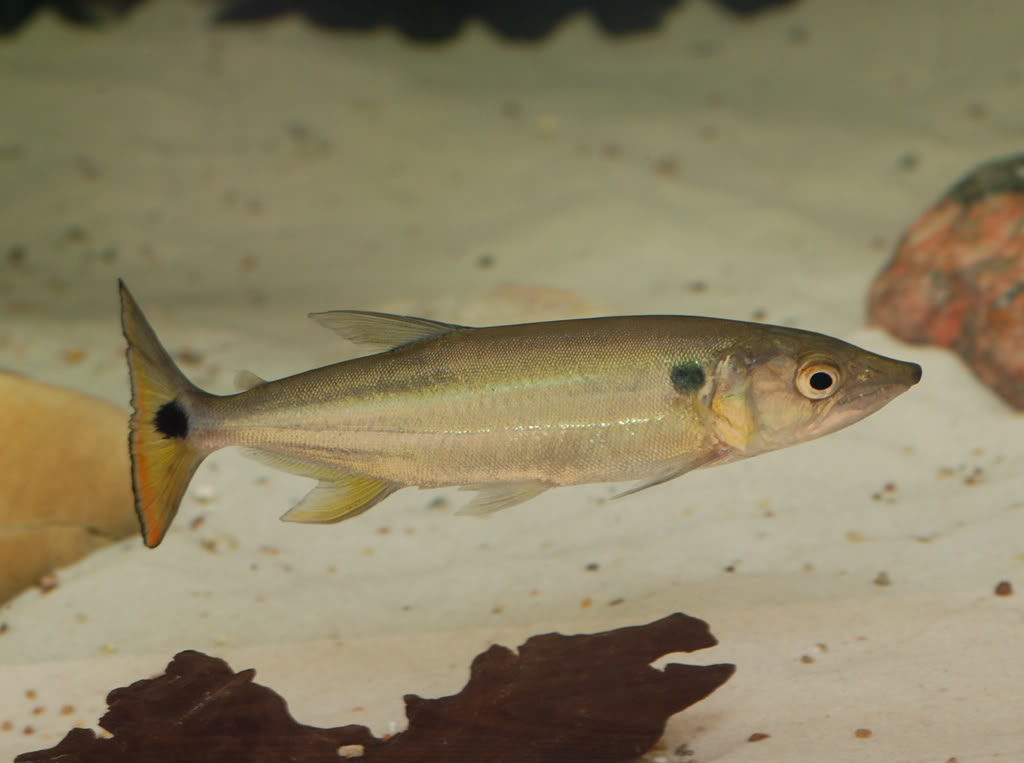
Acestrorhynchus pantaneiroPantanal Barracuda Tetra
Acestrorhynchidae · Menezes, 1992
An obligate piscivore capable of consuming surprisingly surprisingly large prey. Newly-imported specimens may refuse to accept anything but live fishes although most can be weaned onto dead alternatives once they recognise them as edible, and some even learn to accept dried foods- Like the vast majority of predatory fishes this specie...
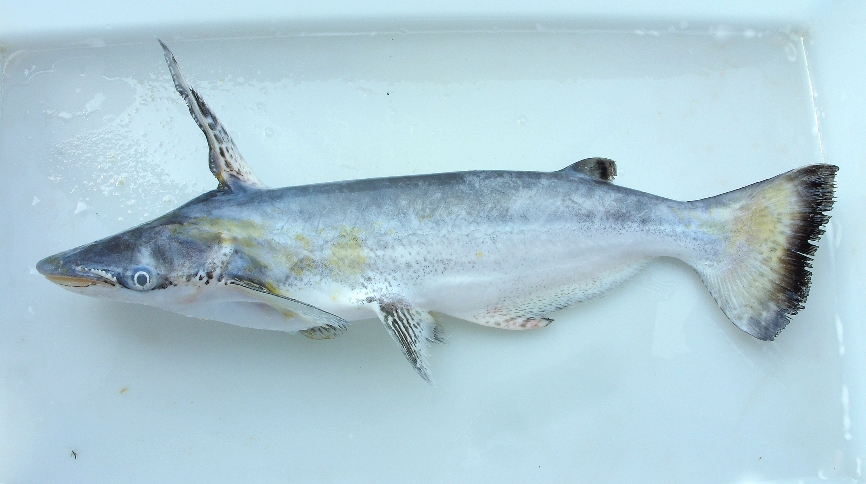
Ageneiosus inermisManduba
Auchenipteridae · Linnaeus, 1766
The genus Ageneiosus was at one point classified in the family Ageneiosidae alongside the genus Tetranematichthys, but this was not accepted by all authors. The grouping remains poorly-studied with the last major revision having been conducted by Watson (1990) in his unpublished dissertation, in which A. inermis was included under the currently synonymous name A. brevifilis. It can be separated from the majority of the genus (except A. marmoratus) by possession of a truncate caudal fin, and from...
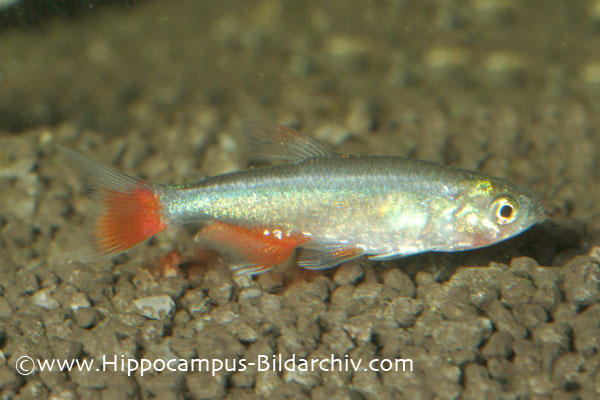
Aphyocharax anisitsiBloodfin Tetra
Characidae · Eigenmann & Kennedy, 1903
A good beginner's tetra, as it's a hardy species that will adapt to a relatively wide range of conditions. In a well-insulated house it can even be kept in an unheated tank, although it won't be as colourful as when kept in warmer water. It's also quite long-lived and captive specimens over ten years old are not unheard of...
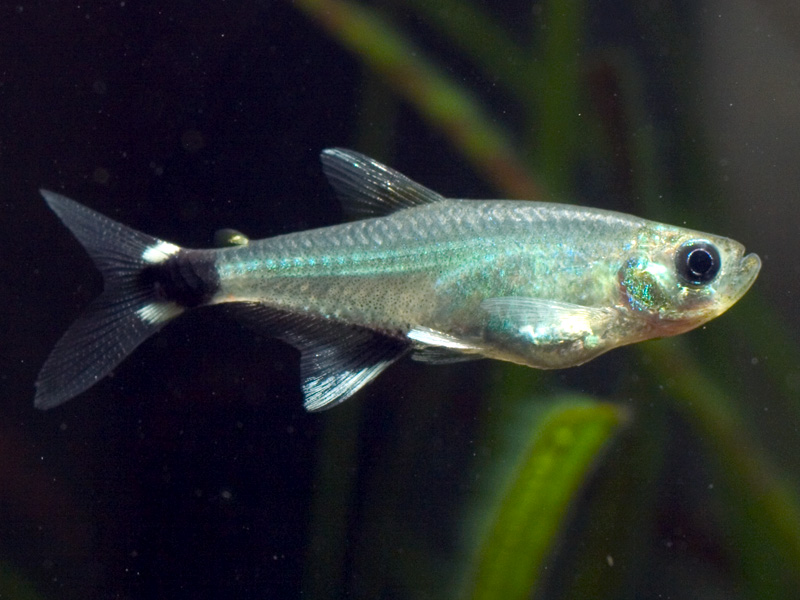
Aphyocharax nattereriDawn Tetra
Characidae · Steindachner, 1882
This species is normally referred to as A. paraguayensis, but that name has been considered a synonym of A. nattereri since 2003. Confusion remains however, as the type locality for the latter is 'Villa Bella', now known as Parintins, a settlement on the main Amazon river channel between Manaus and Santarém and many kilometres away from the majority of confirmed localities.
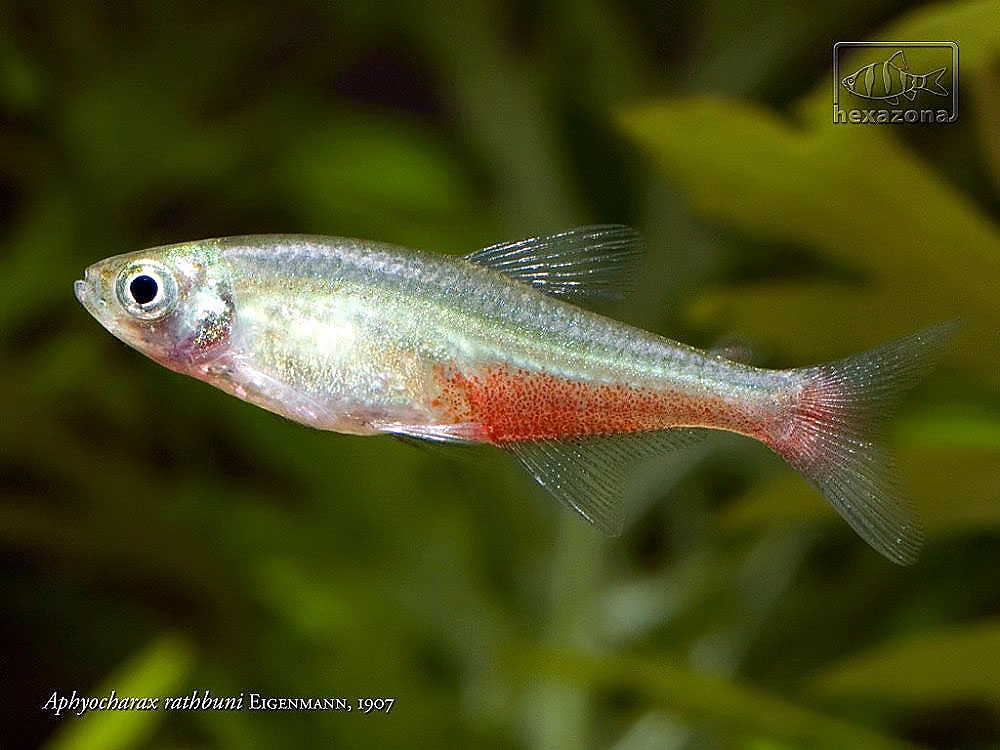
Aphyocharax rathbuniGreen Fire Tetra
Characidae · Eigenmann, 1907
Endemic to the Paraguay, Paraná and Uruguay river drainages in Brazil, Paraguay, Argentina and Uruguay. The smallest of the three Aphyocharax species seen in the hobby, the redflank is relatively uncommon in the hobby in the aquarium trade. It is also known as the Green Fire Tetra.
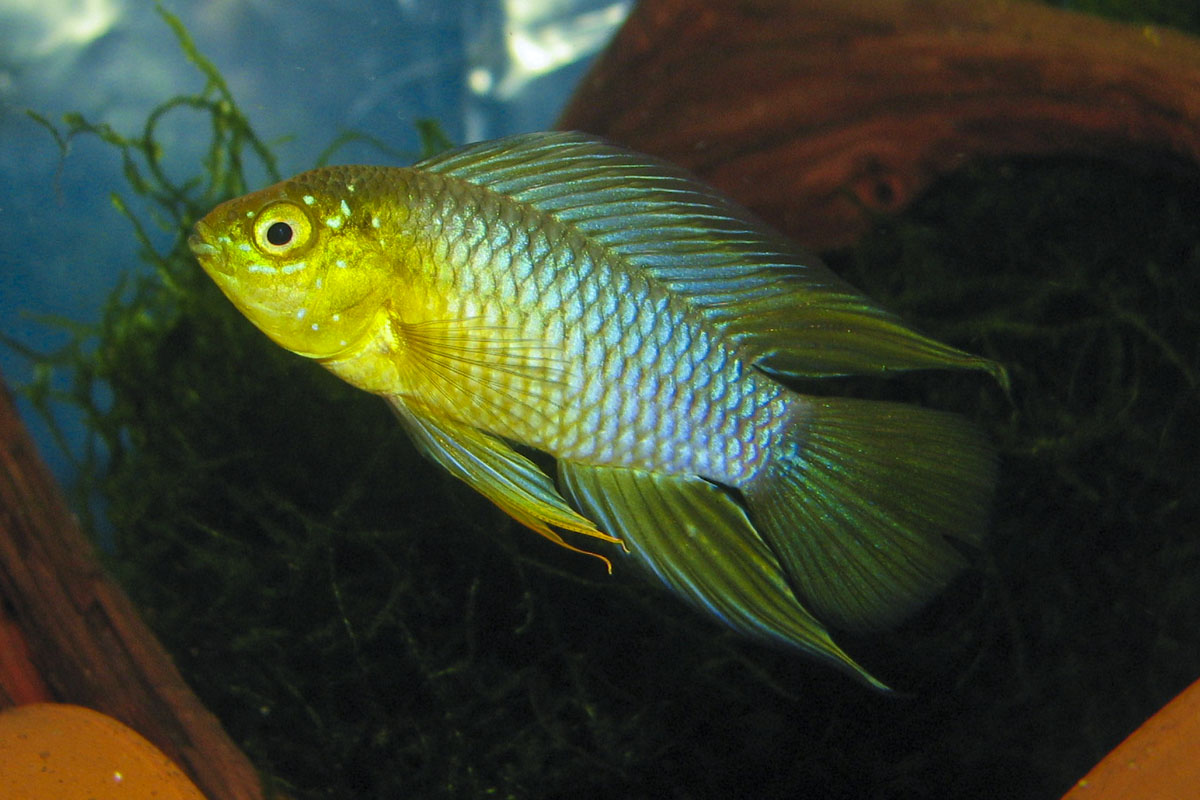
Apistogramma borelliiBorelli's Dwarf Cichlid
Cichlidae · Regan, 1906
Numerous ornamental forms of this species have been selectively-bred for the aquarium trade. It has also been assigned the 'A' number A234 under the DATZ system with possibly conspecific, related forms similarly numbered A103, A104, and A105 depending on locality.
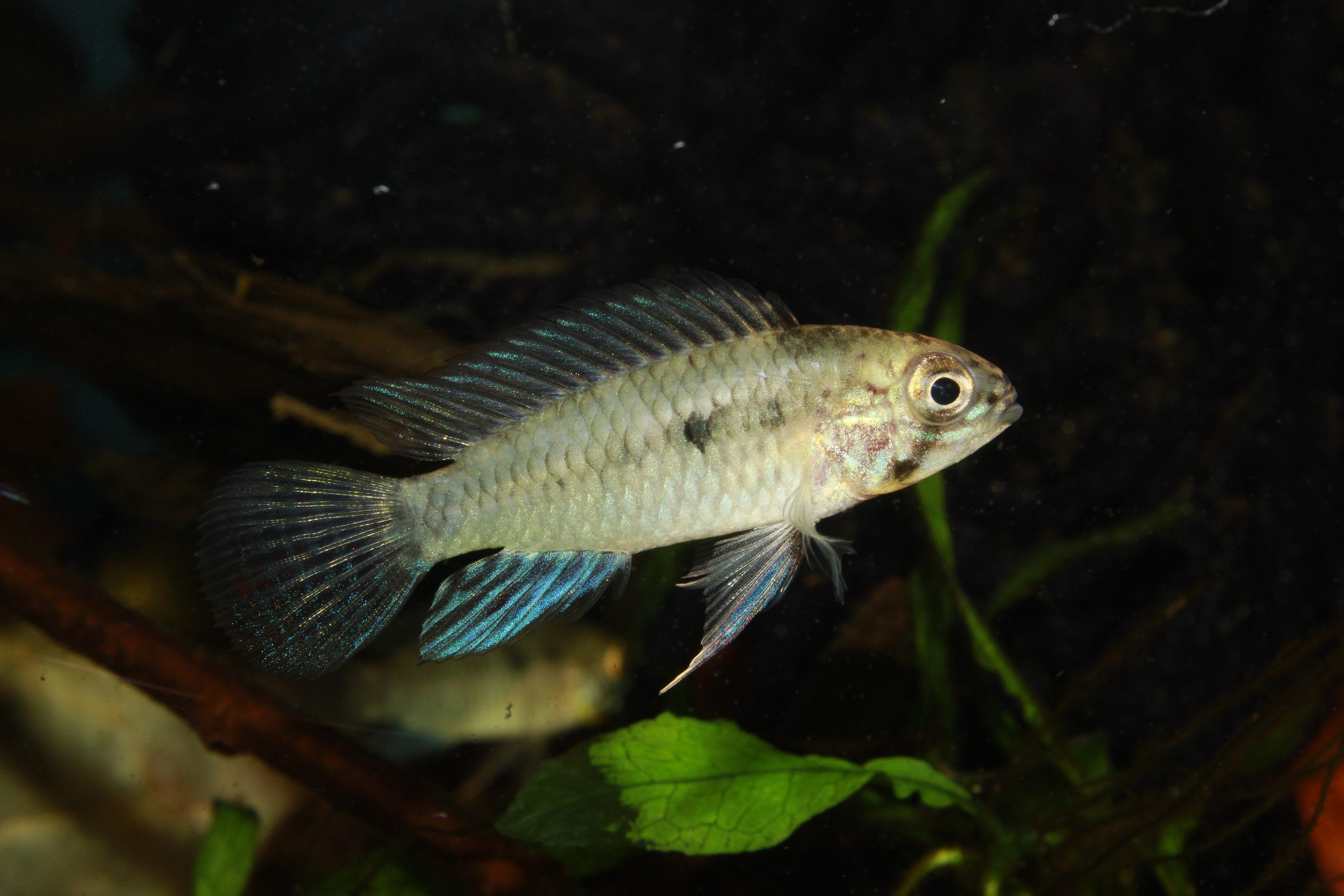
Apistogramma commbraeA93
Cichlidae · Regan, 1906
Apistogramma commbrae and other members of the commbrae complex can be distinguished from congeners by the conspicuous double caudal peduncle spot. This species may also be polymorphic, with some males exhibiting red and blue markings on the cheeks and a yellow gular region.
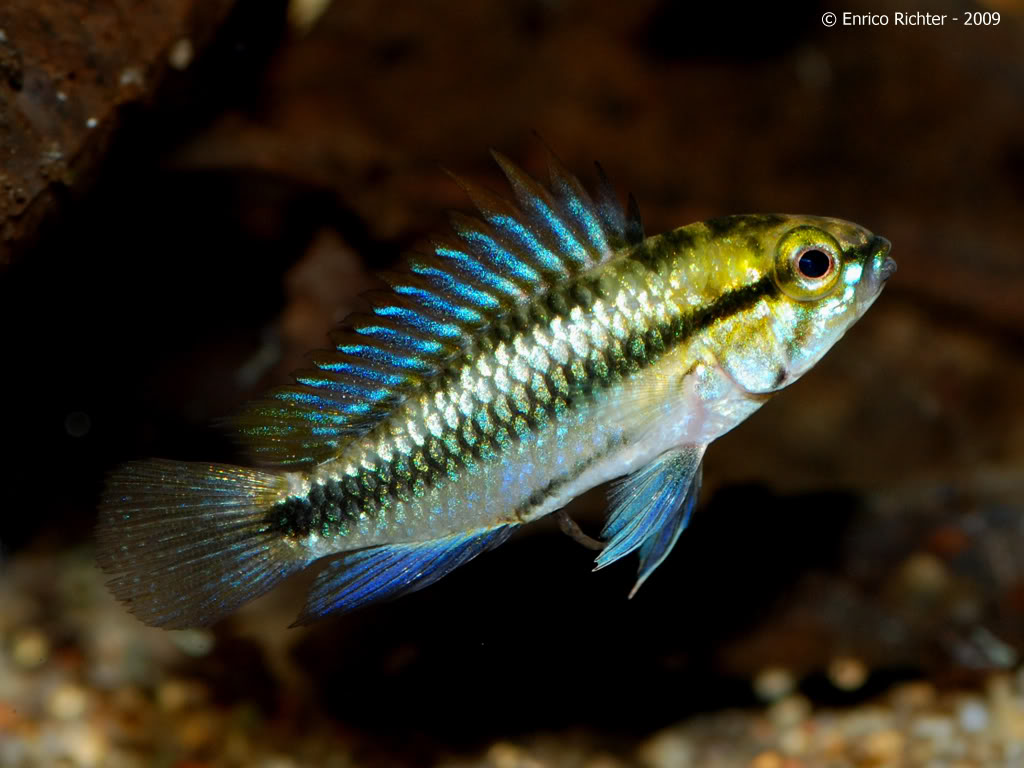
Apistogramma trifasciataThree-striped Apisto
Cichlidae · Eigenmann & Kennedy, 1903
This species is assigned the 'A' number A204 under the DATZ system with possibly conspecific, related forms coded A205 or A206 depending on collection locality and representing populations from Argentina and the rio Guaporé, respectively. The genus Apistogramma is among the most speciose of South American cichlid genera with around 70 species valid at present but many more awaiting description.
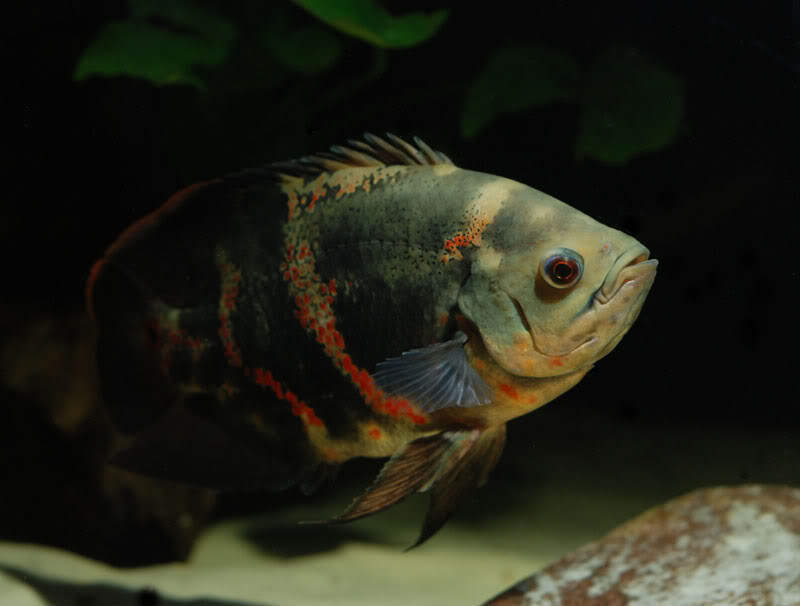
Astronotus ocellatusOscar
Cichlidae · Agassiz, 1831
This species is also referred to as 'velvet cichlid', 'red oscar', 'tiger oscar', or 'marble cichlid'. It is a popular aquarium fish although its adult size and typical life-span of 10-20 years must be taken into account before purchase. Numerous ornamental strains are now available, and while care is more-or-less identical for all of them a degree of additional care must be taken with the 'long-finned' variety which is a little less competitive than other forms.
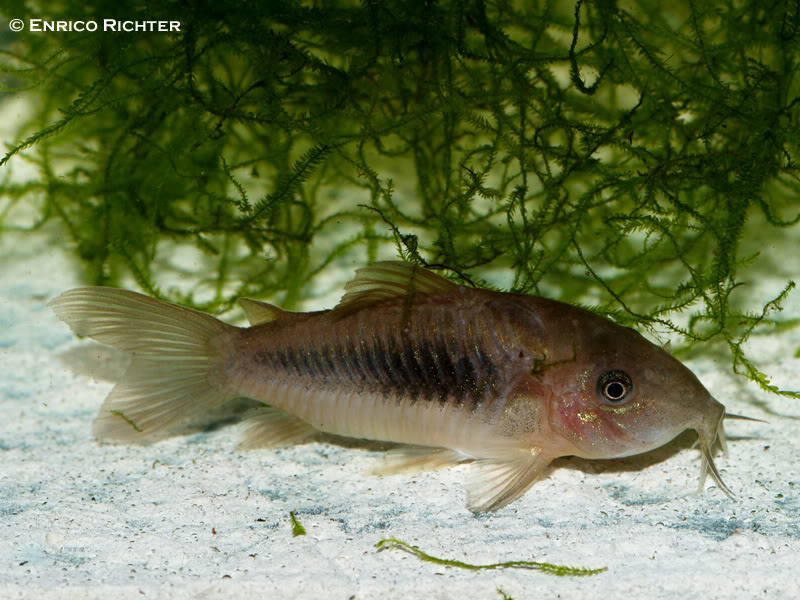
Corydoras aeneusBronze Cory
Callichthyidae · Gill, 1858
Despite the ubiquity of its name in aquarium literature, confusion surrounds its true identity. Given it's the only member of the genus occurring on the island, fish from Trinidad do presumably represent C. aeneus (see our image), but the classification of those from other localities appears far from certain. Today the species is accepted to occur throughout much of South America, and indeed similarly-patterned fish do occur across a large portion of the continent. Some of these, such as the gree...
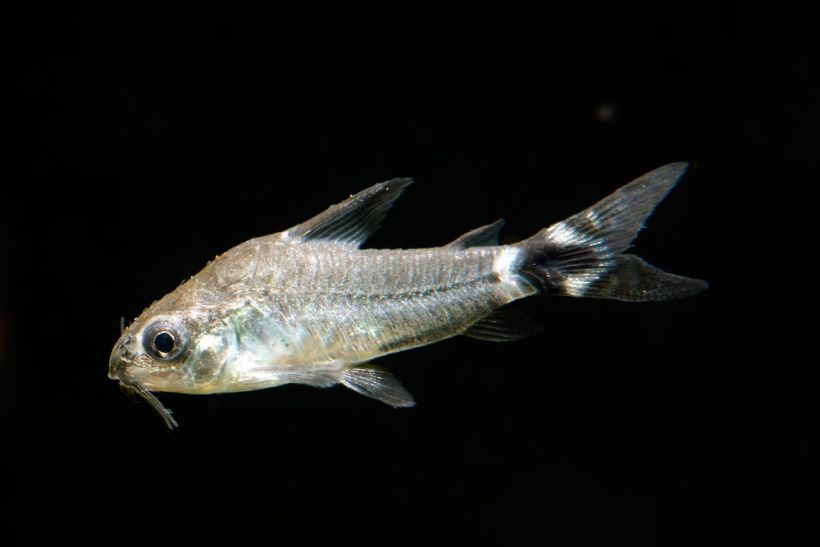
Corydoras hastatusTail-spot Pygmy Cory
Callichthyidae · Eigenmann & Eigenmann, 1888
It exhibits slightly different behaviour to the majority of congeners in that it tends to swim in midwater and spends a large proportion of its time away from the substrate. Its morphology exhibits corresponding adaptations towards a pelagic existence with a relatively large eye, a more terminal mouth position, more strongly-forked caudal-fin, and more symmetrical body shape than most other Corydoras species.
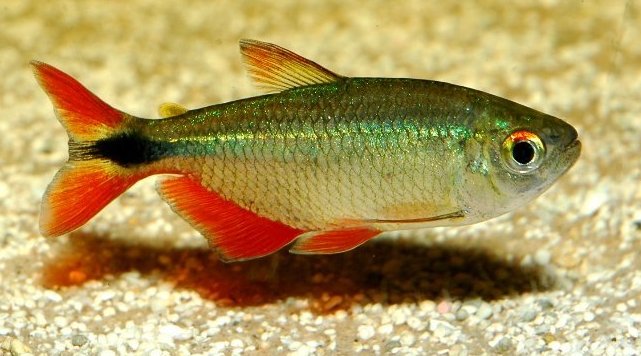
Hyphessobrycon anisitsiBuenos Aires Tetra
Characidae · Eigenmann, 1907
Widely-distributed throughout much of the Paraná and Uruguay river systems in Brazil, Paraguay, Argentina and Uruguay. Some records from Buenos Aires province, Argentina are now considered to refer to the congener H. togoi (Miquelarena and López, 2006) so the common vernacular name 'Buenos Aires tetra' may not...
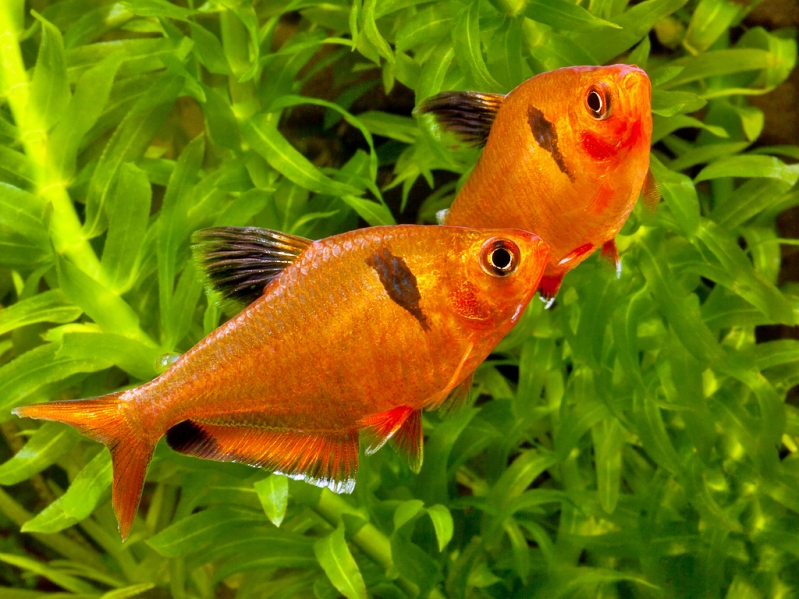
Hyphessobrycon equesSerpae Tetra
Characidae · Steindachner, 1882
This species is very common in the aquarium trade and is also referred to as 'jewel', 'red minor', 'blood', or 'callistus' tetra. A number of selectively-bred ornamental strains have been developed, including 'metallic', 'long-finned', 'balloon' and 'fairy-fin'. Characiformes is among the most diverse orders of freshwa...
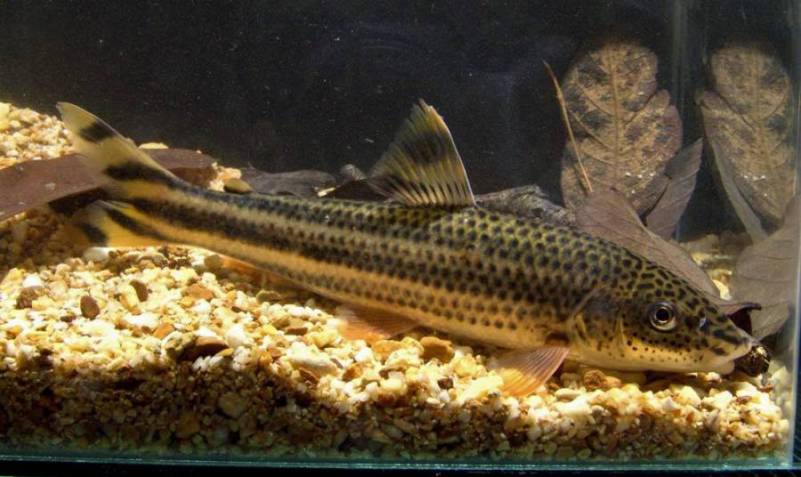
Leporellus vittatus
Anostomidae · Valenciennes, 1850
Type locality is given simply as 'Amazon River, Brazil' and according to current thinking this species has a huge natural range encompassing the Amazon River system in Brazil and Peru plus the Paraná-Paraguay drainage in southern Brazil and Paraguay and rio São Francisco basin in southern Brazil. Specimens in our images were collected fro...
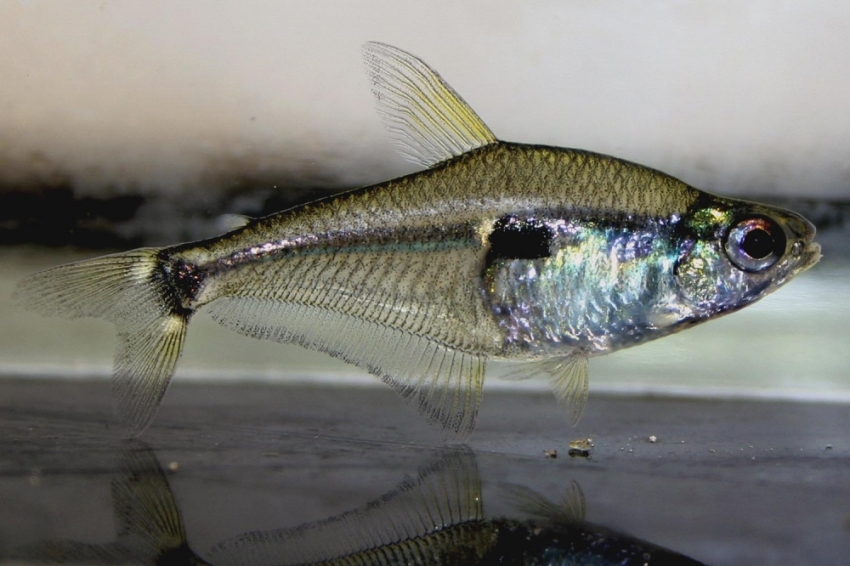
Phenacogaster tegatus
Characidae · Eigenmann, 1911
This species has been traded as 'six-eyed tetra' in reference to its colour pattern comprising two dark spots on each flank plus the eye. Based on the extensive review of the genus by Lucena and Malabarba (2010), in which nine new species were described, P. tegatus can be told apart from congeners by the following combination of characters: lateral line incomplete with 8-13 perforated scales; laterally elongate humera...
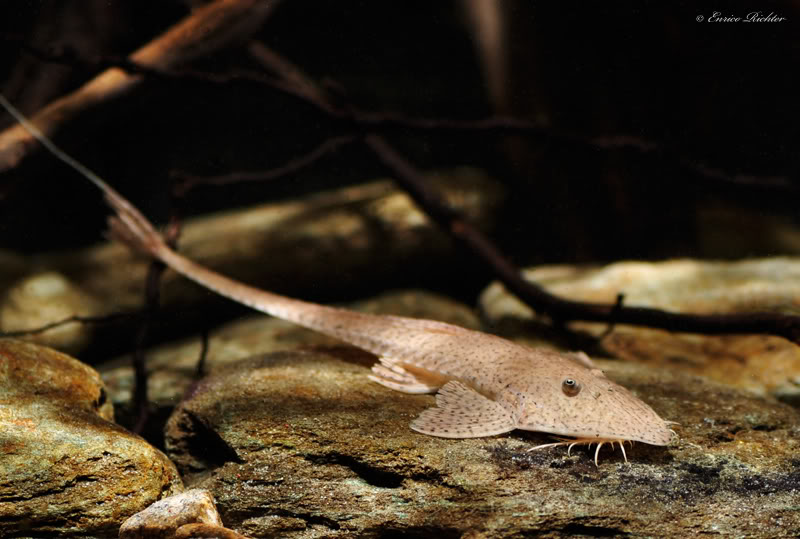
Pseudohemiodon laticepsGiant Whiptail Catfish
Loricariidae · Regan, 1904
A paternal 'lip brooder' which has been bred in aquaria. Post-spawning the male carries the eggs attached to his labial barbels for a period of 12-14 days after which the fry hatch with a large yolk sac attached, this being absorbed over the next 48 hours or so. During incubation the behaviour of the male i...
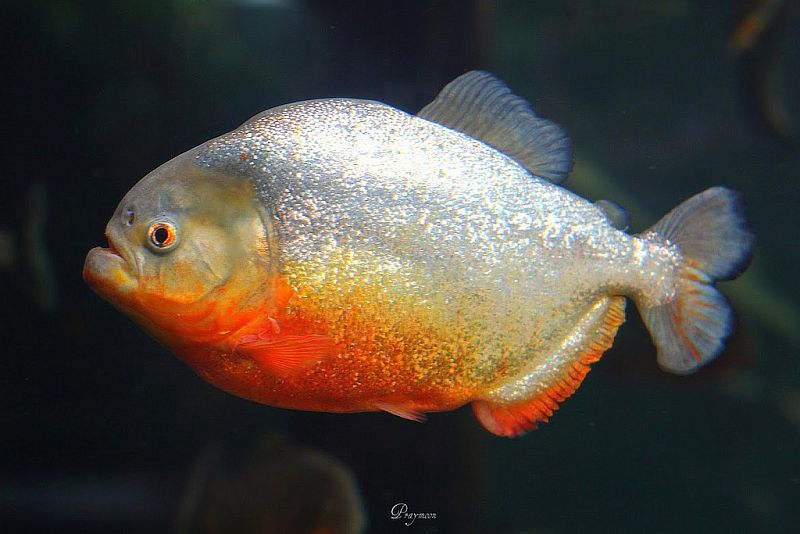
Pygocentrus nattereriRed Bellied Piranha
Serrasalmidae · Kner, 1858
Famed as a rapacious predator capable of rapidly stripping flesh from bone and a danger to any animal entering its native waters, P. nattereri is among the most notorious freshwater fishes in the world. As a result, displays featuring this “bloodthirsty” creature are found in most public aquaria, grisly Hollywood movies have been released, and the species has become popular in the aquarium trade. Little of this infamy is based on factual evidence, however.
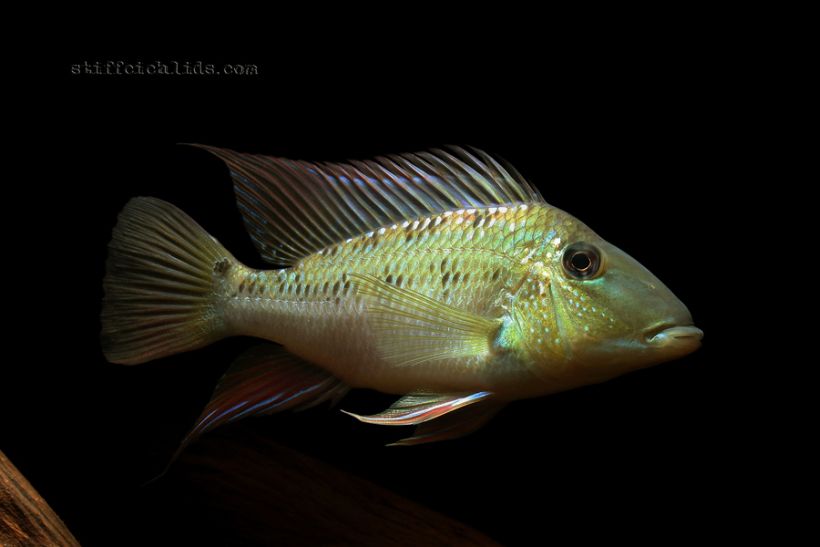
Satanoperca pappaterraPantanal Eartheater
Cichlidae · Heckel, 1840
S. pappaterra is relatively rare in the ornamental trade and much sought after by enthusiasts. It is easily distinguished from all known congeners by presence of a series of prominent black blotches beneath the dorsal-fin, plus a well-defined dark band extending along the side of the body. In recent genetic analyses its genetic distinctness was strongly supported, with S. jurupari and S. leucosticta its closest relatives.
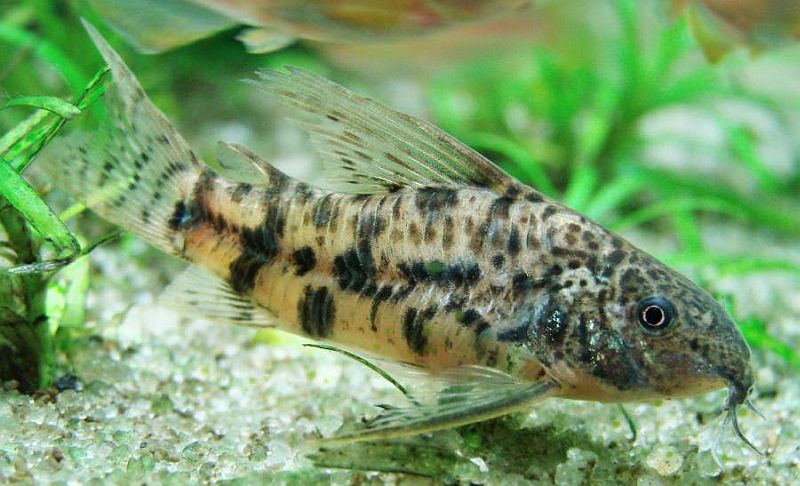
Scleromystax macropterusSailfin 'Cory'
Callichthyidae · Regan, 1913
Known from minor rivers in the coastal states of São Paolo, Paraná, and Santa Catarina, southern Brazil, plus some tributaries of the rio Paraná basin in Paraguay. Type locality is 'Paranaguá, 25°32'S, 48°36'W, Paraná, Brazil'.
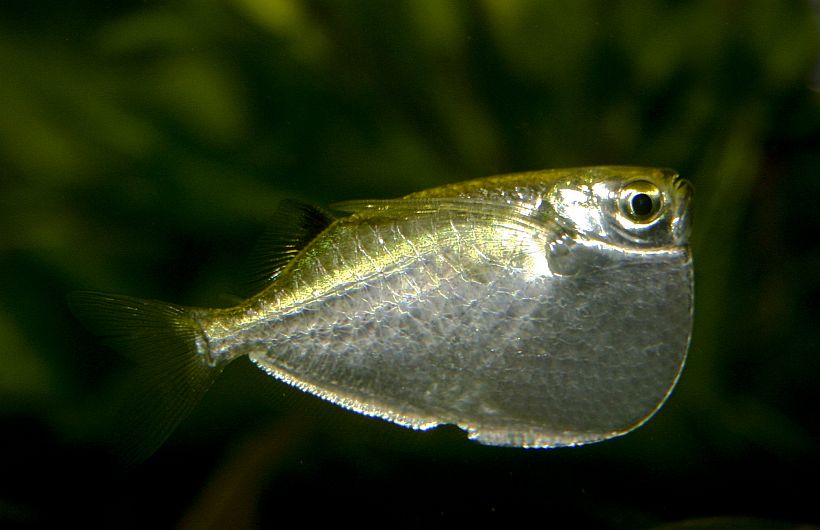
Thoracocharax stellatusSpotfin Hatchetfish
Gasteropelecidae · Kner, 1858
T. stellatus is superficially similar to its only congener T. securis, but can immediately be identified by the presence (vs. absence) of a prominent dark spot in the dorsal-fin. It is sometimes traded as 'platinum hatchetfish'. The genus Thoracocharax was originally erected by Fowler in 1906 as a subgenus of Gasteropelecus, but was elevated to generic status by Weitzman (1960).
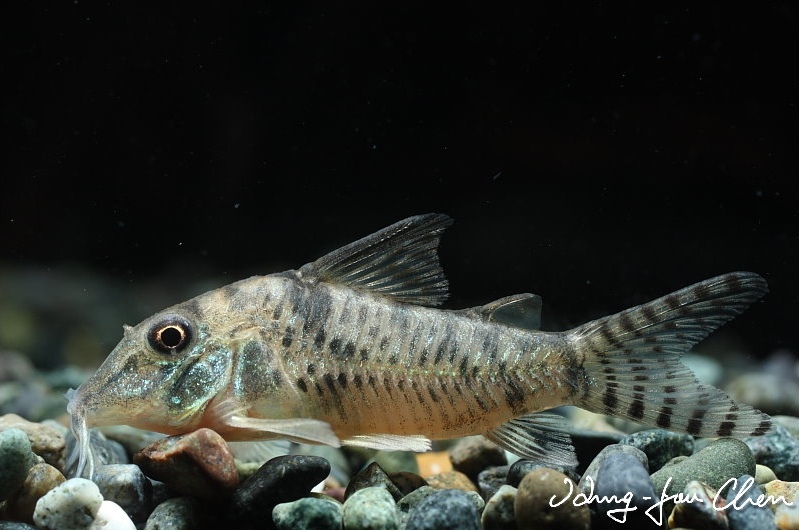
Corydoras aurofrenatusCW005
Callichthyidae · Eigenmann & Kennedy, 1903
C. aurofrenatus is currently understood to occur throughout much of the Río Paraguay-Paraná system in Paraguay, and has also been recorded in Argentina and Bolivia. It was described from Paraguay with type locality given as 'Aguada near Arroyo Trementina'. The latter is stated to be a tributary of the 'Rio Aquido Canigi'.
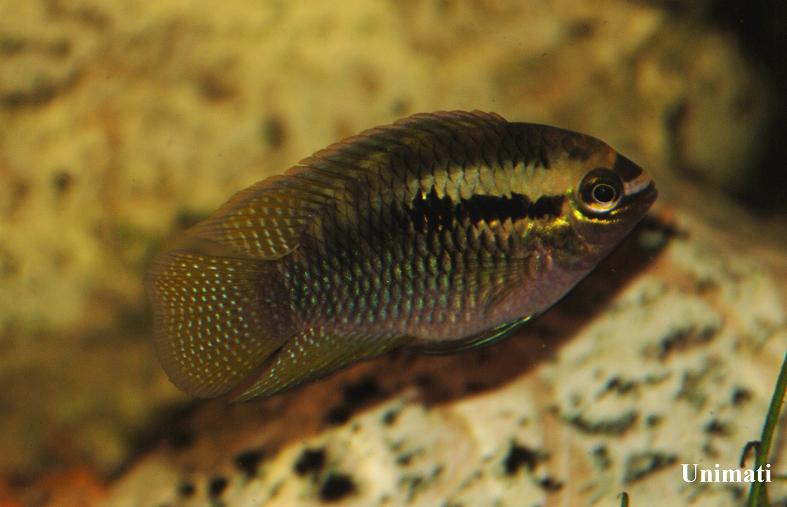
Laetacara dorsigeraRedbreast Acara
Cichlidae · Heckel, 1840
Wild fish are probably foragers feeding on algae, organic detritus, small insects, worms, crustaceans, and other zooplankton. In the aquarium it's easily-fed but the best condition and colours offer regular meals of small live and frozen foods such as bloodworm, Daphnia, and Artemia, alongside good quality dried flakes and granules, at least some of which should include additional plant or algal content.
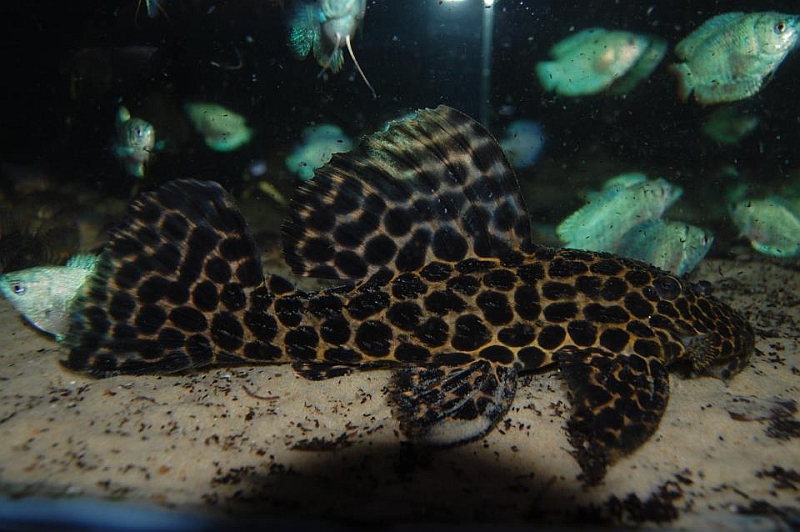
Megalancistrus parananusL113
Loricariidae · Peters, 1881
This species was formerly considered to be represented by the L-numbers L113 and L234 but it appears that only the former is native to the Paraná, Paraguay and Uruguay drainages, whereas L234 is collected in the rio São Francisco in eastern Brazil. M. barrae and M. sp. 'LDA097' are also exported from the São Francisco system.
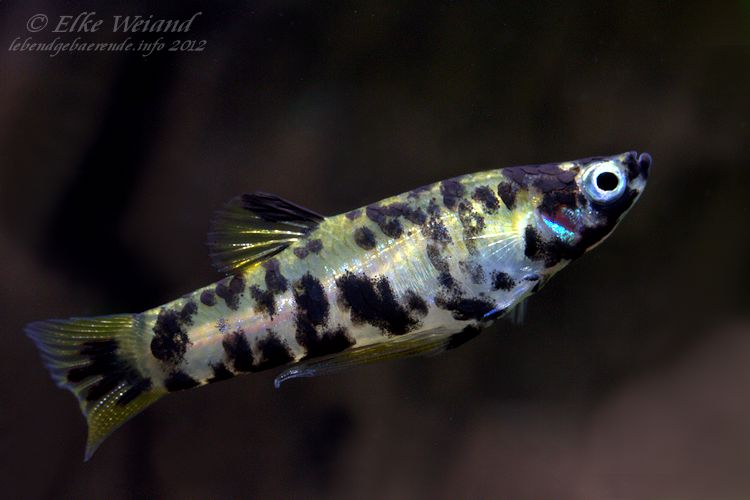
Phalloceros caudimaculatusDusky Millions Fish
Poeciliidae · Hensel, 1868
Occurs naturally in Brazil, Paraguay, Uruguay and Argentina with feral populations in Australia, New Zealand, Ethiopia and Malawi which were purportedly introduced for purposes of mosquito control but are now considered invasive. Following Lucinda (2008) its natural range comprises the Lagoa dos Patos system, lower rio Uruguai, rio Tramandaí, and rio Mampituba in Rio Grande do Sul st...
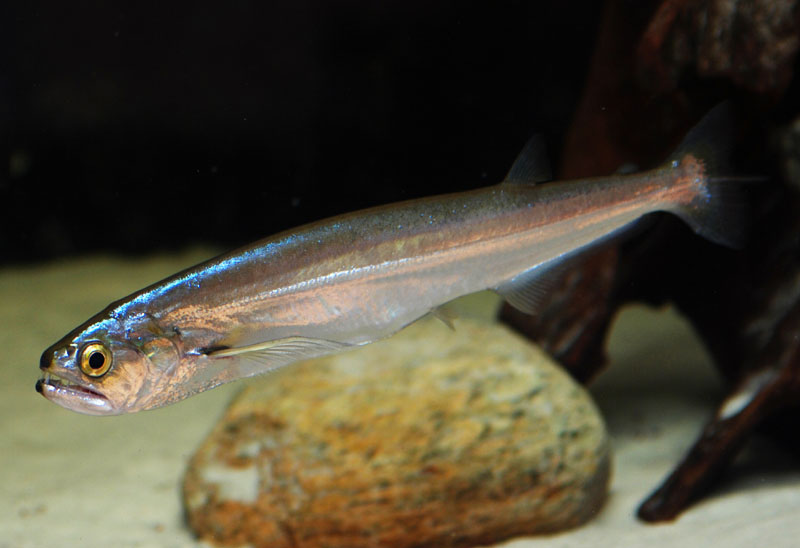
Rhaphiodon vulpinusBiara
Cynodontidae · Spix & Agassiz, 1829
R. vulpinus is the most widely-distributed member of the family Cynodontidae. Type locality is given simply as 'Brazilian rivers', but this species is currently understood to be distributed in the Amazon basin from the Río Ucayali system in Peru, eastward as far as the rio Xingu in Brazil, plus the rio Tocantins and Rio Capim basins. It's also known from the Río Orinoco ba...