Genus
Epalzeorhynchos
- Species
- 4
- Photographed
- 4 of 4
- Difficulty rated
- 4 of 4
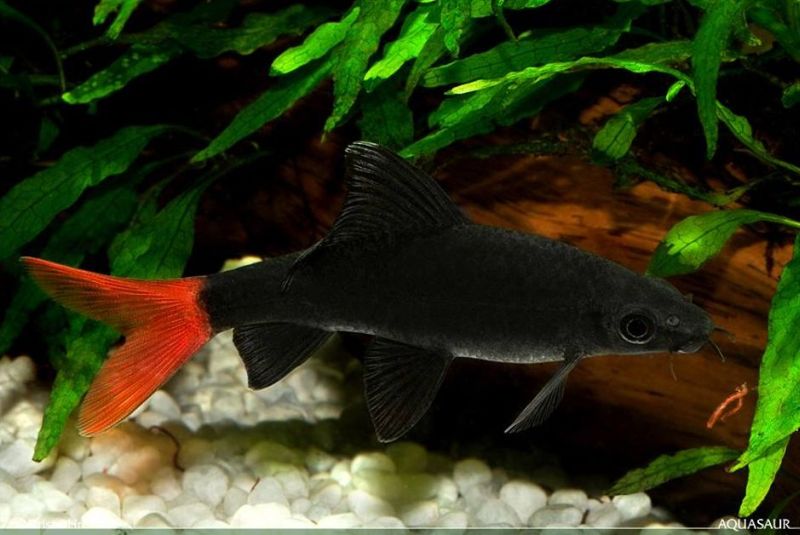
Epalzeorhynchos bicolorRed-Tailed Black Shark
Smith, 1931
Most members of Epalzeorhynchos were formerly regarded as Labeo spp. and are thus referred to as such in older literature. According to Rainboth (1996) they're characterised by absence of a dorsal spine, possession of 10-13 branched dorsal fin rays, a thin membrane connecting the upper and lower lips and rigid, freely moveable rostral lobes. Epalzeorhynchos itself has undergone some quite recent changes with a handful of species hav...
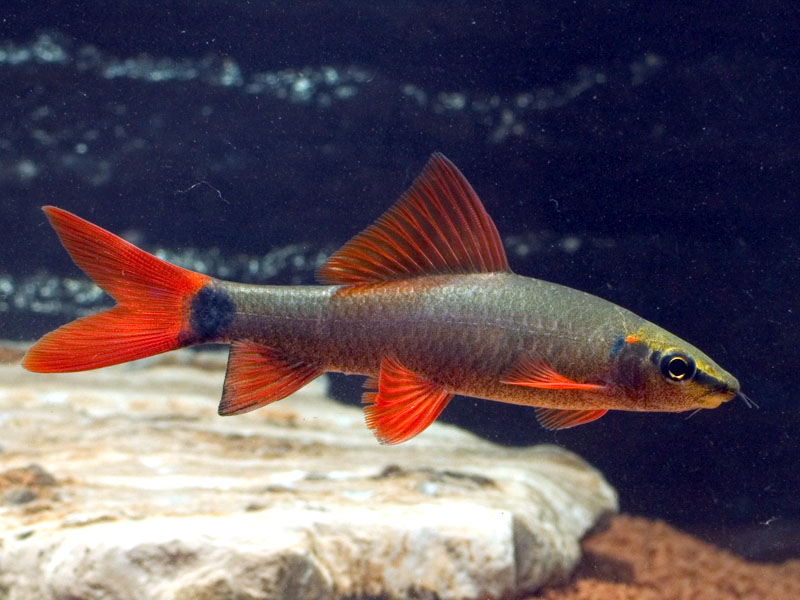
Epalzeorhynchos frenatumRainbow Shark
Fowler, 1934
The ornamental albino variant is widely-available and has become extremely popular in the hobby and there is a commercially-produced anerythristic (lacking red pigment) mutation that has pale yellowish fins and has sometimes been misidentified as E. munense. Also worthy of note is that the specific name is sometimes misspelled 'frenatus'. Most members of Epalzeorhynchos were formerly regarded as Labeo spp. and are thus referred to as such in older literature. According to Rainboth (1996) they're characterised by absence of a dorsal spine...
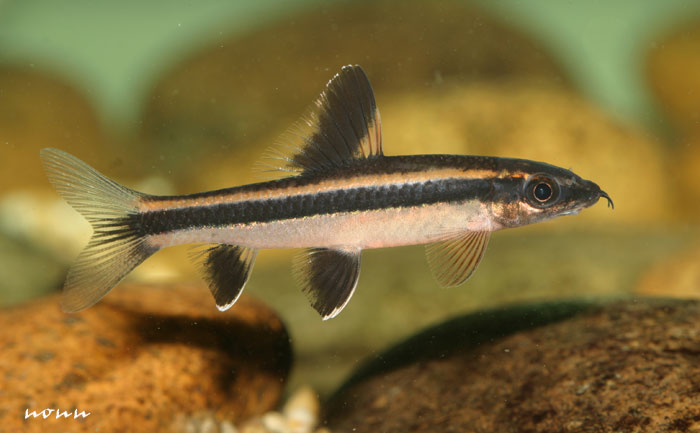
Epalzeorhynchos kalopterumFlying Fox
Bleeker, 1850
Confusion with similar-looking fishes from other genera, such as Garra cambodgiensis, laterally-striped Crossocheilus spp. or Gyrinocheilus aymonieri is not uncommon, and are largely attributable to the use of trade names such as 'false flying fox' or 'Siamese flying fox'. When compared with the other species E. kalopterus exhibits several unique characters but perhaps the simplest way to identify it is by the characteristic white-edged, red and black coloured fins and the presence of two pairs of barbels.
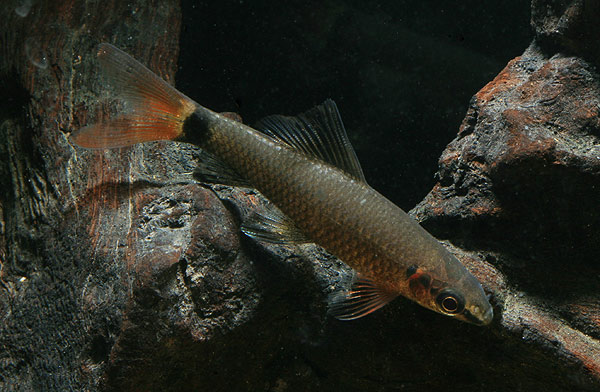
Epalzeorhynchos munense
Smith, 1934
This species does not appear to be in the aquarium hobby at time of writing though it may have been in the past, when exports of wild Epalzeorhynchos spp. still took place. Most members of the genus were formerly regarded as Labeo spp. and are thus referred to as such in older literature. According to Rainboth (1996) they're characterised by absence of a dorsal spine, possession of 10-13 branched dorsal fin rays, a thin membrane...