Genus
Hypsibarbus
- Species
- 6
- Photographed
- 6 of 6
- Difficulty rated
- 6 of 6
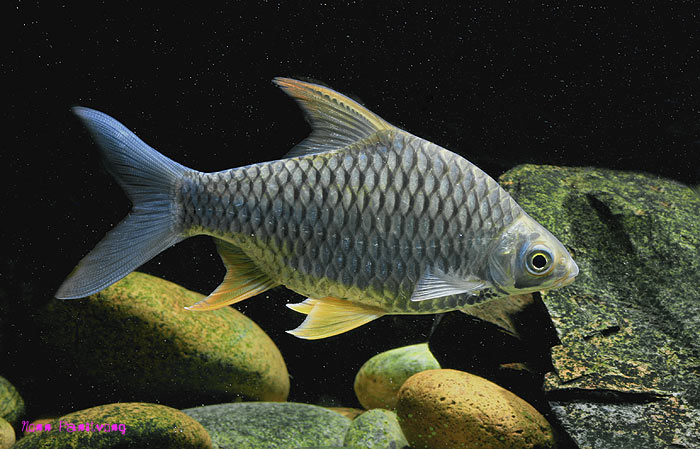
Hypsibarbus lagleri
Rainboth, 1996
This species is migratory on a seasonal basis; during the dry season it can be found in larger river channels, whereas during drier months it moves into smaller tributaries and flooded forests. Apparently displays a preference for rocky habitats and is not known to adapt to reservoirs or other artificial impoundments.
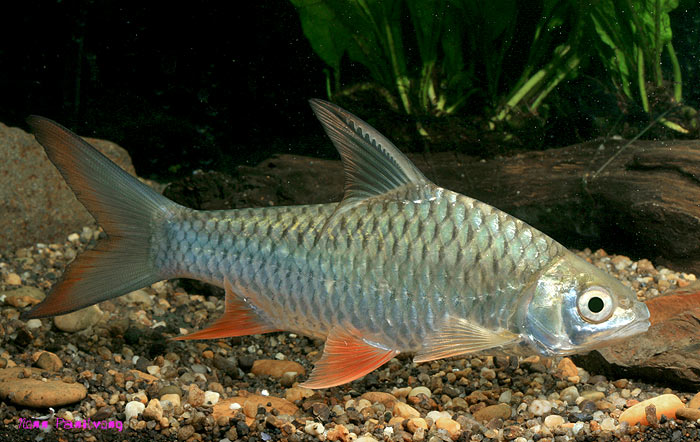
Hypsibarbus malcolmiGoldfin Tinfoil Barb
Smith, 1945
H. malcolmi is distinguished from congeners by the following combination of characters: 12-17 (usually 14-15) rakers on first gill arch; usually 16 circumpeduncular scale rows; less than 30 lateral line scales; some branched lateral line canals, but branching not extensive, median portion of dorsal-fin dark.
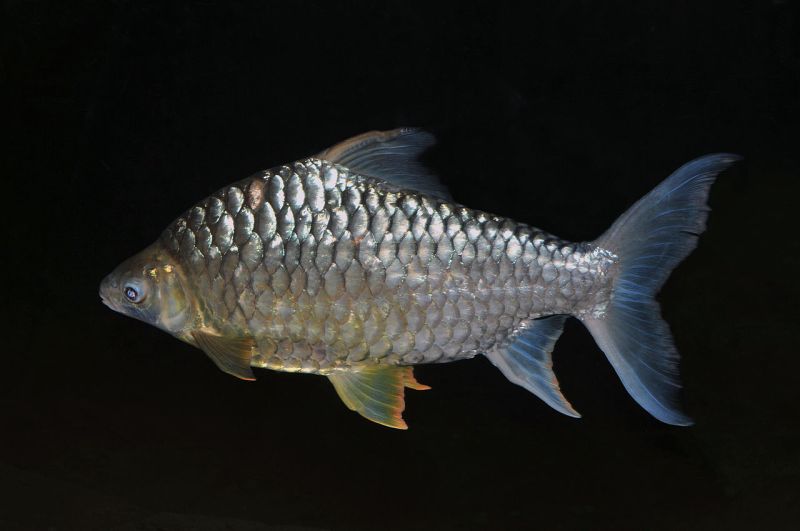
Hypsibarbus pierreiYellow Eyed Silver Barb
Sauvage, 1880
Known from the middle and lower Mekong basins in Laos, Thailand, Cambodia, and Vietnam, plus the Dong Nai drainage in central Vietnam. Type locality is 'Rapids of Dang-nai, Bien Hoa Province, Thailand', which corresponds to what is now the city of Biên Hòa in Đồng Nai province, southern Vietnam.
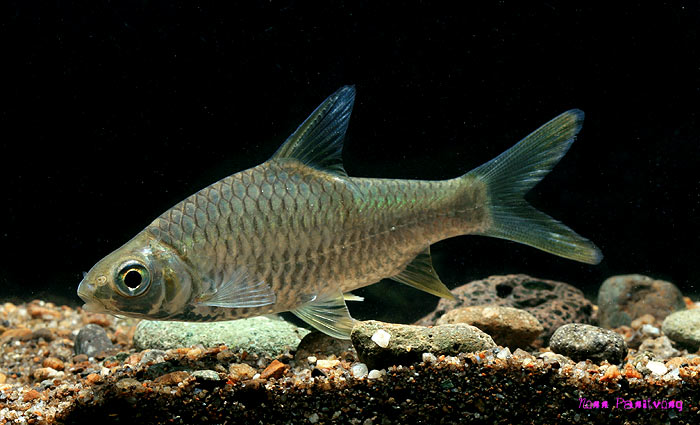
Hypsibarbus salweenensis
Rainboth, 1996
Endemic to the Salween river system in Yunnan province, southern China, eastern Myanmar, and northwestern Thailand. Type locality is 'Salween River midway between Mae Sam Laep and Paleh, Mae Hong Son province, Thailand.'
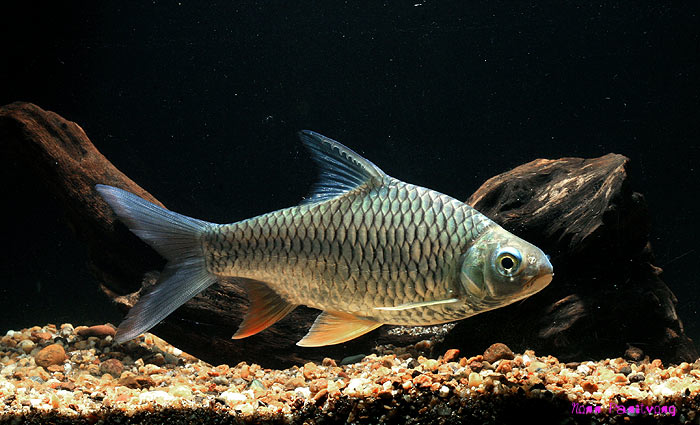
Hypsibarbus vernayi
Norman, 1925
It is very similar to H. wetmorei but can be told apart by possessing yellow (vs. orange to red in H. wetmorei) pectoral, pelvic, and anal fins. It thus appears likely that yellow-finned fish marketed as H. wetmorei or 'lemon fin barb' in the ornamental trade are actually H. vernayi, with both species available on a regular basis.
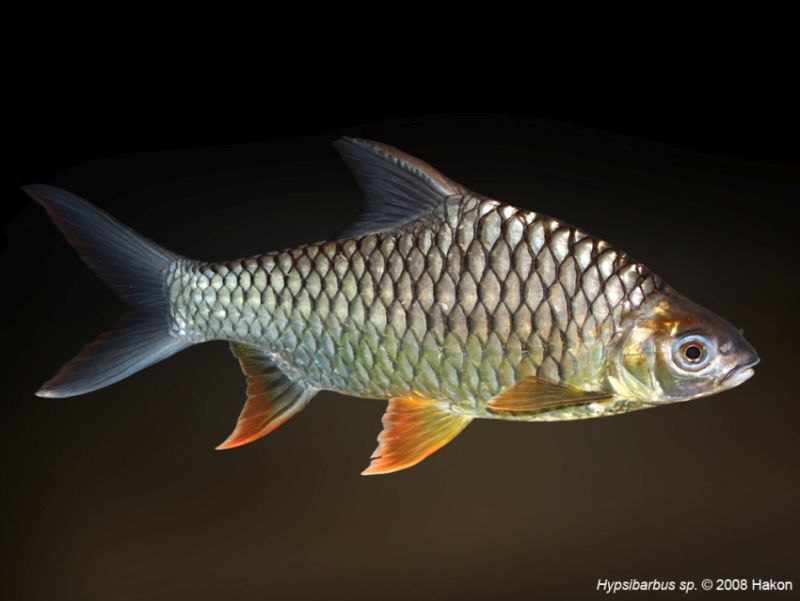
Hypsibarbus wetmorei
Smith, 1931
H. wetmorei is distinguished from congeners by the following combination of characters: upper body reddish brown; robust body, not compressed; usually 4½ scale rows between lateral line and dorsal-fin origin; 8-12 rakers on first gill arch; 7-9 predorsal scales; 14 circumpeduncular scale rows; usually two scale rows separating vent and anal-fin; <29 lateral line scales; 9-14 serrations on the spinous dorsal-fin ray; distance between distal serrae on posterior margin of last unbranched dorsal-fin ray much greater than the width of their bases.