Genus
Iksookimia
- Species
- 4
- Photographed
- 4 of 4
- Difficulty rated
- 4 of 4
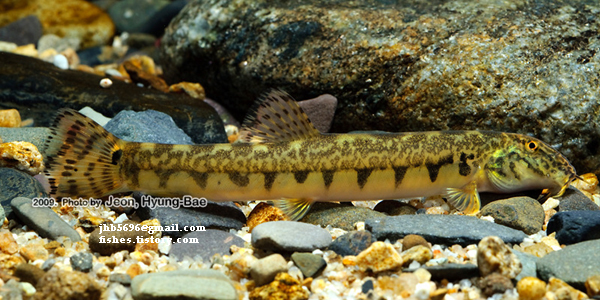
Iksookimia hugowolfeldi
Nalbant, 1993
It appears that I. hugowolfeldi, I. longicorpus and I. yongdokensis form a biogeographic lineage distinct from I. koreensis and I. pumila, with the former group distributed to the south of the Taebaek and Noryeong moutnain ranges and the latter to the west. This is further evidenced by the fact that the lamina circularis in males of the southern gro...
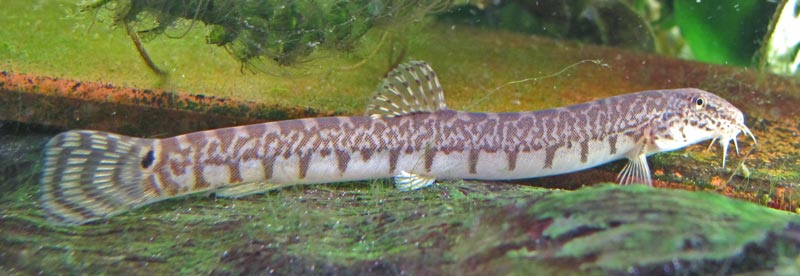
Iksookimia koreensis
Kim, 1975
Among them it's most similar to I. pumila which was initially described as a subspecies but is now considered distinct. The two are most easily-separated by colour pattern; I. koreensis has 10 or...
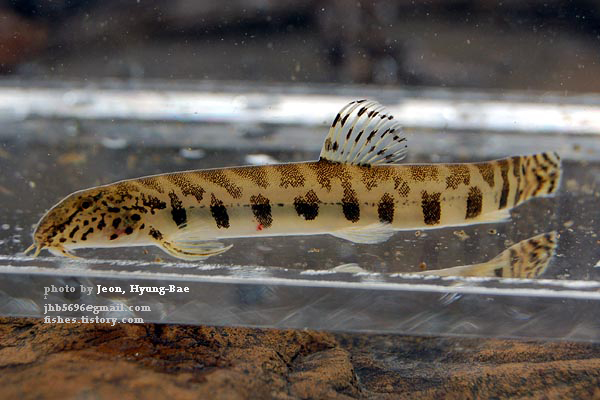
Iksookimia pumila
Kim & Lee, 1987
All Iksookimia species are endemic to Korea, and I. pumila is known only from the Baek River drainage in south-western Korea where its presence has been undermined at some localities due to construction of a dam in the middle reaches of the river during the late 1990s. Type locality is 'Paikchon stream at Sangso-myon, Puan-gun, Chollabuk-do, South Korea'. The reservoir formed by the dam has also be...
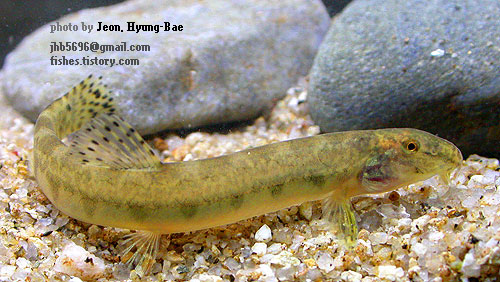
Iksookimia yongdokensis
Kim & Park, 1997
Among them it's most similar to I. longicorpus and I. hugowolfeldi but can be distinguished by the following combination of characters: body patterning consisting of 9-13 dark vertical bars along the flanks plus a small dark spot at the base of the upper caudal-fin lobe; no black blotch or markings posterior to the operculum; reduced lamina circularis in males; interorbital width measures 14.7-17.8% o...