Genus
Mesonoemacheilus
- Species
- 4
- Photographed
- 4 of 4
- Difficulty rated
- 4 of 4
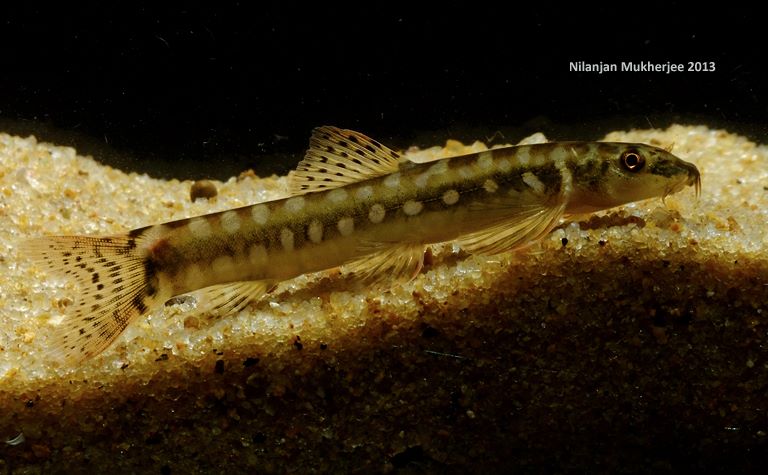
Mesonoemacheilus guentheri
Day, 1867
However, according to the identification key of Rema Devi and Indra (2002), the two can be distinguished by a combination of factors as follows: body spots rounded in shape (vs. 'Y' or 'V' shaped in M. herrei); caudal peduncle relatively long (vs. relatively short); anal-fin not reaching base of caudal-fin (vs. anal-fin reaching base of caudal-fin); caudal peduncle with a dark band (vs. caudal peduncle with a dark spot); sub...
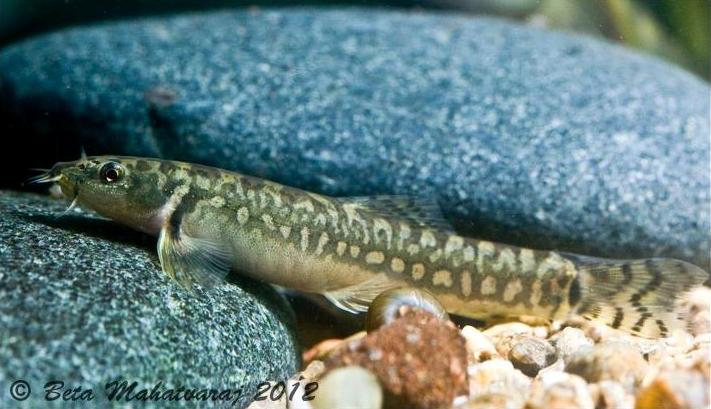
Mesonoemacheilus herrei
Nalbant & Bãnãrescu, 1982
It's unclear if this species has ever been exported for the aquarium hobby outside of India but there may be a chance of finding the occasional specimen mixed in with shipments of M. guentheri or M. triangularis. It was earlier considered synonymous and may still be confused with M. guentheri since both species share similar body patterning consisting of rows of yellowish, dark-edged spots.
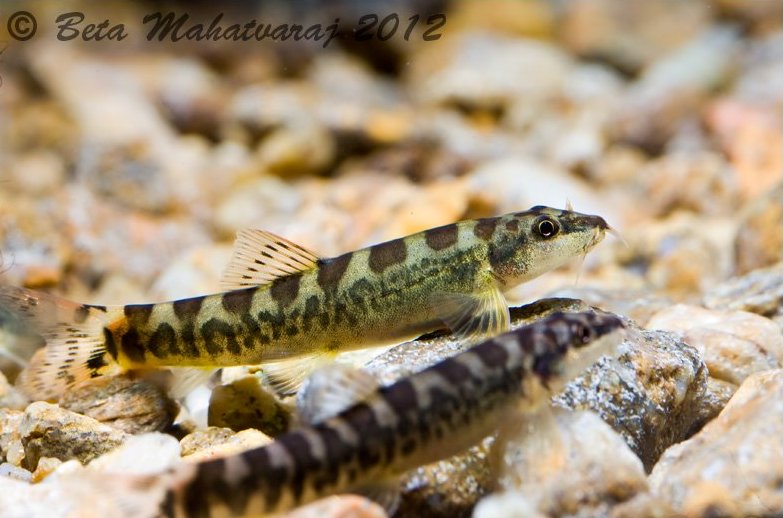
Mesonoemacheilus petrubanarescui
Menon, 1984
Type locality is 'Netravati River, Dharmasthala, Karnataka State, India', with the species subsequently recorded from the Kabini (aka Kabani) River basin and it may be endemic to these two drainages. While the Netraviti flows through Karnataka in its entirety before emptying into the Arabian Sea just south of the city of Mangalore, th...
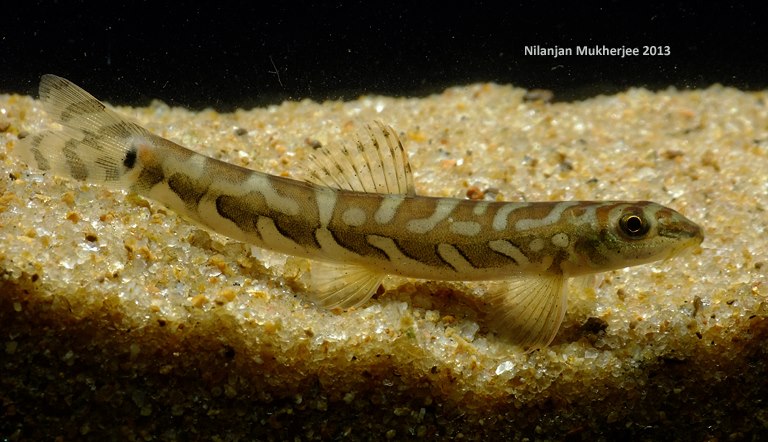
Mesonoemacheilus triangularisZodiac Loach
Day, 1865
This species is also referred to by the alternative vernacular name 'Batik loach' and is the most-commonly traded member of the genus at present. It's easily-distinguished from congeners by body patterning which comprises a series of pale, oblique saddle-like markings edged in black and running along the dorsal surface, plus a similar set of bars originating from the otherwise plain ventral surface.