Genus
Oryzias
- Species
- 12
- Photographed
- 12 of 12
- Difficulty rated
- 11 of 12
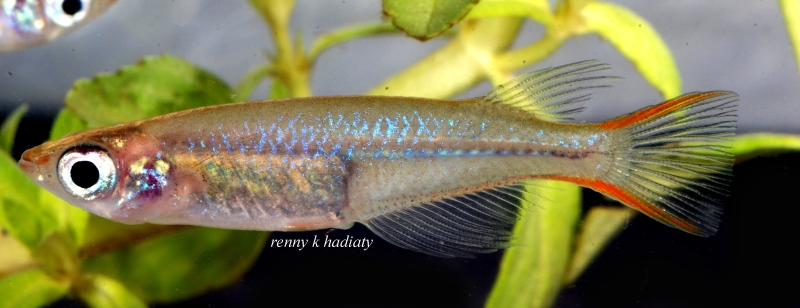
Oryzias asinuaAsinua Ricefish
Parenti, Hadiaty, Lumbantobing & Herder, 2013
When the type series was collected the Sungai Asinua contained clear, slow to fast-moving water with a temperature of 26 °C. The substrate was composed of mud, sand an...
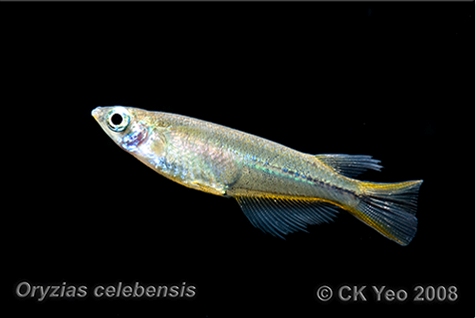
Oryzias celebensisCelebes Ricefish
Weber, 1894
Described from the Maros River (Salo Maros), southwestern Sulawesi, Indonesia and subsequently recorded from rivers and streams throughout the southwestern arm of the island including Lake Tempe (Danau Tempe), plus the Mota Talau River, East Timor state on the nearby island of Timor. More recently Herder and Chapuis (2010) reported it to be more widespread on Sulawesi, with new records pertaining to an unnamed small stre...
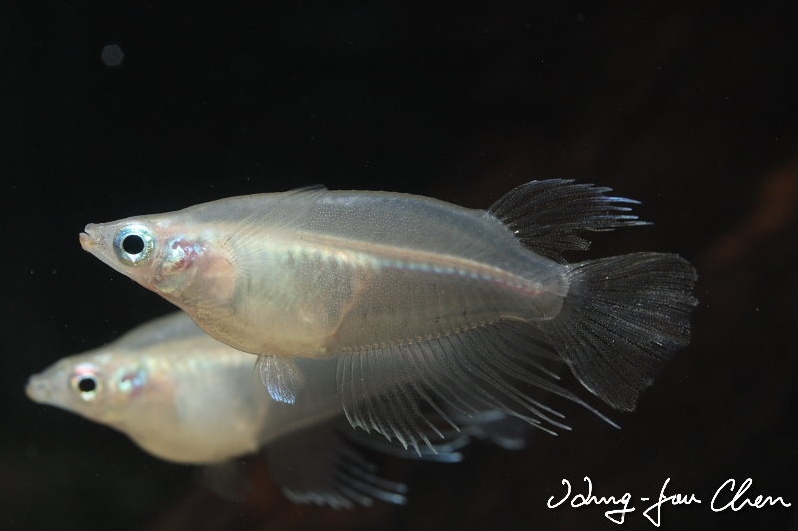
Oryzias dancenaIndian Ricefish
Hamilton, 1822
This species continues to be mislabelled as O. melastigma, a name currently considered invalid by the majority of recent workers, or O. javanicus, a valid but distinct taxon. Roberts (1998) demonstrated that MClelland's description of Aplocheilus melastigmus, later renamed O. melastigma, does not correspond with any known Oryzias species from the Indian subcontinent or Myanmar since it's said to have a dark spot in the dorsal-fin and an excessively slim body, among other anomalies.
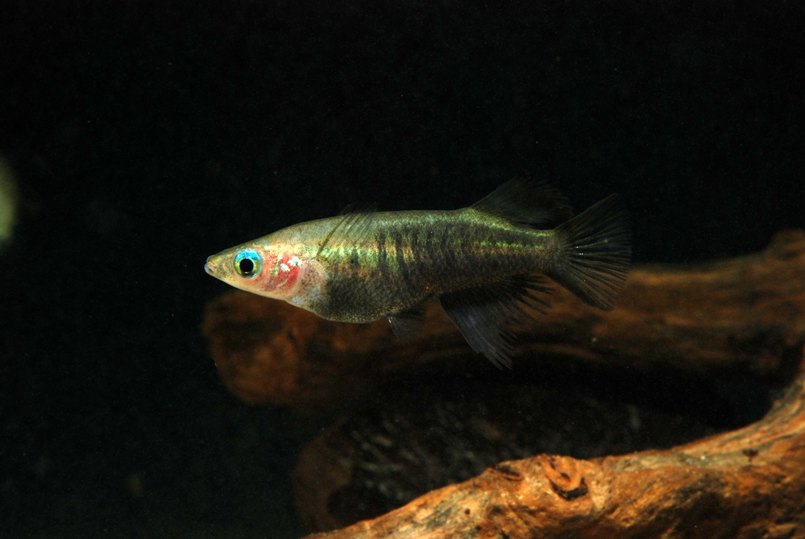
Oryzias eversi
Herder, Hadiaty & Nolte, 2012
The type locality is a karst pool around 30-40 m in length, 10m in width and up to 4 m deep. It contains still, transparent water, has a single inflow and outflow, is surrounded by rainforest and in September 2010 the water temperature was 21.5°C/70.7°F. The habitat is used by locals as a bathing pool and sympatric species included a nat...
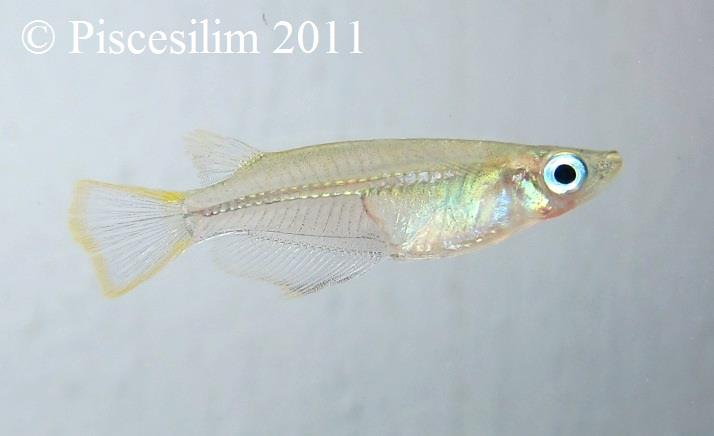
Oryzias javanicusJavanese Ricefish
Bleeker, 1854
This species is widely-distributed throughout Peninsular Thailand, Malaysia (Malay Peninsula plus the states of Sabah and Sarawak, Borneo), Singapore and Indonesia, with records from the Riau Archipelago, Sumatra, Java, Borneo, Bali, Lombok, and Sulawesi existing in the latter. Type locality is 'Panimbang River, Perdana, Indonesia'. It's typically found in coastal, normally brac...
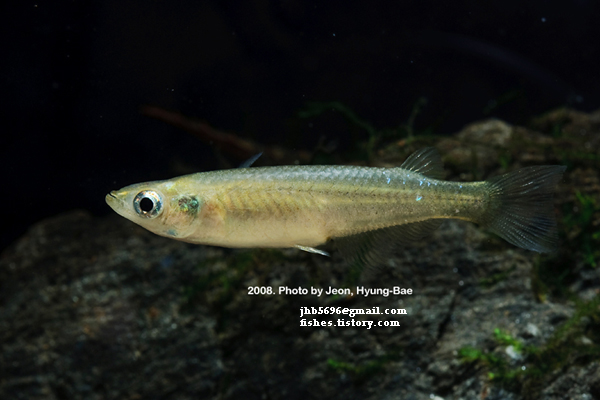
Oryzias latipesMedaka
Temminck & Schlegel, 1846
Commonly known as 'Japanese rice fish' or simply 'rice fish', O. latipes is well-known to science having been widely used as a model organism in genomic and experimental biology for well over a century and was the first vertebrate animal to mate in space during the mid-1990s. It's also been a popular aquarium fish for many years, though is less widely-available than it once was, with the ornamental 'gold' vari...
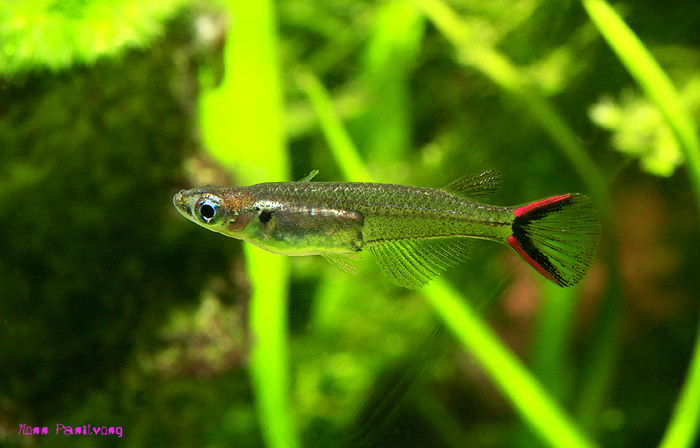
Oryzias mekongensisMekong Ricefish
Uwa & Magtoon, 1986
It can be further distinguished from congeners by the following combination of characters: small adult size; bright orange-red marginal bands on caudal-fin lobes in males; caudal-fin rounded and elongate; 5-7 dorsal-fin rays; relatively few (13-18) anal-fin rays without bony contact organs, the last ray branched; 6-8 pectoral-fin rays. Members of the family Adrianichthyidae are...
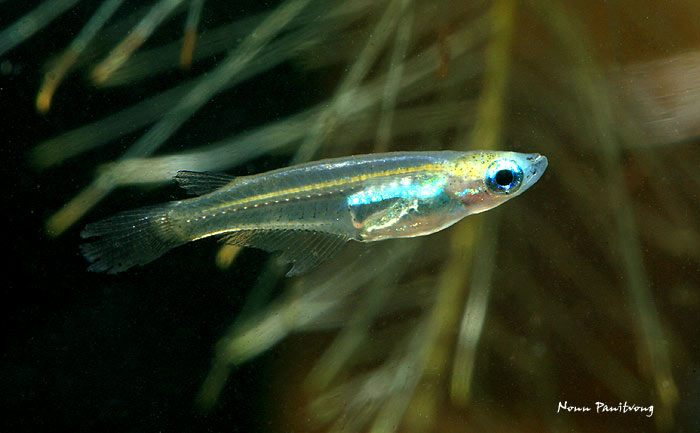
Oryzias minutillusDwarf Medaka
Smith, 1945
Best maintained in a heavily planted set-up, ideally with a dark substrate, patches of dense vegetation, and some open areas. Other décor can consist of twisted roots and pieces of bogwood, while surface vegetation is also appreciated by the fish. When maintained under such conditions they're more likely to display their best colours, and planted aquaria also offer fry a more favourable chance of survival alongside the adults.
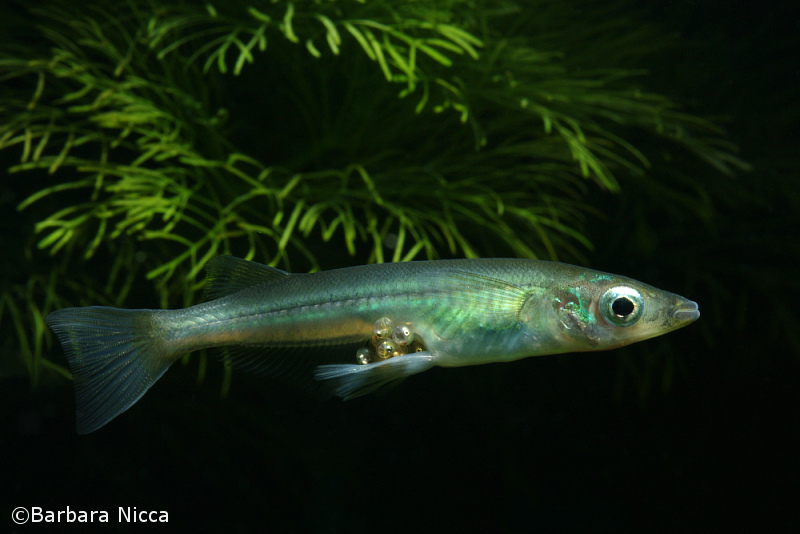
Oryzias sarasinorumSarasin's Buntingi
Popta, 1905
Utilises a strategy which has become known as 'pelvic brooding'. Spawning tends to occur in the early morning, with dominant males darkening in colouration and defending their space by driving away potential competitors, while approaching ripe females in a rigid 'head-down' position. The eggs normally number 8-12 and are expelled as a single mass while being fertilised simultaneously, after which they continue to hang from th...
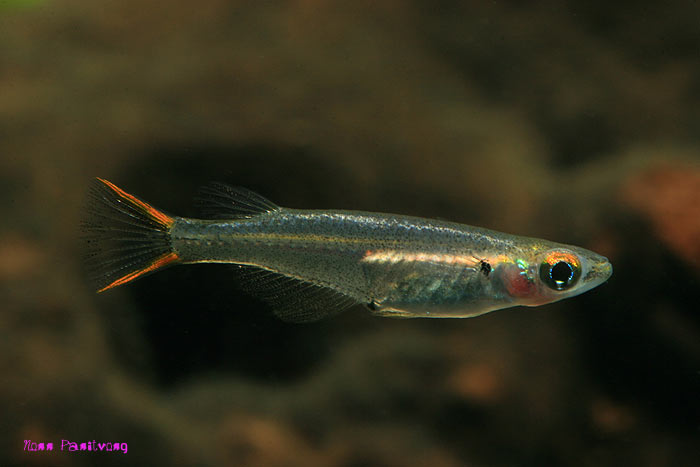
Oryzias songkhramensis
Magtoon, 2010
An exclusive inhabitant of fresh, normally standing, waters including shallow pools, ditches, rice paddies and clear water swamps. The type locality is a small ditch measuring just 3 - 6 metres in width and 0.5 - 2 metres deep. The water was clear and the substrate composed of sand, detritus and mud with growths of the macrophytes Nymphaea lotus, Jussiaea repens and Hydrilla verticillata.
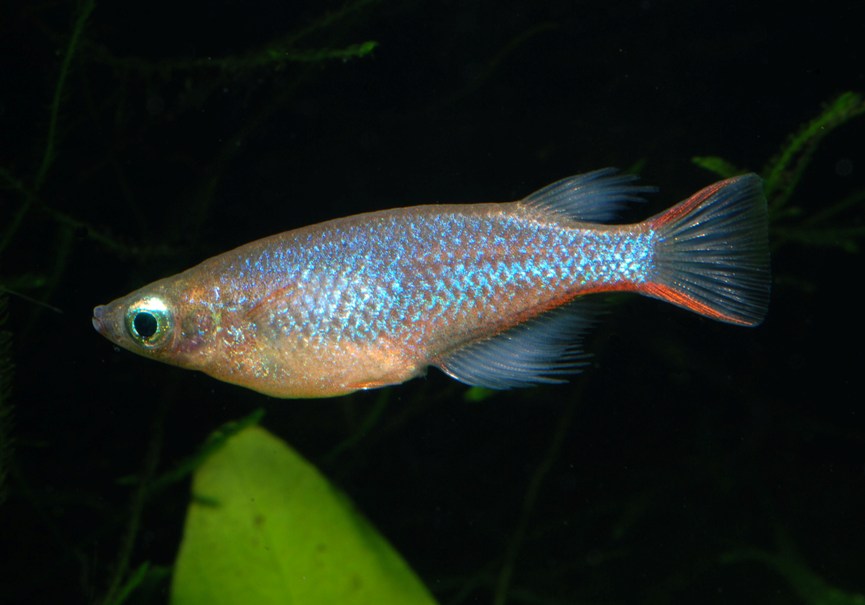
Oryzias wolasiWolasi Ricefish
Parenti, Hadiaty, Lumbantobing & Herder, 2013
This species was discovered in 2009 and as far as we know it has only been collected for the aquarium hobby on a single occasion to date, by Jeffrey Christian of Maju Aquarium, Frank Evers and Hans-Georg Evers. Prior to description it was referred to as O. sp. 'Kendari', O. sp. 'neon' or O. sp. 'Sulawesi'.
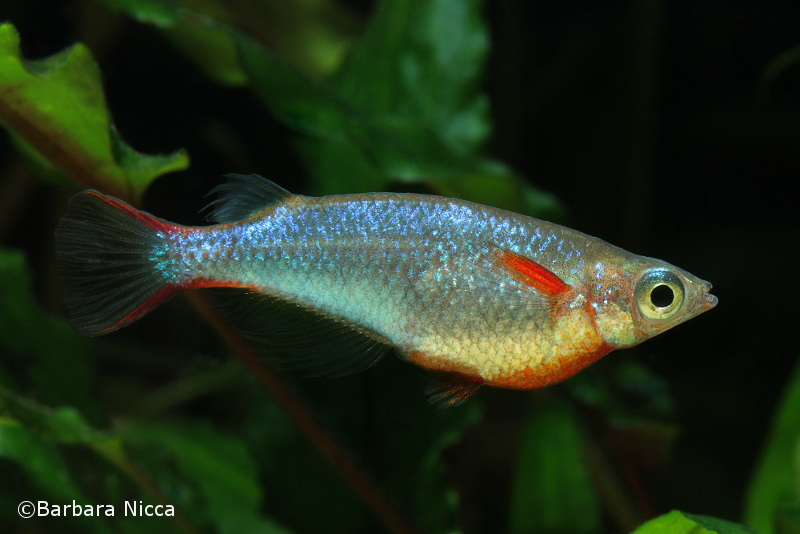
Oryzias woworaeDaisy's Ricefish
Parenti & Hadiaty, 2010
The type locality is a karstic freshwater stream flowing under 80% forest cover with a mixed substrate of mud and sand plus patches of leaf litter. O. woworae was collected from a still pool around 3-4 m deep, opposite an affluent spring, where it was schooling with a species of Nomorhamphus which may turn out to be a form of N. ebrardtii but has subsequently appeared in the aquarium trad...