Genus
Pangio
- Species
- 15
- Photographed
- 15 of 15
- Difficulty rated
- 15 of 15
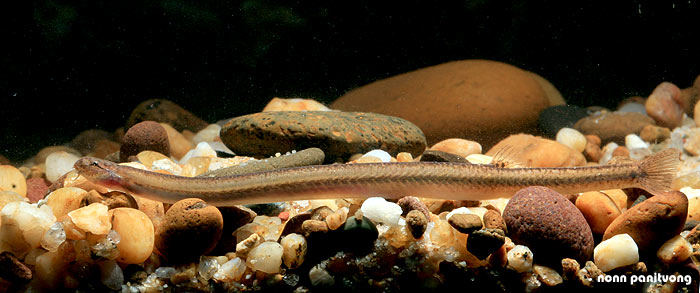
Pangio anguillaris
Vaillant, 1902
One of a handful of Pangio spp. traded under the generic name 'eel loach'. Wild populations tend to differ in colour pattern to some extent, with some exhibiting a more intense lateral stripe while others display an irregular pattern of fine dark spots on the body, for example.
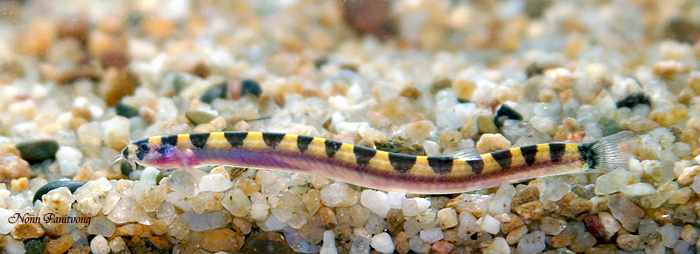
Pangio cuneovirgata
Raut, 1957
Infrequently encountered in the aquarium trade, most often as bycatch among shipments of similar-looking congeners. It's included in the P. kuhlii group of closely-related species within the genus, and can be distinguished from other members by...
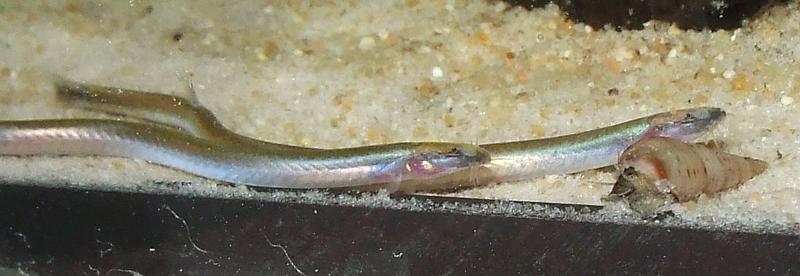
Pangio doriae
Perugia, 1892
One of a handful of Pangio spp. traded under the generic name 'eel loach', though it's most commonly available as bycatch among shipments of other fishes. Some authors have suggested it may be synonymous with P. anguillaris bu...
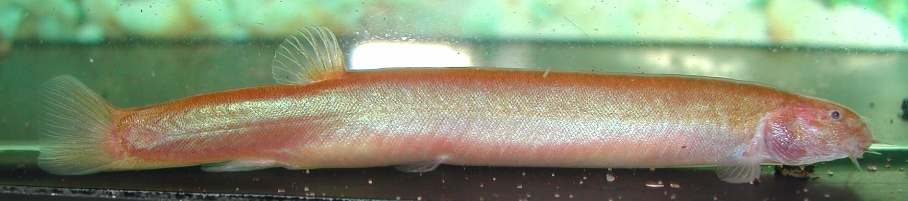
Pangio filinaris
Kottelat & Lim, 1993
It's included in the P. kuhlii-oblonga group of closely-related species within the genus as per Bohlen et al. (2011) and can be...
Pangio malayana
Tweedie, 1956
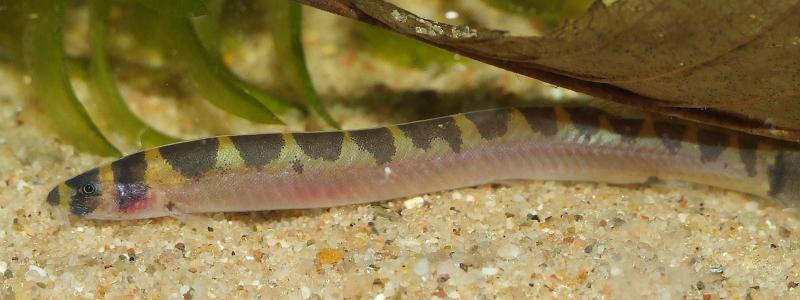
Originally known only from Johor and Pahang states, Peninsular Malaysia but since recorded from the Batang Hari river drainage, Sumatra and the Kapuas system, Kalimantan Barat (West Kalimantan) province, Indonesian Borneo. Type locality is 'Tahan River, Pahang, Malaysia'.
Pangio myersiGiant Kuhli Loach
Harry, 1949
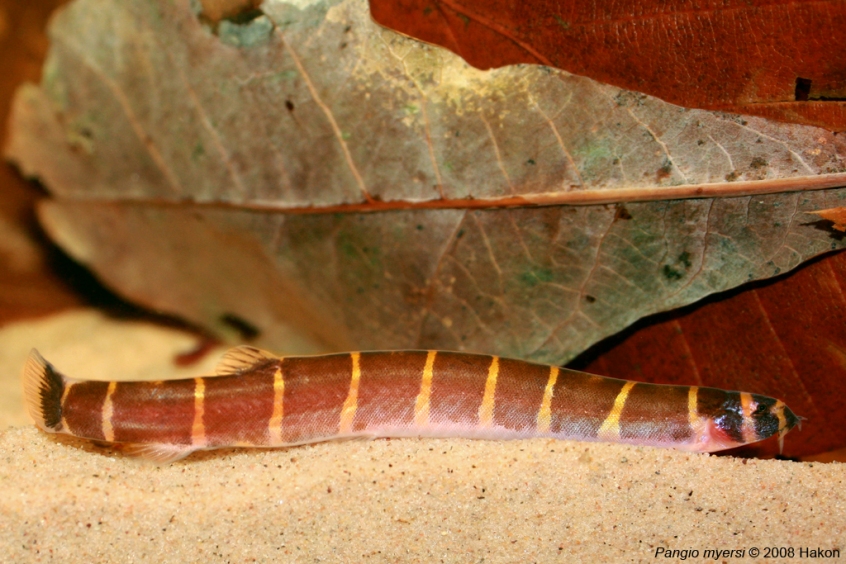
It's included in the P. kuhlii group of closely-related species and can be distinguished from other members by the following combination of characters: 8-11 very broad, quadrangular, regular dark body bars; orange base body colour; caudal-fin either entirely black or with a large black blotch at the base and a submarginal dark bar or row of spots. The latter feature can be useful in identifying young or newly-imported, undernourished specimens which can...
Pangio oblongaBlack Kuhli Loach
Valenciennes, 1846
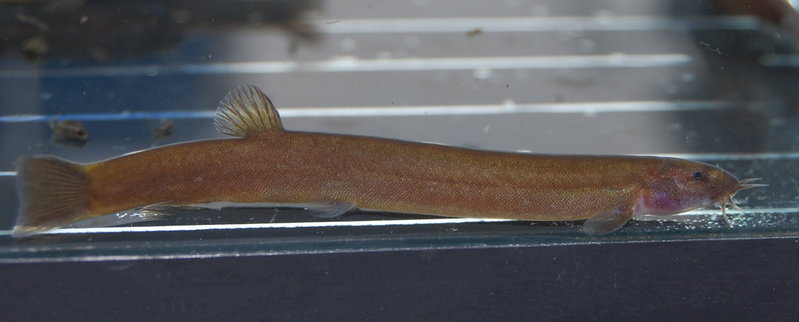
Described from close to the city of Bogor, Jawa Barat (West Java) province on the island of Java, Indonesia, but currently considered widespread with recorded occurrences on Java, Sumatra, Borneo and mainland Peninsular Malaysia. Some populations exhibit lighter...
Pangio piperata
Kottelat & Lim, 1993
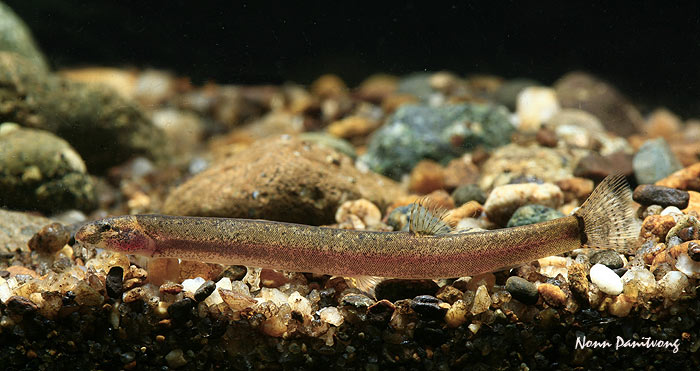
Some Sumatran and Bornean populations of the highly variable P. shelfordii superficially resemble P. piperata which can cause issues with identification as the two often occur together. In general however the body patterning in P. piperata is than that of P. shelfordii and they differ in vertebral counts (mode 47 vs. 50, respectively).
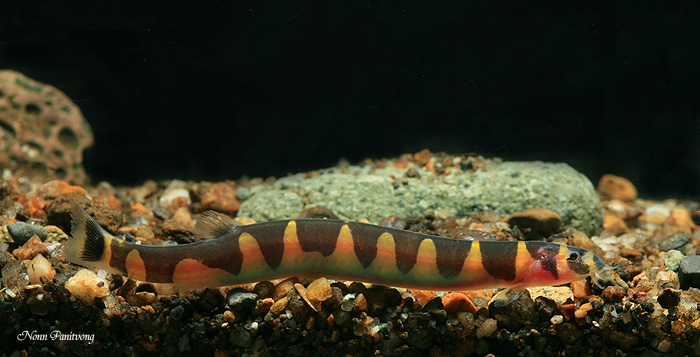
Pangio semicincta'Kuhli' Loach
Fraser-Brunner, 1940
This species is among the most frequently-misidentified in the hobby, almost always being traded as P. kuhlii. However the latter is currently considered endemic to Java, from where commercial collections are almost unheard of, and has possibly never been seen in aquaria.
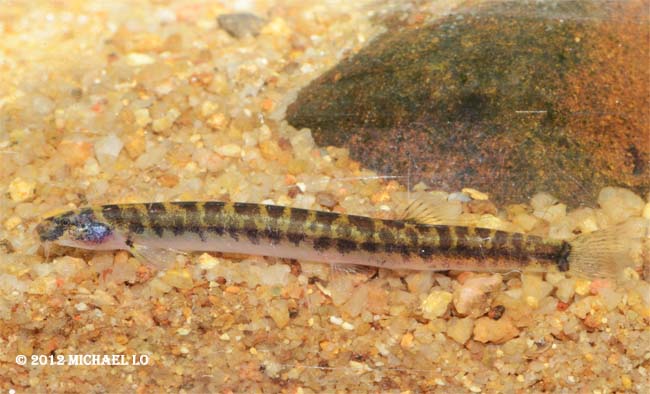
Pangio shelfordii
Popta, 1903
Patterning is highly variable depending both within and between populations and the species may comprise an assemblage containing a number of taxa (Kottelat and Lim, 1993; Tan and Kottelat, 2009). For example, those from Singapore and Johor possessing intricate mottling on the dorsal surface while individuals from Terengganu have a series of saddle-like markings either alternating or connecting with the midlateral markings.
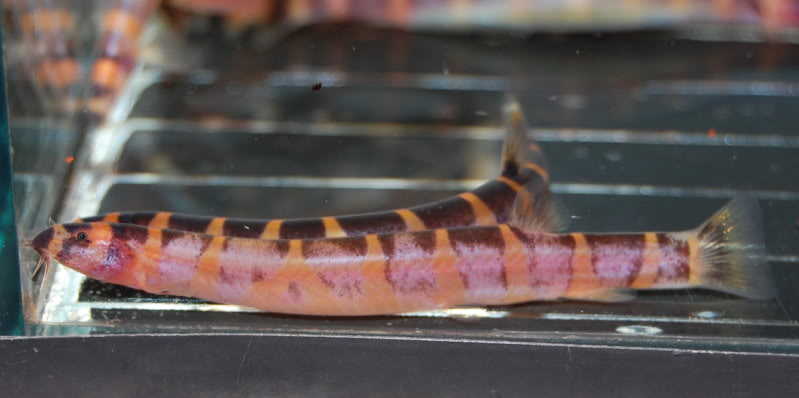
Pangio sp. 'PAN01'
authority not recorded
The fish in our images above were imported together don't correspond to any of the described species of Pangio though they can be assigned to the P. kuhlii species group with a degree of certainty. Unfortunately the live appearance of P. kuhlii itself is a mystery to aquarists since it's currently considered endemic to Java and may have never been seen in the hobby.
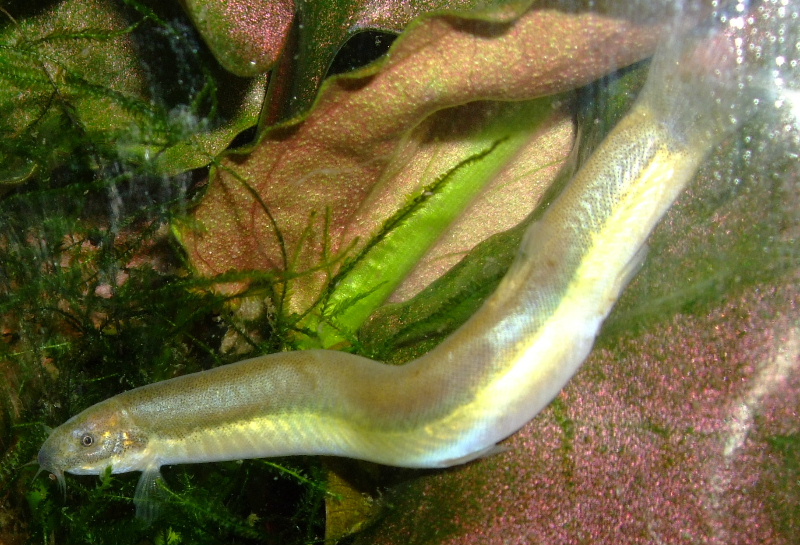
Pangio sp. 'PAN02'
authority not recorded
The fish in our images don't correspond to any of the described members of the genus but can be assigned to the P. oblonga species group with a degree of certainty. It's apparently exported as a contaminant among shipments of a uniformly brown-coloured fish with unpublished genetic analyses suggesting the two might be variants of the same species (J. Bohlen, pers. comm.). Among congeners it may be related to P. alcoides Kottela...
Pangio sp. 'PAN03'
authority not recorded
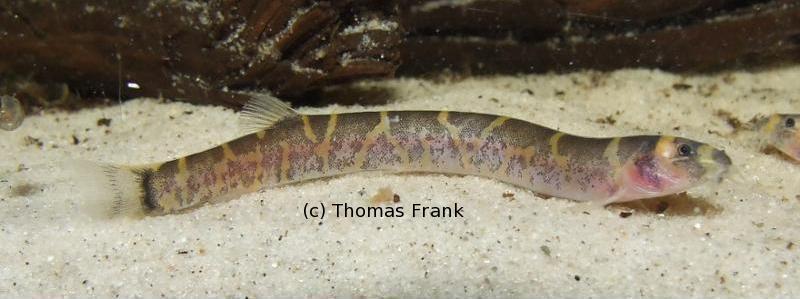
Pangio species are often generically referred to as 'kuhli' or 'coolie' loaches in the aquarium hobby, the latter a variation of the former which was itself derived from the surname of German naturalist Heinrich Kuhl (1797-1821). Ichthyo...
Pangio sp. 'PAN04'Panda Loach
authority not recorded
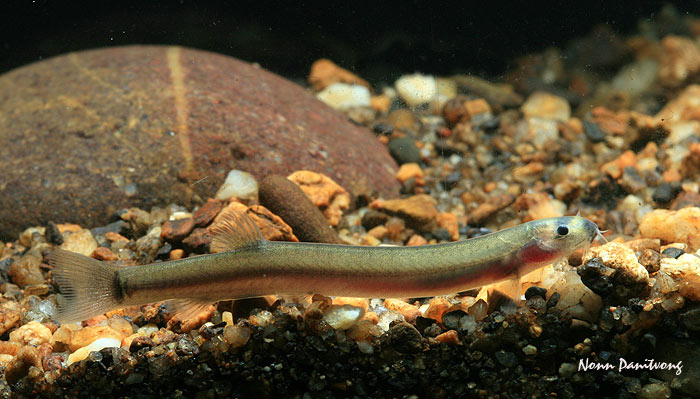
This unidentified species has been traded since the mid-00s and appears to be a member of the P. khulii-oblonga species group as per Bohlen et al. (2011). There are two similar-looking forms; one has a darker body, dark pigmentation in the pectoral fins and barbels and a blue sheen on the head, while the...
Pangio sp. 'PAN05'
authority not recorded
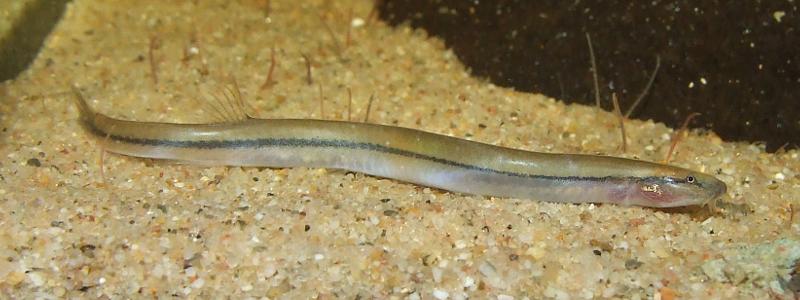
Unclear but usually imported for the aquarium trade alongside P. anguillaris which according to current knowledge has an irregular distribution including Laos, Cambodia, Vietnam, Thailand, Peninsular Malaysia, and the Greater Sunda Islands of Sumatra and Borneo.