Genus
Puntigrus
- Species
- 5
- Photographed
- 5 of 5
- Difficulty rated
- 5 of 5
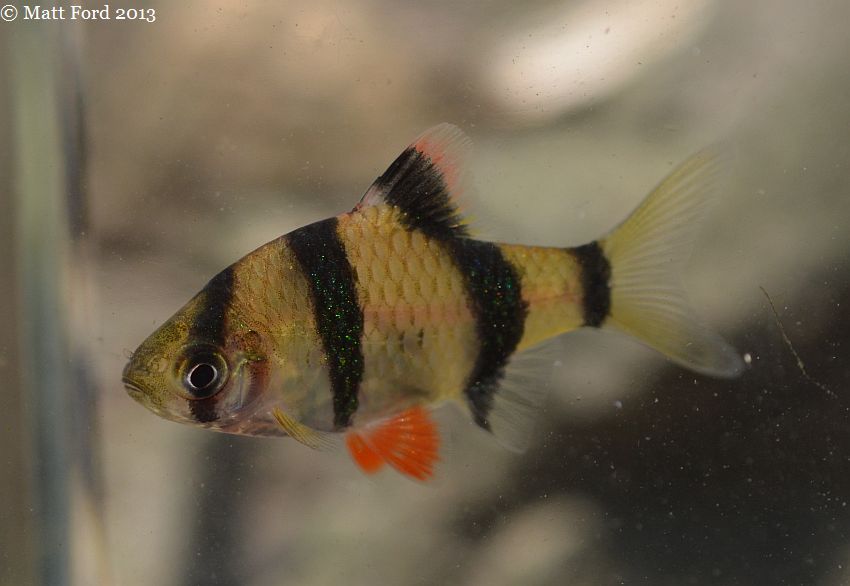
Puntigrus anchisporus
Vaillant, 1902
This species occasionally appears in the aquarium hobby, but the trade is largely reliant on commercially-produced 'tiger barbs' of questionable origin. It is distinguished from congeners by the following combination of characters: lateral line complete; 14 circumpeduncular scales; 21-23+2 scales in the lateral row; dorsal-fin black with red outer band; pelvic fins red.
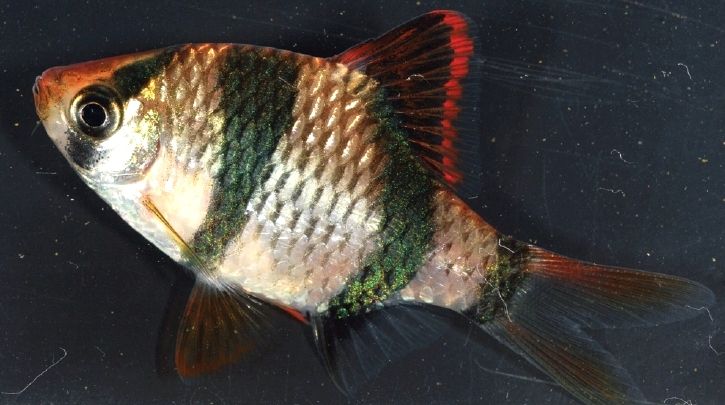
Puntigrus navjotsodhii
Tan, 2012
The type series was collected from a small clear-water stream with a pH of 6.0, forming a series of riffles and deeper pools, with a maximum width of 5 metres and depth ranging from 10 cm to 1 metre. The substrate was composed of sand gravel and rocks, with some leaf litter and overhanging marginal vegetation.
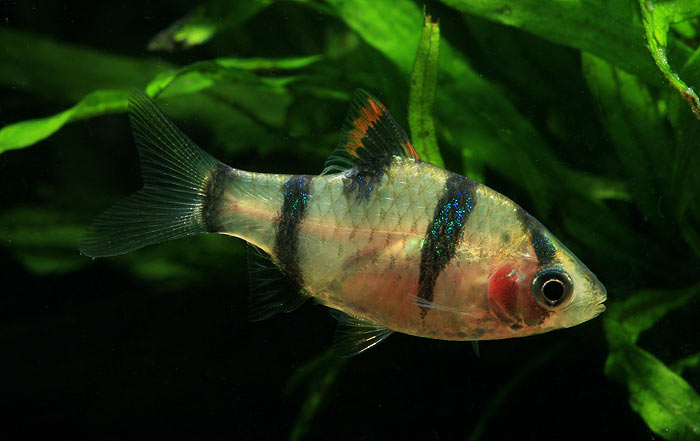
Puntigrus partipentazona
Fowler, 1934
Recorded from numerous river basins in Vietnam, Cambodia, Laos, Thailand, and Peninsular Malaysia, including the Mekong, Chao Phraya, Mae Khlong, Chanthaburi, Tapi, Golok, Terengganu, Pahang, Endau, and Muar. Type locality is 'Kratt, southeastern Siam', which corresponds to modern-day Trat Province, Thailand.
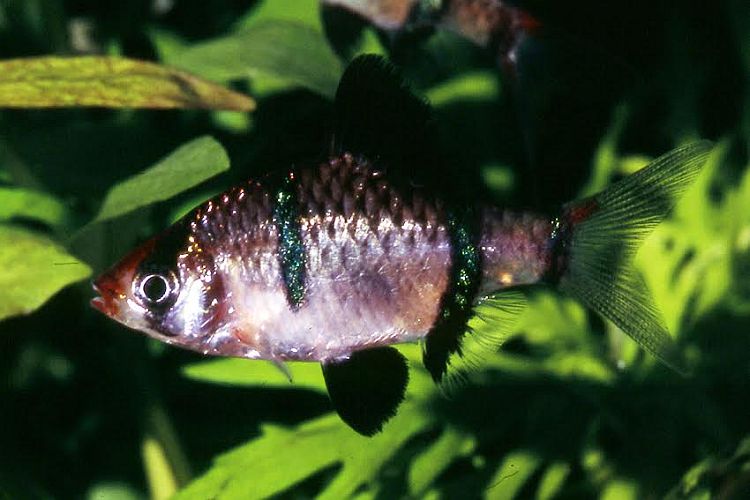
Puntigrus pulcher
Rendahl, 1922
This species occasionally appears in the aquarium hobby, but the trade is largely reliant on commercially-produced 'tiger barbs' of questionable origin. It was considered a synonym of P. anchisporus for a number of decades following Alfred (1963), but revalidated by Kottelat and Tan (2011).
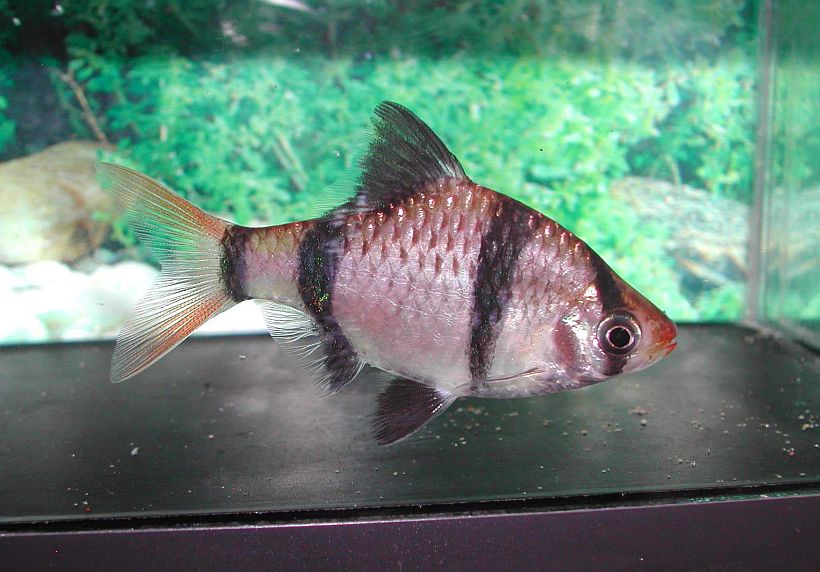
Puntigrus tetrazonaTiger Barb
Bleeker, 1855
P. tetrazona is traditionally considered to be among the most ubiquitous species available in the aquarium trade. Wild examples are rarely traded, however, and there exists ongoing confusion as to the identity of the commercially-produced 'aquarium' tiger barb. A number of selectively-bred, ornamental strains are available. The albino, 'green' (aka 'moss'), and 'golden' (leucistic) variants are particularly pop...