Results for “genus”
Type a name: scientific, common, or one a species used to go by. Or narrow the catalogue with the filters.
Filters
Corynopoma riiseiSwordtail Characin
authority not recorded
Max length65mm SL2.6in SLTank75 × 38cm30 × 15inTemp22–28°C72–82°FpH6.0–7.0This unusual tetra is not often seen on sale in the trade, but is never particularly expensive when available. It is currently the only member in the genus although the family Glandulocaudinae actually contains about 20 member genera. None are especially popular aquarium fish, although a couple of Mimagoniates species are occasionally seen in the hobby. Almost all members of the Glandulocaudinae are characterised by the presence of secretory caudal glands in male fish, the particular structur...
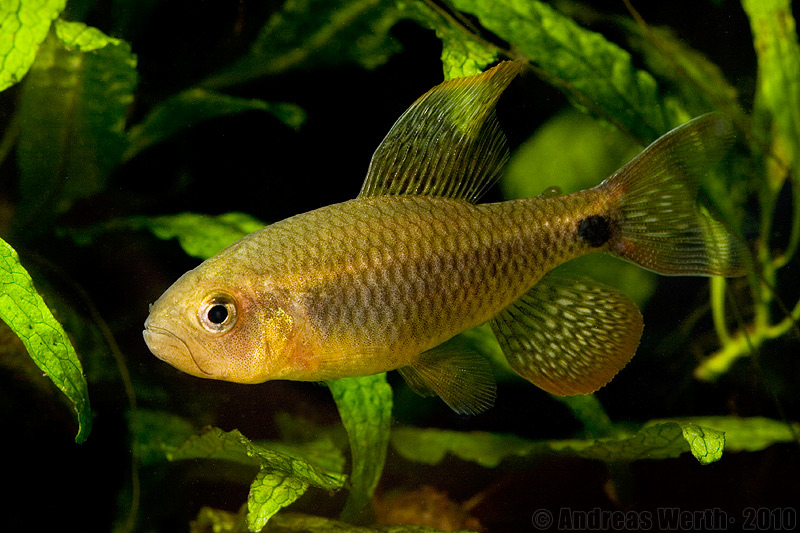
Crenuchus spilurusSailfin Characin
Günther, 1863
Max length70mm SL2.8in SLTank75 × 30cm30 × 12inTemp20–28°C68–82°FpH4.0–6.5This species is currently the only described member of its genus although colour pattern and morphology vary considerably across its range. You may see reference to this species being the only fish species to possess infra-red vision, but other species also possess this ability and we suspect that infra-red plays an important role in the reproductive cycle of many fishes.
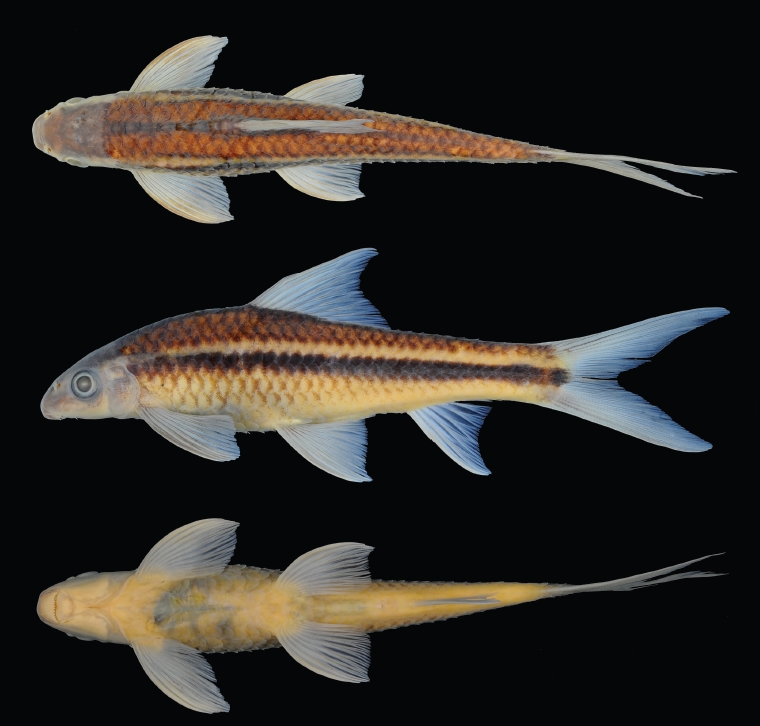
Crossocheilus elegans
Kottelat & Tan, 2011
Max length110mm SL4in SLTank150 × 45cm60 × 18inTemp20–25.5°C68–78°FpHnot recordedThis species can be most easily distinguished from other members of the genus by its colour pattern which consists of a blackish midlateral stripe extending from the tip of the gill opening to the middle of the caudal-fin base, which is separated from the dark brown dorsum by a pale yellowish brown stripe. This differs from the pattern seen in other Crossocheilus species with a black midlateral stripe in which the the dorsum is olive brown and much paler than the midlateral stripe, there is no yellow stripe between the dorsum and the black stripe, and the black stripe extends to the tip of the snout.
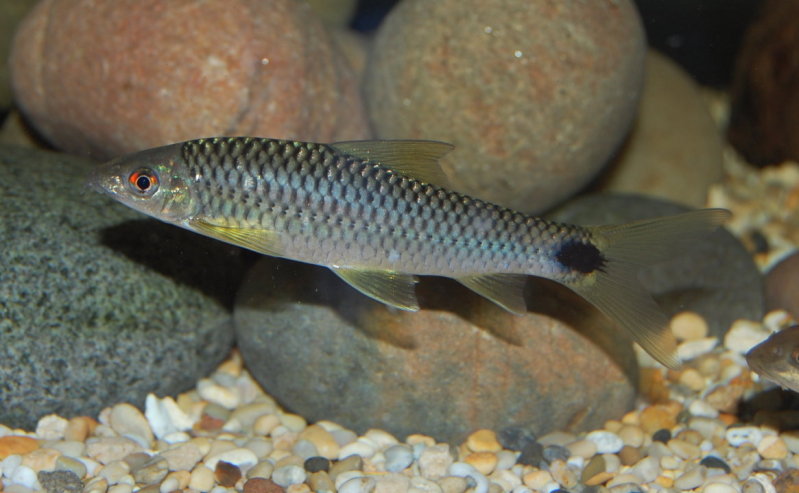
Crossocheilus reticulatus
Fowler, 1934
Max length170mm SL7in SLTank180 × 45cm72 × 18inTemp16–24°C61–75°FpH6.0–7.5While some laterally-striped members of the genus look very similar to one another the combination of silvery body, dark-edged scales and dark caudal peduncle blotch set C. reticulatus uniquely apart. The names Crossocheilus tchangi, Epalzeorhynchos coatesi and E. stigmaeus are all now considered synonyms of the species but were erected because the fish vary, most often in minor aspects of patt...
Ctenopoma murieiOcellated Bushfish
authority not recorded
Max length75mm SL3.0in SLTank60 × 30cm24 × 12inTemp24–28°C75–82°FpH6.0–7.5One of the smallest species in the genus, it is rarely seen in the trade. A pity, as its diminutive size makes for an ideal aquarium subject. Like others in the suborder Anabantoidei, the species possesses an accessory breathing organ known as the labyrinth organ. So-called due to its maze-like structure, this organ allows the fish to breathe atmospheric air to a certain extent. It is formed by a modification of the first gill arch, and consists of many highly vascularised, folded flaps of sk...
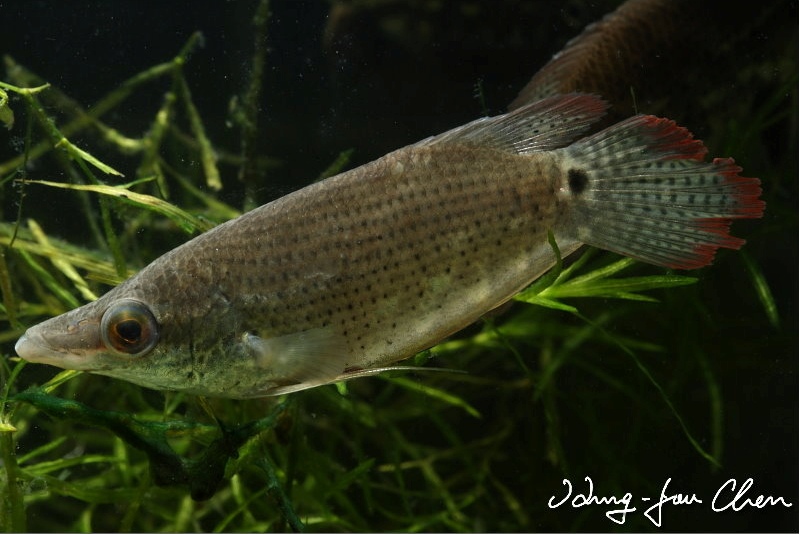
Ctenops nobilisFrail Gourami
McClelland, 1845
Max length100mm SL3.9in SLTank120 × 30cm48 × 12inTemp15–25°C59–77°FpH5.0–7.5This species is also referred to by the alternative vernacular name of 'noble gourami' and is currently the only recognised member of the genus Ctenops. It is usually regarded as being very difficult to keep whereas in reality it is quite adaptable once acclimatised but appears to react poorly to the export and shipping process meaning it is often seen on sale in poor condition and susceptible to or already infested with secondary health issues such as Oödinium, to which it appear...
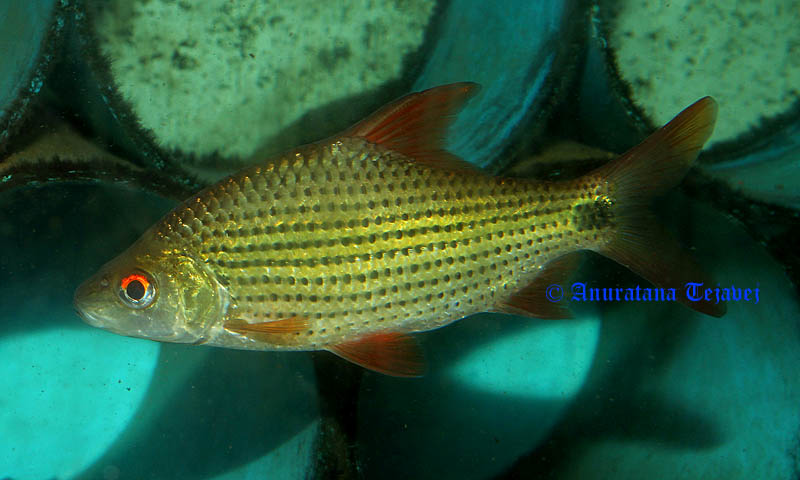
Cyclocheilichthys apogonBeardless Barb
Valenciennes, 1842
Max length180mm SL7in SLTank180 × 45cm72 × 18inTemp20–27°C68–81°FpH5.5–8.0In the aquarium trade this species may also be seen on sale as 'skinhead barb'. As with others in the genus little has been written regarding its captive care but it makes a peaceful and unusual addition to larger aquaria. The best way of obtaining it may be to keep an eye on shipments of wild fishes from Indochina and the Greater Sunda Islands as it's rarely imported in large numbers and most often arrives as bycatch.
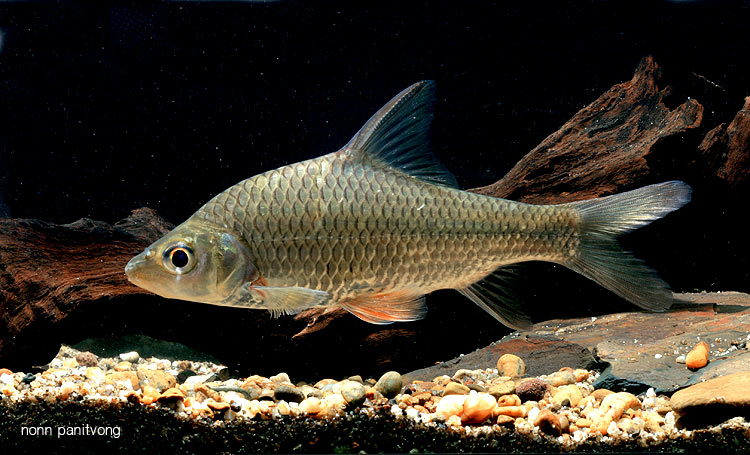
Cyclocheilichthys lagleri
Sontirat, 1985
Max length200mm SL8in SLTank180 × 60cm72 × 24inTemp20–26°C68–79°FpH6.0–8.0As with others in the genus little has been written regarding captive care of this species, but it makes a peaceful and unusual addition to larger aquaria. The best way of obtaining it may be to keep an eye on shipments of wild fishes from Indochina. It can be distinguished from congeners by possessing 20 circumpeduncular scales and lacking barbels entirely.
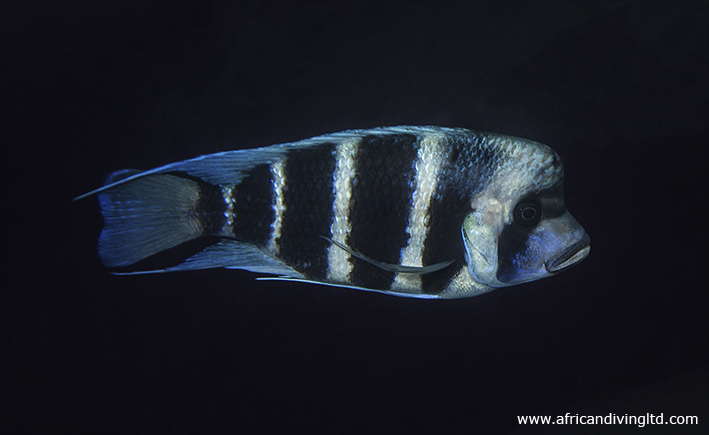
Cyphotilapia gibberosa
Takahashi & Nakaya, 2003
Max length255mm SL10in SLTank240 × 60cm96 × 24inTemp23–27°C73–81°FpH8.0–9.0Prior to the description of C. gibberosa in 2003 the genus Cyphotilapia was considered monotypic for almost a century. Members are separated from other cichlid taxa inhabiting Lake Tanganyika by possession of a hump on the forehead and broad vertical bands on the body, although the latter tend not to be visible in large males.
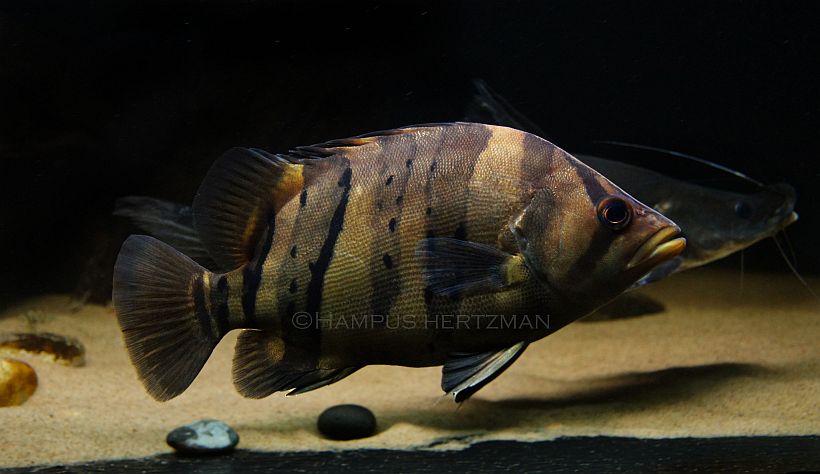
Datnioides microlepisIndonesian Tiger Perch
Bleeker, 1854
Max length500mm SL20in SLTanknot recordedTemp20–28°C68–82°FpH5.5–7.5In aquarium literature this species is also referred to as 'fine scaled tiger fish', 'Indonesian tiger fish', 'Sumatran tiger fish', 'Indo datnoid', and 'Indo dat'. The common name of 'tiger fish' is also used in reference to the African alestid genus Hydrocynus, and the more appropriate 'tiger perch' was suggested by Roberts and Kottelat (1994).
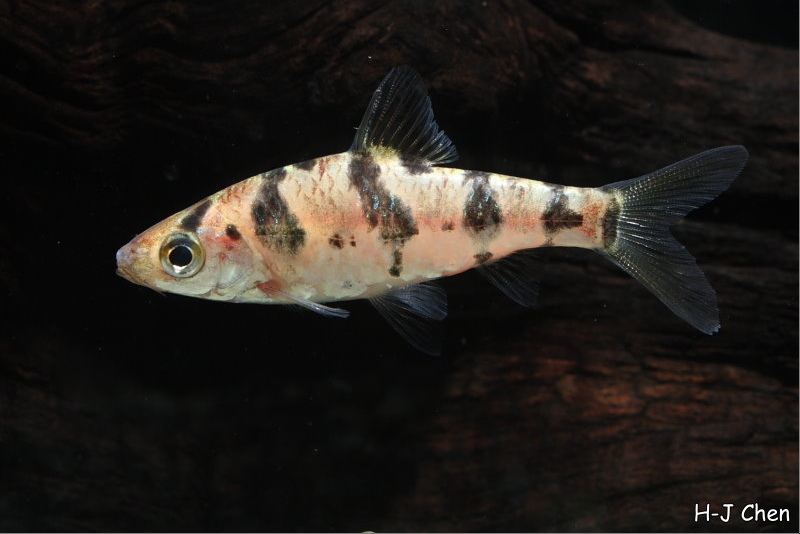
Desmopuntius foerschi
Kottelat, 1982
Max length55mm SL2.2in SLTank80 × 30cm31 × 12inTemp20–28°C68–82°FpH5.0–7.0D. foerschi is sometimes traded as 'boomerang barb' or 'Foersch's fire barb' and is included in a group of closely-related, similar-looking fishes which were moved into the new genus Desmopuntius by Kottelat (2013). It can be told apart from other vertically-striped congeners by possession of additional dark blotches between the second, third and fourth vertical bars and a further marking at the posterior base o...
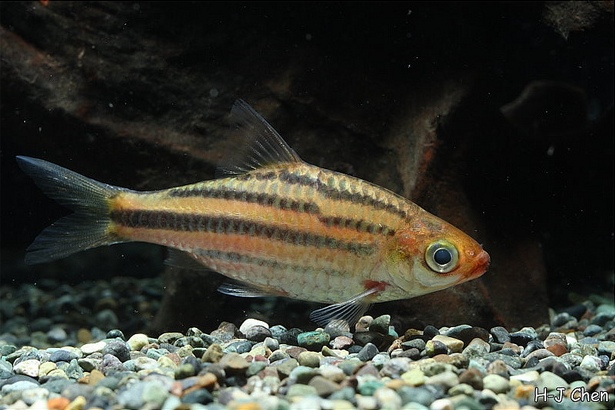
Desmopuntius trifasciatus
Kottelat, 1996
Max length100mm SL3.9in SLTank120 × 45cm48 × 18inTemp20–25°C68–77°FpH5.0–7.0This species is one of three similar-looking members of the genus alongside D. johorensis and D. trifasciatus, while it may also be confused with Striuntius lineatus. Juveniles of all except S. lineatus exhibit a vertically-barred rather than laterally-striped colour pattern, the metamorphosis to adult patterning beginning at around 20 mm SL and normally being complete by 30-40 mm.
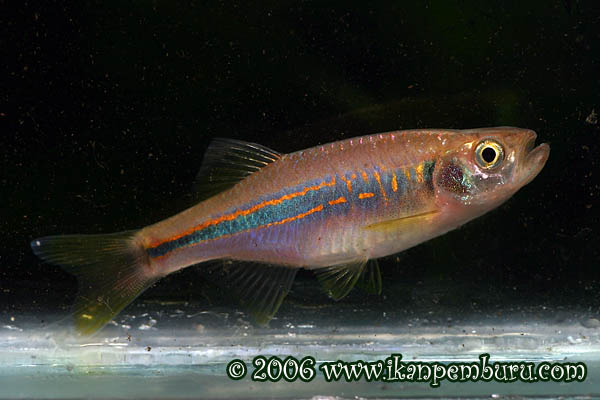
Devario laoensis
Pellegrin & Fang, 1940
Max length65mm SL2.6in SLTank90 × 30cm36 × 12inTemp23–26°C73–79°FpH6.0–7.5It can be further distinguished from other species in the genus by colour pattern consisting of a dark, horizontal P stripe originating around mid-body, where it's relatively faint, this becoming thicker and darker in the posterior portion of the body and terminating at the base of the caudal-fin. Among congeners it's most similar to D. chrysotaeniatus but that species lacks the infraorbital process, has three rows of pharyngeal teeth and the P stripe extends to the end of the caudal-fin rays.
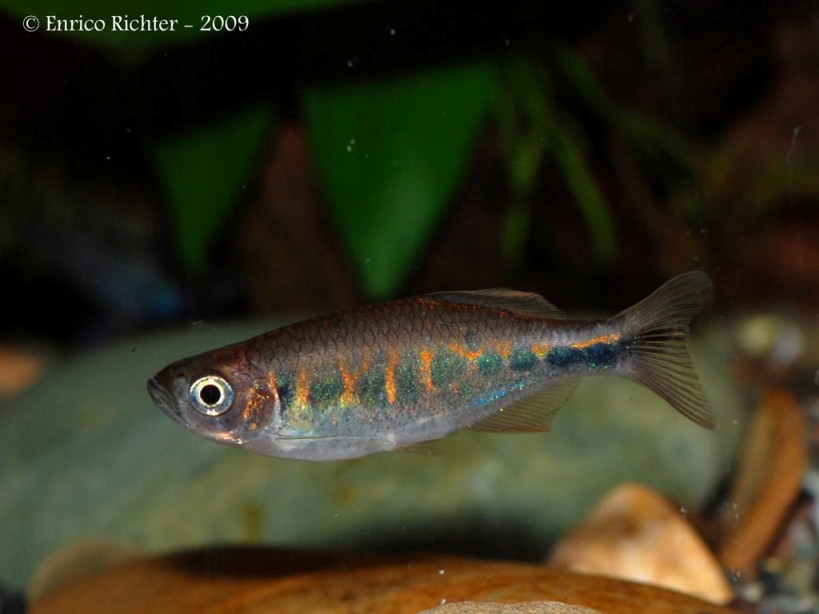
Devario pathiranaBarred 'Danio'
Kottelat & Pethiyagoda, 1990
Max length80mm SL3.1in SLTank120 × 45cm48 × 18inTemp23–26°C73–79°FpH6.0–7.5This species is diagnosable from other members of the genus primarily by its unique colour pattern which consists of 7-11 dark blue, irregularly-shaped, parallel vertical bars on the anterior portion of each flank plus a short horizontal stripe on the caudal peduncle which extends into the central caudal fin rays. Phylogenetic analyses suggest it's most closely-related to Indian Devario spp. plus D. xyrops from the western slope of the Rakhine Yoma mountains in Myanmar (Fang et al., 2009; Fang and Kullander, 2009).
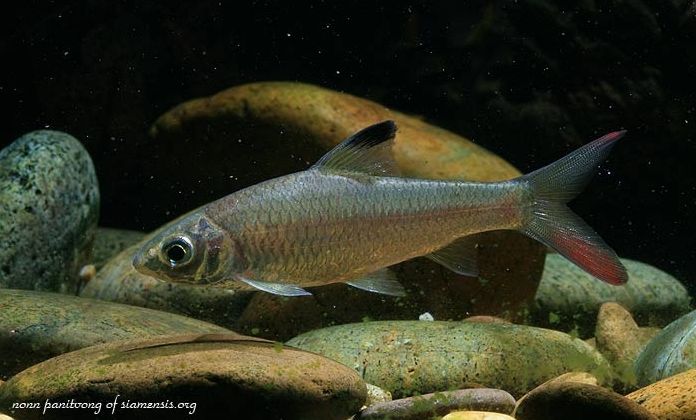
Discherodontus ashmeadi
Fowler, 1937
Max length135mm SL5in SLTank120 × 45cm48 × 18inTemp23–26°C73–79°FpH6.0–7.5D. ashmeadi is the type species and exhibits differences in dental morphology compared with other members of the genus. It can also be told apart from D. halei by the red/pink (vs. orange) colouration in the dorsal and anal fins and serrated (vs. smooth) dorsal spine. D. schroederi is also similar-looking but as it matures the prominent dark dorsal blotch fades to a thin dark distal band whereas in D. ashmeadi it is retained throughout life.
Distichodus affinisSilver Distichodus
authority not recorded
Max length200mm SL8in SLTank120 × 30cm48 × 12inTemp23–27°C73–81°FpH6.0–8.0This species has become more common in the trade in recent years, and makes an interesting addition to larger communities. It develops bright red fins as it matures. Some specimens develop a pink sheen on the underside. These variations may indicate different species, as there are several in the genus that superficially resemble D. affinis....
Dormitator lebretonisClay Goby
authority not recorded
Max length120mm SL5in SLTanknot recordedTemp22–26°C72–79°FpH7.0–8.5Not often seen for sale, but if you can find it, it makes a peaceful addition to the brackish or hardwater community of medium-sized fish. It was previously considered a member of the now defunct genus Batanga. The fish in our picture is a young specimen. Adults develop a pleasing pattern of reds and blues and are most attractive....
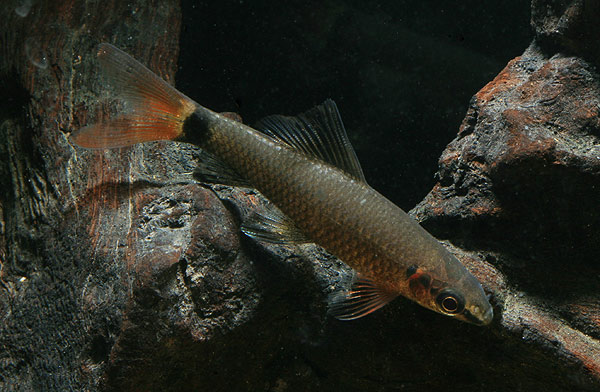
Epalzeorhynchos munense
Smith, 1934
Max length120mm SL5in SLTank120 × 45cm48 × 18inTemp20–26°C68–79°FpH6.5–7.5This species does not appear to be in the aquarium hobby at time of writing though it may have been in the past, when exports of wild Epalzeorhynchos spp. still took place. Most members of the genus were formerly regarded as Labeo spp. and are thus referred to as such in older literature. According to Rainboth (1996) they're characterised by absence of a dorsal spine, possession of 10-13 branched dorsal fin rays, a thin membrane...
Erethistes maesotensis
authority not recorded
Max length40mm SL1.6in SLTank45 × 30cm18 × 12inTemp20–24°C68–75°FpH6.0–7.0This species is now considered a member of the Hara genus by many experts, but as things stand it is still officially included in Erethistes. It is, in all likelihood, a Hara, as Erethistes is characterised by divergent denticles on the pectoral fins, whereas Hara possess outwardly pointing denticles. E. maesotensis has these outwardly pointing denticles. It's quite rare in the trade, but makes an interesting addition to an Asian stream community tank if you can get hold of some....
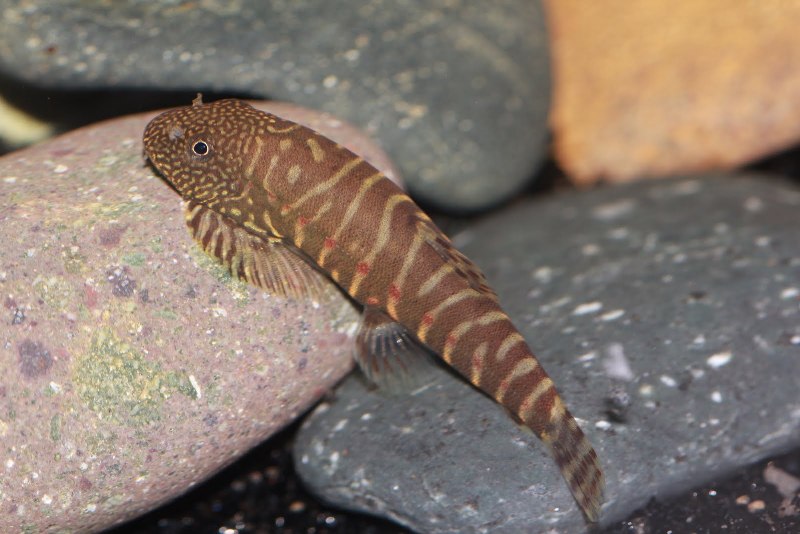
Erromyzon sp. 'ER02'
authority not recorded
Max length50mm SL2.0in SLTank60 × 30cm24 × 12inTemp18–24°C64–75°FpH6.5–8.0This fish remains in need of identification, and we've chosen to list unidentified members of the genus using an 'ER' numbering system in the absence of definitive information. It's quite easy to distinguish from congeners since it's the only species known to possess a colour pattern comprising a dark base colour and series of thin, paler vertical bars on the body and similarly-coloured spots on the head.