Results for “várzea”
Type a name: scientific, common, or one a species used to go by. Or narrow the catalogue with the filters.
Filters
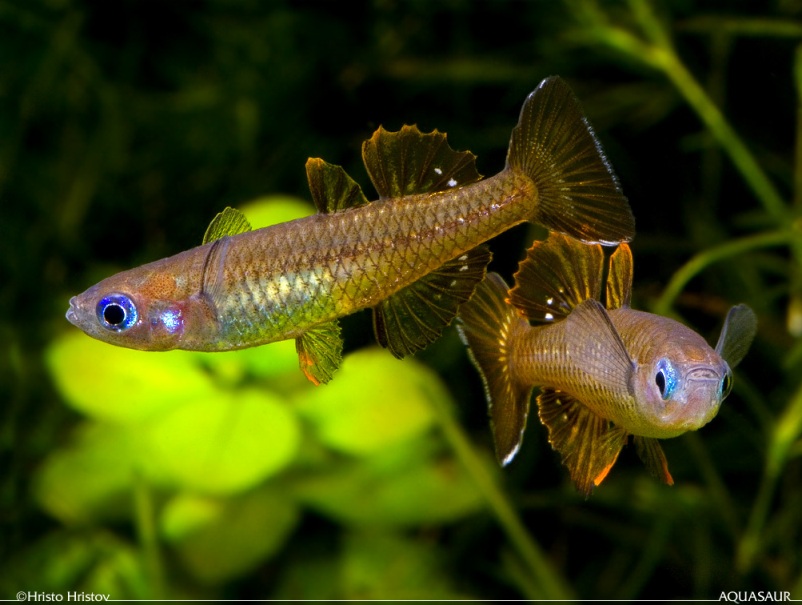
Pseudomugil tenellusDelicate Blue-eye
Taylor, 1964
Max length55mm SL2.2in SLTank75 × 30cm30 × 12inTemp25–32°C77–90°FpH5.5–7.5Euryhaline and mostly inhabits coastal floodplains where it's found in both fresh and brackish habitats, including tidal estuaries and salt marshes. It's particularly common in swamps, billabongs, and slow-moving streams where aquatic vegetation grows densely, but some populations have colonised upper sections of freshwater streams. Larger individuals may also move into main river channels. Tappin (2010) gives the following ranges of parameters based on those taken from various localities: temperature 27 - 38 °C, pH 5...
Pseudotropheus estheraeRed Zebra
authority not recorded
Max length135mm SL5in SLTank120 × 38cm48 × 15inTemp24–28°C75–82°FpH7.6–8.8A deservedly popular mbuna, there is ongoing debate as to the true genus of this species, it having been variously grouped in both Maylandia and Metriaclima, as well as the currently valid Pseudotropheus. It is unlikely it will remain in Pseudotropheus. To add to the confusion, it was only described as a distinct species in 1995, having previously been regarded as a morph of Maylandia zebra. Several colour forms are available and these should not be kept together under any circumstances as they ...
Pseudotropheus fainzilberiGoldbreast Zebra
authority not recorded
Max length175mm SL7in SLTank120 × 45cm48 × 18inTemp24–28°C75–82°FpH7.6–8.8There is ongoing debate as to the true genus of this species, it having been variously grouped in both Maylandia and Metriaclima as well as the currently valid Pseudotropheus. It is unlikely it will remain in Pseudotropheus, however. One interesting feature is the presence of additional rows of teeth when compared to others in the genus. Also, the rows of bicuspid teeth, used for rasping algae from rock surfaces, extend further back into the mouth than in other Pseudotropheus. P. fainzilberi...
Pseudotropheus lombardoiKennyi
authority not recorded
Max length150mm SL6in SLTank120 × 45cm48 × 18inTemp24–28°C75–82°FpH7.6–8.8A popular mbuna that has been in the hobby for many years. There is ongoing debate as to the true genus of this species, it having been variously grouped in both Maylandia and Metriaclima, as well as the currently valid Pseudotropheus. It is unlikely it will remain in Pseudotropheus, however, and many sources already consider it a member of Metriaclima. As with other members of the genus, it possesses flat, bicuspid teeth which are designed for scraping algae and other organisms from the surface...
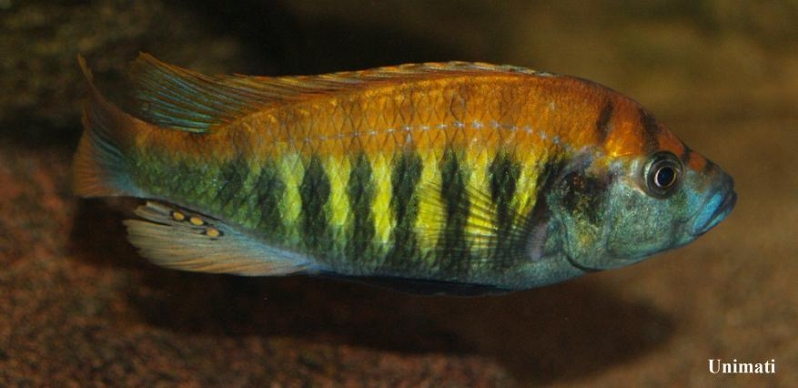
Pundamilia nyererei
Witte-Maas & Witte, 1985
Max length80mm SL3.1in SLTank120 × 45cm48 × 18inTemp23–27°C73–81°FpH7.0–8.5Endemic to Lake Victoria which has a shoreline divided between Kenya, Uganda and Tanzania, although P. nyererei has been recorded only in the southern part of the lake belonging entirely to Tanzania. Type locality is 'Mwanza Gulf, Tanzania, Lake Vic...
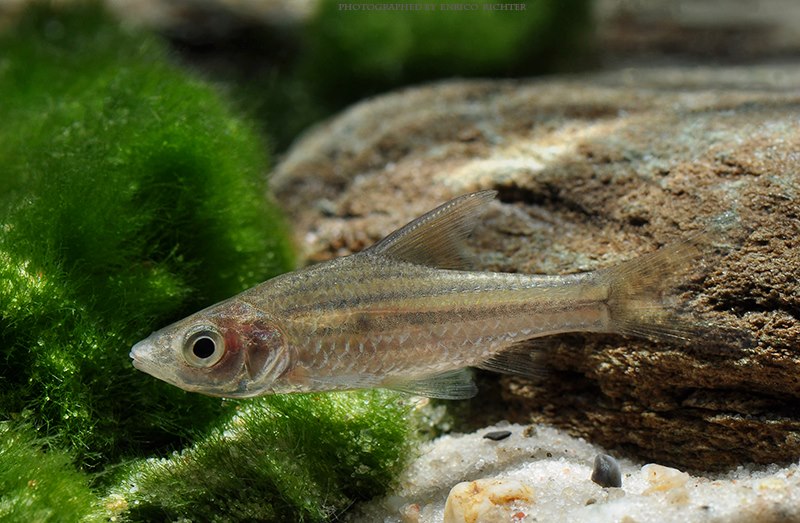
'Puntius' lineatusLined Barb
Duncker, 1904
Max length55mm SL2.2in SLTank80 × 30cm31 × 12inTemp20–26°C68–79°FpH4.0–7.0One of four similar-looking, laterally-striped 'Puntius' spp. native to Southeastern Asia alongside 'P.' gemellus, 'P.' johorensis, and 'P.' trifasciatus. Of these 'P.' lineatus is most often confused with 'P.' johorensis by virtue of the fact that these two seem most common in the aquarium trade. Telling them apart is relatively simple since 'P.' lineatus has 0 - 1 pairs of barbels (vs. 2 pairs in the other three species), juv...
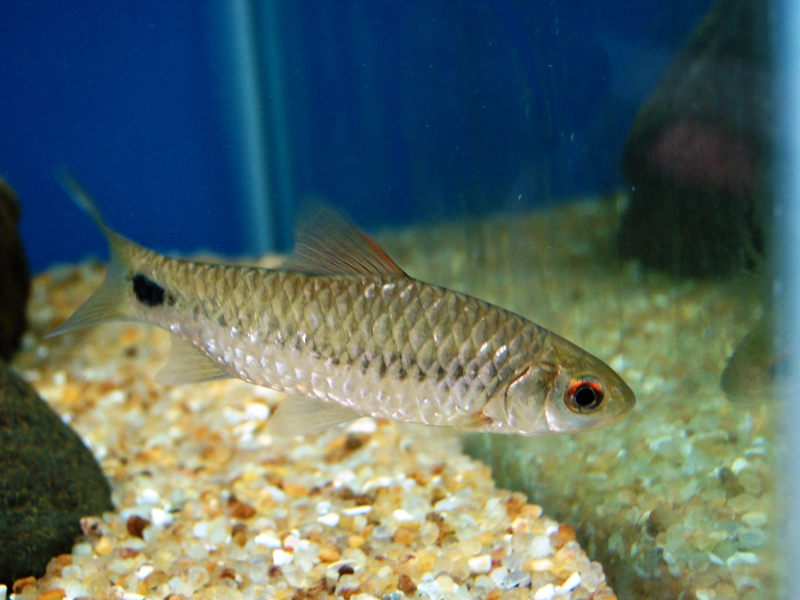
Puntius mahecola
Valenciennes, 1844
Max length75mm SL3.0in SLTank90 × 30cm36 × 12inTemp18–24°C64–75°FpH6.0–7.5This species has a chaotic taxonomic history with certain issues still to be resolved. While the name P. mahecola was misapplied to members of the genus Dawkinsia for over a century the fish itself has been widely misidentified as the congener P. amphibius (Valenciennes 1842). Its identity was partially resolved by Pethiyagoda and Kottelat (2005b) who demonstrated that though valid P. mahecola is not a Dawkinsia spp. but rather a smaller, relatively plain species with a single dark blotc...
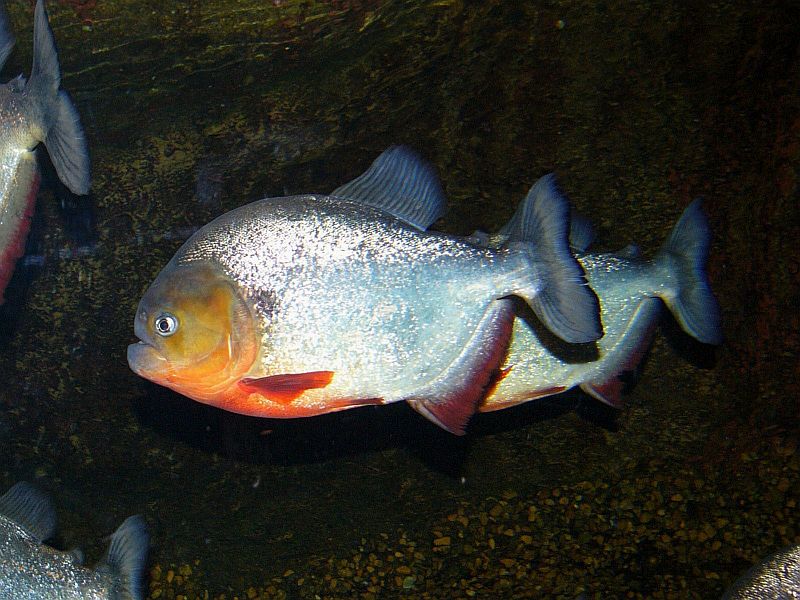
Pygocentrus caribaBlack Spot Piranha
Humboldt, 1821
Max length350mm SL14in SLTank240 × 90cm96 × 36inTemp20–28°C68–82°FpH4.0–7.0Has been recorded from major river channels, smaller tributaries, and floodplain lakes, many of which comprise acidic, mineral-poor blackwater environments with brownish, tannin-stained water, although it has been observed to inhabit clear waters as well. Many of its habitats lie within the Venezuelan and Colombian llanos, a vast, highly biodiverse system of tropical savannah grasslands, seasonally-flooded plains and forests covering an area measuring almost 600,000 square kilo...
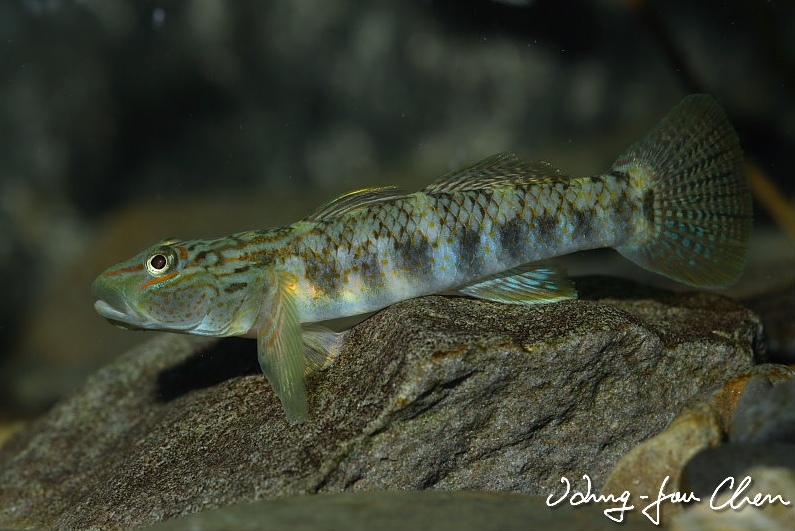
Rhinogobius lanyuensis
Chen, Miller & Fang, 1998
Max length67mm SL2.6in SLTank80 × 30cm31 × 12inTemp18–25°C64–77°FpH6.0–8.0Presumably inhabits small rivers, tributaries and streams with substrates of gravel, rocks, boulders, and exposed bedrock which undergo seasonal variations in water flow rate, depth and turbidity. Lanyu Island is volcanic, measures just 45 km² and has no major rivers or large settlements with a permanent human population of around 4000, although there is a large nuclear waste storage facility at its southern end.
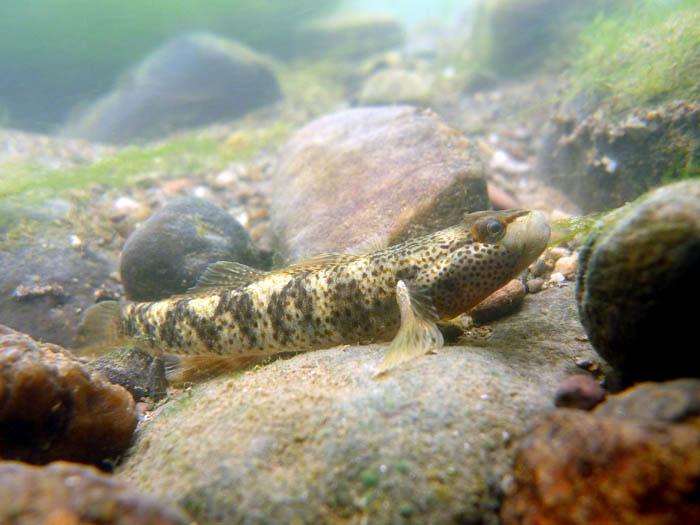
Rhinogobius mekongianus
Pellegrin & Fang, 1940
Max length50mm SL2.0in SLTank60 × 30cm24 × 12inTemp18–26°C64–79°FpH6.0–7.5Known from various parts of the middle and upper Mekong river basins with record existing from the Nam Tha, Nam Ou, Nam Khan, Nam Lik, Nam Ngum and Nam Mang tributary systems in Laos, the Nam Noeua (a tributary of Nam Ou) in Vietnam, and the Mae Nam Kok in Thailand. Occurrences in the Chao Phraya drainage in central Thailand most likely refer to the congener R. chiengmaiensis.
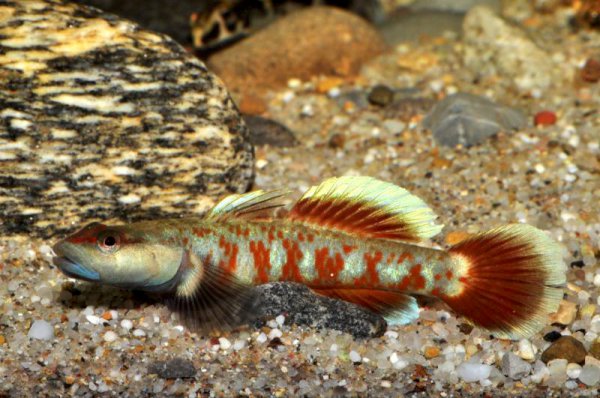
Rhinogobius zhoui
Li & Zhong, 2009
Max length36mm SL1.4in SLTank60 × 30cm24 × 12inTemp19–24°C66–75°FpH7.0–7.8This species has been in the aquarium trade since 2010 and is sold under several names including 'Chinese vermilion goby', 'Zhou's scarlet goby', 'scarlet goby', and 'flame goby'. It can be told apart from congeners by the following combination of characters: second dorsal-fin rays I, 8-9; anal-fin rays I, 7-8; pectoral-fin rays 16-18; longitudinal scale series 29-31; predorsal scales 10-12; vertebral count 10+16=26.
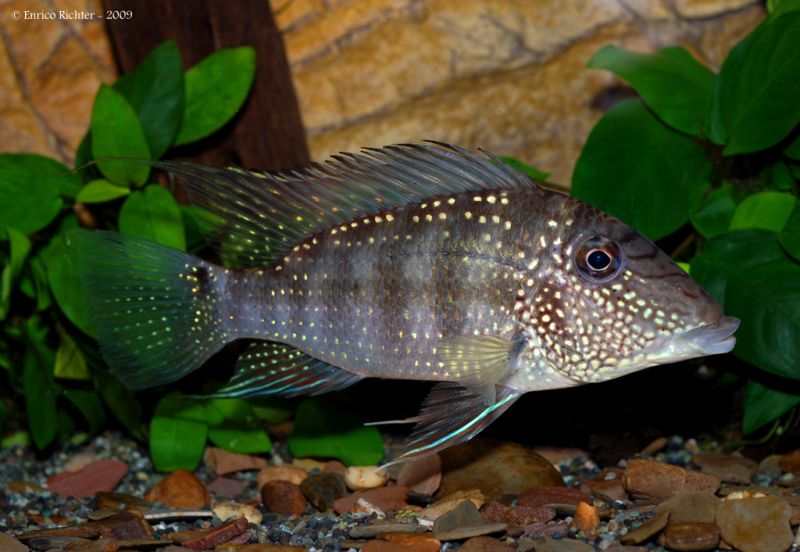
Satanoperca leucostictaWhitespot Eartheater
Müller & Troschel, 1849
Max length150mm SL6in SLTank180 × 60cm72 × 24inTemp20–28°C68–82°FpH5.5–7.5S. leucosticta is frequently available in the ornamental trade and farmed for the purpose in several countries. It is often confused with its congener S. jurupari in aquarium literature and on websites, but is easily recognised by presence (vs. absence) of prominent white spots or vermiform markings on the sides of the head. Although the presence of white spots on the head does not distinguish it from all known Satanoperca populations (see below), it can...
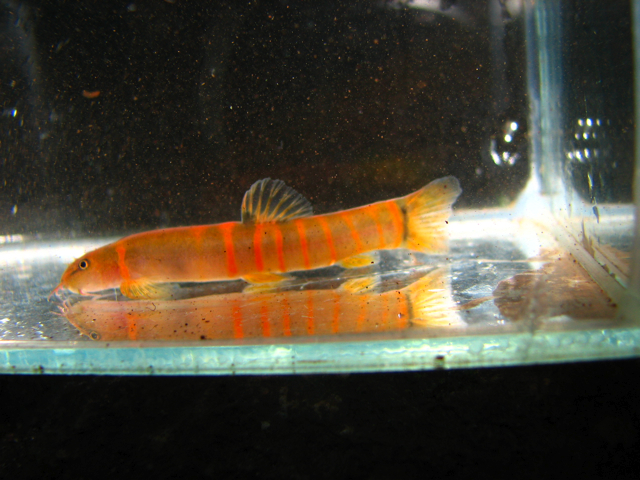
Schistura aurantiaca
Plongsesthee, Page & Beamish, 2011
Max length40mm SL1.6in SLTank75 × 30cm30 × 12inTemp20–26°C68–79°FpH6.5–8.0During collections of the type series stream width was found to vary seasonally but was never wider than 9.1 metres. Water depth was 10-40 cm, flow rate 20-70 cm/s−1, and substrates comprised small to medium-sized rocks. Water temperature was seasonally variable but always within the range 20-26°C/68-78.8°F, pH was 6.5-7.9, oxygen 7.4-8.5 mg/l−1, ammonia, nitrate and total iron were 0.01, < 0.03 and < 0.5 mg/l−1, respectively, and alkalinity was aro...
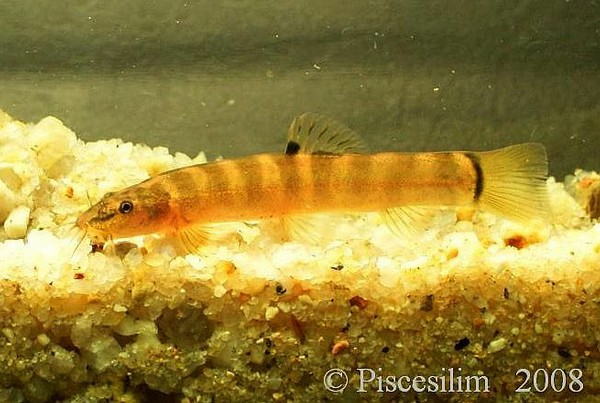
Schistura robertsi
Kottelat, 1990
Max length56mm SL2.2in SLTank80 × 30cm31 × 12inTemp18–30°C64–86°FpH6.0–8.0Should not prove difficult to maintain under the correct conditions. We strongly recommend keeping it in a tank designed to resemble a flowing stream or river with a substrate of variably-sized rocks, sand, fine gravel, and some water-worn boulders. This can be further furnished wit...
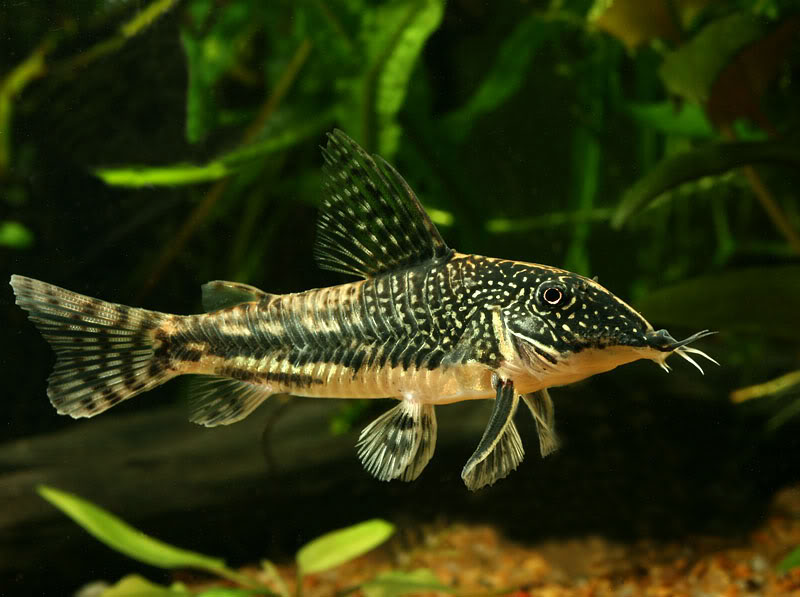
Scleromystax barbatusBanded 'Cory'
Quoy & Gaimard, 1824
Max length100mm SL3.9in SLTank120 × 45cm48 × 18inTemp16–24°C61–75°FpH5.5–7.5Scleromystax spp. are foraging omnivores, and most will accept sinking dried foods as well as small live and frozen varieties such as chironomid larvae (bloodworm), Tubifex, etc. Feeding a varied diet will ensure the fish are in optimum condition. Under no circumstances should they be expected to survive on 'left-overs' from other inhabitants of the aquarium or relied on to 'clean' the aquarium.
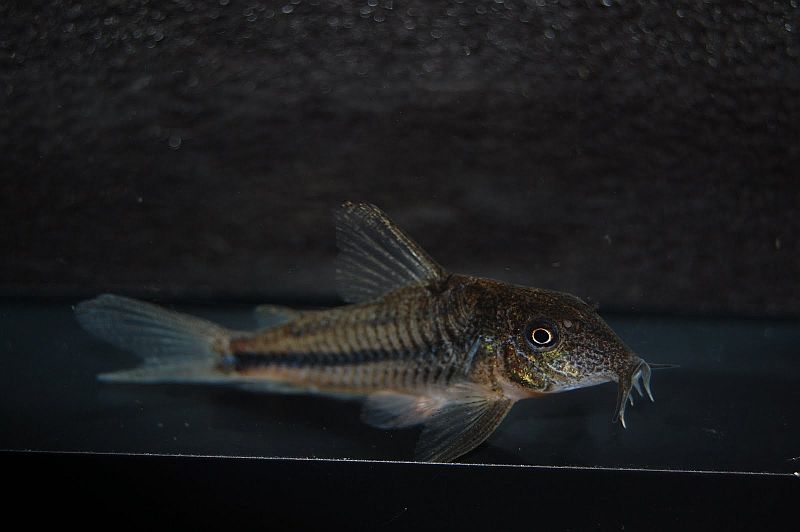
Scleromystax prionotos
Nijssen & Isbrücker, 1980
Max length65mm SL2.6in SLTank120 × 30cm48 × 12inTemp16–24°C61–75°FpHnot recordedScleromystax spp. are foraging omnivores, and most will accept sinking dried foods as well as small live and frozen varieties such as chironomid larvae (bloodworm), Tubifex, etc. Feeding a varied diet will ensure the fish are in optimum condition. Under no circumstances should they be expected to survive on 'left-overs' from other inhabitants of the aquarium or relied on to 'clean' the aquarium.
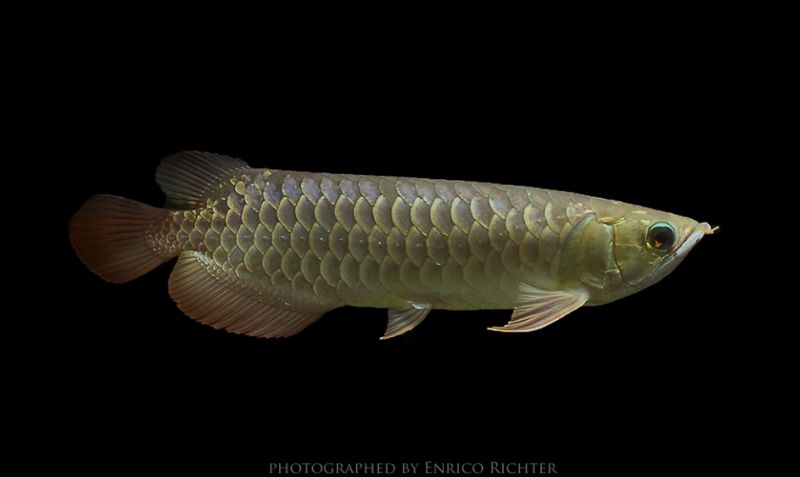
Scleropages formosusAsian Arowana
Müller & Schlegel, 1840
Max length900mm SL35in SLTanknot recordedTemp22–28°C72–82°FpH5.0–8.0This species is distinguished from its Australian congeners S. jardinii and S. leichardti by possessing a lower number of lateral line scales (21-26 vs 32-36). It occurs naturally in a number of colour forms of which three were elevated to distinct species status in 2003, but the current majority view is that all represent S. formosus pending a detailed review. Kottelat (2013) mentions that the red form may...
Serrasalmus geryiGéry's Pirambeba
authority not recorded
Max length181mm SL7in SLTank120 × 60cm48 × 24inTemp22–29°C72–84°FpHnot recordedS. geryi is sometimes sold as the "violet-line piranha" in reference to the unusal purple stripe that runs from the base of the lower jaw over the top of the body. It makes a stunning aquarium fish as it also possesses highly reflective scales, deep orange/red eyes and a compressed, high-bodied shape. Far from widespread in nature or the hobby, it tends to be pricey and highly sought-after when available. There are currently 24 described species of Serrasalmus, many of which look s...
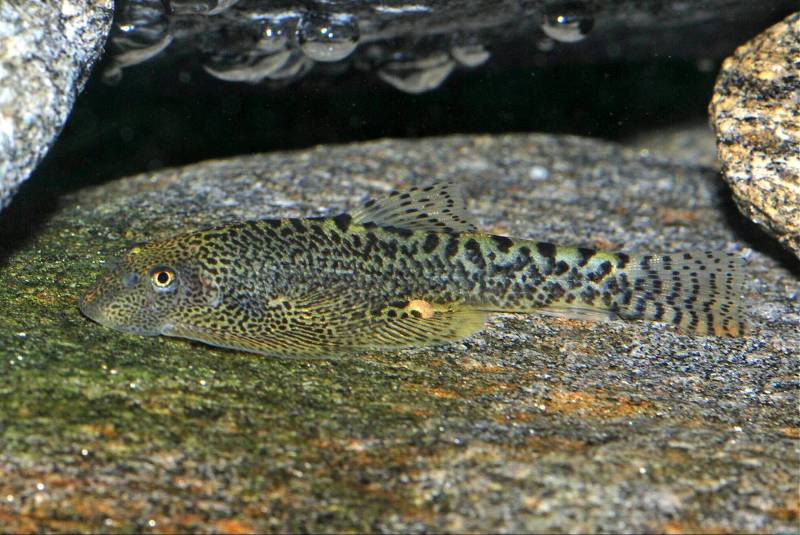
Sewellia sp. 'SEW04'
authority not recorded
Max length60mm SL2.4in SLTank75 × 30cm30 × 12inTemp20–24°C68–75°FpH6.0–7.5This fish has thus far only been imported among shipments of S. sp. 'SEW02' and S. sp. 'SEW03'. It doesn't appear to correspond to any known member of the genus and may be undescribed. Prior to the mid-1990s S. lineolata was the only species in the genus but an upturn in surveys of fresh water fauna in Vietnam and Laos has resulted in the discovery of various new taxa, several of which remain undescribed.
Silurus glanisWels catfish
authority not recorded
Max length5000mm SL197in SLTanknot recordedTemp3.9–20°C39–68°FpHnot recordedJuvenile specimens are occasionally available in the aquarium trade but this species is clearly not a viable subject for the vast majority of private aquarists. While it's considered a sport fish in some countries (France, Italy, Spain, UK) it's flesh and eggs are considered a delicacy in others (Hungary, Poland, Slovakia, Lithuania) and its skin is also used in the manufacture of leather and glue. The family Siluridae comprises those catfsh species commonly referred to as freshwate...