Results for “bar”
Type a name: scientific, common, or one a species used to go by. Or narrow the catalogue with the filters.
Filters
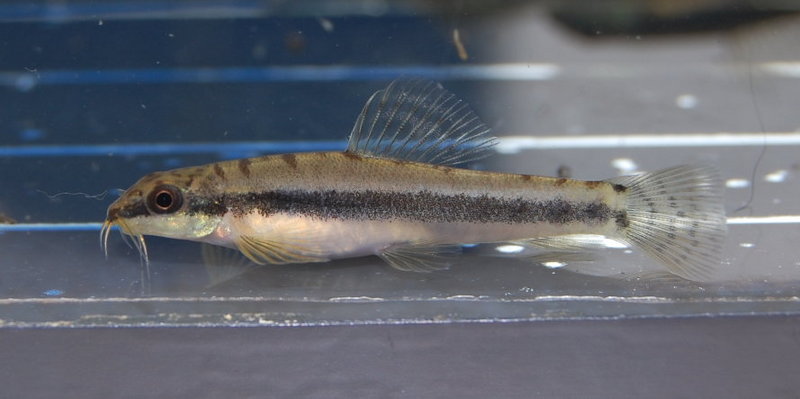
Paracanthocobitis zonalternans
Blyth, 1860
Max length78mm SL3.1in SLTank60 × 30cm24 × 12inTemp20–25°C68–77°FpH6.0–7.5According to Kottelat (1990) the chief distinguishing characters for the genus are: possession of 9-18½ branched dorsal-fin rays; colour pattern without black basal caudal bar, but with an ocellus at upper base of caudal-fin; upper lip with or without several rows of papillae; lower lip with a broad median interruption and a widened, papillated pad on each side.
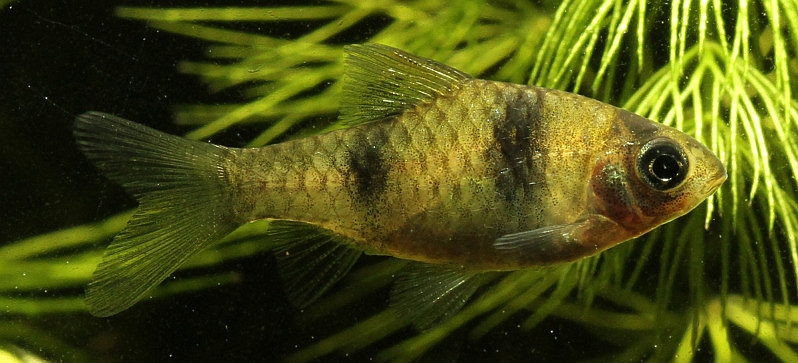
Pethia sp. 'Myanmar'
authority not recorded
Max length55mm SL2.2in SLTank75 × 30cm30 × 12inTemp18–24°C64–75°FpH6.0–7.5This fish has been widely misidentified and sold as the congener P. tiantian and its vernacular name of 'Burmese bumble-bee barb' but actually appears to be an undescribed member of the genus Pethia. This assemblage was erected by Pethiy...
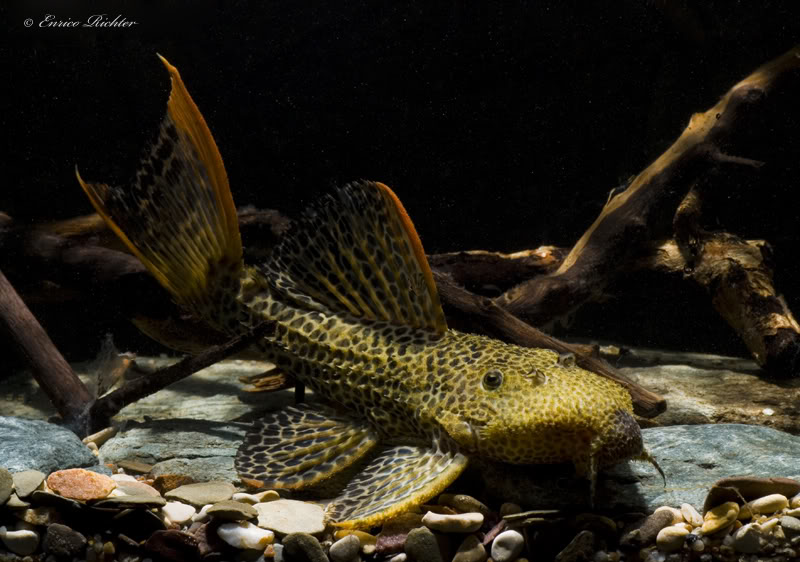
Pseudacanthicus cf. leopardusL114
authority not recorded
Max length250mm SL10in SLTank180 × 60cm72 × 24inTemp24–30°C75–86°FpH5.5–7.5Mostly collected in the in the rio Negro basin, Amazonas state, Brazil, and in particular the rio Demini, a northern tributary flowing into the central Negro in the municipality of Barcelos. P. leopardus was described from the Rupununi River in Guyana and the identity of this fish thus remains unconfirmed. This 'species' is also traded simply as 'leo...
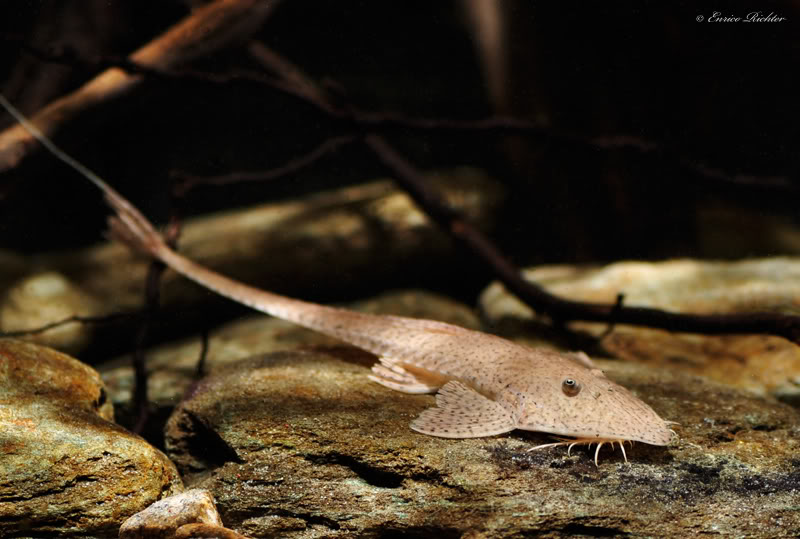
Pseudohemiodon laticepsGiant Whiptail Catfish
Regan, 1904
Max length300mm SL12in SLTank180 × 60cm72 × 24inTemp18–24°C64–75°FpH6.0–7.5A paternal 'lip brooder' which has been bred in aquaria. Post-spawning the male carries the eggs attached to his labial barbels for a period of 12-14 days after which the fry hatch with a large yolk sac attached, this being absorbed over the next 48 hours or so. During incubation the behaviour of the male i...
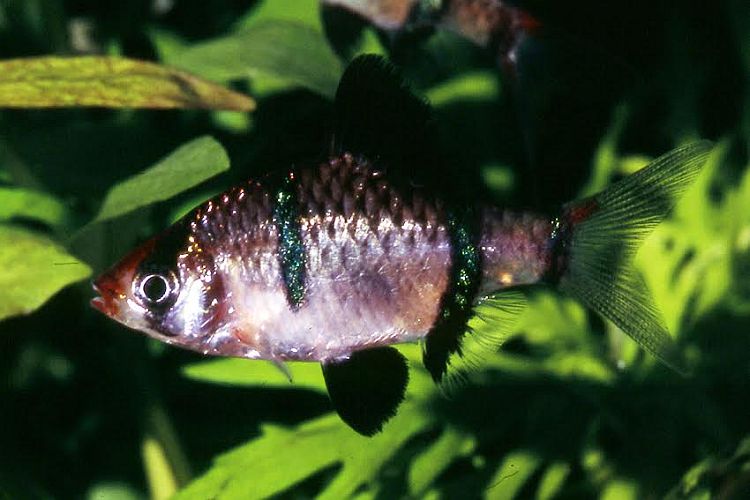
Puntigrus pulcher
Rendahl, 1922
Max length60mm SL2.4in SLTank80 × 30cm31 × 12inTemp20–26°C68–79°FpH5.0–7.5This species occasionally appears in the aquarium hobby, but the trade is largely reliant on commercially-produced 'tiger barbs' of questionable origin. It was considered a synonym of P. anchisporus for a number of decades following Alfred (1963), but revalidated by Kottelat and Tan (2011).
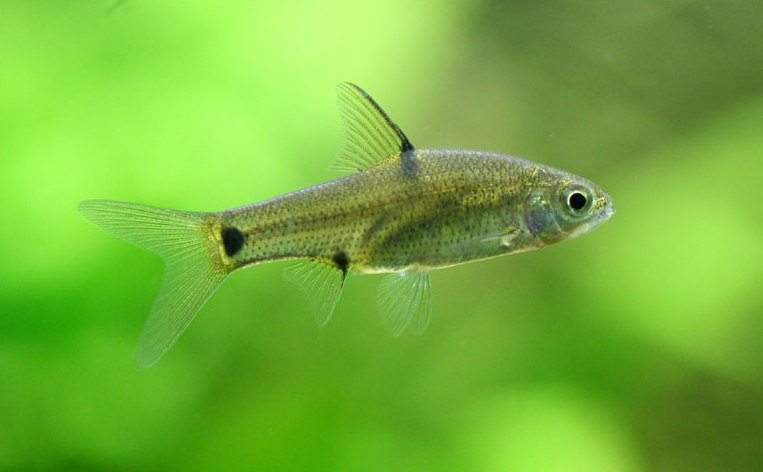
Puntius sharmai
Menon & Rema Devi, 1993
Max length40mm SL1.6in SLTank60 × 30cm24 × 12inTemp20–26°C68–79°FpH5.5–7.5This species is almost unheard of in the aquarium hobby outside of India but is maintained by some private collectors. It's distinguished from similar species by possessing a single pair of maxillary barbels, a relatively elongate body, and distinctive black spot above the anterior anal-fin base. The genus Puntius was for a number of years viewed as a polyphyletic catc...
Rasbora paucisqualis
authority not recorded
Max length40mm SL1.6in SLTank60 × 30cm24 × 12inTemp22.2–25.6°C72–78°FpHnot recordedRainboth's 'Fishes of the Cambodian Mekong' characterised members of Rasbora by possession of an unbranched, non-spiny firstray and seven soft dorsal rays, origin of thein the middle of the body, five branchedrays, a small mouth not extending below the eye and a lack of barbels. It's long been recognised as a polyphyletic lineage as noted by Kottelat (1999) amongst others, and in 2010 the results of a phylogenetic analysis by T. Y. Liao et al. suggested a number of changes in...
Rasbora rasboraGangetic Scissortail Rasbora
authority not recorded
Max length130mm SL5in SLTank120 × 45cm48 × 18inTemp20–25°C68–77°FpHnot recordedThis species is rarely seen in the trade and little has been written regarding its captive care. It's possible that several colour forms may exist depending on collection locality. Rainboth's 'Fishes of the Cambodian Mekong' characterised members of Rasbora by possession of an unbranched, non-spiny firstray and seven soft dorsal rays, origin of thein the middle of the body, five branchedrays, a small mouth not extending below the eye and a lack of barbels. It's long b...
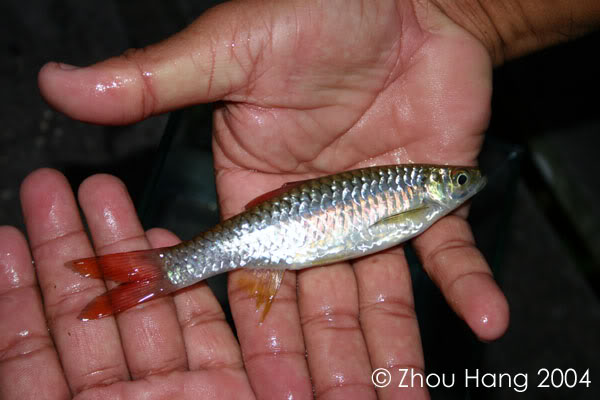
Rasbora tornieri
Ahl, 1922
Max length90mm SL3.5in SLTank120 × 30cm48 × 12inTemp20–26°C68–79°FpH4.0–7.0Type locality is 'Central Sumatra, Indonesia', with additional records existing from Cambodia (Mekong drainage), Peninsular Malaysia (Perak River), Sumatra (from the Siak River, Riau province to the Musi River, South Sumatra (Sumatera Selatan) province) and Borneo (south and westwards from the Belait river basin in Brunei Darussalam to the Sambas drainage in West Kalimantan (Kalimantan Barat) province, Indonesia and probably in Sarawak, Malaysia).
Rhynchodoras woodsiParrot Doradid
authority not recorded
Max length110mm SL4in SLTank90 × 38cm36 × 15inTemp24–26°C75–79°FpH5.8–7.0An interesting but rare species in the hobby, R. woodsi is nicknamed the "parrot doradid" due to its inquisitive feeding habits, and the curious bony growth extending from the upper mouthparts. The precise use of the bony growth isn't known, although one theory suggests it provides protection for the delicate barbels. Another hypothesis considers that it's some sort of feeding tool, possibly being used to lever aquatic invertebrates from crevices in submerged logs and roots....
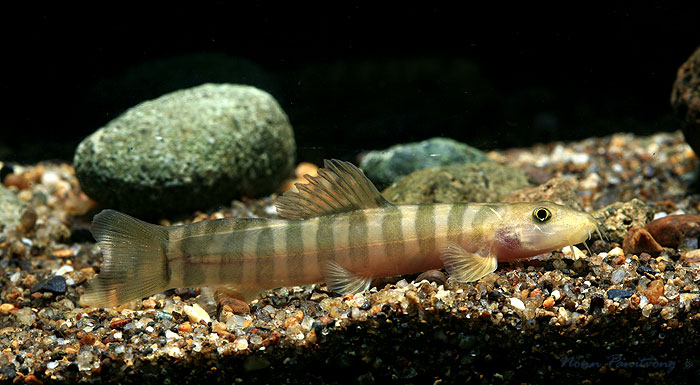
Schistura alticrista
Kottelat, 1990
Max length75mm SL3.0in SLTank90 × 30cm36 × 12inTemp21–26°C70–79°FpH6.0–7.5This species is very rare in the aquarium trade but available on occasion. It has 8-9 darkish body bars which usually split vertically as the fish mature, and like some conspecifics possesses a prominent dorsal adipose crest on the caudal peduncle. Schistura is the most species-rich genus among...
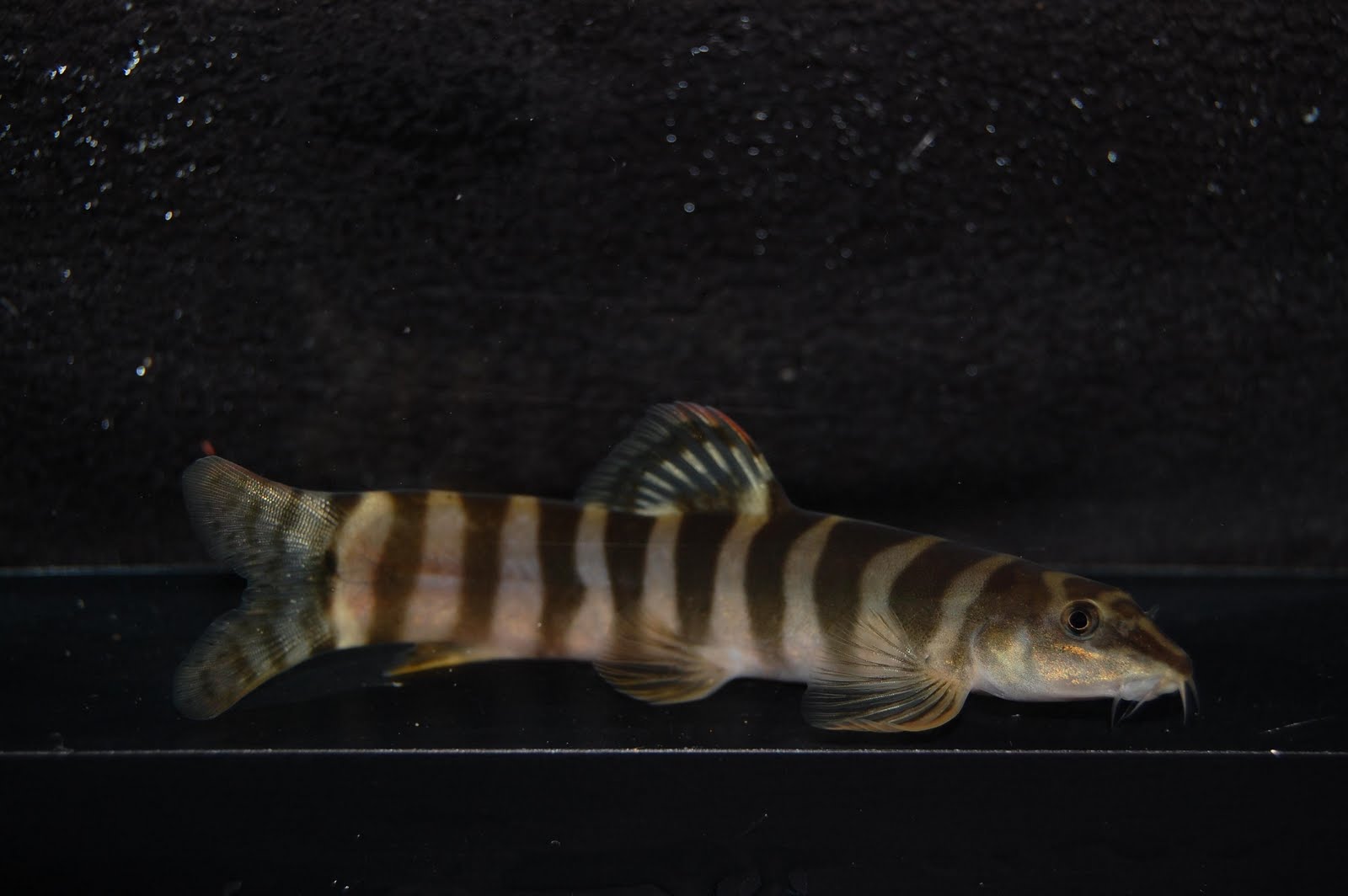
Schistura hypsiuraSuper Convict Loach
Bohlen, Ŝlechtová & Udomritthiruj, 2014
Max length73mm SL2.9in SLTank80 × 30cm31 × 12inTemp18–24°C64–75°FpH6.0–7.5It can be distinguished from congeners by the following combination of characters: caudal peduncle deep, ≥ the deepest part of the remainder of the body; no dorsal or ventral skin crests along the caudal peduncle; caudal-fin deeply forked, the outermost principal rays in the upper and lower lobes more than twice the length of the innermost: suborbital flap in males present; a well-developed suborbital groove in females; 6–8 very regular bars along the flank.
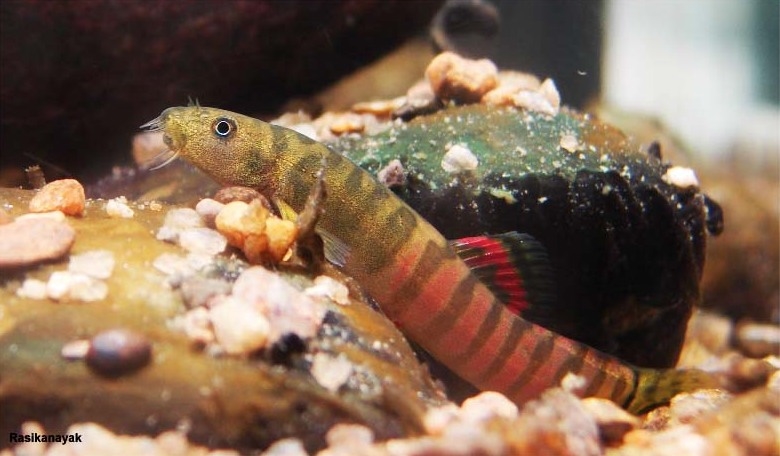
Schistura kodaguensis
Menon, 1987
Max length36mm SL1.4in SLTank60 × 30cm24 × 12inTemp20–25°C68–77°FpH6.0–7.5This species is not a well-known aquarium fish but is maintained by a number of Indian enthusiasts. It can be told apart from related species by the following combination of characters as per Sreekantha et al. (2006): pectoral-fin rays 10; absence of black spot at base of dorsal-fin; presence of rows of spots on caudal-fin; lateral line incomplete; caudal-fin slightly emarginate; 11-14 vertical bars on the body.
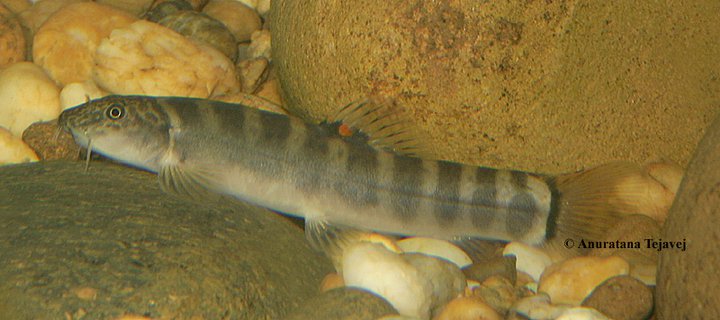
Schistura nicholsi
Smith, 1933
Max length74mm SL2.9in SLTank120 × 30cm48 × 12inTemp20–26°C68–79°FpH6.0–7.5This species is sometimes traded for aquaria but its name also appears to have been widely misapplied to other fishes. It can be identified via the following combination of characters: presence of 8-10 quite regular dark bars...
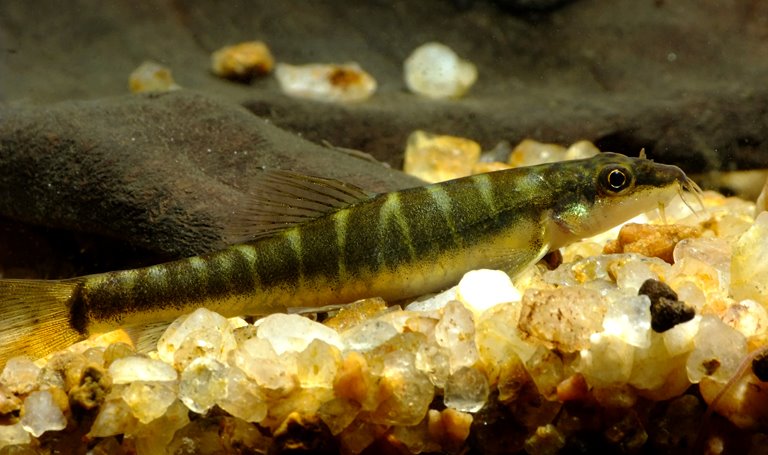
Schistura savonaHalf-banded Loach
Hamilton, 1822
Max length50mm SL2.0in SLTank60 × 30cm24 × 12inTemp15–24°C59–75°FpH6.5–8.5This species is seen in the aquarium trade on a relatively frequent basis and is sometimes sold as 'bicolor loach' in the United States. It can be distinguished from congeners by its unique colour pattern comprising 9-10 thin, yellowish bars on a dark background in the upper part of the body, and plain whitish colouration in the lower portion.
Scleropages jardiniiAustralian Arowana
authority not recorded
Max length900mm SL35in SLTank180 × 60cm72 × 24inTemp24–29°C75–84°FpH6.8–7.5Although S. jardinii superficially resembles its Asian cousins, it is not considered as desirable an aquarium inhabitant, nor is it classed as being at risk in nature. It can be easily distinguished from the asian species by its much smaller scale size, greater lateral scale count (32-35 as opposed to 21-25 in the asian aros) and duller patterning. It differs from its Australian relative S. leichardtii by its more sloping head, downward-pointing barbels and patterned gill covers. The base colour...
Scleropages leichardtiSpotted Australian Arowana
authority not recorded
Max length900mm SL35in SLTank180 × 60cm72 × 24inTempnot recordedpH6.8–7.5Although S. leichardtii superficially resembles its Asian cousins, it is not considered as desirable an aquarium inhabitant, nor is it classed as being at risk in nature. It can be easily distinguished from the asian species by its much smaller scale size, greater lateral scale count (32-35 as opposed to 21-25 in the asian aros) and duller patterning. It differs from its Australian relative S. jardinii by its spotted scales, forward-pointing barbels, lack of sloping head and unpatterned gill cov...
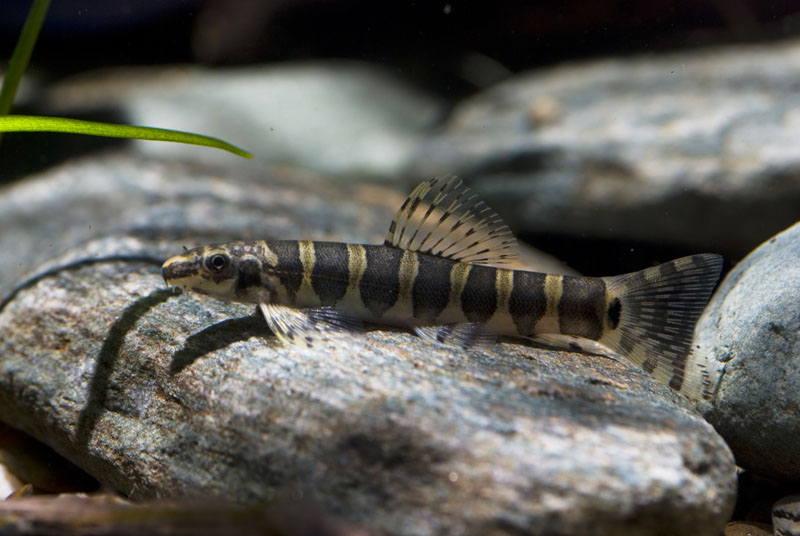
Serpenticobitis octozona
Roberts, 1997
Max length55mm SL2.2in SLTank75 × 30cm30 × 12inTemp23–26°C73–79°FpH6.0–7.0This species exhibits some interesting behaviour including a degree of social interaction plus the ability to cling to vertical or overhanging surfaces. It's sometimes sold under the name 'serpent loach'. The genus currently contains just three members all of which are known only from the Mekong basin. S. octozona is the type species and separated from the others mainly by body patterning which consists of 7-8 dark bars on each flank, these extending the full depth of the body and much wider than the pale interspaces between.
Stomatepia pindu
authority not recorded
Max length90mm SL3.5in SLTank75 × 30cm30 × 12inTemp28–30°C82–86°FpH7.5–8.5Because of it's its tiny natural range, habitat destruction due to excess water removal (the nearby town of Kumba relies on the lake for it's water supply), deforestation, the introduction of non-native species and overfishing, it is considered to be critically endangered. All efforts at captive breeding are to be encouraged. However, it is correspondingly rare in the hobby. The area around Lake Barombi Mbo has been suggested to be designated a protected area, but as yet this has not o...
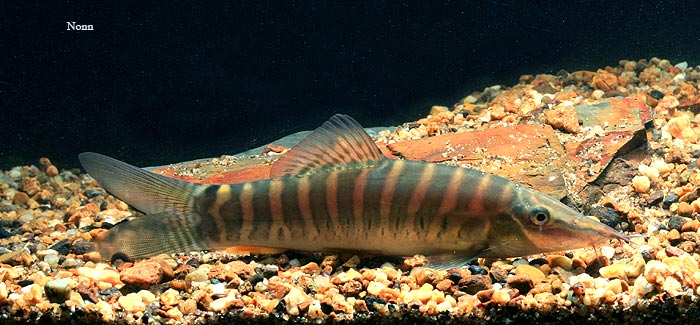
Syncrossus helodesBanded Tiger Loach
Sauvage, 1876
Max length300mm SL12in SLTank180 × 45cm72 × 18inTemp24–30°C75–86°FpH6.0–7.5This species is sometimes confused with S. hymenophysa, native to the Greater Sunda Islands and Peninsular Malaysia, but differs in several ways, the most immediately identifiable of which are possession of small, irregular, dark markings in the lower half of the body and lack of a dark spot in the dorsal-fin. It also has 10-12 vertical body bars...