Results for “genus”
Type a name: scientific, common, or one a species used to go by. Or narrow the catalogue with the filters.
Filters
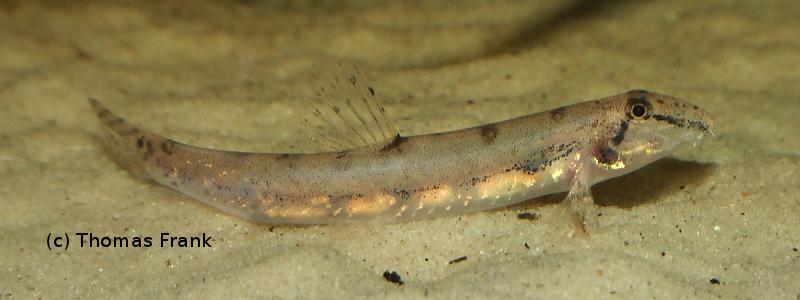
Kottelatlimia hipporhynchos
Kottelat & Tan, 2008
Max length52mm SL2.0in SLTank60 × 30cm24 × 12inTemp23–26°C73–79°FpH4.0–6.5This species differs from congeners in the presence of papillae covering the mouthparts (lips, barbels, and lobes) which are absent in other species. It's also the largest species in the genus and the serrae on the second pectoral fin rays in males form a broa...
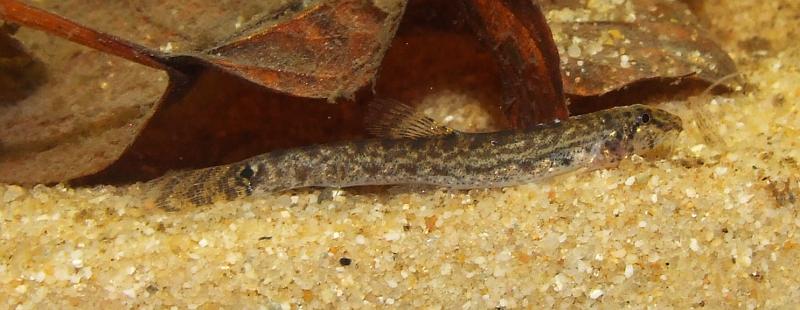
Kottelatlimia pristes
Roberts, 1989
Max length40mm SL1.6in SLTank45 × 30cm18 × 12inTemp21–26°C70–79°FpH3.5–6.5The genus Kottelatlimia was erected by Nalbant (1994) to accommodate K. katik which had previously been assigned to Lepidocephalichthys but differs in various aspects noted earlier by Kottelat and Lim (1992) including: relatively small adult size; scaleless...
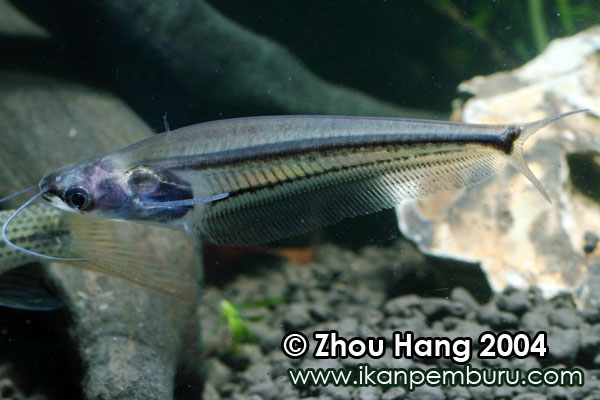
Kryptopterus palembangensis
Bleeker, 1852
Max length140mm SL6in SLTank120 × 30cm48 × 12inTemp20–28°C68–82°FpH6.0–7.5This species is almost unheard of in the aquarium trade though may occasionally be exported among shipments of wild fishes from Sumatra. It's closely-related to K. bichirris but is told apart by presence (vs. absence) of a prominent, dark lateral stripe on each flank. Kryptopterus species are found only in Southeast Asia and the genus has been consi...
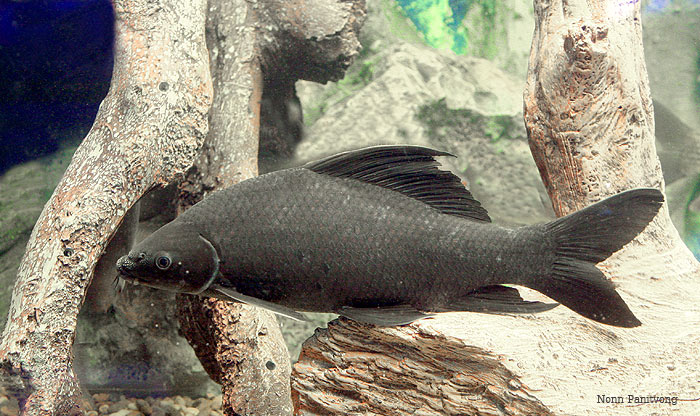
Labeo chrysophekadionBlack Shark
Bleeker, 1849
Max length600mm SL24in SLTanknot recordedTemp20–26°C68–79°FpH6.0–8.0L. chrysophekadion is also known as 'black sharkminnow'. It continues to be available in the ornamental trade despite its patent unsuitability for the home aquarium, and an albino form has been selectively bred for the purpose. It can be distinguished from other members of the genus by the following combination...
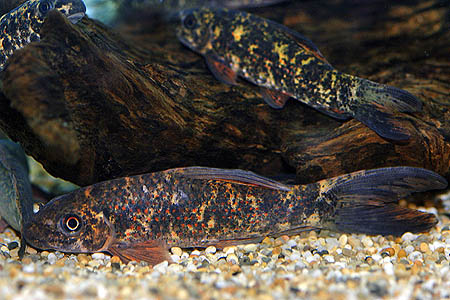
Labeo cyclorhynchusHarlequin Shark
authority not recorded
Max length160mm SL6in SLTanknot recordedTemp21–27°C70–81°FpH6.0–7.5L. cyclorhynchus was described twice in the space of two years, with Pellegrin erecting Labeo variegatus for it in 1901. Although the invalidity of the variegatus name is quite well-documented you may still see the species named as such in older literature, trade lists and by some websites. It's also worth noting that the attractive patterning seen in young fish does fade with age, the adults being much darker in colour. The genus Labeo currently contains over 100 species but is in dire ...
Labeotropheus fuelleborniFuelleborn's Cichlid
authority not recorded
Max length175mm SL7in SLTank90 × 45cm36 × 18inTemp24–28°C75–82°FpH7.6–8.8This species has the characteristic overhanging snout possessed by all three members of the genus. It has chisel-shaped teeth which are designed for grazing algae off rocks. These physical adaptations allow it to graze algae from rocks situated in very shallow water which other species cannot reach. The position of the mouth allows the fish to remain parallel to the rock surfaces, thus enabling it to cope with the turbulence in these areas. L. fuelleborni exists in many different colour forms in...
Labeotropheus trewavasaeTrewavas' Cichlid
authority not recorded
Max length113mm SL4in SLTank90 × 45cm36 × 18inTemp24–28°C75–82°FpH7.6–8.8This species has the characteristic overhanging snout possessed by all three members of the genus. It also has chisel-shaped teeth which are designed for scraping algae off rocks. These physical adaptations give it a competitive advantage, as they allow it to graze from rocks situated in very shallow water which other species cannot reach. The position of the mouth allows the fish to remain parallel to the rock surfaces, thus enabling it to cope with the turbulence in these areas. L. trewava...
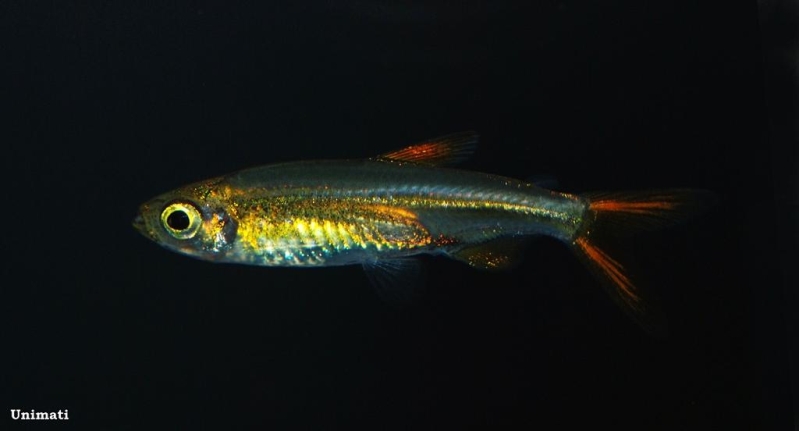
Ladigesia roloffiJelly Bean Tetra
Géry, 1968
Max length31mm SL1.2in SLTank60 × 30cm24 × 12inTemp20–26°C68–79°FpH5.0–7.0This species is sometimes referred to as 'Sierra Leone dwarf characin' and is the only member of its genus which can be distinguished from other alestids by lacking dorsal scales anterior to the adipose-fin insertion. The family Alestidae is the most spe...
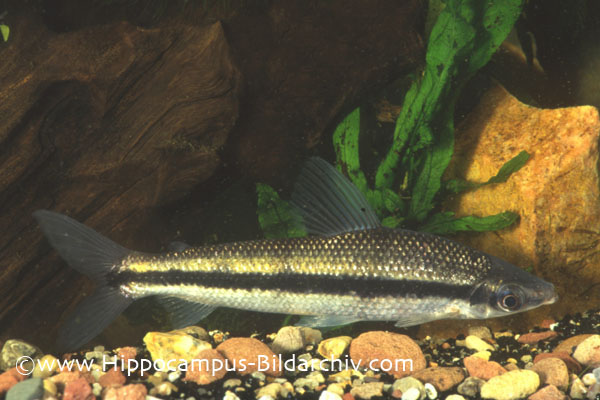
Laemolyta taeniataStriped Headstander
Kner, 1858
Max length288mm SL11in SLTank120 × 60cm48 × 24inTemp20–28°C68–82°FpH4.0–7.5L. taeniata is the largest-growing and second most widely-distributed member of the genus although it's a rarely-seen in the aquarium trade. It can be distinguished from all congeners since it uniquely possesses 5 lateral scale rows between the lateral line and dorsal-fin origin (vs. 4 or 6–8 in the remaining species).
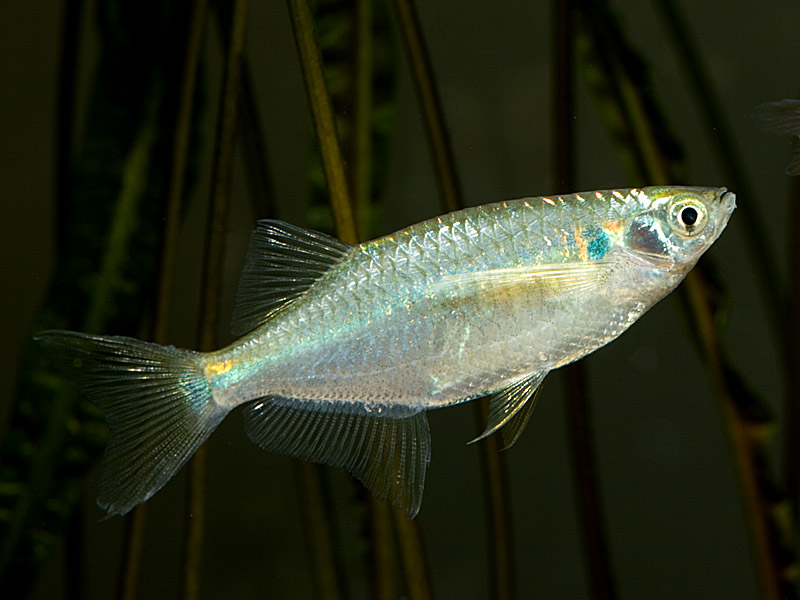
Laubuka caeruleostigmataFlying Minnow
Smith, 1931
Max length70mm SL2.8in SLTank120 × 30cm48 × 12inTemp20–26°C68–79°FpH6.0–8.0This species is also known as 'leaping barb' and was once quite common in the ornamental trade but is now seldom seen. It can be distinguished from other members of the genus by the following characters: bright blue spot on top of head; series of 4-5 short faint bars on anterior portion of body; 19-23½ branched anal-fin rays; body depth fits 2.1-2.9 times in SL.
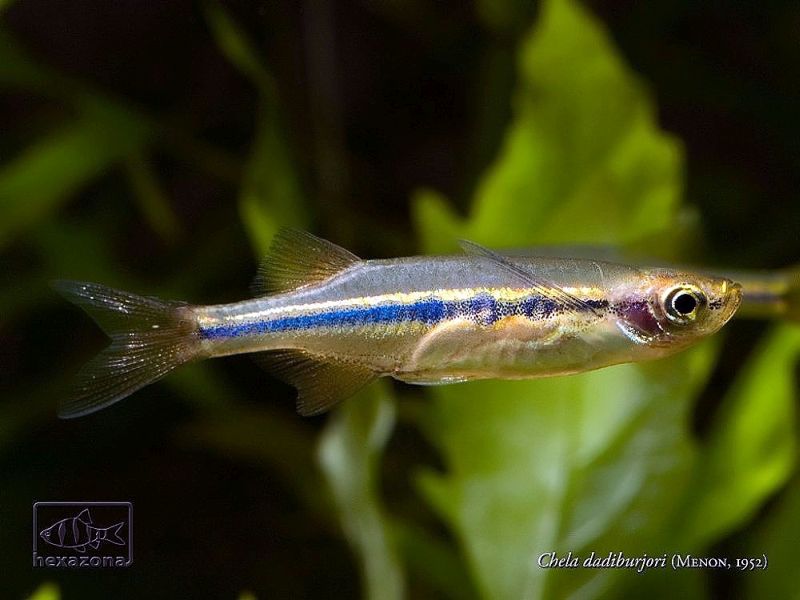
Laubuka dadiburjoriDadio
Menon, 1952
Max length30mm SL1.2in SLTank90 × 30cm36 × 12inTemp20–24°C68–75°FpH6.0–7.5It can be distinguished from other members of the genus by the following characters: lateral line absent or perforating only 2-5 scales; pharyngeal teeth hooked; body size small, not exceeding 30 mm SL; body depth less than 25 % SL; colour pattern comprising a dark bluish lateral stripe extending from the eye to the caudal peduncle, typically, but not always, forming 2-5 circular spots along its length.
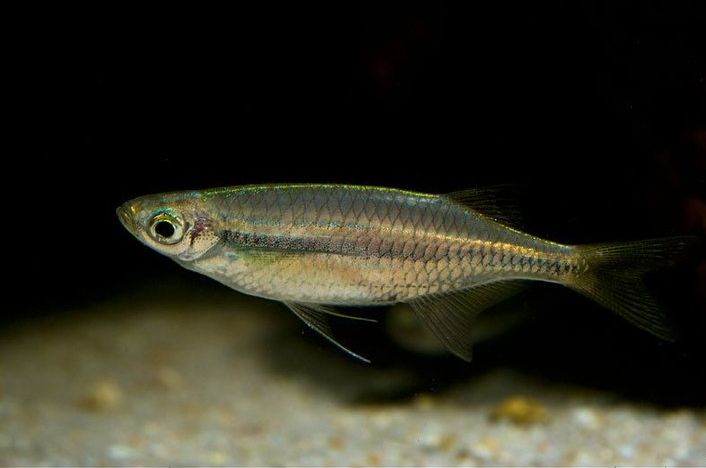
Laubuka fasciataMalabar Hatchet Chela
Silas, 1958
Max length50mm SL2.0in SLTank120 × 30cm48 × 12inTemp20–26°C68–79°FpH6.5–7.5It can be distinguished from other members of the genus by the following characters: dark longitudinal stripe on body, extending from eye to caudal peduncle; scattered tubercles present on lower jaw; 14½-16½ branched anal-fin rays; pelvic-fin long, reaching beyond anus.
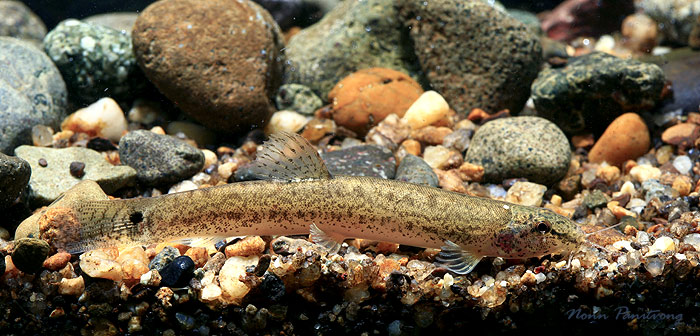
Lepidocephalichthys berdmorei
Blyth, 1860
Max length120mm SL5in SLTank75 × 30cm30 × 12inTemp20–25°C68–77°FpH6.0–8.0This is one of the most frequently-traded members of the genus and is an excellent choice for those new to keeping loaches. It's distinguishable from congeners by a combination of characters including: relatively large adult size (to at least 80 mm SL); rounded/truncate caud...
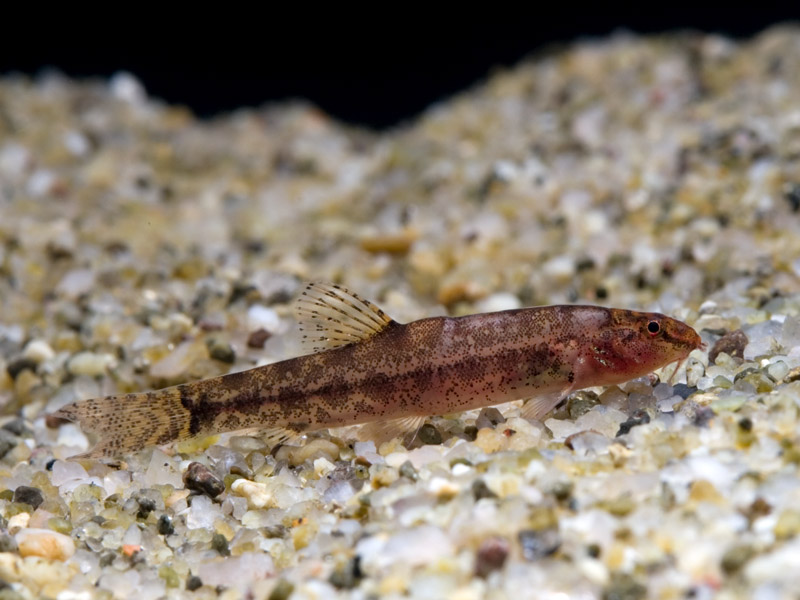
Lepidocephalichthys furcatus
de Beaufort, 1933
Max length50mm SL2.0in SLTank45 × 30cm18 × 12inTemp23–26°C73–79°FpH5.5–7.5This species is not traded often but is occasionally available as bycatch among shipments of other species. It can be told apart from congeners most easily by the prominent, dorsally-orientated, roughly semi-circular lamina circularis in males, a feature unique within the genus. Other distinguishing characters include a combination of: forked caudal-fin; relatively small adult size; dark <-shaped mark at the base of the caudal-fin; a black spot at the base of branched caudal-fin rays 3-5.
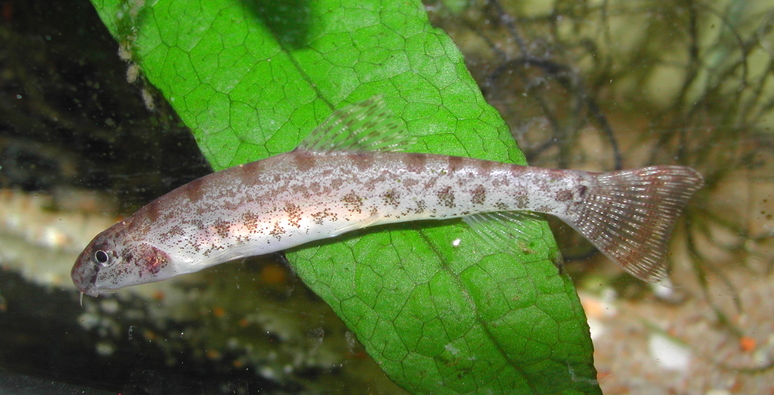
Lepidocephalichthys goalparensis
Pillai & Yazdani, 1976
Max length45mm SL1.8in SLTank45 × 30cm18 × 12inTemp22.8–26.1°C73–79°FpH6.0–7.5This species is almost unheard of in the hobby with the specimen pictured above the only one we're aware of. It was imported into the United Kingdom in late 2011 as bycatch among a shipment of mastacembelid eels from northern India, and the identification was subsequently confirmed by Justin Havird, senior author of the most recent revision of the genus.
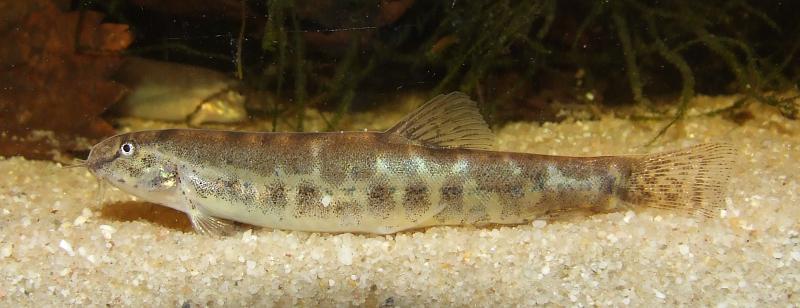
Lepidocephalichthys sp. 'LE1'Vietnamese Marbled Hog-faced Loach
authority not recorded
Max length55mm SL2.2in SLTank45 × 30cm18 × 12inTemp23–26°C73–79°FpH6.0–7.5This fish has only been traded on a handful of occasions to date. It's been referred to as Lepidocephalichthys cf. hasselti and Lepidocephalus cf. thermalis but appears to be an undescribed member of the former genus. Following a...
Lepidosiren paradoxaSouth American Lungfish
authority not recorded
Max length1250mm SL49in SLTank240 × 90cm96 × 36inTemp24–28°C75–82°FpH6.0–8.0Lungfish are among the most intriguing of "oddball" aquarium species, being able to survive in extreme conditions. They are very ancient fish, having remained virtually unchanged for millions of years. This is the only species known from South America, and is the sole representative of its genus. Most hail from Africa, with a single species native to Australia. They belong to the class Sarcopterygii (lobe-finned fishes), members of which are actually more closely related to terrestrial...
Leporacanthicus galaxiasGalaxy Plec
authority not recorded
Max length250mm SL10in SLTank120 × 45cm48 × 18inTemp22–26°C72–79°FpH5.6–7.0A very stylish looking plec, L. galaxias can also be seen for sale as the vampire or tusken plec. Both these names relate to features of morphology that are shared by all members of the genus. The latter arose from the presence of a characteristic growth on the head of the fish. The vampire moniker, meanwhile, is derived from the unique upper jaw dentition, consisting of, you guessed it, two large teeth or "fangs". The exact use for these is unknown, but they're probably utilised ...
Leporacanthicus heterodonGolden Vampire Plec
authority not recorded
Max length100mm SL3.9in SLTank120 × 30cm48 × 12inTemp22–26°C72–79°FpH6.0–7.0The vampire part of the common name is derived from the unique upper jaw dentition exhibited by members of this genus, consisting of, you guessed it, two large teeth or "fangs". The exact use for these is unknown, but they're probably utilised to grip prey items such as snails or other aquatic invertebrates in some way. When buying one of these (or any Loricariid), be sure to check the fish has a rounded belly and that its eyes aren't sunken, as these are classic signs of ema...
Leporacanthicus joselimaiSultan Plec
authority not recorded
Max length150mm SL6in SLTank120 × 30cm48 × 12inTemp25–27°C77–81°FpH6.0–7.5Leporacanthicus species are commonly referred to as "vampire plecs". This is derived from the unique upper jaw dentition exhibited by members of this genus, unsurprisingly consisting of two large teeth or "fangs". The exact use for these is unknown, but they're probably utilised to grip prey items such as snails or other aquatic invertebrates in some way. Another feature shared by all Leporacanthicus is a small bony growth of unknown use on top of the head. This particul...