Results for “várzea”
Type a name: scientific, common, or one a species used to go by. Or narrow the catalogue with the filters.
Filters
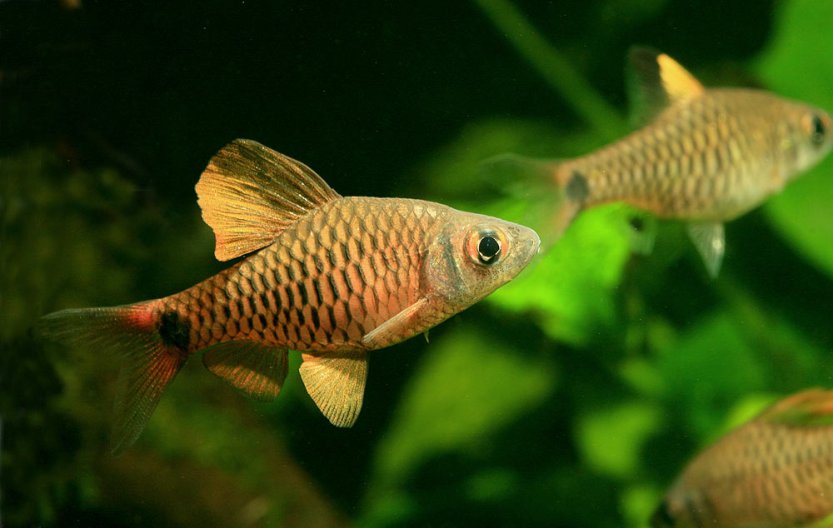
Oreichthys sp. 'Myanmar Redfin'
authority not recorded
Max length40mm SL1.6in SLTank60 × 30cm24 × 12inTemp24–28°C75–82°FpH6.5–7.5This fish is one of several sometimes imported and sold as Oreichthys cosuatis or O. parvus which has led to considerable confusion. It appears to be an undescribed species and can be most easily identified by the absence of a dark marking in the dorsal-fin of adult males (vs. presence in O. cosuatis and O. parvus) and possession of a large, well-defined black blotch on the caudal peduncle ( vs. absent in O. cosuatis, smaller and less well-defined in O. parvus).
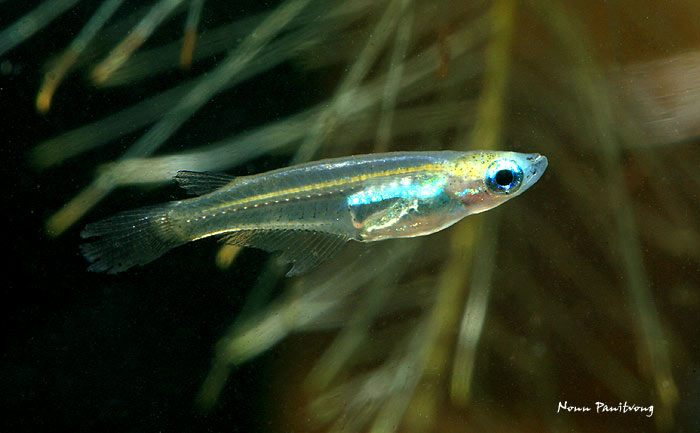
Oryzias minutillusDwarf Medaka
Smith, 1945
Max length17mm SL0.7in SLTank40 × 20cm16 × 8inTemp23–32°C73–90°FpH6.0–7.5Best maintained in a heavily planted set-up, ideally with a dark substrate, patches of dense vegetation, and some open areas. Other décor can consist of twisted roots and pieces of bogwood, while surface vegetation is also appreciated by the fish. When maintained under such conditions they're more likely to display their best colours, and planted aquaria also offer fry a more favourable chance of survival alongside the adults.
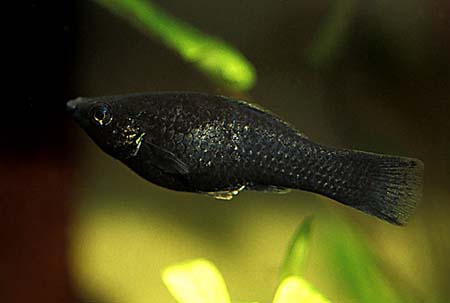
Poecilia sphenopsShort-finned Molly/Black Molly
Valenciennes, 1846
Max length80mm SL3.1in SLTank90 × 30cm36 × 12inTemp21–28°C70–82°FpH7.0–8.5A hugely popular aquarium fish. Many aquarium-bred colour morphs of this species are available, including the ubiquitous black molly. There are also Gold, Green, Lyretail, Silver and Dalmation varieties. Some of these are the results of P. sphenops being crossed with P. latipinnis. The 2 species will also interbreed readily in the aquarium and in order to avoid this we suggest keeping only one of them per tank. There also exists a (in our opinion) grotesque 'balloon' variety of this fi...
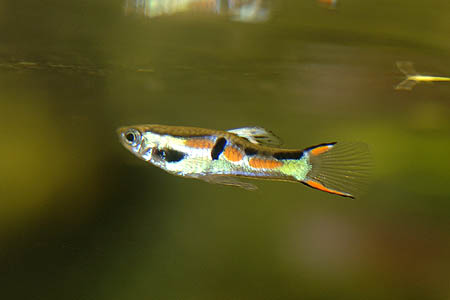
Poecilia wingeiEndler's Livebearer
Poeser, Kempkes & Isbrucker, 2005
Max length25mm SL1.0in SLTank45 × 30cm18 × 12inTemp24–30°C75–86°FpH7.0–8.5Endler's Livebearer was actually discovered in 1937 by Franklyn F. Bond before being rediscovered by John Endler in 1975 in Laguna de Patos, Cumana, northeastern Venezuela. It was found coexisting, but not interbreeding with, a wild form of P. reticulata. Both species are native to this area of Venezuela, but P. reticulata was much less common in areas where P. wingei was thriving. This is thought to be partially related to habitat type, as guppies are usually found in colder, running water...
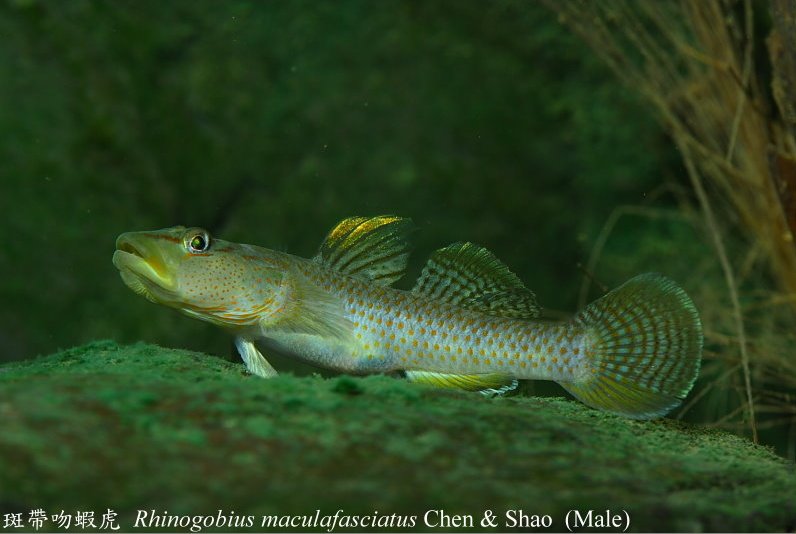
Rhinogobius maculafasciatus
Chen & Shao, 1996
Max length50mm SL2.0in SLTank60 × 30cm24 × 12inTemp18–24°C64–75°FpH6.0–8.0This species may not yet have appeared in the ornamental trade but it has been collected by a few individuals. It can be told apart from related species from Taiwan by possessing 30-32 longitudinal (lateral) scales vs. 32-39 in other species, and 6-8 scale rows between the origin of the first dorsal-fin and upper pectoral-fin base vs. 9-15 in other species.
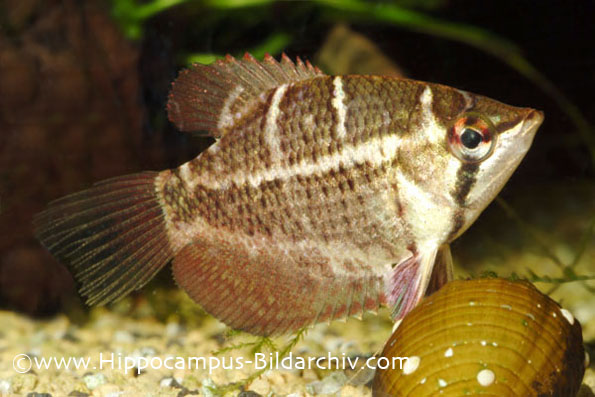
Sphaerichthys selatanensisCrossband Chocolate Gourami
Vierke, 1979
Max length45mm SL1.8in SLTank60 × 30cm24 × 12inTemp26–31°C79–88°FpH4.0–6.5This species is only occasionally seen in the hobby and sometimes sold as 'cherry chocolate gourami'. It was originally described as a subspecies of S. osphromenoides since the two are very similar-looking but has been considered a species in its own right since the late 1980s. The two differ in the number ofrays (7 in S. selatanensis vs. 9-10 in S. osphromenoides),rays (7 vs. 8),...
Squaliforma cf. emarginataRed Fin Thresher Plec
authority not recorded
Max length400mm SL16in SLTanknot recordedTemp25–28°C77–82°FpH6.4–7.2This attractive species is often seen for sale at around 3-4" in length (often as Hypostomus cf. emarginata or H. emarginatus), but given its adult size, its not a terribly good choice for the general community tank. Due to its very wide natural distribution, there are a number of known geographical variants, and this has resulted in four L numbers currently being assigned to it. In reality, there are many more variants than this, and all share the characteristic elongated which gives rise...
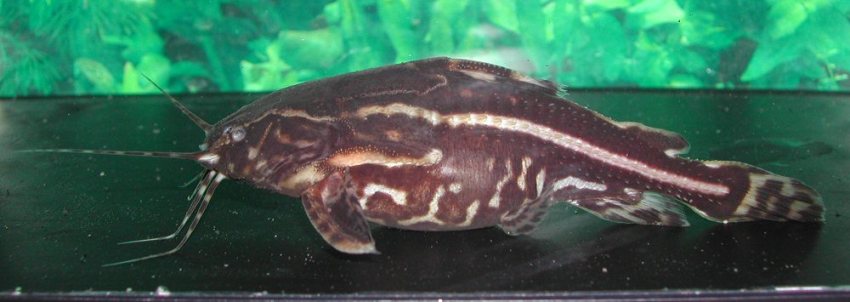
Acanthodoras cataphractusChocolate Talking Catfish
Linnaeus, 1758
Max length115mm SL5in SLTank120 × 30cm48 × 12inTemp22–26°C72–79°FpH6.0–7.5This species, which may also be referred to by the alternative vernacular names 'spiny catfish', 'painted talking catfish' or 'chocolate raphael', isn't particularly common in the trade and most often exported only as bycatch among shipments of Platydoras armatulus. It appears very similar to the congener A. spinosissimus with the most useful external distinguishing character being the presence of pale blotches on the dorsal surface, between the dorsal and caud...
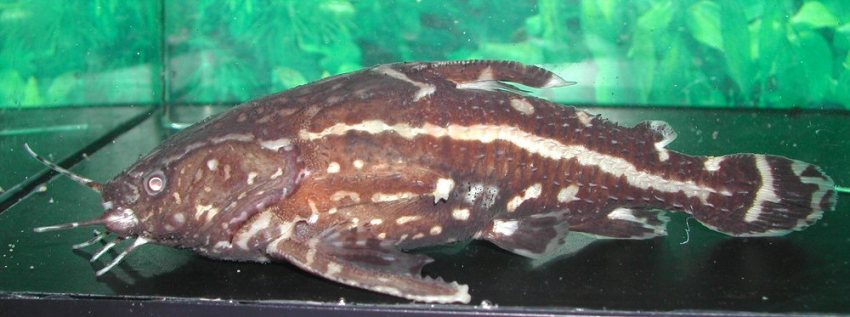
Acanthodoras spinosissimusChocolate Talking Catfish
Eigenmann & Eigenmann, 1888
Max length137mm SL5in SLTank120 × 30cm48 × 12inTemp22–26°C72–79°FpH6.0–7.5This species, which may also be referred to by the alternative vernacular names 'spiny catfish', 'painted talking catfish' or 'chocolate raphael', isn't particularly common in the trade and most often exported only as bycatch among shipments of Platydoras armatulus. It appears very similar to A. cataphractus with the most useful external distinguishing character being the presence of pale blotches on the dorsal surface, between the dorsal and caudal fins, in....
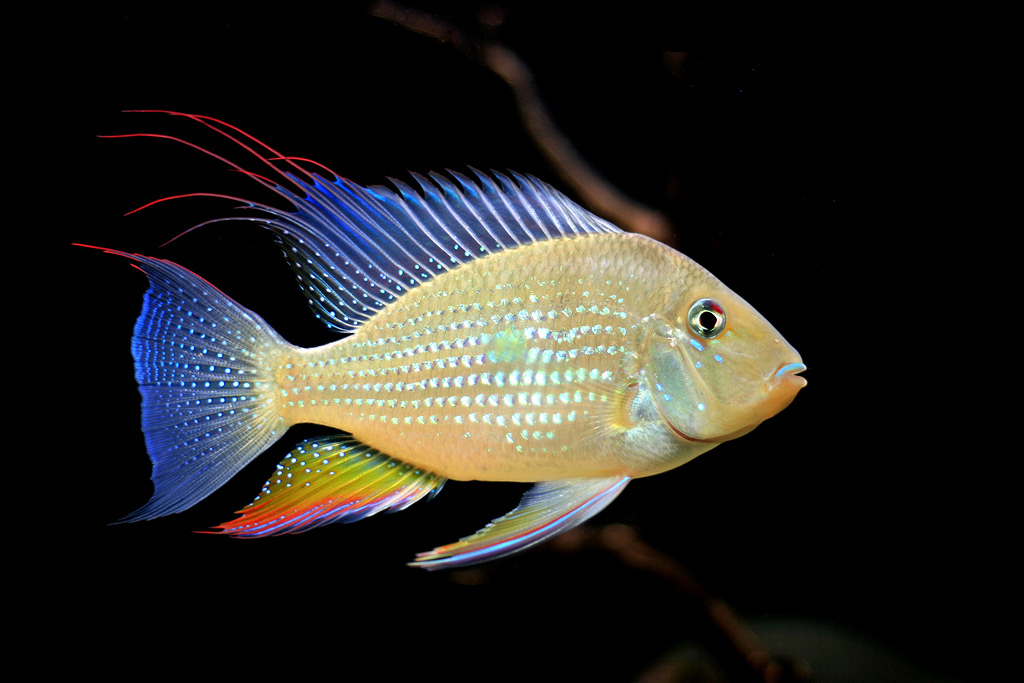
Acarichthys heckeliiThreadfin Acara
Müller & Troschel, 1849
Max length200mm SL8in SLTanknot recordedTemp24–30°C75–86°FpH6.0–8.0The genus Acarichthys remains monotypic and was resdescribed by Kullander (1986) who characterised it by the following: lack of epibranchial lobe; comparatively few (12-14)rays; pelvic fins with relatively broad tips (branches of the first ray are equal in length or the inner is slightly longer); possession of a single supraneural plus 14-15 vertebrae (these characters taken as a combination); no caudal extensions to swim bladder; no caudal ribs. Its current taxonomic position is based largel...
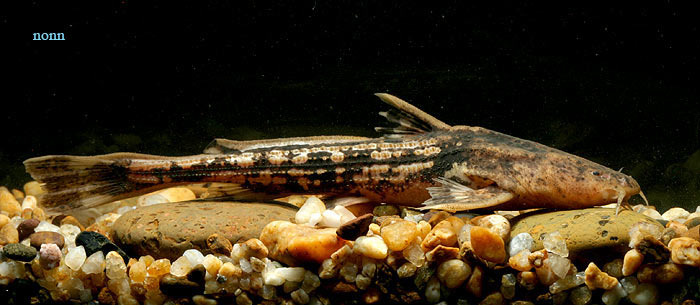
Acrochordonichthys gyrinusFalcate Chameleon Catfish
Vidthayanon & Ng, 2003
Max length80mm SL3.1in SLTank75 × 30cm30 × 12inTemp17.5–24°C64–75°FpH5.0–7.0As in other members of the genus body colouration in this species is variable, even among individuals collected from a single locality, although a few regularities have been observed which can be used to distinguish certain species from one another. This is thought related to the fact that Acrochordonichthys spp. periodically shed their skins and appear paler post-moulting.
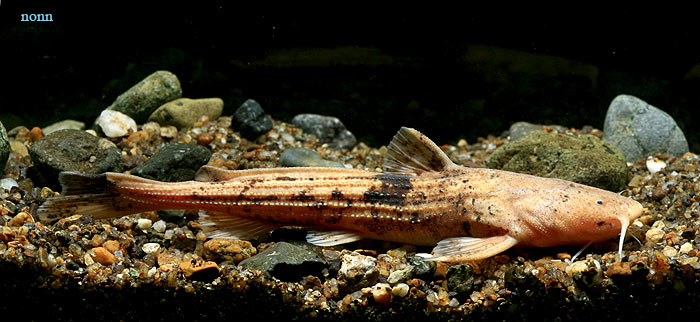
Acrochordonichthys septentrionalisMae Klong Chameleon Catfish
Ng & Ng, 2001
Max length100mm SL3.9in SLTank90 × 30cm36 × 12inTemp17.5–24°C64–75°FpH5.0–7.0As in other members of the genus body colouration in this species is variable, even among individuals collected from a single locality, although a few regularities have been observed which can be used to distinguish certain species from one another. This is thought related to the fact that Acrochordonichthys spp. periodically shed their skins and appear paler post-moulting.
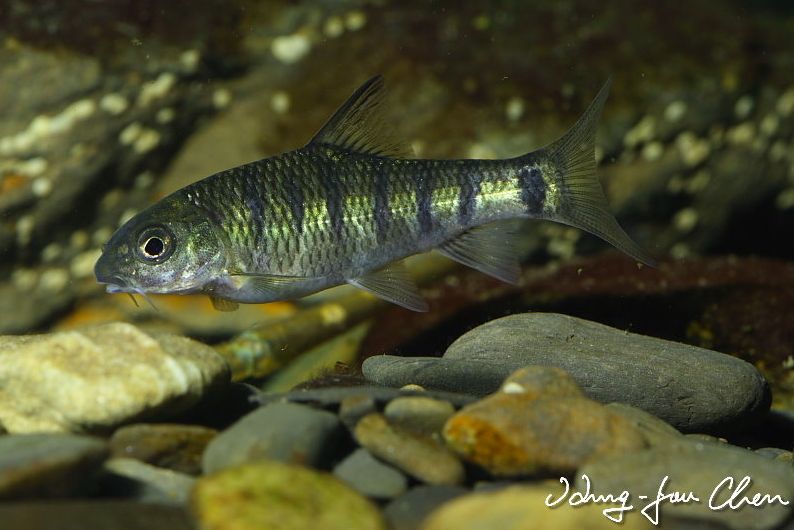
Acrossocheilus paradoxusTaiwan Banded Barb
Günther, 1868
Max length200mm SL8in SLTank180 × 45cm72 × 18inTemp15–25°C59–77°FpH6.0–8.0The genus Acrossocheilus is restricted to southern China, northern Vietnam and northern Laos. It can be distinguished from related genera by the following combination of characters: rostral fold present; lips fleshy and continuous around corners of mouth; lower lip with a median interruption; mouth inferior; horny sheath on lower jaw; two pairs of barbels; last simple ray of dorsal fin osseous with a serrated or smooth posterior margin.
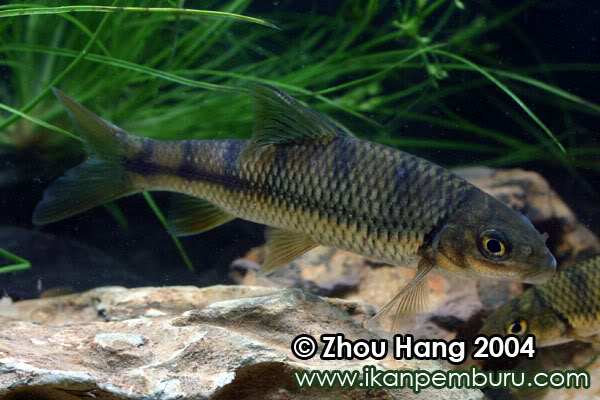
Acrossocheilus parallens
Nichols, 1931
Max length160mm SL6in SLTanknot recordedTempnot recordedpHnot recordedMembers of the genus are characterised by possessing a particular number of dark vertical bar on each flank, and A. parallens belongs to a group of species with five or six such bars, each of which is two scales in width. Congeners sharing this pattern include A. fasciatus, A. hemispinus (in juveniles only), A. jishouensis, A. kreyenbergii, A. paradoxus, A. spinifer, A. wenchowensis, and A. wuyiensis.
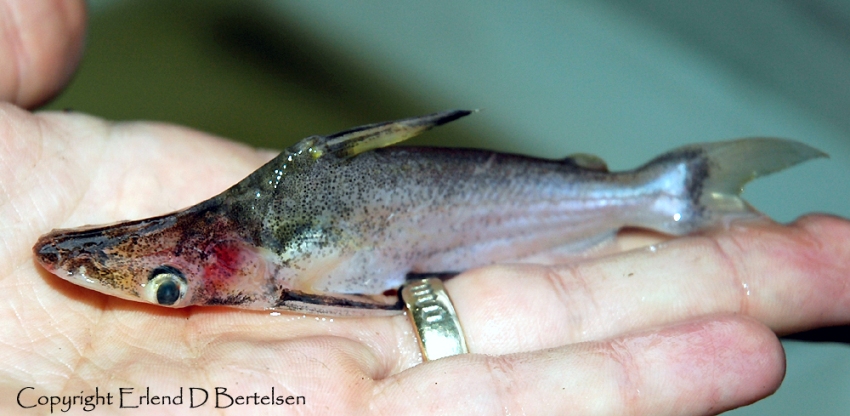
Ageneiosus ucayalensisDuck Catfish
Castelnau, 1855
Max length290mm SL11in SLTank180 × 60cm72 × 24inTemp22.5–28°C73–82°FpH5.5–7.5Apparently this species is polymorphic with body patterning varying significantly depending on locality. Individuals collected from black water habitats tend to be noticeably darker in overall colouration, for example, with this being particularly evident among populations from the Guiana Shield. The genus Ageneiosus was at one point classified in...
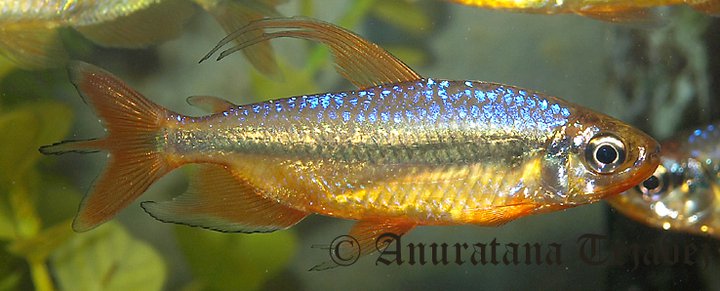
Alestopetersius brichardiCherry Red Congo Tetra
Poll, 1967
Max length80mm SL3.1in SLTank120 × 30cm48 × 12inTemp20–28°C68–82°FpH5.0–7.0This species is sometimes traded as 'cherry red Congo tetra' or 'super red Congo tetra' and has also been referred to using the misapplied names Alestopetersius nigropterus (a valid congener) and A. ansorgii (a synonym of Nannopetersius ansorgii).
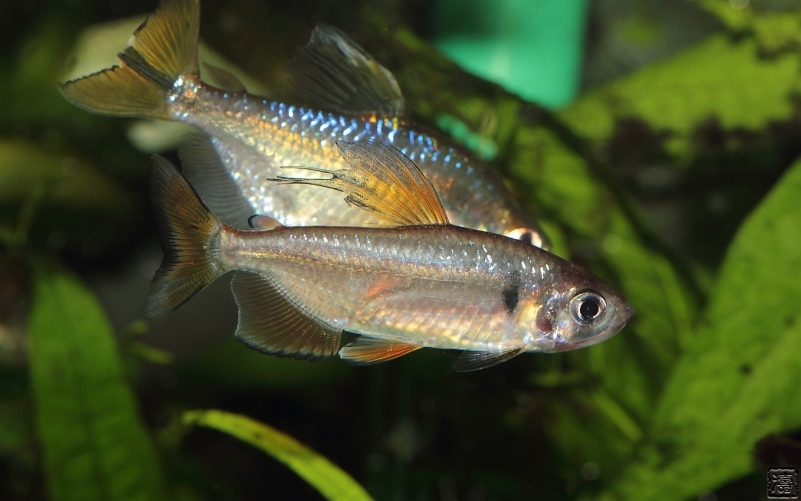
Alestopetersius nigropterusAfrican Rainbow Tetra
Poll, 1967
Max length60mm SL2.4in SLTank120 × 30cm48 × 12inTemp22–26°C72–79°FpH5.0–7.0This fish is normally traded as A. nigropterus or A. cf. ansorgii although neither appears to be its correct name meaning it remains unidentified at present. A. nigropterus is a valid congener that is not in the aquarium trade with little to no export from Lake Mai-Ndombe, to which it is endemic, while A. ansorgii is a synonym of Nannopetersius ansorgii.
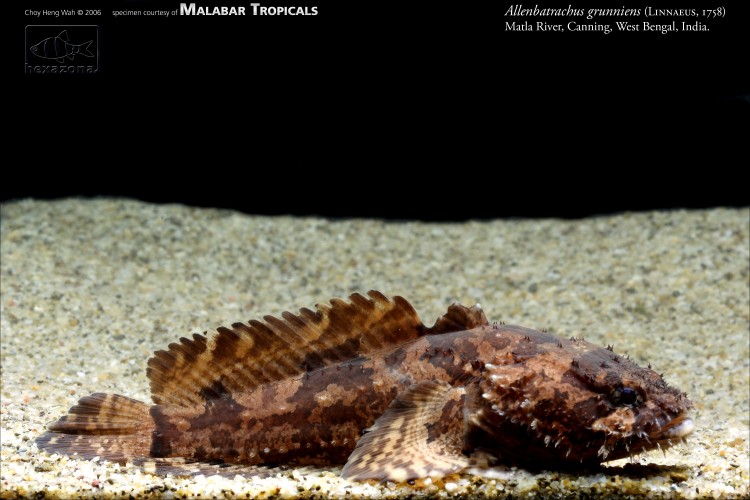
Allenbatrachus grunniensFreshwater Toadfish
Linnaeus, 1758
Max length300mm SL12in SLTanknot recordedTemp23–28°C73–82°FpH7.5–9.0This species is relatively common in the aquarium hobby but contrary to popular belief is not venomous in any way. Its dorsal and opercular spines can pierce the skin, however, meaning extreme caution is necessary when netting it or performing aquarium maintenance. The genus Allenbatrachus was erected in 1997 to accom...
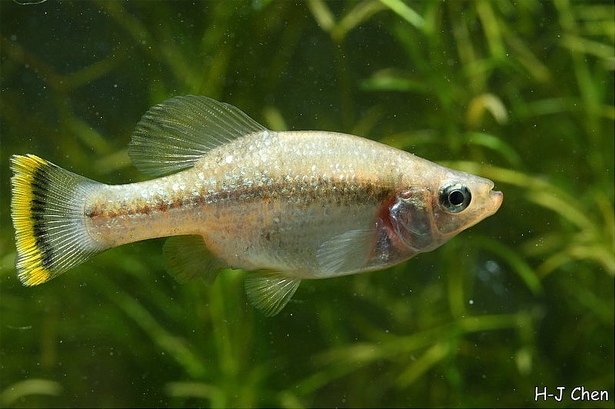
Ameca splendensButterfly Goodeid
Miller & Fitzsimons, 1971
Max length90mm SL3.5in SLTank90 × 30cm36 × 12inTemp24°C75°FpH7.0–8.0Despite often being referred to as extinct in the wild this monotypic species is still surviving at a few localities. It's not particularly scarce in the hobby with strong captive populations existing, some of which have been selectively bred to produce variations in colour and patterning. As with other goodeids, there is less of a size difference between the sexes than in many other livebearers. This is thought to be related to the relatively primitive...
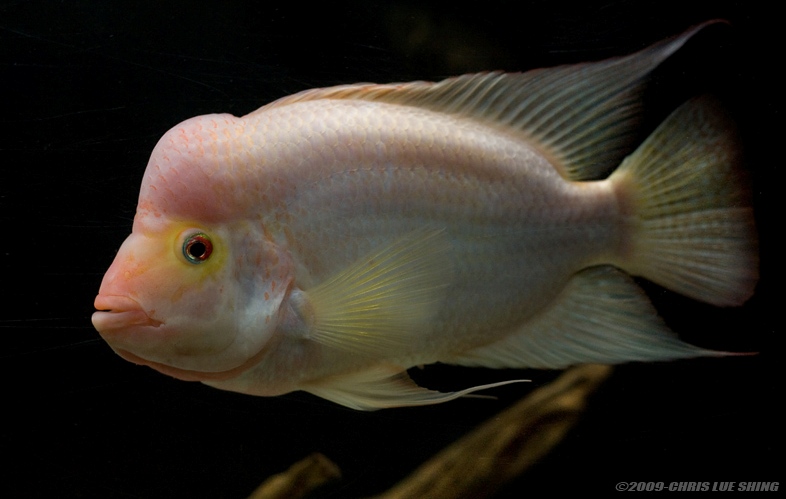
Amphilophus citrinellusMidas Cichlid
Günther, 1864
Max length350mm SL14in SLTanknot recordedTemp21–26°C70–79°FpH6.0–8.0Previously included as a member of the genus Cichlasoma, the midas cichlid is often confused with the red devil, A. labiatus. The two can be distinguished through differences in morphology. As suggested by its scientific name, A. labiatus often possesses characteristically large lips, although this is variable and should not be used as a defining indicator of species. More reliable differences include the bigger nuchal hump and more thick-set appearance in A. citrinellus. The midas exists in many n...