Results for “anterior”
Type a name: scientific, common, or one a species used to go by. Or narrow the catalogue with the filters.
Filters
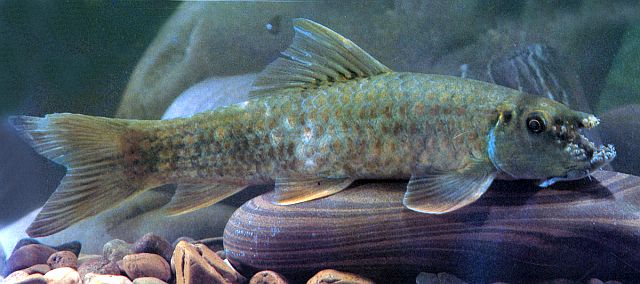
Garra orientalis
Nichols, 1925
Max length120mm SL5in SLTanknot recordedTempnot recordedpHnot recordedAmong other Garra species from Southeast Asia and China, G. orientalis is most similar to G. salweenica and G. fuliginosa in that all three possess a roughly triangular, trilobed proboscis on the snout, the anterior margin of which is densely tuberculated, and the inferior margin not in contact with the depressed rostral surface, i.e., the proboscis projects forwards.
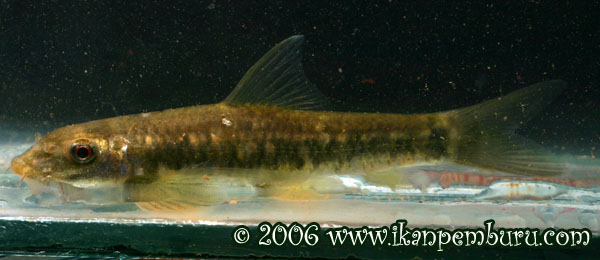
Garra qiaojiensis
Wu & Yao, 1977
Max length175mm SL7in SLTanknot recordedTempnot recordedpHnot recordedG. qiaojiensis can be differentiated from closely-related congeners by the configuration of its proboscis, which is quadrate (1.6-1.8 times wider than long), reflected downwards against the snout and heavily tuberculated anteriorly, and the relative size of its mental disc which measures 48.7-55.9 % HL.
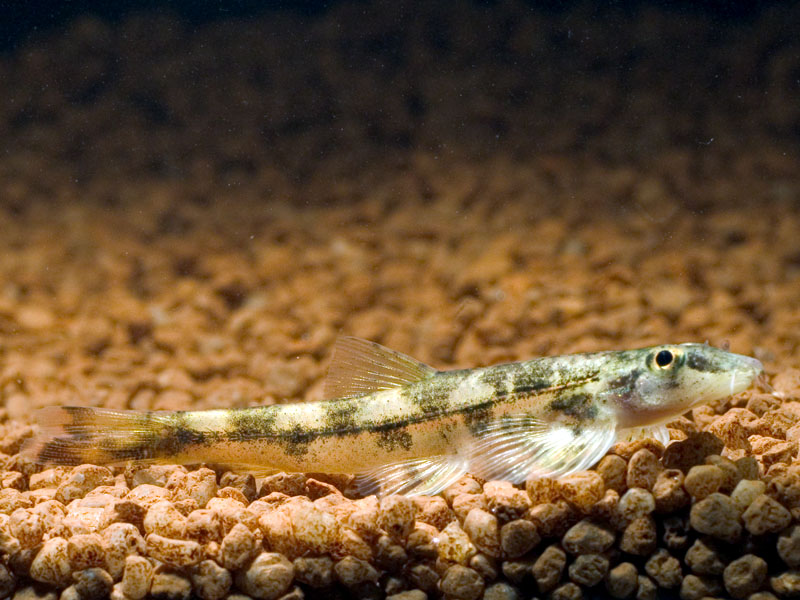
Homalopteroides nebulosus
Alfred, 1969
Max length36mm SL1.4in SLTank60 × 30cm24 × 12inTemp20–25.5°C68–78°FpH6.0–7.5The genus Homalopteroides was revalidated by Randall and Page (2012) and is told apart from the related Homaloptera by the following character combination: dorsal-fin origin above pelvic-fin; ≤ 60 lateral-line scales; ≤ 30 predorsal scales; oral morphology consisting of two thin and widely separated rostral barbels on each side of the mouth, thin crescent-shaped lips, the absence of any structure such as a mental pad or lobes between the lateral portions of the lower lip, and a chin that extends anterior to the lateral portions of the lower lip.
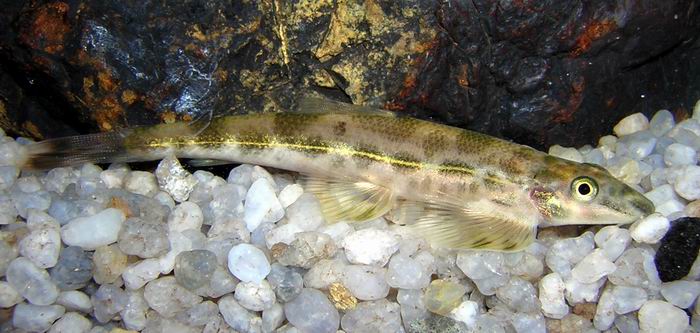
Homalopteroides stephensoni
Hora, 1932
Max length65mm SL2.6in SLTank60 × 30cm24 × 12inTemp20–25.5°C68–78°FpH6.0–7.5Tan (2009) redescribed H. stephensoni and it possesses the following unique character set: sub-inferior mouth with thin barbels; five principle, 12-13 secondary pectoral fin rays (usually 12); scaleless belly; pattern of keeled scales on anterior, dorsal portion of body consisting of a single central keel in the posterior third of each scale; 43-50 lateral line...
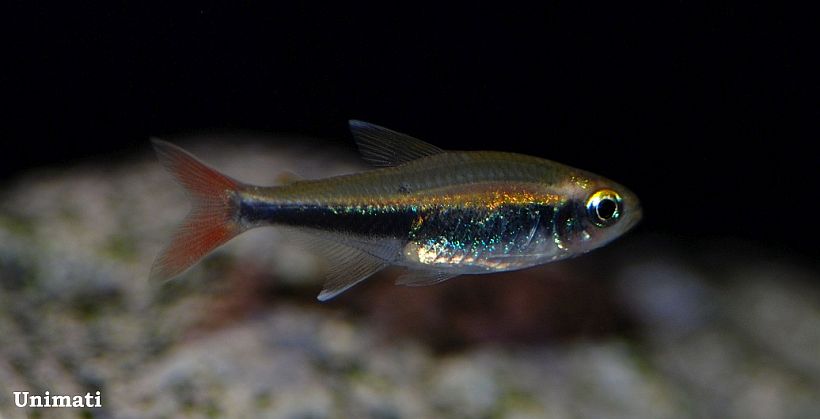
Hyphessobrycon loretoensisLoreto Tetra
Ladiges, 1938
Max length25mm SL1.0in SLTank60 × 30cm24 × 12inTemp22–28°C72–82°FpH5.0–7.0The most recent diagnosis appears to be that of Géry (1977), in which it was separated from other members of the group by the following combination of characters: dorsal-fin insertion at or slightly anterior to mid-body; caudal-fin brick red to orange-red; body depth fits less than 3.6 times in SL; head length fits 3.5-4.0 times in SL; caudal peduncle length u...
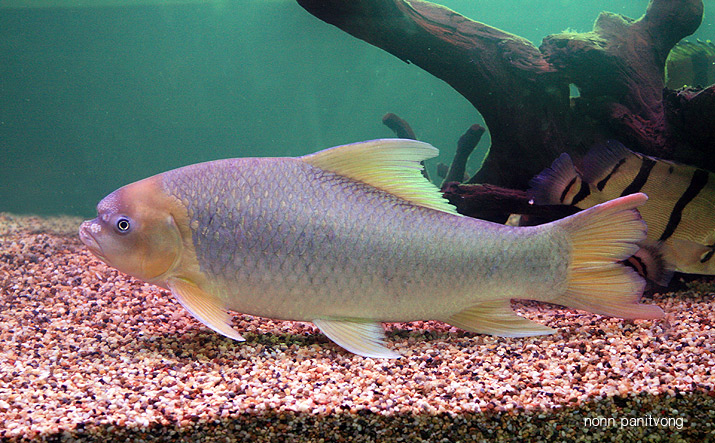
Incisilabeo behri
Fowler, 1937
Max length550mm SL22in SLTanknot recordedTemp20–26°C68–79°FpH6.0–8.0The monotypic genus Incisilabeo is separated from the closely-related taxon Bangana by presence of a unique and conspicuous transverse notch across the top of the head, comparable in position to the ethmoid furrow in Bangana species. This notch approaches the eye, and the top of the head bulges forward, with the nostrils located partially beneath this projection and immediately anterior to the eyes. Tubercles cover the upper portion of the rostral fold, lower part of the notch, and upper surface of the forehead projection...
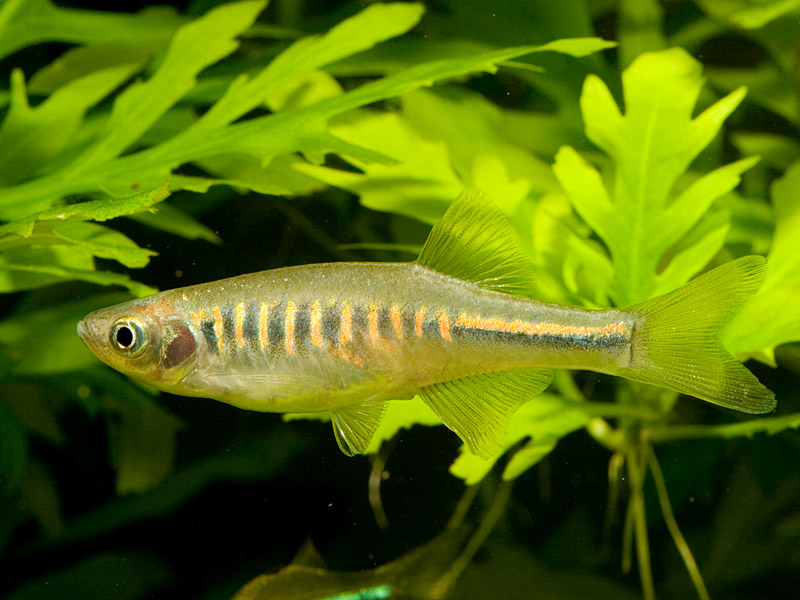
'Inlecypris' shanensis
Hora, 1928
Max length60mm SL2.4in SLTank80 × 30cm31 × 12inTemp18–26°C64–79°FpH6.0–8.0This species is sometimes referred to as 'Hora danio' or Salween danio'. It is distinguished from similar-looking species by a combination of characters as follows: lateral line complete or incomplete with 22-33 pored scales; absence of infraorbital process; 7 branched dorsal-fin rays; usually 10 or 11 branched anal-fin rays; barbels absent or rudimentary; flank markings comprising a series of narrow vertical bars on the anterior portion of each flank, fol...
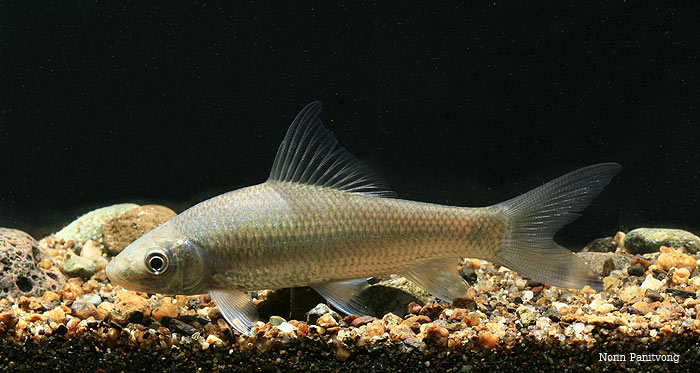
Labeo pierrei
Sauvage, 1880
Max length800mm SL31in SLTanknot recordedTempnot recordedpHnot recordedThis species can be distinguished by the following characters: juveniles with brown body and dark marking at base of caudal-fin; 37-42 + 3-4 lateral line scales; 11½ branched dorsal-fin rays; 7½ scale rows between lateral line and dorsal-fin origin; 20-25 predorsal scales; dorsal-fin relatively small with anterior branched rays shorter than head in juveniles, slightly longer than head in adults.
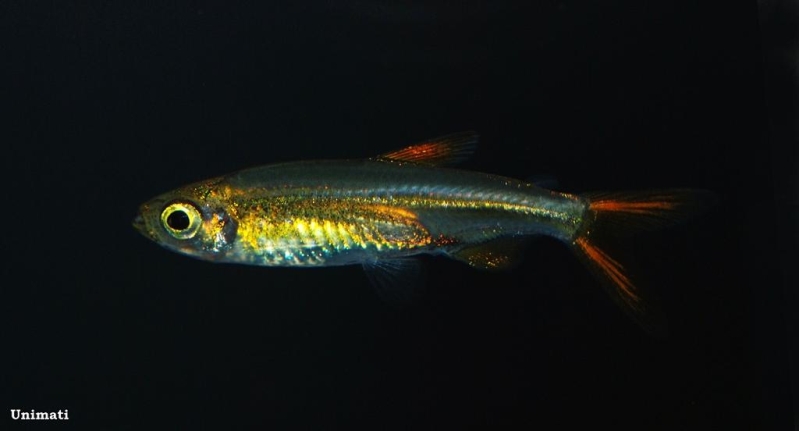
Ladigesia roloffiJelly Bean Tetra
Géry, 1968
Max length31mm SL1.2in SLTank60 × 30cm24 × 12inTemp20–26°C68–79°FpH5.0–7.0This species is sometimes referred to as 'Sierra Leone dwarf characin' and is the only member of its genus which can be distinguished from other alestids by lacking dorsal scales anterior to the adipose-fin insertion. The family Alestidae is the most spe...
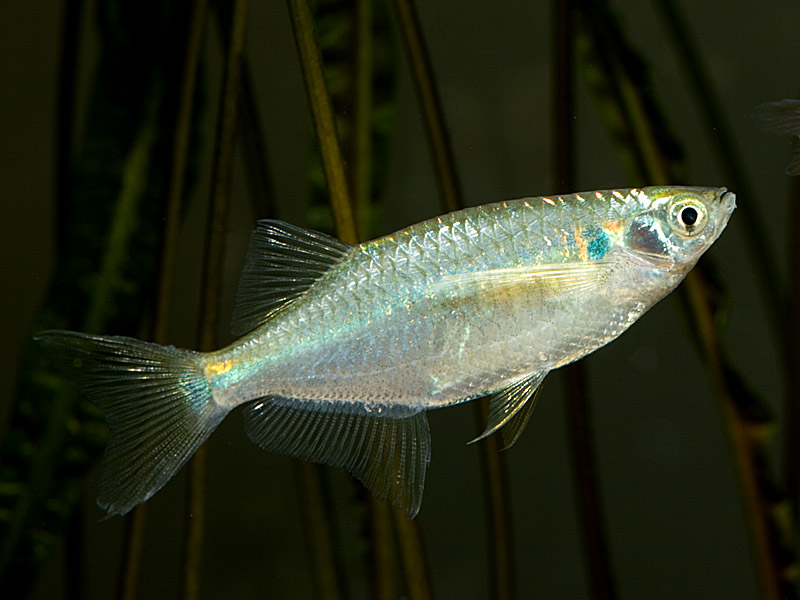
Laubuka caeruleostigmataFlying Minnow
Smith, 1931
Max length70mm SL2.8in SLTank120 × 30cm48 × 12inTemp20–26°C68–79°FpH6.0–8.0This species is also known as 'leaping barb' and was once quite common in the ornamental trade but is now seldom seen. It can be distinguished from other members of the genus by the following characters: bright blue spot on top of head; series of 4-5 short faint bars on anterior portion of body; 19-23½ branched anal-fin rays; body depth fits 2.1-2.9 times in SL.
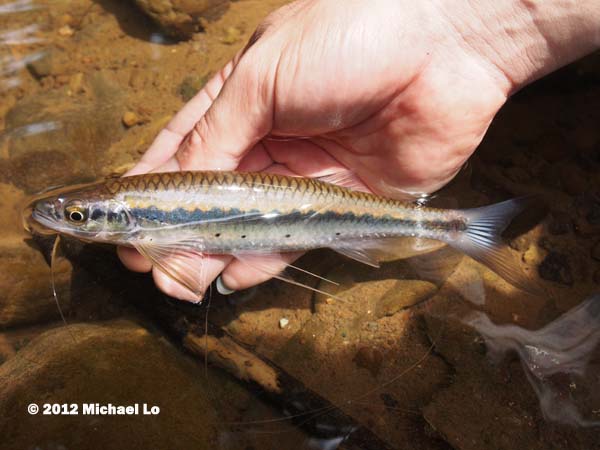
Luciosoma pellegrinii
Popta, 1905
Max length170mm SL7in SLTanknot recordedTempnot recordedpHnot recordedThe five species which currently comprise Luciosoma can be distinguished by elements of colour pattern. Popta described the colour pattern of L. pellegrinii as follows: body colour olive dorsally, with dark-edged scales, yellow ventrally; a lateral series of dark spots on the flank forming a midlateral band which extends onto the opercle but not the head; 4-8 blackish-brown, distinctly-separate spots on the lateral line; fins yellow; dorsal and anal fins with a blackish-brown band; anterior half of some pectoral-fin rays blackish-brown...
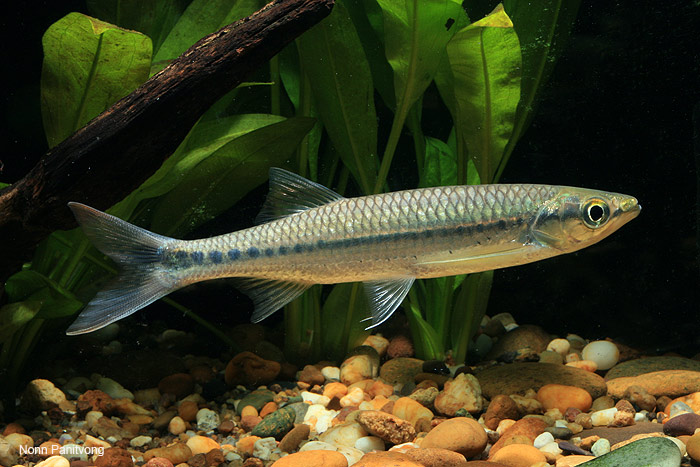
Luciosoma setigerumApollo Shark
Valenciennes, 1842
Max length220mm SL9in SLTank240 × 60cm96 × 24inTemp20–26°C68–79°FpH6.0–8.0There is a fish of unknown geographical origin which matches the majority of diagnostic features for L. setigerum with the exception that the dark lateral stripe is absent in the anterior portion of the body and is not composed of interconnected spots. It is relatively common in the aquarium trade and included here as L. cf. setigerum until a confirmed identity is established.
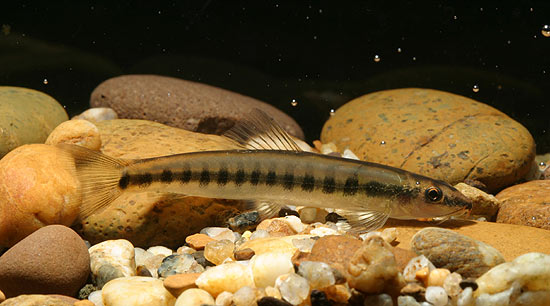
Nemacheilus ornatus
Kottelat, 1990
Max length45mm SL1.8in SLTank60 × 30cm24 × 12inTemp23–26°C73–79°FpH6.0–7.5This species is distinguished from similar-looking congeners such as N. longistriatus and N. ornatus by its unique colour pattern consisting of a black lateral body stripe with 9-16 vertically-orientated blotches extending along it both above and below, plus an irregular stripe running along the dorsal surface. The anterior lateral blotch is surrounded by lighter pigment, forming an ocellus similar to that seen in N. binotatus.
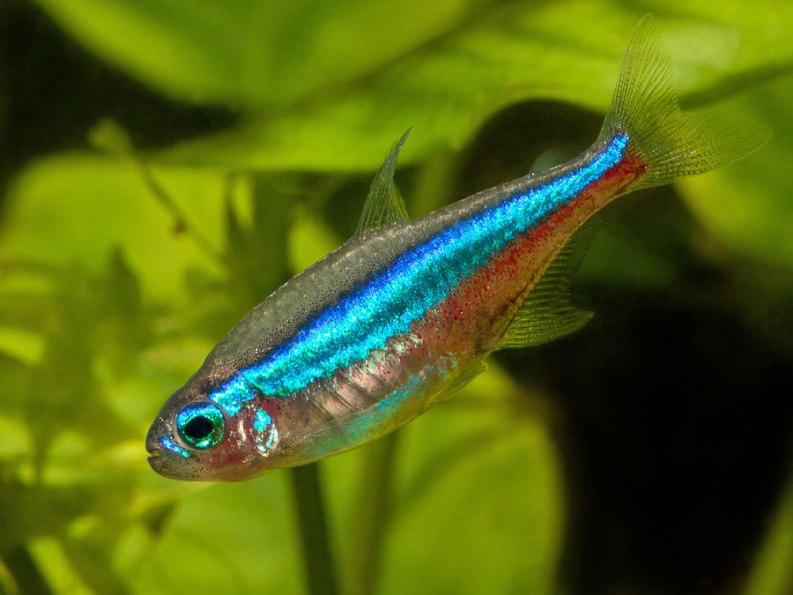
Paracheirodon simulansGreen Neon Tetra
Géry, 1963
Max length25mm SL1.0in SLTank45 × 30cm18 × 12inTemp21–35°C70–95°FpH3.0–6.5For aquarists perhaps more useful are the subtle differences in colour pattern with P. simulans differing from both P. innesi and P. axelrodi in possessing a greener (vs. bluer) lateral stripe which covers more (vs. less) of the eye/head and extends to the caudal-fin base (vs. terminating anterior to caudal-fin base), a lesser (vs. greater) amount of relatively duller (vs. brighter) red pigmentation on the flanks. The taxonomic history of all three species is complicated with earlier authors such as Géry (1960, 1977) ten...
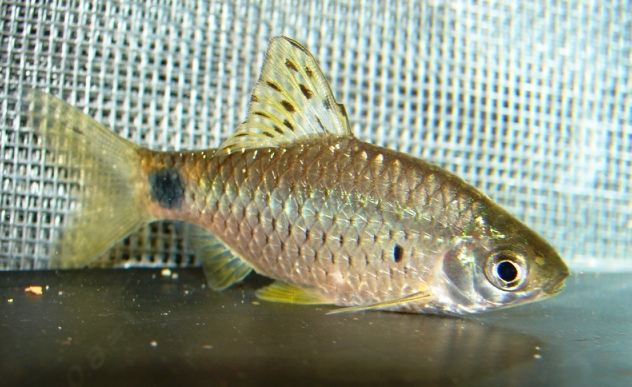
Pethia punctata
Day, 1865
Max length55mm SL2.2in SLTank75 × 30cm30 × 12inTemp21–26°C70–79°FpH6.0–7.5This species is poorly-known in the aquarium hobby and has a confusing taxonomic history having been considered both synonymous with or a subspecies of the congener P. ticto in the past. It can be distinguished from other members of the genus by the following combination of characters: lateral line complete with 27 scales (following Day); body with two dark blotches; anterior spot one scale row below lateral line; dorsal-fin with rows of spots.
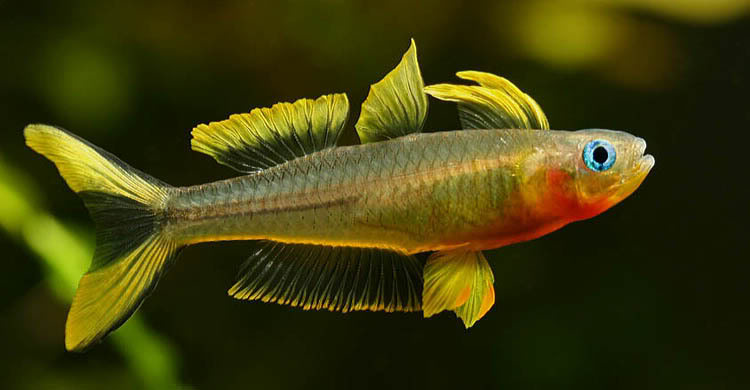
Pseudomugil furcatusForktail Blue-eye
Nichols, 1955
Max length60mm SL2.4in SLTank60 × 30cm24 × 12inTemp24–28°C75–82°FpH7.0–8.0This species is also traded as 'forktail rainbowfish' or 'yellow forktail', and it's also undergone several changes in scientific name since description. Pseudomugil furcatus is the original designation, but Allen (1980) created the genus Popondetta for it on the basis of morphological characters including number of anal-fin rays (16-20 in P. furcatus, 8-12 in other Pseudomugil spp.), absence of anterior...
Puntius sharmai
Menon & Rema Devi, 1993
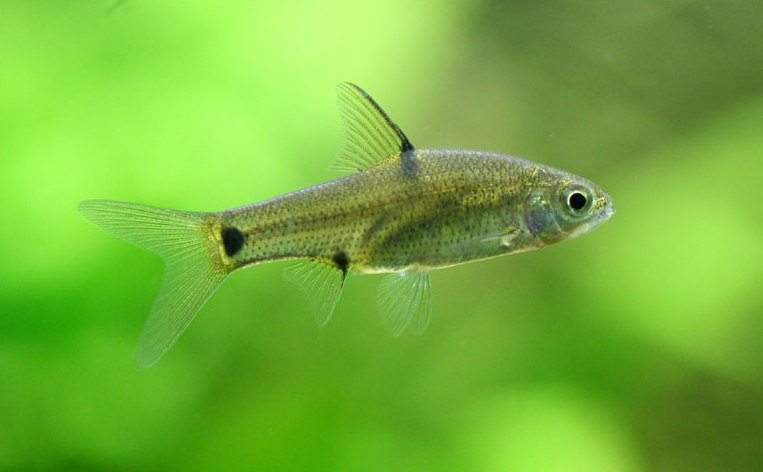
Max length40mm SL1.6in SLTank60 × 30cm24 × 12inTemp20–26°C68–79°FpH5.5–7.5This species is almost unheard of in the aquarium hobby outside of India but is maintained by some private collectors. It's distinguished from similar species by possessing a single pair of maxillary barbels, a relatively elongate body, and distinctive black spot above the anterior anal-fin base. The genus Puntius was for a number of years viewed as a polyphyletic catc...
Pygocentrus pirayaPiraya
Cuvier, 1819
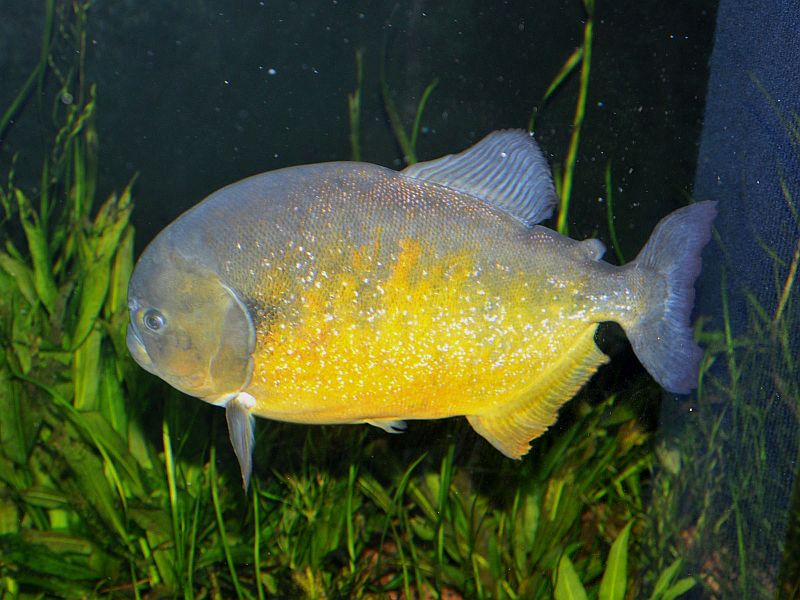
Max length350mm SL14in SLTanknot recordedTemp20–28°C68–82°FpH6.0–8.0Following Fink (1993), P. piraya can be distinguished from congeners by the following combination of characters: adipose fin with rays in larger specimens (vs. always without rays in other Pygocentrus species); branched dorsal-fin rays 15-18, usually 16 (vs. 14-18, usually 15); usually 7 neural spines anterior to first pterygiophore (vs. usually 6); vertebrae 36-39, usually 38 (vs. 35-38, usually 36). It can also be identified by colour pattern since it possesses distinctive bright yellow-orange pigmentation on the lower jaw, opercle and lateral body in life.
Rhinogobius flumineus
Mizuno, 1960
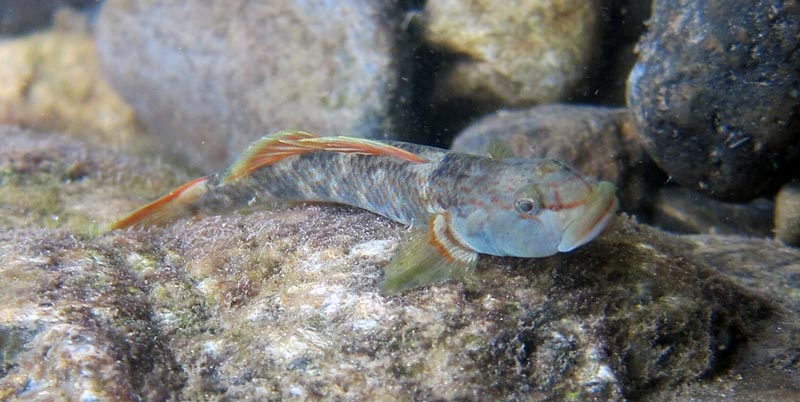
Max length60mm SL2.4in SLTank75 × 30cm30 × 12inTemp18–25°C64–77°FpH6.0–8.0In addition, there appear to exist two colour forms based on male dorsal-fin morphology and patterning; one in which the 4th ray of the first dorsal-fin is longest with a square bluish-black blotch on the anterior ⅔ of the fin, and a second in which the 2nd and 3rd rays of the first dorsal-fin are longest with the fin itself paler and lacking dark markings.
Rhinogobius rubromaculatusRed-spotted Goby
Lee & Chang, 1996
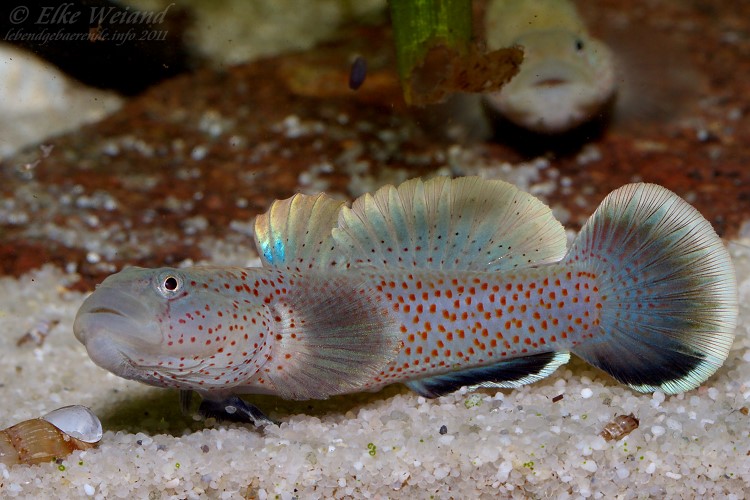
Max length55mm SL2.2in SLTank60 × 30cm24 × 12inTemp18–24°C64–75°FpH6.0–8.0This species occurs in a couple of colour forms with fish from northern and central Taiwan possessing a greyish base body colour and those from the Linbian river, southern Taiwan having a dark marking in the anterior portion of the first dorsal fin and larger, more intense red spots on the body. The latter form is also smaller in size, lays smaller eggs, does not exhibit extreme sexual dimorphism and has been refe...