Results for “coast”
Type a name: scientific, common, or one a species used to go by. Or narrow the catalogue with the filters.
Filters
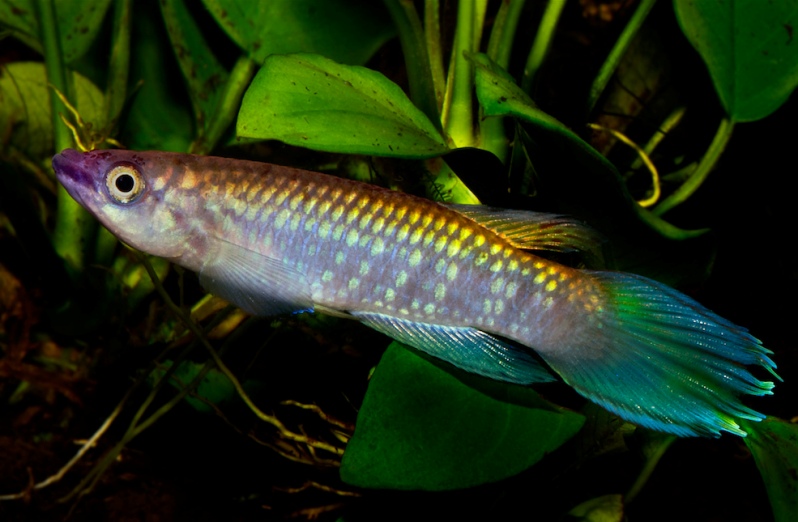
Epiplatys fasciolatusBanded Epiplatys
Günther, 1866
Max length80mm SL3.1in SLTank80 × 30cm31 × 12inTemp20–27°C68–81°FpH5.0–7.0Native to northwestern Africa with a range extending southwards from Guinea-Bissau through coastal parts of Guinea and Sierra Leone as far as western Liberia, around the city of Monrovia. Type locality was originally given as 'Sierra Leone' and 'Upper Nile' but this was later changed to 'Freetown, 8°30'N, 13°15'W, Sierra Leon', referring to the capital of Sierra Leone.
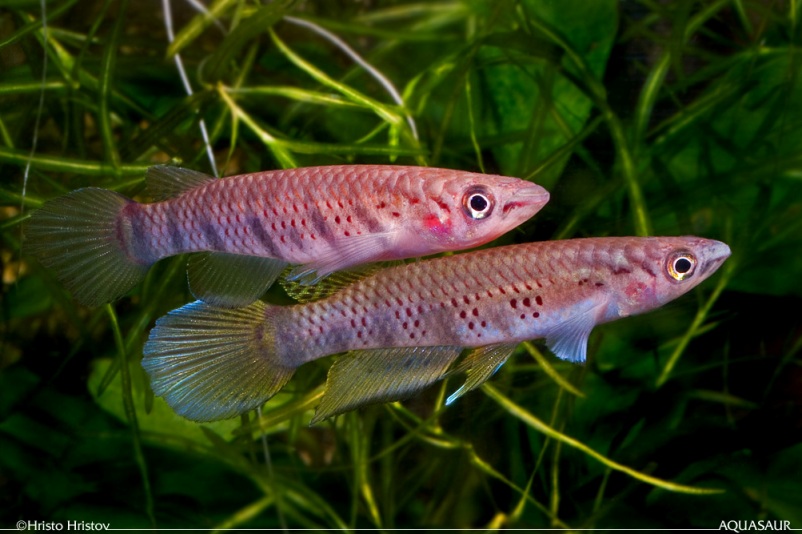
Epiplatys sexfasciatusSix-barred Panchax
Gill, 1862
Max length70mm SL2.8in SLTank80 × 30cm31 × 12inTemp20–27°C68–81°FpH5.0–7.0Distributed throughout coastal regions north and westwards from Gabon through Equatorial Guinea, Cameroon, Nigeria, Benin and Togo as far as Ghana although some consider it restricted to northwestern Gabon and Equatorial Guinea with the remaining populations representing various subspecies (see 'Notes'). Type locality is 'Gaboon River', which presumably refe...
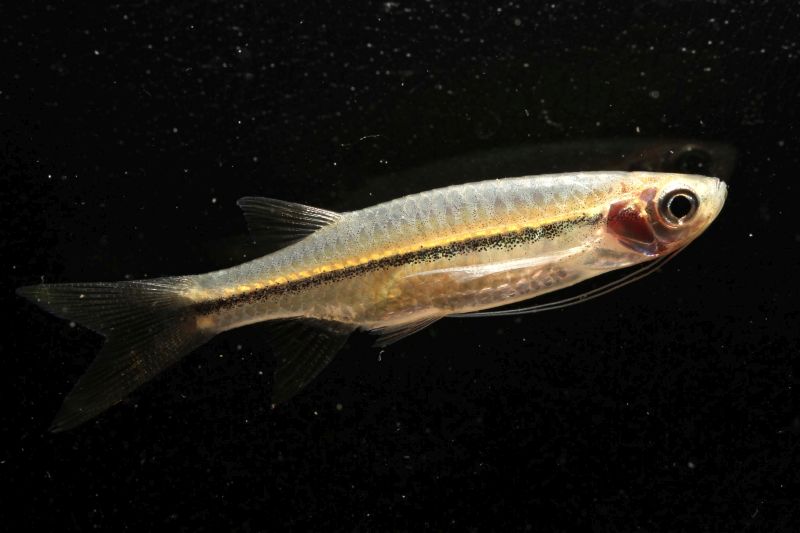
Esomus longimanusMekong Flying Barb
Lunel, 1881
Max length80mm SL3.1in SLTank120 × 30cm48 × 12inTemp20–28°C68–82°FpH6.0–8.0Known from the Mekong river basin in Thailand, Laos, Cambodia, and Vietnam, the Tonlé Sap river and lake system in Cambodia, and smaller, coastal drainages in southeast Thailand. Records from Peninsular Malaysia are likely to refer to other species. Type locality is given simply as 'Cambodia'.
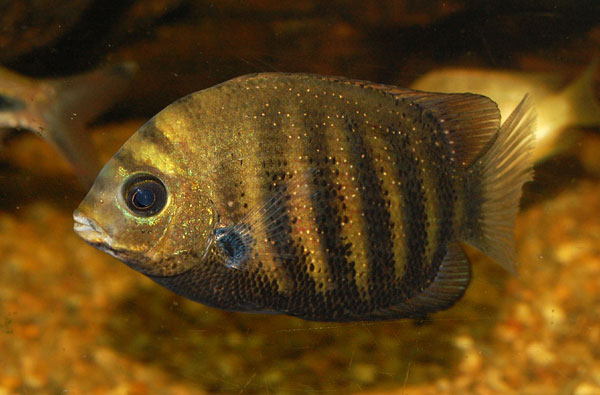
Etroplus suratensisGreen Chromide
Bloch, 1790
Max length350mm SL14in SLTanknot recordedTemp20–30°C68–86°FpH7.0–8.5This species is euryhaline and mostly inhabits brackish estuaries, coastal lagoons and the lower reaches of rivers. It also occurs in freshwater habitats, however, including a number of inland lakes in Sri Lanka although it appears to have been introduced intentionally.
Fundulopanchax walkeri
authority not recorded
Max length65mm SL2.6in SLTank45 × 25cm18 × 10inTemp20–23°C68–73°FpH6.0–7.0There exist many different populations of this species in nature, some of which are now threatened or extinct, due to rapid human development in Ghana and the Ivory Coast in recent years. It is not a common fish in the hobby. Interestingly, it appears that F. walkeri occurs as both an annual and non-annual fish. This adaptation allows it to inhabit many different habitats, as it is able to breed in both permananent and temporary bodies of water. Note that this fish prefers cooler temperatures t...
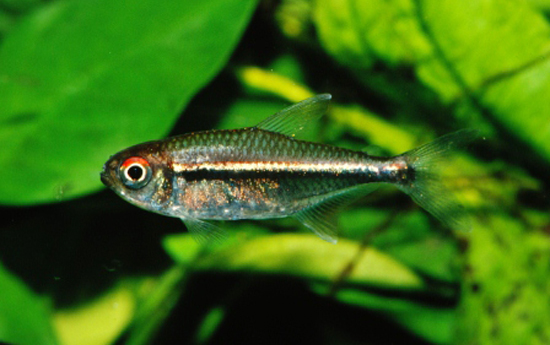
Hyphessobrycon heterorhabdusFlag Tetra
Ulrey, 1894
Max length35mm SL1.4in SLTank80 × 30cm31 × 12inTemp20–26°C68–79°FpH5.5–7.5Its name appears to have been misapplied to similar-looking fishes occurring throughout much of the middle and lower Amazon in Brazil and Colombia, plus the rio Orinoco drainage in Colombia and Venezuela, and coastal systems of the Guianas. Some of these have been described as distinct species (e.g. Hyphessobrycon amapaensis Zarske & Géry 1998; H. eschwartzae García-Alzate, Román-Valencia & Ortega 2013; H. montagi Lima, Couthino & Woziacki 2014), whereas the identity of others remains un...
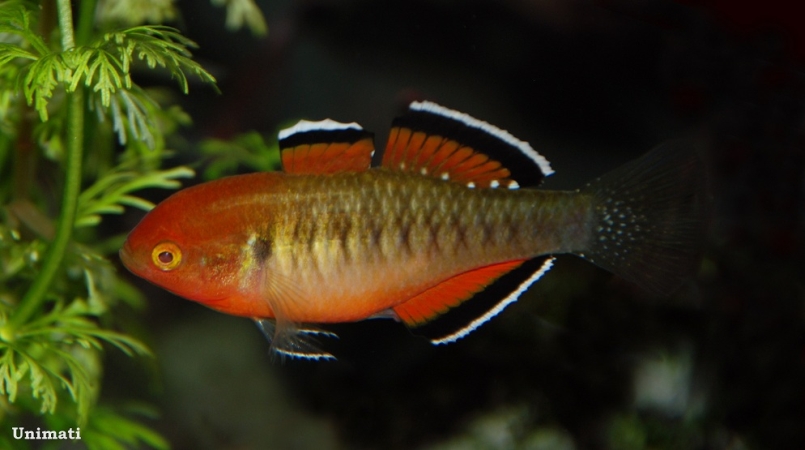
Hypseleotris compressaEmpire Gudgeon
Krefft, 1864
Max length120mm SL5in SLTank80 × 30cm31 × 12inTemp20–35°C68–95°FpH5.0–9.1Occurs in northern and eastern Australia and southern New Guinea. In the former its range extends from the Pilbara and Kimberley regions of Western Australia state around the northern and eastern coastlines of the continent as far as the Towamba river system in New South Wales state.
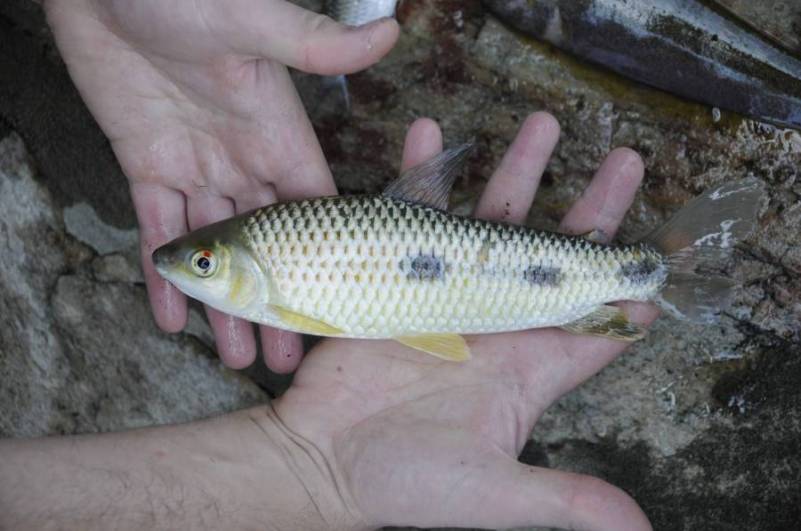
Leporinus fridericiThreespot Leporinus
Bloch, 1794
Max length400mm SL16in SLTank240 × 90cm96 × 36inTemp20–28°C68–82°FpH5.0–8.0This species was described from Suriname but no specific locality was given. It's currently accepted to occur throughout much of the Amazon river system in Brazil, Peru and Bolivia with additional records from coastal drainages of Guyana, Suriname and French Guiana plus the island of Trinidad (Trinidad and Tobago).
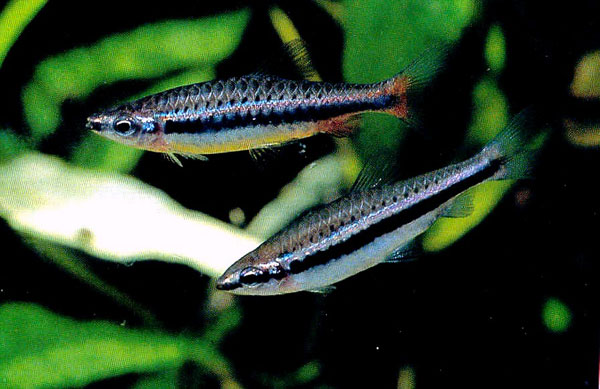
Nannostomus nitidusShining Pencilfish
Weitzman, 1978
Max length35mm SL1.4in SLTank60 × 30cm24 × 12inTemp23–28°C73–82°FpH4.0–7.0Described from 'Igarapé Candiru-Mirim, Rio Capim, Pará, Brazil', a relatively short river draining into the rio Pará near the city of Belem, eastern Brazil. Records of similar-looking fish exist from Santarém, Pará state, in the central Amazon region, and the coastal city of Fortaleza, Ceará state, much further southeast. These may require confirmation.
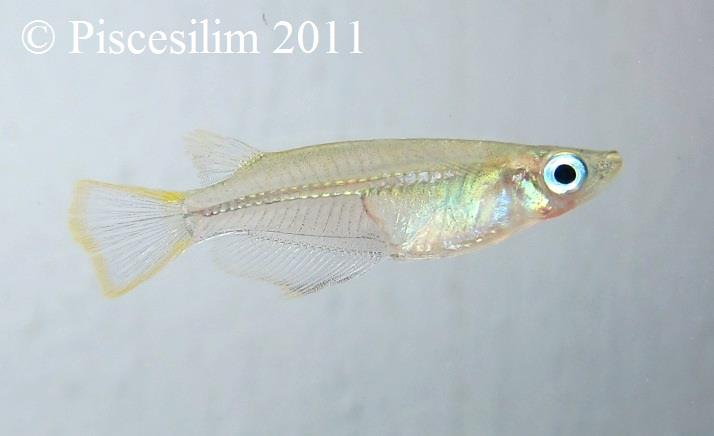
Oryzias javanicusJavanese Ricefish
Bleeker, 1854
Max length35mm SL1.4in SLTank45 × 30cm18 × 12inTemp24–29°C75–84°FpH7.0–9.0This species is widely-distributed throughout Peninsular Thailand, Malaysia (Malay Peninsula plus the states of Sabah and Sarawak, Borneo), Singapore and Indonesia, with records from the Riau Archipelago, Sumatra, Java, Borneo, Bali, Lombok, and Sulawesi existing in the latter. Type locality is 'Panimbang River, Perdana, Indonesia'. It's typically found in coastal, normally brac...
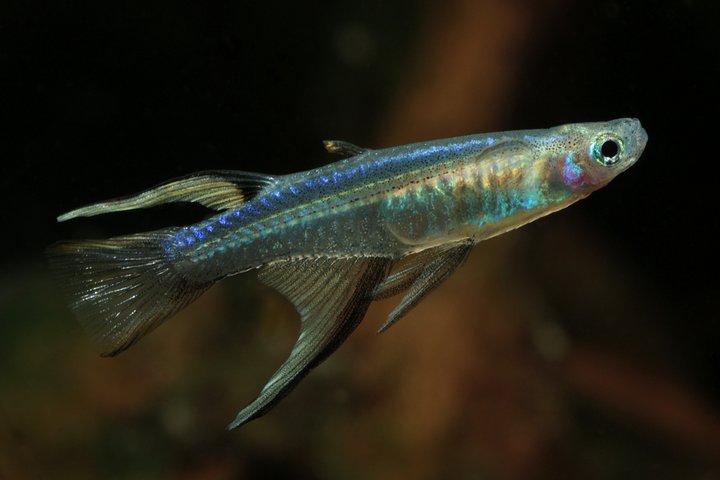
Pseudomugil cyanodorsalisNeon Blue-eye
Allen & Sarti, 1983
Max length35mm SL1.4in SLTank45 × 30cm18 × 12inTemp21–31°C70–88°FpH7.0–8.5Euryhaline and thus capable of withstanding significant fluctuations in salinity and other water conditions. It's been recorded in full marine conditions as well as pure freshwater environments, and commonly inhabits coastal mangrove creeks and swamps. Such changes may occur on a daily or seasonal basis depending on locality, with some habitats influenced by daily tides whereas others become hypersal...
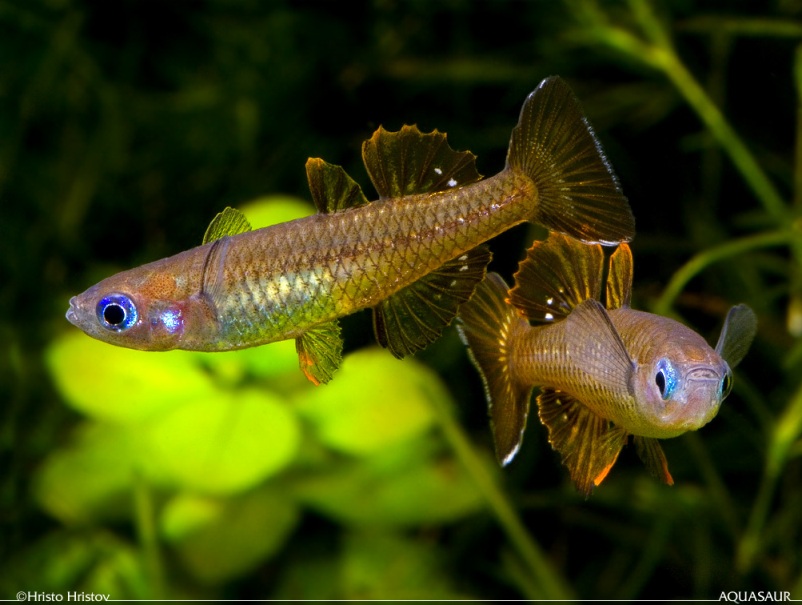
Pseudomugil tenellusDelicate Blue-eye
Taylor, 1964
Max length55mm SL2.2in SLTank75 × 30cm30 × 12inTemp25–32°C77–90°FpH5.5–7.5Euryhaline and mostly inhabits coastal floodplains where it's found in both fresh and brackish habitats, including tidal estuaries and salt marshes. It's particularly common in swamps, billabongs, and slow-moving streams where aquatic vegetation grows densely, but some populations have colonised upper sections of freshwater streams. Larger individuals may also move into main river channels. Tappin (2010) gives the following ranges of parameters based on those taken from various localities: temperature 27 - 38 °C, pH 5...
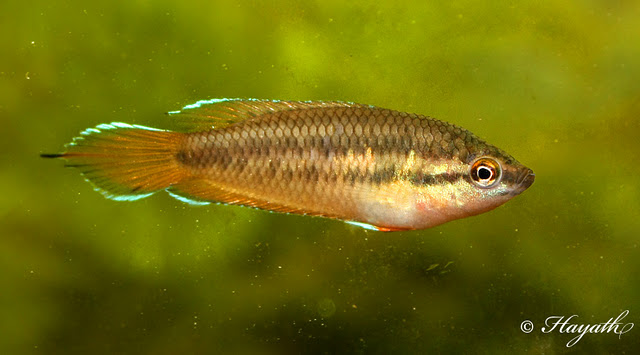
Pseudosphromenus dayiBrown Spike-tailed Paradise Fish
Engman, 1909
Max length65mm SL2.6in SLTank60 × 30cm24 × 12inTemp20–28°C68–82°FpH6.0–7.5Engmann (1909) mentions that the type series was collected from 'Malakka' but this is considered an error which probably should have read 'Kerala' since this species is known only from coastal drainages of the Western Ghats mountains in southern Kerala state, India.
Rasbora vulcanus
authority not recorded
Max length40mm SL1.6in SLTank60 × 38cm24 × 15inTemp23–26°C73–79°FpHnot recordedThis species was described in 1999 and may still occasionally be seen on sale under the incorrect names R. reticulata or R. cf. reticulata as well as the trade name 'volcano rasbora'. The real reticulata is endemic to the small island of Nias which lies off Sumatra's northwestern coast and is virtually inaccessible to fish collectors so is unlikely to be in the hobby although it may have been exported on a couple of occasions. It's a deeper-bodied fish and does not exhibit th...
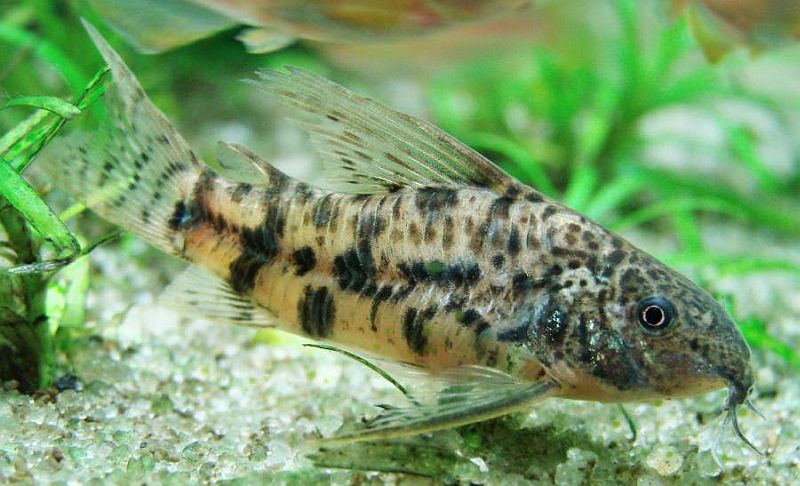
Scleromystax macropterusSailfin 'Cory'
Regan, 1913
Max length90mm SL3.5in SLTank120 × 45cm48 × 18inTemp14–20°C57–68°FpH5.0–7.0Known from minor rivers in the coastal states of São Paolo, Paraná, and Santa Catarina, southern Brazil, plus some tributaries of the rio Paraná basin in Paraguay. Type locality is 'Paranaguá, 25°32'S, 48°36'W, Paraná, Brazil'.
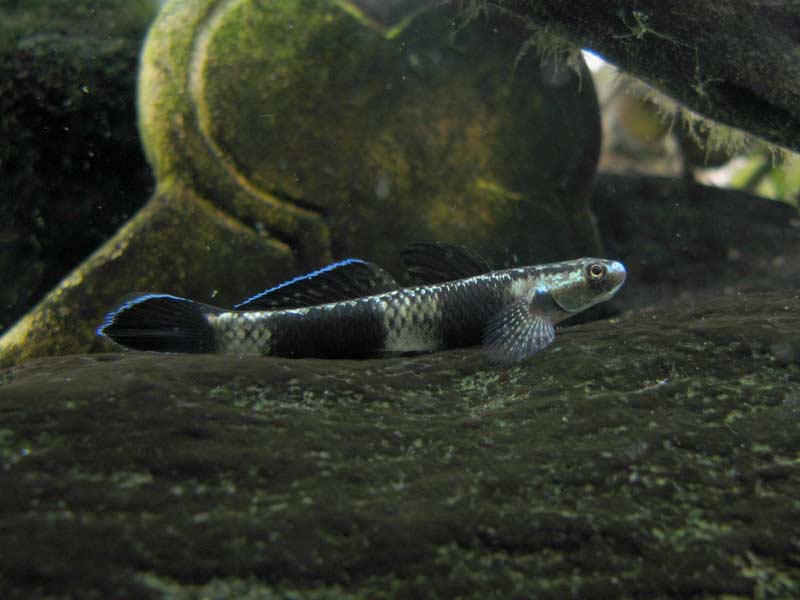
Stiphodon pelewensis
Herre, 1936
Max length45mm SL1.8in SLTank60 × 30cm24 × 12inTemp22–28°C72–82°FpH6.5–7.5This species seems not to have appeared in the trade and is similar to several congeners in appearance, most notably S. weberi which is native to the Maluku archipelago and other islands around the coast of Papua (formerly Irian Jaya). The two are said to be most easily-distinguished by examination of the belly which is fully-scaled in S. pelewensis but lacks scalation in S. weberi. The Gobiidae is the most speciose vertebrate family and notoriously problematic in terms of identifying fishes down to sp...
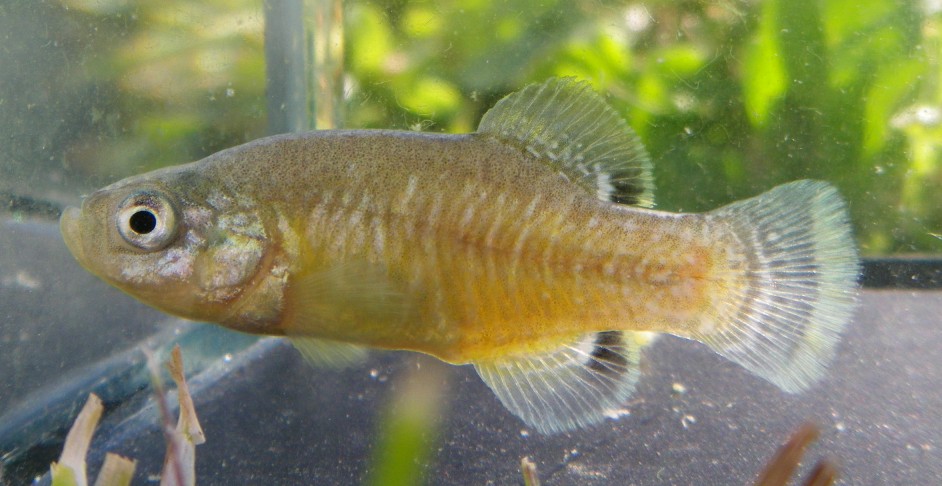
Tellia apodaFootless Toothcarp
Gervais, 1853
Max length45mm SL1.8in SLTank120 × 30cm48 × 12inTemp16–30°C61–86°FpH7.0–9.0The genus Aphanius currently contains 22 species and subspecies which are thought to have derived from a common ancestor originally distributed around the periphery of the former Tethys Sea. These can be separated into two main phylogenetic groups usually referred to as the 'eastern' and 'western' clades by scientists and aquarists because they broadly correspond to those coastlines of the Tethys. The eastern clade comprises the species now found in the Arabian Peninsula and ...
Thalassophryne amazonicaPrehistoric Monster Fish
authority not recorded
Max length150mm SL6in SLTank75 × 30cm30 × 12inTemp24–28°C75–82°FpHnot recordedThere are currently six described species in the genus Thalassophryne, of which T. amazonica is the only freshwater representative. The others (T. nattereri, T. maculosa, T. megalops, T. montevidensis and T. punctata) are all estuarine animals distributed along the western Atlantic coastlines of Central and South America and inhabit brackish-to-marine waters. They are members of the family Batrachoididae or toadfishes, of which most are exclusively marine species. All batrachoidids are ambush pr...