Results for “family”
Type a name: scientific, common, or one a species used to go by. Or narrow the catalogue with the filters.
Filters
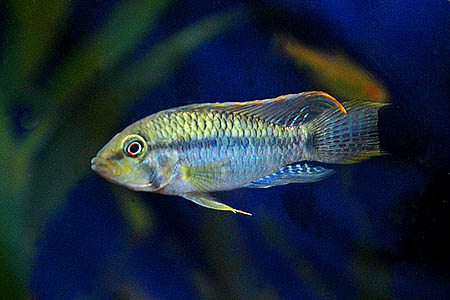
Apistogramma brevis
Kullander, 1980
Max length60mm SL2.4in SLTank45 × 38cm18 × 15inTemp26–28°C79–82°FpH6.0–7.0Apistogrammas are identified by the use of "A numbers"in a similar fashion to the "L number" system used to identify loricariids. Apistogramma brevis is identified as A168. Additionally, apistos are also grouped into type families and this species is the species type of the brevis group. Unlike some apistogramma species, a. brevis occurs only in a relatively small range and has not been found outside this. personata complex gibbiceps group...
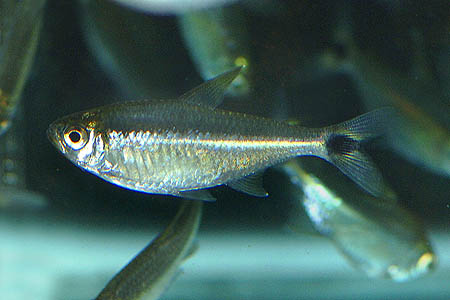
Astyanax kennedyiKennedy's Tetra
Géry, 1964
Max length50mm SL2.0in SLTank80 × 30cm31 × 12inTemp26–29°C79–84°FpH5.5–7.0Endemic to pthe upper Amazon basin in Peru, around the city of Iquitos. Most Astyanax spp. are not popular in the aquarium hobby, though the genus is among the most speciose within the family Characidae. A. kennedyi is no exception; you'll rarely see it offered for sale but may find the occasional specimen mixed among other species in shipments of wild fishes from Peru.
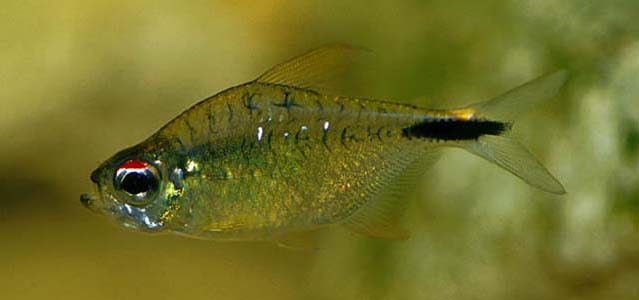
Astyanax leopoldiLeopold's Tetra
Géry, Planquette & Le Bail, 1988
Max length60mm SL2.4in SLTank60 × 30cm24 × 12inTemp23–27°C73–81°FpH5.5–7.0Most Astyanax spp. are not popular in the aquarium hobby, though the genus is among the most speciose within the family Characidae. A. leopoldi is no exception in that you'll rarely see it offered for sale but may find the occasional specimen mixed among other species in shipments of wild fishes from Peru.
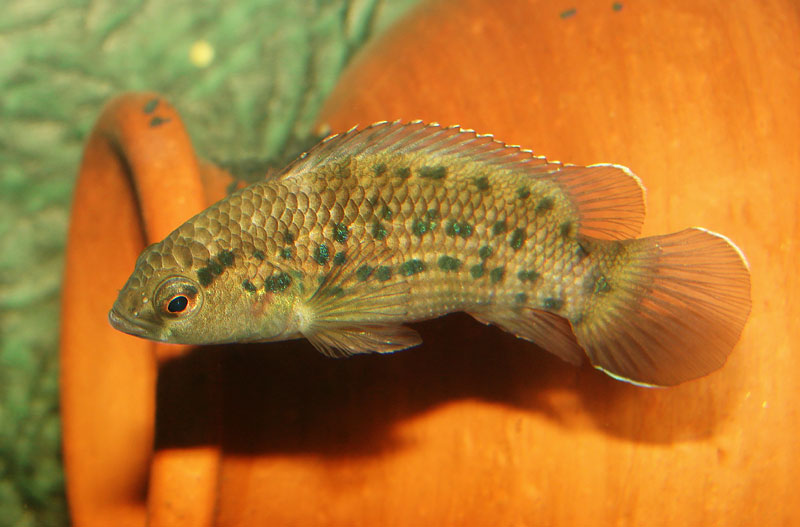
Badis assamensis
Ahl, 1937
Max length75mm SL3.0in SLTank75 × 30cm30 × 12inTemp15–25°C59–77°FpH6.0–7.5Like most badids this species is poorly documented and has yet to find significant popularity in the aquarium hobby. It is easily confused with B. blosyrus at first glance as the body patterning of the two is almost identical but can be distinguished by its slightly larger adult size, noticeably shorter jaw profile and some other, mostly internal, meristic characters. Prior to 2002 the family Badidae inc...
Badis corycaeus
Kullander & Britz, 2002
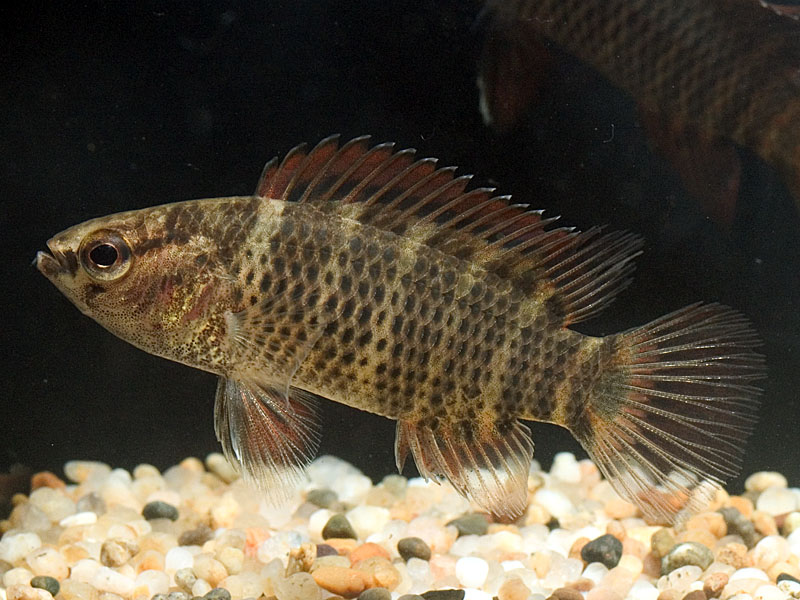
Max length60mm SL2.4in SLTank60 × 30cm24 × 12inTemp15–25°C59–77°FpH6.5–7.5Like most badids this species is poorly documented and has yet to find significant popularity in the aquarium hobby. Within the genus it is most closely-related to B. pyema but the two are unlikely to be confused as B. corycaeus is much the deeper, darker-bodied fish. Prior to 2002 the family Badidae included just five species of which only B. badis and, to a lesser extent, Badis dario (referred to as B. bengalensis by some sources) were popular in the aquarium hobby. However an extensive rev...
Betta antoni
Tan & Ng, 2006
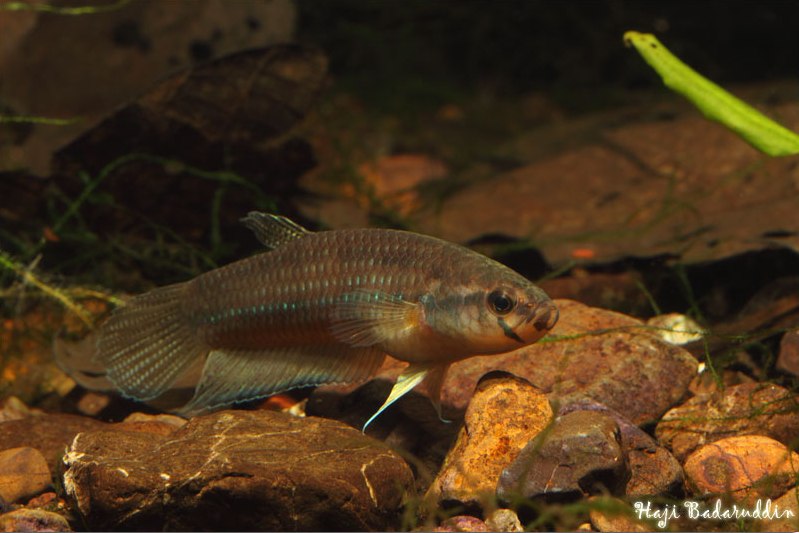
Max length50mm SL2.0in SLTank60 × 30cm24 × 12inTemp22–27°C72–81°FpH5.5–7.0The genus Betta is the most speciose within the family Osphronemidae with almost 70 recognised members and looks set to grow further with new ones continuing to be described on a regular basis since the turn of the century. Member species have successfully adapted to inhabit a variety of ecological niches from stagnant ditches to flowing hill streams including some extreme environments such as highly acidic peat swamp forests.
Betta coccinaScarlet Betta
Vierke, 1979
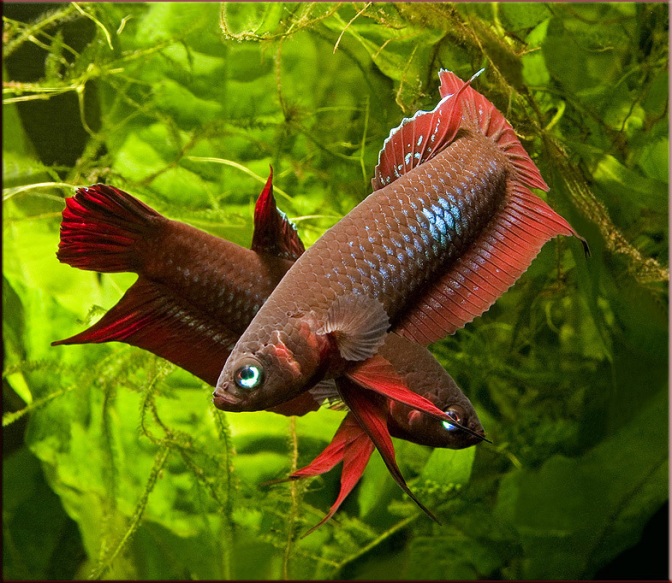
Max length40mm SL1.6in SLTank45 × 30cm18 × 12inTemp22–30°C72–86°FpH4.0–6.0B. coccina can be told apart from other members by the following combination of characters: iridescent green lateral blotch present in male, absent in female; body dark red in colour; no parallel vertical iridescent gold opercle bars; pelvic fin falcate with black filamentous tip, remainder red; median fins with discrete iridescent green spots; dorsal fin-rays 9-12; anal-fin rays 27-29; subdorsal scales 7-8; lateral scales 31-32; predorsal scales 18-21. The genus Betta is the most speciose within the family Osphronemidae with almost 70 reco...
Bunocephalus coracoideusBanjo Catfish
authority not recorded
Max length150mm SL6in SLTank60 × 38cm24 × 15inTemp20–27°C68–81°FpH5.8–7.8Bunocephalus is the largest genus within the Aspredinidae family and there are several undescribed species. B. coracoideus is the most common member seen in dealers' tanks. Its native name "Guitarrita" translates as "little guitar" and refers to the shape of the fish when viewed from above. Despite the regularity with which it is seen for sale, it isn't really a good catfish for the general community tank because it's a largely inactive, secretive species, ...
Butis butisCrazy Fish
Hamilton, 1822
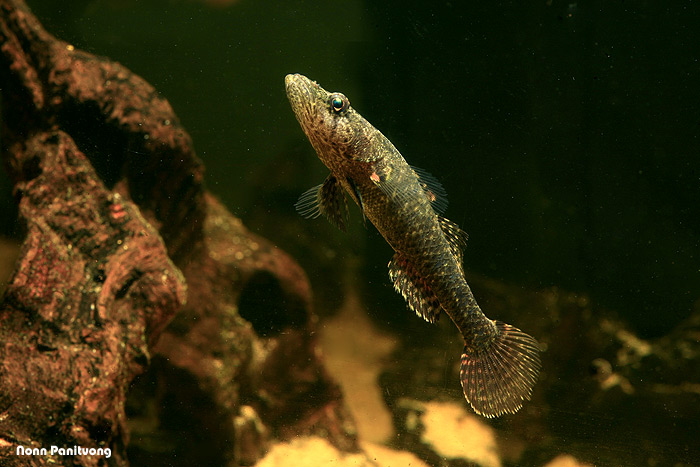
Max length120mm SL5in SLTank75 × 30cm30 × 12inTemp22–27°C72–81°FpH7.0–8.5Butis spp. are largely nocturnal ambush predators with cryptic patterning to help them blend in with their surroundings. They can also lighten and darken their body colouration to an extent, have a habit of aligning themselves with solid surfaces whether horizontal, vertical, or inverted, and often swim in an upside-down position. The genus is usually included in the family Eleotridae of which members are often referred to...
Caecomastacembelus albomaculatus
authority not recorded
Max length220mm SL9in SLTank120 × 30cm48 × 12inTemp23–27°C73–81°FpH8.0–9.5This is a great oddball species for the Tanganyikan community tank, although it is not as attractive as the closely related Aethiomastacembelus ellipsifer. It is rarely seen in the hobby. The species in the family Mastacembelidae are known as "spiny" eels because the dorsal rays are stiffened. Care must therefore be exercised when handling them to avoid injuries. Spiny eels also have no swim bladder, an adaptation to their benthic lifestyle....
Caecomastacembelus plagiostomus
authority not recorded
Max length300mm SL12in SLTank120 × 45cm48 × 18inTemp23–27°C73–81°FpH8.0–9.5Very rarely seen in the hobby, this species makes an interesting oddball addition to the Tanganyikan community tank. The species in the family Mastacembelidae are known as "spiny" eels because the dorsal rays are stiffened. Care must therefore be exercised when handling them to avoid injuries. Spiny eels also have no swim bladder, an adaptation to their benthic lifestyle.....
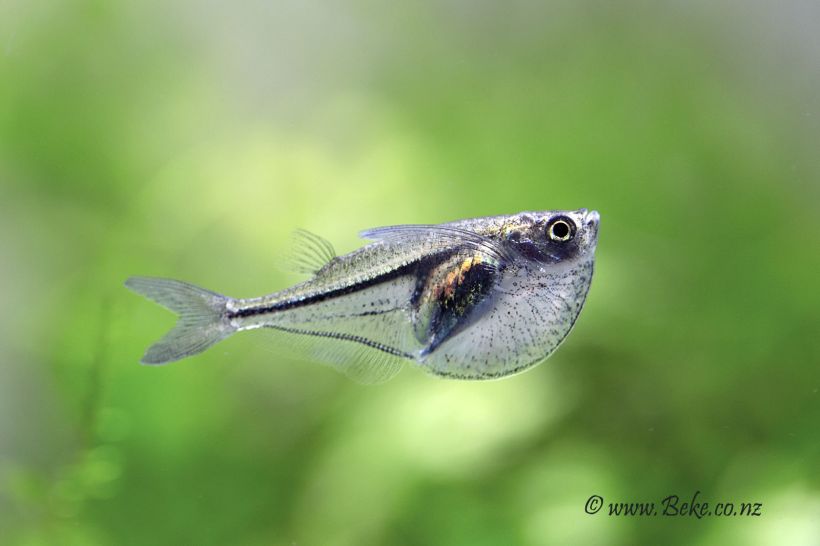
Carnegiella myersiPygmy Hatchetfish
Fernandez-Yepes, 1950
Max length25mm SL1.0in SLTank50 × 30cm20 × 12inTemp23–26°C73–79°FpH4.0–7.0The smallest and most delicate of the nominal hatchetfishes. The rounded keel is shallower than related species, giving this fish a distinctive elongate profile. The family Gasteropelecidae is separated from other Characiformes by the following combination of characters: front...
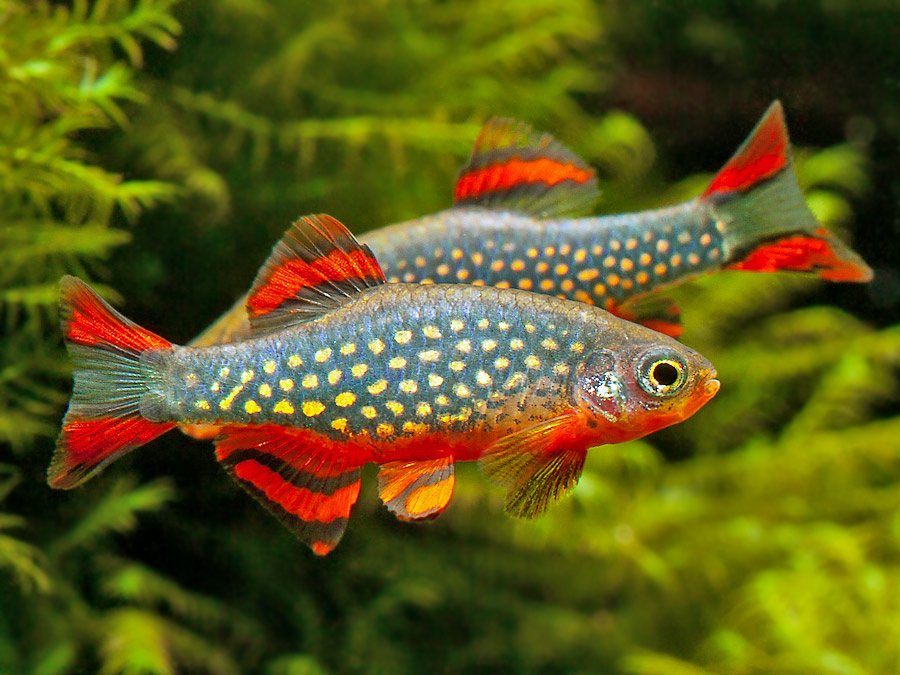
Celestichthys margaritatusCelestial Pearl 'Danio'
Roberts, 2007
Max length21mm SL0.8in SLTank45 × 30cm18 × 12inTemp20–26°C68–79°FpH6.5–7.5The type locality is an area of permanently-flooded grassland formed by the damming of a spring for agricultural purposes. The water is only around 30cm deep, transparent and supports dense growths of aquatic plants, mostly from the family Hydrocharitaceae which includes such genera as Elodea, Egeria and Blyxa. Sympatric species included Devario sondhii, a Microrasbora very similar to M. rubescens, an undescribed Yunnanilus known to aquarists as the 'rosy' loach and Channa harcourtbutleri.
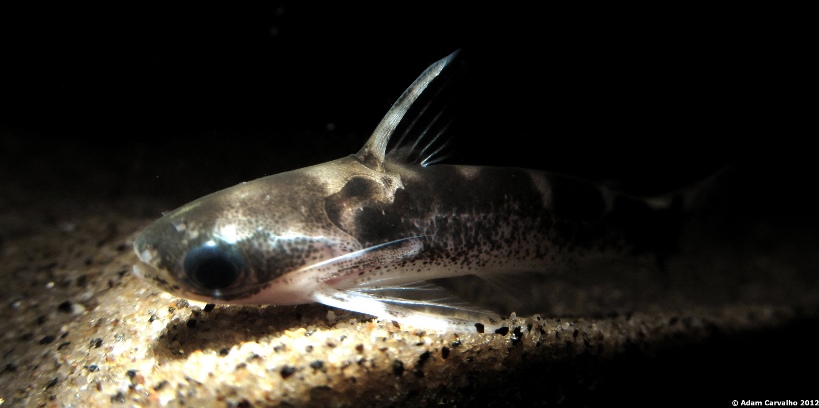
Centromochlus macracanthus
Soares-Porto, 2000
Max length71mm SL2.8in SLTank80 × 30cm31 × 12inTemp22–28°C72–82°FpH4.0–7.0All members of the family Auchenipteridae are thought to practise internal insemination and females can carry mature, unfertilised eggs and sperm packets inside the body for unspecified periods of time. When conditions are satisfactory fertilisation is triggered and the eggs deposited, and there is n...
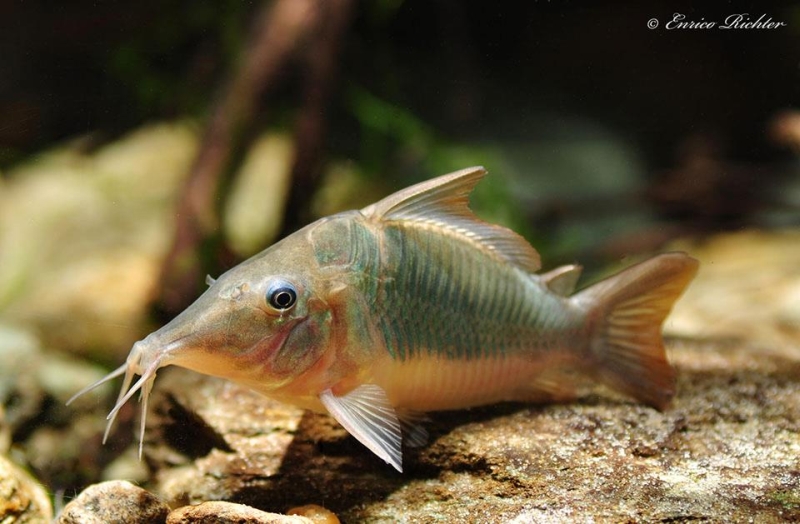
Corydoras multiradiatusHognose 'Brochis'
Orcés V., 1960
Max length100mm SL3.9in SLTank120 × 45cm48 × 18inTemp20–26°C68–79°FpH6.0–7.5The genus is included in the family Callichthyidae, of which members are often referred to collectively as 'armoured' or 'mailed' catfishes group due to the presence of bony plates in place of scales on the body. Their taxonomy can be confusing, and numerous undescribed species are also thought to exist.
Corydoras paleatusPepper Cory
authority not recorded
Max length70mm SL2.8in SLTank61 × 38cm24 × 15inTemp22–26°C72–79°FpH6.0–7.0Corydoras are members of the armoured catfish family. The genus name means "helmet skin" and the fish live up to this name as they are rather tough little fish. They also have spines in the leading rays of the pectoral fins to deter larger predators from eating them. Corydoras are sometimes observed taking a gulp of air at the water surface: this is because they can absorb oxygen through their gut. It is not known why cories do this even on oxygen rich waters. Along with the bronze ...
Corynopoma riiseiSwordtail Characin
authority not recorded
Max length65mm SL2.6in SLTank75 × 38cm30 × 15inTemp22–28°C72–82°FpH6.0–7.0This unusual tetra is not often seen on sale in the trade, but is never particularly expensive when available. It is currently the only member in the genus although the family Glandulocaudinae actually contains about 20 member genera. None are especially popular aquarium fish, although a couple of Mimagoniates species are occasionally seen in the hobby. Almost all members of the Glandulocaudinae are characterised by the presence of secretory caudal glands in male fish, the particular structur...
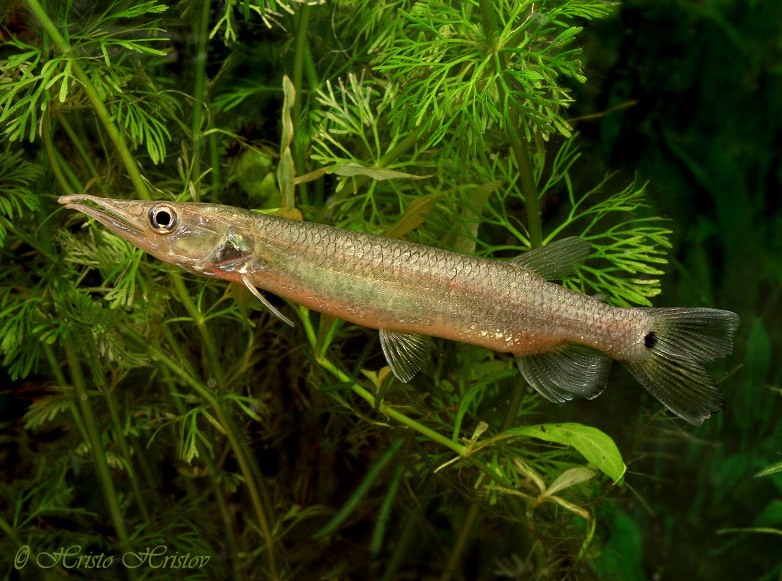
Ctenolucius hujetaGar 'Characin'
Valenciennes, 1850
Max length250mm SL10in SLTank180 × 60cm72 × 24inTemp22–28°C72–82°FpH5.0–7.5C. hujeta is traded under various names including 'slant-nosed gar', 'hujeta gar', 'rocket gar' and 'freshwater barracuda' but it and other members of the family Ctenoluciidae have traditionally been referred to as 'pike characids'. They're all predatory fishes native to South America, included in the order Characiformes and currently spread across two genera; Ctenolucius with two species and Boulengerella with five. The two genera are ...
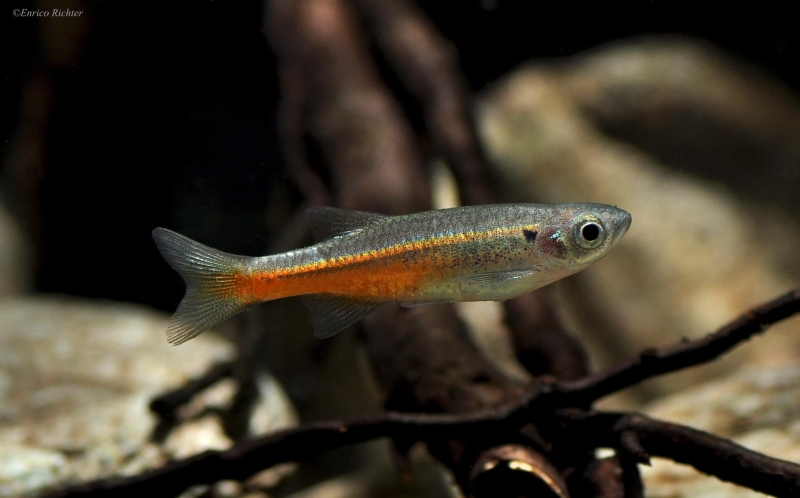
Devario sondhiiFireline Devario
Hora & Mukerji, 1934
Max length45mm SL1.8in SLTank75 × 30cm30 × 12inTemp20–26°C68–79°FpH6.5–7.5The habitat near Hopong is an area of permanently-flooded grassland formed by the damming of a spring for agricultural purposes and is around 1,040 metres AMSL. The water is only around 30cm deep, transparent and supports dense growths of aquatic plants, mostly from the family Hydrocharitaceae which includes such genera as Elodea, Egeria and Blyxa.
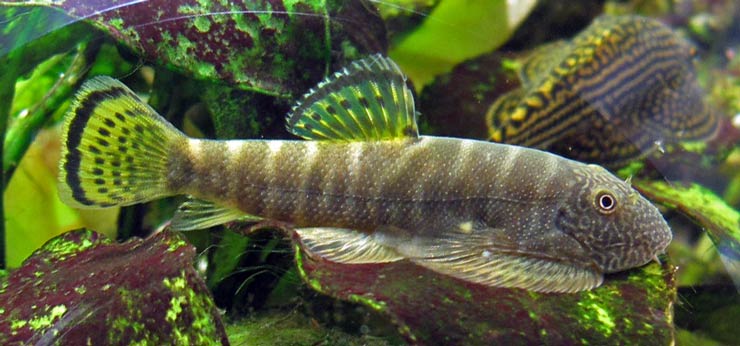
Gastromyzon viriosus
Tan, 2006
Max length55mm SL2.2in SLTank75 × 30cm30 × 12inTemp20–24°C68–75°FpH6.0–7.5Many loaches from the families Nemacheilidae, Balitoridae and Gastromyzontidae are also suitable but research your choices before purchase in order to be sure as some are excessively aggressive or otherwise competitive. Gastromyzon spp. tend to exist in lo...