Results for “grow out”
Type a name: scientific, common, or one a species used to go by. Or narrow the catalogue with the filters.
Filters
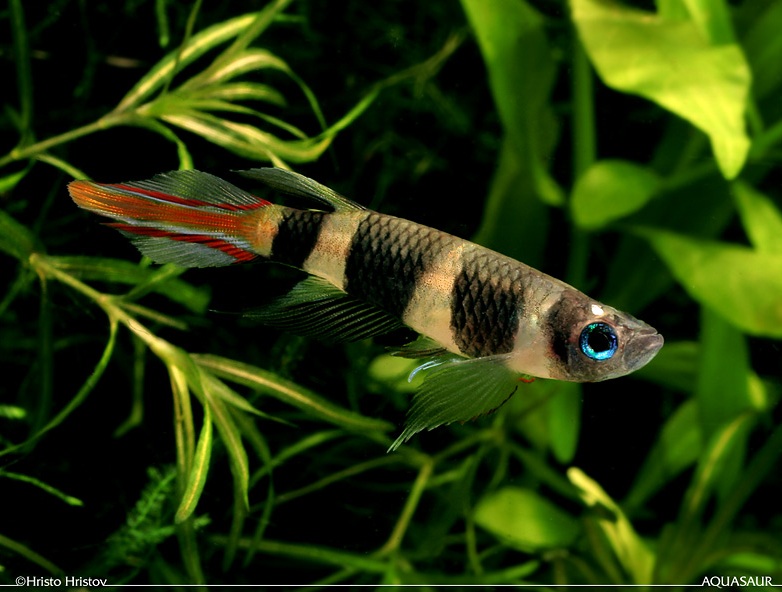
Epiplatys annulatusClown Killifish
Boulenger, 1915
Max length35mm SL1.4in SLTank45 × 30cm18 × 12inTemp20–26°C68–79°FpH4.0–7.0Perhaps looks best in a heavily-planted set-up or natural-style arrangement comprising a sandy substrate plus some driftwood roots and branches. The addition of dried leaf litter would further emphasise the natural feel and as well as offering additional cover for the fish brings with it the growth of microbe colonies as decomposition occurs. These can provide a valuable secondary food source for fry and the humic su...
Gobioides broussonnetiiViolet Goby
authority not recorded
Max length625mm SL25in SLTank120 × 60cm48 × 24inTemp22–26°C72–79°FpH7.5–9.0This fish is also commonly sold as the dragon or Peruvian goby, or dragon fish, and its bizarre appearance has made it popular in the trade. This is unfortunate, as not only does it grow very large, but it has specialised feeding requirements and does not survive for very long in freshwater. When provided with the correct conditions, however, it makes a unique and fascinating captive subject. There is a smaller species in the genus, G. peruanus, that does survive in freshwater, being a riverine ...
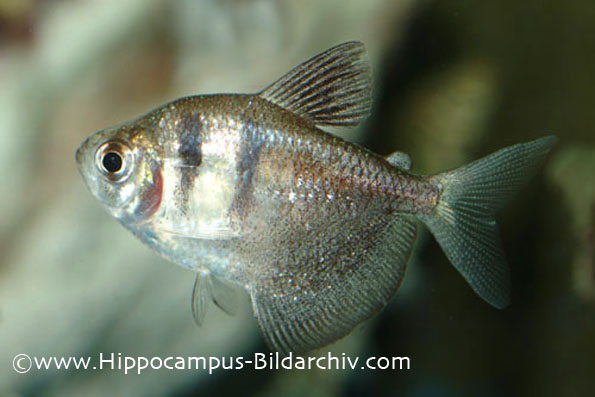
Gymnocorymbus ternetziBlack Widow Tetra
authority not recorded
Max length60mm SL2.4in SLTank75 × 30cm30 × 12inTemp20–26°C68–79°FpH6.0–7.0This species is ubiquitous in most dealers' tanks and is one of the best choices for the newcomer to fishkeeping. All the fish sold in the trade have been captive bred and as such are unfussy regarding water chemistry and diet. The intense black colouration of juveniles does fade as they grow, but adult fish provide a subtle contrast to most other commonly kept species. It goes by several common names, including 'butterfly tetra', 'black skirt tetra' and simply '...
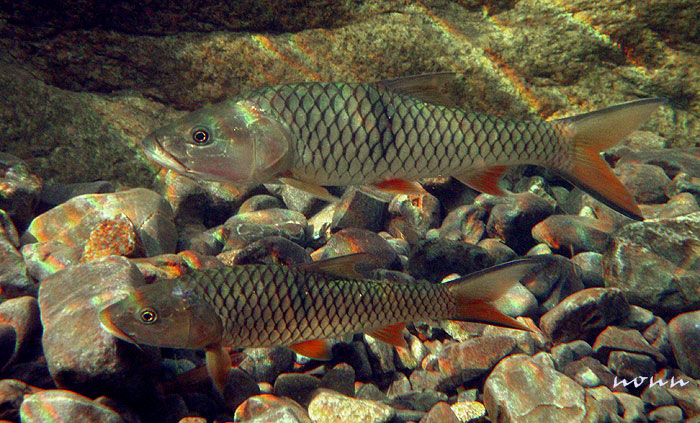
Hampala macrolepidotaHampala Barb
Kuhl & van Hasselt, 1823
Max length700mm SL28in SLTanknot recordedTemp20–26°C68–79°FpH5.5–8.0This species is also known by the vernacular 'jungle perch' or 'sidebar barb' and should not be considered an aquarium subject in all but the most extreme circumstances since it can grow to over 2 feet in length, weigh in excess of 5 kg and is a powerful, pelagic predator. It's also a popular sport fish with a reputation for striking hard.
Heros efasciatusSeverum
authority not recorded
Max length300mm SL12in SLTank120 × 45cm48 × 18inTemp22.2–28.9°C72–84°FpH5.5–7.0The severum is one of the most poular and readily available cichids in the hobby, however not everyone realises that these fish can attain a fairly large size and are therefore not suitable for every aquarium. The fish is normally sold in the standard green variety and also gold. Severums make good fish for a South American community setup, as long as there are no fish small enough for them to eat. They grow quite quickly, so should be housed in an adequately sized tank from the start....
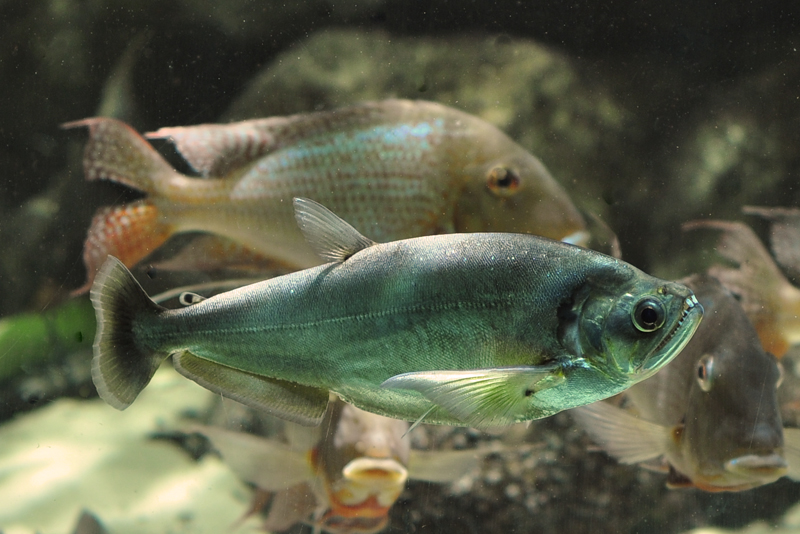
Hydrolycus scomberoidesVampire Tetra
Cuvier, 1819
Max length300mm SL12in SLTank210 × 75cm84 × 30inTemp24–28°C75–82°FpH6.0–8.0This species may be referred to using a variety of names including 'scomb', 'sabre tooth tetra', 'sabre tusk barracuda', 'dog tooth characin, 'vampire fish', 'Cachorra' or Pirandirá (the latter two names being used in Brazil where they're also applied to congeners). It's regularly confused with the payara, H. armatus, though that species grows considerably larger, is pop...
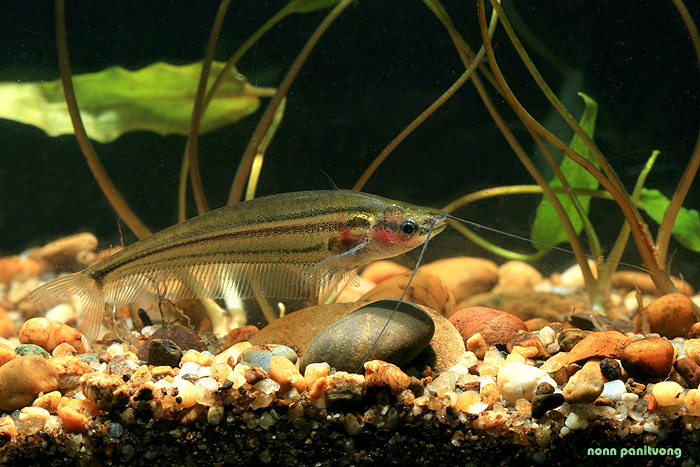
Kryptopterus macrocephalusStriped Glass Catfish
Bleeker, 1858
Max length100mm SL3.9in SLTank120 × 30cm48 × 12inTemp20–26°C68–79°FpH4.0–7.0Has been recorded in fast-flowing environments but most commonly associated with peat swamp forests and associated blackwater streams. Many such habitats have suffered degradation of some kind but in unaltered cases the dense canopy of branches above means very little light penetrates the surface of such environments, and riparian vegetation also tends to grow thickly.
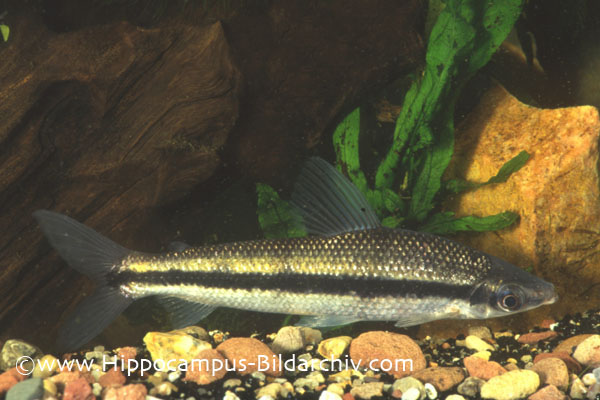
Laemolyta taeniataStriped Headstander
Kner, 1858
Max length288mm SL11in SLTank120 × 60cm48 × 24inTemp20–28°C68–82°FpH4.0–7.5L. taeniata is the largest-growing and second most widely-distributed member of the genus although it's a rarely-seen in the aquarium trade. It can be distinguished from all congeners since it uniquely possesses 5 lateral scale rows between the lateral line and dorsal-fin origin (vs. 4 or 6–8 in the remaining species).
Lasiancistrus tentaculatusL092
authority not recorded
Max length120mm SL5in SLTank75 × 30cm30 × 12inTemp24–28°C75–82°FpH6.0–7.4This lovely little species was only described in 2005 and the same study also reclassified most of the species previously assigned to Laciancistrus. Many were found to be of different genera or representatives of the same species. Laciancistrus can be easily distinguished from Ancistrus (and indeed all other Loricariids) by the presence of whiskerlike odontotes growing among the cheek odontotes. These are very thin and clearly visible, and are indeed reminiscent of mammalian hairs. This part...
Leiarius longibarbisMarbled Pim
authority not recorded
Max length800mm SL31in SLTank300 × 90cm118 × 36inTemp21–26°C70–79°FpH5.8–7.4It's debatable as to whether this species should be considered an aquarium subject at all, given its eventual size. All too often, juveniles are sold without adequate information regarding their long term care. These cats can and will attain something close to their maximum size in captivity, and will do so quite quickly. The myth that they will only grow to match the size of the tank they're kept in is just that. It's also worth noting that species such as this can live for well ...
Leiarius pictusSailfin Pim
authority not recorded
Max length600mm SL24in SLTank240 × 90cm96 × 36inTemp22–26°C72–79°FpH6.2–7.6Also known as the painted, saddle or marbled sailfin catfish, it's debatable as to whether this species should be considered an aquarium subject at all given its eventual size. All too often, juveniles are sold without adequate information regarding their long term care. These cats can and will attain something close to their maximum size in captivity, and will do so quite quickly. The myth that they will only grow to match the size of the tank they're kept in is just that. It's a...
Leporacanthicus galaxiasGalaxy Plec
authority not recorded
Max length250mm SL10in SLTank120 × 45cm48 × 18inTemp22–26°C72–79°FpH5.6–7.0A very stylish looking plec, L. galaxias can also be seen for sale as the vampire or tusken plec. Both these names relate to features of morphology that are shared by all members of the genus. The latter arose from the presence of a characteristic growth on the head of the fish. The vampire moniker, meanwhile, is derived from the unique upper jaw dentition, consisting of, you guessed it, two large teeth or "fangs". The exact use for these is unknown, but they're probably utilised ...
Leporacanthicus joselimaiSultan Plec
authority not recorded
Max length150mm SL6in SLTank120 × 30cm48 × 12inTemp25–27°C77–81°FpH6.0–7.5Leporacanthicus species are commonly referred to as "vampire plecs". This is derived from the unique upper jaw dentition exhibited by members of this genus, unsurprisingly consisting of two large teeth or "fangs". The exact use for these is unknown, but they're probably utilised to grip prey items such as snails or other aquatic invertebrates in some way. Another feature shared by all Leporacanthicus is a small bony growth of unknown use on top of the head. This particul...
Leporacanthicus triactisThree Beacon Plec
authority not recorded
Max length245mm SL10in SLTank120 × 45cm48 × 18inTemp24–27°C75–81°FpH6.0–7.6There are a few different colour forms of this lovely suckermouth available, each of which possess varying amounts of orange patterning in the fins. Some of these are given extravagant sounding names such as "dragon fin" or "tiger fin". What's nice about this species, is that these flashes of colour don't fade with age, as with many of its relatives, making for a striking fish when fully grown. Leporacanthicus species are commonly referred to as "vampire ple...
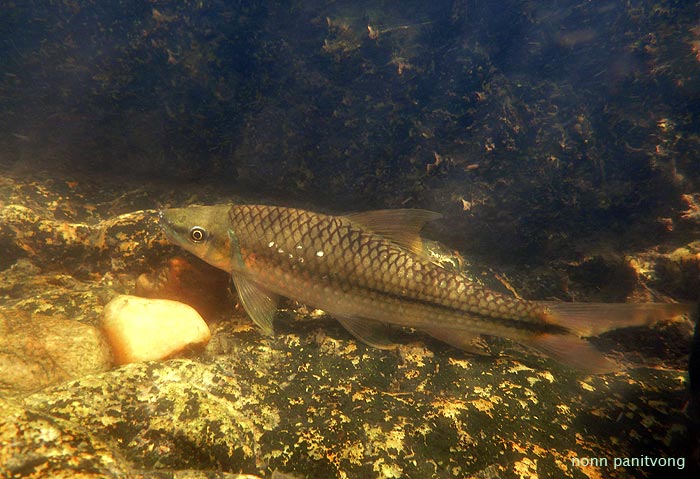
Lobocheilos rhabdoura
Fowler, 1934
Max length220mm SL9in SLTank180 × 60cm72 × 24inTemp20–26°C68–79°FpH6.0–8.0Lobocheilos species are specialised grazers of periphyton, benthic algae, and other organisms which grow attached to rocks and other solid surfaces, and they typically leave visible scrape marks in places where they have been feeding. They are by no means herbivorous and should be offered meaty foods such as live or frozen chironomid larvae (bloodworm), Tubifex, Artemia, chopped prawn, etc., along with good quality, sinking dried products, at lea...
Myloplus rubripinnisRedhook
authority not recorded
Max length250mm SL10in SLTank180 × 38cm72 × 15inTemp23–27°C73–81°FpH6.0–7.0The Redhook is another species commonly sold as a Silver Dollar in the trade. It can be distinguished from those species as the black-trimmed, redis much more obvious than any of the metynnis species. The Redhook is also capable of growing much larger than its Silver Dollar relatives. This species was until recently referred to as myleus rubripinnis and is still widel y referred to as such. The Redhook is sometimes described as a difficult fish to care for but, given a large enough aquarium, ...
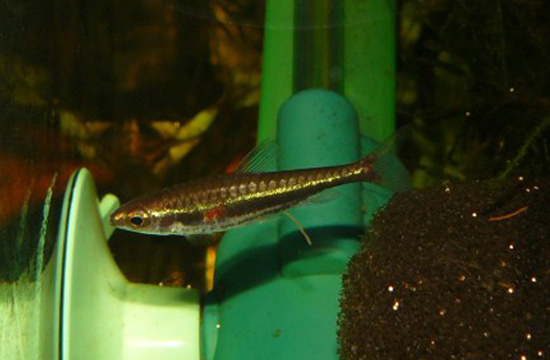
Nannostomus minimusLeast Pencilfish
Eigenmann, 1909
Max length23mm SL0.9in SLTank45 × 30cm18 × 12inTemp22–28°C72–82°FpH4.0–6.5Inhabits sluggish blackwater tributaries, small rivers and swampy areas, particularly in areas with dense growth of aquatic or overhanging riparian vegetation, submerged woody structures and leaf litter. The water is typically stained darkly with humic acids and other chemicals released by decaying organic material, the dissolved mineral content is generally negligible and pH can be as low as 4.0. N. minimus occurs sympat...
Ophthalmotilapia nasuta
authority not recorded
Max length200mm SL8in SLTank150 × 45cm60 × 18inTemp23–27°C73–81°FpH7.5–9.0O. nasuta can be distinguished from other members of the genus primarily by the fleshy proboscis-like growth that extends beyond the upper lip. It exists in several different geographical morphs including "Kachese", "Mpimbwe", "Cape Tembwe" and "Chamba", among others. These should not be mixed in aquaria as they will hybridise freely....
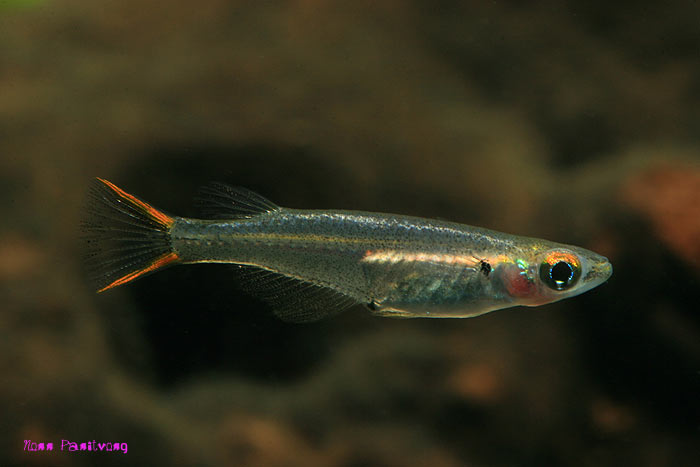
Oryzias songkhramensis
Magtoon, 2010
Max length20mm SL0.8in SLTank40 × 20cm16 × 8inTemp23–30°C73–86°FpH6.0–7.5An exclusive inhabitant of fresh, normally standing, waters including shallow pools, ditches, rice paddies and clear water swamps. The type locality is a small ditch measuring just 3 - 6 metres in width and 0.5 - 2 metres deep. The water was clear and the substrate composed of sand, detritus and mud with growths of the macrophytes Nymphaea lotus, Jussiaea repens and Hydrilla verticillata.
Osphronemus exodonElephant Ear Gourami
authority not recorded
Max length600mm SL24in SLTank180 × 60cm72 × 24inTemp20–30°C68–86°FpH6.5–8.0A bizarre and very recent addition to the genus, O. exodon is infrequently imported to the hobby, but has been seen occasionally. It has specially adapted mouthparts whereby it has greatly enlarged teeth. An extra set of teeth can also be seen growing in concentric bands on the outer lips! These are used in nature to literally 'pick' fruit from overhanging branches, with the fish often leaping from the water to grab a particularly juicy fig or other fruit. When the mouth of the fish is...