Results for “opercle”
Type a name: scientific, common, or one a species used to go by. Or narrow the catalogue with the filters.
Filters
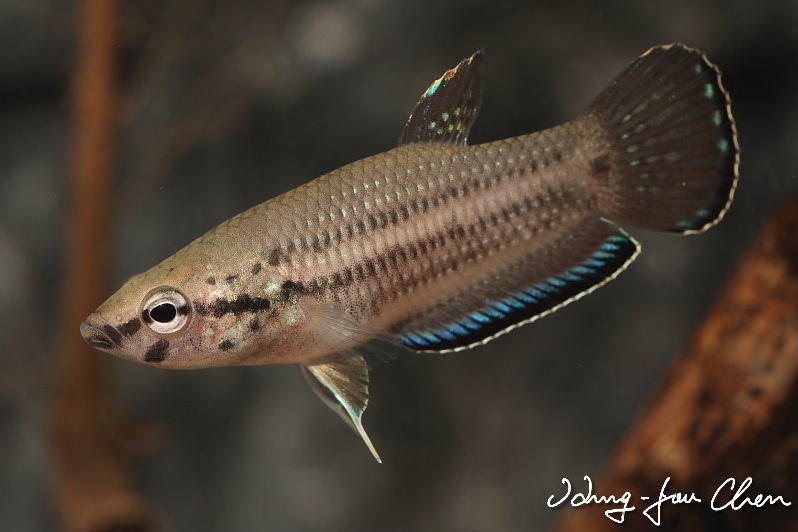
Betta simplex
Kottelat, 1994
Max length60mm SL2.4in SLTank60 × 30cm24 × 12inTemp20–28°C68–82°FpH7.0–8.0B. simplex is included in the Betta picta group/complex of closely-related species within the genus, an assemblage comprising species with the following shared characters: unpaired fins rounded (anal-fin sometimes tapering to a blunt point); anal-fin rays I-III, 18-24; dark marginal band on anal and caudal fins, more pronounced in mature males; presence of pre-orbital and post-orbital stripes; presence of chin bar on throat; iridescent green, gold, or blue scales on opercle.
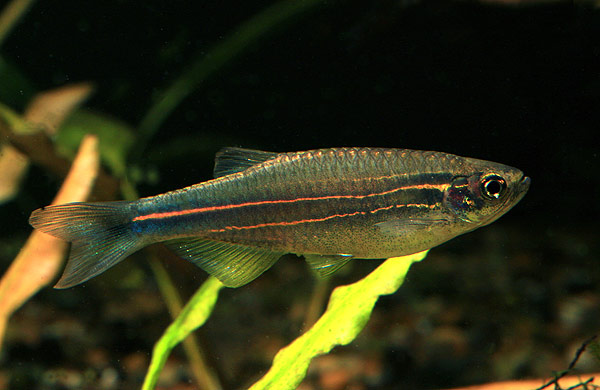
Brachydanio kerriBlue 'Danio'
Smith, 1931
Max length45mm SL1.8in SLTank80 × 30cm31 × 12inTemp18–26°C64–79°FpH6.5–7.5Can be hard to find in aquarium shops, and there has been some confusion surrounding its identity in the past. Base body colour is either powdery-blue or yellow-green (see 'Distribution') and this continues into the caudal-fin, while pinkish-yellow lateral stripes extend from opercle to caudal peduncle.
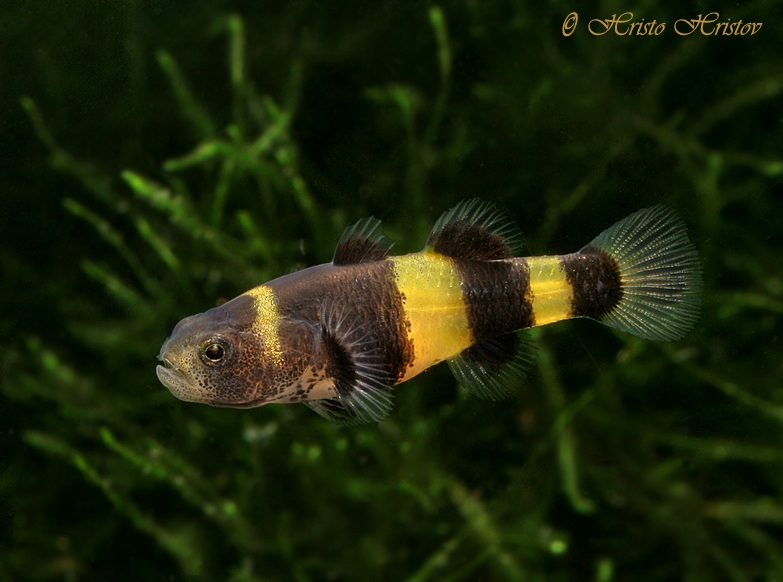
Brachygobius doriaeBumblebee Goby
Günther, 1868
Max length35mm SL1.4in SLTank45 × 30cm18 × 12inTemp22–28°C72–82°FpH7.0–8.5This species is among the more frequently-traded members of the genus, although confusion regarding its identification and natural distribution is commonplace and it's often misidentified as B. nunus or B. xanthozonus. It can be diagnosed as follows: <30 lateral scales; one black band on head, three on body; first black band on body overlapping first dorsal fin to the extent that almost all fin, except a narrow margin, is black, and beginning opposite centre of opercle...
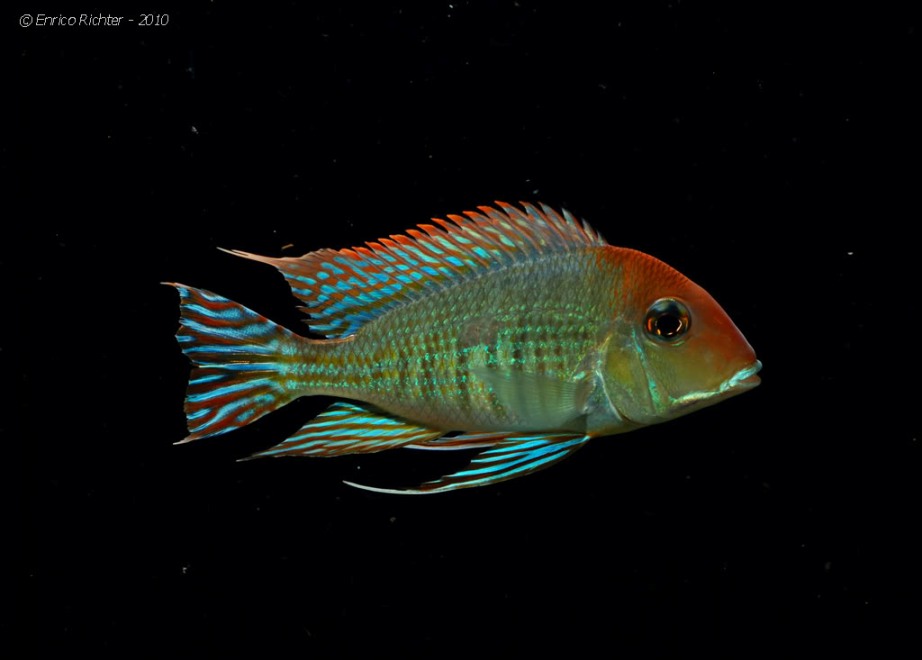
Geophagus sp. 'orange head'
authority not recorded
Max length250mm SL10in SLTank180 × 60cm72 × 24inTemp26–30°C79–86°FpH4.5–7.5There are at least two variants available one of which is often traded as G.sp. 'Araguaia orange head'. This is misleading since both are endemic to the Tapajós drainage (see 'Distribution'), and appears to date back to an error in collection locality when the fish were first exported. The two differ in the extent of orange colouration on the head which extends onto the opercle in G. sp. 'orange head (rio Arapiuns form) but is mostly restricted to the area above the ey...
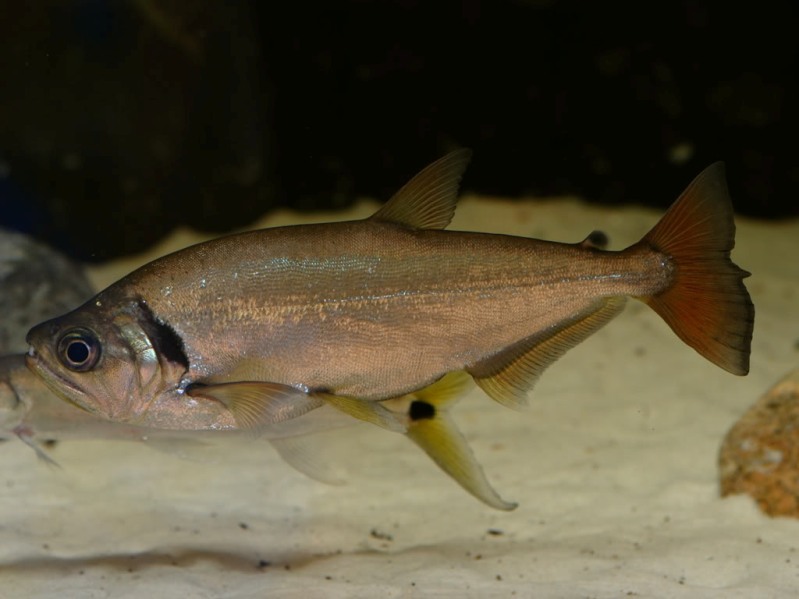
Hydrolycus tatauaia
Toledo-Piza, Menezes & Santos, 1999
Max length455mm SL18in SLTanknot recordedTemp24–28°C75–82°FpH6.0–8.0Vernacular names in Brazil include 'Cachorra' or 'Pirandirá', although these are also applied to congeners. It can be told apart from all congeners by the following combination of characters: head and body silvery with dark dorsal surface; an elongate dark blotch posterior to the opercle; dorsal, caudal and anal-fin rays reddish to orange proximally with some individual variation in intensity and tonality; adipose fin dark, with diffuse black pigmentation.
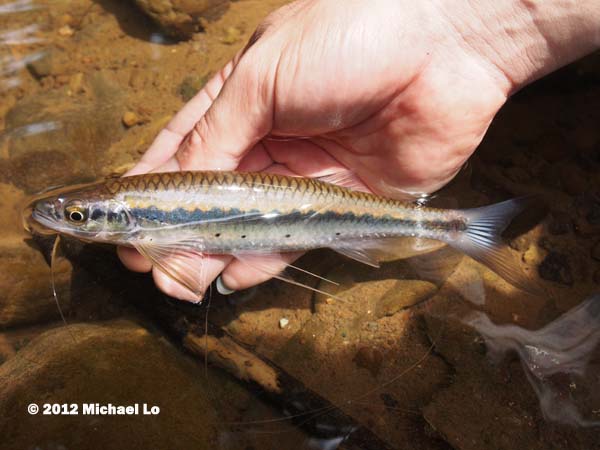
Luciosoma pellegrinii
Popta, 1905
Max length170mm SL7in SLTanknot recordedTempnot recordedpHnot recordedThe five species which currently comprise Luciosoma can be distinguished by elements of colour pattern. Popta described the colour pattern of L. pellegrinii as follows: body colour olive dorsally, with dark-edged scales, yellow ventrally; a lateral series of dark spots on the flank forming a midlateral band which extends onto the opercle but not the head; 4-8 blackish-brown, distinctly-separate spots on the lateral line; fins yellow; dorsal and anal fins with a blackish-brown band; anterior half of some pectoral-fin rays blackish-brown...
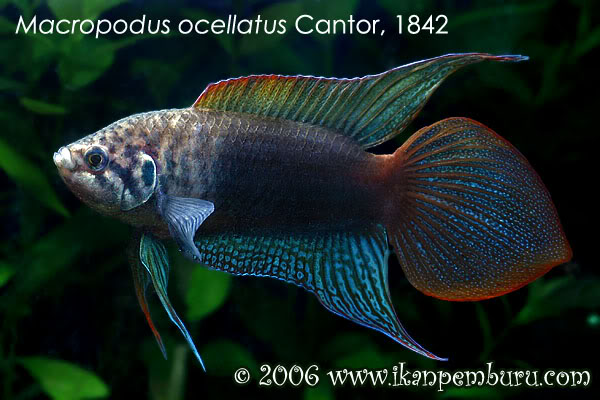
Macropodus ocellatusRoundtail Paradise Fish
Cantor, 1842
Max length80mm SL3.1in SLTank80 × 30cm31 × 12inTemp10–22°C50–72°FpH6.0–7.5M. ocellatus can be distinguished from congeners by the following combination of characters: caudal-fin rounded; eye stripe not connecting spot on posterior projection of opercle with eye; dorsal-fin rays filamentous posterior to a vertical through the posterior anal-fin rays in adults; 16-19 spinous dorsal-fin rays; 6-13 rakers on ceratobranchial of first gill arch; posterior tip or margin of body scales not darker than scales.
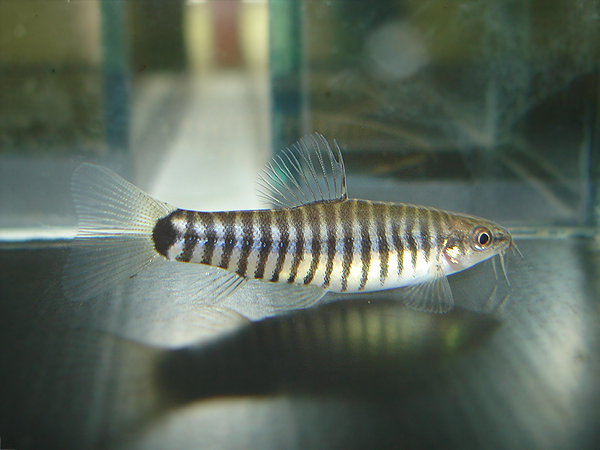
Micronemacheilus cruciatus
Rendahl, 1944
Max length40mm SL1.6in SLTank60 × 30cm24 × 12inTemp22–27°C72–81°FpH6.0–7.5This species is traded under various names including 'Vietnamese multi-banded zebra loach', 'hovering zebra loach', 'Laos pygmy multi-stripe loach', and 'banded dwarf loach'. It can be distinguished from related species by the following combination of characters: body with distinct vertical bars; 8 branched dorsal-fin rays; 3-10 pored lateral line scales; one pair of large papillae in median portion of upper lip; two pairs of large papillae in median portion of lower lip; lower posterior edge of opercle with 3-4 prominent indentations.
Pygocentrus pirayaPiraya
Cuvier, 1819
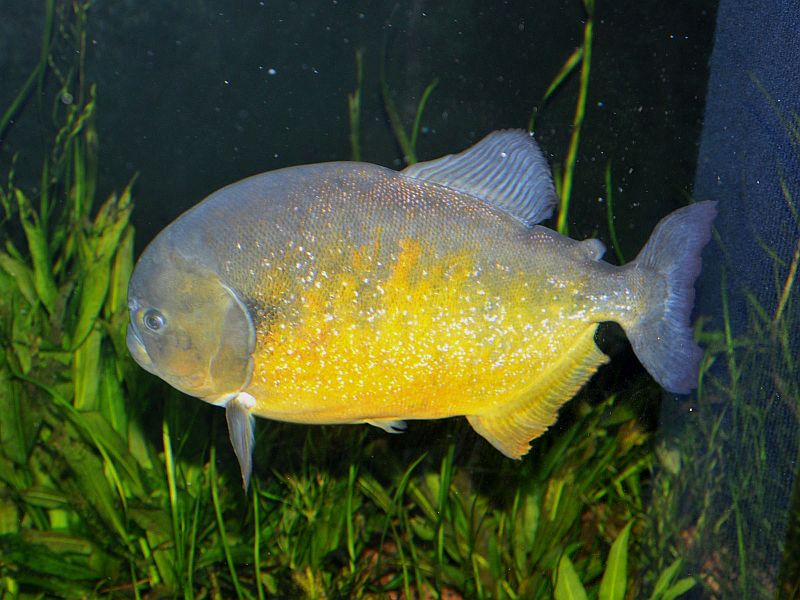
Max length350mm SL14in SLTanknot recordedTemp20–28°C68–82°FpH6.0–8.0Following Fink (1993), P. piraya can be distinguished from congeners by the following combination of characters: adipose fin with rays in larger specimens (vs. always without rays in other Pygocentrus species); branched dorsal-fin rays 15-18, usually 16 (vs. 14-18, usually 15); usually 7 neural spines anterior to first pterygiophore (vs. usually 6); vertebrae 36-39, usually 38 (vs. 35-38, usually 36). It can also be identified by colour pattern since it possesses distinctive bright yellow-orange pigmentation on the lower jaw, opercle and lateral body in life.
Rhinogobius formosanus
Oshima, 1919
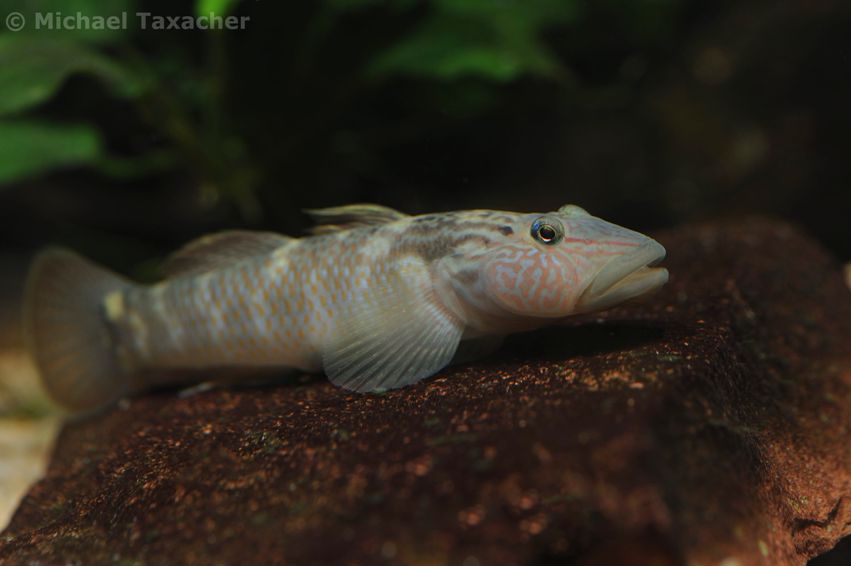
Max length100mm SL3.9in SLTank80 × 30cm31 × 12inTemp18–28°C64–82°FpH6.0–8.0This species was previously considered to be a subspecies of R. nagoyae but has generally been accepted as distinct since 2008. It can be told apart from other Rhinogobius spp. from Taiwan by presence of irregular, wavy, reddish brown lines on the cheek and opercle.
Stiphodon surrufus
Watson & Kottelat, 1995
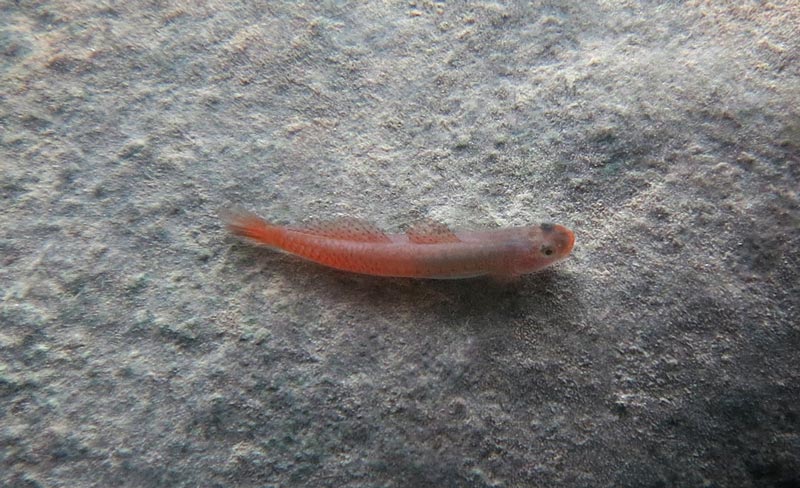
Max length35mm SL1.4in SLTank60 × 30cm24 × 12inTemp22–28°C72–82°FpH6.5–7.5As with all members of the genus sexual dimorphism is pronounced. Males are brightly-coloured, with a reddish-orange stripe extending posteriorly from the pectoral-fin, with the posterior portion of the body entirely suffused with red. A darkish band extends from behind the eye to the edge of the opercle, and the basal third of the caudal-fin is reddish-orange.