Results for “type”
Type a name: scientific, common, or one a species used to go by. Or narrow the catalogue with the filters.
Filters
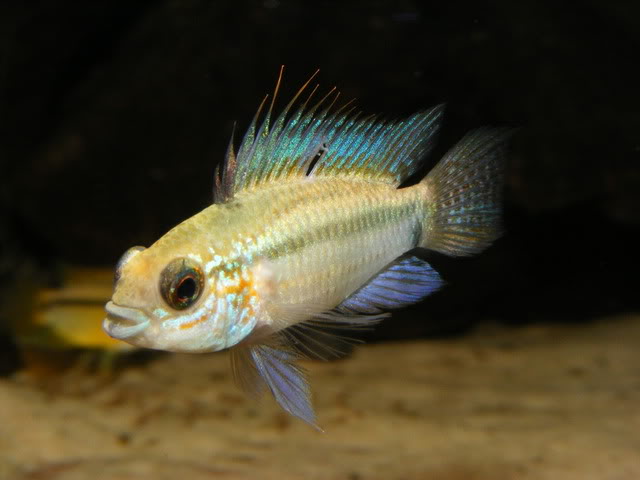
Apistogramma eremnopygeA218
Ready & Kullander, 2004
Max length♂ 70 · ♀ 50mm SL♂ 2.8 · ♀ 2.0in SLTank60 × 30cm24 × 12inTemp22–28°C72–82°FpH4.0–6.0Known only from Loreto region in northeastern (Amazonian) Peru. Type locality is 'Río Pintuyacu, 48 kilometers on road from Iquitos to Nauta, Río Itaya drainage, Province Loreto, Peru' and it's also been recorded from tributaries of the Nanay system in the same area. An additional population is known from the Río Tapiche, a tributary of the Río Ucayali located well over 150 km further south.
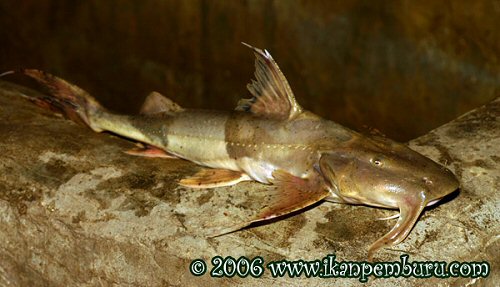
Bagarius rutilus
Ng & Kottelat, 2000
Max length1000mm SL39in SLTanknot recordedTemp18–23°C64–73°FpH6.0–7.5Known from the from the Red River in northern Vietnam and Yunnan province, southern China, plus the Thái Bình, Sông Kỳ Cùng, Mã and Lam rivers in Vietnam and possibly the Nam Xam and Nam Ma drainages in Laos. Type locality is 'Market in Hanoi, Vietnam'.
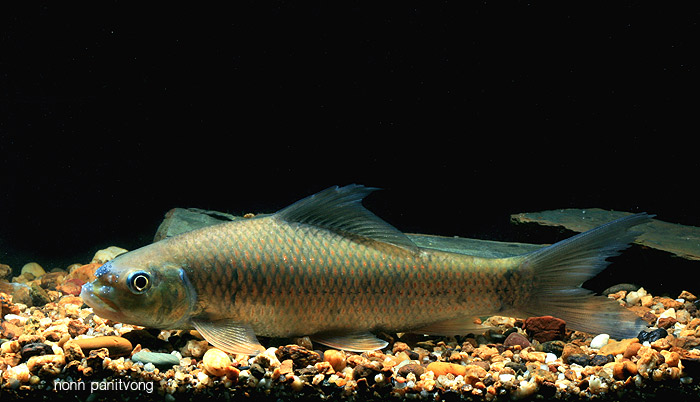
Bangana devdevi
Hora, 1936
Max length250mm SL10in SLTanknot recordedTempnot recordedpHnot recordedKnown with certainty from the Irrawaddy River system in Manipur state, India, and Myanmar, and the Salween watershed in eastern Myanmar and northwestern Thailand. Records from the Red River basin in Vietnam appear questionable. Type locality is 'Burma: Myitkyina District: Mali Hka basin: Phungin Hka;'.
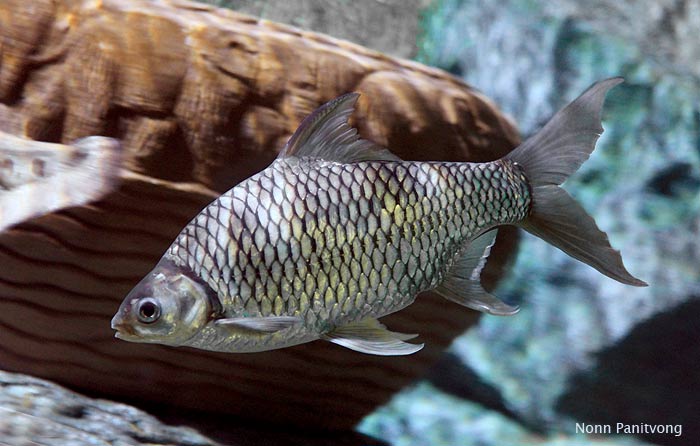
Barbonymus gonionotus
Bleeker, 1849
Max length300mm SL12in SLTank210 × 60cm84 × 24inTemp20–26°C68–79°FpH6.0–8.0The genus Barbonymus was erected by Kottelat in 1999 and contains former members of Barbodes from southeast Asia. The type species is B. schwanenfeldii and currently there exist only three other representatives; B. altus, B. collingwoodii and B. gonionotus. The latter two are rare in the hobby although an SF member has kept B. gonionotus in the past so they are worth looking out for if you harbour an...
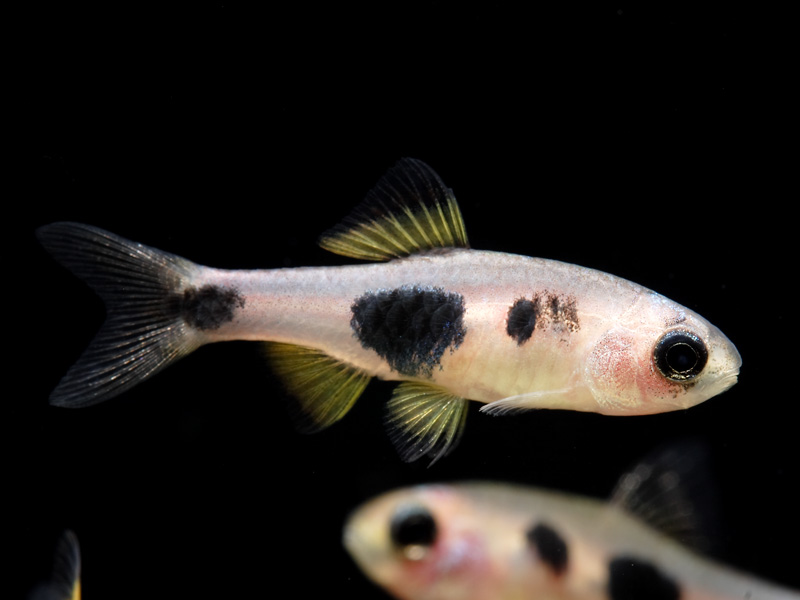
'Barbus' hulstaertiAfrican Butterfly Barb
Poll, 1945
Max length35mm SL1.4in SLTank45 × 30cm18 × 12inTemp17–24°C63–75°FpH5.0–6.5Two closely-related species are also found in the Congo basin and infrequently seen in the trade. 'B.' candens has been collected northeast of the range of 'B.' hulstaerti around the city of Kisangani (formerly Stanleyville) and nearby town of Yangambi. It can be distinguished from 'B.' hulstaerti by its paler body colouration, smaller dark markings on the body and red ventral and anal fins in males. 'B.' papillo is known only from its type locality close to the eastern town of Kindu between the Lualaba and Lomami rivers. It has an elongated central body marking and males possess black dorsal, ventral and anal fins.
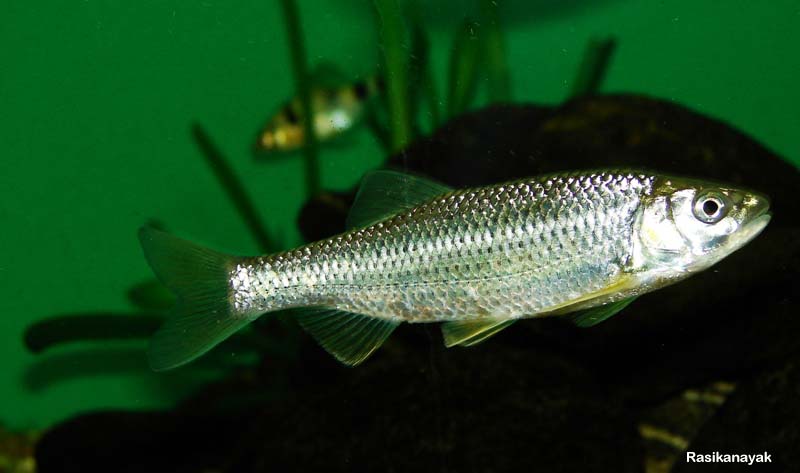
Barilius bendelisis
Hamilton, 1807
Max length200mm SL8in SLTank180 × 60cm72 × 24inTemp18–26°C64–79°FpH6.0–8.0Type locality is given as 'Cedawáti [Vedawati] stream, headwaters of Krishna River near Heriuru, Mysore, India', with the species currently considered to occur throughout India, Bangladesh, Nepal, and probably Bhutan. It's also been recorded in Pakistan, Myanmar, Thailand and Sri Lanka although some or all of these reports may refer to other species.
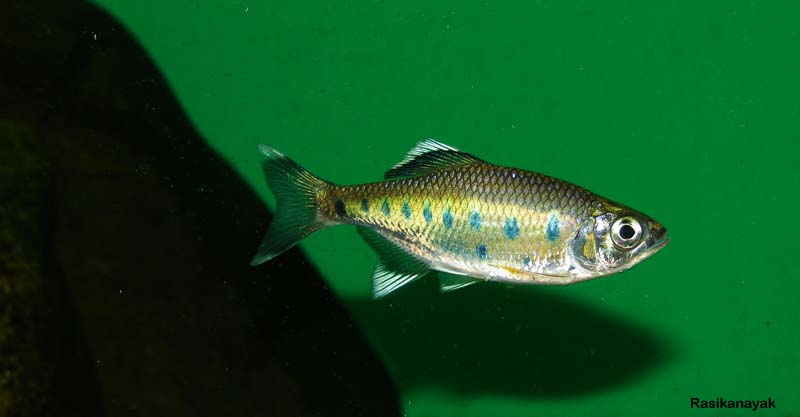
Barilius canarensis
Jerdon, 1849
Max length130mm SL5in SLTank150 × 60cm60 × 24inTemp18–26°C64–79°FpH6.0–7.5Type locality is 'Canara, southern India', which corresponds to a coastal region of approximately 300 km in length covering several districts of Karnataka and Kerala states, southwestern India. Rivers in this area drain the Western Gha...
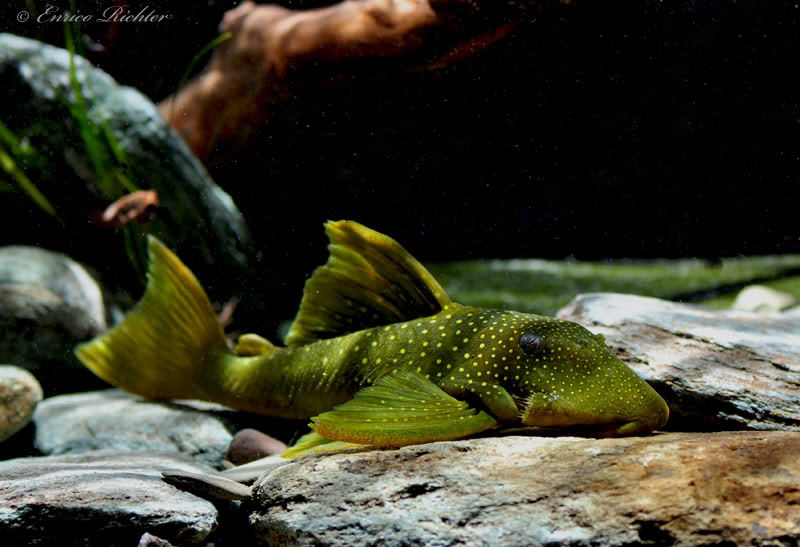
Baryancistrus demantoidesGreen Phantom Pleco
Werneke, Sabaj Pérez, Lujan & Armbruster, 2005
Max length151mm SL6in SLTank120 × 45cm48 × 18inTemp26–30°C79–86°FpH5.5–7.5This species is very similar to Hemiancistrus subviridis in appearance and the two occur sympatrically in nature, although B. demantoides is less common in the aquarium trade. Both have been marketed under the DATZ code L200 with B. demantoides sometimes referred to as 'L200 high-fin' or 'L200a', the former name in reference to its comparatively long dorsal-fin spine (average length in the type series 42.1 mm vs. 34.3 mm in H. subviridis).
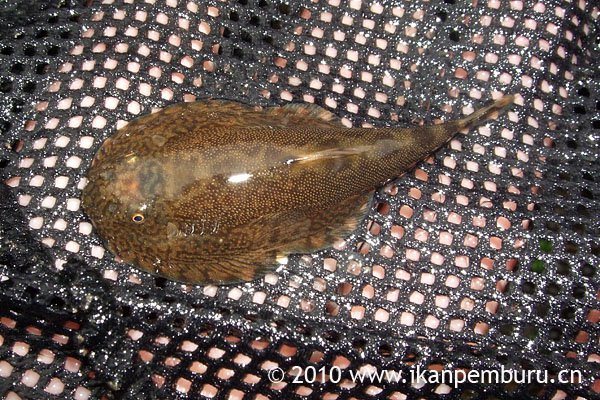
Beaufortia cyclica
Chen, 1980
Max length40mm SL1.6in SLTank80 × 30cm31 × 12inTemp16–24°C61–75°FpH6.0–8.5Known only from a handful of localities within the Xi River (Xi Jiang) drainage in Guangxi Zhuang Autonomous Region, southern China plus the Tuoniang river system in Funing County, southeastern Yunnan province. Type locality is 'West River, Longzhow Xian, Guangxi Province, China'.
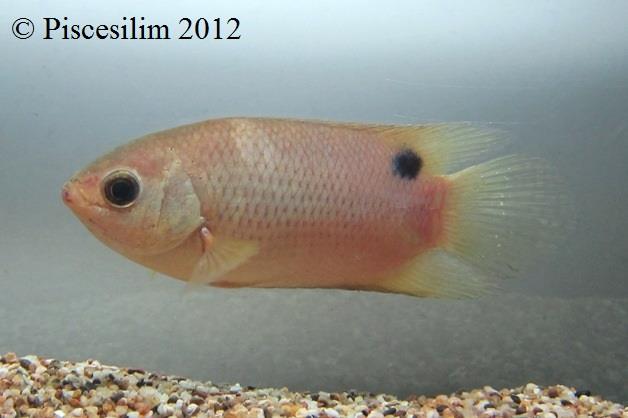
Belontia hasseltiJava Combtail
Cuvier, 1831
Max length200mm SL8in SLTank120 × 30cm48 × 12inTemp21–26°C70–79°FpH4.5–8.5This species is also referred to by the vernacular name 'Malay combtail'. In terms of external characters it differs most obviously from its only congener, B. signata by its overal brownish grey (vs. reddish) body colouration and presence of a mosaic-type patterning in the unpaired fins (vs. absence). The position of relatedness of the genus Belontia with respect to other anabantoids remains somewhat...
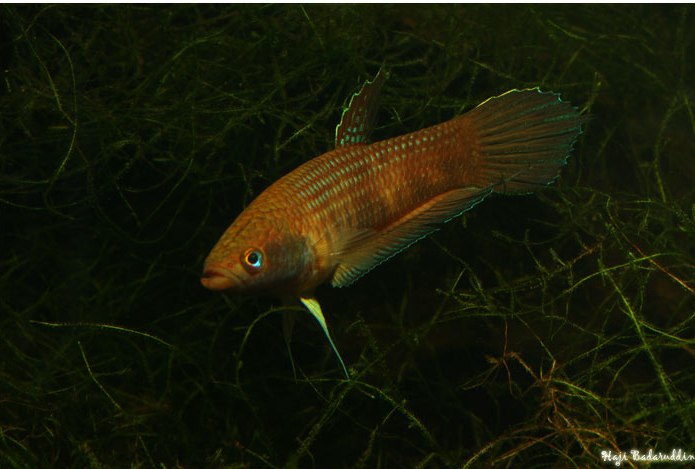
Betta cracens
Tan & Ng, 2005
Max length60mm SL2.4in SLTank80 × 30cm31 × 12inTemp22–27°C72–81°FpH5.5–6.5The type locality is a stream in a forest swamp with dense growth of Barclaya motleyi at intervals, part of which had been turned over to cultivation of rubber trees in 1997. The water depth varied between 5-80 cm, pH was 5.8 and syntopic species included 'Puntius' banksi, Rasbora einthoveni, Trigonopoma pauciperforatum, Hemirhamphodon pogonognathus, Betta pugnax, Sphaerichthys osphromenoides, Trichogaster trichopterus, Channa gachua and C. lucius.
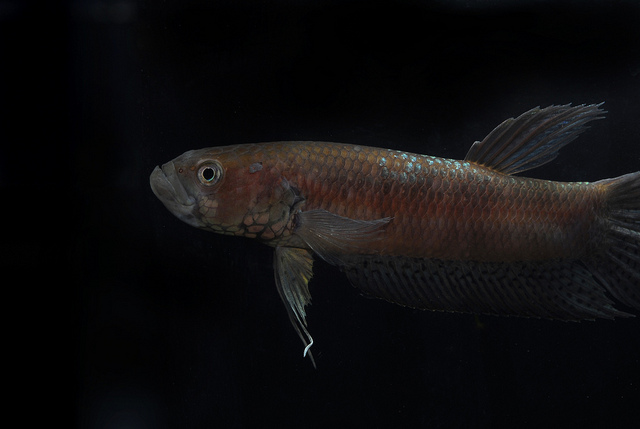
Betta gladiator
Tan & Ng, 2005
Max length90mm SL3.5in SLTank90 × 30cm36 × 12inTemp22–27°C72–81°FpH4.0–6.0Presumed endemic to the geographically-isolated Maliau basin, a roughly circular plateau enclosed by hills in Sabah state, Malaysia, Borneo. The Maliau River is part of the much larger Kinabantangan watershed, Malaysia's second longest river. The type series was collected from heath forest alongside 'Puntius' sealei and Hemibagrus cf. baramensis in acidic water with a pH of 4.2-4.8. Adult individuals were spaced around a metre apa...
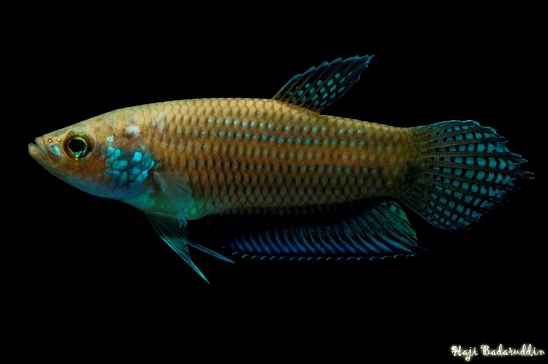
Betta stigmosa
Tan & Ng, 2005
Max length50mm SL2.0in SLTank60 × 30cm24 × 12inTemp22–28°C72–82°FpH5.0–7.0Known only forest hill streams with flowing, clear water. These are typically shaded from the sun by dense riparian vegetation. The substrate is composed of rocks or gravel, fallen leaves, branches and submerged tree roots, and presumably the fish show a preference for quieter marginal zones as with related congeners. The type locality was described as a 'swampy stream' and sympatric species incl...
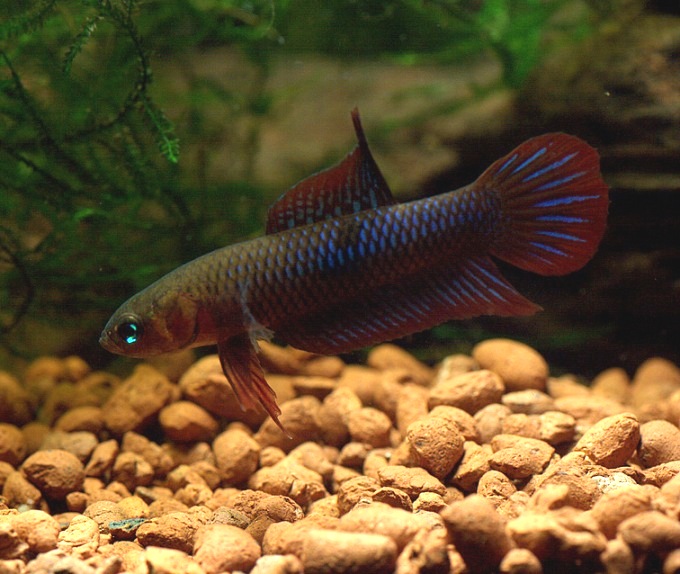
Betta uberis
Tan & Ng, 2006
Max length36mm SL1.4in SLTank45 × 30cm18 × 12inTemp22–27°C72–81°FpH4.0–6.0The majority of records pertain to an area sandwiched between the lower Arut and Kumai rivers, south of the towns of Pangkalan Bun and Kumai in Kalimantan Tengah (Central Kalimantan) province, Borneo, Indonesia. Addditional collections have taken place in the Sampit river basin to the east, and several hundred kilometres further north in Sukadana district Kalimantan Barat (West Kalimantan) province. Type locality is 'Indonesia: Borneo: Kalimantan Tengah: Arut basin: Pankalanbun', with the specimens having been obtained from the aquarium trade.
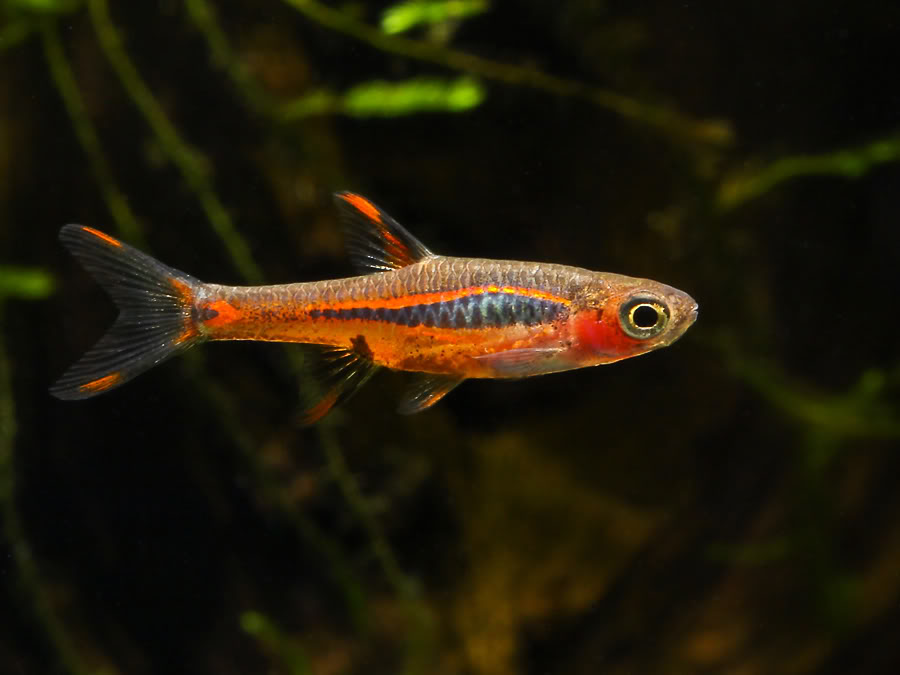
Boraras brigittaeMosquito Rasbora
Vogt, 1978
Max length20mm SL0.8in SLTank45 × 30cm18 × 12inTemp20–28°C68–82°FpH4.0–7.0Appears to be endemic to southwestern Borneo though occurence records are scant. Type locality is 'Bandjarmasin', a port town in the Indonesian province of Kalimantan Selatan (South Kalimantan), and following Kottelat (1991) it's range extends westwards as far as the Jelai Bila river basin, near the town of Sukamara, where it's said to occur sympatrically with the congener B. merah. Boraras was erected in 1993 in order to separa...
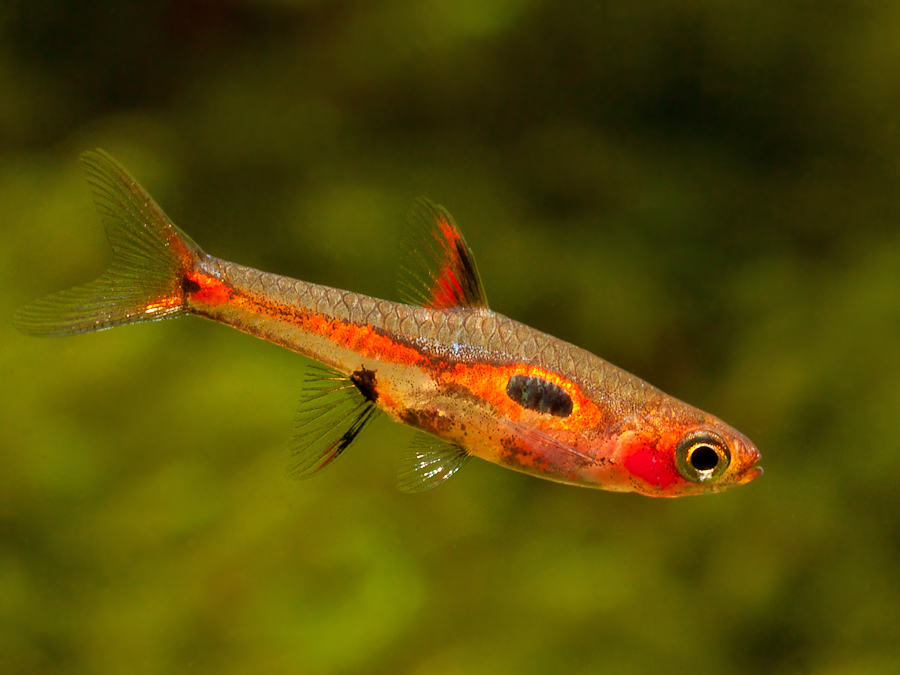
Boraras merah
Kottelat, 1991
Max length20mm SL0.8in SLTank45 × 30cm18 × 12inTemp20–28°C68–82°FpH4.0–6.5Appears endemic to southern Borneo. The type specimens were collected from the Jelai Bila river basin at Nataik Sedawak, presumably a settlement of some kind, near the town of Sukamara in the Indonesian province of Kalimantan Tengah (Central Kalimantan). Its range extends westwards from the Jelai Bila watershed whereas that of the congener B. brigittae, with which it may occur sympatrically there (see 'Notes'), extends east.
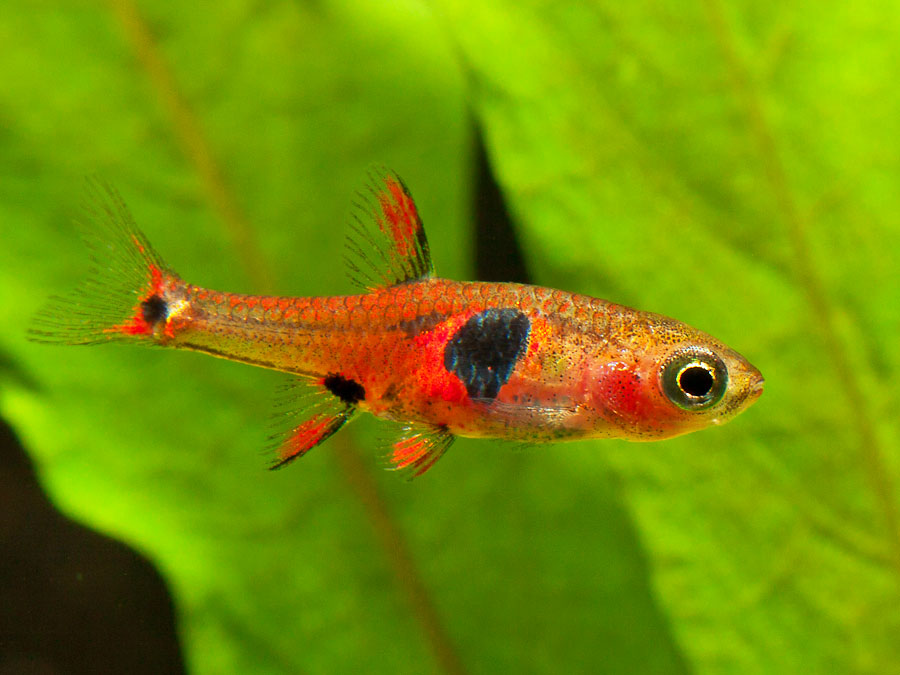
Boraras naevus
Conway & Kottelat, 2011
Max length20mm SL0.8in SLTank45 × 30cm18 × 12inTemp20–28°C68–82°FpH5.0–7.0Known only from southern (peninsular) Thailand with the type series originating from a swamp some 83 km north of Surat Thani city, Surat Thani province. It's been recorded at additional locations, all within the lower Tapi river drainage on the Gulf of Thailand slope of the Malay Peninsula. In the description Conway and Kottelat (2011) report the occurence of a similar-looking, possibly conspecific fish on the Andaman Sea side of the Peninsula, close to Trang province.
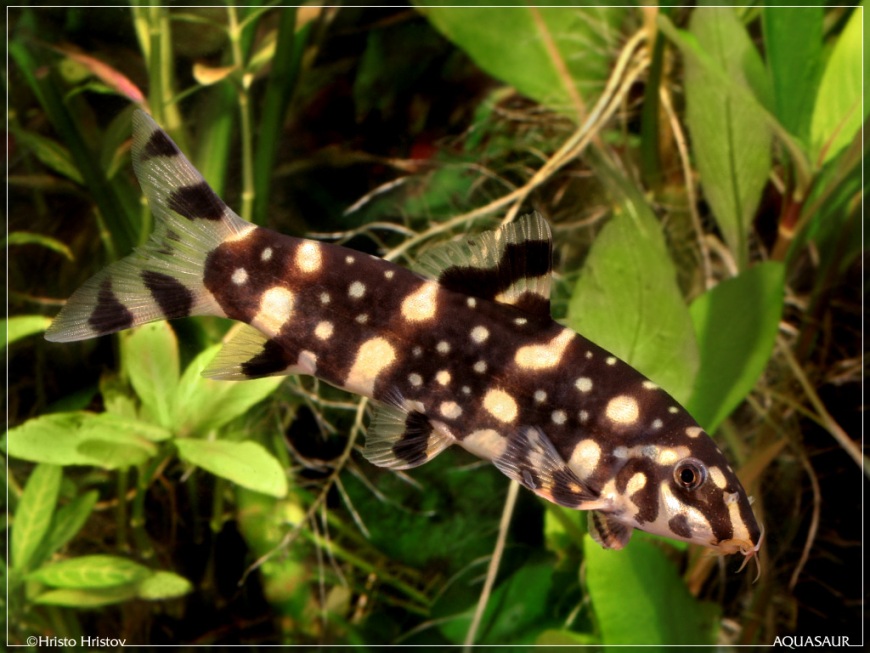
Botia kubotaiPolka-Dot Loach
Kottelat, 2004
Max length150mm SL6in SLTank120 × 45cm48 × 18inTemp22–28°C72–82°FpH6.0–7.5Appears to be endemic to headwaters of the Salween River basin around the border between Myanmar and Thailand. The type specimens were collected from the Megathat Chaung (Megathat stream) in the upper Ataran (known as the Kasat in Thai) River basin, Kayin/Karen State, Myanmar and another population was later discovered in the Hanthayaw River (Suriya in Thai), Tak Province, Thailand.
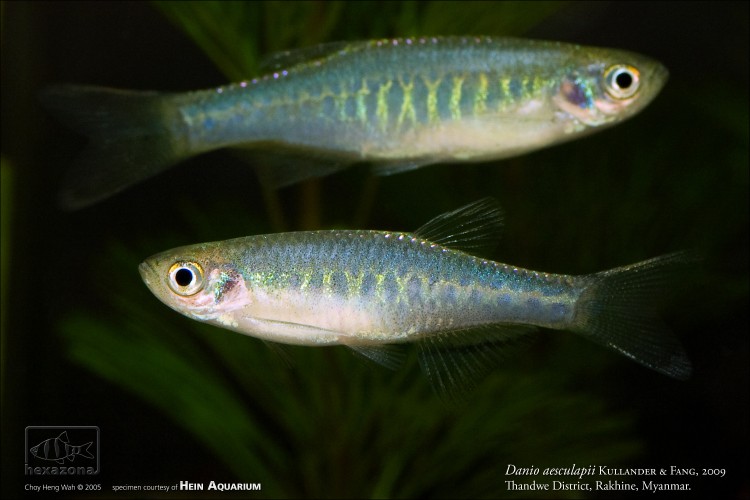
Brachydanio aesculapiiPanther 'Danio'
Kullander & Fang, 2009
Max length30mm SL1.2in SLTank60 × 30cm24 × 12inTemp22–27°C72–81°FpH6.9–7.1Endemic to the Rakhine Yoma/Arakan mountains in Rakhine state, western Myanmar; this range forms a natural barrier which cuts the state off from the remainder of the country. It was originally collected from a handful of streams and rivers of the western, interior, slopes of which the type specimens originated from the Kananmae Chaung, a coastal rivulet draining into the Bay of Bengal (Kullander and Fa...
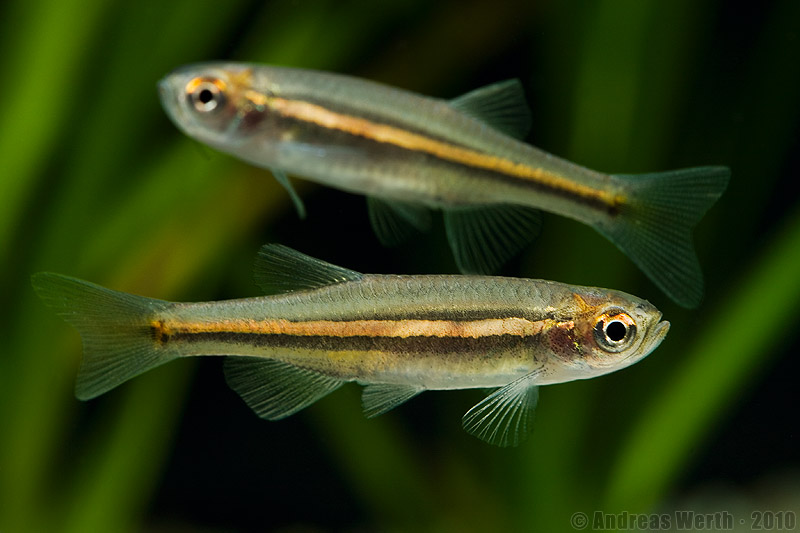
Brachydanio jaintianensis
Sen, 2007
Max length45mm SL1.8in SLTank80 × 30cm31 × 12inTemp18–23°C64–73°FpH6.0–7.0To date known only from the Jaintia Hills district, Meghalaya state, northeastern India meaning its natural waters are part of the Brahmaputra River system. The type locality is given as 'Tre Rangriang, Jowai' in the description paper, but we've been unable to locate this on any map. The paratypes were collected at 'Thlu Muwi', which probably refers to the ancient stone bridge built over the Muwi stream, a place popular with tourists due to the nearby Muwi waterfalls.