Results for “várzea”
Type a name: scientific, common, or one a species used to go by. Or narrow the catalogue with the filters.
Filters
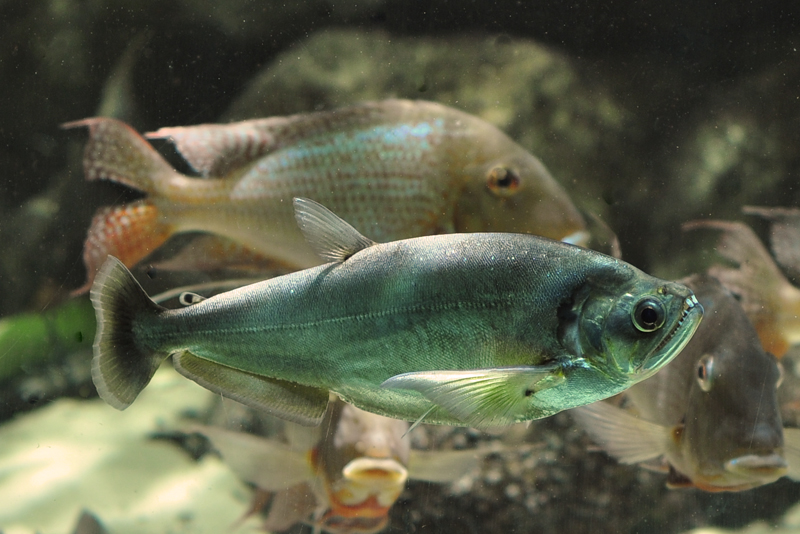
Hydrolycus scomberoidesVampire Tetra
Cuvier, 1819
Matched on the common name Vampire Tetra
Max length300mm SL12in SLTank210 × 75cm84 × 30inTemp24–28°C75–82°FpH6.0–8.0This species may be referred to using a variety of names including 'scomb', 'sabre tooth tetra', 'sabre tusk barracuda', 'dog tooth characin, 'vampire fish', 'Cachorra' or Pirandirá (the latter two names being used in Brazil where they're also applied to congeners). It's regularly confused with the payara, H. armatus, though that species grows considerably larger, is pop...
Synodontis schoutedeniVermiculated Synodontis
authority not recorded
Matched on the common name Vermiculated Synodontis
Max length138mm SL5in SLTank90 × 30cm36 × 12inTemp22–27°C72–81°FpH6.0–7.5In our opinion, this is one of the most attractively marked Synos commonly available in the hobby. The colour and patterning can vary considerably and the vermiculated pattern seems to intensify with age in well kept fish. When taken into consideration with its moderate adult size, this is an ideal beginners's Syno. One point worth noting is that this species seems very susceptible to bloating. While the cause of this is unknown, we suggest that feeding of dried foods be kept to a minimum. ...
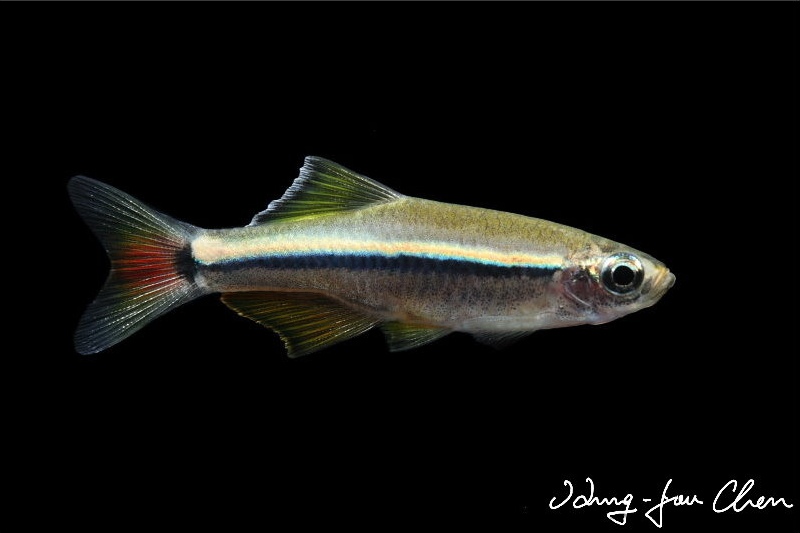
Tanichthys sp. 'Vietnam'
authority not recorded
Max length30mm SL1.2in SLTank45 × 30cm18 × 12inTemp18–25°C64–77°FpH6.0–7.5This fish was first collected in 2009 and limited numbers have been available in the aquarium trade. Though additional exports may be unlikely it's proven easy to breed in captivity and there's a fair chance it will become established in the hobby. It's sold under several names including T. sp. 'lemon' or 'yellow white cloud', and has also been misidentified as the congener T. thacbaensis, a valid species occurring much further north in Vietnam.
Telmatochromis vittatus
authority not recorded
Max length85mm SL3.3in SLTank75 × 30cm30 × 12inTemp23–27°C73–81°FpH8.0–9.5Similar in lifestyle to Julidochromis species, Telmatochromis vittatus is ideal for the smaller Tanganyikan community and is also a good choice for the beginner. It can be distinguished from the similar T. brichardi and T. bifrenatus primarily by its larger size, smaller eyes and more rounded nose. Like other Lamprologines, Telmatochromis have fang-like, caniform teeth, which they use for scraping microrganisms from rock surfaces. On adult specimens these are clearly visible....
Vieja fenestrata
authority not recorded
Max length300mm SL12in SLTank120 × 45cm48 × 18inTemp23–30°C73–86°FpH7.0A very attractive fish when in adult colouration, vieja fenestrata is not all that common in the UK hobby. It can is often confused with the more commonly available v. synspila.
Vieja maculicaudaBlackbelt Cichlid
authority not recorded
Max length254mm SL10in SLTank120 × 38cm48 × 15inTemp22–27°C72–81°FpH6.0–8.0The Blackbelt Cichlid gets its name from two things: firstly the vertical black stripe around its flank, and secondly its toughness. Vieja maculicauda is a tough, aggressive fish and should be respected as such. Maculicauda is a relatively easy fish to keep. They are not impossible to breed, but not the easiest fish either. If you seriously intend to breed this fish, it is a wise decision to house 6 juvenile fish in a large tank (212 litres at least), and let them pair off. When a pair has be...
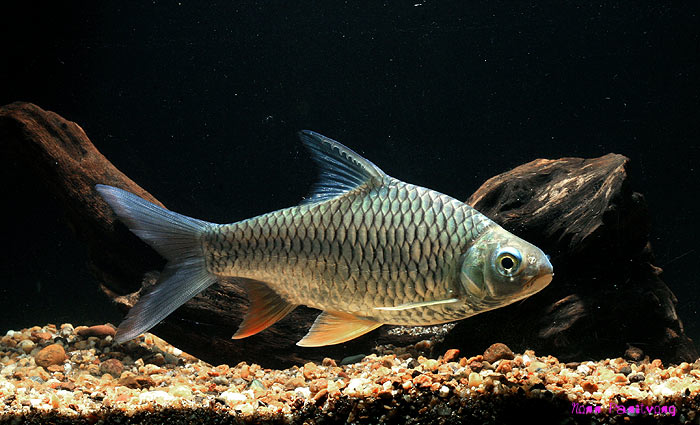
Hypsibarbus vernayi
Norman, 1925
Matched on Barbus vernayi, a name it was formerly known by
Max length216mm SL9in SLTank240 × 60cm96 × 24inTemp20–26°C68–79°FpH6.0–8.0It is very similar to H. wetmorei but can be told apart by possessing yellow (vs. orange to red in H. wetmorei) pectoral, pelvic, and anal fins. It thus appears likely that yellow-finned fish marketed as H. wetmorei or 'lemon fin barb' in the ornamental trade are actually H. vernayi, with both species available on a regular basis.
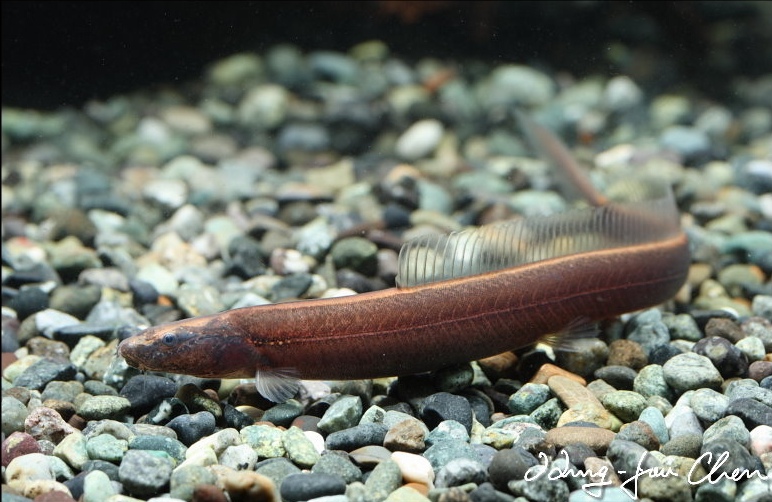
Vaillantella maassiFork-tailed Loach
Weber & de Beaufort, 1912
Matched on Vaillantella flavofasciata, a name it was formerly known by
Max length125mm SL5in SLTank120 × 30cm48 × 12inTemp23–29°C73–84°FpH3.5–7.2This species is traded under various names including 'chocolate scissor-tailed loach', chocolate long-finned loach', 'red line cobra loach', 'spiny eel loach' and 'dragon loach'. It's apparently difficult to find in its natural habitats and thus time-consuming to collect, meaning it's rarely traded in numbers, sought after by enthusiasts and tends to carry a relatively high price tag when available. The genus currently contains just three...
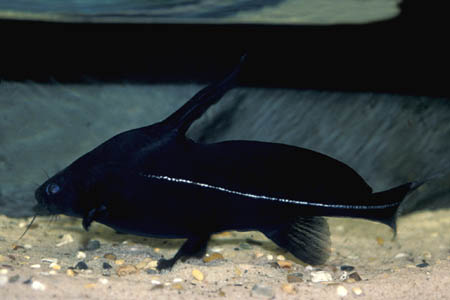
Bagrichthys macracanthusBlack Lancer
Bleeker, 1854
Max length230mm SL9in SLTank120 × 45cm48 × 18inTemp24–28°C75–82°FpH5.5–7.0The vernacular name 'lancer' is derived from the extended dorsal spine possessed by several members of the genus, which currently contains 7 species. Among them B. macracanthus is most similar to B. majusculus and B. vaillantii but can be told apart from the former by possession of shorter pectoral spines (13.3 - 16.2% SL vs. 15.8 - 20.7%), shorter adipose fin (46.0 - 58.0% SL vs. 38.8 - 45.8%), less deep caudal peduncle (7.1 - 7.5% SL vs. 5.6-7.0%) and larger adult size. From B. vaillantii it di...
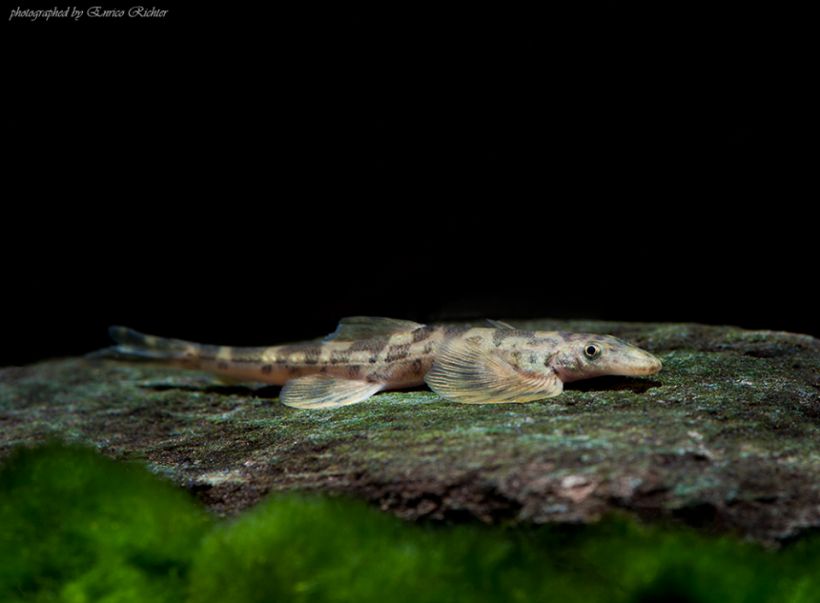
Annamia normaniVietnamese Giraffe Loach
Hora, 1931
Matched on the common name Vietnamese Giraffe Loach
Max length100mm SL3.9in SLTank120 × 30cm48 × 12inTemp16–22°C61–72°FpH6.0–7.5Traditionally considered to be a micropredator feeding on insect larvae and suchlike (Rainboth, 1996), but a study by Herder and Freyhof (2006) revealed adult A. normani inhabiting the Duc My River in central Vietnam to be specialised grazers of cyanobacteria. In rapids the latter form hard encrustations on rock surfaces from which adults are able to bite chunks.
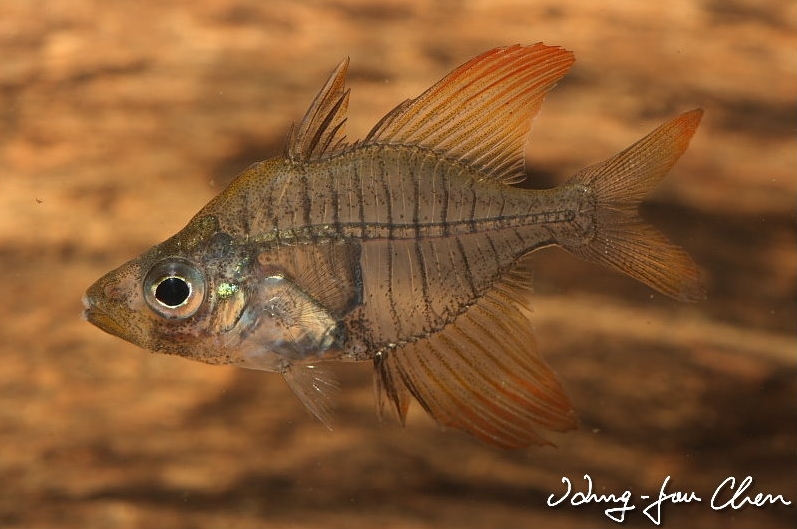
Gymnochanda verae
Tan & Lim, 2011
Max length26mm SL1.0in SLTank60 × 30cm24 × 12inTemp20–28°C68–82°FpH4.0–6.0A densely-planted tank with floating vegetation and roots, twigs or branches and natural leaf litter would seem appropriate. There's no need to use natural peat, the collection of which is both unsustainable and environmentally-destructive. Filtration should not be strong with an air-powered sponge-type unit ideal, and given it naturally inhab...
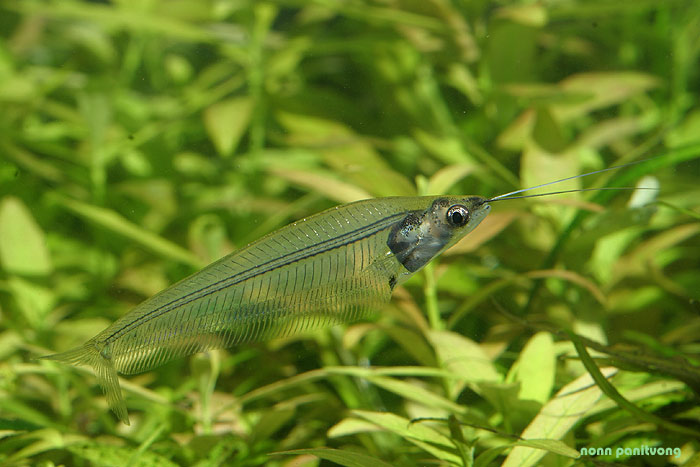
Kryptopterus vitreolusGlass Catfish
Ng & Kottelat, 2013
Max length65mm SL2.6in SLTank90 × 30cm36 × 12inTemp20–26°C68–79°FpH4.0–7.0This species has been available in the trade for decades during which time it's been widely misidentified as the valid congeners K. bicirrhis or, more recently, K. minor. Its identity was not resolved until early 2013 meaning you will find it under one of these two names in the majority of literature published prior to that date. Other trade names include 'Asia...
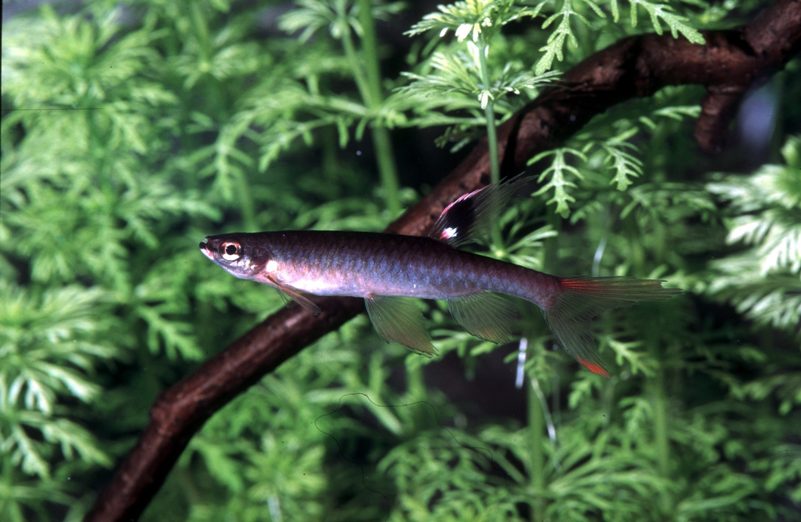
Copella carsevennensis
Regan, 1912
Max length40mm SL1.6in SLTank75 × 30cm30 × 12inTemp20–28°C68–82°FpH4.0–7.0C. carsevennensis has formerly been synonymised with C. arnoldi but was considered separate by Zarske (2011) using the following combination characters: absence (vs. presence) of a silvery-white to white patch in the centre of some of the flank scales in males, particularly in the lower half of the body; absence (vs. presence) of a horizontal dark body bar in nuptial males; absence (vs. presence) of thin black margins in the dorsal, ventral and anal fins; eggs deposited among submerged vegetation (vs. eg...
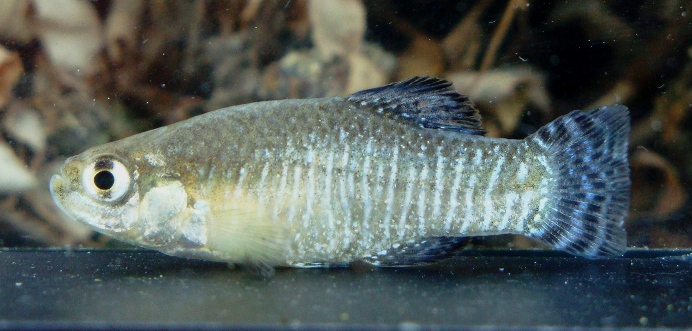
Apricaphanius baeticusBaetican Toothcarp
Doadrio, Carmona & Fernández-Delgado, 2002
Max length50mm SL2.0in SLTank120 × 30cm48 × 12inTemp2–30°C36–86°FpH7.0–9.0Prior to its description this species was considered a geographic variant of A. iberus but the 2002 paper revealed the pair to be genetically quite distinct and also highlighted some morphological differences. It is distinguished from A. iberus by possessing 8-9 (usually 8 ) branched dorsal-fin rays (vs. 8-9, sometimes 10), 9-11 branched anal-fin rays (vs. 8-9), a deeper, more elongate body shape, noticeably shorter snout, relatively thick (vs. thin) vertical bars in males and a flank patterning consisting of a few la...
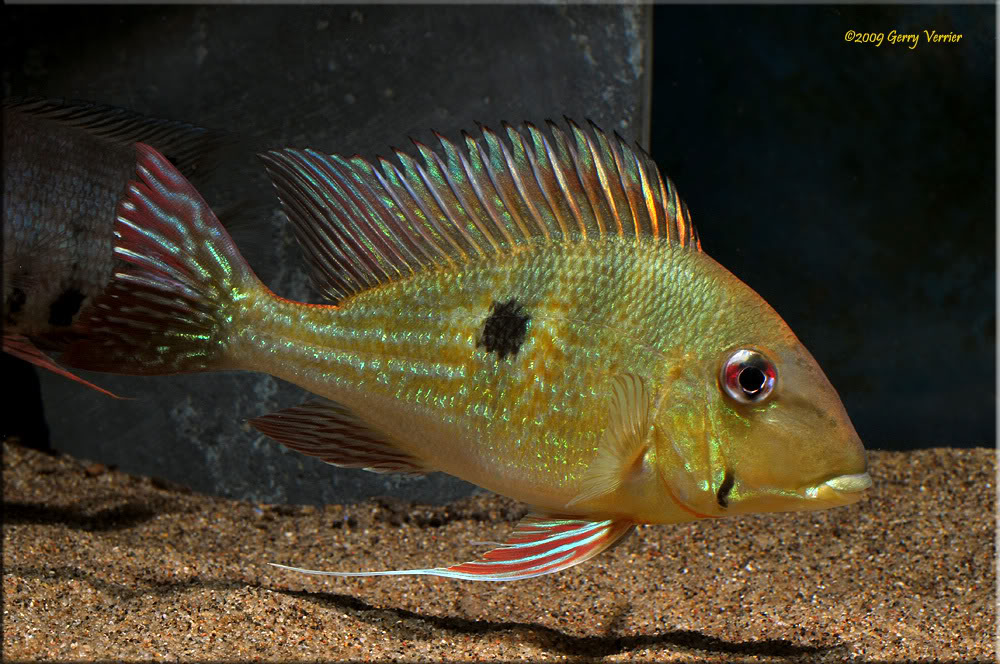
Geophagus dicrozoster
López-Fernández & Taphorn, 2004
Max length202mm SL8in SLTank180 × 60cm72 × 24inTemp26–30°C79–86°FpH4.0–7.0It's a member of the nominal G. surinamensis 'group' of closely-related species within the genus and can be identified by a combination of characters including: presence of dark preopercular markings; seven parallel vertical bars on each flank (normally visible only when the fish are stressed, spawning or preserved); vertical bars four and five meet in such a way that they form a 'Y' shape; dark lateral spot positioned within the third vertical bar; caudal fin reddish with variable pattern of iridescent blue spots and stripes.
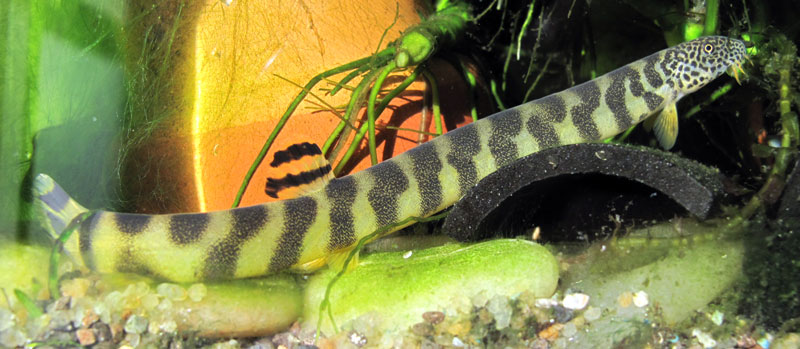
Kichulchoia multifasciata
Wakiya & Mori, 1929
Max length120mm SL5in SLTank90 × 30cm36 × 12inTemp20–24°C68–75°FpH6.0–7.5It's most easily told apart from K. brevifasciata, its only congener, by body patterning consisting of dark, vertical bars running along the dorso-ventral part of the body (vs. dark bars running alongside the midventral part of the body), lips with wrinkled surfaces (vs. smooth) and barbels short (vs. long).
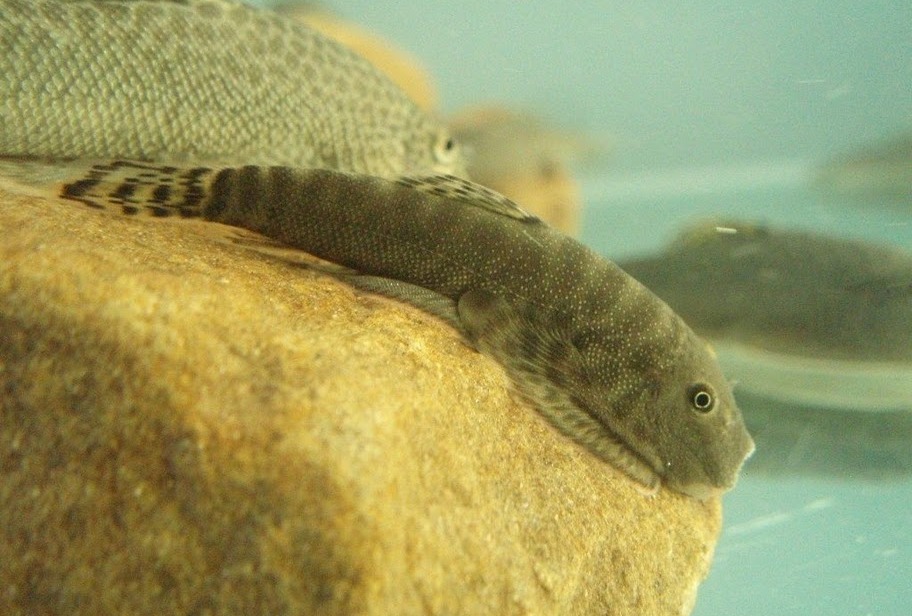
Gastromyzon cornusaccus
Tan, 2006
Max length50mm SL2.0in SLTank75 × 30cm30 × 12inTemp20–24°C68–75°FpH6.0–8.0G. cornusaccus can be distinguished from congeners by the following combination of characters: secondary rostrum present; incomplete postoral pouch present reduced to pockets located posterior to mouth corners; sublacrymal groove present and visible when viewed laterally; juveniles with thick, cream-coloured bars and blotches on body, adults uniformly-coloured; head dorsum plain; subopercular groove absent; gill slit vertical; snout truncate when viewed dorsally; no scales on abdomen; 55-61 lateral line scale...
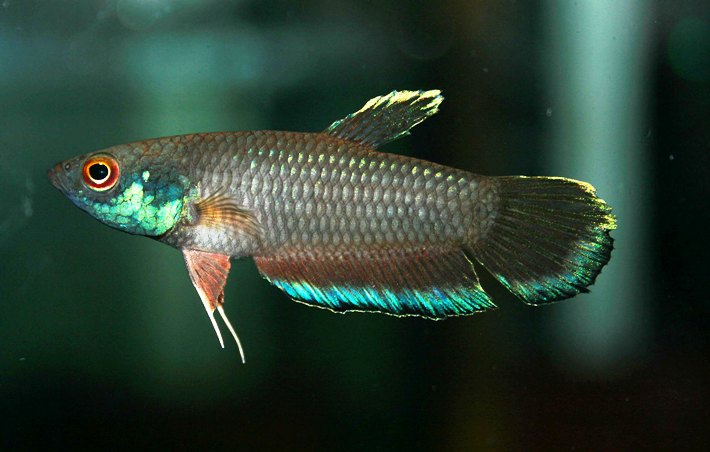
Betta taeniata
Regan, 1910
Max length55mm SL2.2in SLTank60 × 30cm24 × 12inTemp22–27°C72–81°FpH5.0–7.0At one locality close to Serian, Sarawak, the habitat comprised a swiftly-flowing, clear hill stream with a substrate of quartz gravel and variably-sized rocks. The pH was 7.0 and there was no aquatic vegetation. The stream was approximately 10 metres across at its widest point and between 5-80 cm deep. B. taeniata was found in sluggish stretches among submerged tree roots, leaf litter, or overhanging riparian vegetation.
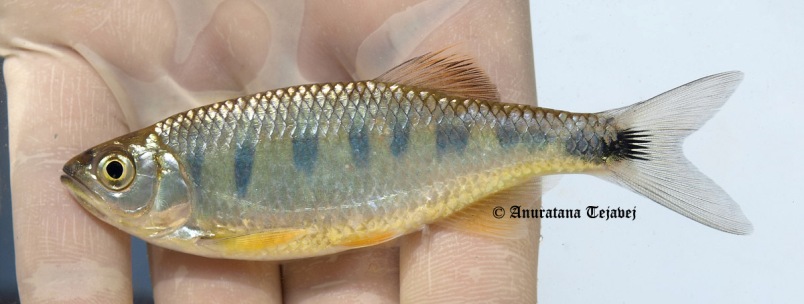
Opsarius signicaudus
Tejavej, 2012
Max length100mm SL3.9in SLTank120 × 45cm48 × 18inTemp18–26°C64–79°FpH6.0–8.0O. dogarsinghi and O. bernatziki are the only two Southeast Asian congeners to possess a large blotch at the caudal-fin base but in the former the blotch is vertically-orientated and hardly extends onto the fin itself (vs. laterally-elongate and extending onto the basal fin rays) and long (vs. short) barbels, while th...
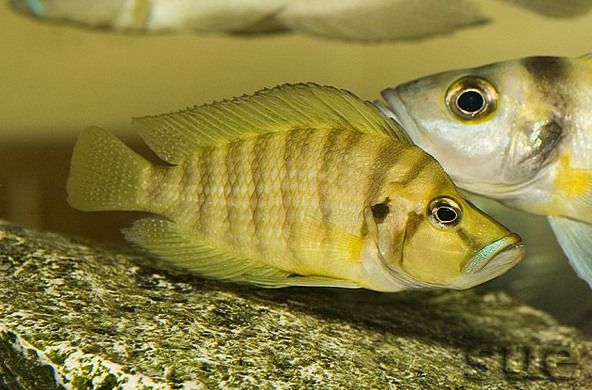
Altolamprologus compressicepsCompressed Cichlid
Boulenger, 1898
Max length125mm SL5in SLTank120 × 45cm48 × 18inTemp24–28°C75–82°FpH8.0–9.0This species varies in colour pattern depending on locality. Some of them are sold under several such names with the variant from Kigoma being known variously as A. compressiceps "Kigoma red", "Kigoma red fin", "Kigoma orange top" or "firefin" for example. The different populations should ideally be kept apart in aquaria and clearly labelled with collection locality in order to avoid hybridisation. Forms popular in the aquarium hobby include: - &quo...