Results for “ventral-fin”
Type a name: scientific, common, or one a species used to go by. Or narrow the catalogue with the filters.
Filters
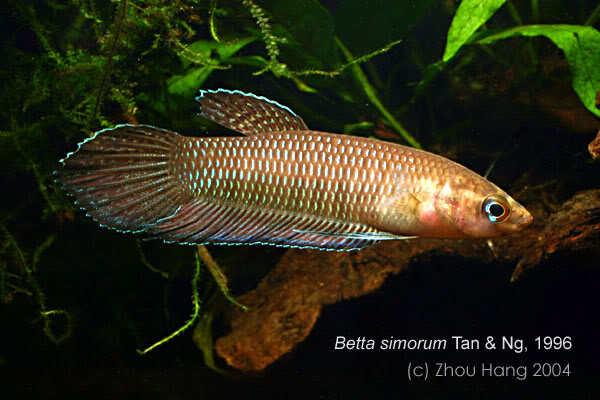
Betta simorum
Tan & Ng, 1996
Max length90mm SL3.5in SLTank80 × 30cm31 × 12inTemp25–30°C77–86°FpH3.0–6.0This species is included in the B. bellica group/complex of closely-related species within the genus, an assemblage of which members share the following set of characters: long and slender body with dorsal and ventral margins almost parallel; body depth 23-28 % SL; 30-33 anal-fin rays; 11-13 dorsal-fin rays; 32-34 total vertebrae; body dark brown in colour with iridescent green markings on each individual scale.
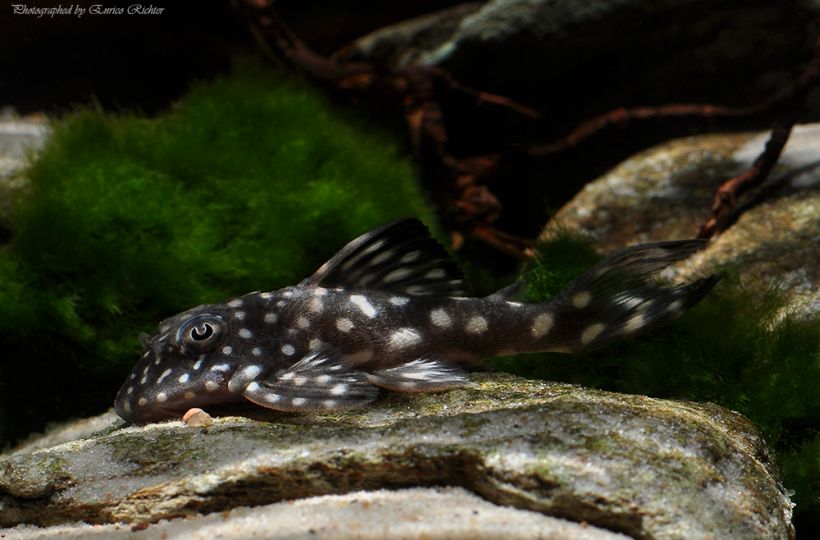
Hypancistrus inspectorL102
Armbruster, 2002
Max length160mm SL6in SLTank120 × 45cm48 × 18inTemp22–30°C72–86°FpH5.0–7.5H. inspector can be told apart from other described species in the genus by the following combination of characters: colour pattern comprising brown to black base with large whitish to yellow spots; adpressed dorsal-fin not reaching the adipose-fin spine; spots on head much smaller than on rest of body; spots in the upper caudal-fin lobe combining to form bands in adults; 24 plates in the mid-ventral series.
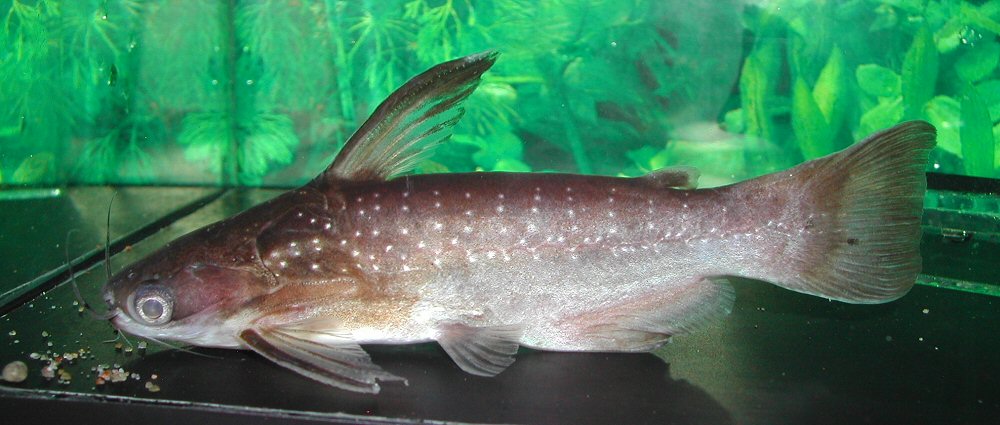
Auchenipterichthys coracoideusMidnight Catfish
Eigenmann & Allen, 1942
Max length110mm SL4in SLTank80 × 30cm31 × 12inTemp22–25°C72–77°FpH6.0–7.2This species is also known by the alternative vernacular name of 'Zamora woodcat', and is often misidentified as A. thoracatus. The latter is a valid species and very similar to A. coracoideus in that the coracoid bone is exposed ventrally and covered only by a thin layer of integument in both species. The two differ principally in the number of anal fin rays...
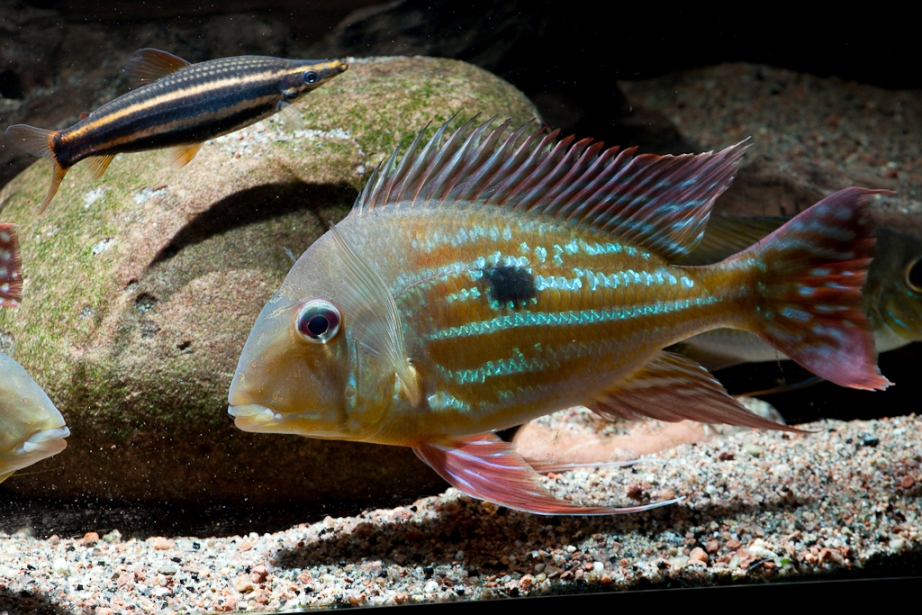
Geophagus winemilleri
López-Fernández & Taphorn, 2004
Max length200mm SL8in SLTank180 × 60cm72 × 24inTemp26–30°C79–86°FpH4.0–7.0This species is rare in the hobby although other species are sometimes sold under the name. It's a member of the nominal G. surinamensis 'group' of closely-related species within the genus and can be identified by a combination of characters including: possession of dark preopercular marking; four parallel, ventrally-inclined bars on each flank (normally visible only when the fish are stressed, spawning or preserved); dark lateral spot positioned within the second vertical bar; caudal fin red with variable pattern of large, iridescent blue to white spo...
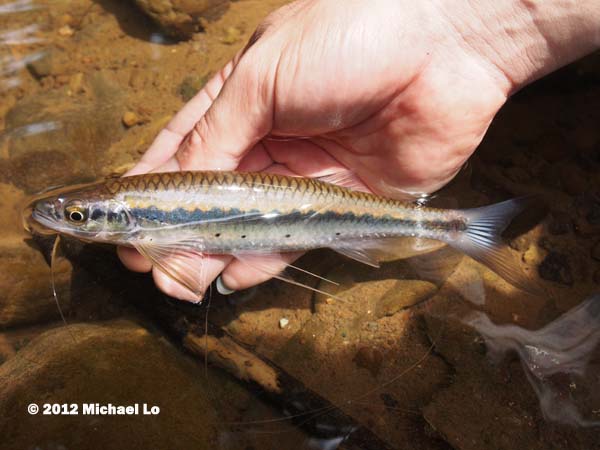
Luciosoma pellegrinii
Popta, 1905
Max length170mm SL7in SLTanknot recordedTempnot recordedpHnot recordedThe five species which currently comprise Luciosoma can be distinguished by elements of colour pattern. Popta described the colour pattern of L. pellegrinii as follows: body colour olive dorsally, with dark-edged scales, yellow ventrally; a lateral series of dark spots on the flank forming a midlateral band which extends onto the opercle but not the head; 4-8 blackish-brown, distinctly-separate spots on the lateral line; fins yellow; dorsal and anal fins with a blackish-brown band; anterior half of some pectoral-fin rays blackish-brown...