Results for “fin”
Type a name: scientific, common, or one a species used to go by. Or narrow the catalogue with the filters.
Filters
Rasbora lacrimulaRed Cherry Rasbora
authority not recorded
Max length31mm SL1.2in SLTank45 × 30cm18 × 12inTemp22.2–25.6°C72–78°FpHnot recordedThis species is also traded as 'Bornean redfin rasbora', 'sunshine rasbora' and 'dwarf volcano rasbora' and first appeared in the hobby during the latter part of 2010. It can be told apart from all other members of the genus by a combination of the following characters: possession of small tubercules on the dorsal surface, posterior to theand continuing onto the upper part of caudal fin, visible as an irregular 'crest' when a specimen is viewed laterally; ...
Rasbora paviana
authority not recorded
Max length90mm SL3.5in SLTank120 × 30cm48 × 12inTemp22–26°C72–79°FpHnot recordedIn much of the literature this species is pictured with the invalid name R. paviei, due to an issue with spelling which was corrected by Kottelat (2005), and the common name 'sidestripe rasbora' although the latter has yet to find popularity in the aquarium hobby. There are a number of similar-looking species including R. sumatrana, R. hobelmani and R. laticlavia and it can be problematic to separate members of this 'group'. If the collection locality of the fish is known ide...
Rasbora sarawakensis
authority not recorded
Max length50mm SL2.0in SLTank60 × 38cm24 × 15inTemp22–26°C72–79°FpHnot recordedR. sarawakensis is poorly-documented in the aquarium literature and we're not even sure if it has been exported for the hobby although it may be worth looking out for among shipments of wild fish from southern/western Borneo. We find this a little odd as it is an attractive, very peaceful little fish that would suit many home aquaria and is apparently quite common across its natural range. Rainboth's 'Fishes of the Cambodian Mekong' characterised members of Rasbora by poss...
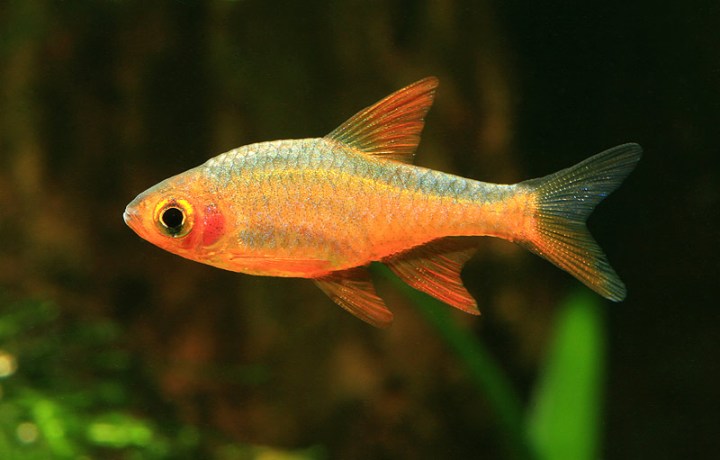
Rasboroides vateriflorisFire Rasbora
Deraniyagala, 1930
Max length40mm SL1.6in SLTank60 × 30cm24 × 12inTemp23–27°C73–81°FpH5.5–7.0These are still regarded as valid by some authorities although it's widely accepted that they represent variants of R. vaterifloris due to a lack of type material hindering conclusive study. Rasboroides nigromarginata (Meinken, 1956) has also been used to refer to a reddish form in which males differ from other populations in possessing dark fin margins, but the name is currently considered synonymous with R. vaterifloris by most sources despite the fish being rediscovered in 2010.
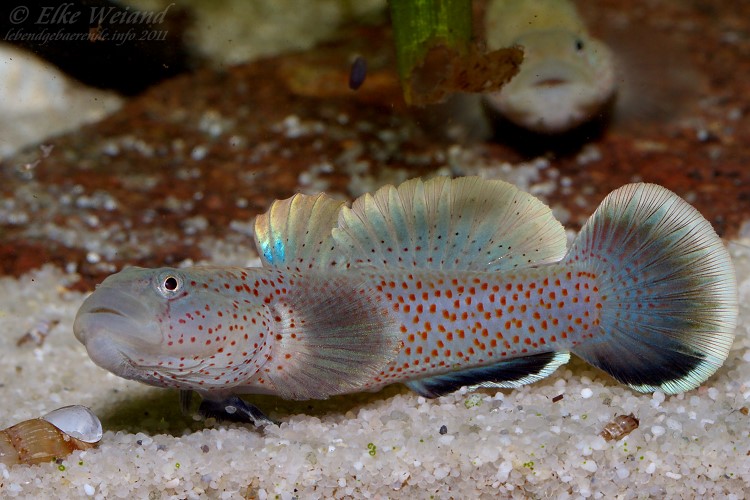
Rhinogobius rubromaculatusRed-spotted Goby
Lee & Chang, 1996
Max length55mm SL2.2in SLTank60 × 30cm24 × 12inTemp18–24°C64–75°FpH6.0–8.0This species occurs in a couple of colour forms with fish from northern and central Taiwan possessing a greyish base body colour and those from the Linbian river, southern Taiwan having a dark marking in the anterior portion of the first dorsal fin and larger, more intense red spots on the body. The latter form is also smaller in size, lays smaller eggs, does not exhibit extreme sexual dimorphism and has been refe...
Rita kuturneeDeccan Rita
authority not recorded
Max length260mm SL10in SLTank120 × 30cm48 × 12inTemp22–27°C72–81°FpH6.0–7.0Rita species are not often seen in the hobby. When available, R. kuturnee makes a fine bottom dweller for communities containing other robust species....
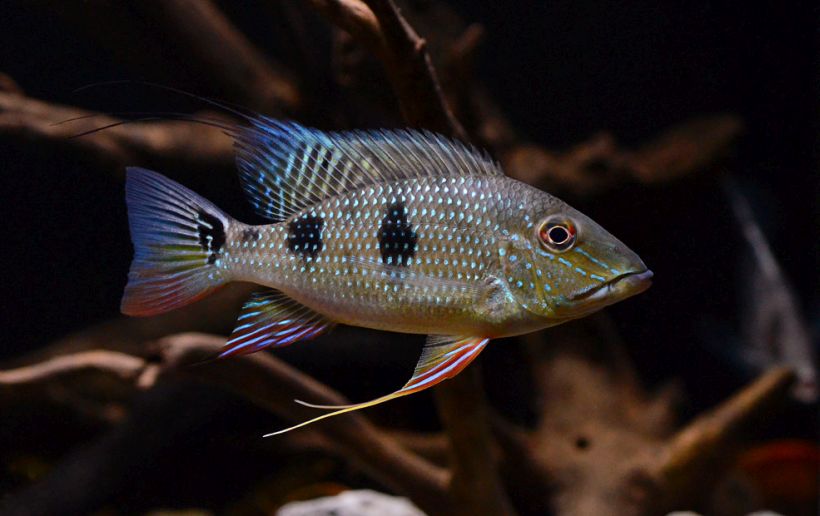
Satanoperca daemonThreespot Eartheater
Heckel, 1840
Max length250mm SL10in SLTank210 × 60cm84 × 24inTemp24–28°C75–82°FpH3.5–6.0S. daemon is relatively common in the aquarium trade but is by no means easy to maintain, with particular attention to space, diet, water quality, and chemistry required in order for it to thrive. It can be distinguished from other members of the genus by possessing two dark blotches on the flank and a prominent ocellus at the caudal-fin base. Among the named species it is most similar to...
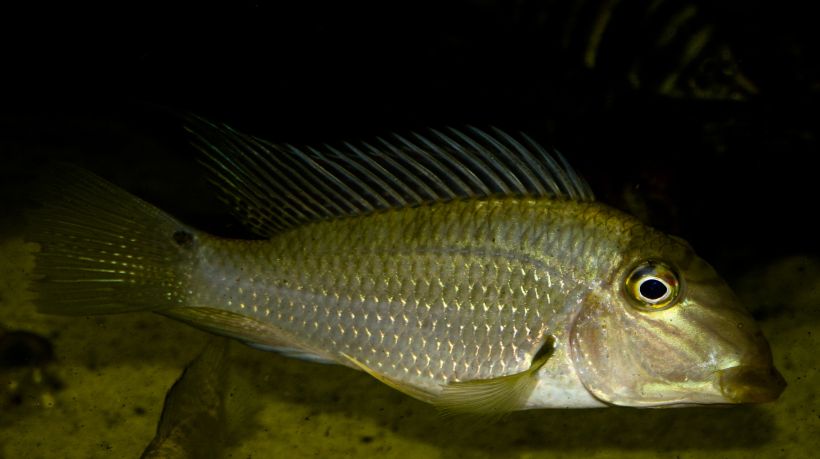
Satanoperca jurupariDemon Eartheater
Heckel, 1840
Max length185mm SL7in SLTank210 × 60cm84 × 24inTemp20–28°C68–82°FpH5.5–7.5S. jurupari is also known as 'demon fish', 'jurupari earth eater', 'green horse face', or simply 'jurupari' in the aquarium hobby. It can be distinguished from other members of the genus by the following combination of characters: presence of a relatively small dark ocellus on the upper caudal-fin base; absence of well-defined dark blot...
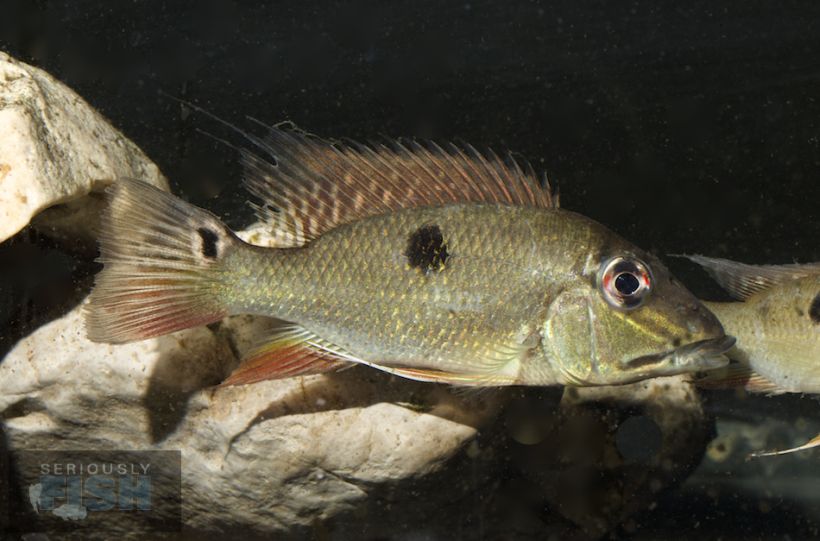
Satanoperca lilith
Kullander & Ferreira, 1988
Max length255mm SL10in SLTank210 × 60cm84 × 24inTemp20–28°C68–82°FpH5.0–7.5Despite its extensive natural distribution S. lilith is uncommon in the ornamental trade, where it is sometimes referred to as 'one-spotted demon fish' or 'one spot eartheater'. It can be distinguished from other members of the genus by possessing a single dark blotch on the flank and a prominent ocellus at the caudal-fin base. Among the named species it is most similar to S. daemon, but that species possesses two blotches on the flank.
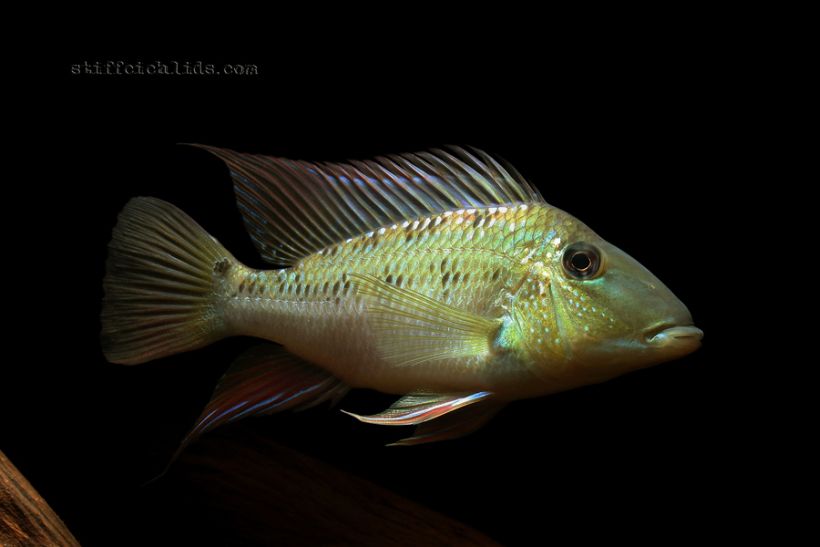
Satanoperca pappaterraPantanal Eartheater
Heckel, 1840
Max length200mm SL8in SLTank210 × 60cm84 × 24inTemp20–28°C68–82°FpH5.5–7.5S. pappaterra is relatively rare in the ornamental trade and much sought after by enthusiasts. It is easily distinguished from all known congeners by presence of a series of prominent black blotches beneath the dorsal-fin, plus a well-defined dark band extending along the side of the body. In recent genetic analyses its genetic distinctness was strongly supported, with S. jurupari and S. leucosticta its closest relatives.
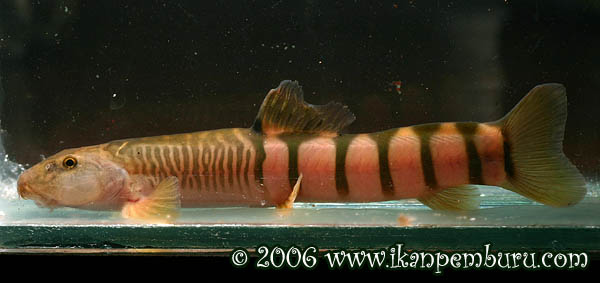
Schistura disparizona
Zhou & Kottelat, 2005
Max length96mm SL3.8in SLTank120 × 30cm48 × 12inTemp18–25°C64–77°FpH6.0–8.0Can be told apart from congeners by its colour pattern which consists of 8-11 closely-set, narrow dark bars in the anterior part of the body and 5 wider bars in the posterior part. It also possesses prominent dorsal and ventral adipose crests on the caudal peduncle and 9½ branched dorsal-fin rays.
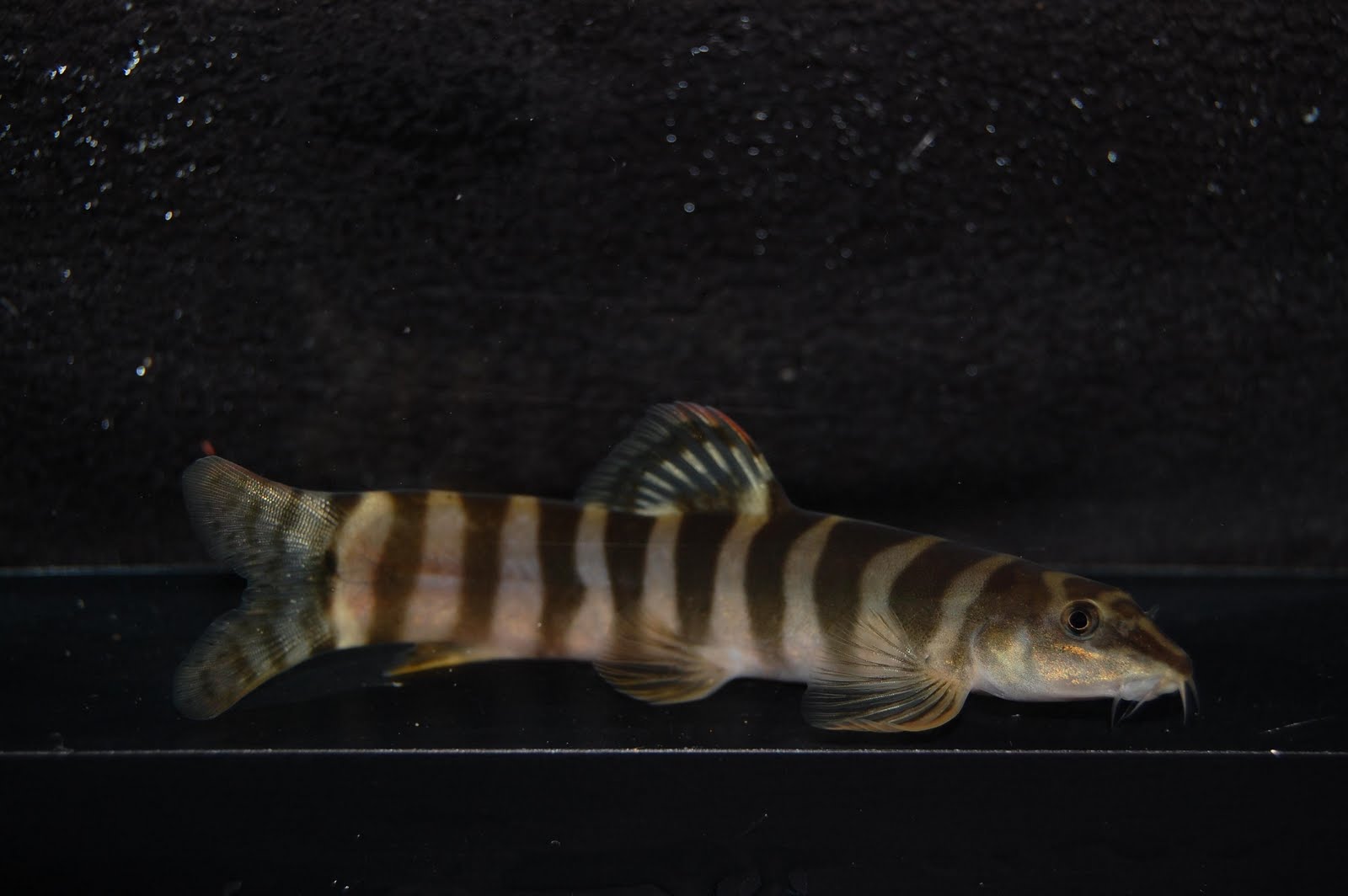
Schistura hypsiuraSuper Convict Loach
Bohlen, Ŝlechtová & Udomritthiruj, 2014
Max length73mm SL2.9in SLTank80 × 30cm31 × 12inTemp18–24°C64–75°FpH6.0–7.5It can be distinguished from congeners by the following combination of characters: caudal peduncle deep, ≥ the deepest part of the remainder of the body; no dorsal or ventral skin crests along the caudal peduncle; caudal-fin deeply forked, the outermost principal rays in the upper and lower lobes more than twice the length of the innermost: suborbital flap in males present; a well-developed suborbital groove in females; 6–8 very regular bars along the flank.
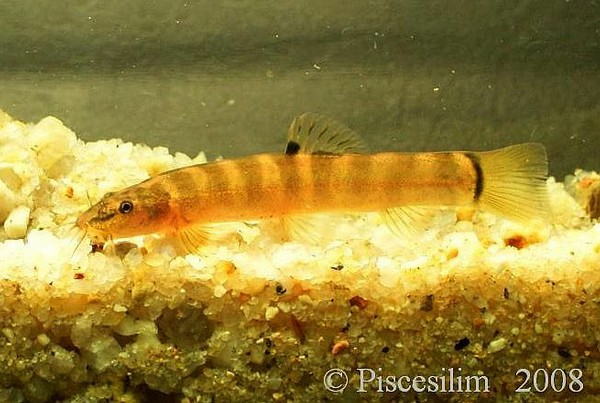
Schistura robertsi
Kottelat, 1990
Max length56mm SL2.2in SLTank80 × 30cm31 × 12inTemp18–30°C64–86°FpH6.0–8.0Should not prove difficult to maintain under the correct conditions. We strongly recommend keeping it in a tank designed to resemble a flowing stream or river with a substrate of variably-sized rocks, sand, fine gravel, and some water-worn boulders. This can be further furnished wit...
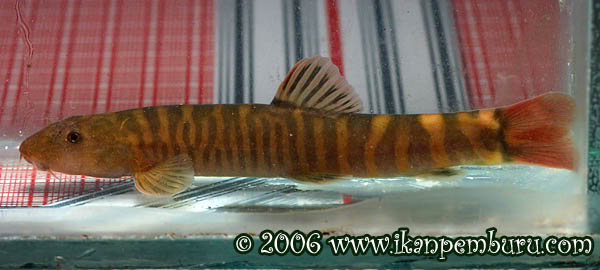
Schistura yingjiangensis
Zhu, 1982
Max lengthnot recordedTank80 × 30cm31 × 12inTemp20–24°C68–75°FpH6.0–7.5Following Kottelat (1990) the genus Nemacheilus is characterised by a combination of characters as follows: elongate body; complete lateral line; presence of enlarged scales above and below the lateral line in some species; caudal-fin forked to deeply forked with enlarged upp...
Sciaenochromis fryeriElectric Blue Hap
authority not recorded
Max length200mm SL8in SLTank150 × 45cm60 × 18inTemp24–28°C75–82°FpH7.6–8.8This popular species was previously imported and classified as Sciaenochromis ahli, and is still named as such in much of the available literature. Many morphs exist, although males of all these exhibit the characteristic blue colouration, differing only in fin colouration and patterning. These should not be mixed in aquaria as they will hybridise. Extra care must be taken regarding tankmates, too, as male S. fryeri have been known to spawn with females of other genera, particularly Aulonoca...
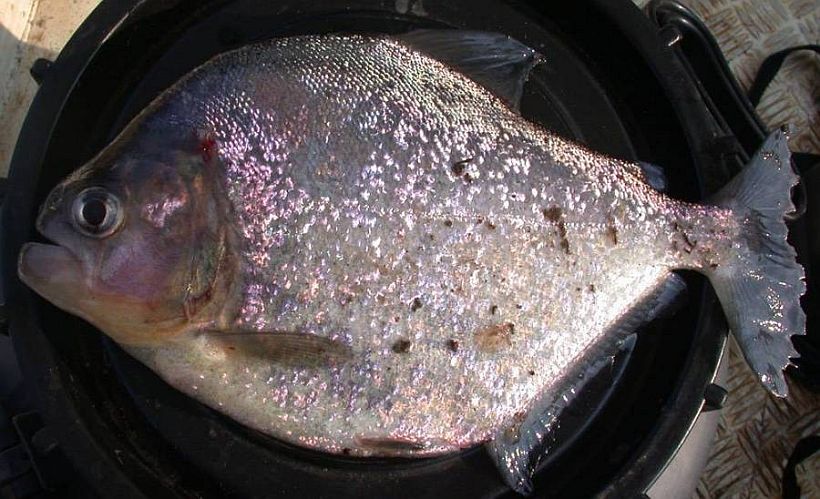
Serrasalmus gouldingiGoulding's Piranha
Fink & Machado-Allison, 1992
Max length280mm SL11in SLTank150 × 60cm60 × 24inTemp24–28°C75–82°FpH4.0–7.0This species occasionally appears in the ornamental trade where it is sometimes referred to as 'blue tiger piranha' Following Fink and Macaht can be distinguished from other members of the genus by the following combination of characters: body shape deep and rhomboid; head robust, snout blunt; eye large; mouth moderate, jaw projecting; 1-3 ontogeneticlly var...
Serrasalmus marginatus
authority not recorded
Max length221mm SL9in SLTank120 × 38cm48 × 15inTemp22–25°C72–77°FpHnot recordedThere are currently 24 described species of Serrasalmus, many of which look superficially similar. S. marginatus has at various times been considered a synonym of S. rhombeus and S. humeralis, but is currently considered to be distinct. It's main distinguishing feature is usually given as the thick, black, v-shaped marking in the anterior portion of the caudal fin. Juveniles are said to differ from similar-looking species such as S. compressus and S. altuvei because the dark body "spot...
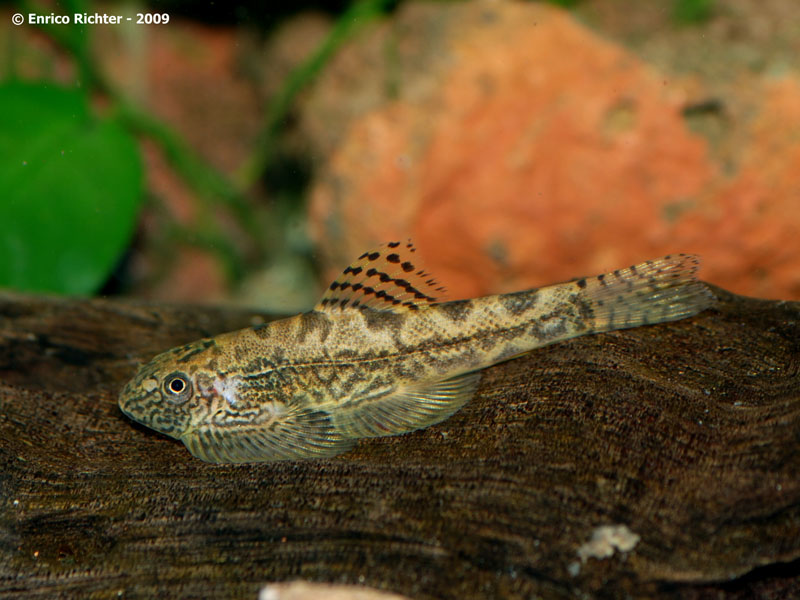
Sewellia sp. 'SEW02'
authority not recorded
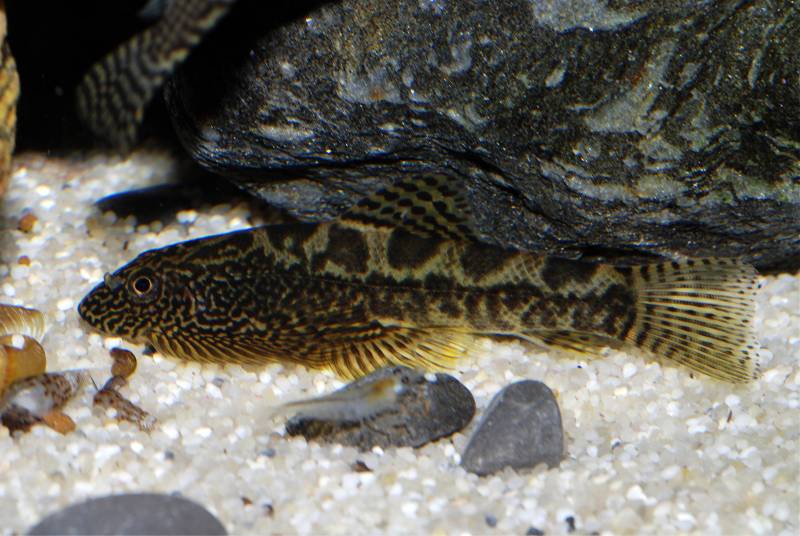
Max length65mm SL2.6in SLTank75 × 30cm30 × 12inTemp18–24°C64–75°FpH6.0–7.5This species first became available in early 2009 and was initially identified as S. breviventralis (Freyhof and Serov, 2000) because there is a clear space between the pelvic and anal fins and body patterning is vaguely similar to that species, and also appears quite similar to S. elongata (Roberts, 1998) and S. sp. 'SEW03'. It does not fully match the original descriptions of either, however, and therefore remains in need of identification.
Sewellia sp. 'SEW03'
authority not recorded
Max length60mm SL2.4in SLTank75 × 30cm30 × 12inTemp20–24°C68–75°FpH6.0–7.5This fish first became available in early 2009 and was initially identified as S. breviventralis (Freyhof and Serov, 2000). However it cannot be that species because there is no discernible gap between pelvic and anal fins, which also discounts the possibility of it being S. elongata (Roberts, 1998). It therefore remains unidentified and is often imported in mixed batches with S. sp. 'SEW02', which it also resembles closely.
Sicyopus exallisquamulus
Watson & Kottelat, 2006
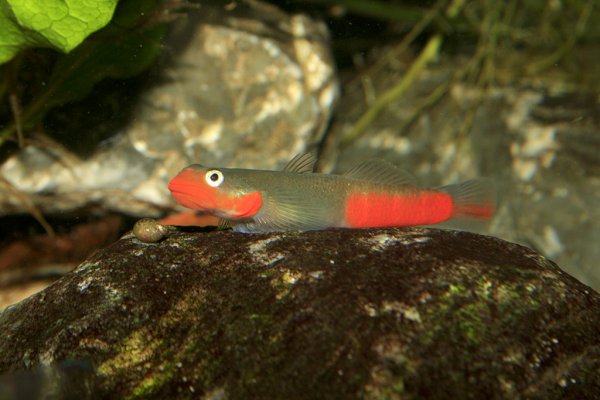
Max length52mm SL2.0in SLTank60 × 30cm24 × 12inTemp22–28°C72–82°FpH6.5–7.5Live colouration of this species was not included in the original description but the specimens in our images were identified by Dr. Ronald E. Watson, the principal author, as S. exallisquamulus. It's normally misidentified and traded as the Sri Lankan endemic species Sicyopus jonklaasi. It is diagnosable from congeners by the following combination of characters: 14-15 pectoral-fin rays; both genders exhibit small, widely-spaced scales...