Results for “várzea”
Type a name: scientific, common, or one a species used to go by. Or narrow the catalogue with the filters.
Filters
Cichla temensisSpeckled Pavon
authority not recorded
Max length990mm SL39in SLTanknot recordedTemp27–29°C81–84°FpH5.5–6.5One of the largest cichla species. Due to their large size, Peacock Bass are only really recommended for the experienced fishkeeper that can house them adequately. That said, they are a hardy and robust species that will adapt to a variety of conditions. Peacock Bass are becoming much more available in the hobby and are often seen for sale as cute 2" babies, often tempting people into buying a fish they will not be able to care for in the long term. Peacock Bass are also fished as...
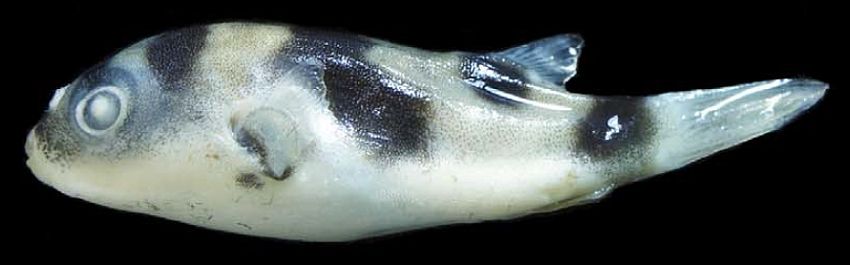
Colomesus tocantinensis
Amaral, Brito, Silva & Carvalho, 2013
Max length35mm SL1.4in SLTanknot recordedTempnot recordedpHnot recordedIt is distinguished from congeners by the following combination of characters: anal-fin with 6-7 basal pterygiophores and 9 rays (vs. 10-11 rays in C. asellus and C. psittacus; dorsal-fin with 10 bas...
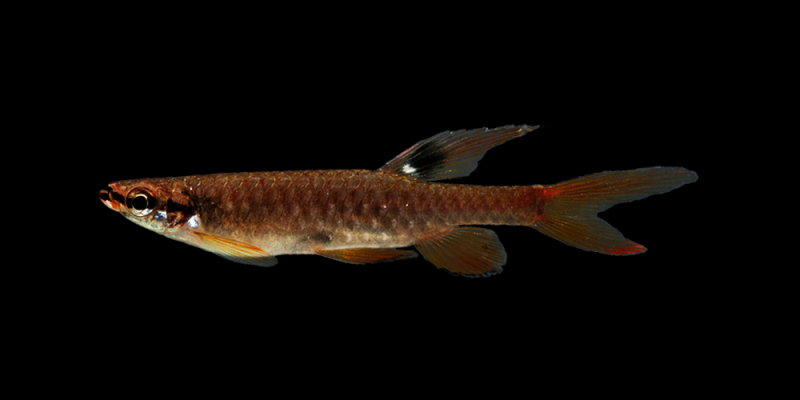
Copella arnoldiSplash Tetra
Regan, 1912
Max length55mm SL2.2in SLTank90 × 30cm36 × 12inTemp20–28°C68–82°FpH4.0–7.5This species is also known as the 'spraying', 'splashing' or 'jumping' tetra and these names are also sometimes applied to its congeners although none of them exhibit a comparable spawning strategy, simply depositing their eggs among vegetation at or around the water surface.
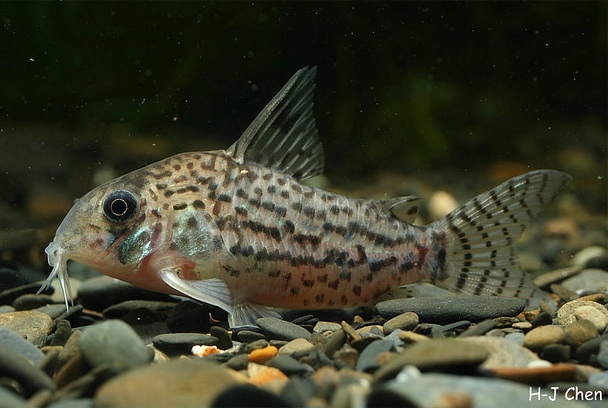
Corydoras acrensisAcre Cory
Nijssen, 1972
Max length55mm SL2.2in SLTanknot recordedTemp21–25°C70–77°FpH6.0–7.5Type locality is 'Furo do Lago São Francisco, 7°40'S, 72°39'W, tributary at left bank of Rio Juruá, Acre State, Brazil', and C. acrensis appears to be endemic to the rio Juruá basin. Unfortunately diagnostic characters cannot be provided since we've been unable to obtain the type description, and little has been written about this species since it was published.
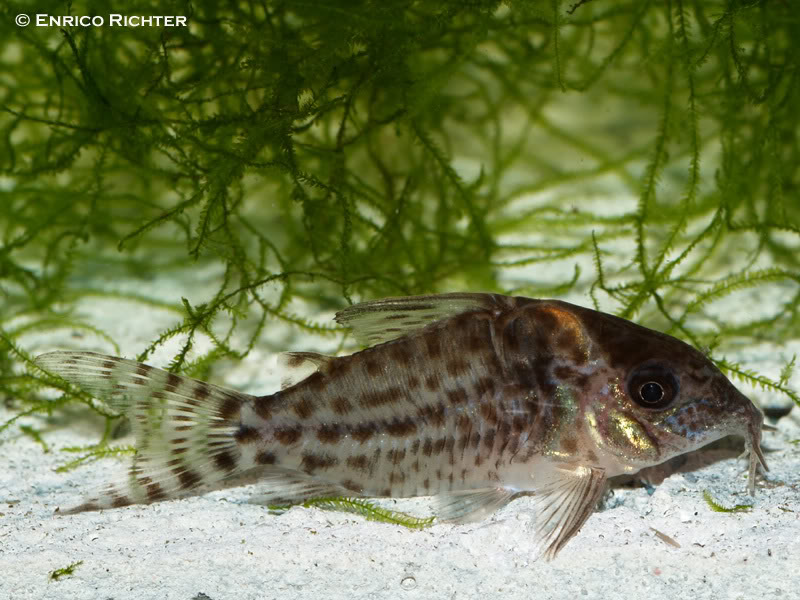
Corydoras agassiziiSpotted Cory
Steindachner, 1876
Max length70mm SL2.8in SLTanknot recordedTemp22–27°C72–81°FpH6.0–8.0This species' name is commonly misapplied to a number of similar-looking fishes and it can be difficult to identify if collection locality is unknown. In addition, colour pattern is variable and it's not clear whether this occurs between, within, or both between and within populations. In the original description, Steindachner did note that the first three dorsal-fin rays are completely black while the remainder is whi...
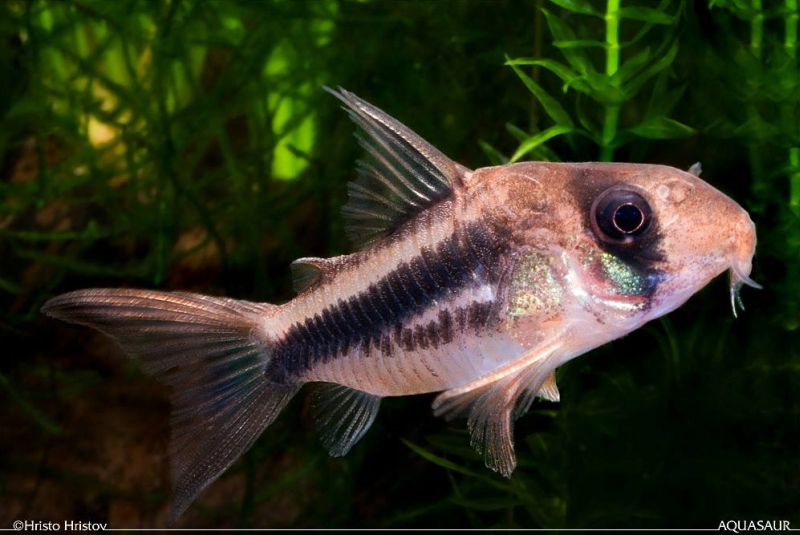
Corydoras axelrodiAxelrod's Cory
Rössel, 1962
Max length50mm SL2.0in SLTanknot recordedTemp22–26°C72–79°FpH5.0–7.0This species is somewhat variable in appearance and can have between 1-3 dark lateral stripes on each flank, for example. It's also known by the alternative common name 'pink corydoras'. It looks similar to the congener C. loxozonus plus unidentified fishes which have been assigned the codes C003 and CW021, and all four are sometimes traded under the fabricated names C. 'deckeri' or C. sp. 'decker/deker'.
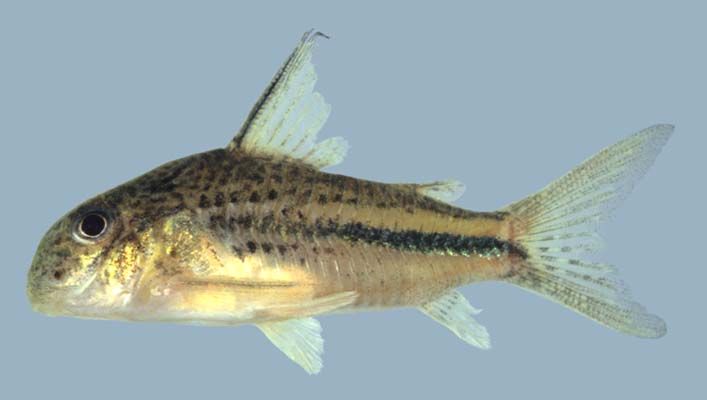
Corydoras bondiBlackstripe Cory
Gosline, 1940
Max length50mm SL2.0in SLTanknot recordedTemp20–26°C68–79°FpH6.0–7.5Type locality is 'Río Yuruari, 3 kilometers east of El Callao, 7°18'N, 61°50'W, Bolivar, Venezuela', and this species is also known from the Rupununi River drianage in Guyana and the Courantyne/Corantijn system in Suriname. The Yuruari, an affluent of the Río Cuyuni, an...
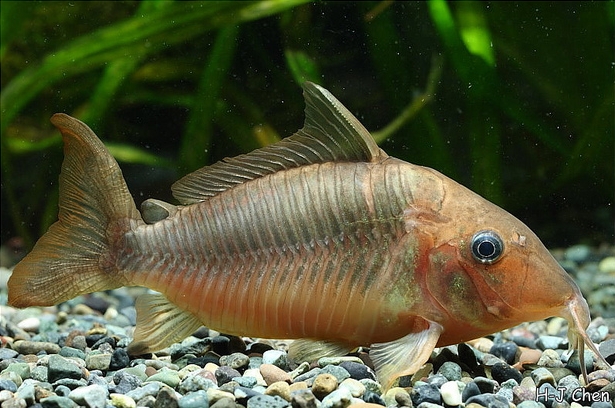
Corydoras britskiiGiant Brochis
Nijssen & Isbrücker, 1983
Max length90mm SL3.5in SLTank120 × 45cm48 × 18inTemp20–26°C68–79°FpH6.0–7.0Brochis was first synonymised with Corydoras by Britto (2003), since the latter genus cannot be considered monophyletic if the former is accepted as valid. This decision has been supported in subsequent phylogenetic studies by Shimabukuro-Dias et al. (2004) and Alexandrou et al. (2011), although the name Brochis is still common in aquarium literature. It is likely that the genus will be revalidated and expanded in the future following a required taxonomic review of the subfamily Corydoradinae as suggested by Alexandrou and Taylor (2011).
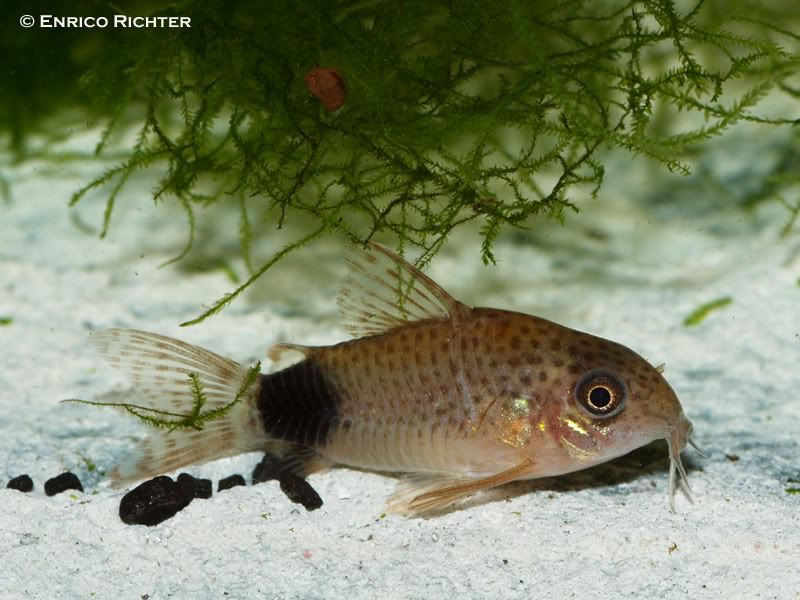
Corydoras caudimaculatusTailspot Cory
Rössel, 1961
Max length50mm SL2.0in SLTanknot recordedTemp20–26°C68–79°FpH6.0–7.0C. caudimaculatus may be confused with the congener C. similis but can be told apart by possession of a well-defined, blackish spot on the caudal peduncle vs. a 'smudged' bluish marking. C. guapore also has a comparable colour pattern but possesses a distinctly rounded snout and tends to swim above the substrate.
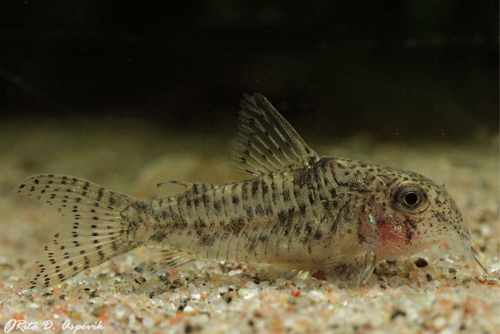
Corydoras cochuiBarredtail Cory
Myers & Weitzman, 1954
Max length35mm SL1.4in SLTanknot recordedTemp20–28°C68–82°FpH6.0–7.5This small species can be told apart from the similar-looking congener C. habrosus by possession of 4-5 (vs. 2-3) dark markings along the side of the body.
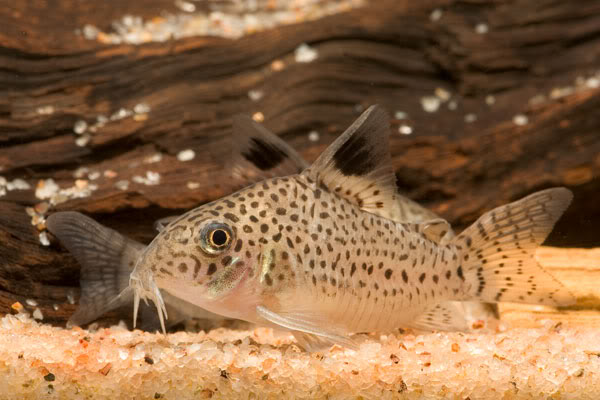
Corydoras copei
Nijssen & Isbrücker, 1986
Max length50mm SL2.0in SLTank80 × 30cm31 × 12inTemp20–26°C68–79°FpH5.0–7.0This species is not well known and rarely traded for the aquarium hobby. Unfortunately diagnostic characters cannot be provided since we’ve been unable to obtain the type description, and little has been written about this species since it was published. It looks very similar to several congeners, particularly C. acrensis and C. cruziensis.
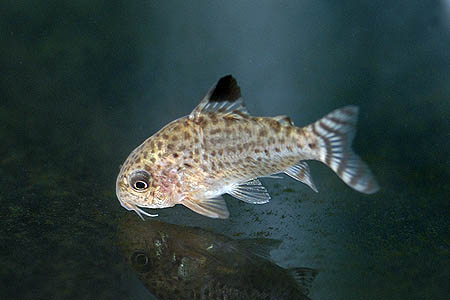
Corydoras cruziensisSanta Cruz Cory
Knaack, 2002
Max length50mm SL2.0in SLTank80 × 30cm31 × 12inTemp20–28°C68–82°FpH6.0–8.5This species is not well-documented but is said to differ from the comparable C. punctatus by possessing larger dark markings on the body which may form an irregular midlateral stripe in some specimens. Unfortunately diagnostic characters cannot be provided since we’ve been unable to obtain the type description, and little has been written about the species since it was published.
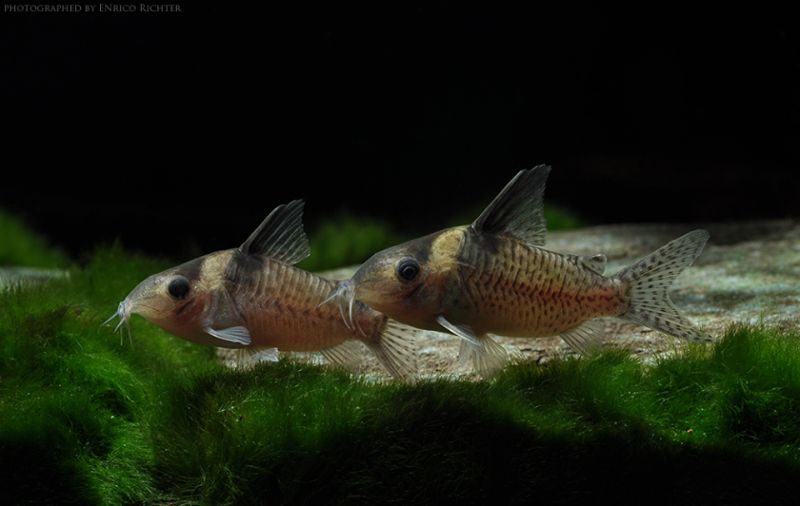
Corydoras delphax
Nijssen & Isbrücker, 1983
Max length60mm SL2.4in SLTank90 × 30cm36 × 12inTemp22–27°C72–81°FpH5.5–7.5Unfortunately, precise diagnostic characters cannot currently be provided since we’ve been unable to obtain the type description, and little has been Characters said to separate it from species such as C. ambiacus, C. agassizii, C. brevirostris, C. ephippifer, and C. melanistius include a combination of relatively elongated snout, dark spots on body fading in adults, dark anterior dorsal-fin patch extending to upper extremity of fin, and presence of spots in the caudal-fin.
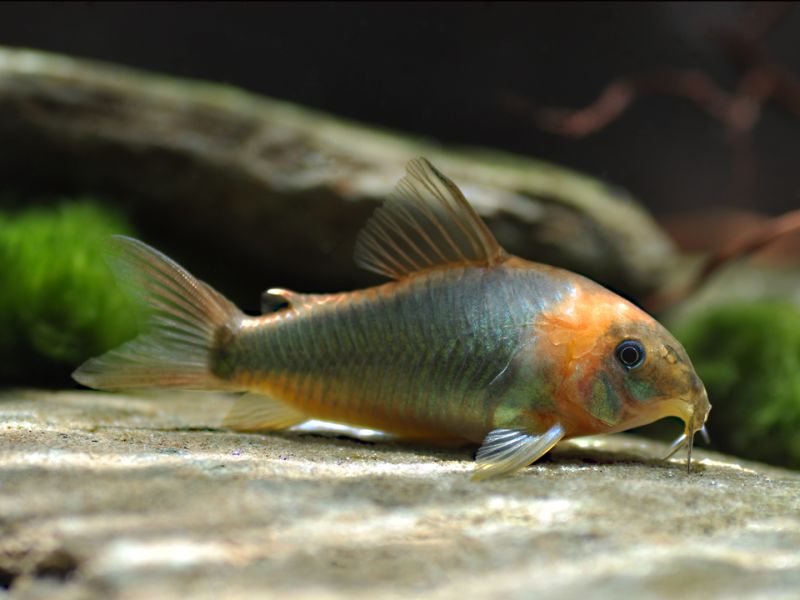
Corydoras eques
Steindachner, 1876
Max length50mm SL2.0in SLTank90 × 30cm36 × 12inTemp20–26°C68–79°FpH6.0–8.0Although described as a member of Corydoras this species was later moved into the genus Osteogaster by Cope (1894), but this was later synonymised with Corydoras by Gosline (1940). It is sometimes confused with C. venezuelanus, while two similar-looking, unidentified fishes from Peru have been assigned the codes CW007 and CW043, respectively.
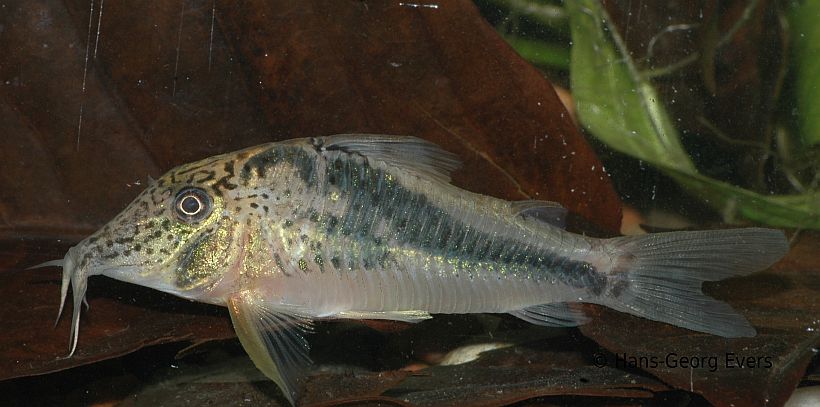
Corydoras fowleriFowler's Cory
Böhlke, 1950
Max length70mm SL2.8in SLTank120 × 45cm48 × 18inTemp20–28°C68–82°FpH5.0–7.5In addition, the colour pattern in aquarium fish traded or identified as C. fowleri is highly variable, but it is unclear whether such differences represent diversity within or between populations. Nevertheless, colour pattern is typically used to distinguish them, with fish from Peru possessing a greater extent of dark pigmentation on the body generally referred to...
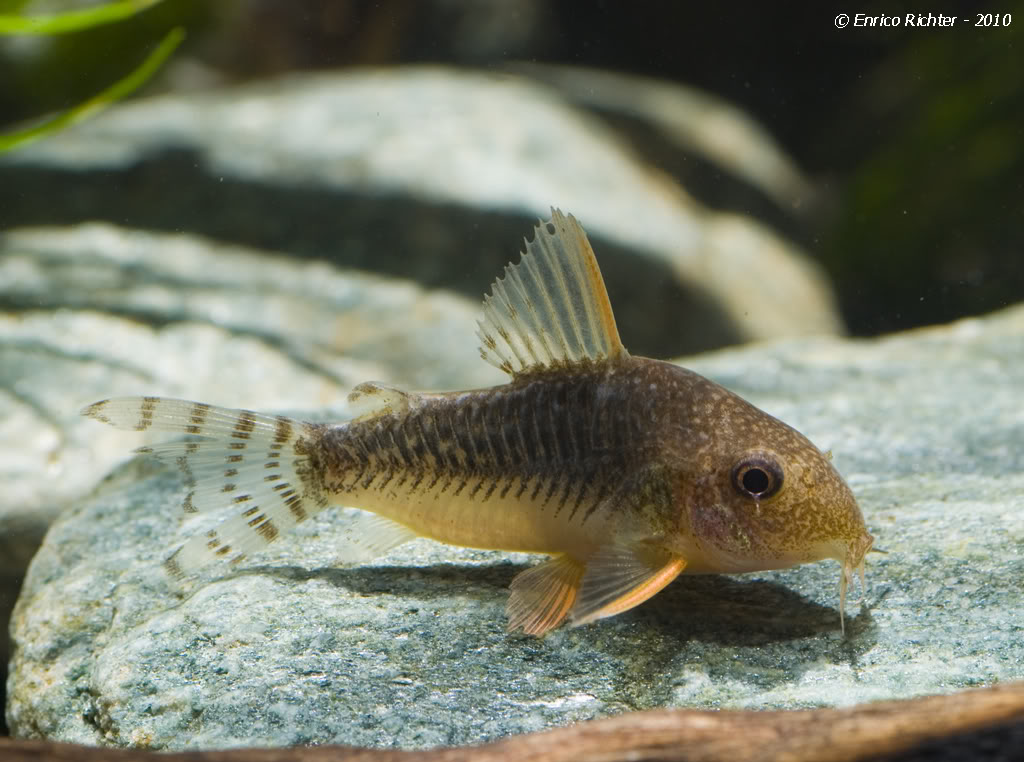
Corydoras gosseiPalespotted Cory
Nijssen, 1972
Max length55mm SL2.2in SLTank90 × 30cm36 × 12inTemp24–28°C75–82°FpH5.5–7.5The congener C. seussi, which is also native to the rio Mamoré, has a similar colour pattern but its snout is noticeably prolonged compared with that of C. gossei, plus there are some subtle differences in pigmentation. There is a third variant which has been referred to as 'CW069' in the aquarium hobby and appears to be somewhat intermediate, with a short, rounded snout as in C. gossei but a colour pattern more reminiscent of C. seussi.
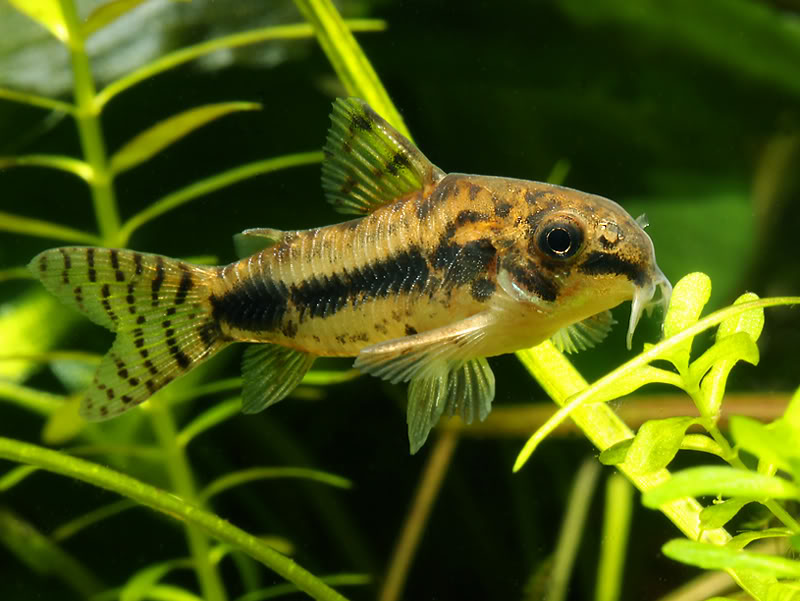
Corydoras habrosusSalt and Pepper Cory
Weitzman, 1960
Max length35mm SL1.4in SLTank60 × 30cm24 × 12inTemp20–26°C68–79°FpH5.5–7.5The majority of records derive from the Río Apure watershed in southwestern Venezuela, where C. habrosus has been collected in the states of Portuguesa, Cojedes, Barinas, Guárico, and Apure. Its distribution in Colombia is less clear but it is known with certainty from the Río Arauca and Río Casanare, the latter a tributary of the lower Río Meta, and it makes sense that it should also be found in other left bank Orinoco affluents between the Meta and Apure, which include the ríos Cinaruco and Capanaparo.
Corydoras haraldschultziMosaic Cory
Knaack, 1962
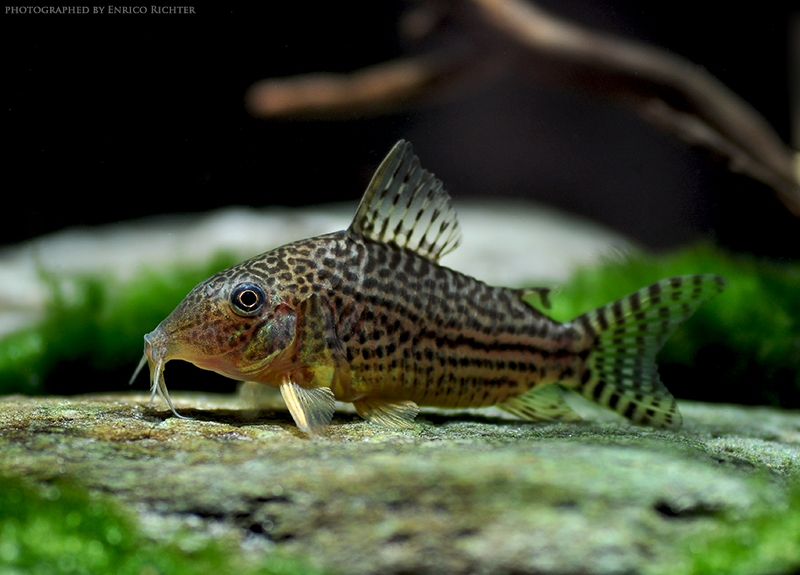
Max length85mm SL3.3in SLTank120 × 30cm48 × 12inTemp24–28°C75–82°FpH5.5–7.5The original type locality is 'Rio Guaporé, Brazil', supposedly in the vicinity of Pontes e Lacerda in Mato Grosso state. However, this was modified by Nijssen and Isbrücker (1980) to 'Brazil-Goias, Rio Tocantins, road between Pedro-Afonso (08°59'S 48°12'W) and Itacajá (08°18'S 47°45'W)'. This is confusing since the distance between these two localities is well over 1000 km, although it appears that the former is correct as per our image of specimens with locality details.
Corydoras imitatorImitator Cory
Nijssen & Isbrücker, 1983
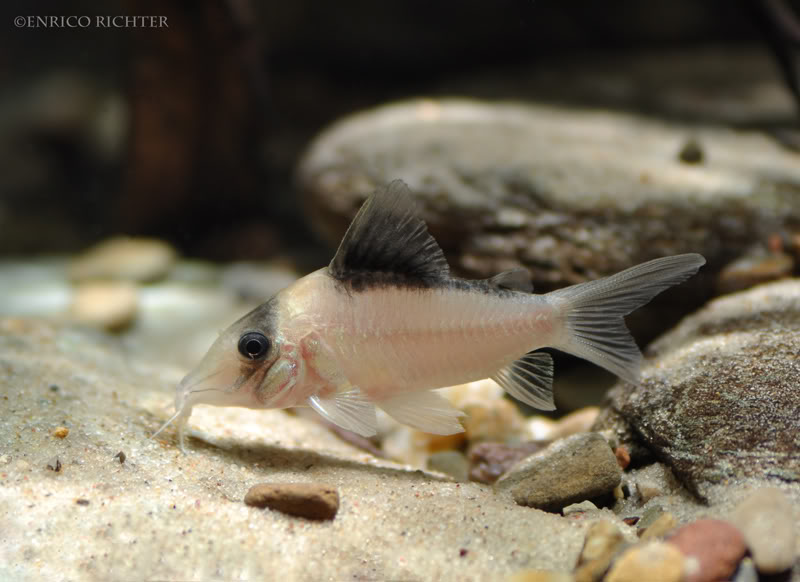
Max length65mm SL2.6in SLTank90 × 30cm36 × 12inTemp20–26°C68–79°FpH4.0–7.0Endemic to the upper rio Negro basin in Amazonas state, northern Brazil, and Amazonas state, southern Venezuela. One specific locality is Igarapé Muiá (00°09'03"N 66°48'10"W). Type locality is 'Upper Rio Negro, eastern Amazonas, Brazil', which is thought to refer to forest brooks crossing the "new army road", north of São Gabriel da Cachoeira municipality.
Corydoras pastazensisPastaza Cory
Weitzman, 1963
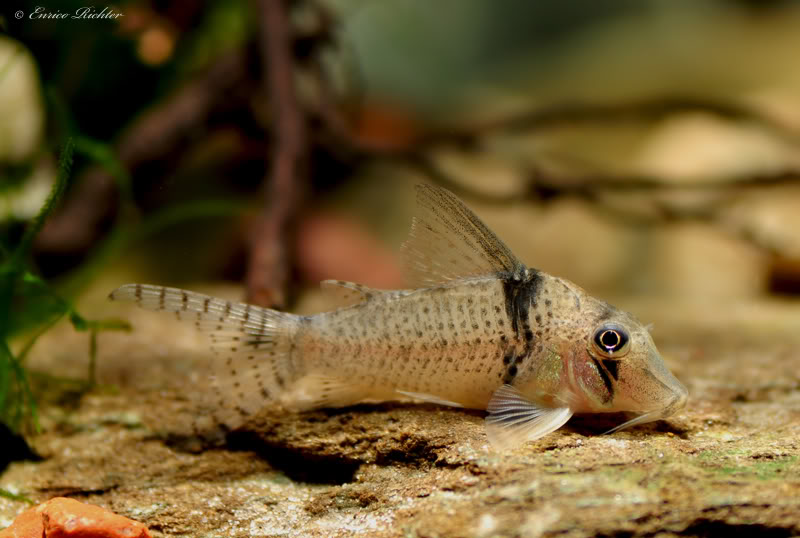
Max length70mm SL2.8in SLTank90 × 30cm36 × 12inTemp22–28°C72–82°FpH5.0–7.0The form from the Río Tigre, previously referred to as the subspecies C. p. orcesi (Weitzman & Nijssen, 1970) was raised to full species status as C. orcesi by Isbrücker (2001), but this decision does not appear to have been followed by all authorities some of which consider C. p. orcesi a synonym of C. pastazensis. The two species are relatively easy to tell apart by colour pattern; in C. pastazensis the dark vertical...