Results for “community”
Type a name: scientific, common, or one a species used to go by. Or narrow the catalogue with the filters.
Filters
Neolamprologus sexfasciatusSix-barred Lamprologus
authority not recorded
Max length150mm SL6in SLTanknot recordedTemp23–27°C73–81°FpH7.5–9.0Several geographical morphs of this species are available, including "Sambia" and "Kipili". These vary in base colour from blue to yellow to white. It is not recommended for the general Tanganyikan community due to its aggressive and predatory nature....
Neolamprologus tretocephalusFive-barred Lamprologus
authority not recorded
Max length150mm SL6in SLTank120 × 30cm48 × 12inTemp23–27°C73–81°FpH7.5–9.0It can be distinguished from the similar N. sexfasciatus by the presence of only five, rather than six, vertical bars on it's flanks. It is not recommended for the general Tanganyikan community due to it's aggressive nature, particularly when breeding....
Neolebias trilineatusThree-lined Neolebias
authority not recorded
Max length35mm SL1.4in SLTank45 × 30cm18 × 12inTemp23–26°C73–79°FpH6.0–7.2This species is rarely seen in the trade but makes a superb addition to the smaller community tank. Often appears quite bland in dealer's tanks but, in the correct environment, is a stunning little fish....
Nimbochromis livingstonii
authority not recorded
Max length250mm SL10in SLTank120 × 45cm48 × 18inTemp24–28°C75–82°FpH7.6–8.8Not a fish for the general Malawi cichlid community, N. livingstonii is an ambush predator in nature, often being seen hanging motionless around rocky structures, in Vallisneria thickets or on the floor of the lake. It is a sedentary species and does not move around a lot. This is a behavioural adaptation known as thanatosis, or 'playing dead'. This strategy is usually used as for defensive means in other animals but in N. livingstonii is adapted for offensive means. The fish has a mot...
Nimbochromis venustusVenustus
authority not recorded
Max length250mm SL10in SLTank120 × 45cm48 × 18inTemp24–28°C75–82°FpH7.6–8.8Not a fish for the general Malawi cichlid community, N. venustus is an ambush predator in nature. It is often found hanging motionless around rocky structures, in Vallisneria thickets or on the floor of the lake. It is a sedentary species and does not move around a lot. This is a behavioural adaptation known as thanatosis, or 'playing dead'. This strategy is usually used as for defensive means in other animals but in N. venstus is adapted for offensive means. The fish has a mottled col...
Ompok eugeneiatusBorneo Glass Catfish
authority not recorded
Max length165mm SL6in SLTank120 × 30cm48 × 12inTemp20–28°C68–82°FpH6.0–7.0Not often encountered in the hobby, but makes an ideal schooling catfish for a community of medium to large peaceful fish.
Ophthalmotilapia ventralis
authority not recorded
Max length150mm SL6in SLTank135 × 45cm53 × 18inTemp23–27°C73–81°FpH7.5–9.0This is a truly stunning species that does well in a Tanganyikan community with well-chosen tankmates. It exists in well over 20 colour morphs, too many to list here. Obviously these should not be mixed in aquaria as they will hybridise freely. In nature, it is only the largest dominant males that build nests whilst the subdominant males and females shoal together. The territories of these dominant fish may measure several metres across....
Pangasionodon hypophthalmusIridescent Shark Catfish
authority not recorded
Max length1300mm SL51in SLTanknot recordedTemp22–26°C72–79°FpH6.5–7.5Previously referred to as Pangasius sutchi, this is the commonest of the Pangasiid catfish seen in the aquatic trade. It's usually seen for sale as a cute silvery-blue 2-3" youngster, most often without adequate information regarding its long term care requirements and potential size. Unfortunately this means it makes it's way into many a beginner's community tank, as it's undeniably attractive when small. The use of common names such as the one stated here don't he...
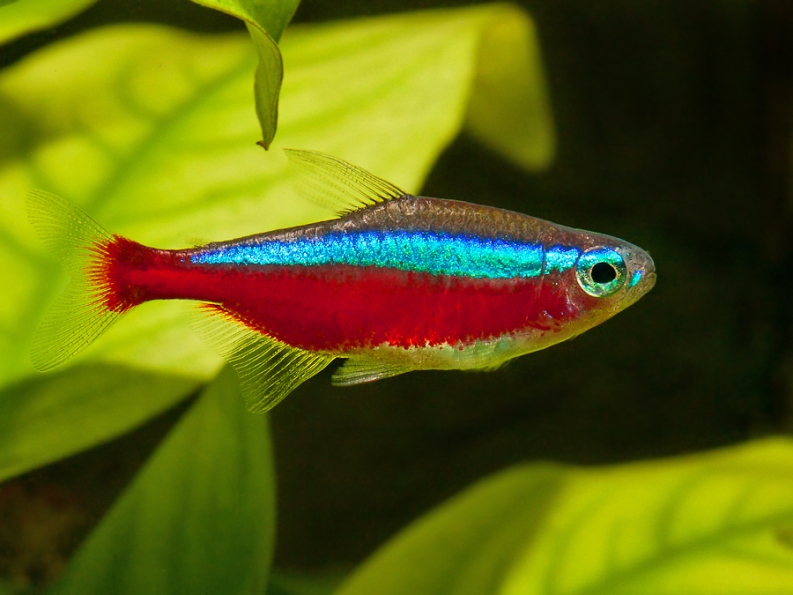
Paracheirodon axelrodiCardinal Tetra
Schultz, 1956
Max length35mm SL1.4in SLTank60 × 30cm24 × 12inTemp23–29°C73–84°FpH3.5–7.5It was initially going to be described as Hyphessobrycon cardinalis by Myers and Weitzman (1956) but just before this was due to be published Schultz presented an alternative description in the hobbyist magazine 'Tropical Fish Hobbyist' and named the fish after the publication's founder, Dr. Herbert R. Axelrod. A significant proportion of the fish available in the aquarium trade are still wild caught or derive from community-led breeding projects such as Project Piaba in the middle Negro region, where this sp...
Platydoras armatulusHumbug Catfish
authority not recorded
Max length240mm SL9in SLTank120 × 30cm48 × 12inTemp24–30°C75–86°FpH5.8–7.5This popular species is also sold as the striped dora, striped raphael or striped talking catfish. It's often seen as an ideal beginner's cat, being hardy and tolerant of a wide range of water conditions. However its secretive nature, adult size and tendency to snack on smaller tankmates mean it should only be considered for communities of larger fish. The 'talking catfish' moniker is derived from the fish's ability to produce sounds when communicating with conspecif...
Platystacus cotylephorusBanded Banjo Catfish
authority not recorded
Max length320mm SL13in SLTank120 × 30cm48 × 12inTemp22–25°C72–77°FpH6.0–8.2Not a particularly good catfish for the general community tank, as it's a largely inactive, secretive species that will only emerge and become active under cover of darkness. It is, nonetheless, an interesting aquarium subject for the enthusiast, exhibiting an incredible degree of camouflage. It's designed to resemble a dead leaf, and usually will not even swim to escape a net. When released into the aquarium will simply drift in the current until it hits the bottom. All members of the...
Pristolepis marginatusMalabar Leaffish
authority not recorded
Max length150mm SL6in SLTank120 × 30cm48 × 12inTemp23–28°C73–82°FpH6.5–7.5Also known as the common catopra, this is still quite a rare species in the hobby, although it's becoming more readily available due to captive breeding efforts. It makes an interesting addition to the larger community or oddball tank....
Pseudotropheus flavus
authority not recorded
Max length90mm SL3.5in SLTank90 × 45cm36 × 18inTemp24–28°C75–82°FpH7.6–8.8Although it is a good choice for the general mbuna community, as mentioned above P. flavus should not be kept together with any member of the P. elongatus complex. Not only will these species interbreed, producing undesirable hybrid offspring, but males of these species will clash very heavily. As with other members of the genus it possesses flat, bicuspid teeth which are designed for scraping algae and other organisms from the surface of rocks....
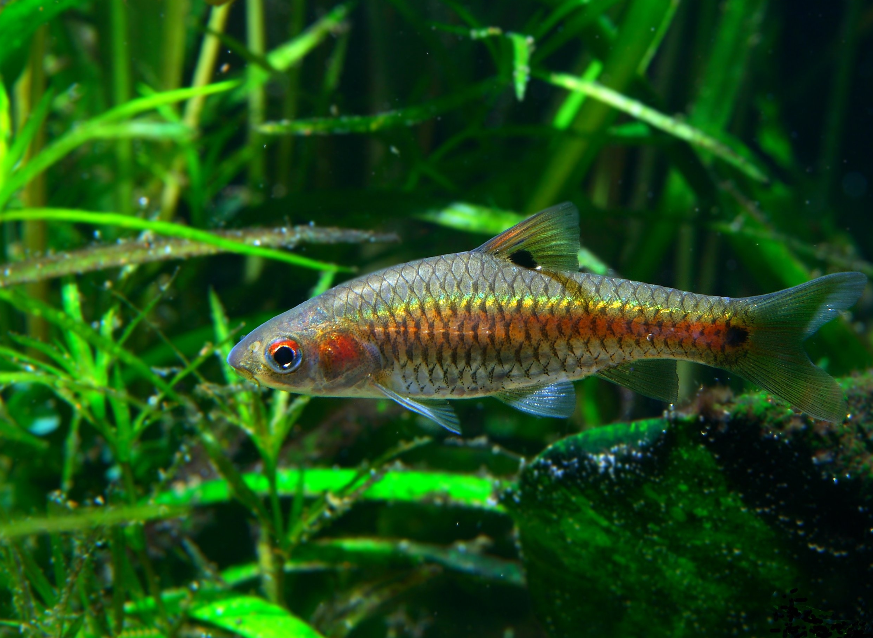
Puntius bimaculatusTwo-spotted Barb
Bleeker, 1863
Max length50mm SL2.0in SLTank60 × 30cm24 × 12inTemp18–24°C64–75°FpH6.0–7.5Generally very peaceful making it an ideal resident of the well-researched community tank. As it places no special demands in terms of water chemistry it can be combined with many of the most popular fish in the hobby including other small cyprinids as well as tetras, livebearers, rainbowfishes, anabantoids, catfishes and loaches. It's a schooling species by nature, and at least 6-10 specimens should be purchased. Maintaining it in such...
Rasbora cephalotaeniaPorthole Rasbora
authority not recorded
Max length130mm SL5in SLTank120 × 45cm48 × 18inTemp22–25°C72–77°FpHnot recordedThis species is not often exported which is a shame as it makes an elegant, peaceful resident of the larger community tank. It can be easily distinguished from similar-looking congeners such as R. einthovenii and R. jacobsoni by examining the dark lateral stripe that extends lengthways along the body of the fish as in R. cephalotaenia it is composed of a series of dark spots whereas in the other species it forms a continous solid line. Rainboth's 'Fishes of the Cambodian Mekong'...
Rasbora einthoveniiBrilliant Rasbora
authority not recorded
Max length90mm SL3.5in SLTank120 × 30cm48 × 12inTemp22–26°C72–79°FpHnot recordedThis is one of the more commonly-seen rasboras in the hobby and is ideal for the medium-sized community set-up. It shares some close similarities with R. jacobsoni but can be most easily identified by the fact it lacks dark reticulated scales above the lateral stripe. This stripe also has noticeably more uneven or "crinkly" edges in R. einthovenii than in R. jacobsoni or indeed any other species of laterally-striped Rasbora. A further distinguishing combination of characters for both t...
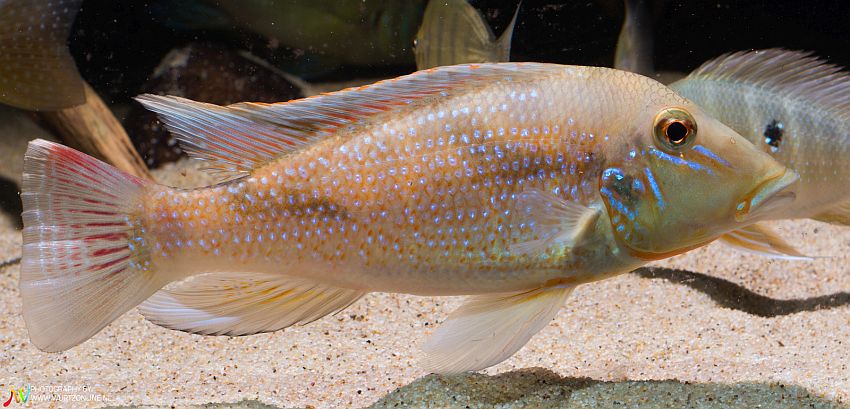
Retroculus lapidifer
Castelnau, 1855
Max length200mm SL8in SLTank210 × 60cm84 × 24inTemp26–32°C79–90°FpH6.0–8.0Retroculus spp. are unsuitable for the standard community aquarium, and should be maintained in a set-up designed to resemble a flowing river. The substrate should be composed of soft sand mixed with small pebbles if the aim is to breed the fish (see 'Reproduction'). Rocks, boulders, roots, branches, and aquatic plants can also be added, although the la...
Rhinodoras boehlkeiFog Talking Catfish
authority not recorded
Max length130mm SL5in SLTank120 × 30cm48 × 12inTemp24–26°C75–79°FpH5.8–7.0At present there's not a great deal of information available regarding this species. It seems to be fairly easy to keep, and makes a good addition to larger community tanks.
Rhinodoras dorbygnyi
authority not recorded
Max length300mm SL12in SLTank120 × 60cm48 × 24inTemp20–25°C68–77°FpH6.0–7.0At present there's not a great deal of information available regarding this species. It seems to be fairly easy to keep, and makes a nice, unusual addition to larger community tanks.
Rita kuturneeDeccan Rita
authority not recorded
Max length260mm SL10in SLTank120 × 30cm48 × 12inTemp22–27°C72–81°FpH6.0–7.0Rita species are not often seen in the hobby. When available, R. kuturnee makes a fine bottom dweller for communities containing other robust species....