Results for “morphology”
Type a name: scientific, common, or one a species used to go by. Or narrow the catalogue with the filters.
Filters
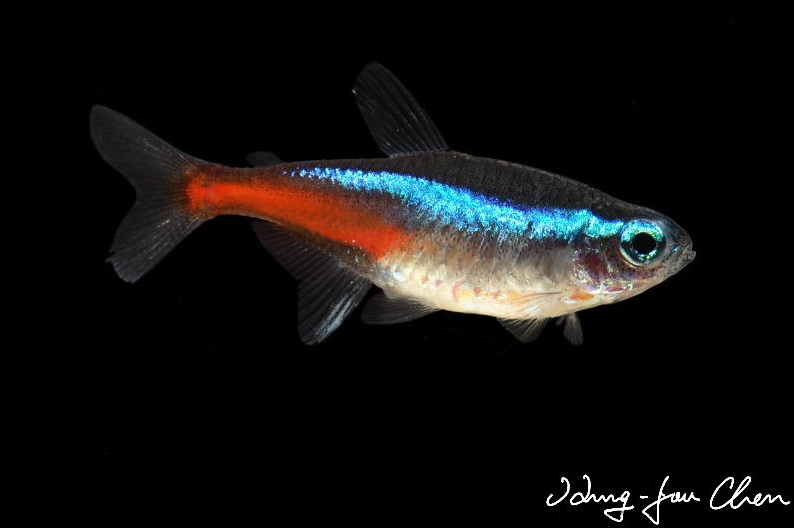
Paracheirodon innesiNeon Tetra
Myers, 1936
Max length30mm SL1.2in SLTank60 × 30cm24 × 12inTemp21–25°C70–77°FpH4.0–7.5One of the most popular and instantly recognisable fishes in the aquarium hobby, this species has been selectively-bred to produce a number of additional strains including albino, 'golden' (leucistic), short-bodied, long-finned and 'diamond' (in which the dorsal surface is covered in reflective scales). Unfortunately years of commercial breeding have somewhat affected the genetic vigour of the ornamental strain meaning morphological defects an...
Pelvicachromis humilisYellow Kribensis
authority not recorded
Max length125mm SL5in SLTanknot recordedTemp24–27°C75–81°FpH5.0–7.0A rare species in the hobby, P. humilis is also the largest known species in the genus. Several morphs are available, including "Guinea" and "Liberia red". Some of these may eventually be described as distinct species, as they are quite different in colouration and, to a lesser extent, morphology. This has already occured with P. rubrolabiatus and P. signatus, both of which were originally assigned to the humilis complex but have recently been reclassified. The easiest wa...
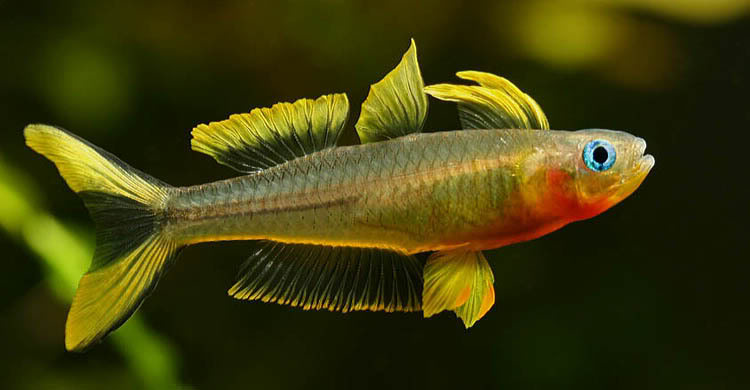
Pseudomugil furcatusForktail Blue-eye
Nichols, 1955
Max length60mm SL2.4in SLTank60 × 30cm24 × 12inTemp24–28°C75–82°FpH7.0–8.0This species is also traded as 'forktail rainbowfish' or 'yellow forktail', and it's also undergone several changes in scientific name since description. Pseudomugil furcatus is the original designation, but Allen (1980) created the genus Popondetta for it on the basis of morphological characters including number of anal-fin rays (16-20 in P. furcatus, 8-12 in other Pseudomugil spp.), absence of anterior...
Pseudotropheus elongatusElongate Mbuna
authority not recorded
Max length135mm SL5in SLTank120 × 38cm48 × 15inTemp24–28°C75–82°FpH7.6–8.8Over 30 different forms of this species occur in Lake Malawi. These should not be mixed in the aquarium as they will hybridise freely. P. elongatus differs morphologically from other mbuna, being relatively slender and elongate. In nature females protect territories which contain 'gardens' of algae which they leave to breed before returning once they are holding eggs. Juvenile fish from previous spawns also inhabit the territory, protecting it when the female is away. This species i...
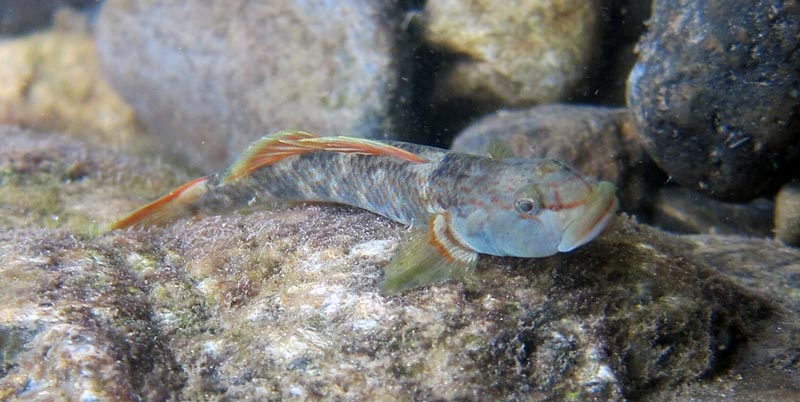
Rhinogobius flumineus
Mizuno, 1960
Max length60mm SL2.4in SLTank75 × 30cm30 × 12inTemp18–25°C64–77°FpH6.0–8.0In addition, there appear to exist two colour forms based on male dorsal-fin morphology and patterning; one in which the 4th ray of the first dorsal-fin is longest with a square bluish-black blotch on the anterior ⅔ of the fin, and a second in which the 2nd and 3rd rays of the first dorsal-fin are longest with the fin itself paler and lacking dark markings.
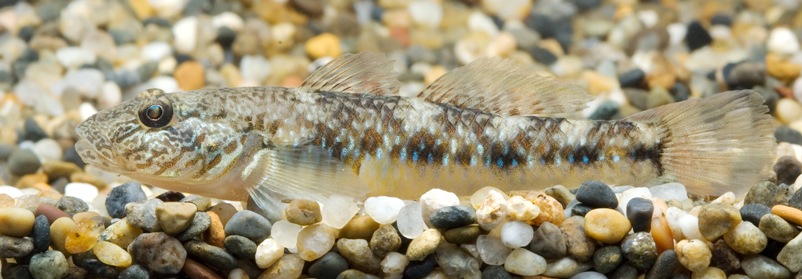
Rhinogobius giurinus
Rutter, 1897
Max length90mm SL3.5in SLTank60 × 30cm24 × 12inTemp18–24°C64–75°FpH6.5–8.5This species appears to exist in a number of different forms which exhibit differences in colour pattern, morphology, or both, and it's currently unclear whether all of them are truly conspecific or not although to avoid confusion we list all together here.
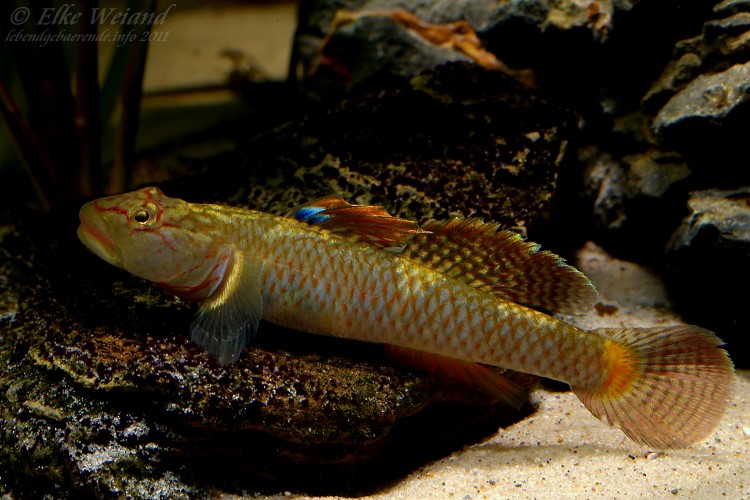
Rhinogobius leavelli
Herre, 1935
Max length60mm SL2.4in SLTank60 × 30cm24 × 12inTemp20–28°C68–82°FpH6.0–8.0This species appears to exist in a number of different forms which exhibit differences in colour pattern, morphology, or both, and it's currently unclear whether all of them are truly conspecific or not although those in the aquarium trade all appear similar to one another. We've been unable to obtain a copy of the original description so it's not currently possible to provide a detailed diagnosis either, with most recent studi...
Schistura jarutanini
Kottelat, 1990
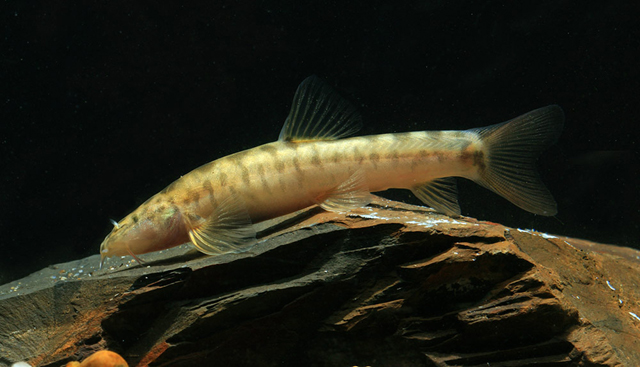
Max length67mm SL2.6in SLTanknot recordedTempnot recordedpHnot recordedThis species' conservation status clearly precludes its suitability as an aquarium fish so it's included here for reasons of interest only. It's protected by Thai national law and illegal to remove from its habitat. Species exhibiting morphological, physiological or behavioral adaptations to a subterranean existence are often referred to as troglomorphic.
Serrasalmus altuveiAltuvei
authority not recorded
Max length173mm SL7in SLTank120 × 45cm48 × 18inTempnot recordedpHnot recordedS. altuvei is very scarce in the hobby, most commonly being found among imports of juvenile S. rhombeus (the type species of the genus). It's also known as the "Caribe azul" or "blue caribe" in the trade. There are currently 24 described species of Serrasalmus, many of which look superficially similar. This one is considered a member of the "compressed group". This grouping of morphologically similar species currently comprises S. altuvei, S. geryi, S. compress...
Steatocranus tinanti
authority not recorded
Max length130mm SL5in SLTanknot recordedTemp25–28°C77–82°FpH6.0–7.5S. tinanti has a confused taxonomic history, having been previously classified in the genera Gobiochromis and then Leptotilapia, before being assigned to Steatocranus. Further taxonomic revision is likely, as it exhibits both behavioural and morphological differences to other species in the genus. It is a reophilic fish, meaning it inhabits fast waters. Its swimbladder is relatively small to reduce buoyancy and thus prevent it from being swept away by the strong currents in its natural habita...
Sundasalanx microps
Roberts, 1981
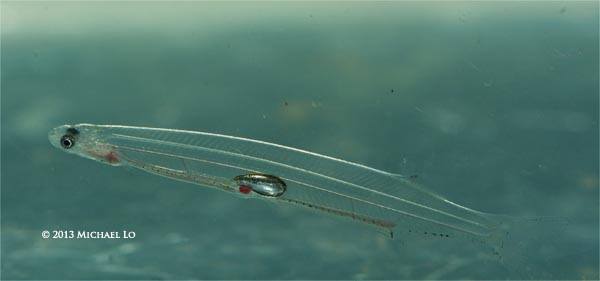
Max length20mm SL0.8in SLTank45 × 30cm18 × 12inTemp22–26°C72–79°FpHnot recordedThe genus Sundasalanx is distributed throughout much of Southeast Asia and currently comprises seven species which have primarily been distinguished on the basis of oral and dental morphology, gill rakers and eye size. S. microps possesses 0-3 small conical teeth on ceratobranchial 5, 0-2 minute gill rakers on the first arch and a small eye measuring less...
Trigonostigma heteromorphaHarlequin
Duncker, 1904
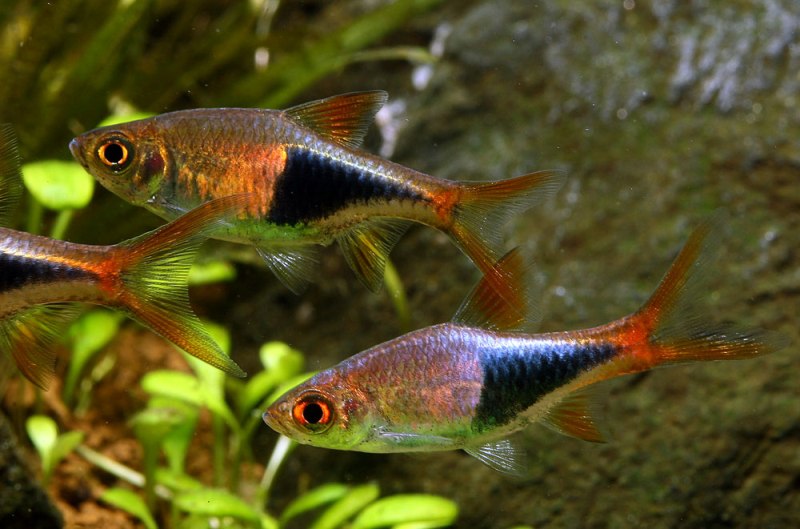
Max length45mm SL1.8in SLTank60 × 30cm24 × 12inTemp21–28°C70–82°FpH5.0–7.5T. heteromorpha was first exported for aquaria in the early 1900s and has gone on to become one of the most familiar, enduring species in the hobby. It has suffered as a result of its popularity to a certain extent with the mass-produced fish we see today lacking much of the colour seen in wild specimens and even exhibiting morphological deformities in some cases. Several selectively-bred ornamental strains have also...