Results for “posterior”
Type a name: scientific, common, or one a species used to go by. Or narrow the catalogue with the filters.
Filters
Herichthys pearsei
authority not recorded
Max length425mm SL17in SLTank240 × 60cm96 × 24inTemp24–30°C75–86°FpH7.2–8.5Like many cichlids, members of the genus Herichthys share something of a confused taxonomic past. Erected in 1854 with H. cyanoguttatus the type species, its members were moved into Cichlasoma by Regan in 1905. However following a review of Cichlasoma by Kullander in 1983 it was once again deemed valid. In 1996 Kullander suggested Herichthys should only contain species "sharing a colour pattern of short vertical bars or black spots posteriorly from the middle of the side, and a unique breed...
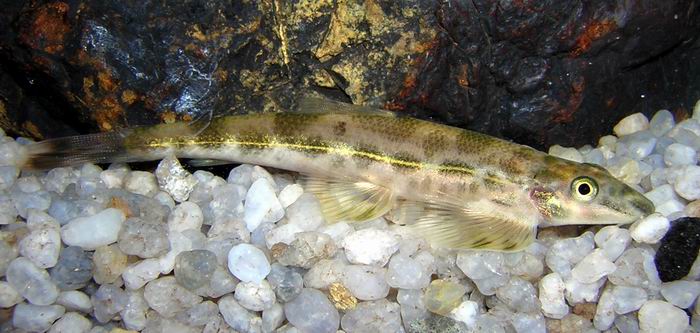
Homalopteroides stephensoni
Hora, 1932
Max length65mm SL2.6in SLTank60 × 30cm24 × 12inTemp20–25.5°C68–78°FpH6.0–7.5Tan (2009) redescribed H. stephensoni and it possesses the following unique character set: sub-inferior mouth with thin barbels; five principle, 12-13 secondary pectoral fin rays (usually 12); scaleless belly; pattern of keeled scales on anterior, dorsal portion of body consisting of a single central keel in the posterior third of each scale; 43-50 lateral line...
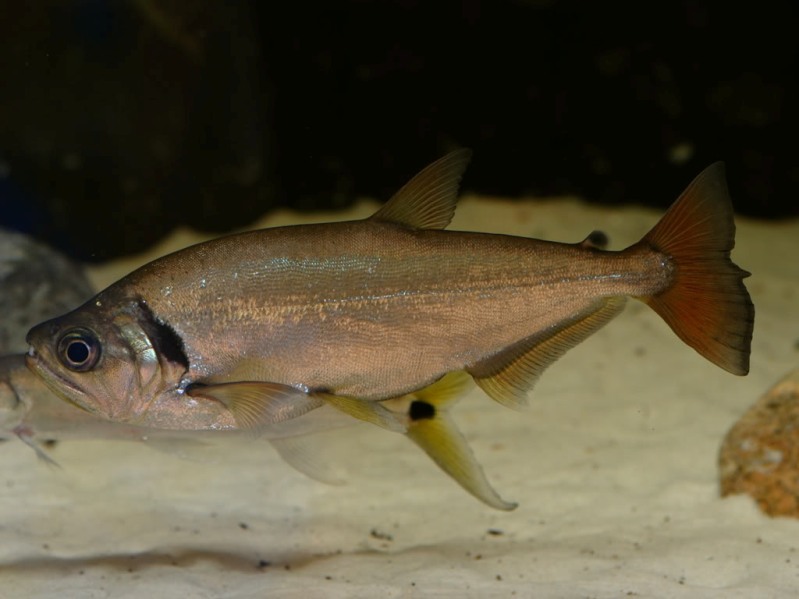
Hydrolycus tatauaia
Toledo-Piza, Menezes & Santos, 1999
Max length455mm SL18in SLTanknot recordedTemp24–28°C75–82°FpH6.0–8.0Vernacular names in Brazil include 'Cachorra' or 'Pirandirá', although these are also applied to congeners. It can be told apart from all congeners by the following combination of characters: head and body silvery with dark dorsal surface; an elongate dark blotch posterior to the opercle; dorsal, caudal and anal-fin rays reddish to orange proximally with some individual variation in intensity and tonality; adipose fin dark, with diffuse black pigmentation.
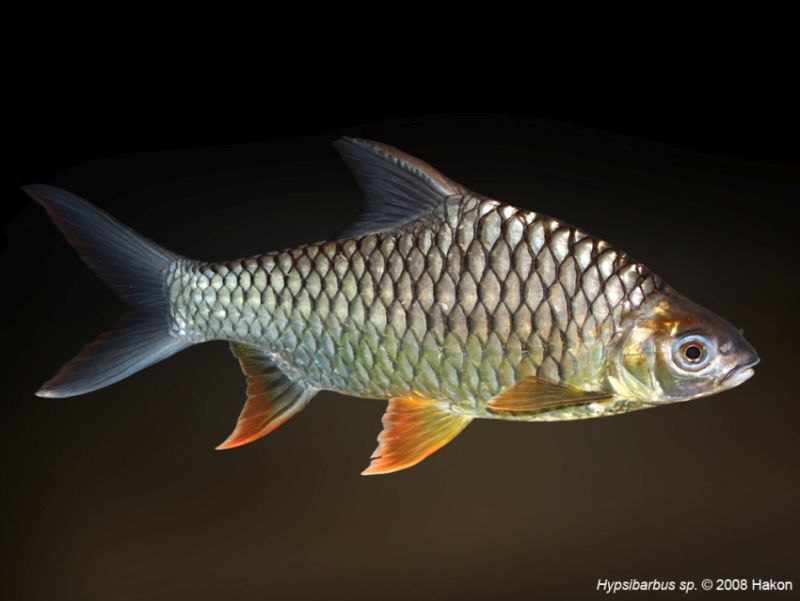
Hypsibarbus wetmorei
Smith, 1931
Max length250mm SL10in SLTank240 × 60cm96 × 24inTemp20–26°C68–79°FpH6.0–8.0H. wetmorei is distinguished from congeners by the following combination of characters: upper body reddish brown; robust body, not compressed; usually 4½ scale rows between lateral line and dorsal-fin origin; 8-12 rakers on first gill arch; 7-9 predorsal scales; 14 circumpeduncular scale rows; usually two scale rows separating vent and anal-fin; <29 lateral line scales; 9-14 serrations on the spinous dorsal-fin ray; distance between distal serrae on posterior margin of last unbranched dorsal-fin ray much greater than the width of their bases.
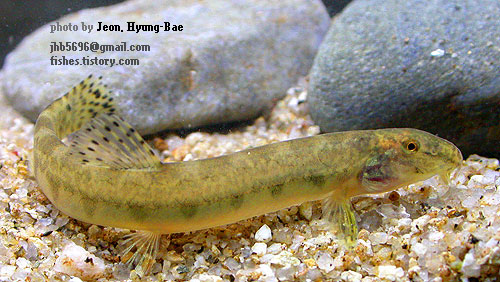
Iksookimia yongdokensis
Kim & Park, 1997
Max length160mm SL6in SLTank100 × 30cm39 × 12inTemp20–24°C68–75°FpH7.0–8.0Among them it's most similar to I. longicorpus and I. hugowolfeldi but can be distinguished by the following combination of characters: body patterning consisting of 9-13 dark vertical bars along the flanks plus a small dark spot at the base of the upper caudal-fin lobe; no black blotch or markings posterior to the operculum; reduced lamina circularis in males; interorbital width measures 14.7-17.8% o...
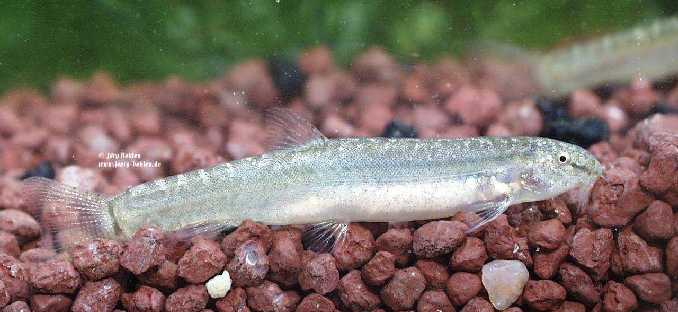
Lepidocephalichthys cf. irrorataLoktak Loach
Hora, 1921
Max length30mm SL1.2in SLTank45 × 30cm18 × 12inTemp20–25°C68–77°FpH5.5–7.5This species is not traded often but may occasionally be exported as bycatch among shipments of other species. It can be distinguished from congeners by the following combination of characters: presence of large, exposed scales on top of head; dorsal-fin origin posterior to pelvic-fin origin; moderate to small size (to 29 mm SL); caudal-fin emarginate and with dark reticulations; caudal-fin lobes with dark, elongated spots along upper and lower edges.
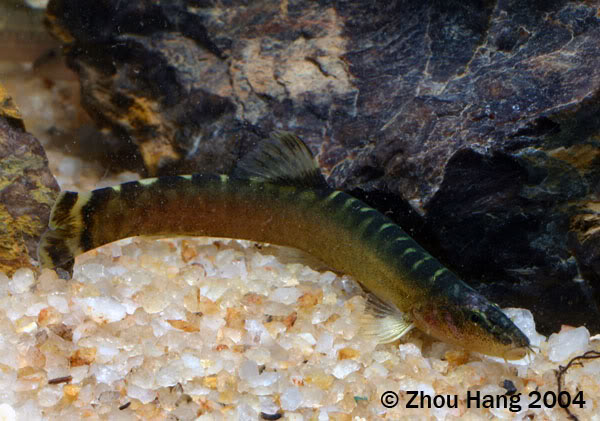
Leptobotia guilinensis
Chen, 1980
Max length100mm SL3.9in SLTank120 × 30cm48 × 12inTemp15.5–21°C60–70°FpH6.5–7.5L. elongata is the type species of the genus but according to current knowledge there exist 13 members in total, all of which are endemic to China and northern Vietnam. They're diagnosable by the following shared characters: possession of a simple (non-bifurcated), short sub-ocular spine not extending beyond the posterior edge of the eye; a laterally-compressed body; relatively deep caudal peduncle; pelvic fins reaching origin of anal-fin; anus below base of dorsal-fin and equidistant between pelvic and anal-fin origins.
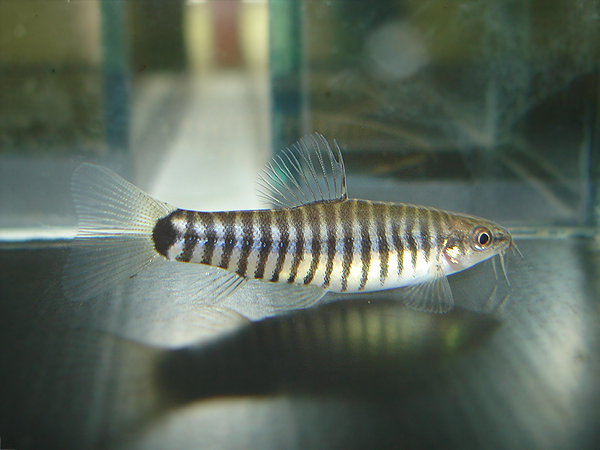
Micronemacheilus cruciatus
Rendahl, 1944
Max length40mm SL1.6in SLTank60 × 30cm24 × 12inTemp22–27°C72–81°FpH6.0–7.5This species is traded under various names including 'Vietnamese multi-banded zebra loach', 'hovering zebra loach', 'Laos pygmy multi-stripe loach', and 'banded dwarf loach'. It can be distinguished from related species by the following combination of characters: body with distinct vertical bars; 8 branched dorsal-fin rays; 3-10 pored lateral line scales; one pair of large papillae in median portion of upper lip; two pairs of large papillae in median portion of lower lip; lower posterior edge of opercle with 3-4 prominent indentations.
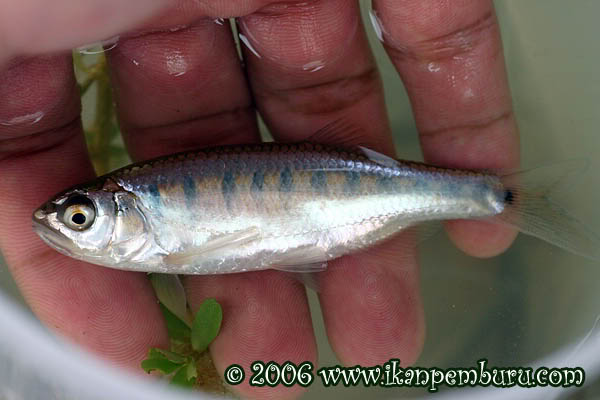
Opsarius caudiocellatus
Chu, 1984
Max length86mm SL3.4in SLTank150 × 45cm60 × 18inTemp18–24°C64–75°FpH6.5–8.0This species may have appeared in the aquarium trade though probably not under the correct name. It can be told apart from similar-looking congeners by the following combination of characters: presence of a black round spot at the caudal base; dorsal-fin rays black with connecting membranes transparent; posterior dorsal-fin origin located midway between upper angle of gill aperture and caudal-fin base, or slightly closer to the latter.
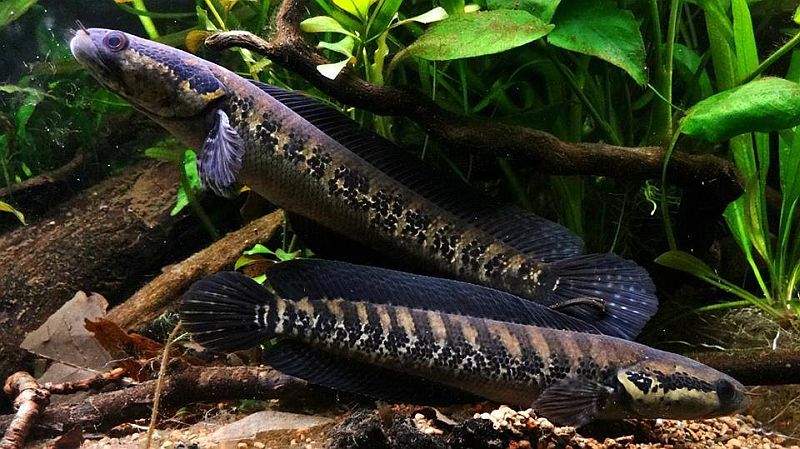
Parachanna africana
Steindachner, 1879
Max length300mm SL12in SLTank120 × 60cm48 × 24inTemp20–25°C68–77°FpH5.0–7.5Following Bonou and Teugels (1985), P. africana can be distinguished from congeners by the following combination of characters: colour pattern unique, comprising a series of 8-11 dark, chevron-shaped markings extending along the body posterior to the pectoral fins; 19-24 scales in the transverse series; lateral line complete with 73-83 pored scales; 45-48 dorsal-fin rays 45-48; 32-35 anal-fin rays.
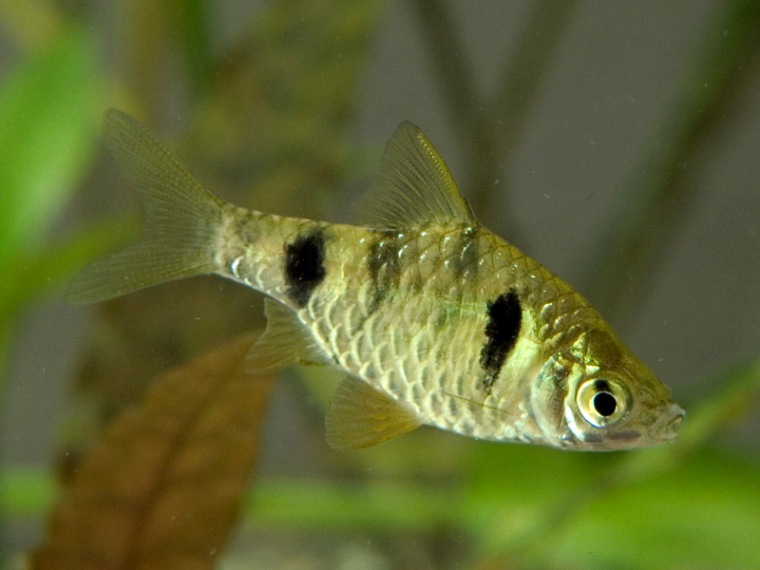
Pethia phutunioDwarf Barb
Hamilton, 1822
Max length30mm SL1.2in SLTank60 × 30cm24 × 12inTemp21–26°C70–79°FpH6.0–7.0In P. phutonio the flank markings comprise two black, vertically-orientated blotches, one posterior to the operculum and the other on the caudal peduncle, and within the P. conchonius group this patterning is shared with P. bandula, P. cumingii, P. didi, P. meingangbii, P. padamya, and P. tiantian. It can be told apart from these by the following combination of characters: smaller adult size of 25 - 30 mm vs. at least 35 - 40 mm; minute maxillary barbels; incomplete lateral line with ab...
Rasbora lacrimulaRed Cherry Rasbora
authority not recorded
Max length31mm SL1.2in SLTank45 × 30cm18 × 12inTemp22.2–25.6°C72–78°FpHnot recordedThis species is also traded as 'Bornean redfin rasbora', 'sunshine rasbora' and 'dwarf volcano rasbora' and first appeared in the hobby during the latter part of 2010. It can be told apart from all other members of the genus by a combination of the following characters: possession of small tubercules on the dorsal surface, posterior to theand continuing onto the upper part of caudal fin, visible as an irregular 'crest' when a specimen is viewed laterally; ...
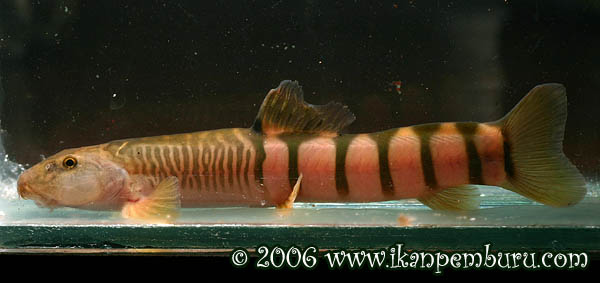
Schistura disparizona
Zhou & Kottelat, 2005
Max length96mm SL3.8in SLTank120 × 30cm48 × 12inTemp18–25°C64–77°FpH6.0–8.0Can be told apart from congeners by its colour pattern which consists of 8-11 closely-set, narrow dark bars in the anterior part of the body and 5 wider bars in the posterior part. It also possesses prominent dorsal and ventral adipose crests on the caudal peduncle and 9½ branched dorsal-fin rays.
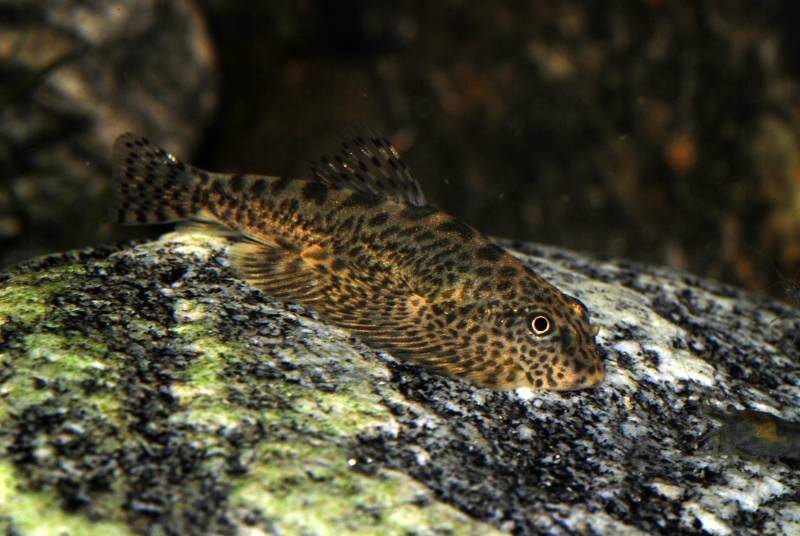
Sewellia speciosa
Roberts, 1998
Max length55mm SL2.2in SLTank75 × 30cm30 × 12inTemp20–24°C68–75°FpH6.0–7.5This species first became available in early 2010 and sometimes appears on trade lists under the vernacular names 'Laos sucker' or 'Laos Sakura sucker'. It's distinguishable from other members of the genus by the following combination of characters: body spotted and without stripes; no concentric bands on paired fins; origin of pelvic-fin below origin of dorsal-fin; origin of pectoral-fin posterior to corner of mouth; pelvic fin reaching origin of anal fin; small elevated ...
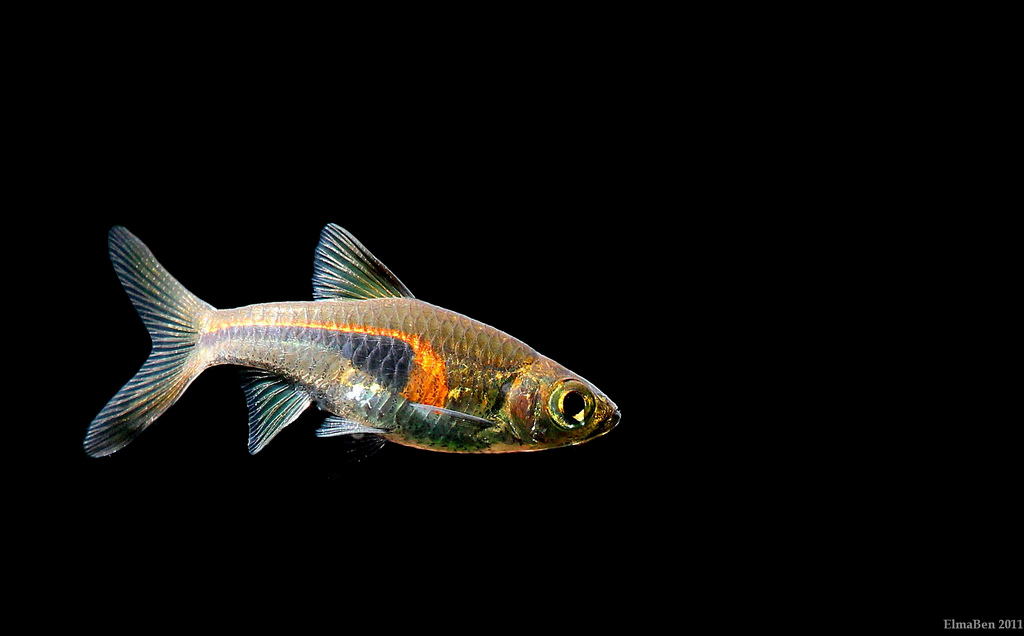
Trigonostigma hengeli
Meinken, 1956
Max length30mm SL1.2in SLTank60 × 30cm24 × 12inTemp23–28°C73–82°FpH5.0–7.5T. hengeli is sometimes seen for sale with the trade name of 'glowlight rasbora' due to the distinctive orange patterning on the posterior part of the body but we've refrained from using that name here because it's also commonly applied to Trigonopoma pauciperforatum. It can be confused with the similar-looking T. heteromorpha and T. espei although on close inspection they're actually quite easy to tell...
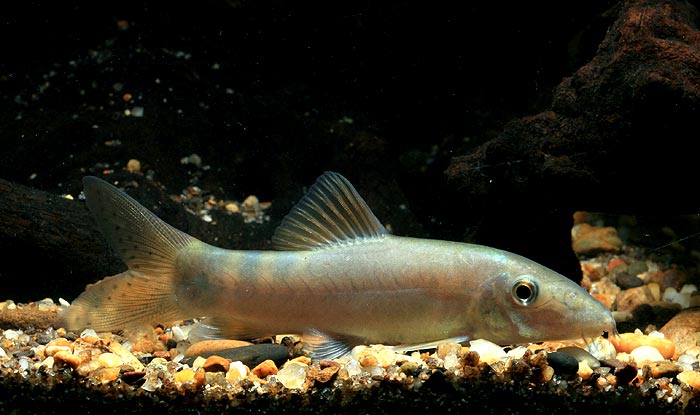
Yasuhikotakia caudipunctataSpeckle-tailed Loach
Taki & Doi, 1995
Max length100mm SL3.9in SLTank120 × 30cm48 × 12inTemp23–30°C73–86°FpH6.0–7.5This specie is relatively rare in the aquarium trade and much sought after by enthusiasts as a result. It looks relatively similar to Y. splendida but can be told apart from it, and indeed all other members of the genus, by the following combination of characters: possession of 8 branched dorsal-fin rays; 32-33 vertebrae; one or two small, brownish, vertically-orientated markings on the dorsal part of the body posterior to the dorsal fi...