Search the catalogue
Type a name: scientific, common, or one a species used to go by. Or narrow the catalogue with the filters.
Filters
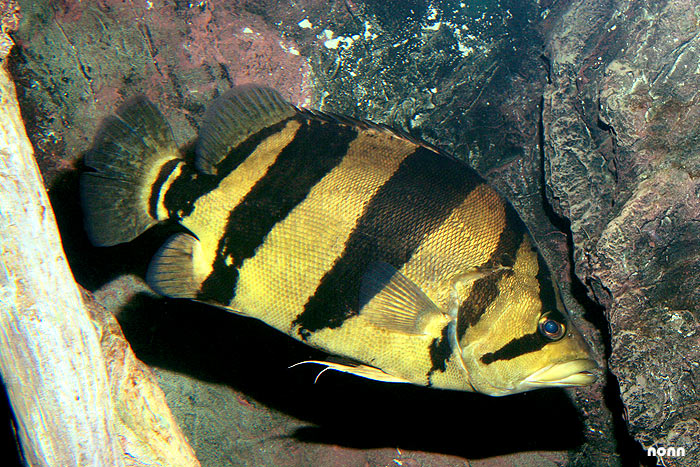
Datnioides pulcherSiamese Tiger Perch
Kottelat, 1998
Max length400mm SL16in SLTanknot recordedTemp20–28°C68–82°FpH5.5–7.5The massive decline in wild populations, hypothesised to be in excess of 90% since the mid-1980s, is thought to have been caused by a variety of factors, including habitat alteration due to construction of dams and other infrastructure, removal of riparian vegetation, and urban pollution, plus over fishing for both human consumption and the aquarium trade.
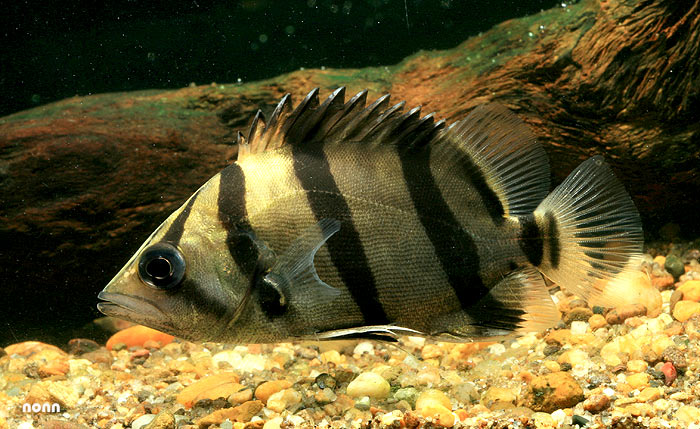
Datnioides undecimradiatusMekong Tiger Perch
Roberts & Kottelat, 1994
Max length300mm SL12in SLTank180 × 60cm72 × 24inTemp20–28°C68–82°FpH5.5–7.5An efficient, largely piscivorous, predator with highly protrusible mouthparts. In the aquarium, juveniles can be offered chironomid larvae (bloodworm), small earthworms, chopped prawn, and suchlike, while adults will accept strips of fish flesh, whole prawns, mussels, live river shrimp, larger earthworms, etc. Older individuals do not require feeding on a daily basis, with 2-3 times per week sufficient.
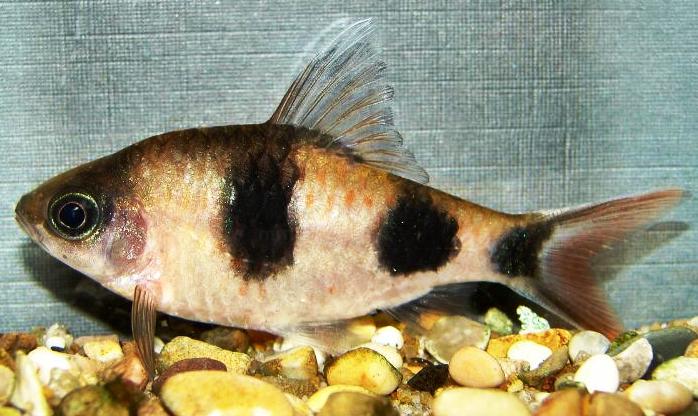
Dawkinsia arulius
Jerdon, 1849
Max length100mm SL3.9in SLTank120 × 45cm48 × 18inTemp19–25°C66–77°FpH6.0–7.5The fish appearing in the majority of earlier literature as P. arulius or 'arulius barb', and often still traded as such, is the related D. tambraparniei. Though similar the latter can be told apart from D. arulius by possession of filamentous extensions to the dorsal-fin rays in males, longer maxillary barbels measuring > ½ eye diameter, i.e., 2.4 - 4.7 % SL, and some aspects of colour pattern.
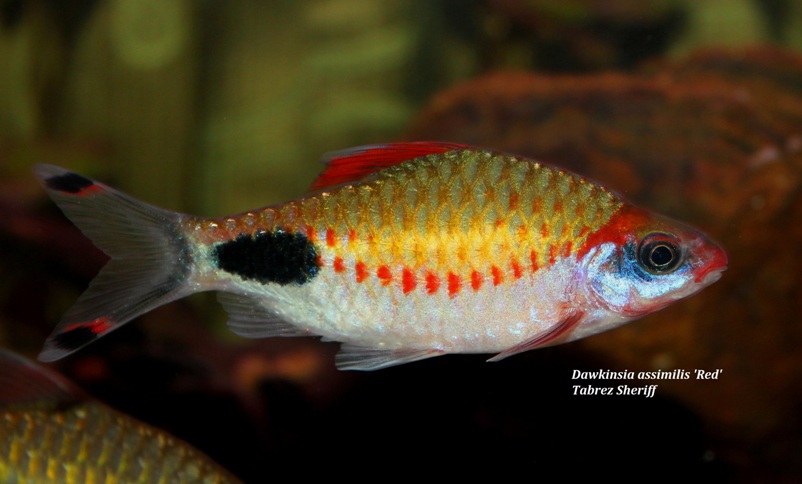
Dawkinsia assimilisMascara Barb
Jerdon, 1849
Max length120mm SL5in SLTank120 × 45cm48 × 18inTemp19–25°C66–77°FpH6.0–7.0D. assimilis has been misidentified as Puntius mahecola (Valenciennes 1844) in the past but the identity of both species was resolved by Pethioyagoda and Kottelat (2005 a, 2005b). They inspected the syntypes of P. mahecola and concluded that though valid it isn't closely related to any Dawkinsia (then the Puntius filamentosus group) but is rather a smaller, silvery fish with a single dark blotch on the caudal peduncle, located entirely posterior to the anal-fin. It's wi....
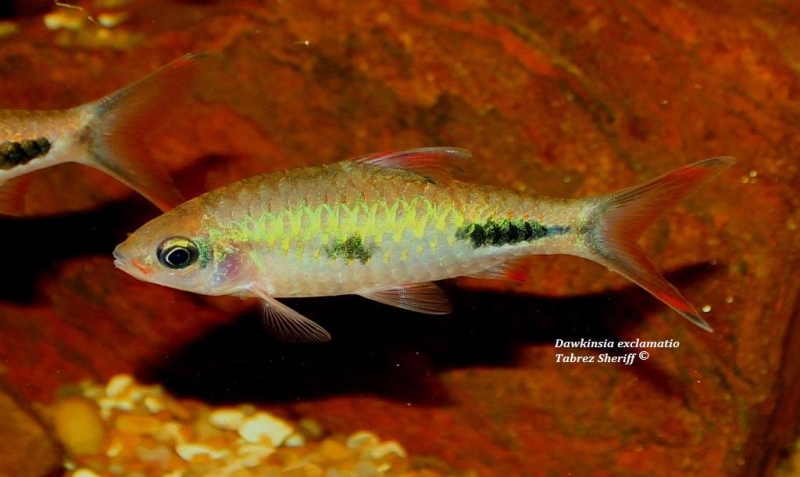
Dawkinsia exclamatio
Pethiyagoda & Kottelat, 2005
Max length100mm SL3.9in SLTank120 × 45cm48 × 18inTemp19–25°C66–77°FpH6.0–7.5There is a case, however, to suggest that D. exclamatio is not actually a distinct taxon but rather a natural hybrid between D. assimilis and a D. arulius-like fish (possibly D. rubrotinctus) which occur together at its type locality in the Kallada River at Thenmalai. The potential of hybridisation is evidenced by the somewhat intermediate colour pattern in that it possesses a (roughly) W-shaped mid-lateral blot...
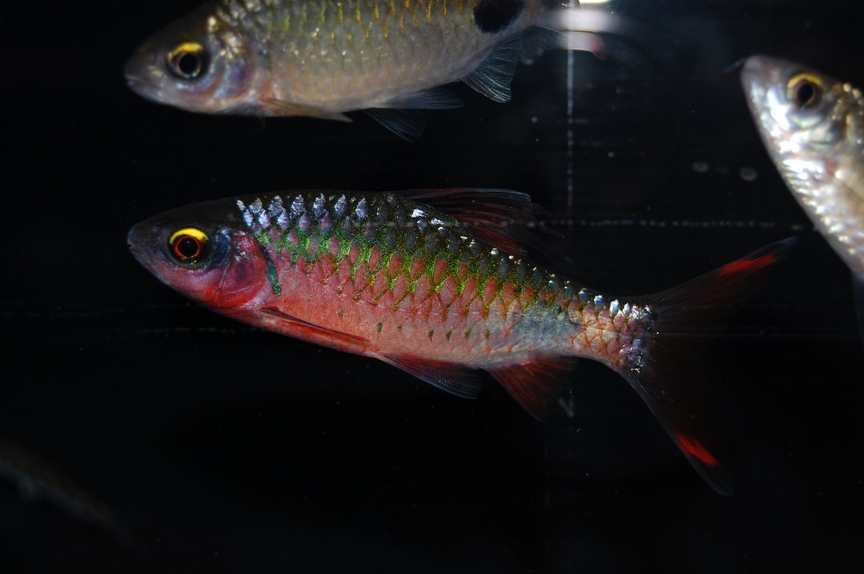
Dawkinsia filamentosaFilament Barb
Valenciennes, 1844
Max length120mm SL5in SLTank120 × 45cm48 × 18inTemp20–25°C68–77°FpH6.0–7.0Not difficult to keep in a well-maintained set-up, though we recommend aquascaping the tank to resemble a flowing stream/river with a substrate of variably-sized, water-worn rocks, sand, fine gravel and perhaps some small boulders. This can be further furnished with driftwood roots or branches, and while the majority of aquatic plants will fail to thrive in such surroundings hardy types such as Microsorum, Bolbitis or Anubias spp. can be grown attached to the décor.
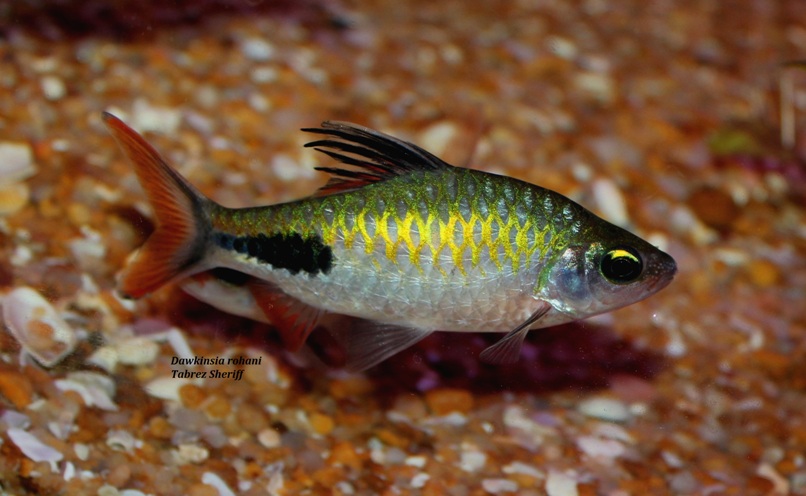
Dawkinsia rohani
Rema Devi, Indra & Knight, 2010
Max length95mm SL3.7in SLTank120 × 45cm48 × 18inTemp19–25°C66–77°FpH6.0–7.5Known only from Kanyakumari District, Tamil Nadu state, at the southern tip of the Indian peninsula. Type locality is the Kodayar River drainage and it's also been collected in the Paralayar and Pamburivaikal river systems. No precise data is available but it's certainly a pelagic, riverine species with habitats likely to vary depending on locality and time o...
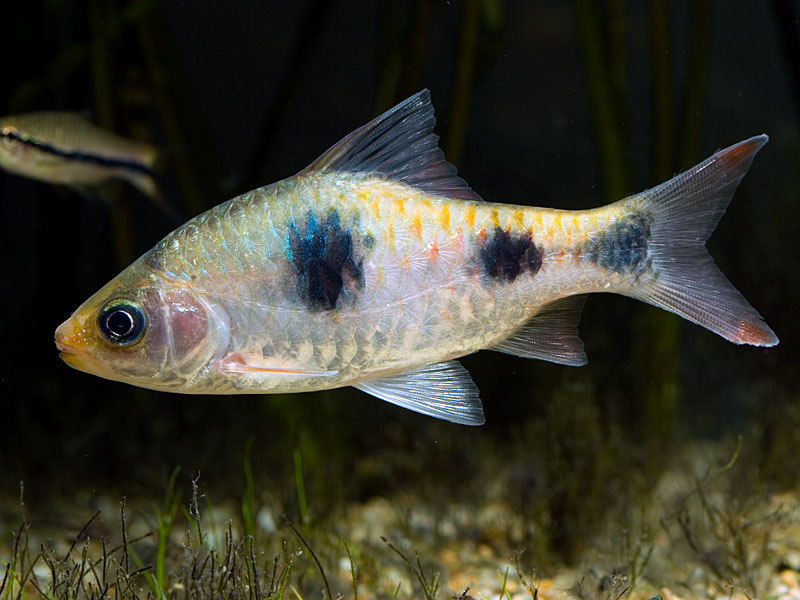
Dawkinsia rubrotinctus
Jerdon, 1849
Max length90mm SL3.5in SLTank120 × 45cm48 × 18inTemp18–25°C64–77°FpH6.0–7.5This species may have appeared in the aquarium trade under the misapplied names Puntius arulius or P. tambraparniei in the past, both of which are also now classified within Dawkinsia. See the relevant profiles for D. arulius and D. tambraparniei for additional information regarding that confusion, since here we concentrate on D. rubrotinctus. It was initially described by Jerdon in 1849 but placed in synonymy with P. arulius by Day (1878), where it remained for ov...
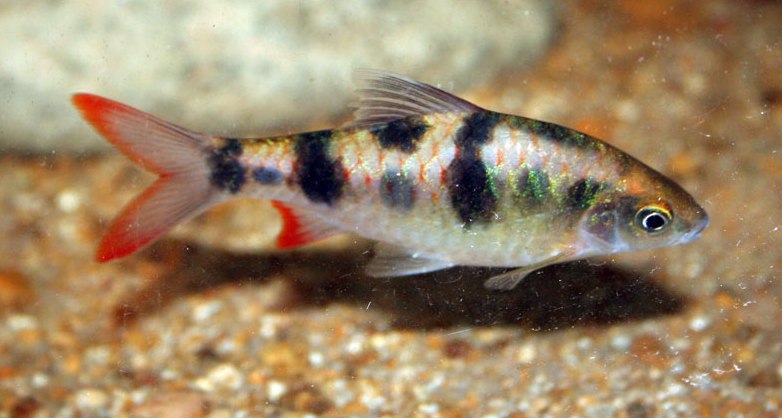
Dawkinsia tambraparniei'Arulius' Barb
Silas, 1954
Max length130mm SL5in SLTank120 × 45cm48 × 18inTemp18–25°C64–77°FpH6.0–8.0D. exclamatio should also have a sub-terminal mouth and lack dorsal-fin filaments but some specimens possess a terminal mouth and/or possess dorsal filaments, and one specimen also had black caudal-fin tips as typically seen in D. filamentosa, whereas the description states that the fin tips are only dusky and lack distinctive markings.
Dekeyseria brachyuraButterfly Plec
authority not recorded
Max length140mm SL6in SLTank120 × 30cm48 × 12inTemp25–28°C77–82°FpH5.6–7.0Formerly known as Peckoltia pulcher, this species is also known as the pretty peckoltia, flounder plec (in reference to its flattened shape) or chameleon plec. This latter name is quite appropriate, as the fish will change colour depending on the colour of the substrate and other surfaces. It also has a distinctive night time colouration. It closely resembles the Rio Orinoco species L052 and these may turn out to be the same species, as the waters that they inhabit become connected during th...
Dermogenys pusillaWrestling Halfbeak
authority not recorded
Max length55mm SL2.2in SLTank60 × 38cm24 × 15inTemp24–28°C75–82°FpH6.5–8.0Halfbeaks derive their common name from the elongated lower jaw shared by all species. The 'wrestling' moniker given to this particular species is due to the tendency of males to fight with each other, often locking jaws in the process. It is used as a fighting fish in some of its native countries, with wagers being placed on the outcome of fights between males. The two fish are placed in a small container for fighting purposes, as they will spar incessantly in such confined conditions...
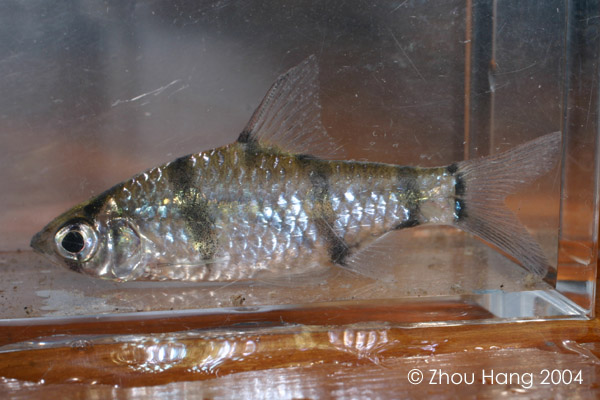
Desmopuntius endecanalis
Roberts, 1989
Max length50mm SL2.0in SLTank75 × 30cm30 × 12inTemp19–26°C66–79°FpH4.0–7.0Probably a micropredator feeding on small insects, worms, crustaceans and other zooplankton in nature. In the aquarium it will accept dried foods of a suitable size but should not be fed these exclusively. Daily meals of small live and frozen fare such as Daphnia, Artemia, and suchlike will result in the best colouration and encourage the fish to come into breeding condition. It's a schooling species by natur...
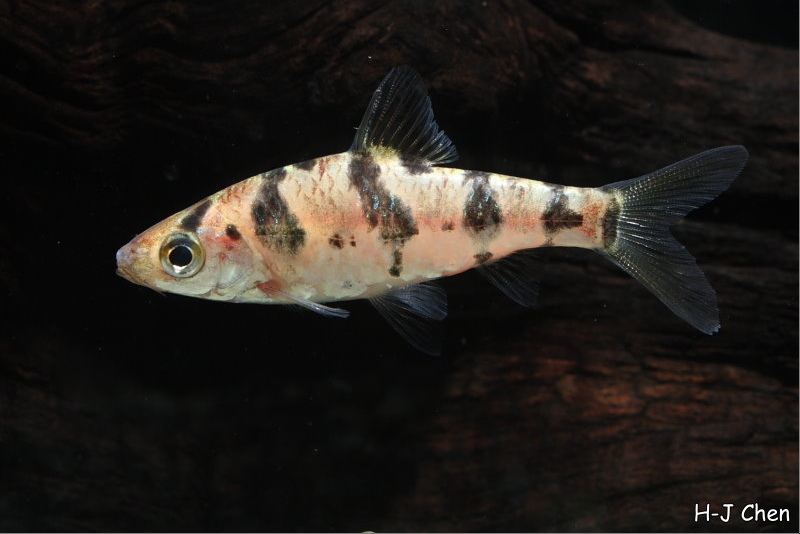
Desmopuntius foerschi
Kottelat, 1982
Max length55mm SL2.2in SLTank80 × 30cm31 × 12inTemp20–28°C68–82°FpH5.0–7.0D. foerschi is sometimes traded as 'boomerang barb' or 'Foersch's fire barb' and is included in a group of closely-related, similar-looking fishes which were moved into the new genus Desmopuntius by Kottelat (2013). It can be told apart from other vertically-striped congeners by possession of additional dark blotches between the second, third and fourth vertical bars and a further marking at the posterior base o...
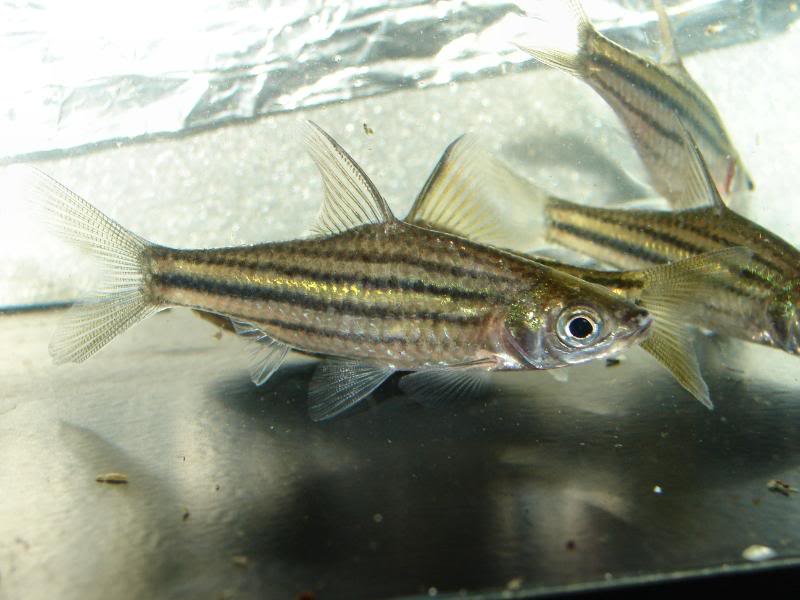
Desmopuntius gemellus
Kottelat, 1996
Max length100mm SL3.9in SLTank120 × 45cm48 × 18inTemp22–25°C72–77°FpH4.0–7.0The type series was purchased from a market in Jambi province, eastern Sumatra, Indonesia and this species is also known from neighbouring Riau province plus the island province of Bangka. On Sumatra it may be restricted to the Indragiri and Batang Hari river systems. Inhabits peat swamp forests and associated black water streams in which the water is typically stained brown with humic acids and other chemicals released by decaying organic material. The dissolved mineral content is generally negligible and the pH can be as...
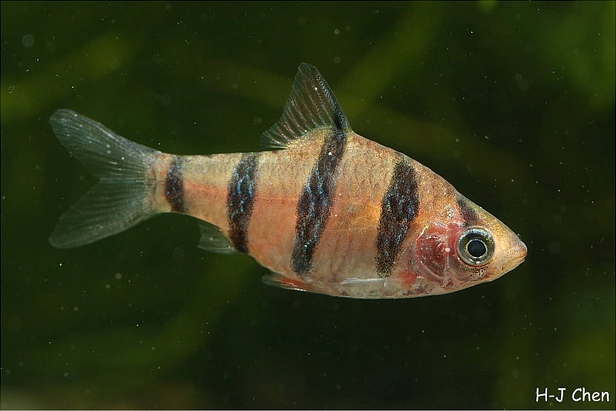
Desmopuntius hexazona'Pentazona' Barb
Weber & de Beaufort, 1912
Max length55mm SL2.2in SLTank80 × 30cm31 × 12inTemp20–26°C68–79°FpH4.0–7.0Native to parts of southern Borneo, eastern Sumatra, Singapore, and the Malay Peninsula. In Singapore it's considered highly-endangered and is now restricted to the Central Catchment nature reserve. Type locality is 'Tuluk and Gunung Sahilan, Sumatra, Indonesia' which appears to correspond to localities within the Kampar River drainage of which the former is now known as Teluk Meranti and is o...
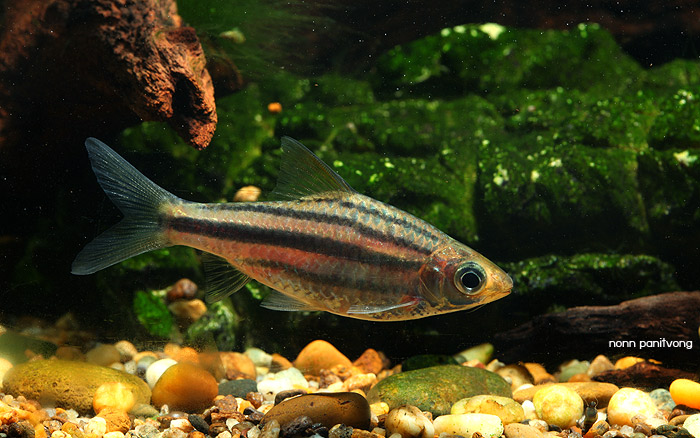
Desmopuntius johorensisStriped Barb
Duncker, 1904
Max length100mm SL3.9in SLTank120 × 45cm48 × 18inTemp20–25°C68–77°FpH5.0–7.0D. johorensis can be distinguished by the following combination of characters: 5-6 dark, lateral stripes on body in specimens larger than 40 mm; stripes immediately above and below the central stripe (stripes '+1' and '-1', respectively) located on scale rows +2 and -2, not touching dorsal and ventral midlines (except in some small specimens from Peninsular Malaysia); stripes broad, typically between 0.5-1 scale rows deep...
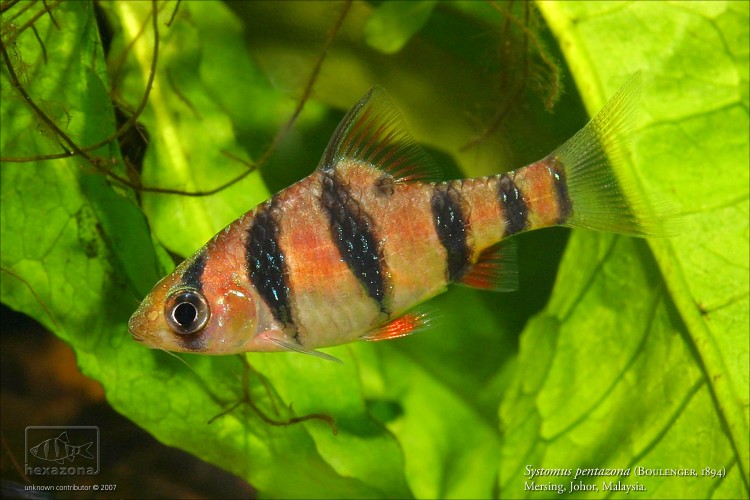
Desmopuntius pentazonaFive-banded Barb
Boulenger, 1894
Max length55mm SL2.2in SLTank80 × 30cm31 × 12inTemp21–26°C70–79°FpH4.0–7.0This species is rare in the aquarium trade with the majority of fish available under the name or the vernacular 'pentazona barb' being the closely-related D. hexazona. The two are almost identical in terms of both appearance and meristics but can be separated by the fact that D. pentazona possesses a small dark marking at the posterior base of the dorsal-fin which is absent in D. hexazona.
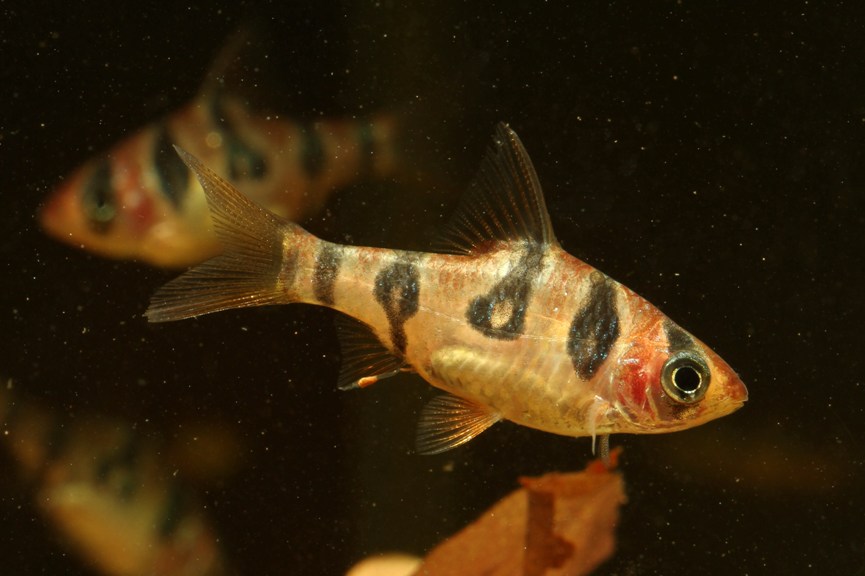
Desmopuntius rhomboocellatusSnakeskin Barb
Koumans, 1940
Max length55mm SL2.2in SLTank80 × 30cm31 × 12inTemp20–28°C68–82°FpH4.0–7.0Endemic to southern Kalimantan, the Indonesian portion of Borneo where it's been recorded from several river systems including the Kapuas, Kepayang, Barito and Kahajan. Type locality is given as 'Canal along the highway from Oelin to Bandjermasin, about 15 kilometers from Bandjermasin, Borneo.' Often referred to as the 'rhomb' or 'rhombo' barb and included in a group of closely-related, similar-looking congeners which also includes...
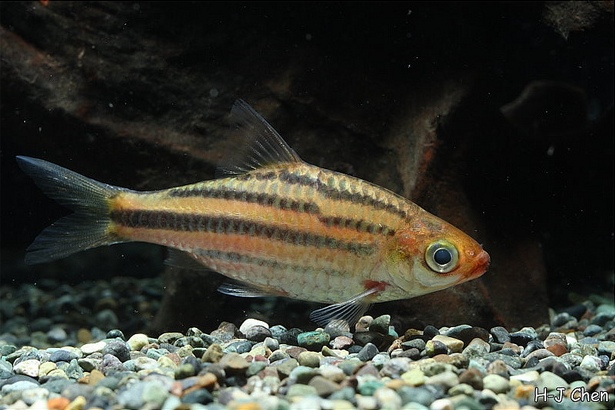
Desmopuntius trifasciatus
Kottelat, 1996
Max length100mm SL3.9in SLTank120 × 45cm48 × 18inTemp20–25°C68–77°FpH5.0–7.0This species is one of three similar-looking members of the genus alongside D. johorensis and D. trifasciatus, while it may also be confused with Striuntius lineatus. Juveniles of all except S. lineatus exhibit a vertically-barred rather than laterally-striped colour pattern, the metamorphosis to adult patterning beginning at around 20 mm SL and normally being complete by 30-40 mm.
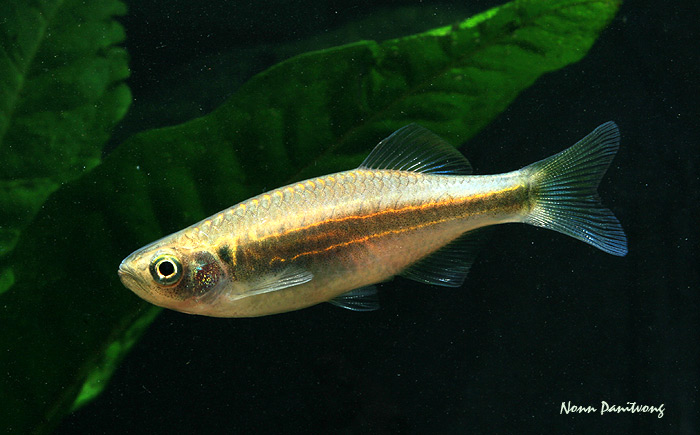
Devario acrostomus
Fang & Kottelat, 1999
Max length80mm SL3.1in SLTank120 × 45cm48 × 18inTemp23–26°C73–79°FpH6.0–7.0The type series was collected during the dry season from localities with varying gradient both within the Nam Leuk mainstream and smaller tributaries. In the tributaries the fish were found congregating in pools some of which were isolated on steep slopes. All habitats above Tad Leuk falls were characterised by clear to very clear water under forest cover while below the falls they were dominated by exposed basalt slabs with some underground water channels.