Results for “Solimões”
Type a name: scientific, common, or one a species used to go by. Or narrow the catalogue with the filters.
Filters
Melanotaenia boesemaniBoeseman's rainbowfish
authority not recorded
Max length110mm SL4in SLTank120 × 30cm48 × 12inTemp27–30°C81–86°FpH7.0–8.0This uniquely-patterned species is one of the most popular rainbowfish in the hobby and can be found swimming in most dealers' tanks. However, virtually all these fish are mass-produced on fish farms in the Far East and Eastern Europe. M. boesmani is actually quite rare in nature, and is on the IUCN red list of endangered species. Unfortunately this is one species on which the aquarium trade has had a massively detrimental effect, with an estimated one million fish a year being collected to...
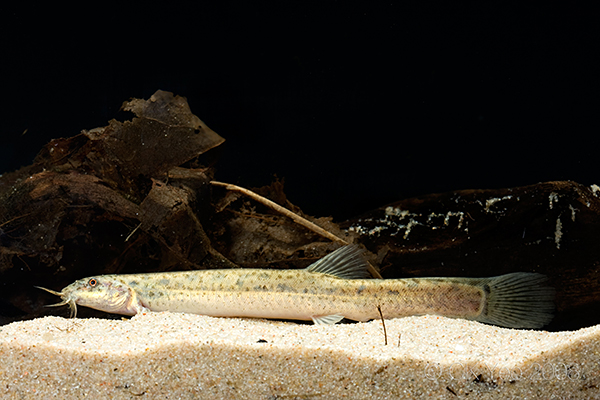
Misgurnus anguillicaudatusOriental Weather Loach
authority not recorded
Max length280mm SL11in SLTank120 × 45cm48 × 18inTempnot recordedpH6.0–8.0An exceptionally hardy and adaptable species tolerant of a wide range of physiological variables and flexible of diet, factors which have allowed it to become established as an alien species around the globe. Its high reproductive potential and low vulnerability to predation have made it a cause for concern to conservation scientists although as yet there remains no proof of it exerting a negative effect on native fishes in countries outside its natural range.
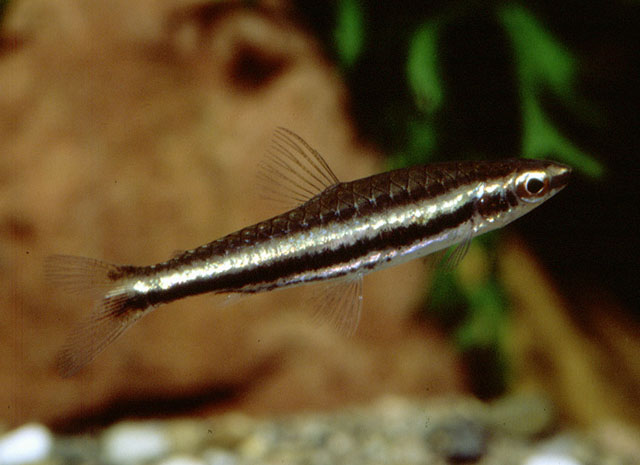
Nannostomus digrammusTwostripe Pencilfish
Fowler, 1913
Max length30mm SL1.2in SLTank45 × 30cm18 × 12inTemp22–28°C72–82°FpH5.0–7.0Native to the central Amazon basin with records existing from the Madeira, Branco, Trombetas, and Tapajós river drainages, plus the Rupununi basin in Guyana. Although an affluent of the rio Essequibo and thus not officially part of the Amazon basin, the latter is connected to the rio Takutu, a tributary of the upper rio Branco, during the annual wet season. Type locality is given by Fowler as 'Rio Madeira about 200 miles east of W. Long. 62°20', Brazil'.
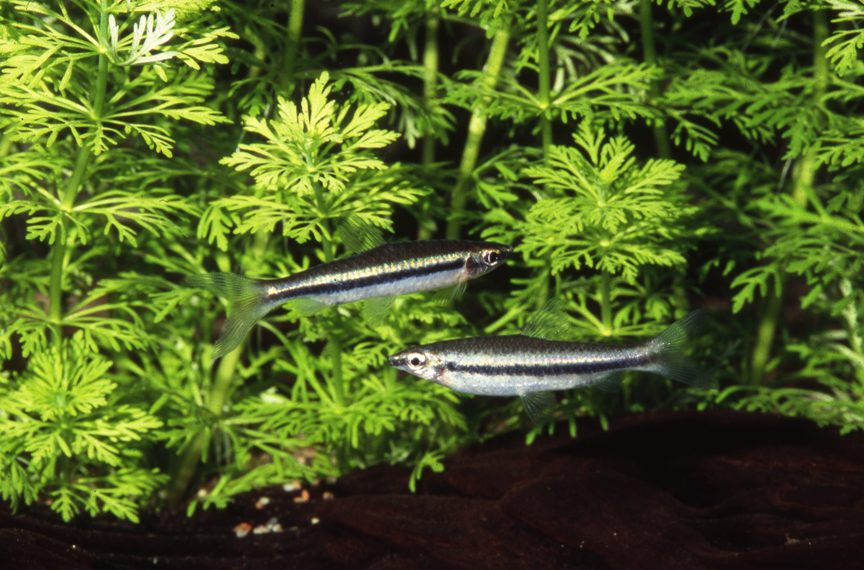
Nannostomus grandis
Zarske, 2011
Max length46mm SL1.8in SLTank60 × 30cm24 × 12inTemp22–28°C72–82°FpH5.0–7.0This species is poorly-known in the aquarium hobby but is sometimes exported as bycatch among shipments of other species, especially Nannostomus beckfordi to which it appears quite similar. The easiest way to tell the two apart is that N. grandis lacks pale white or bluish tips to the ventral fins. It can be further distinguished from all congeners by the following combination of characters: body size up to 46.2 mm, the largest in the genus; bo...
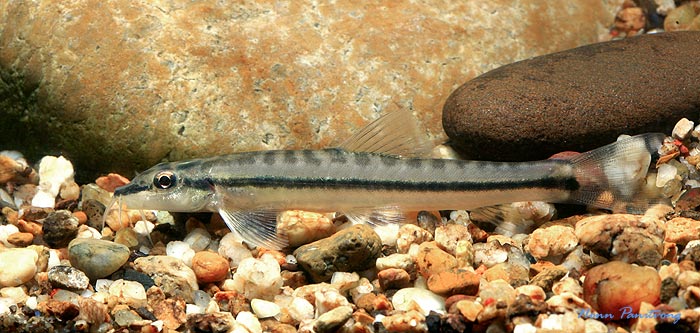
Nemacheilus longistriatusLaos Blackline Torpedo Loach
Kottelat, 1990
Max length125mm SL5in SLTank90 × 30cm36 × 12inTemp23–26°C73–79°FpH6.5–7.5Fishes which inhabit similar biotopes in nature constitute the best options, especially peaceful, open water-dwelling cyprinids since the presence of one or two schools can make a visible difference to the confidence of this naturally reclusive loach. Other possibilities include rheoph...
Neolamprologus multifasciatus
authority not recorded
Max length45mm SL1.8in SLTanknot recordedTemp24–27°C75–81°FpH7.5–9.0This is probably the smallest known cichlid species and exhibits truly fascinating behaviour. The territories it establishes are very small, usually measuring no more than 6" across, but they are defended vigorously. The tiny fish will even bite hands or fingers that invade their 'personal space'! Highly recommended to anyone wishing to observe some unique behaviour on a small scale....
Neolamprologus similis
authority not recorded
Max length45mm SL1.8in SLTanknot recordedTemp24–27°C75–81°FpH7.5–9.0N. similis is one of the less frequently seen shelldwellers in the hobby but has no less personality than its cousins. The territories it establishes are very small, usually measuring no more than 6" across, but they are defended vigorously. The tiny fish will even bite hands or fingers that invade their 'personal space'! It can be distinguished from the similar N. multifasciatus by the presence of additional barring on the head and neck and also in this species the stripes appear...
Oreochromis niloticus niloticusNile Tilapia
authority not recorded
Max length600mm SL24in SLTank210 × 60cm84 × 24inTemp21–27°C70–81°FpH6.2–8.5One of the most invasive fish species in the world but also one of the most economically important, O. niloticus is bred in huge numbers in many countries as a food fish. It is often cross-bred with other Oreochromis species for colour in order to make the fish more appealing to consumers. The destructive effect of O. niloticus on non-native ecosystems into which it escapes or is released is mainly due to it's adaptibility. It has been recorded over a temperature range of 60-110°F an...
Pantodon buchholziAfrican Butterfly Fish
authority not recorded
Max length120mm SL5in SLTank90 × 30cm36 × 12inTemp23–30°C73–86°FpH6.0–7.5The common name of this surface-dwelling species is derived from it's appearance when viewed from above, the large pectoral fins giving it the appearance of a butterfly. In reality, these fins serve a dual purpose. They help to camouflage the fish, making it look like a dead leaf floating on the surface, and along with the caudal fin, power the incredible jumps that it is capable of making. The fish jumps from the water to catch flying insects or to escape potential predators and it can mak...
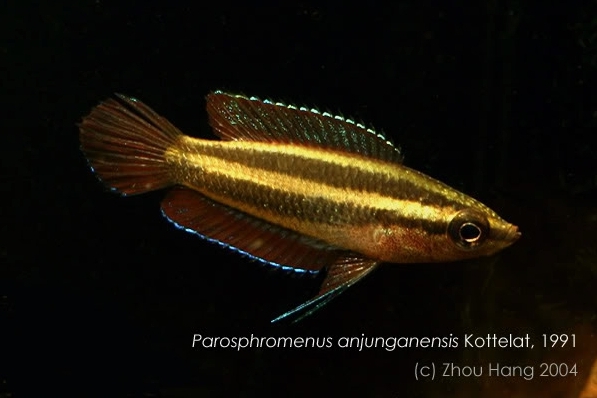
Parosphromenus anjunganensis
Kottelat, 1991
Max length35mm SL1.4in SLTank40 × 20cm16 × 8inTemp22–28°C72–82°FpH3.0–6.5It's care requirements, disposition, and especially conservation status dictate that it should be maintained alone or alongside a group of small, peaceful cyprinids such as Boraras or Sundadanio spp. Likewise, different Parosphromenus spp. should not be kept together since the females of many are very difficult to tell apart and some are undoubtedly capable of hybridising.
Platystacus cotylephorusBanded Banjo Catfish
authority not recorded
Max length320mm SL13in SLTank120 × 30cm48 × 12inTemp22–25°C72–77°FpH6.0–8.2Not a particularly good catfish for the general community tank, as it's a largely inactive, secretive species that will only emerge and become active under cover of darkness. It is, nonetheless, an interesting aquarium subject for the enthusiast, exhibiting an incredible degree of camouflage. It's designed to resemble a dead leaf, and usually will not even swim to escape a net. When released into the aquarium will simply drift in the current until it hits the bottom. All members of the...
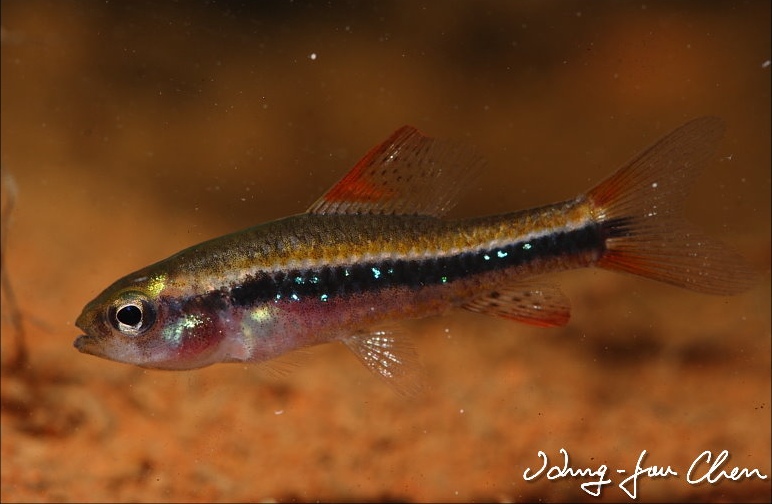
Poecilocharax weitzmaniBlack Darter Tetra
Géry, 1965
Max length50mm SL2.0in SLTank45 × 30cm18 × 12inTemp21–28°C70–82°FpH3.0–6.5Quite widely distributed having been recorded from Brazil, Colombia, Peru and Venezuela. It's been collected from the upper parts of several major river drainages including the Río Negro, Río Orinoco (including the Río Inírida and Casiquiare canal) and Río Solimões. The type series was collected from 'Igarapé Préto', Brazil, said to be 60 kilometres to the south of the Colombian border city Leticia. Populations from Colombia and Brazil tend to be more intensely-coloured, and the Peruvian populations may apparently represent an undescribed species.
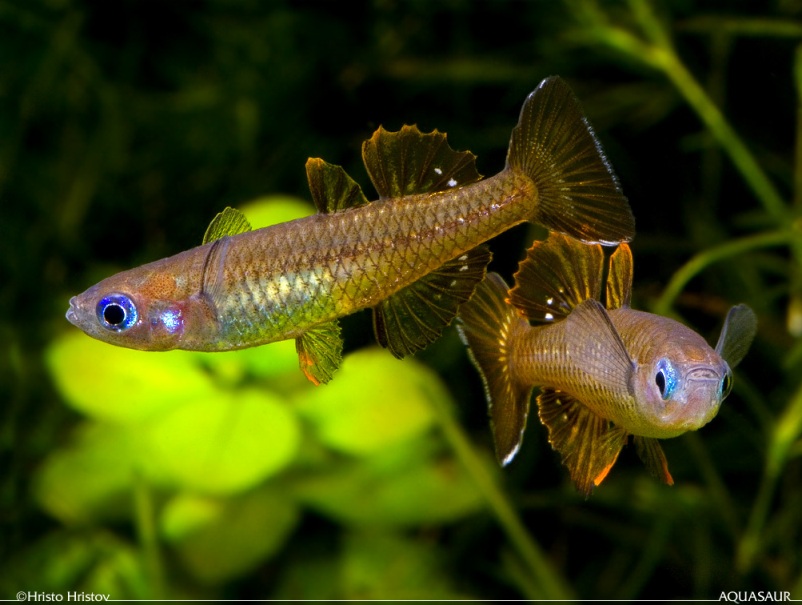
Pseudomugil tenellusDelicate Blue-eye
Taylor, 1964
Max length55mm SL2.2in SLTank75 × 30cm30 × 12inTemp25–32°C77–90°FpH5.5–7.5Euryhaline and mostly inhabits coastal floodplains where it's found in both fresh and brackish habitats, including tidal estuaries and salt marshes. It's particularly common in swamps, billabongs, and slow-moving streams where aquatic vegetation grows densely, but some populations have colonised upper sections of freshwater streams. Larger individuals may also move into main river channels. Tappin (2010) gives the following ranges of parameters based on those taken from various localities: temperature 27 - 38 °C, pH 5...
Rasbora elegansElegant Rasbora
authority not recorded
Max length200mm SL8in SLTank120 × 45cm48 × 18inTemp22–25°C72–77°FpHnot recordedThis species is not especially popular in the hobby and is only infrequently seen on sale. It is clearly distinguishable from similar-looking members of the genus by lacking a dark stripe along the lateral line. Instead it possesses two spot-like markings on each flank, one below theorigin and lateral line and another at the caudal peduncle. The intensity of these can vary depending on the collection locality of the fish and they can be quite faint in some forms. There is also a third, smaller m...
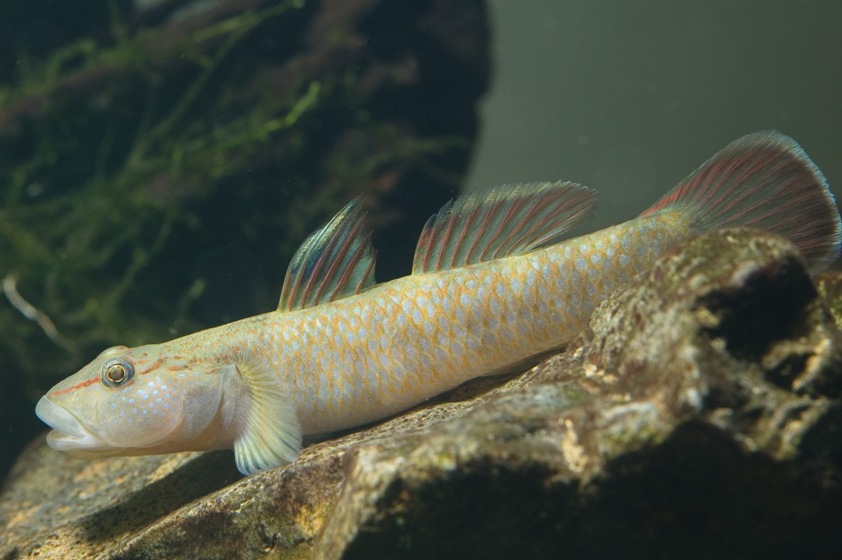
Rhinogobius sp. 'CO'
authority not recorded
Max lengthnot recordedTanknot recordedTempnot recordedpHnot recordedSome wild populations have evolved a complex amphidromous breeding strategy in which adults live and spawn in freshwater or brackish streams and the pelagic post-hatch larvae are washed downstream to the sea where the post-larval fry spend the first part of their life developing in estuarine nursery zones under brackish to full marine conditions. Once they reach a certain stage of development they begin to migrate upstream with some mov...
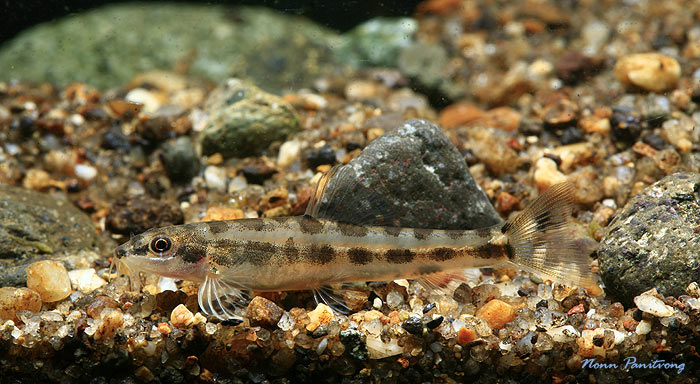
Schistura geisleri
Kottelat, 1990
Max length35mm SL1.4in SLTank60 × 30cm24 × 12inTemp21–26°C70–79°FpH6.0–7.5Fishes which inhabit similar biotopes in nature constitute the best options, especially peaceful, open water-dwelling cyprinids since the presence of one or two schools can make a visible difference to the confidence of this naturally reclusive loach.
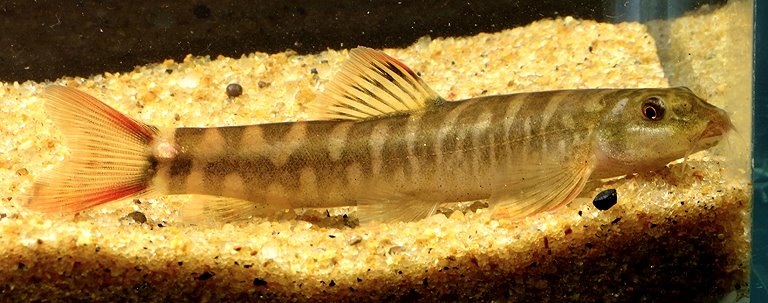
Schistura sp. 6
authority not recorded
Max length50mm SL2.0in SLTank80 × 30cm31 × 12inTemp18–24°C64–75°FpHnot recordedThis fish was collected for the aquarium trade during 2012 but its identity has not yet been established. The fish in our images were obtained at an unspecified locality in the Garo Hills, these for...
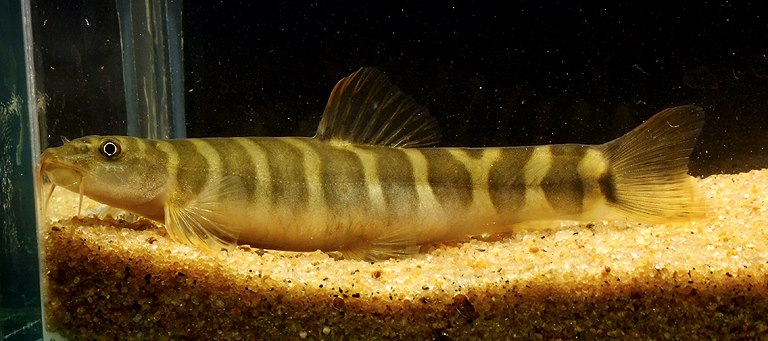
Schistura sp. 7
authority not recorded
Max length50mm SL2.0in SLTanknot recordedTempnot recordedpHnot recordedThis fish was collected for the aquarium trade during 2012 but its identity has not yet been established. Schistura is the most species-rich genus among nemacheilid loaches with some 190 members and it continues to grow with over 100 having be...
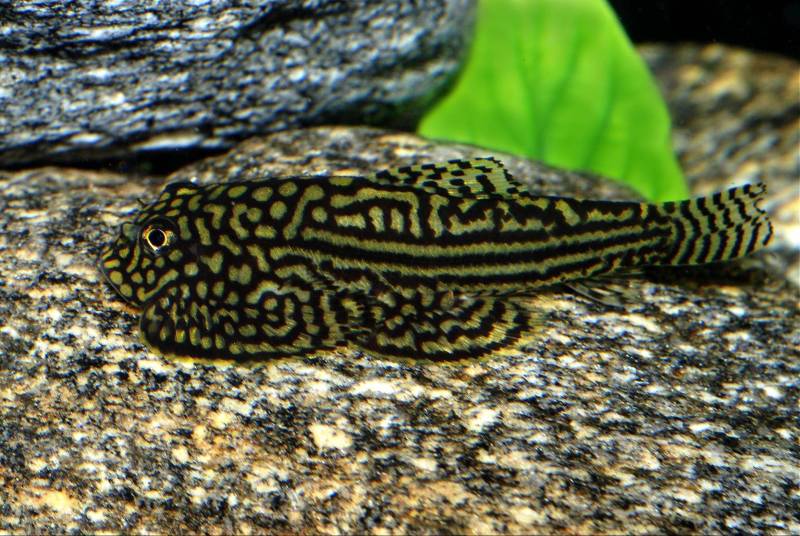
Sewellia lineolataTiger Hillstream Loach
Valenciennes, 1846
Max length65mm SL2.6in SLTank75 × 30cm30 × 12inTemp20–24°C68–75°FpH6.0–7.5S. lineolata was first recorded by Diard over 150 years prior to its 'rediscovery' in the early-1990s. It became available to the aquarium trade in the mid-2000s and swiftly established itself as one of the more popular balitorids in the hobby due to its attractive body markings and ease of breeding. It's also sold under the names 'reticulated hillstream loach', 'Vietnamese hillstream loach' and 'gold ring butterfly sucker'. It's difficult to...
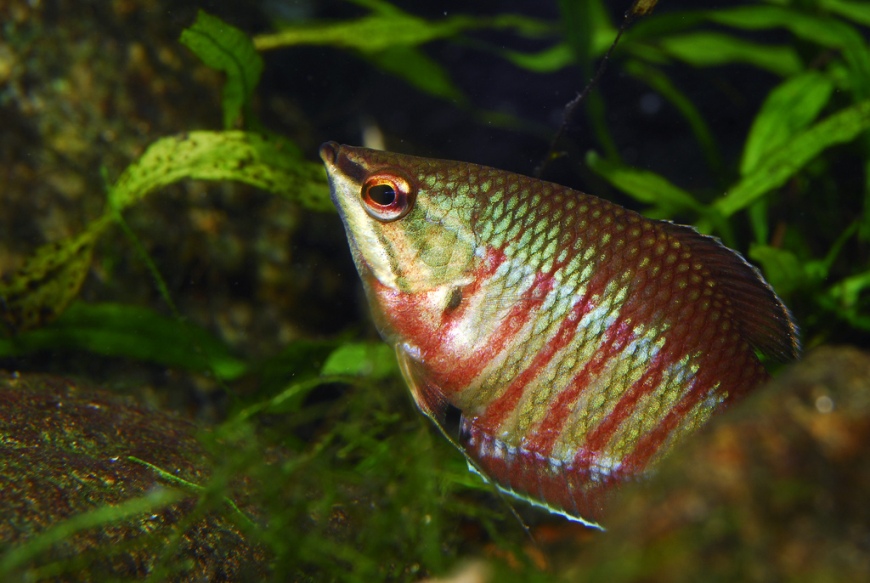
Sphaerichthys vaillantiVaillant's Chocolate Gourami
Pellegrin, 1930
Max length55mm SL2.2in SLTank60 × 30cm24 × 12inTemp21–25°C70–77°FpH3.5–6.5This species is traded under several names of which others include 'Samurai gourami' and 'Samurai Zebra Chocolate Gourami'. Though the former of these is arguably the most common, these names are potentially misleading since the fish is neither especially combative nor from Japan. Its unique colour pattern makes it difficult to confuse with any of the three other members of the genus even in the abse...