Results for “barb”
Type a name: scientific, common, or one a species used to go by. Or narrow the catalogue with the filters.
Filters
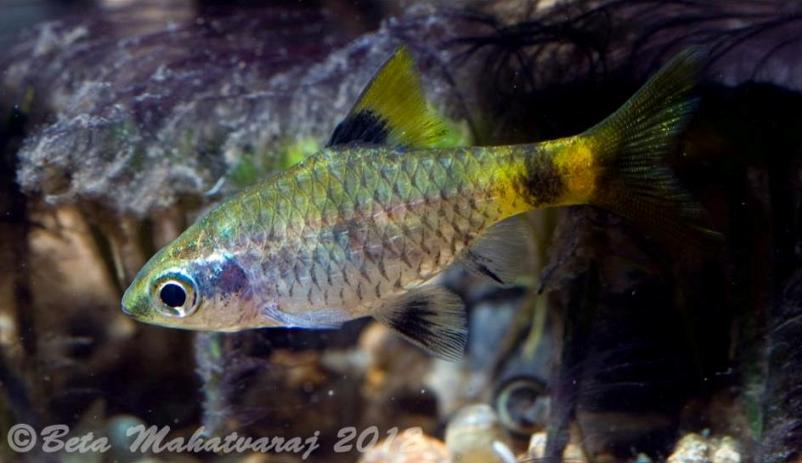
Pethia geliusGolden Dwarf Barb
Hamilton, 1822
Matched on the common name Golden Dwarf Barb
Max length40mm SL1.6in SLTank60 × 30cm24 × 12inTemp18–24°C64–75°FpH6.0–7.0This species' identity was settled and a neotype designated by Knight (2013) who also revalidated the congener P. canius (Hamilton, 1822) and described the closely-related P. aurea. These three had previously been considered to represent geographic forms of P. gelius, albeit on a tentative basis, with the validity of P. canius having been discussed since the late 19th century.
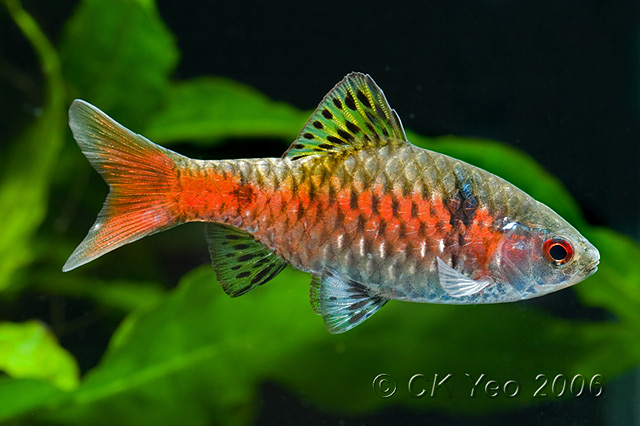
Pethia padamyaOdessa Barb
Kullander & Britz, 2008
Matched on the common name Odessa Barb
Max length46mm SL1.8in SLTank80 × 30cm31 × 12inTemp16–25°C61–77°FpH6.5–8.5This species has been in the aquarium trade since the early 1970s but its precise origin was a mystery until 2003. It first appeared in Ukraine, the common name 'Odessa' being derived from the port city of that name, and when it arrived in western Europe was widely considered a hybrid of similar-looking congeners such as P. conchonius, P. ticto and P. cumingii. It was also hypothesised as a subspecies of P. ticto or P. conchonius, and some suggested the fish to be artificially dyed.
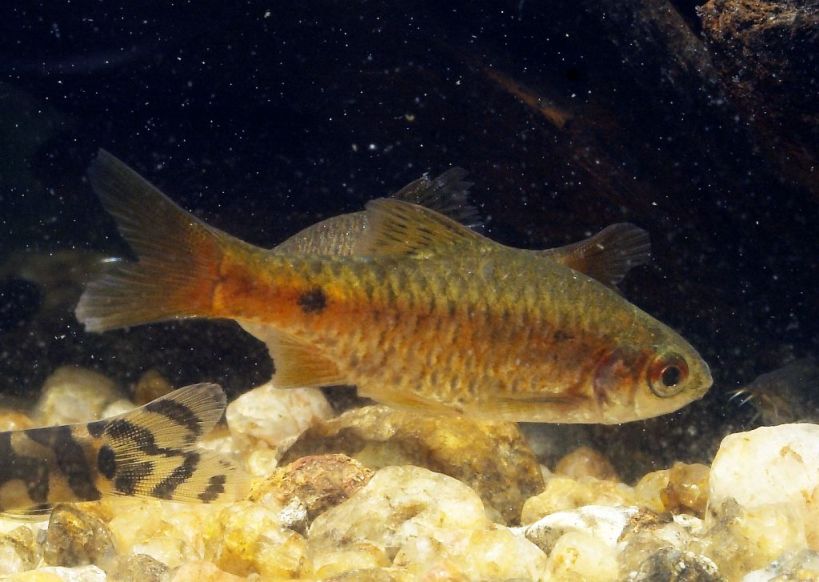
Pethia pookodensisPookode Lake Barb
Mercy & Jacob, 2007
Matched on the common name Pookode Lake Barb
Max length42mm SL1.7in SLTank75 × 30cm30 × 12inTemp20–25°C68–77°FpH5.5–7.5Described from Pookode Lake in Wayanad district, Kerala state, southern India and possibly endemic there although some unconfirmed records exist from within the surrounding Wayanad Wildlife Sanctuary. Pookode is a small freshwater lake surrounded by forest with a surface area of around 2 km² and is the source of the Panamaram River, a tributary within the much larger Kabani system. Its maximum depth is around 6.5 metres and in marginal areas dense patches of water lilies can be found.
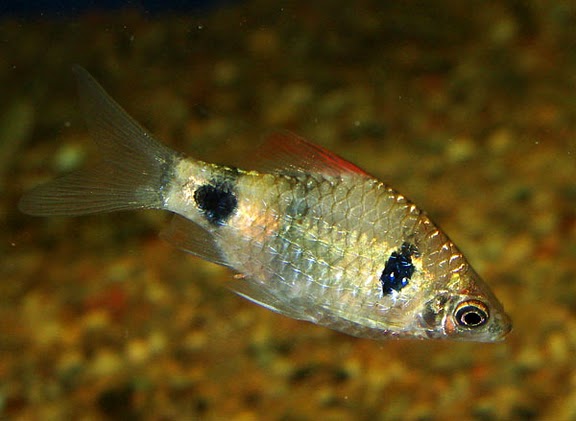
Pethia setnaiNarayan Barb
Chhapgar & Sane, 1992
Matched on the common name Narayan Barb
Max length65mm SL2.6in SLTank90 × 30cm36 × 12inTemp20–26°C68–79°FpH6.0–7.5This species is widely referred to and traded as the congener 'Puntius' narayani (Hora, 1937). The precise identity of the latter is in doubt, however, plus P. setnai possesses a serrated dorsal-fin spine whereas 'P.' It was formerly included in the Puntius conchonius 'group' of closely-related species alongside P. ater, P. bandula, P. conchonius, P. cumingii, P. erythromycter,...
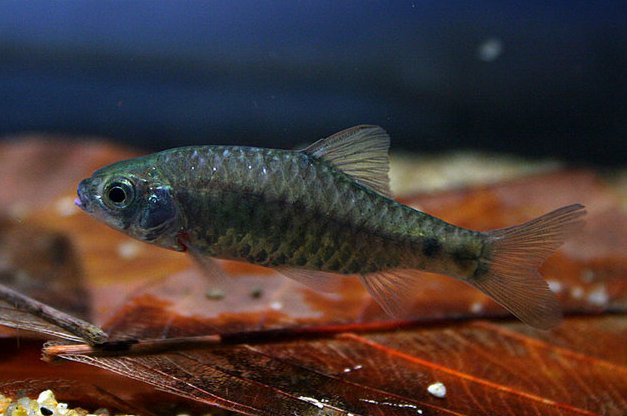
Pethia shalyniusShalyni Barb
Yazdani & Talukdar, 1975
Matched on the common name Shalyni Barb
Max length55mm SL2.2in SLTank75 × 30cm30 × 12inTemp16–24°C61–75°FpH6.0–7.5A benthopelagic fish mostly recorded from streams and minor tributaries at relatively high altitudes of more than 1200 metres AMSL with cool, clear, well-oxygenated water and substrates of bedrock, boulders, cobbles, and gravel. Aquatic plants aren't usually present though riparian vegetation may be well-developed. It's also present in some ponds and small lakes, including some stagnant water bodies with muddy substrates.
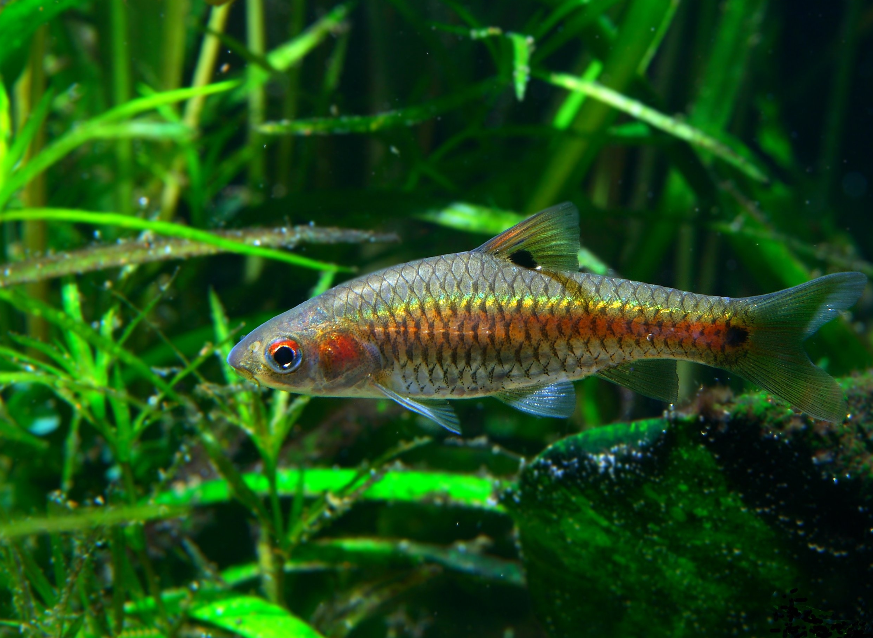
Puntius bimaculatusTwo-spotted Barb
Bleeker, 1863
Matched on the common name Two-spotted Barb
Max length50mm SL2.0in SLTank60 × 30cm24 × 12inTemp18–24°C64–75°FpH6.0–7.5Generally very peaceful making it an ideal resident of the well-researched community tank. As it places no special demands in terms of water chemistry it can be combined with many of the most popular fish in the hobby including other small cyprinids as well as tetras, livebearers, rainbowfishes, anabantoids, catfishes and loaches. It's a schooling species by nature, and at least 6-10 specimens should be purchased. Maintaining it in such...
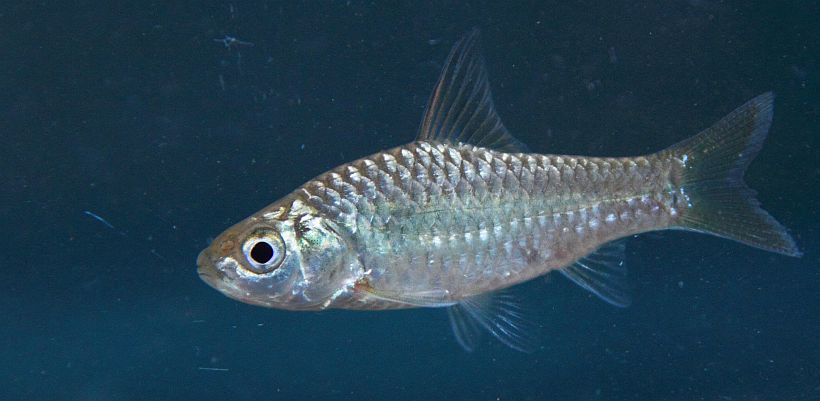
Puntius kamalikaKami's Barb
Silva, Maduwage & Pethiyagoda, 2008
Matched on the common name Kami's Barb
Max length75mm SL3.0in SLTank120 × 30cm48 × 12inTemp20–27°C68–81°FpHnot recordedPrior to its description P. kamalika was referred to as P. amphibius, a putatively valid species probably restricted to western India. It differs from all congeners in the following combination of characters: 4½/1/2½ scales in a transverse line between the mid-dorsal...
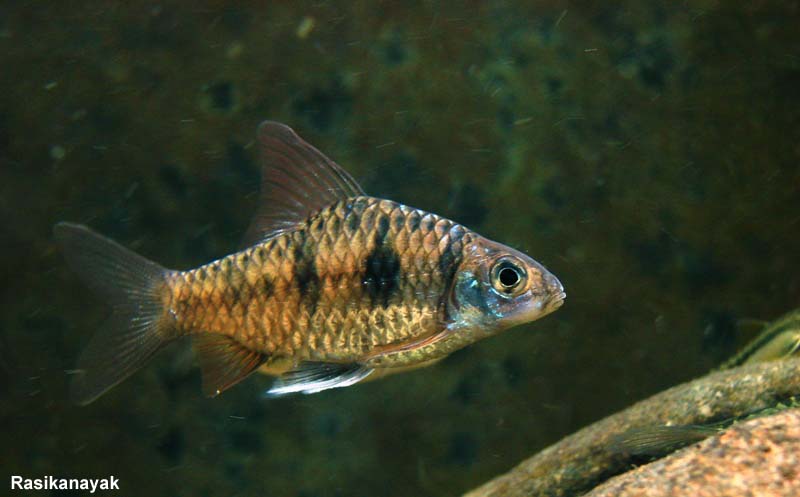
Puntius sahyadriensisMaharaja Barb
Silas, 1953
Matched on the common name Maharaja Barb
Max length65mm SL2.6in SLTank80 × 30cm31 × 12inTemp18–24°C64–75°FpH6.0–7.8The hill streams in which this fish can be found are generally shaded by the forest canopy and dense marginal vegetation. Substrates are typically composed of boulders, smaller stones, sand or gravel with submerged tree roots around the margins and quieter areas in which fallen branches and leaf litter collect. Other fish species occurring in the Tunga...
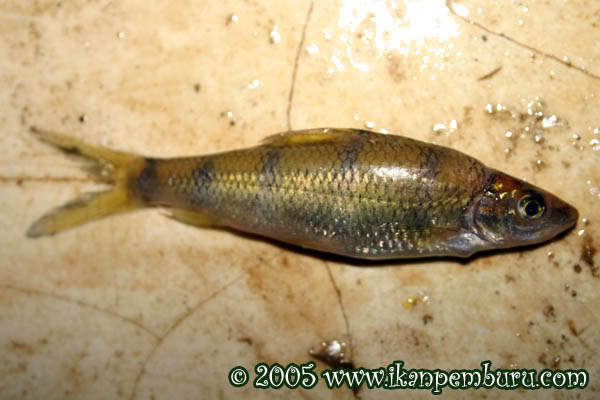
Acrossocheilus iridescens
Nichols & Pope, 1927
Matched on Barbus barbodon, a name it was formerly known by
Max length300mm SL12in SLTanknot recordedTempnot recordedpHnot recordedA. iridescens and its closest relative A. longipinnis can be distinguished from all other barred species of Acrossocheilus by the following characters: wider (vs. narrower) black vertical bars on the flank in adults, each five to eight (vs. no more than four) scales in width; a horse-shoe shaped (vs. arched) mouth gape; rostral barbel located posteriorly (vs. anteriorly) to a horizontal line through the anteriormost margin of the lower jaw; two postlabial grooves extending anteromedially beyond (vs. away from) a horizontal line through the roots of the rostral barbels.
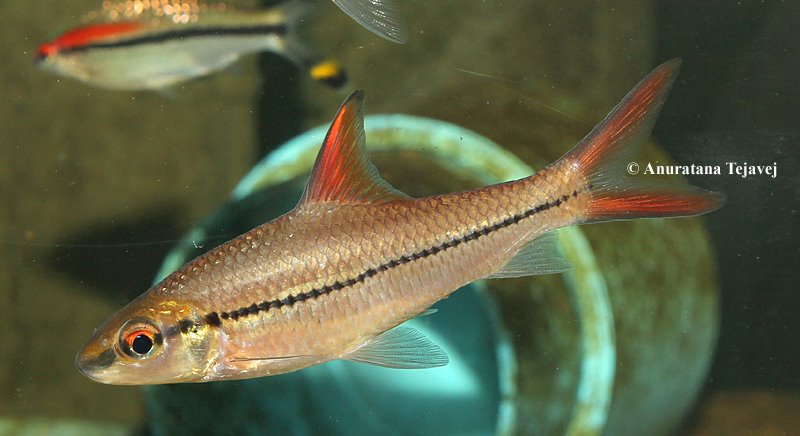
Cyclocheilichthys janthochir
Bleeker, 1854
Max length200mm SL8in SLTank180 × 45cm72 × 18inTemp22–27°C72–81°FpH4.0–7.0In the exceptionally diverse Danau Sentarum lake system of the upper Kapuas River basin, West Kalimantan, sympatric species include Scleropages formosus, Barbonymus gonionotus, B. schwanenfeldii, Crossocheilus nigriloba, Cyclocheilichthys apogon, C. repasson, Epalzeorhynchos kalopterus, Labiobarbus ocellatus , Leptobarbus hoevenii, Luciosoma spilopleura plus various representatives of Barbodes, Rasbora and Osteochilus.
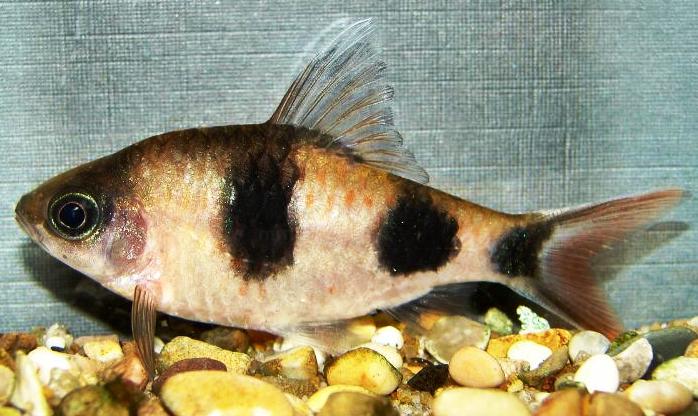
Dawkinsia arulius
Jerdon, 1849
Max length100mm SL3.9in SLTank120 × 45cm48 × 18inTemp19–25°C66–77°FpH6.0–7.5The fish appearing in the majority of earlier literature as P. arulius or 'arulius barb', and often still traded as such, is the related D. tambraparniei. Though similar the latter can be told apart from D. arulius by possession of filamentous extensions to the dorsal-fin rays in males, longer maxillary barbels measuring > ½ eye diameter, i.e., 2.4 - 4.7 % SL, and some aspects of colour pattern.
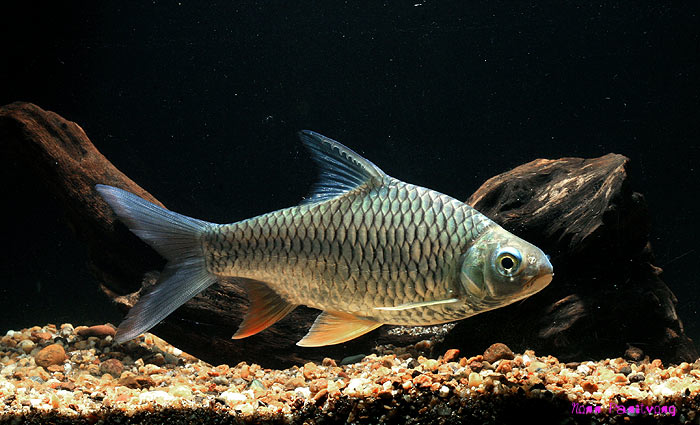
Hypsibarbus vernayi
Norman, 1925
Matched on Barbus vernayi, a name it was formerly known by
Max length216mm SL9in SLTank240 × 60cm96 × 24inTemp20–26°C68–79°FpH6.0–8.0It is very similar to H. wetmorei but can be told apart by possessing yellow (vs. orange to red in H. wetmorei) pectoral, pelvic, and anal fins. It thus appears likely that yellow-finned fish marketed as H. wetmorei or 'lemon fin barb' in the ornamental trade are actually H. vernayi, with both species available on a regular basis.
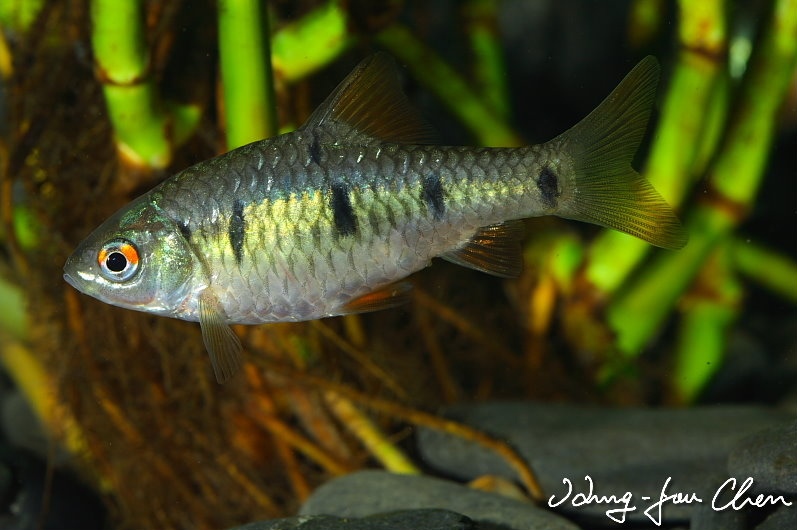
'Puntius' snyderi
Oshima, 1919
Max length75mm SL3.0in SLTank90 × 30cm36 × 12inTemp18–24°C64–75°FpH6.0–8.0This species is almost identical to the wild form of 'P.' semifasciolatus which is best known as the 'golden barb' in the aquarium hobby due to the popularity of a yellowish ornamental strain. The natural colour pattern is greenish in both species, however, and in terms of external characters they're only reliably distinguished by the fact that 'P.' semifasciolatus possesses a pair of prominent maxillary barbels wherea...
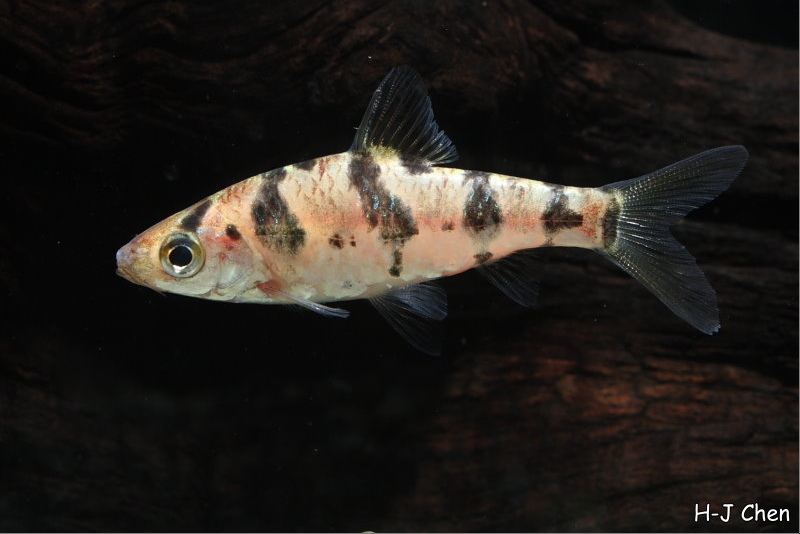
Desmopuntius foerschi
Kottelat, 1982
Matched on Barbus foerschi, a name it was formerly known by
Max length55mm SL2.2in SLTank80 × 30cm31 × 12inTemp20–28°C68–82°FpH5.0–7.0D. foerschi is sometimes traded as 'boomerang barb' or 'Foersch's fire barb' and is included in a group of closely-related, similar-looking fishes which were moved into the new genus Desmopuntius by Kottelat (2013). It can be told apart from other vertically-striped congeners by possession of additional dark blotches between the second, third and fourth vertical bars and a further marking at the posterior base o...
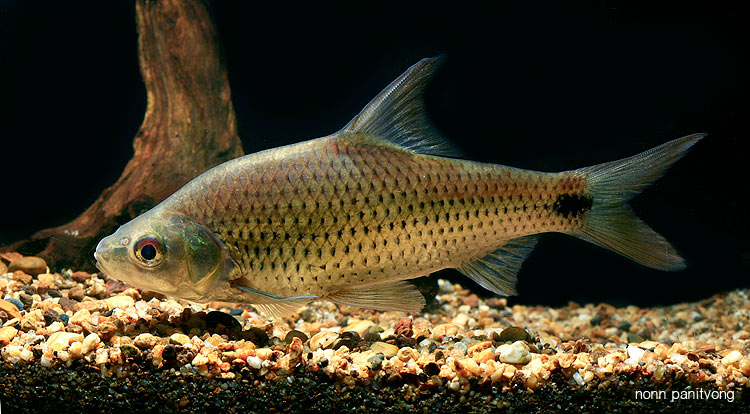
Cyclocheilichthys armatus
Valenciennes, 1842
Matched on Barbus armatus, a name it was formerly known by
Max length230mm SL9in SLTank180 × 60cm72 × 24inTemp20–26°C68–79°FpH6.0–8.0It can be distinguished from congeners by possessing one or two pairs of barbels, a black blotch at the base of the caudal-fin, and rows of dark spots along the lateral scale rows. Members of Cyclocheilichthys are characterised by possessing a serrated dorsal fin spine, 9 branched pelvic fin rays, a conical snout, small, subterminal...
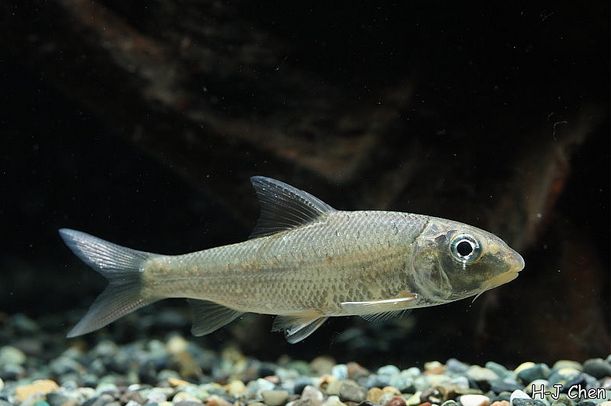
Chagunius chagunio
Hamilton, 1822
Matched on Barbus spilopholus, a name it was formerly known by
Max length450mm SL18in SLTank240 × 90cm96 × 36inTemp20–25°C68–77°FpH6.0–7.5Endemic to the Ganges and Brahmaputra river basins and thus occurs in northern India, Nepal and Bangladesh. Type locality is 'the Yamuna River, and northern rivers of Behar and Bengal'. The distribution of the genus as a whole is interesting because these fish occupy the area that geographically separates Indian and Southeast Asia barbs and it has been theorised that they may represent an evolutionary 'link' species...
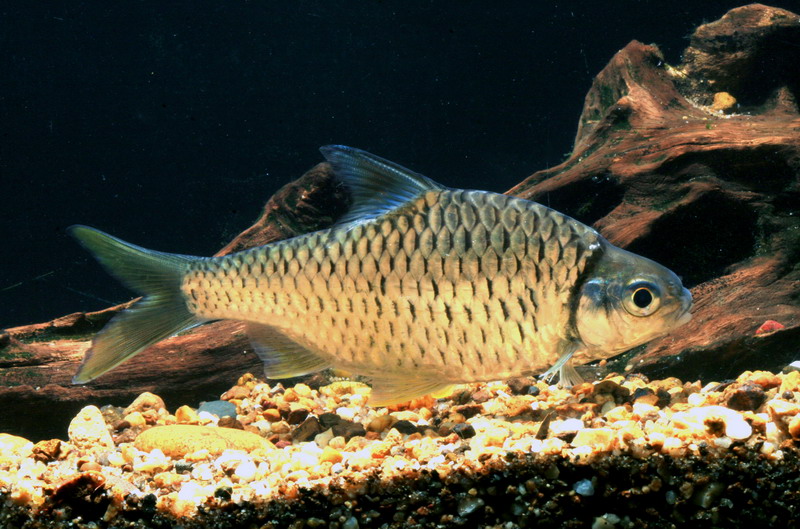
Mystacoleucus obtusirostris
Valenciennes, 1842
Matched on Barbus obtusirostris, a name it was formerly known by
Max length140mm SL6in SLTank120 × 45cm48 × 18inTemp20–27°C68–81°FpH6.0–8.0This species is occasionally marketed as 'Burmese Rainbow Barb' in the ornamental trade. others may have been exported in small numbers or as bycatch among shipments of other species. It was referred to as Mystacoleucus marginatus for decades, but that name is a simultaneous subjective synonym of M. obtusirostris following Kottelat (2013).
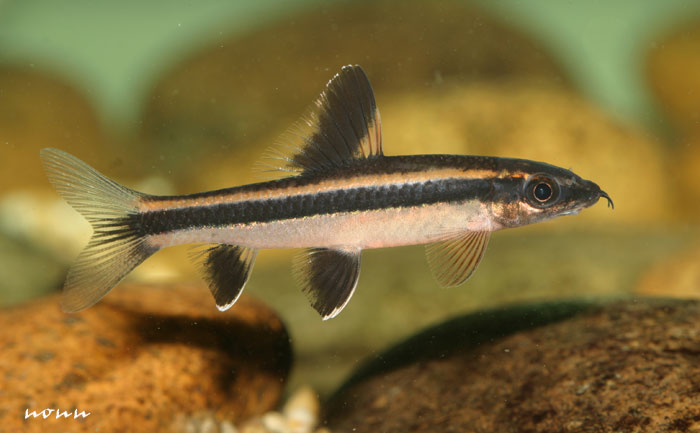
Epalzeorhynchos kalopterumFlying Fox
Bleeker, 1850
Matched on Barbus kalopterus, a name it was formerly known by
Max length160mm SL6in SLTank120 × 45cm48 × 18inTemp20–26°C68–79°FpH6.0–7.5Confusion with similar-looking fishes from other genera, such as Garra cambodgiensis, laterally-striped Crossocheilus spp. or Gyrinocheilus aymonieri is not uncommon, and are largely attributable to the use of trade names such as 'false flying fox' or 'Siamese flying fox'. When compared with the other species E. kalopterus exhibits several unique characters but perhaps the simplest way to identify it is by the characteristic white-edged, red and black coloured fins and the presence of two pairs of barbels.
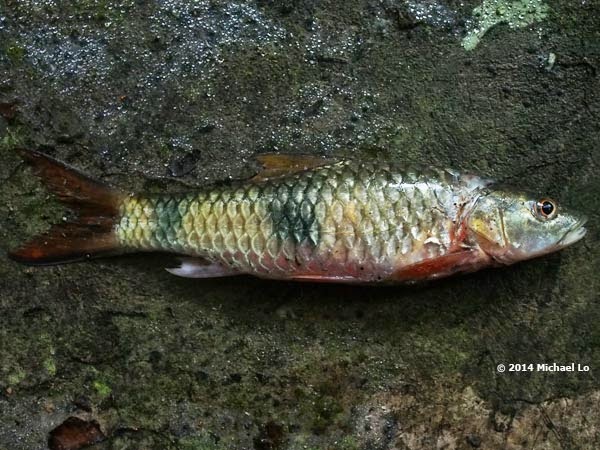
Hampala bimaculata
Popta, 1905
Matched on Barbus hampal var. bimaculata, a name it was formerly known by
Max length500mm SL20in SLTanknot recordedTempnot recordedpHnot recordedPredominantly a riverine fish preferring clear, well-oxygenated, running waters with substrates of sand, gravel, rock or mud, typically flowing through tropical forest. In the habitat seen in our images sympatric fish species included Barbonymus balleroides, B. collingwoodi, Cyclocheilichthys repasson, C. apogon, Diplocheilichthys pleurotaenia, Garra borneensis, Leptobarbus hosii, and an unidentified Gastromyzon sp.
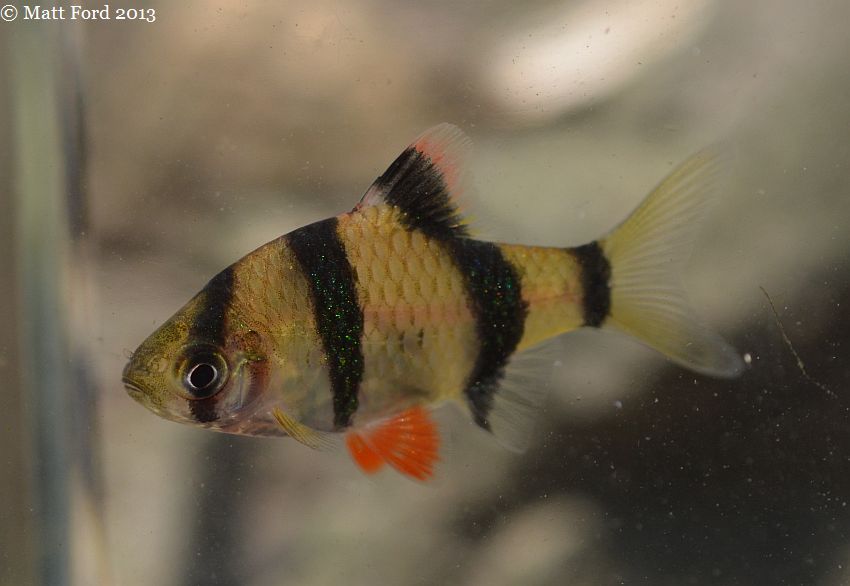
Puntigrus anchisporus
Vaillant, 1902
Matched on Barbus anchisporus, a name it was formerly known by
Max length60mm SL2.4in SLTank80 × 30cm31 × 12inTemp20–26°C68–79°FpH5.5–7.0This species occasionally appears in the aquarium hobby, but the trade is largely reliant on commercially-produced 'tiger barbs' of questionable origin. It is distinguished from congeners by the following combination of characters: lateral line complete; 14 circumpeduncular scales; 21-23+2 scales in the lateral row; dorsal-fin black with red outer band; pelvic fins red.