Results for “pectoral”
Type a name: scientific, common, or one a species used to go by. Or narrow the catalogue with the filters.
Filters
Triportheus angulatusDusky Narrow Hatchetfish
authority not recorded
Max length165mm SL6in SLTank120 × 30cm48 × 12inTemp22–30°C72–86°FpH5.0–7.5An attractive but not often seen species in the hobby. This is quite odd considering how common it is in many of its native habitats, where it is known as sardina. It has very strong pectoral muscles, and uses these to jump from the water to catch flying insects or to escape potential predators. It can make leaps of several metres in length....
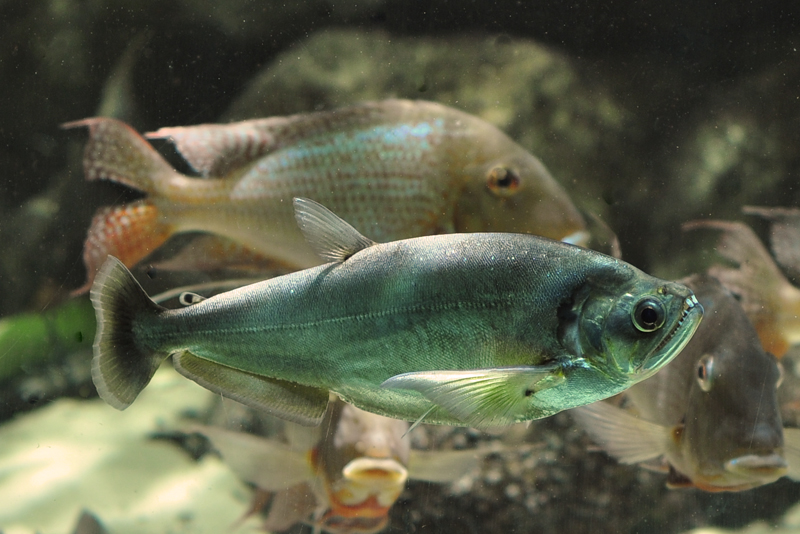
Hydrolycus scomberoidesVampire Tetra
Cuvier, 1819
Matched on Cynodon pectoralis, a name it was formerly known by
Max length300mm SL12in SLTank210 × 75cm84 × 30inTemp24–28°C75–82°FpH6.0–8.0This species may be referred to using a variety of names including 'scomb', 'sabre tooth tetra', 'sabre tusk barracuda', 'dog tooth characin, 'vampire fish', 'Cachorra' or Pirandirá (the latter two names being used in Brazil where they're also applied to congeners). It's regularly confused with the payara, H. armatus, though that species grows considerably larger, is pop...
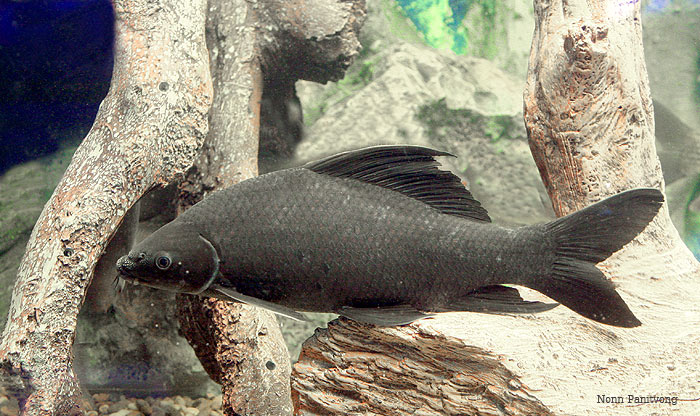
Labeo chrysophekadionBlack Shark
Bleeker, 1849
Matched on Rohita pectoralis, a name it was formerly known by
Max length600mm SL24in SLTanknot recordedTemp20–26°C68–79°FpH6.0–8.0L. chrysophekadion is also known as 'black sharkminnow'. It continues to be available in the ornamental trade despite its patent unsuitability for the home aquarium, and an albino form has been selectively bred for the purpose. It can be distinguished from other members of the genus by the following combination...