Results for “population”
Type a name: scientific, common, or one a species used to go by. Or narrow the catalogue with the filters.
Filters
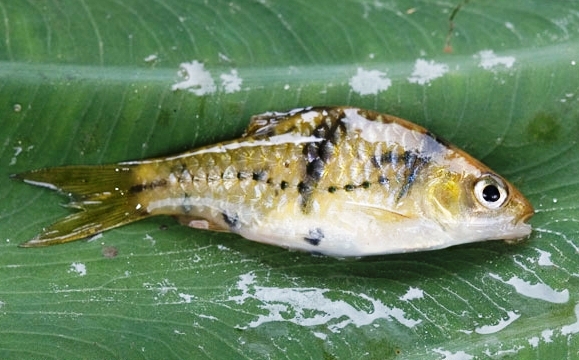
Barbodes kuchingensisFalse Spanner Barb
Herre, 1940
Max length120mm SL5in SLTank120 × 45cm48 × 18inTemp20–28°C68–82°FpH5.0–7.5This species is rarely-exported for the aquarium hobby but is available on occasion. The name 'P.' kuchingensis is frequently misapplied, however, with subadult forms of 'P.' everetti and some populations of the geographically-variable 'P.' lateristriga regularly traded as such, for example. Though closely-affiliated with and superficially very similar to...
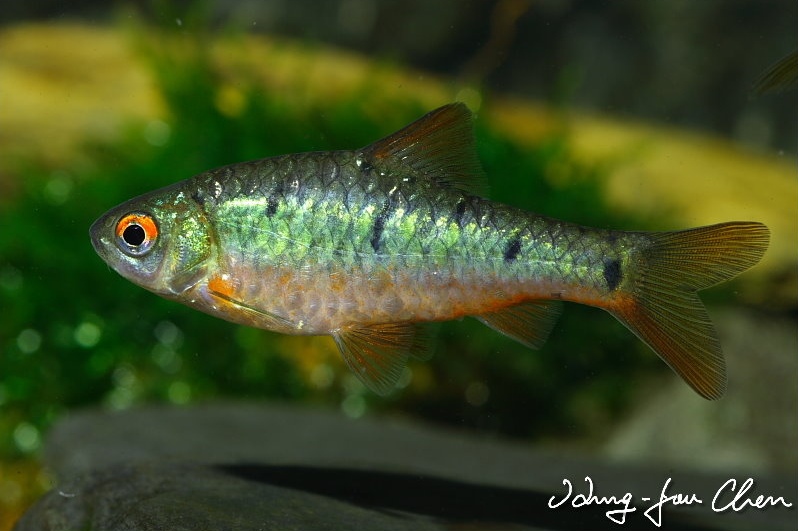
Barbodes semifasciolatusGolden Barb*
Günther, 1868
Max length75mm SL3.0in SLTank90 × 30cm36 × 12inTemp16–24°C61–75°FpH6.0–8.0This species is also known by the alternative names 'green' or 'Chinese' barb. The natural 'green' form is an infrequent find in the aquarium trade whereas the selectively-bred 'golden' variant is farmed in huge numbers and is among the most popular of freshwater aquarium fish. The latter was first produced in the 1960s and is now so ubiquitous that many hobbyists are initially unaware that it is not the natural form.
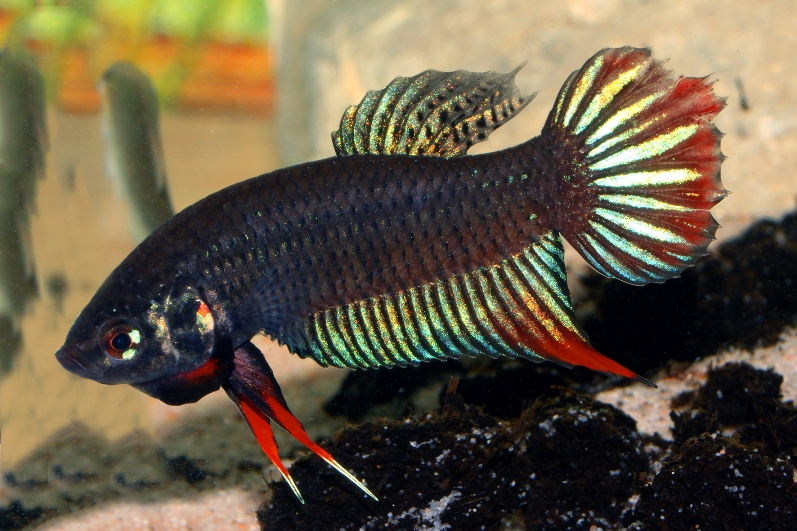
Betta siamorientalis
Kowasupat, Panijpan, Ruenwongsa & Jeenthong, 2012
Max length33mm SL1.3in SLTank45 × 30cm18 × 12inTemp22–28°C72–82°FpH5.5–7.5This species was considered a colour form of the closely-related B. imbellis and commonly-referred to as 'black imbellis' prior to description due to its blackish opercle and body. It's also previously been confused with B. splendens due to the colour of the vertical opercular bars which tend to be reddish (but may also be pale red, greenish-silvery, plain silvery or without colour in some populations), but DNA analysis has demonstrated it...
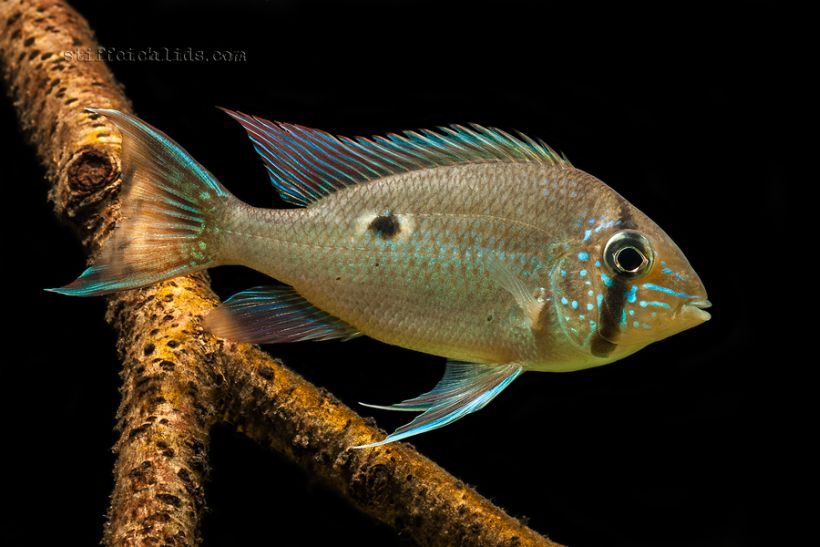
Biotodoma wavriniOrinoco Eartheater
Gosse, 1963
Max length100mm SL3.9in SLTank150 × 45cm60 × 18inTemp20–30°C68–86°FpH4.0–6.5Populations known in the aquarium trade include 'Cuao', 'Orinoco', 'San Antonio', and 'Sipapo Ventuari'. B. wavrini and its congener B. cupido can be separated by body shape and position of the dark blotch on the posterior portion of the flank. In B. cupido the body is relatively compact and the blotch located above the upper lateral line, whereas in B. wavrini the body is noticeably elongate and the blotch on or below the upper lateral line.
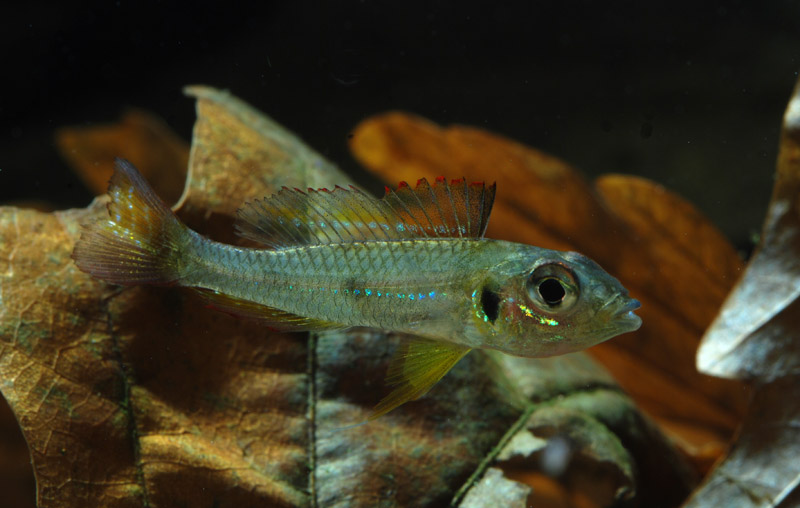
Biotoecus opercularis
Steindachner, 1875
Max length40mm SL1.6in SLTank90 × 30cm36 × 12inTemp25–30°C77–86°FpH4.0–6.5At time of writing there exists no scientific evidence that the different populations of this species seen in the aquarium trade (see 'Distribution') represent anything other than a single, widely-distributed species although some exibit minor morphological differences including relative body depth, longer fin rays in the unpaired fins and yellow or orange colouration in the paired fins. There is apparently a form from the upper rio Negro which may turn out to be distinct but it's...
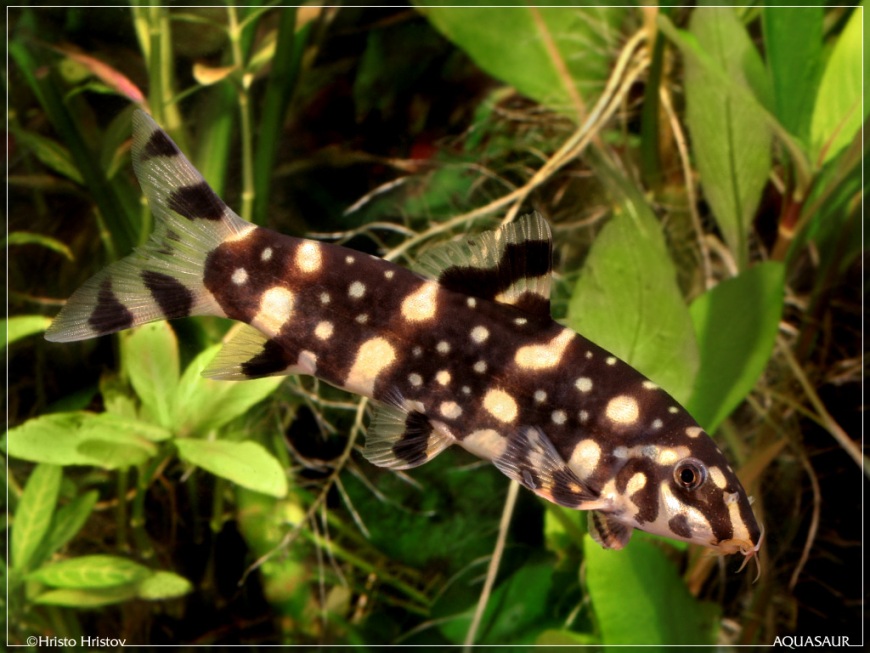
Botia kubotaiPolka-Dot Loach
Kottelat, 2004
Max length150mm SL6in SLTank120 × 45cm48 × 18inTemp22–28°C72–82°FpH6.0–7.5Appears to be endemic to headwaters of the Salween River basin around the border between Myanmar and Thailand. The type specimens were collected from the Megathat Chaung (Megathat stream) in the upper Ataran (known as the Kasat in Thai) River basin, Kayin/Karen State, Myanmar and another population was later discovered in the Hanthayaw River (Suriya in Thai), Tak Province, Thailand.
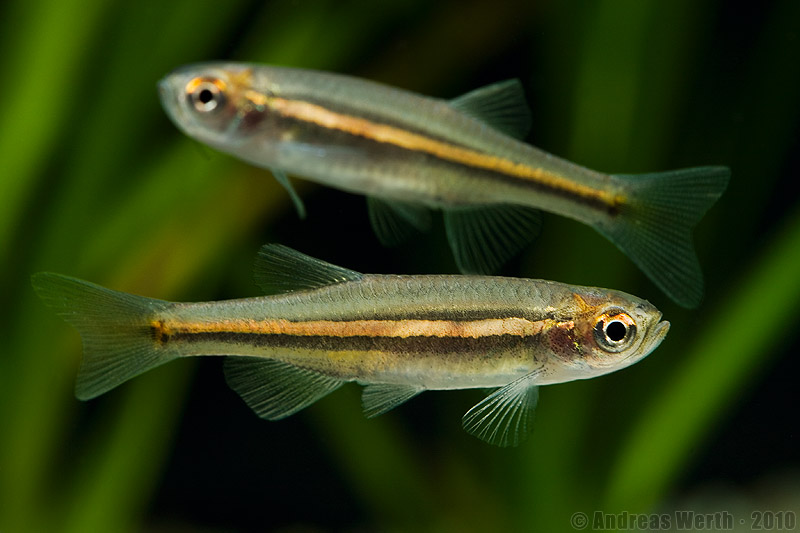
Brachydanio jaintianensis
Sen, 2007
Max length45mm SL1.8in SLTank80 × 30cm31 × 12inTemp18–23°C64–73°FpH6.0–7.0To date known only from the Jaintia Hills district, Meghalaya state, northeastern India meaning its natural waters are part of the Brahmaputra River system. The type locality is given as 'Tre Rangriang, Jowai' in the description paper, but we've been unable to locate this on any map. The paratypes were collected at 'Thlu Muwi', which probably refers to the ancient stone bridge built over the Muwi stream, a place popular with tourists due to the nearby Muwi waterfalls.
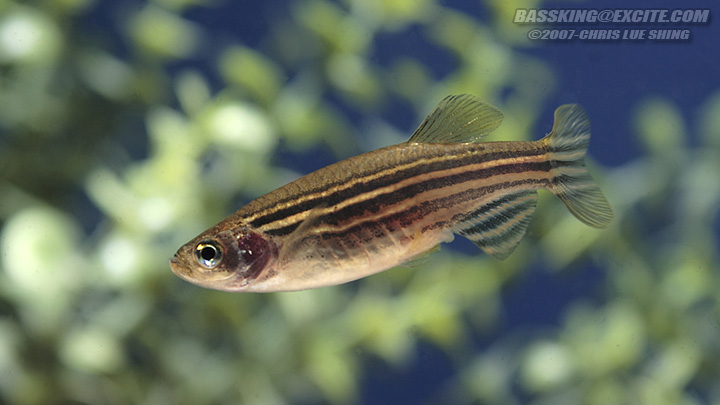
Brachydanio rerioZebra 'Danio'
Hamilton, 1822
Max length50mm SL2.0in SLTank90 × 30cm36 × 12inTemp18–25°C64–77°FpH6.0–8.0This species is very peaceful indeed and can be combined with many of the most popular fish in the hobby including other small cyprinids as well as tetras, livebearers, rainbowfishes, anabantoids, catfishes and loaches. As always when selecting a compatible community of...
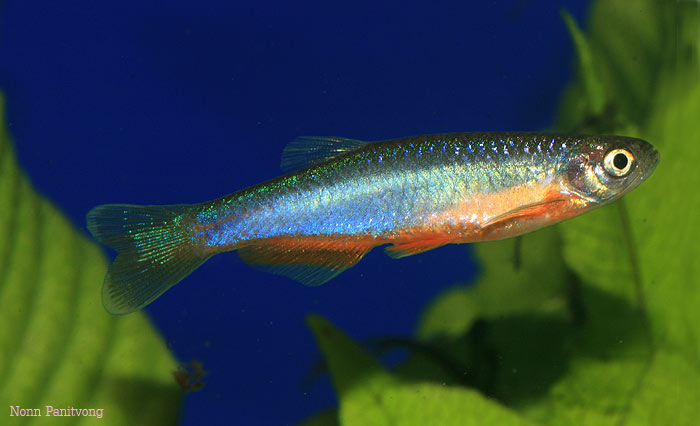
Brachydanio roseaRosy 'Danio'
Fang & Kottelat, 2000
Max length55mm SL2.2in SLTank90 × 30cm36 × 12inTemp18–25°C64–77°FpH6.0–7.5B. rosea is a relatively recent addition to the aquarium trade but has proved very popular since it's colourful, hardy and usually quite cheap making it ideal for beginners. It's sometimes sold as 'purple passion danio'. It's very similar to B. albolineata sensu stricto but differs in several characters, notably the relatively slimmer body, shorter rostral barbels and lack of...
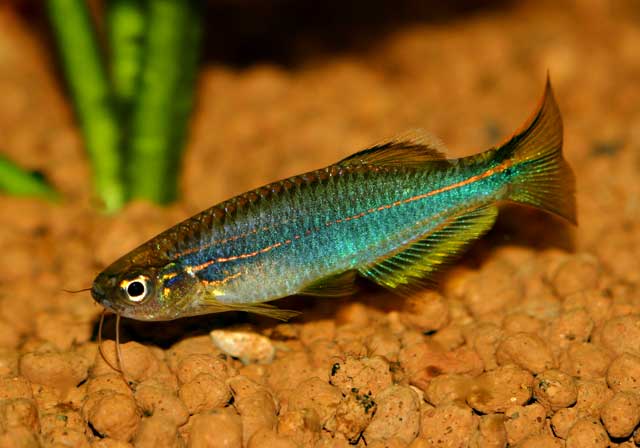
Brachydanio sp. 'hikari'Hikari 'Danio'
authority not recorded
Max length65mm SL2.6in SLTank120 × 30cm48 × 12inTemp18–26°C64–79°FpH6.5–7.5This potentially-undescribed species first became available in 2002, and males and females were marketed as 'Danio sp. hikari yellow' and 'D. sp. hikari blue', respectively. Subsequent DNA testing in the United States revealed them to be the same species and genetically distinct from the very similar B. kerri. It can be told apart as the central body (P) stripe always extends into the caudal fin whereas in B. kerri it terminates at the caudal peduncle. Only a single population of B. kerri was sampled in the stu...
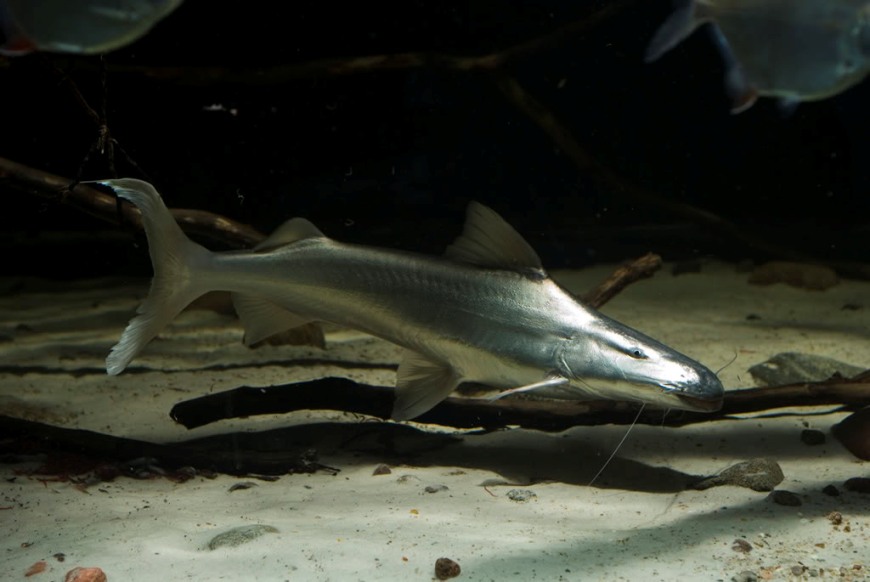
Brachyplatystoma rousseauxiiDourada
Castelnau, 1855
Max length1900mm SL75in SLTanknot recordedTemp22–28°C72–82°FpH6.0–8.0Study of B. rousseauxii has revealed that sexually mature adults are found only in the western Amazon, with no mature individual ever recorded east of Manaus despite the intensive commercial fishery operating there. The total distance covered by some populations during migration from the delta was as much as 5500 km, making it the longest known in any freshwater fish species.
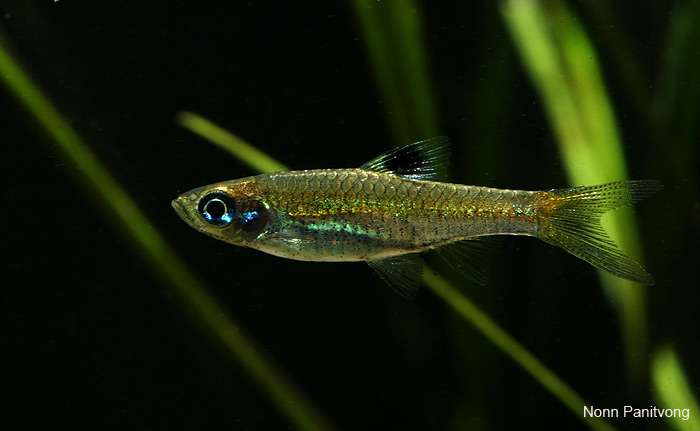
Brevibora dorsiocellataEyespot Rasbora
Duncker, 1904
Max length35mm SL1.4in SLTank45 × 30cm18 × 12inTemp20–25°C68–77°FpH5.0–7.5B. dorsiocellata is sometimes traded as 'green-eyed', 'emerald-eyed' or 'hi-spot' rasbora. There appear to exist several geographical forms of the species at least two of which have been seen in the trade. The most common is the rather plain-coloured fish that is produced commercially in large numbers and has gained popularity due to the bright green/blue reflective patch in the lower part of the eye.
Carinotetraodon travancoricusDwarf Puffer
authority not recorded
Max length25mm SL1.0in SLTanknot recordedTemp22–28°C72–82°FpH6.8–8.0C. travancoricus is probably the smallest species of puffer, and is certainly one of the more diminutive fish regularly found in the trade. It's cute looks, amusing personality and fascinating swimming action make it a justifiably popular import, although it's all-too-often sold without the correct information needed for its long-term health and care. It's also known as the Malabar puffer, in reference to the area of southern India that contains much of the species' natural r...
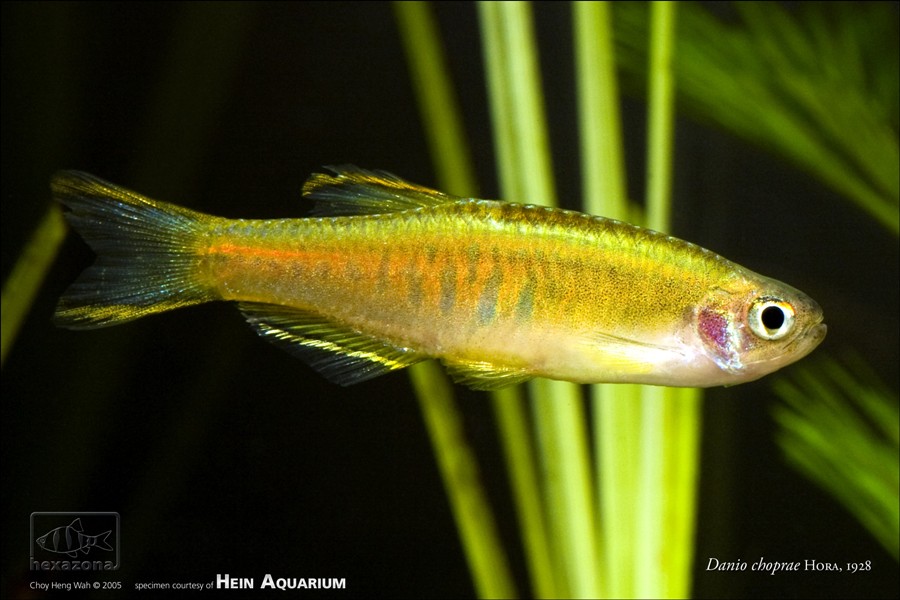
Celestichthys chopraeGlowlight 'Danio'
Hora, 1928
Max length30mm SL1.2in SLTank80 × 30cm31 × 12inTemp16–26°C61–79°FpH6.0–8.0C. choprae has only been available since 2003 but has quickly established itself as one of the most popular small danios in the hobby. There has been some confusion regarding the correct spelling of the specific name with many resources listing it incorrectly as "choprai". Briefly, when Hora described the species he named it after a man, Dr B. N. Chopra, meaning that "choprai" is technically correct as under ICZN rules the specific name ought to follow the gender of the indiv...
Chaca bankanensisChocolate Frogmouth Catfish
authority not recorded
Max length200mm SL8in SLTanknot recordedTemp22–26°C72–79°FpH6.0–8.0Chaca are unsuitable subjects for the general aquarist, but are relatively popular among lovers of oddball species. This species is very similar in appearance to the closely related C. chaca. However, it is somewhat darker and redder in colour than its relative, and lacks the hooklets that occur on the lips and body of chaca. It is a true master of disguise, and is also known as the angler catfish, due to it's ability to use its barbels as a kind of lure, using them to simulate the movement...
Chaca chacaFrogmouth Catfish
authority not recorded
Max length200mm SL8in SLTanknot recordedTemp22–25°C72–77°FpH6.0–8.0Chaca are unsuitable subjects for the general aquarist, but are quite popular among lovers of oddball species. This species is very similar in appearance to the closely related C. bankanensis. However, it's usually a bit lighter in colour than its relative and possesses small hooklets on the lower lip and body that are not present in bankanensis. It's a true master of disguise and is also known as the angler catfish, due to its ability to use its barbels as a kind of lure. These can be...
Chaetostoma sp.Spotted Bulldog Plec
authority not recorded
Max length120mm SL5in SLTanknot recordedTemp20–22.8°C68–73°FpH6.8–7.8Also known popularly as the rubbernose plecs, Chaetostoma species are seen for sale quite often these days. This is one of the more commonly seen, and provided its needs are adequately met, is a very hardy little fish. There's a bit of mystery surrounding its true identity, hence the species name, and it's sometimes misidentified in shops. The true L187 is currently known as Chaetostoma pearsei, and is a white-spotted fish. When buying Loricariids such as this always check the fish ...
Charax condeiSmall-scale Glass Tetra
authority not recorded
Max length55mm SL2.2in SLTank60 × 38cm24 × 15inTemp23–25°C73–77°FpH6.0–7.4This rarely seen Characin occasionally shows up in the trade, usually as a contaminant among shipments of more popular species. It's sometimes referred to as Asiphonichthys condei in older literature.
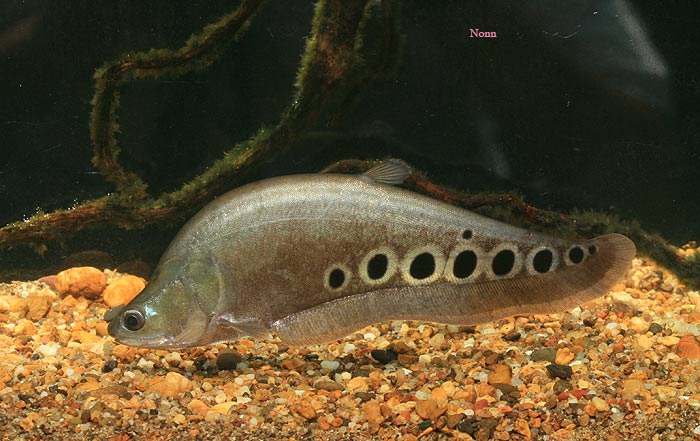
Chitala ornataClown Featherback
Gray, 1831
Max length1000mm SL39in SLTanknot recordedTemp20–28°C68–82°FpH6.0–8.0This species is also referred to as 'clown knifefish' in the aquarium trade. It arguably has no place in the ornamental hobby given its adult size and specialised requirements but remains inexplicably popular and an albino form has even been line-bred for the purpose. It can be distinguished from all congeners by presence of one or more rows of large ocellated spots above the base of the anal-fin, but...
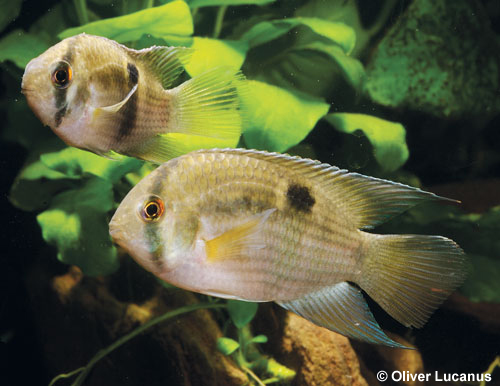
Cleithracara maroniiKeyhole Cichlid
Steindachner, 1881
Max length110mm SL4in SLTank90 × 30cm36 × 12inTemp21–28°C70–82°FpH4.0–7.5This species can be told apart from relatives by the characteristic 'keyhole' shaped marking on each side of the body. It's one of few fishes in which the current generic name is derived from the common name popularised in the aquarium hobby with 'Cleithracara' a combination of the Greek kleithron, meaning lock, and, acará, the Guaraní word for cichlids.