Results for “sand”
Type a name: scientific, common, or one a species used to go by. Or narrow the catalogue with the filters.
Filters
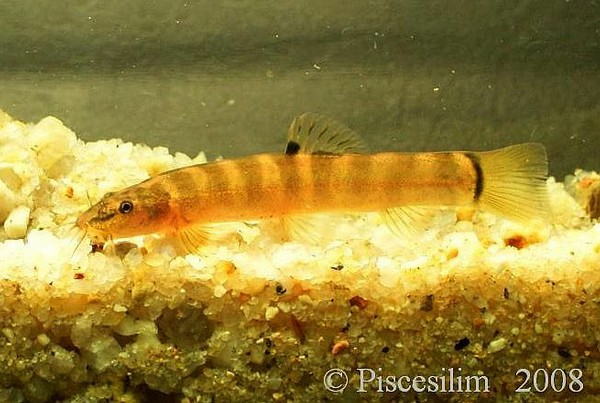
Schistura robertsi
Kottelat, 1990
Max length56mm SL2.2in SLTank80 × 30cm31 × 12inTemp18–30°C64–86°FpH6.0–8.0Should not prove difficult to maintain under the correct conditions. We strongly recommend keeping it in a tank designed to resemble a flowing stream or river with a substrate of variably-sized rocks, sand, fine gravel, and some water-worn boulders. This can be further furnished wit...
Tramitichromis intermedius
authority not recorded
Max length160mm SL6in SLTank120 × 38cm48 × 15inTemp24–28°C75–82°FpH7.6–8.8Sand dwelling Malawian cichlid species such as this can be somewhat delicate in the aquarium. A rigorous tank maintenance schedule is recommended to keep them in top shape; with small, regular partial water changes a necessity. Also take care with feeding as discussed above. It is likely this species will eventually be assigned to a different genus, as there is some confusion surrounding Tramitichromis and it's scientific validity. The fish included in the genus differ from Lethrinops sp...
Xenotilapia melanogenysBlack-Chinned Xenotilapia
authority not recorded
Max length160mm SL6in SLTank120 × 38cm48 × 15inTemp24–27°C75–81°FpH7.5–9.0This fish feeds in a similar way to Geophagus species in that it will sift sand through its gills to extract invertebrates and morsels hidden in the substrate. It was until recently classified in the genus Enatiopus and is still named as such in much of the available literature. There are slight geographical variations in colour but these are not major. Interestingly, the shoals in which these fish live in nature appear to be fixed. That is, that an individual will remain in the same group for ...
Xenotilapia simaBig-Eyed Xenotilapia
authority not recorded
Max length165mm SL6in SLTank120 × 38cm48 × 15inTemp23–27°C73–81°FpH8.0–9.5A rarely seen species in the hobby, X. sima is nevertheless a charming species for the peaceful Tanganyikan community. It feeds in a similar way to the well-known South American Geophagus species in that it will sift sand through its gills to extract invertebrates and morsels hidden in the substrate. It is quite a skittish fish and may react very nervously to rapid movements outside the tank or when lights are switched on and off....