Results for “Maracyn-2”
Type a name: scientific, common, or one a species used to go by. Or narrow the catalogue with the filters.
Filters
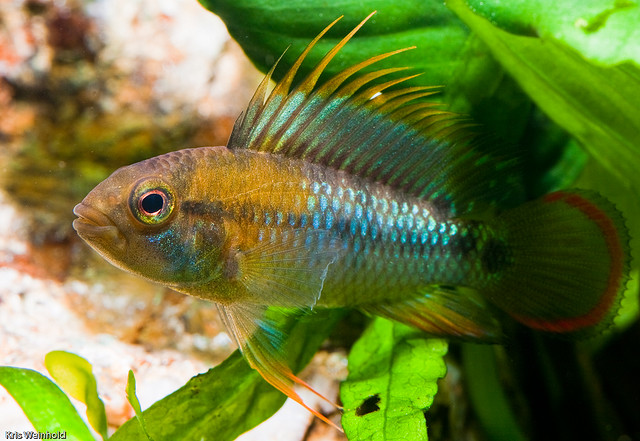
Apistogramma baenschiA188
Römer, Hahn, Römer, Soares & Wöhler, 2004
Max length♂ 55 · ♀ 40mm SL♂ 2.2 · ♀ 1.6in SLTank80 × 30cm31 × 12inTemp20–26°C68–79°FpH4.0–6.5This species is assigned the code A188 under the DATZ system and is also known by the trade names A. sp. 'Inca/Inka', A. sp. 'Inka 50', A. sp. 'highfin nijsseni', A. sp. 'Nijsseni 2', A. sp. 'red crescent' or A. baenschi 'Inca'. It's among those members of the genus produced on a commercial basis and is regularly available in the aquarium trade.
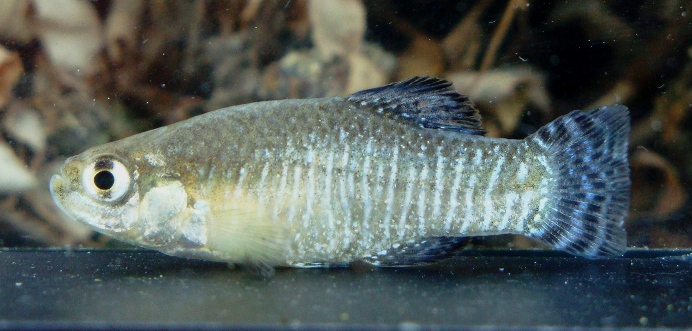
Apricaphanius baeticusBaetican Toothcarp
Doadrio, Carmona & Fernández-Delgado, 2002
Max length50mm SL2.0in SLTank120 × 30cm48 × 12inTemp2–30°C36–86°FpH7.0–9.0Prior to its description this species was considered a geographic variant of A. iberus but the 2002 paper revealed the pair to be genetically quite distinct and also highlighted some morphological differences. It is distinguished from A. iberus by possessing 8-9 (usually 8 ) branched dorsal-fin rays (vs. 8-9, sometimes 10), 9-11 branched anal-fin rays (vs. 8-9), a deeper, more elongate body shape, noticeably shorter snout, relatively thick (vs. thin) vertical bars in males and a flank patterning consisting of a few la...
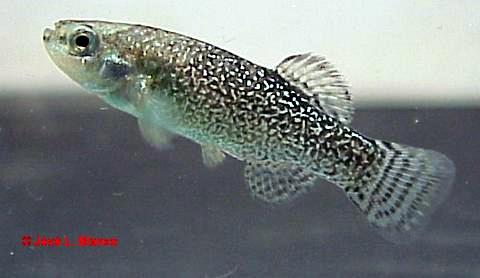
Apricaphanius saourensisSahara Toothcarp
Blanco, Hrbek & Doadrio, 2006
Max length45mm SL1.8in SLTank120 × 30cm48 × 12inTemp2–30°C36–86°FpH7.5–9.0All Algerian Aphanius populations were considered to be representative of A. iberus until this species was described in 2006. It differs both morphologically and genetically from A. iberusand A. baeticus, probably diverging about 5.3 million years ago during the opening of the Straits of Gibraltar. It is most easily distinguished by the distinct mottled body patterning which in males of the other two species forms distinct vertical bars and in females dark spot-like markings. A. iberusis now k...
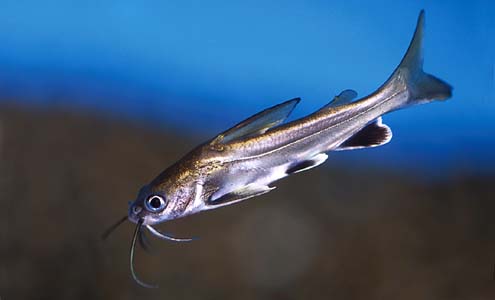
Ariopsis seemanniColombian Shark Catfish
Günther, 1864
Max length350mm SL14in SLTank240 × 60cm96 × 24inTemp22–26°C72–79°FpH6.8–8.5This species is not recommended to those lacking the facilities to house it for life. Sadly it's all too often seen for sale as an attractive, silvery 2-3" juvenile, supposedly suitable for the general freshwater community tank. To make matters worse, it is also usually given an 'alluring' name such as 'black-finned' or 'silvertip' shark catfish. The fate of the majority of these specimens is in all likelihood a depressing one.
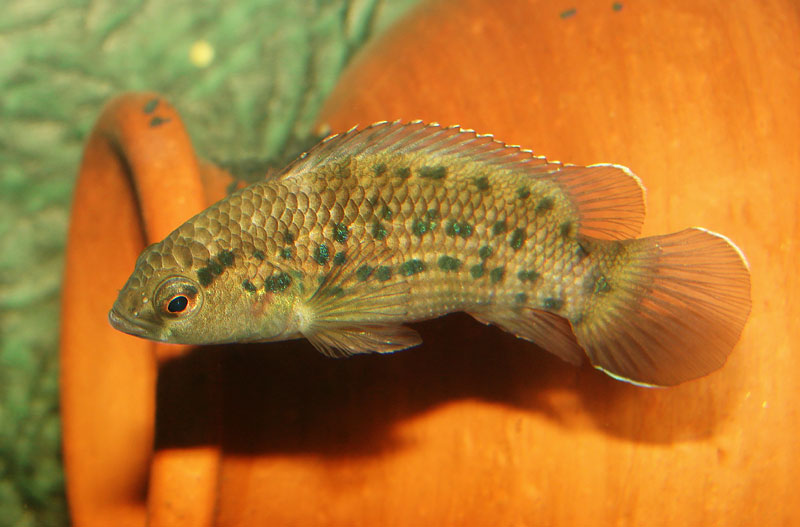
Badis assamensis
Ahl, 1937
Max length75mm SL3.0in SLTank75 × 30cm30 × 12inTemp15–25°C59–77°FpH6.0–7.5Like most badids this species is poorly documented and has yet to find significant popularity in the aquarium hobby. It is easily confused with B. blosyrus at first glance as the body patterning of the two is almost identical but can be distinguished by its slightly larger adult size, noticeably shorter jaw profile and some other, mostly internal, meristic characters. Prior to 2002 the family Badidae inc...
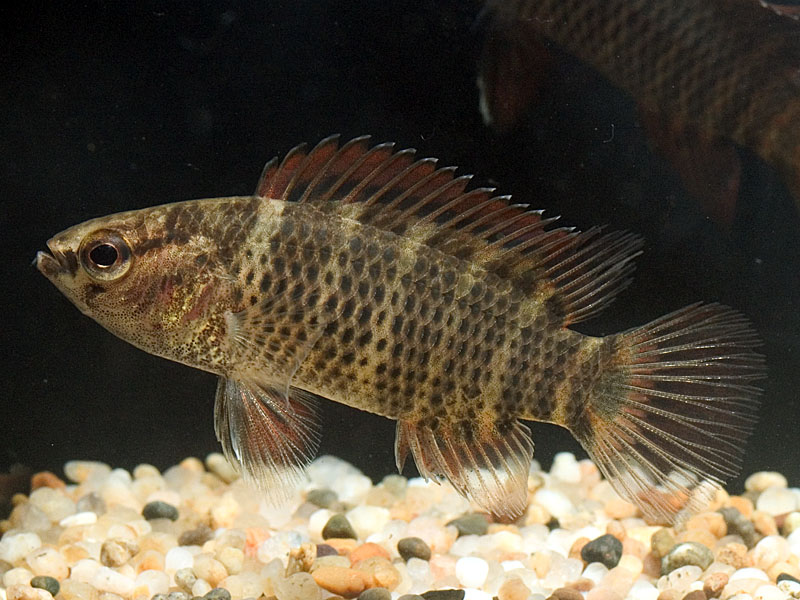
Badis corycaeus
Kullander & Britz, 2002
Max length60mm SL2.4in SLTank60 × 30cm24 × 12inTemp15–25°C59–77°FpH6.5–7.5Like most badids this species is poorly documented and has yet to find significant popularity in the aquarium hobby. Within the genus it is most closely-related to B. pyema but the two are unlikely to be confused as B. corycaeus is much the deeper, darker-bodied fish. Prior to 2002 the family Badidae included just five species of which only B. badis and, to a lesser extent, Badis dario (referred to as B. bengalensis by some sources) were popular in the aquarium hobby. However an extensive rev...
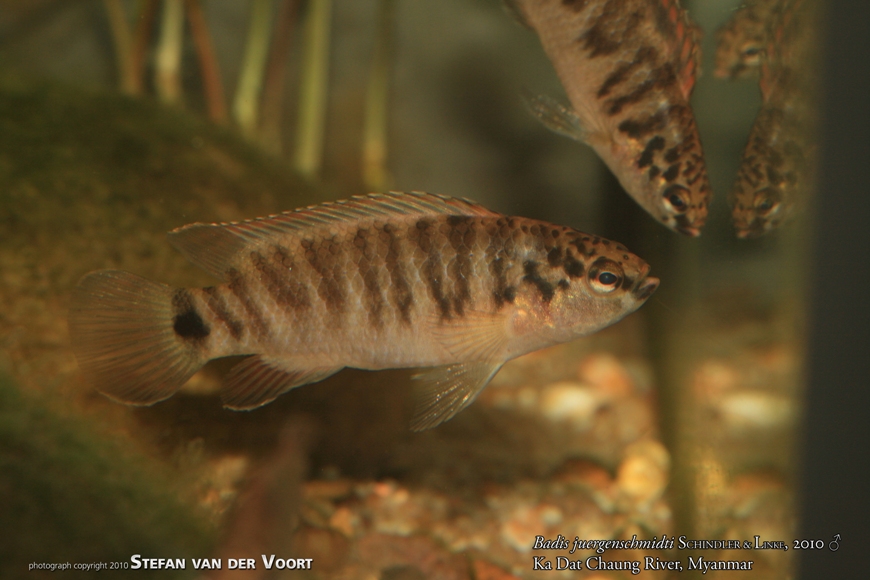
Badis juergenschmidti
Schindler & Linke, 2010
Max length50mm SL2.0in SLTank60 × 30cm24 × 12inTempnot recordedpH6.0–7.0This species is essentially unknown in the hobby at time of writing. It was discovered by German aquarist Horst Linke in early 2010 and before official description was known as B. sp. ‘East Myanmar’ (‘Ost Myanmar’ in Germany). It can be differentiated from other members of the genu...
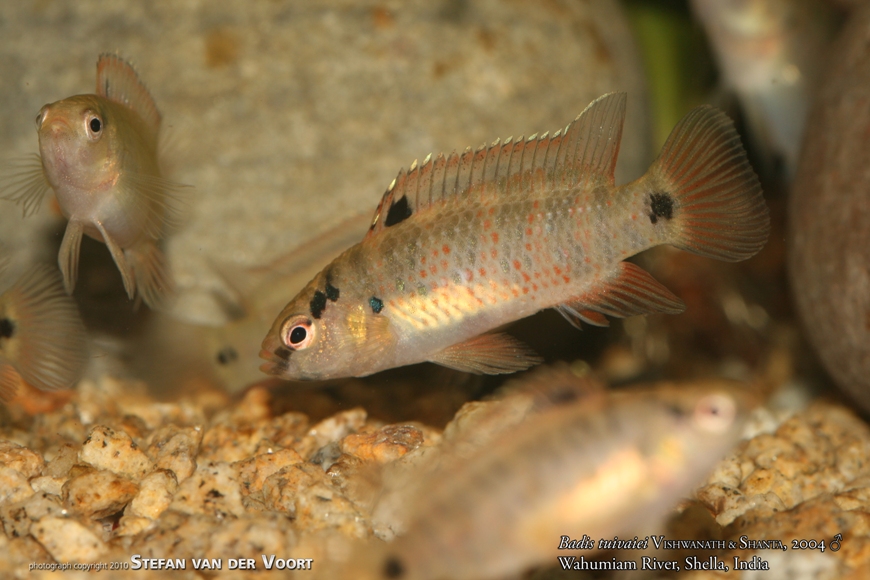
Badis tuivaiei
Vishwanath & Shanta, 2004
Max length85mm SL3.3in SLTank60 × 30cm24 × 12inTemp20–24°C68–75°FpH6.5–7.5This fish has yet to appear in the aquatic trade and only been exported in extremely limited numbers to date. Specimens collected from the Wahumiam River close to the settlement of Shella Bholaganj by Peter Cottle and Andrew Rao in 2006 were initially considered an undescribed species and referred to as B. sp.'Wahumiam River' or B. sp. 'terracotta', but later found to match B. tuivaiei in terms of morphology, meristics, etc. (S. van der Voort, pers. comm.).
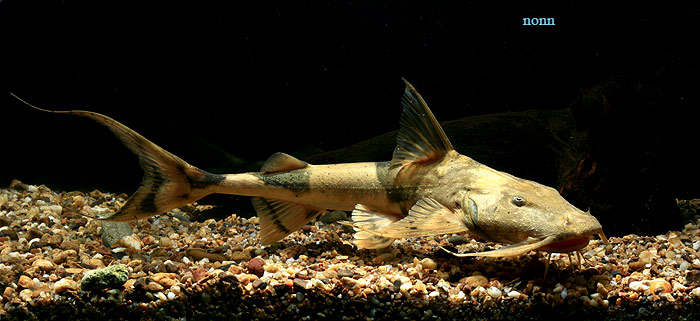
Bagarius bagarius
Hamilton, 1822
Max lengthnot recordedTanknot recordedTempnot recordedpHnot recordedThere is considerable confusion surrounding the identity of B. bagarius with its name having been widely applied to a relatively small species that is said to reach only 200 mm SL and considered to be common in northern India and much of Indochina.
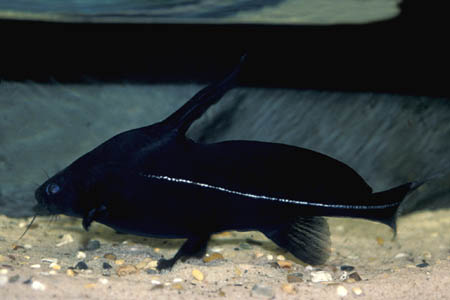
Bagrichthys macracanthusBlack Lancer
Bleeker, 1854
Max length230mm SL9in SLTank120 × 45cm48 × 18inTemp24–28°C75–82°FpH5.5–7.0The vernacular name 'lancer' is derived from the extended dorsal spine possessed by several members of the genus, which currently contains 7 species. Among them B. macracanthus is most similar to B. majusculus and B. vaillantii but can be told apart from the former by possession of shorter pectoral spines (13.3 - 16.2% SL vs. 15.8 - 20.7%), shorter adipose fin (46.0 - 58.0% SL vs. 38.8 - 45.8%), less deep caudal peduncle (7.1 - 7.5% SL vs. 5.6-7.0%) and larger adult size. From B. vaillantii it di...
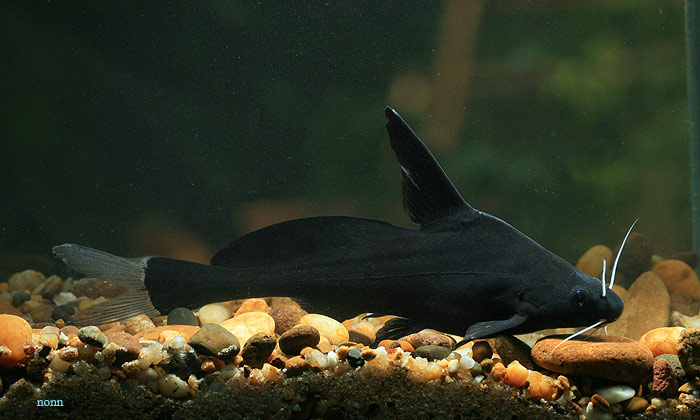
Bagrichthys majusculusWhite-Whisker Lancer
Ng, 2002
Max length177mm SL7in SLTank120 × 45cm48 × 18inTemp24–28°C75–82°FpH5.5–7.0The vernacular name 'lancer' is derived from the extended dorsal spine possessed by several members of the genus, which currently contains 7 species. Among them B. majusculus is most similar to B. macracanthus and B. vaillantii but can be told apart from both by possession of longer pectoral-fin spines (length 15.8 - 20.7 % SL vs. 11.5 - 16.2 %), from the former by possession of a larger adipose fi...
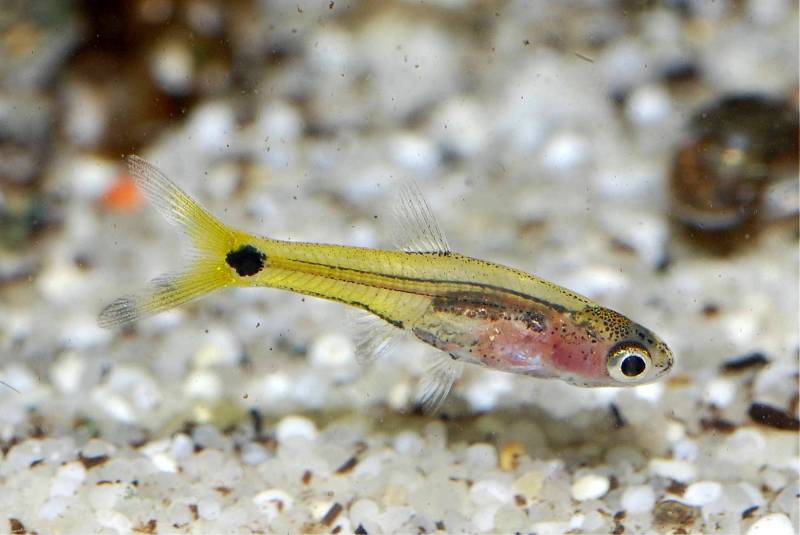
Barboides gracilis
Brüning, 1929
Max length18mm SL0.7in SLTank45 × 20cm18 × 8inTemp21–26°C70–79°FpH6.0–7.0This species is still very rare in the hobby although it has built up something of a following among enthusiasts of planted 'nano' aquaria and you may see it on sale under the trade names of 'dwarf amber/ember barb'. Its small adult size evolved via a process known as miniaturisation characterised by sexually mature adults with a significantly reduced size of less than 20mm SL. Among bony fishes cyprinids are one of the few groups in which this phenomenon occurs repeated...
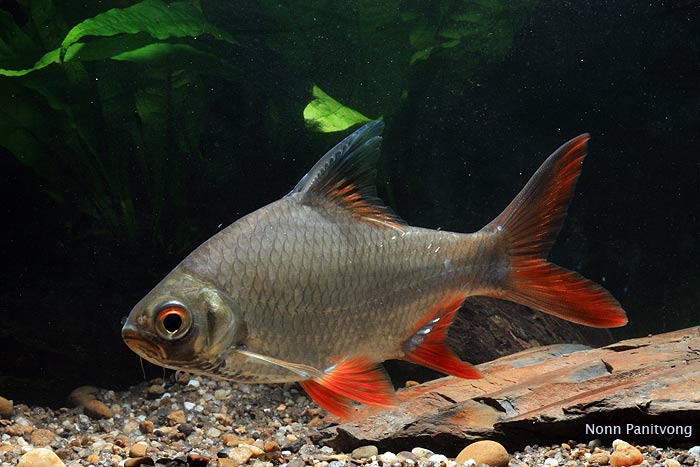
Barbonymus altusRed-tailed Tinfoil Barb
Günther, 1868
Max length210mm SL8in SLTank150 × 60cm60 × 24inTemp20–27°C68–81°FpH6.0–8.0This is one of two species sold with the common/trade name of "tinfoil barb", the other being the more widely-recognised B. schwanenfeldii. Despite this it appears that B. altus is just as widely available as B. schwanenfeldii and in many cases is seen on sale more regularly. Unfortunately both are usually offered at a small size (usually around 2 - 3"/5 - 7.5cm) with little to no information regarding the eventual size of the fish. Although B. altus is the ...
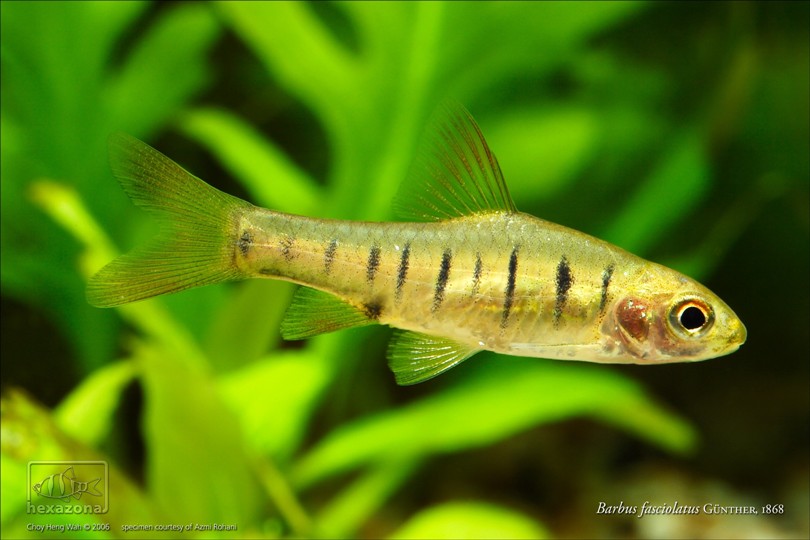
'Barbus' fasciolatusAfrican Banded Barb
Günther, 1868
Max length60mm SL2.4in SLTank75 × 30cm30 × 12inTemp20–26°C68–79°FpH5.0–6.5For many years this species was imported and sold as Barbus/Barbodes barilioides, now recognised as a junior synonym of 'B.' fasciolatus, and is sometimes called the Blue Banded or Angola Barb. It's an exceptionally attractive little fish when in good condition but like all African barbs is quite rare in the hobby due to sporadic exports from the countries in which it is found. Distinguishing features include 25-30 late...
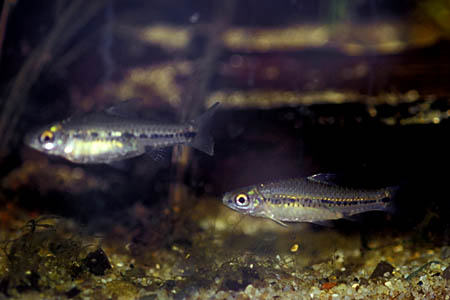
'Barbus' sublineatus
Daget, 1954
Max length100mm SL3.9in SLTank120 × 30cm48 × 12inTemp22–27°C72–81°FpH6.0–7.0The genus Barbus is in something of a confused state classification-wise. While there exist almost 340 putative species the vast majority of them do not appear to be closely-related to the genus Barbus sensu stricto. Berrebi et al. (1996) proposed that only the European, Southwest Asian and North African representatives should be included in Barbus (around 20 species) and that 'all species of Barbus sen...
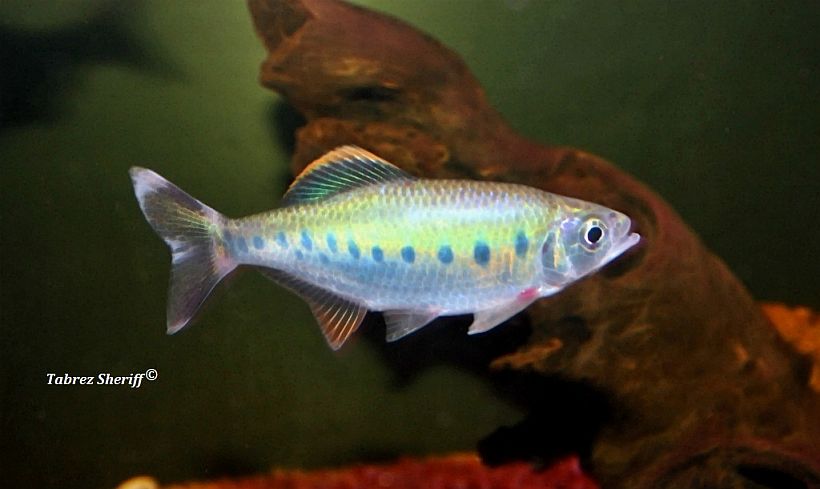
Barilius malabaricus
Jerdon, 1849
Max length105mm SL4in SLTank150 × 60cm60 × 24inTemp18–26°C64–79°FpH6.0–7.5Probably restricted to southern parts of Karnataka state and northern Kerala state in southwestern India. Following its revalidation in 2015 (see 'Notes') it is known with certainty only from the Payaswini and Vallapattanam river systems in Kerala although it is thought to occur elsewhere.
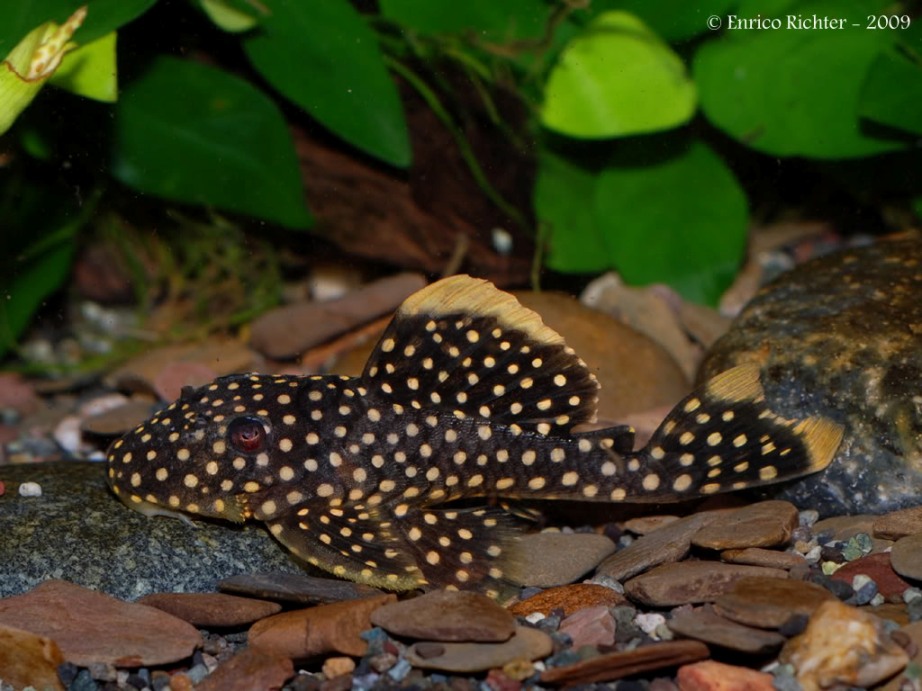
Baryancistrus xanthellusGold Nugget Pleco
Rapp Py-Daniel, Zuanon & Ribeiro de Oliveira, 2011
Max length224mm SL9in SLTank120 × 45cm48 × 18inTemp27–32°C81–90°FpH6.0–8.0Prior to description in 2011 this species was traded under the DATZ code numbers L018, L085, L077 and 'Das Aquarium' code LDA060, while a very similar-looking fish from the lower rio Xingu which has been assigned the code L081 may also represent a form of B. xanthellus but is not mentioned in the description paper. B. xanthellus can be distinguished from congeners by a combination of the following...
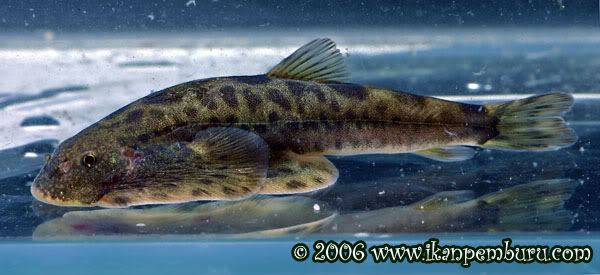
Beaufortia szechuanensis
Fang, 1930
Max length69mm SL2.7in SLTank75 × 30cm30 × 12inTemp16–24°C61–75°FpH6.5–8.0At time of writing there exist 18 recognised members of the genus though only B. kweichowensis is well-known in the trade with B. szechuanensis unlikely to have been exported. According to Chen, Huang and Yang (2009) it can be distinguished from similar congeners by the following suite of characters: 1 branched and 17-20 simple pectoral-fin rays...
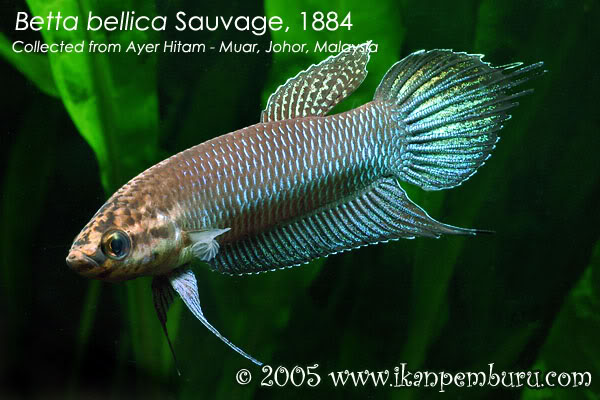
Betta bellicaSlender Betta
Sauvage, 1884
Max length90mm SL3.5in SLTank80 × 30cm31 × 12inTemp25–30°C77–86°FpH4.0–7.0This species lends it name to the B. bellica group/complex of closely-related species within the genus, an assemblage of which members share the following set of characters: long and slender body with dorsal and ventral margins almost parallel; body depth 23-28 % SL; 30-33 anal-fin rays; 11-13 dorsal-fin rays; 32-34 total vertebrae; body dark brown in colour with iridescent green markings on each individual scale.
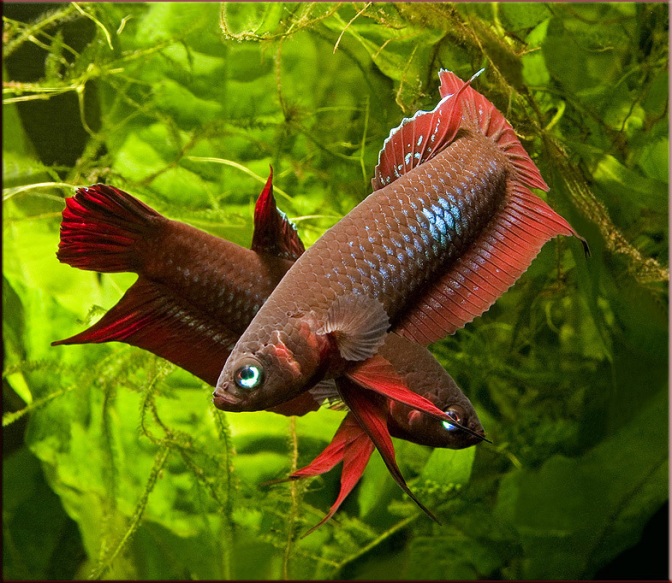
Betta coccinaScarlet Betta
Vierke, 1979
Max length40mm SL1.6in SLTank45 × 30cm18 × 12inTemp22–30°C72–86°FpH4.0–6.0B. coccina can be told apart from other members by the following combination of characters: iridescent green lateral blotch present in male, absent in female; body dark red in colour; no parallel vertical iridescent gold opercle bars; pelvic fin falcate with black filamentous tip, remainder red; median fins with discrete iridescent green spots; dorsal fin-rays 9-12; anal-fin rays 27-29; subdorsal scales 7-8; lateral scales 31-32; predorsal scales 18-21. The genus Betta is the most speciose within the family Osphronemidae with almost 70 reco...