Results for “Solimões”
Type a name: scientific, common, or one a species used to go by. Or narrow the catalogue with the filters.
Filters
Synodontis robbianus
authority not recorded
Max length130mm SL5in SLTank90 × 30cm36 × 12inTemp22–25°C72–77°FpH6.0–7.5S. robbianus is often confused with the similar but larger S. nigrita. They can be distinguished by the brownish base colour of this species as opposed to the greyer patterning exhibited by S. nigrita. It is also similar to several other Syno species, especially when juvenile. A hardy, adaptable species ideal for the newcomer to Synodontis but not often seen for sale....
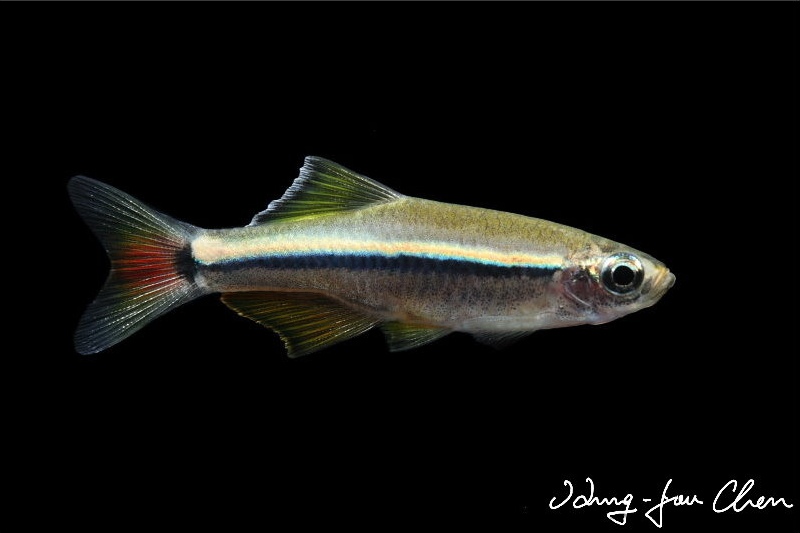
Tanichthys sp. 'Vietnam'
authority not recorded
Max length30mm SL1.2in SLTank45 × 30cm18 × 12inTemp18–25°C64–77°FpH6.0–7.5This fish was first collected in 2009 and limited numbers have been available in the aquarium trade. Though additional exports may be unlikely it's proven easy to breed in captivity and there's a fair chance it will become established in the hobby. It's sold under several names including T. sp. 'lemon' or 'yellow white cloud', and has also been misidentified as the congener T. thacbaensis, a valid species occurring much further north in Vietnam.
Thalassophryne amazonicaPrehistoric Monster Fish
authority not recorded
Max length150mm SL6in SLTank75 × 30cm30 × 12inTemp24–28°C75–82°FpHnot recordedThere are currently six described species in the genus Thalassophryne, of which T. amazonica is the only freshwater representative. The others (T. nattereri, T. maculosa, T. megalops, T. montevidensis and T. punctata) are all estuarine animals distributed along the western Atlantic coastlines of Central and South America and inhabit brackish-to-marine waters. They are members of the family Batrachoididae or toadfishes, of which most are exclusively marine species. All batrachoidids are ambush pr...
Trichopodus pectoralisSnakeskin Gourami
authority not recorded
Max length300mm SL12in SLTank120 × 30cm48 × 12inTemp22–30°C72–86°FpH5.8–8.5This species is not often seen for sale but is a very good addition to the larger community tank. It is cultured commercially for food in it's native countries, and is used to make a particularly tasty fish soup! The snakeskin gourami can also produce 'cracking' noises, especially during breeding or territorial exchanges....
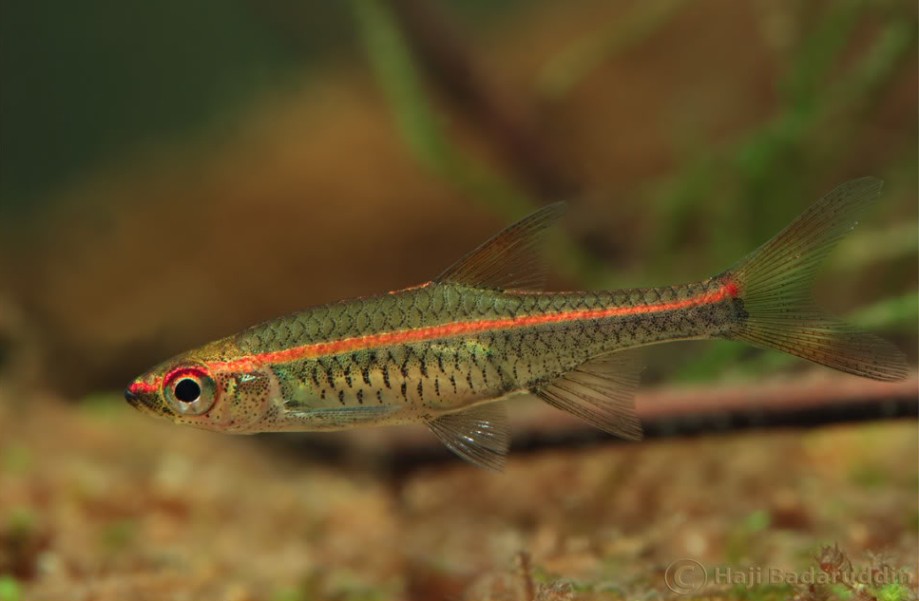
Trigonopoma pauciperforatumGlowlight Rasbora
Weber & de Beaufort, 1916
Max length60mm SL2.4in SLTank90 × 30cm36 × 12inTemp21–26°C70–79°FpH4.0–7.5This species is also sold as the 'redline' rasbora which is something of a misnomer as in reality the colour of the lateral stripe that gives rise to the name can vary from deep orange to golden depending upon the collection locality of the fish as well as diet, condition, and even mood. Some specimens also have a second, darkish stripe beneath the other which seems to vary in length and intensity depending on a similar array of factors. Older fish tend to possess a greater degree of black edging to the scales, especially in the ventral portion of the body.
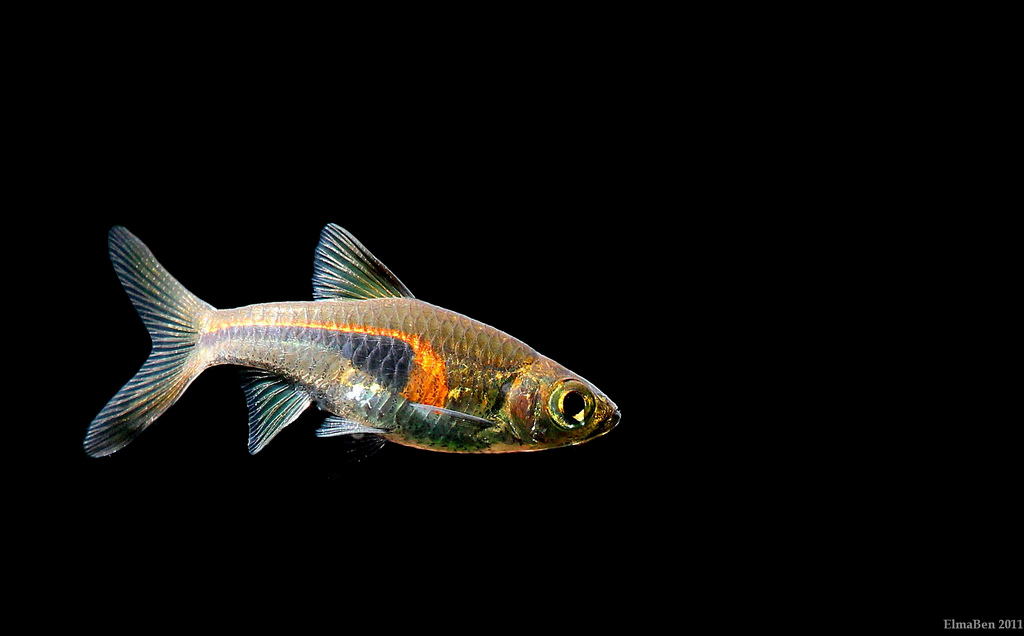
Trigonostigma hengeli
Meinken, 1956
Max length30mm SL1.2in SLTank60 × 30cm24 × 12inTemp23–28°C73–82°FpH5.0–7.5T. hengeli is sometimes seen for sale with the trade name of 'glowlight rasbora' due to the distinctive orange patterning on the posterior part of the body but we've refrained from using that name here because it's also commonly applied to Trigonopoma pauciperforatum. It can be confused with the similar-looking T. heteromorpha and T. espei although on close inspection they're actually quite easy to tell...
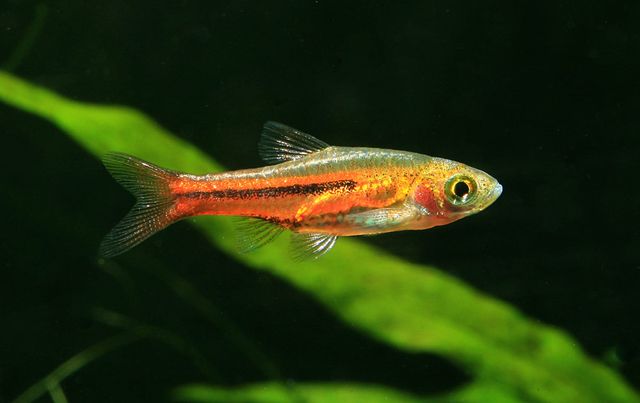
Trigonostigma somphongsi
Meinken, 1958
Max length30mm SL1.2in SLTank60 × 30cm24 × 12inTemp22–26°C72–79°FpH5.0–7.0T. somphongsi is exceptionally rare both in nature and the hobby and was considered potentially extinct for around a dozen years before a trio were imported to Germany as contaminants among a batch of Boraras urophthalmoides in 2006. Since then it has been successfully bred and distributed to various experts, mostly in Thailand and Germany, in the hope of establishing a sustainable captive population. The possibility of a...
Triportheus angulatusDusky Narrow Hatchetfish
authority not recorded
Max length165mm SL6in SLTank120 × 30cm48 × 12inTemp22–30°C72–86°FpH5.0–7.5An attractive but not often seen species in the hobby. This is quite odd considering how common it is in many of its native habitats, where it is known as sardina. It has very strong pectoral muscles, and uses these to jump from the water to catch flying insects or to escape potential predators. It can make leaps of several metres in length....
Vieja bifasciataRed-spotted Cichlid
authority not recorded
Max length300mm SL12in SLTanknot recordedTemp27–29°C81–84°FpH7.0–8.5Vieja bifasciata are often confused for vieja synspilum but can be told apart as bifasciata have two prominent horizontal lines running between their eyes (hence the name). They are a very colourful fish and respond to their owner's presence - usually looking for food! Bifasciata are not particularly demanding in terms of water parameters and easy to keep, especially if suitable tankmates can be found. It is sometimes the case that a pair of fish that will not live together in a tank on ...
Wallago attuHelicopter Catfish
authority not recorded
Max length2400mm SL94in SLTank360 × 120cm142 × 48inTemp19–29°C66–84°FpH6.0–7.6This species is clearly not an aquarium fish, and thankfully is not imported with any great regularity. Young specimens are occasionally seen for sale however and no matter how cute they look, don't be tempted to buy one. The gigantic adult size is not the only problem with W. attu, as the mouth is filled with needle sharp, backward-pointing teeth. The fish will bite aggressively when being fed, especially when handled and larger individuals could easily sever a hand or worse. It is a genu...
Xenotilapia flavipinnisYellow Sand Cichlid
authority not recorded
Max length90mm SL3.5in SLTank75 × 30cm30 × 12inTemp23–27°C73–81°FpH8.0–9.5In nature, the pair bond formed by this species lasts only for the duration of the breeding season. However, in aquaria this bond can last much longer, with the pair remaining in their territory and defending it even when not spawning. It is thought that this is directly due to the fish being kept in the confines of the aquarium, where the territory is a permanent fixture. X. flavipinnis is very sensitive to deteriorating water conditions and regular water changes are essential to its good heal...
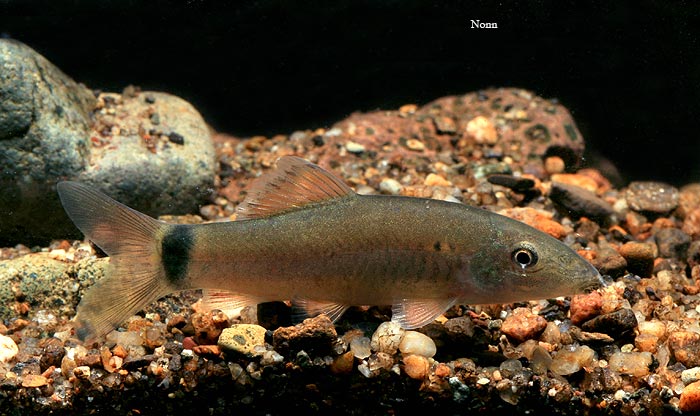
Yasuhikotakia eosSun Loach
Taki, 1972
Max length110mm SL4in SLTank120 × 30cm48 × 12inTemp23–28°C73–82°FpH6.0–7.5Y. eos isn't as commonly-traded as it once was but is still available occasionally. It's difficult to confuse with any other member of the genus due to its colour pattern consisting of yellow to reddish brown base body colour (can appear greyish in some specimens, especially post-import or when introduced to a new aquarium) with a metallic green/blue golden sheen and large darkish marking on either side of the caudal peduncle. The fins can be yellowish to reddish, and the dorsal and c...