Results for “spot”
Type a name: scientific, common, or one a species used to go by. Or narrow the catalogue with the filters.
Filters
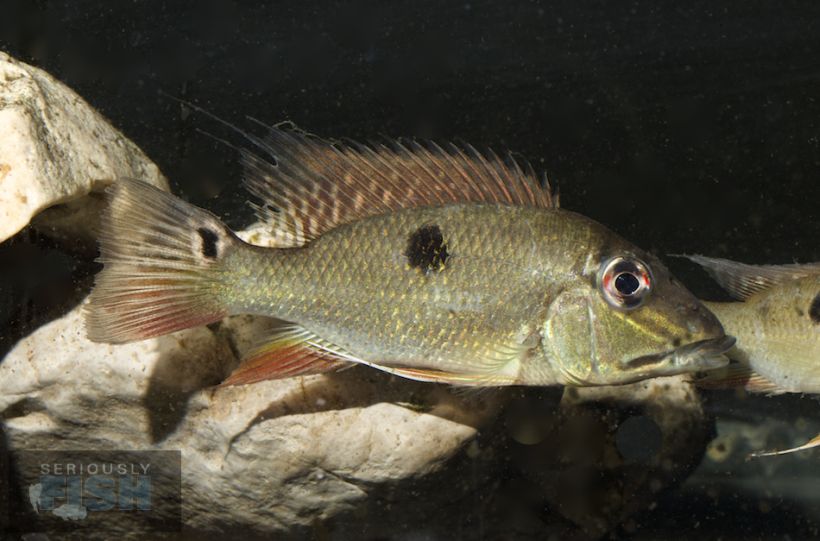
Satanoperca lilith
Kullander & Ferreira, 1988
Max length255mm SL10in SLTank210 × 60cm84 × 24inTemp20–28°C68–82°FpH5.0–7.5Despite its extensive natural distribution S. lilith is uncommon in the ornamental trade, where it is sometimes referred to as 'one-spotted demon fish' or 'one spot eartheater'. It can be distinguished from other members of the genus by possessing a single dark blotch on the flank and a prominent ocellus at the caudal-fin base. Among the named species it is most similar to S. daemon, but that species possesses two blotches on the flank.
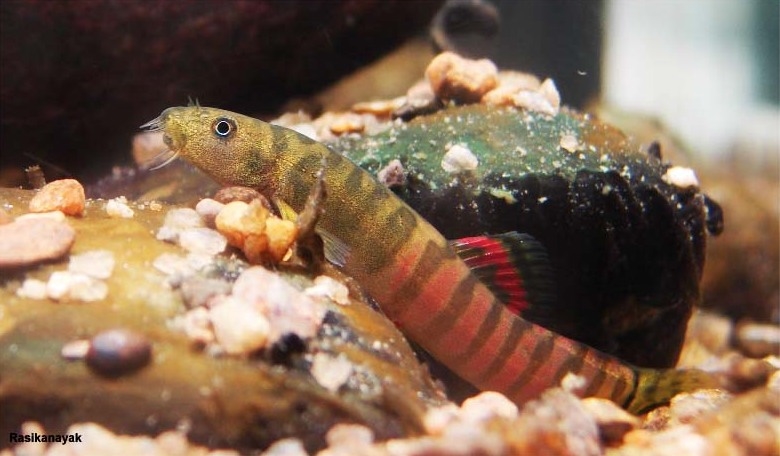
Schistura kodaguensis
Menon, 1987
Max length36mm SL1.4in SLTank60 × 30cm24 × 12inTemp20–25°C68–77°FpH6.0–7.5This species is not a well-known aquarium fish but is maintained by a number of Indian enthusiasts. It can be told apart from related species by the following combination of characters as per Sreekantha et al. (2006): pectoral-fin rays 10; absence of black spot at base of dorsal-fin; presence of rows of spots on caudal-fin; lateral line incomplete; caudal-fin slightly emarginate; 11-14 vertical bars on the body.
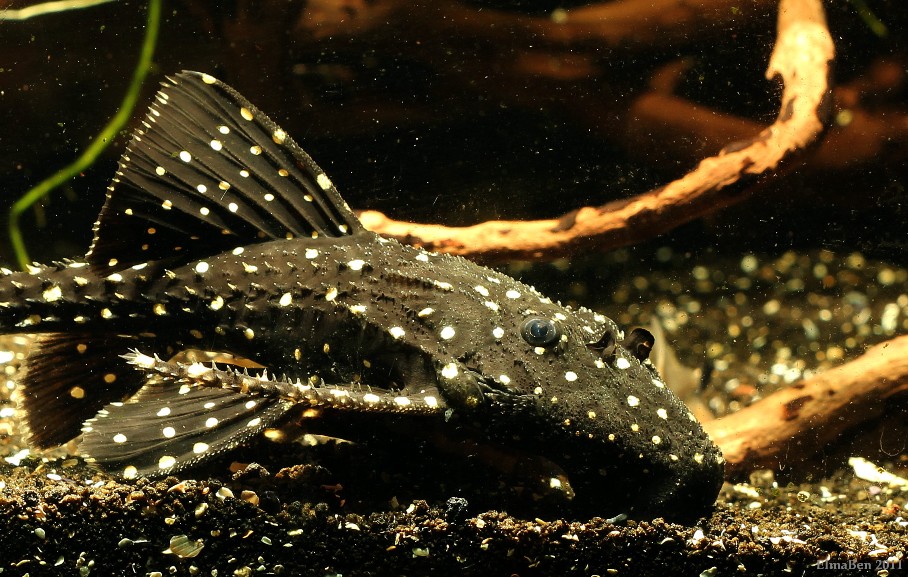
Acanthicus adonisPolka Dot Lyre Tail Pleco
Isbrücker & Nijssen, 1988
Max length1000mm SL39in SLTank600 × 200cm236 × 79inTemp23–30°C73–86°FpH6.0–7.5Despite its patent unsuitability as an aquarium subject attractively-coloured juvenile specimens of this species are traded in quite large numbers, although the scarcity of privately-maintained adults would suggest that most fail to reach their potential. The striking, spotted patterning also disappears as this species matures, and since it also becomes increasingly bellligerent with age it can only be recommended to owners of the largest private aquaria or tropical ponds. There exists an albino...
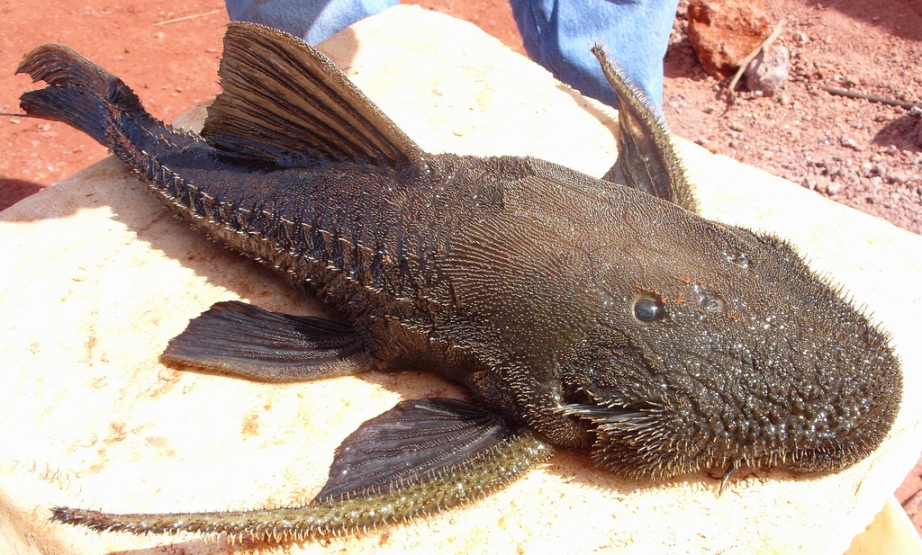
Acanthicus hystrixL155
Spix & Agassiz, 1829
Max length1000mm SL39in SLTank600 × 200cm236 × 79inTemp23–30°C73–86°FpH6.0–7.5Despite its patent unsuitability as an aquarium subject attractively-coloured juvenile specimens of this species are traded in quite large numbers, although the scarcity of privately-maintained adults would suggest that most fail to reach their potential. The striking, spotted patterning also disappears as this species matures, and since it also becomes increasingly bellligerent with age it can only be recommended to owners of the largest private aquaria or tropical ponds. There exists an albino...
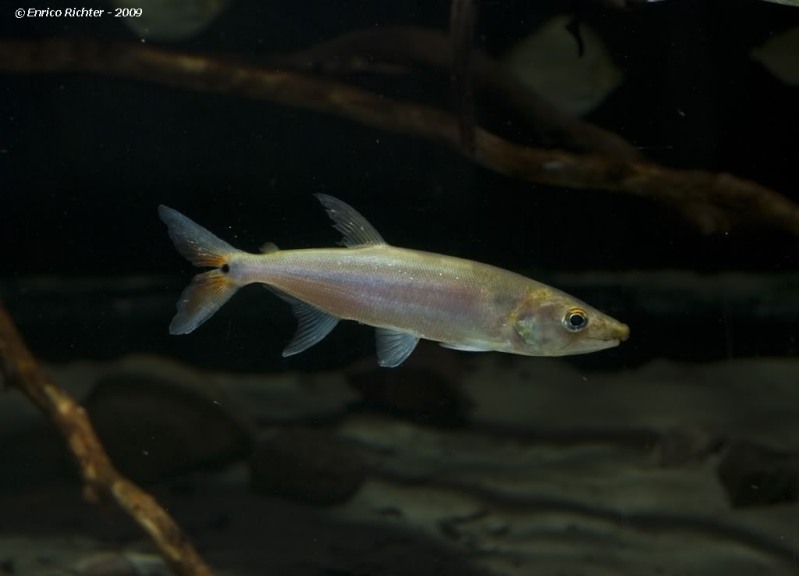
Acestrorhynchus falcatusRed-Tailed Freshwater Barracuda
Bloch, 1794
Max length275mm SL11in SLTank250 × 90cm98 × 36inTemp22–28°C72–82°FpH6.0–7.5The vernacular name of this fish is derived from its appearance and behaviour, rather than a genetic association with the marine barracuda, and it's also sometimes referred to as 'pike characin' or 'spotted cachorro' with local vernacular names including 'Grand dent-chien' (French Guiana), ' Cachorrinho' or 'Ueua' (Brazil). Although most species of Acestrorhynchus appear superficially similar to one another most exhibit distinguishable external chara...
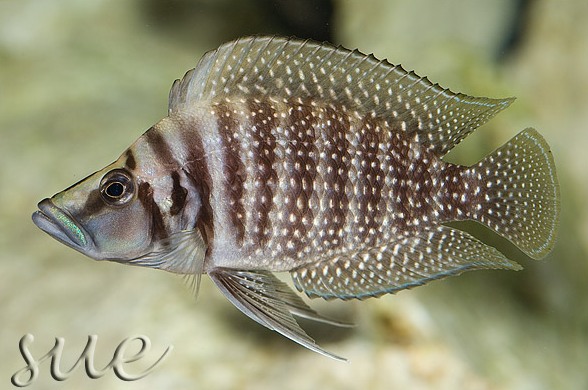
Altolamprologus calvusCalvus Cichlid
Poll, 1978
Max length138mm SL5in SLTanknot recordedTemp24–27°C75–81°FpH7.5–9.0A. calvus is a predator by nature and its body shape has been adapted to allow it to enter small crevices and gaps in the rockwork of Lake Tanganyika to prey on eggs, fry and small fish. Its laterally compressed shape makes the fish hard to spot head on, giving it an advantage over would be predators and prey alike. It is also quite well-armoured, possessing thick scales which can be turned towards potential attackers. These can cause real damage with their serrated edges. Several colour form...
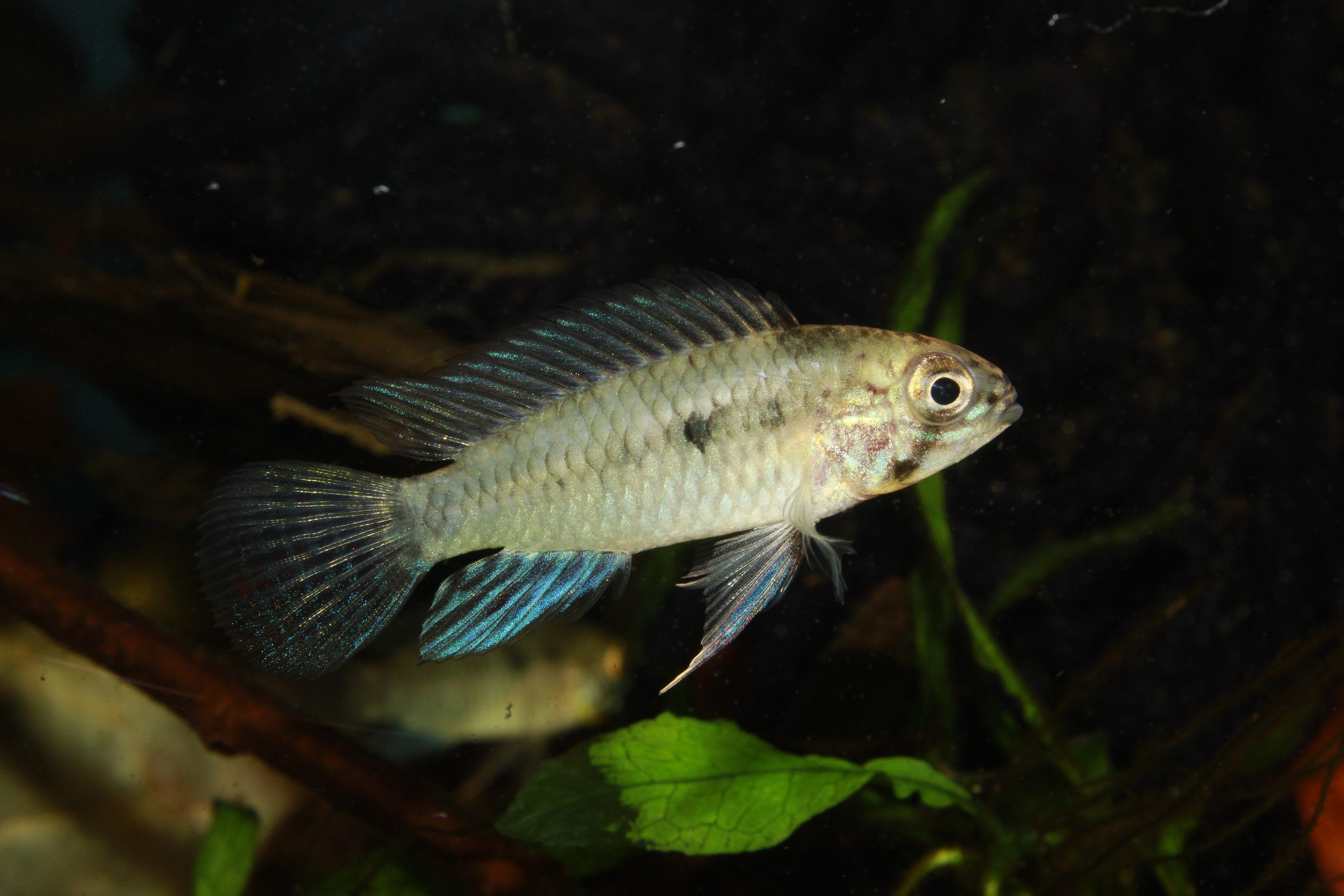
Apistogramma commbraeA93
Regan, 1906
Max length♂ 50 · ♀ 30mm SL♂ 2.0 · ♀ 1.2in SLTank60 × 30cm24 × 12inTemp15–27°C59–81°FpH6.0–7.4Apistogramma commbrae and other members of the commbrae complex can be distinguished from congeners by the conspicuous double caudal peduncle spot. This species may also be polymorphic, with some males exhibiting red and blue markings on the cheeks and a yellow gular region.
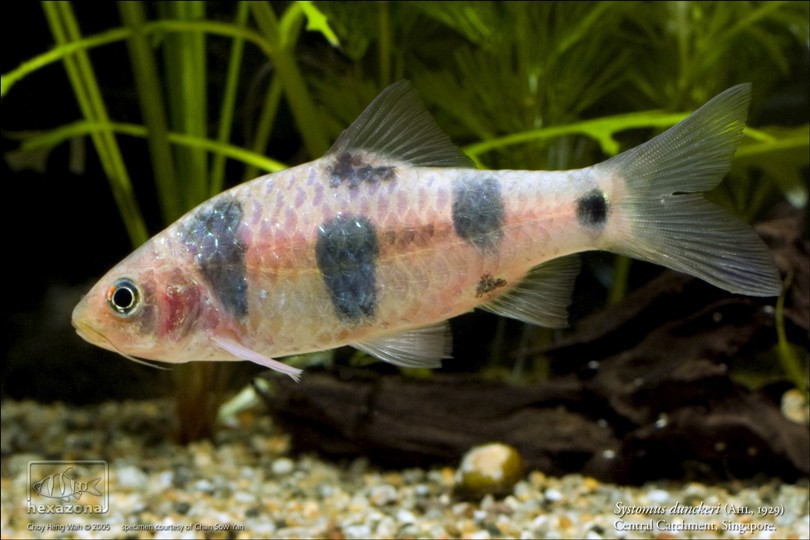
Barbodes dunckeriClown Barb
Ahl, 1929
Max length120mm SL5in SLTank120 × 45cm48 × 18inTemp18–28°C64–82°FpH6.0–7.5Although sometimes referred to by the vernacular name 'big spot barb' this species is better known in the aquarium hobby as 'clown barb'. It has been widely misidentified as the congener B. everetti, a distinct and uncommonly-traded species from Borneo and thus appears under that name in the majority of available literature. The two are quite easy to tell apart, with B. everetti an overall les...
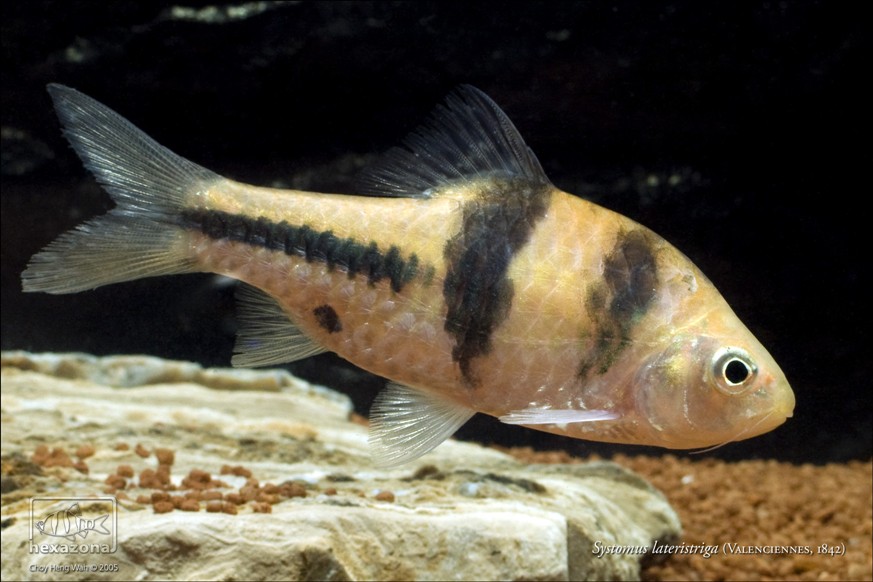
Barbodes lateristrigaSpanner Barb
Valenciennes, 1842
Max length150mm SL6in SLTank150 × 45cm60 × 18inTemp20–28°C68–82°FpH6.0–8.0This species is commonly-referred to as 'T-barb' in some countries. It's closely-affiliated with and sometimes traded as the congener B. kuchingensis but that species can be told apart by colour pattern comprising a prominent row of dark spots along the lateral line, plus a short, horizontally-orientated streak extending from the upper part of the operculum. In B. lateristriga the lateral markings usually form a solid stripe and there is no streak extending from the operculum.
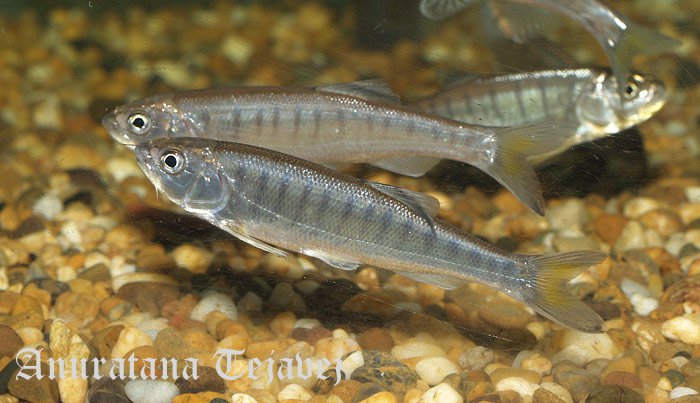
Barilius shacra
Hamilton, 1822
Max length130mm SL5in SLTank150 × 60cm60 × 24inTemp18–26°C64–79°FpH6.0–7.5Like many fishes that naturally inhabit running waters it's intolerant to the accumulation of organic wastes and requires spotless water at all times in order to thrive. It also does best if there is a high proportion of dissolved oxygen and moderate degree of water movement so external filters, powerheads, airstones, etc., should be employed as necessary.
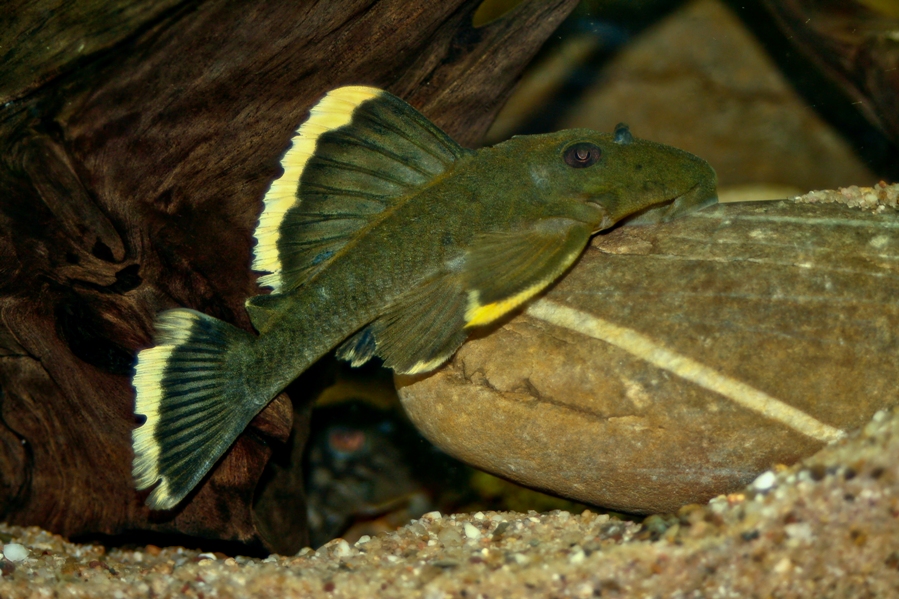
Baryancistrus chrysolomusMango Pleco
Rapp Py-Daniel, Zuanon & Ribeiro de Oliveira, 2011
Max length219mm SL9in SLTank120 × 45cm48 × 18inTemp27–32°C81–90°FpH6.0–7.5Prior to description this species was traded under the DATZ code L047 or the alternative vernacular name 'magnum pleco'. It can be distinguished from congeners by a combination of the following characters: presence of a broad, light-coloured (usually yellowish) distal band on the dorsal and caudal fins throughout life, slightly reduced in adults. The only other member of the genus to possess such bands is B. xanthellus but in that species they are reduced to small markings at the fin tips in adults, and the body is covered in pale, normally yellowish, spots.
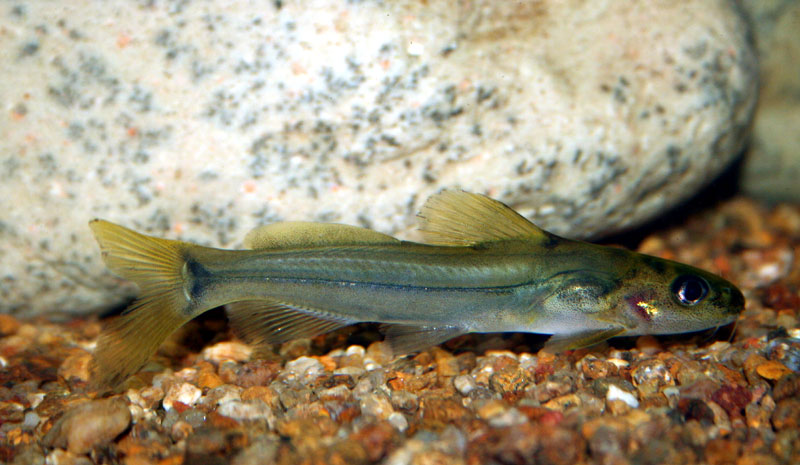
Batasio travancoriaMalabar Batasio
Hora & Law, 1941
Max length100mm SL3.9in SLTank120 × 30cm48 × 12inTemp18–25°C64–77°FpH6.0–7.0The only other described member of the genus native to southwestern India is B. sharavtiensis which occurs a little further north than B. travancoria in Karanataka state. The two are easily distinguished by colour pattern in that B. travancoria possesses a darkish midlateral stripe and a poorly-defined, but normally visible, post-opercular spot, whereas B. sharavtiensis has no such mark...
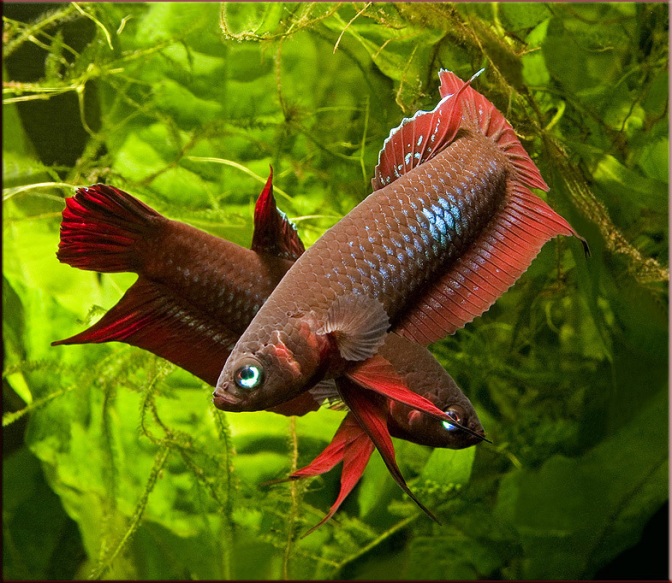
Betta coccinaScarlet Betta
Vierke, 1979
Max length40mm SL1.6in SLTank45 × 30cm18 × 12inTemp22–30°C72–86°FpH4.0–6.0B. coccina can be told apart from other members by the following combination of characters: iridescent green lateral blotch present in male, absent in female; body dark red in colour; no parallel vertical iridescent gold opercle bars; pelvic fin falcate with black filamentous tip, remainder red; median fins with discrete iridescent green spots; dorsal fin-rays 9-12; anal-fin rays 27-29; subdorsal scales 7-8; lateral scales 31-32; predorsal scales 18-21. The genus Betta is the most speciose within the family Osphronemidae with almost 70 reco...
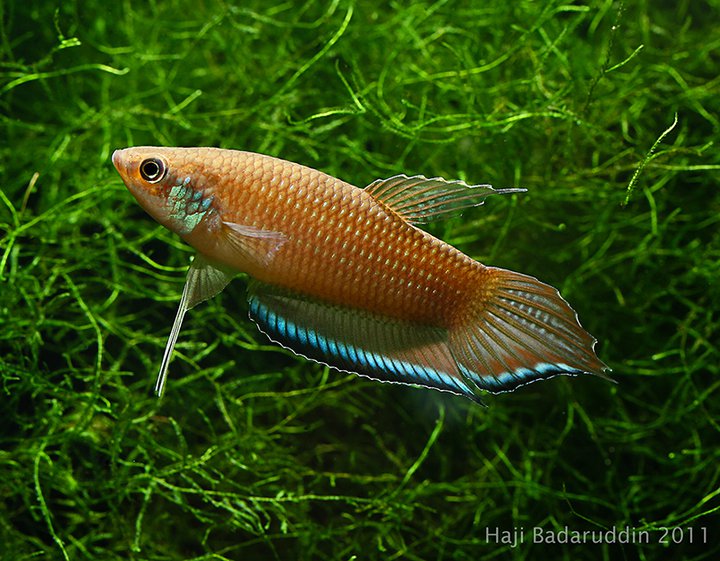
Betta enisae
Kottelat, 1995
Max length60mm SL2.4in SLTank45 × 30cm18 × 12inTemp21–24°C70–75°FpH5.5–7.0This species is included in the B. pugnax complex of closely-related species within the genus, an assemblage of which members are notoriously difficult to tell apart from one another, but which can be characterised collectively by the following set of shared characters: relatively large head measuring 28-40% SL; live colouration usually brown with green or blue iridescent spots; male with similarly-coloured scales on opercle, sometimes extending to abdomen; juveniles and females usually brown with two central body stripes and a dark marking on the caudal peduncle; anal-fin in mature specimens pointed and often elongated; caudal-fin lanceolate.
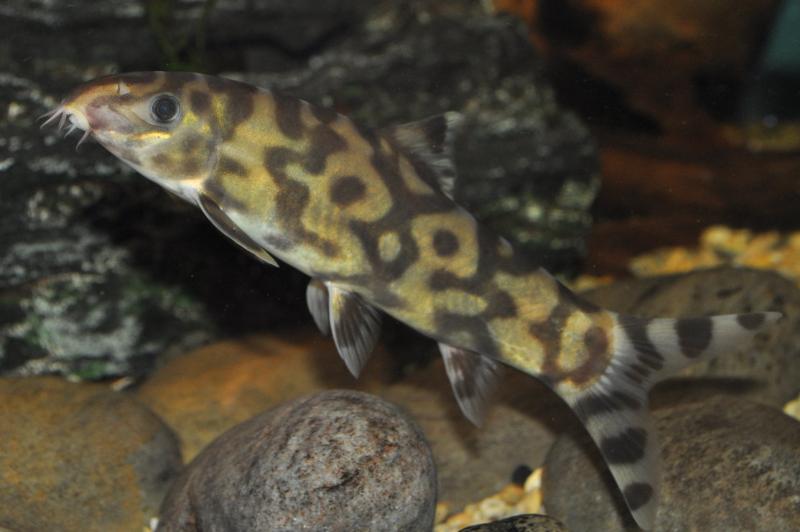
Botia histrionica
Blyth, 1860
Max length130mm SL5in SLTank120 × 45cm48 × 18inTemp22–28°C72–82°FpH6.0–7.5Adult patterning of the different geographical forms can vary considerably though young specimens all possess 5 solid dark bars on each flank and are often confused with those species exhibiting a similar juvenile pattern, particularly B. kubotai. However the horizontal dark bars on the flanks in B. kubotai typically split at quite a young age and/or develop horizontally-orientated 'peaks' whereas those in B. histrionica remain solid for longer and the central bar usually has a pale spot at the top so forms a 'y' shape.
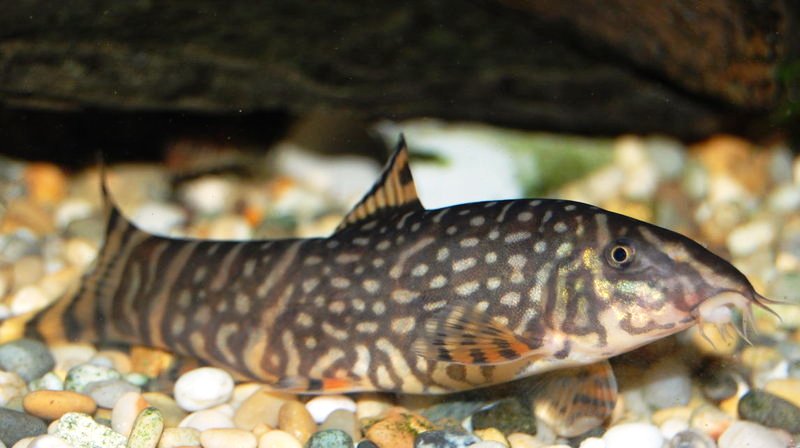
Botia rostrata
Günther, 1868
Max length120mm SL5in SLTank120 × 45cm48 × 18inTemp19–27°C66–81°FpH6.0–7.5Within the nominal species grouping suggested by Grant (2007) almost all B. rostrata sold in the hobby are B. sp. 'upper Brahmaputra' with B. rostrata sensu stricto rarely, if ever, available. Trade names include 'Gangetic loach', 'twin-banded loach' and 'ladder loach'. The defining characters of the group are "Pattern consisiting of 8-10 black to dark brown body bars that exhibit pale and numerous spots in juveniles, and in adults the bars can anast...
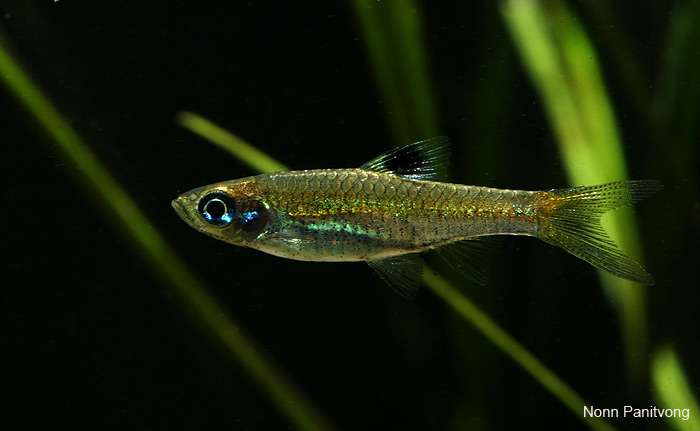
Brevibora dorsiocellataEyespot Rasbora
Duncker, 1904
Max length35mm SL1.4in SLTank45 × 30cm18 × 12inTemp20–25°C68–77°FpH5.0–7.5B. dorsiocellata is sometimes traded as 'green-eyed', 'emerald-eyed' or 'hi-spot' rasbora. There appear to exist several geographical forms of the species at least two of which have been seen in the trade. The most common is the rather plain-coloured fish that is produced commercially in large numbers and has gained popularity due to the bright green/blue reflective patch in the lower part of the eye.
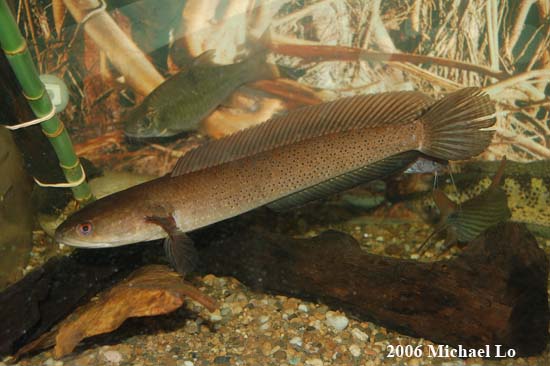
Channa baramensisBaram Snakehead
Steindachner, 1901
Max length220mm SL9in SLTank120 × 45cm48 × 18inTemp22–28°C72–82°FpHnot recordedThis species was considered a synonym of Channa melasoma for a number of years prior to its revalidation by Ng. et al. (1996). Specimens larger than around 120 mm SL can be distinguished by possession of a black spot in the centre of numerous body scales and a barred caudal-fin pattern, characters which are missing in both C. melasoma and the similar-looking C. cyanospilos.
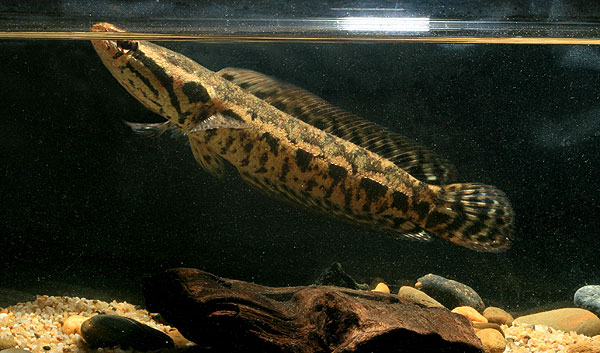
Channa luciusForest Snakehead
Cuvier, 1831
Max length400mm SL16in SLTank150 × 60cm60 × 24inTemp20–30°C68–86°FpH5.0–7.5Prefers a dimly-lit aquarium with plenty of cover in the form of live plants, driftwood branches, terracotta pipes, plant pots, etc., arranged to form a network of nooks, crannies, and shaded spots. Surface vegetation such as Ceratopteris spp. is also appreciated and makes the fish less inclined to conceal themselves.
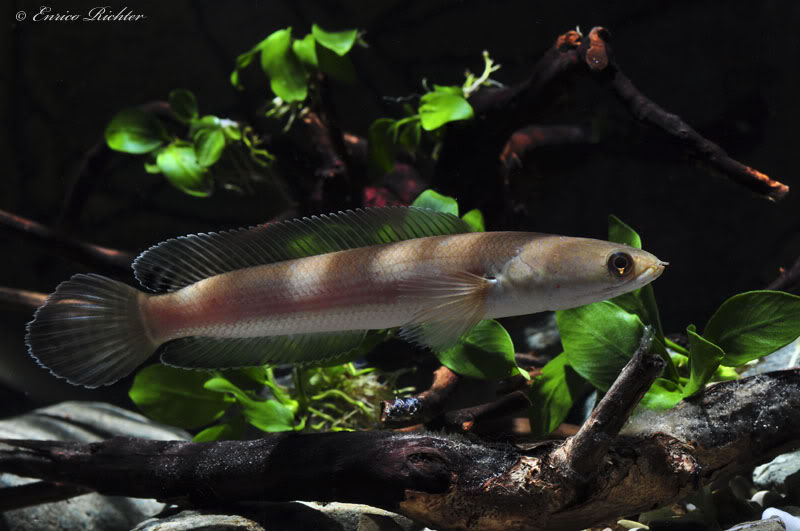
Channa melasomaBlack Snakehead
Bleeker, 1851
Max length300mm SL12in SLTank120 × 45cm48 × 18inTemp22–32°C72–90°FpH4.0–7.0This species can be told apart from the similar-looking congener C. baramensis (once considered synonymous with C. melasoma) by absence (vs. presence) of a black spot in the centre of numerous body scales and absence (vs. presence in specimens larger than 120 mm SL) of a barred caudal-fin pattern.