Results for “sp.”
Type a name: scientific, common, or one a species used to go by. Or narrow the catalogue with the filters.
Filters
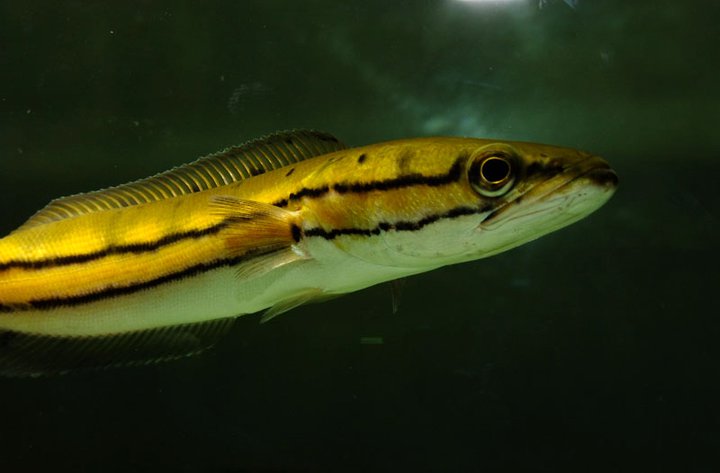
Channa diplogrammaMalabar Snakehead
Day, 1865
Max length480mm SL19in SLTanknot recordedTemp22–32°C72–90°FpH6.0–8.0This species was considered synonymous with the Indochinese congener C. micropeltes for over a century before being revalidated in 2011. Like in C. micropeltes colour pattern varies depending on the age of the fish. Juveniles possess two longitudinal black stripes on the head and body with the are...
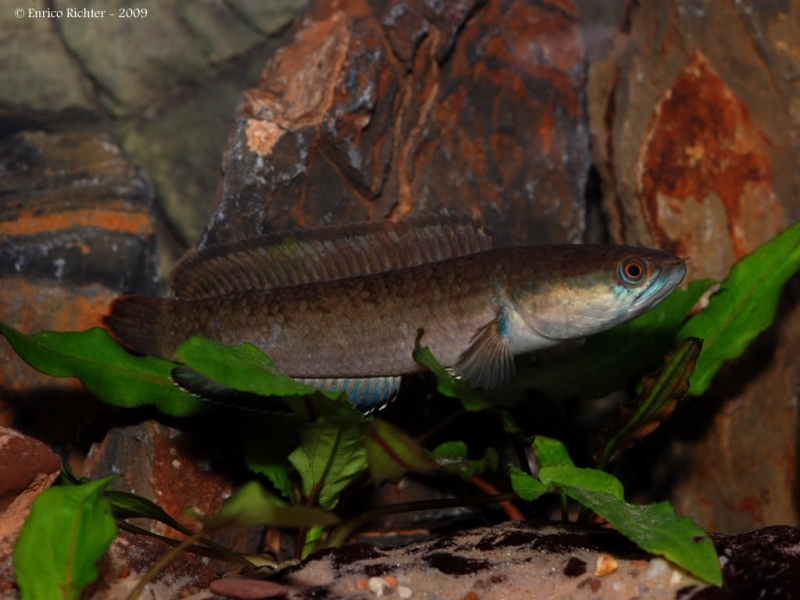
Channa gachuaDwarf Snakehead
Hamilton, 1822
Max length200mm SL8in SLTank120 × 45cm48 × 18inTemp18–28°C64–82°FpH5.0–8.0Generally considered to have an enormous natural range extending from Iran to Taiwan and Bali, with records existing from Iran, Iraq, Afghanistan, Pakistan, Nepal, India, Sri Lanka, Bangladesh, Bhutan, China, Myanmar, Thailand, Laos, Cambodia, Vietnam, Malaysia, Indonesia, and Singapore. However there exists significant evidence to suggest that C. gachua as currently understood represents a complex of similar-looking species, and a taxonomic review of the group is clearly required.
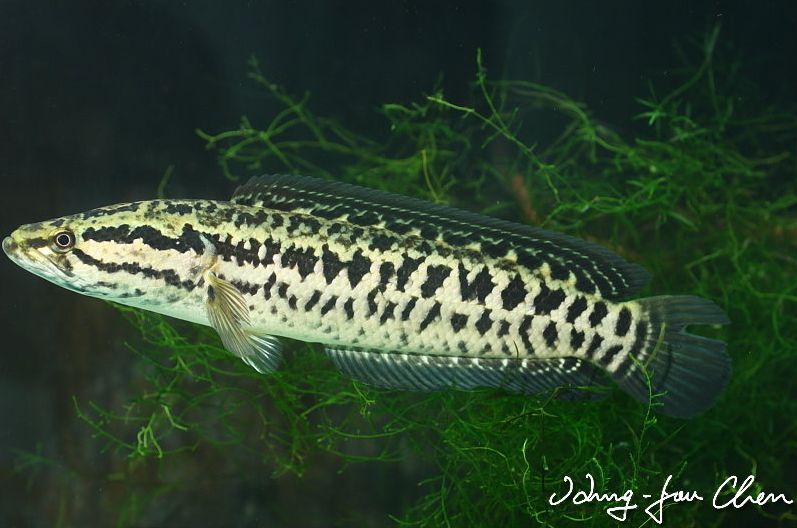
Channa maculataBlotched Snakehead
Lacepède, 1801
Max length300mm SL12in SLTanknot recordedTempnot recordedpHnot recordedThis species is frequently confused with C. argus but can be distinguished by the following characters: dorsal-fin rays 38-45 (vs. 47-50 in C. argus); anal fin rays 26-29 (vs. 31-36); lateral line scales 50-56 (vs. 60-66); 2-3 rounded blotches on caudal peduncle (vs. no blotches on caudal peduncle). It is widely-distributed in Pacific coastal drainages of southeastern China (e.g. the Yangtze, Minjiang, Hangjiang River, and Pearl (Nanjiu...
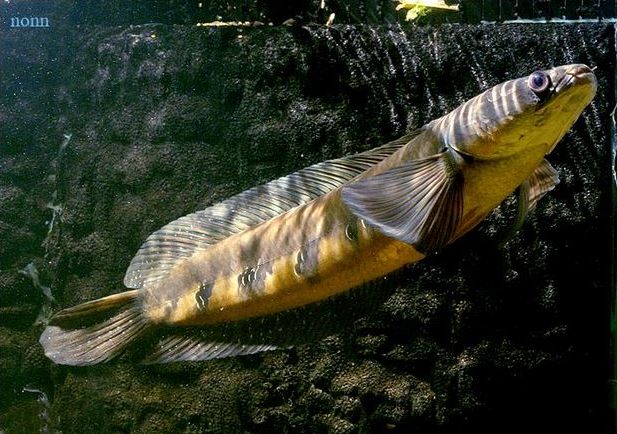
Channa marulioidesEmperor Snakehead
Bleeker, 1851
Max length650mm SL26in SLTanknot recordedTemp22–30°C72–86°FpH6.0–8.0This species is often confused with the nominal congeners C. marulius (Hamilton, 1822) and C. melanoptera (Bleeker, 1855) with all three presenting taxonomic problems. For example, C. marulioides exhibits a number of variations in colour pattern depending on collection locality with the most common possessing a brownish base colour with a series of dark, chevron-like markings along each flank and some scales margined posteriorly in white.
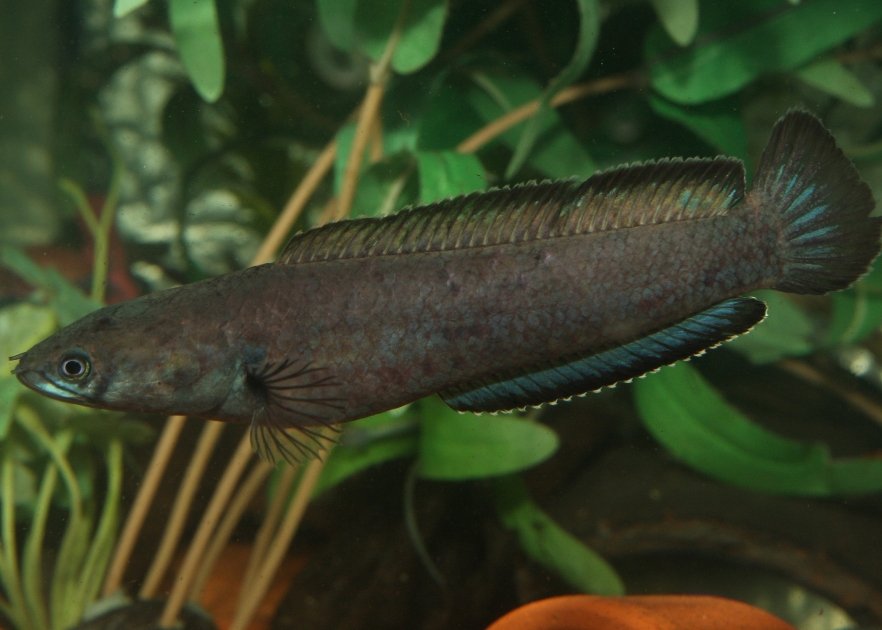
Channa orientalisCeylon snakehead
Bloch & Schneider, 1801
Max length100mm SL3.9in SLTank90 × 30cm36 × 12inTemp16–24°C61–75°FpH5.0–7.5Endemic to southwestern Sri Lanka where it appears restricted to the so-called ‘wet zone’ (see 'Habitat'). Confirmed localities are all within the Bentota and Kelani river systems and Kottawa Forest Reserve in Galle district, Southern Province. Type locality is given simply as 'Habitat in India orientale' and this appears to have caused confusion regarding the species' distribution with it of...
Charax condeiSmall-scale Glass Tetra
authority not recorded
Max length55mm SL2.2in SLTank60 × 38cm24 × 15inTemp23–25°C73–77°FpH6.0–7.4This rarely seen Characin occasionally shows up in the trade, usually as a contaminant among shipments of more popular species. It's sometimes referred to as Asiphonichthys condei in older literature.
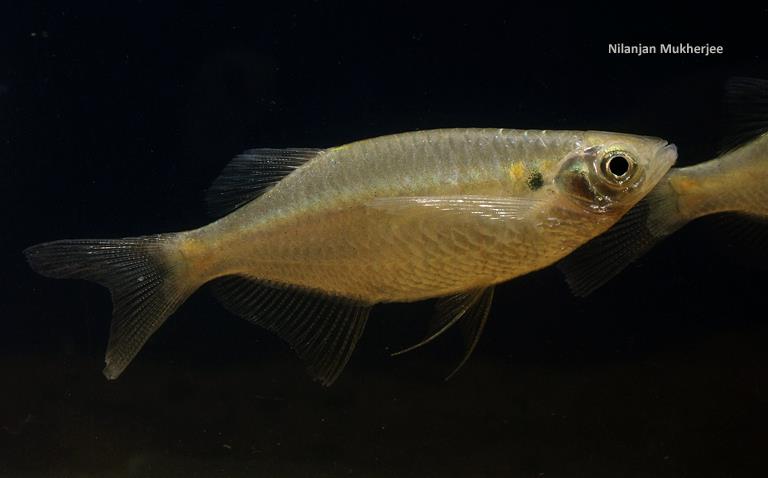
Chela cachiusNeon Hatchet Fish
Hamilton, 1822
Max length50mm SL2.0in SLTank90 × 30cm36 × 12inTemp18–24°C64–75°FpH6.0–8.0It is currently the only valid member of the genus but it is possible that additional taxa exist, particularly in Myanmar, while a number of former species are contained within the Laubuka assemblage, to which C. cachius is closely related. Phylogenetic studies suggest the existence of a monophyletic clade consisting of the genera Devario, Chela, Laubuca, Microdevario and Microrasbora plus the genus Betadevario.
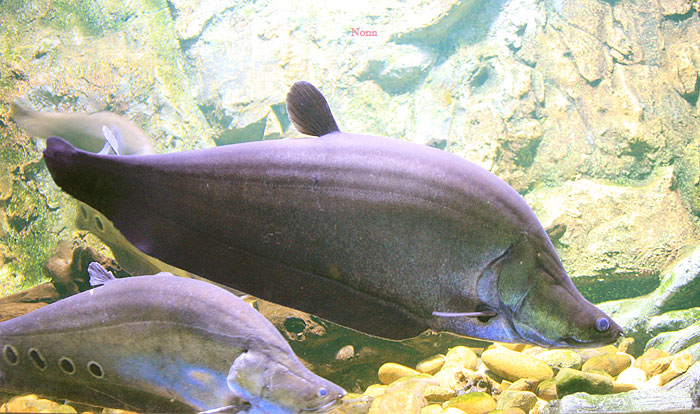
Chitala lopisGiant Featherback
Bleeker, 1851
Max length1500mm SL59in SLTanknot recordedTemp22–28°C72–82°FpH6.0–8.0This species is not collected for the aquarium trade at time of writing. In contrast to other members of the genus older juvenile and adult individuals lack dark markings on the body while the jaw is more pronounced.
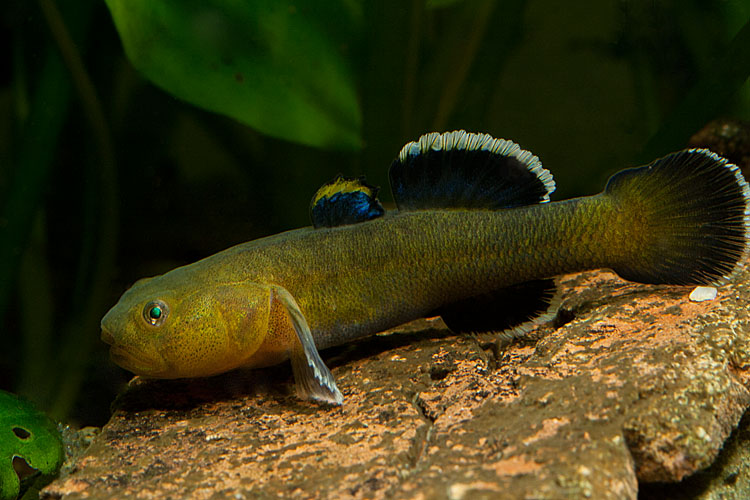
Chlamydogobius eremiusDesert Goby
Zietz, 1896
Max length60mm SL2.4in SLTank45 × 30cm18 × 12inTemp20–28°C68–82°FpH7.0–8.5Lake Eyre is a vast endorheic basin within which lies the lowest point in Australia at some 15 m BMSL. It only fills with water occasionally and when it does so forms the country's largest salt lake. C. eremius does not occur in the lake itself since no fishes are able to survive there, rather it inhabits isolated freshwater springs, flowing artesian bores (wells), and ephemeral waterholes where it tends to be associated with rocks and other submerged cover.
Clarotes laticepsWidehead Catfish
authority not recorded
Max length800mm SL31in SLTank150 × 60cm60 × 24inTemp20–26°C68–79°FpH6.5–8.0This is not a particularly common species in the trade, probably as it's not especially attractive to look at and grows very large. It's unsuitable for all but the biggest aquaria.
Cleithracara maroniiKeyhole Cichlid
Steindachner, 1881
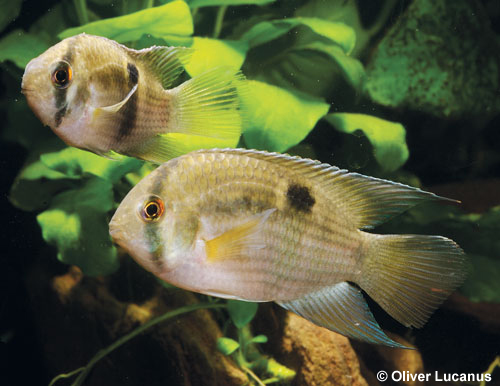
Max length110mm SL4in SLTank90 × 30cm36 × 12inTemp21–28°C70–82°FpH4.0–7.5This species can be told apart from relatives by the characteristic 'keyhole' shaped marking on each side of the body. It's one of few fishes in which the current generic name is derived from the common name popularised in the aquarium hobby with 'Cleithracara' a combination of the Greek kleithron, meaning lock, and, acará, the Guaraní word for cichlids.
Colomesus asellusAmazon Puffer
Müller & Troschel, 1849
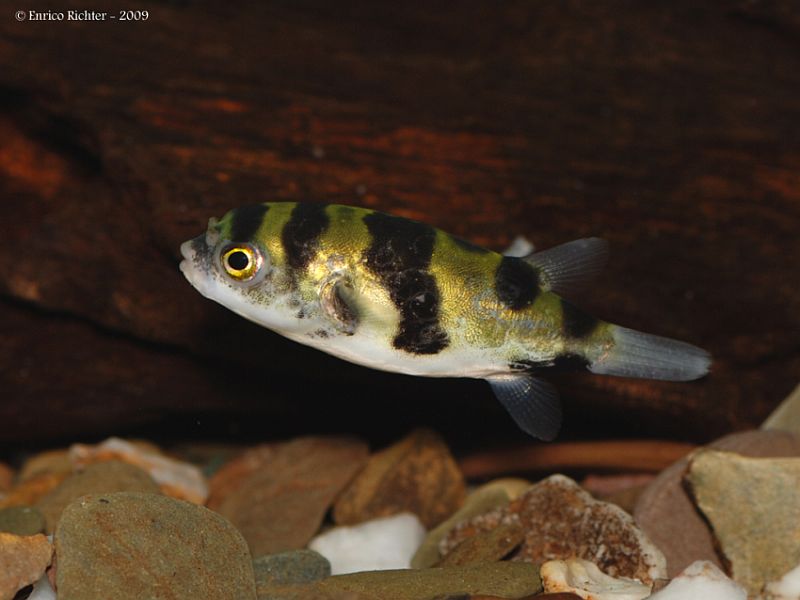
Max length128mm SL5in SLTank120 × 30cm48 × 12inTemp20–26°C68–79°FpH5.5–8.0This species is also referred to as 'South American puffer', 'SAP', 'Amazonian puffer', 'Peruvian puffer', or 'Brazilian puffer' in the ornamental trade. Within the genus Colomesus, C. asellus can be immediately identified by possessing a unique transverse row of dermal flaps across the chin which is absent in its congeners C. psittacus and C. tocantinensis.
Colomesus psittacusBanded Puffer
Bloch & Schneider, 1801
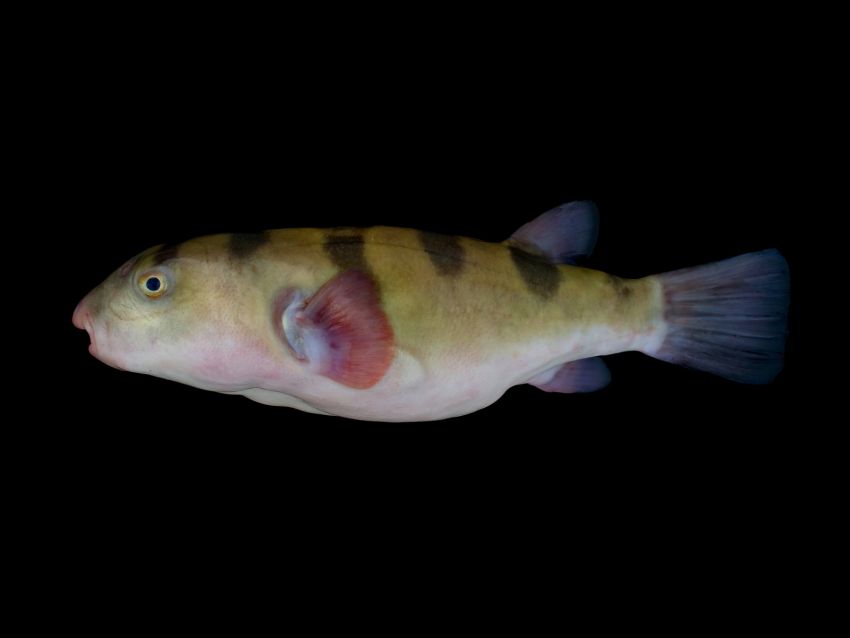
Max length290mm SL11in SLTank180 × 60cm72 × 24inTemp20–26°C68–79°FpH7.0–9.0Although it does penetrate the lower basins of rivers, particularly the Amazon where it has been collected from the rio Xingu several hundred kilometres from its mouth, this species is predominantly an inhabitant of mangrove swamps, estuaries, and other such saline habitats. It is particularly common in tidal channels, shallow inshore lagoons, and the lower reaches of rivers.
Copella callolepis
Regan, 1912
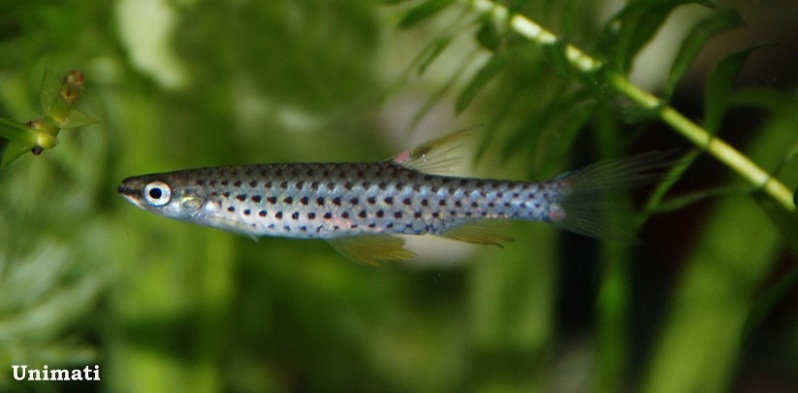
Max length42mm SL1.7in SLTank60 × 30cm24 × 12inTemp20–28°C68–82°FpH4.0–7.0This species is quite common in the aquarium trade although normally misidentified as the congeners C. nattereri or the very similar C. meinkeni. It was considered synonymous with C. nattereri for a number of years and was also referred to as C. cf. meinkeni by Zarske and Géry (2006) befo...
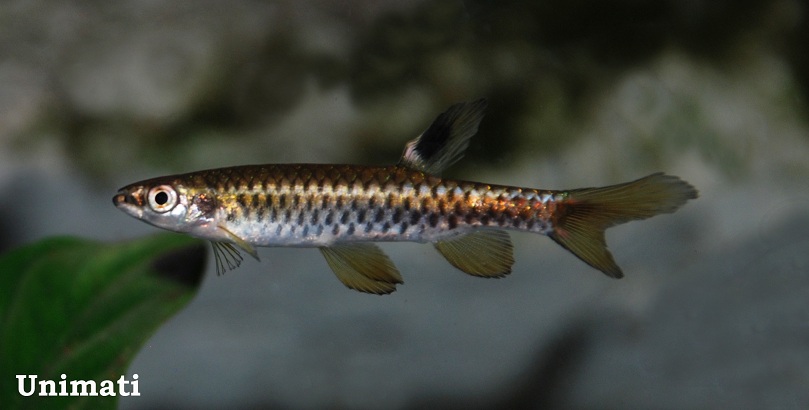
Copella eigenmanni
Regan, 1912
Max length45mm SL1.8in SLTank80 × 30cm31 × 12inTemp20–28°C68–82°FpH4.0–7.0This species does appear in the aquarium trade from time-to-time, often among shipments of other wild-caught fishes from the Orinoco basin. Populations from Colombia were formerly referred to as C. metae until Zarske (2011) synonymised the two when designating a lectoty...
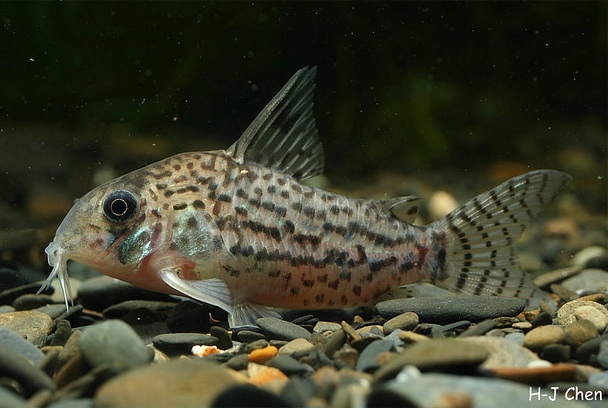
Corydoras acrensisAcre Cory
Nijssen, 1972
Max length55mm SL2.2in SLTanknot recordedTemp21–25°C70–77°FpH6.0–7.5Type locality is 'Furo do Lago São Francisco, 7°40'S, 72°39'W, tributary at left bank of Rio Juruá, Acre State, Brazil', and C. acrensis appears to be endemic to the rio Juruá basin. Unfortunately diagnostic characters cannot be provided since we've been unable to obtain the type description, and little has been written about this species since it was published.
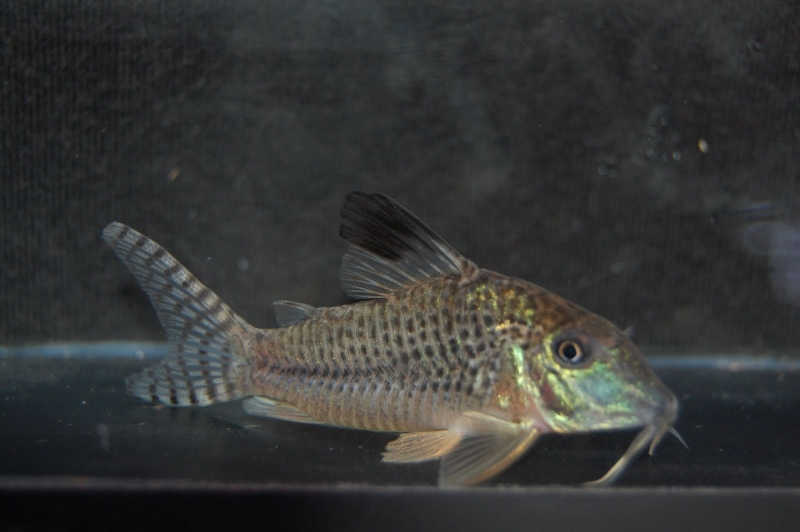
Corydoras acutusBlacktop Cory
Cope, 1872
Max length70mm SL2.8in SLTanknot recordedTemp22–28°C72–82°FpH6.0–7.5This species can be confused with three similar-looking fishes of uncertain taxonomic status which have been assigned the C numbers C024, C077, and C109 in the aquarium hobby. C024 and C109 are unlikely to be conspecific in that they occur in Pará state, Brazil, several thousand kilometers outside the range of C. acutus, in the rio Guamá (Tocantins drainage), and lower rio Xingu, respectively.
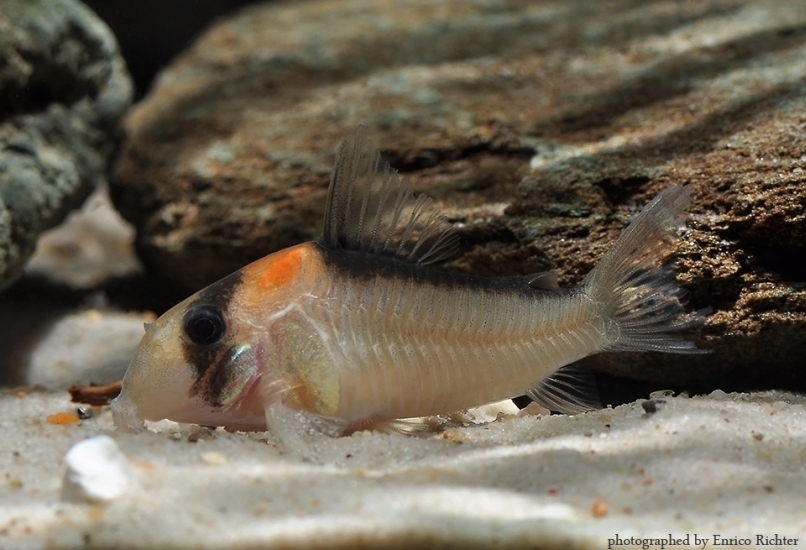
Corydoras adolfoiAdolfo's Cory
Burgess, 1982
Max length60mm SL2.4in SLTanknot recordedTemp20–26°C68–79°FpH4.0–7.0Type locality is given as 'Small tributary of the upper Rio Negro on the equator near São Gabriel da Cachoeira, Brazil', and this species is apparently highly endemic there. Some sources state that it also occurs in the rio Uaupés (known as 'Vaupés' in Colombia), a major tributary of the Negro, but we've been unable to obtain confirmation thus far.
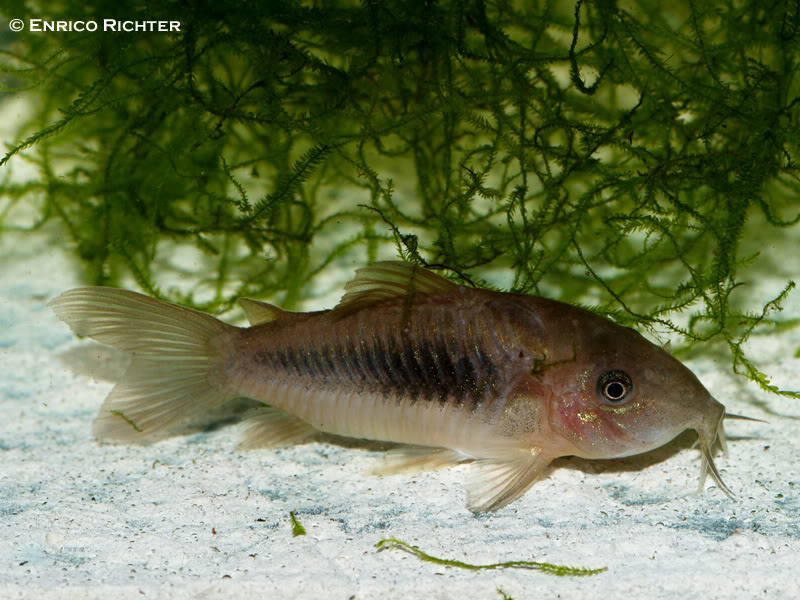
Corydoras aeneusBronze Cory
Gill, 1858
Max length75mm SL3.0in SLTank80 × 30cm31 × 12inTemp21–27°C70–81°FpH6.0–8.0Despite the ubiquity of its name in aquarium literature, confusion surrounds its true identity. Given it's the only member of the genus occurring on the island, fish from Trinidad do presumably represent C. aeneus (see our image), but the classification of those from other localities appears far from certain. Today the species is accepted to occur throughout much of South America, and indeed similarly-patterned fish do occur across a large portion of the continent. Some of these, such as the gree...
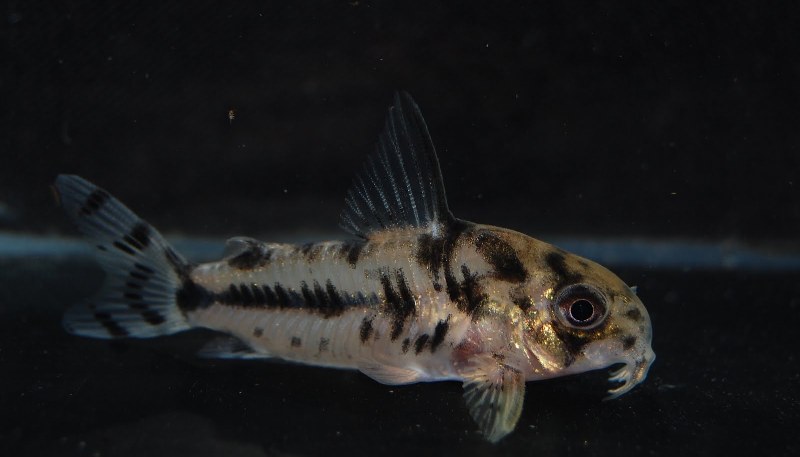
Corydoras boesemaniBoeseman's Catfish
Nijssen & Isbrücker, 1967
Max length45mm SL1.8in SLTanknot recordedTemp21–28°C70–82°FpH5.5–7.5This species appears endemic to and abundant within the upper Suriname River system, Suriname. Type locality is given as 'little tributaries of Gran Rio between Ligolio and Awaradam Falls', this corresponding to a section of the Suriname River, which is known as 'Gran Río' in parts of its upper basin, upstream of Brokopondo reservoir and not...