Results for “sp.”
Type a name: scientific, common, or one a species used to go by. Or narrow the catalogue with the filters.
Filters
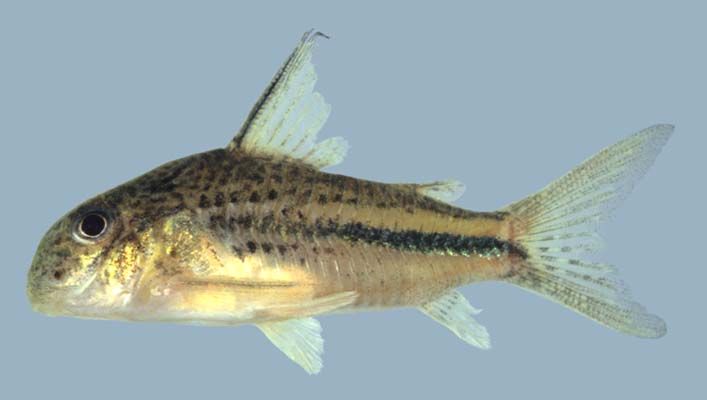
Corydoras bondiBlackstripe Cory
Gosline, 1940
Max length50mm SL2.0in SLTanknot recordedTemp20–26°C68–79°FpH6.0–7.5Type locality is 'Río Yuruari, 3 kilometers east of El Callao, 7°18'N, 61°50'W, Bolivar, Venezuela', and this species is also known from the Rupununi River drianage in Guyana and the Courantyne/Corantijn system in Suriname. The Yuruari, an affluent of the Río Cuyuni, an...
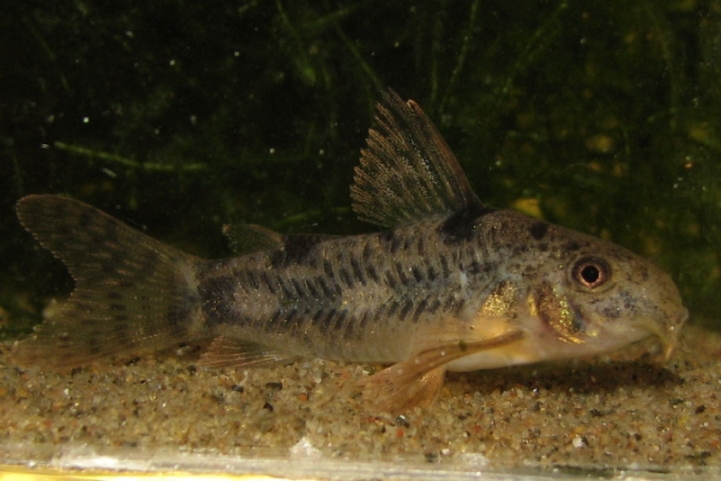
Corydoras carlae
Nijssen & Isbrücker, 1983
Max length45mm SL1.8in SLTanknot recordedTemp15–22°C59–72°FpH6.5–8.0This species is not available on a commercial basis but was collected and introduced to the aquarium hobby by Hans Georg-Evers in 2010. It's similar in appearance to a number of congeners including C. diphyes, C. erhardti, C. garbei, C. paleatus and C. steindachneri but can be told apart from most of them by possession of two large, indistinct, dark blotches in the middle of each flank.
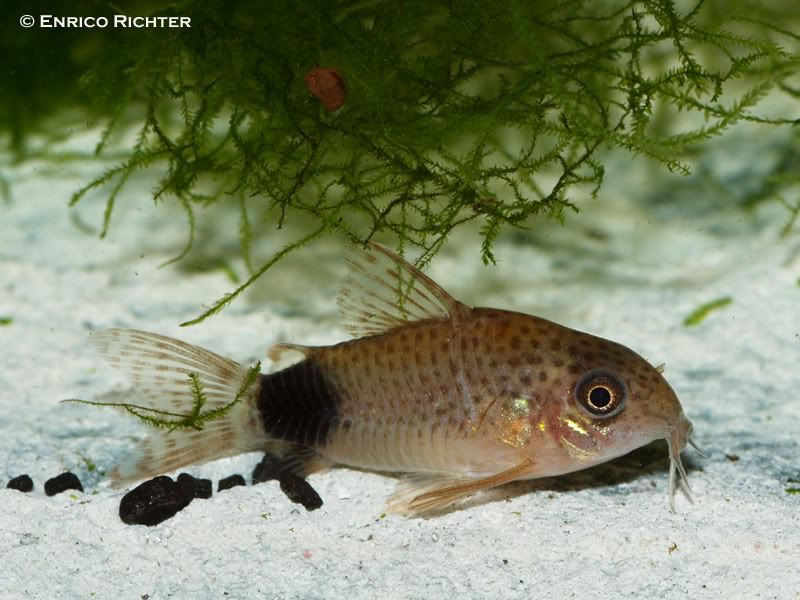
Corydoras caudimaculatusTailspot Cory
Rössel, 1961
Max length50mm SL2.0in SLTanknot recordedTemp20–26°C68–79°FpH6.0–7.0C. caudimaculatus may be confused with the congener C. similis but can be told apart by possession of a well-defined, blackish spot on the caudal peduncle vs. a 'smudged' bluish marking. C. guapore also has a comparable colour pattern but possesses a distinctly rounded snout and tends to swim above the substrate.
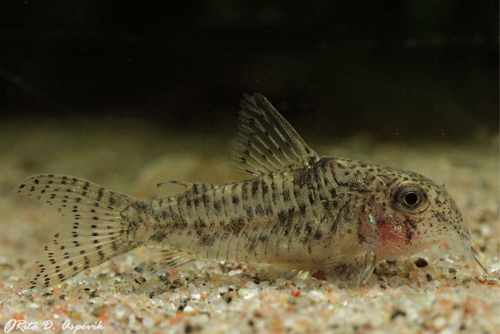
Corydoras cochuiBarredtail Cory
Myers & Weitzman, 1954
Max length35mm SL1.4in SLTanknot recordedTemp20–28°C68–82°FpH6.0–7.5This small species can be told apart from the similar-looking congener C. habrosus by possession of 4-5 (vs. 2-3) dark markings along the side of the body.
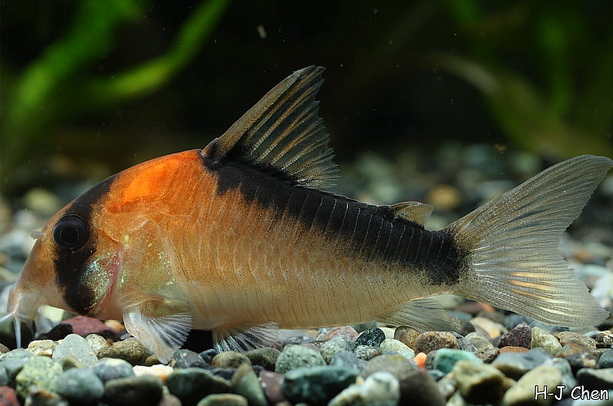
Corydoras duplicareus
Sands, 1995
Max length50mm SL2.0in SLTanknot recordedTemp20–26°C68–79°FpH4.0–7.0This species is among a number of congeners native to the rio Negro region to possess a colour pattern with an oblique dark bar running along the dorsal surface of the body. This unofficial group also includes C. burgessi, C. davidsandsi, C. duplicareus, C. imitator, C. melini, and C. serratus, and among these C. duplicareus is most easily-confused with C. adolfoi.
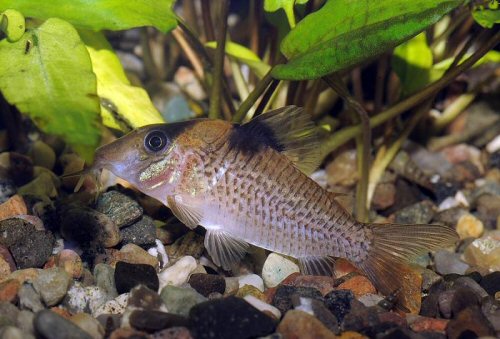
Corydoras ephippiferSaddle Cory
Nijssen, 1972
Max length60mm SL2.4in SLTanknot recordedTemp20–25°C68–77°FpH6.0–7.5This species appears superficially similar to a number of congeners including C. ambiacus, C. agassizii, C. brevirostris, C. delphax, and C. melanistius. Among these C. ephippifer seems to be unique in that all fins except the dorsal are transparent and lack markings.
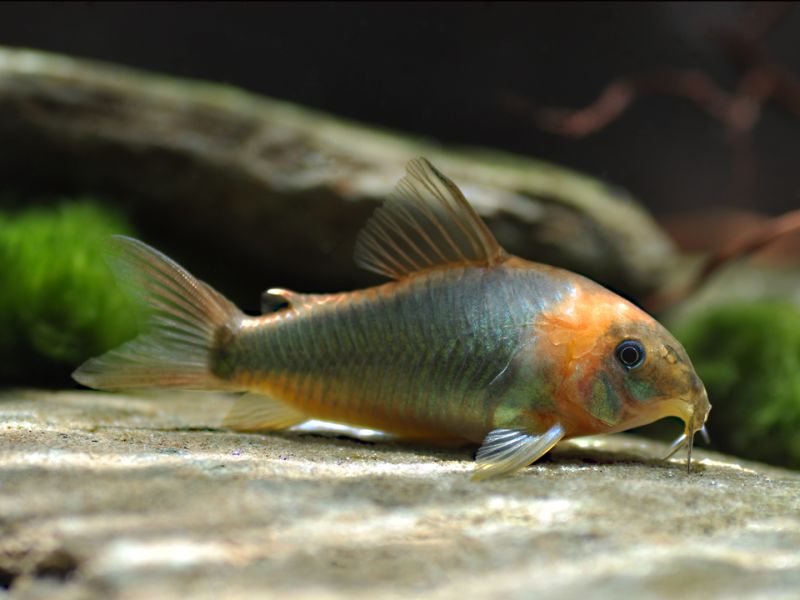
Corydoras eques
Steindachner, 1876
Max length50mm SL2.0in SLTank90 × 30cm36 × 12inTemp20–26°C68–79°FpH6.0–8.0Although described as a member of Corydoras this species was later moved into the genus Osteogaster by Cope (1894), but this was later synonymised with Corydoras by Gosline (1940). It is sometimes confused with C. venezuelanus, while two similar-looking, unidentified fishes from Peru have been assigned the codes CW007 and CW043, respectively.
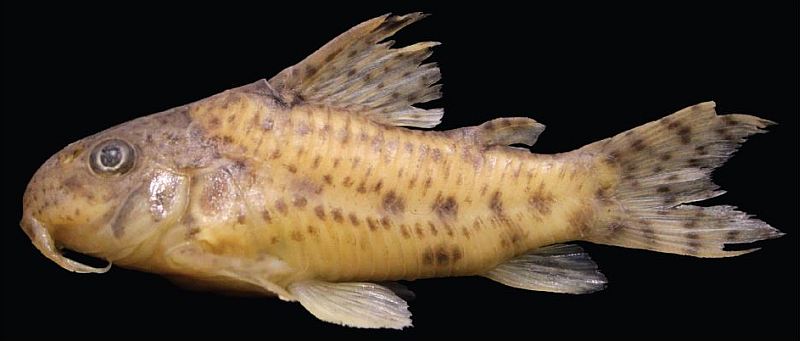
Corydoras flaveolus
Ihering, 1911
Max length50mm SL2.0in SLTanknot recordedTemp20–25°C68–77°FpH6.0–7.5This species is exceptionally rare in the aquarium hobby. Among congeners it is most similar to C. lacrimostigmata but can be distinguished by...
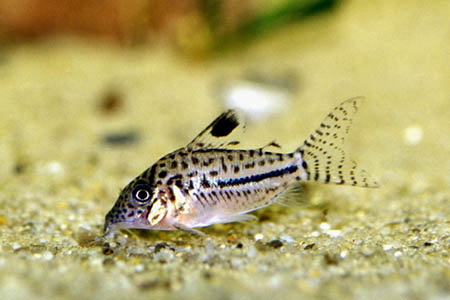
Corydoras gomezi
Castro, 1986
Max length60mm SL2.4in SLTank90 × 30cm36 × 12inTemp20–26°C68–79°FpH6.0–7.5This species' range is unclear with collection records scarce, although it certainly occurs in the 'Tres Fronteras' region of the western Amazon river basin where the borders of Brazil, Colombia, and Peru meet. Type locality is 'Lakes of the Isla de Mocagua, Amazon River, near Leticia, Comisaría del Amazonas, 3°54'S, 70°14'W, Colombia'.
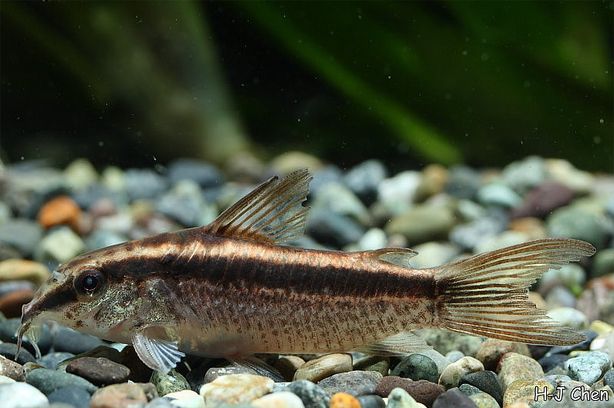
Corydoras gracilis
Nijssen & Isbrücker, 1976
Max length40mm SL1.6in SLTank60 × 30cm24 × 12inTemp20–26°C68–79°FpH5.0–7.5It can be distinguished from the majority of other Corydoras species by its distinctive colour pattern, comprising a uniform, lightish base pigmentation with a dark arched stripe extending over the upper portion of each flank, from the tip of the snout to the caudal-fin base. This is shared with a few congeners, however, including C. arcuatus, C. narcissus, and C. urucu.
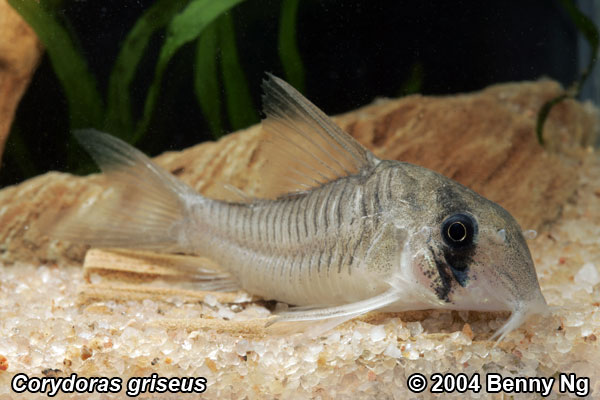
Corydoras griseus
Holly, 1940
Max length50mm SL2.0in SLTank90 × 30cm36 × 12inTemp20–26°C68–79°FpH6.0–7.5Native to Guyana, where it may be restricted to the Potaro River, a major tributary within the Essequibo watershed. It was described from aquarium specimens which were said to have been collected in 'very small water courses of the Amazon', but the type locality was corrected to 'Guyana-Essequibo, Potaro River, Kuribong trail' by Nijssen and Isbrücker (1980).
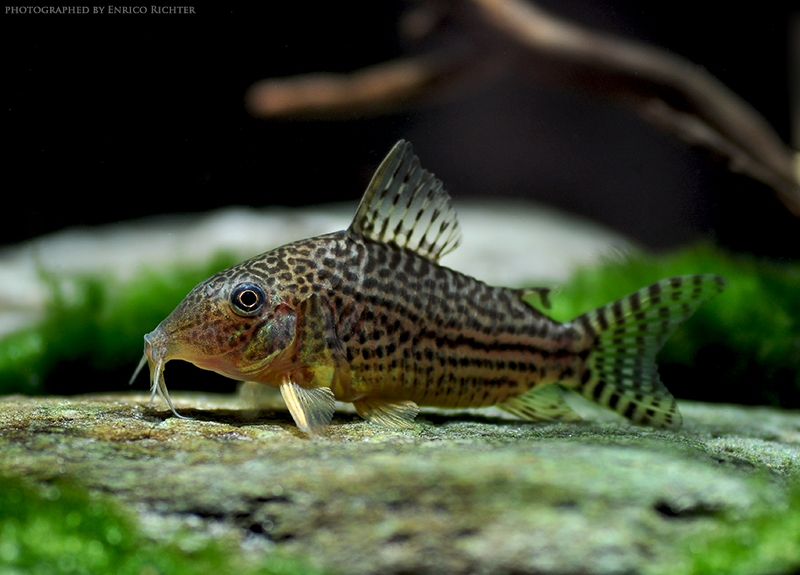
Corydoras haraldschultziMosaic Cory
Knaack, 1962
Max length85mm SL3.3in SLTank120 × 30cm48 × 12inTemp24–28°C75–82°FpH5.5–7.5The original type locality is 'Rio Guaporé, Brazil', supposedly in the vicinity of Pontes e Lacerda in Mato Grosso state. However, this was modified by Nijssen and Isbrücker (1980) to 'Brazil-Goias, Rio Tocantins, road between Pedro-Afonso (08°59'S 48°12'W) and Itacajá (08°18'S 47°45'W)'. This is confusing since the distance between these two localities is well over 1000 km, although it appears that the former is correct as per our image of specimens with locality details.
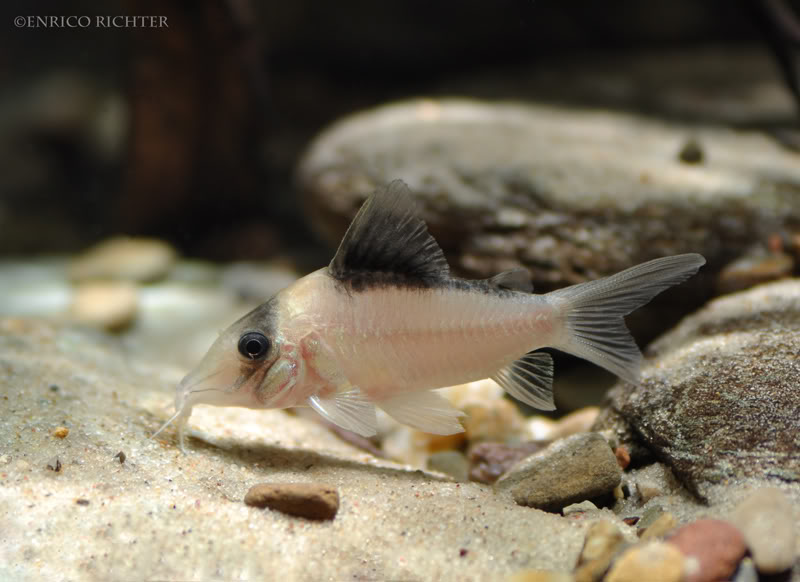
Corydoras imitatorImitator Cory
Nijssen & Isbrücker, 1983
Max length65mm SL2.6in SLTank90 × 30cm36 × 12inTemp20–26°C68–79°FpH4.0–7.0Endemic to the upper rio Negro basin in Amazonas state, northern Brazil, and Amazonas state, southern Venezuela. One specific locality is Igarapé Muiá (00°09'03"N 66°48'10"W). Type locality is 'Upper Rio Negro, eastern Amazonas, Brazil', which is thought to refer to forest brooks crossing the "new army road", north of São Gabriel da Cachoeira municipality.
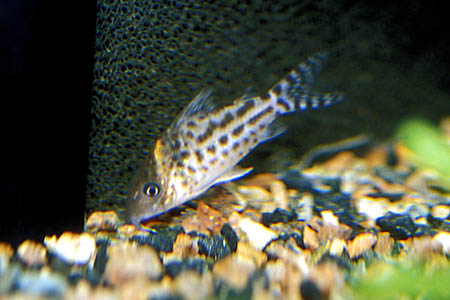
Corydoras incolicanaC001
Burgess, 1993
Max length80mm SL3.1in SLTank120 × 30cm48 × 12inTemp20–26°C68–79°FpH4.0–7.0C. incolicana was the first recipient of a 'C' number (see below) in 1993 and was described the same year. Unfortunately its description was published in an aquarium hobbyist magazine, and we have been unable to obtain a copy to date meaning its diagnosis is unavailable. It is therefore difficult to identify accurately, not least because its type locality is in a relatively remote area, and there exist a number of superficially similar Corydoras species or populations in the aquarium trade.
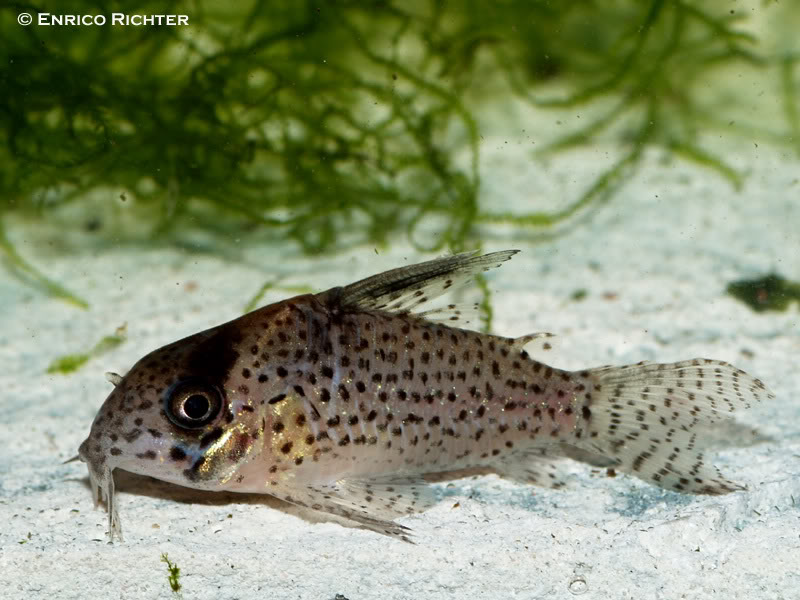
Corydoras kaneiC026
Grant, 1998
Max length50mm SL2.0in SLTank90 × 30cm36 × 12inTemp20–26°C68–79°FpH5.5–7.5Prior to description C. kanei was assigned the 'C' numbers C026 and C046. Among congeners it is most easily-confused with, and sometimes traded as, C. atropersonatus, but can be identified by presence (vs. absence in C. atropersonatus) of dark markings in the anal and caudal fins, presence of numerous, smaller (vs. fewer, larger) dark spots on the body, and an overall darker (vs. paler) base colouration.
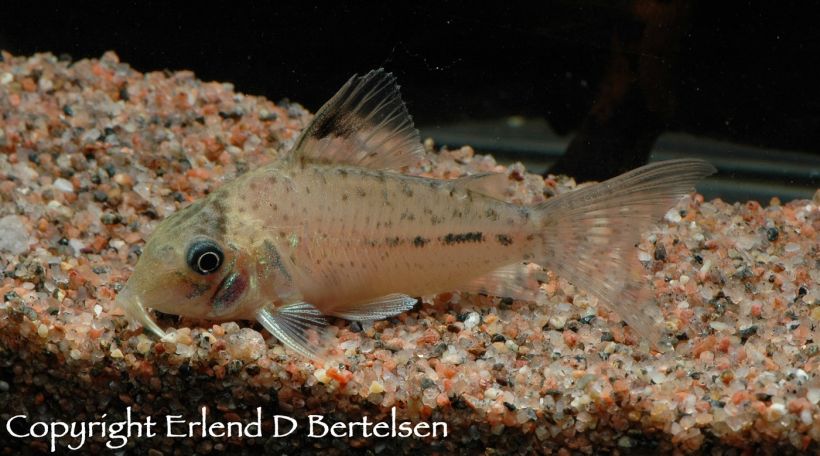
Corydoras lambertiC009
Nijssen & Isbrücker, 1986
Max length55mm SL2.2in SLTank80 × 30cm31 × 12inTemp20–26°C68–79°FpH6.0–8.0Unfortunately diagnostic characters cannot be provided since we have been unable to obtain the type description to date, and little else has been written about this species. There is also confusion regarding whether C. lamberti, the unidentified 'C009', and similar-looking fish collected close to Iquitos are conspecific or not. We include all together here until these issues are resolved.
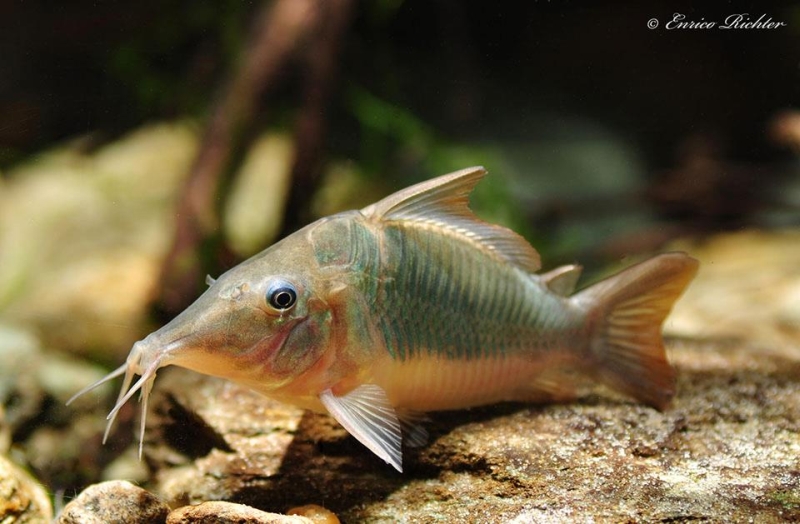
Corydoras multiradiatusHognose 'Brochis'
Orcés V., 1960
Max length100mm SL3.9in SLTank120 × 45cm48 × 18inTemp20–26°C68–79°FpH6.0–7.5The genus is included in the family Callichthyidae, of which members are often referred to collectively as 'armoured' or 'mailed' catfishes group due to the presence of bony plates in place of scales on the body. Their taxonomy can be confusing, and numerous undescribed species are also thought to exist.
Corydoras paleatusPepper Cory
authority not recorded
Max length70mm SL2.8in SLTank61 × 38cm24 × 15inTemp22–26°C72–79°FpH6.0–7.0Corydoras are members of the armoured catfish family. The genus name means "helmet skin" and the fish live up to this name as they are rather tough little fish. They also have spines in the leading rays of the pectoral fins to deter larger predators from eating them. Corydoras are sometimes observed taking a gulp of air at the water surface: this is because they can absorb oxygen through their gut. It is not known why cories do this even on oxygen rich waters. Along with the bronze ...
Corydoras pantanalensis
authority not recorded
Max length80mm SL3.1in SLTank75 × 30cm30 × 12inTemp22–26°C72–79°FpH6.5–7.5This species may also be referred to by its C-number, C005.
Corydoras reticulatusReticulated Cory
authority not recorded
Max length60mm SL2.4in SLTank60 × 38cm24 × 15inTemp22–26°C72–79°FpH6.0–7.2Also known as the network cory, this is one of the commoner species seen in dealers tanks, and is a good cory for the beginner.