Results for “species”
Type a name: scientific, common, or one a species used to go by. Or narrow the catalogue with the filters.
Filters
Osphronemus exodonElephant Ear Gourami
authority not recorded
Max length600mm SL24in SLTank180 × 60cm72 × 24inTemp20–30°C68–86°FpH6.5–8.0A bizarre and very recent addition to the genus, O. exodon is infrequently imported to the hobby, but has been seen occasionally. It has specially adapted mouthparts whereby it has greatly enlarged teeth. An extra set of teeth can also be seen growing in concentric bands on the outer lips! These are used in nature to literally 'pick' fruit from overhanging branches, with the fish often leaping from the water to grab a particularly juicy fig or other fruit. When the mouth of the fish is...
Osteochilus hasseltiiHard-lipped Barb
authority not recorded
Max length320mm SL13in SLTank180 × 60cm72 × 24inTemp22–25°C72–77°FpHnot recordedThere are currently 34 described species of Osteochilus although none can be considered popular in the aquarium hobby. According to Rainboth's 'Fishes of the Cambodian Mekong' members of the genus are characterised by lack of aspine, presence of 11-18rays, large rostral and maxillary barbels, papillae on both upper and lower lips, darkened but not black median fins and the fact that the lower lip is not separated from the isthmus by a deep post-labial groove. O. hasseltii can be f...
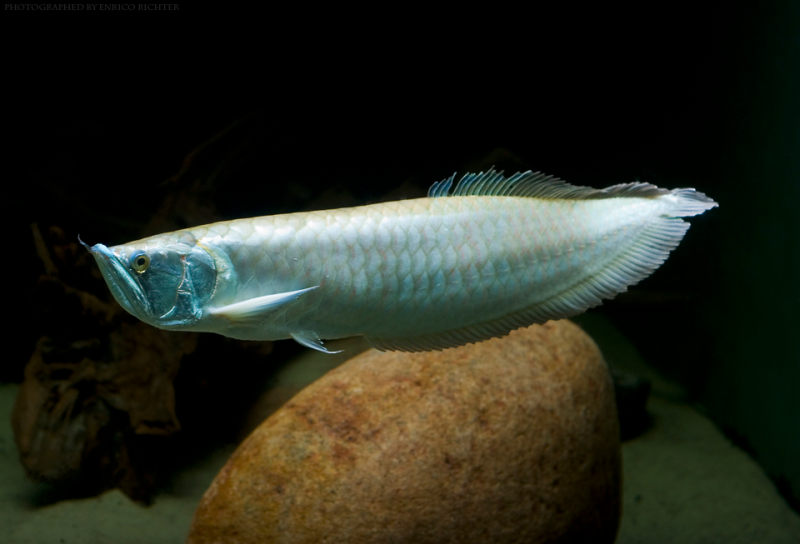
Osteoglossum bicirrhosumSilver Arowana
Cuvier, 1829
Max length800mm SL31in SLTanknot recordedTemp20–30°C68–86°FpH5.0–7.5Given its eventual size and natural behaviour this species is largely unsuitable for the home aquarium, and we know of only a handful of private aquarists with the facilities required to house it long-term. Unfortunately juveniles are readily available in the trade, although the scarcity of privately-maintained adults would suggest that most fail to reach their potential.
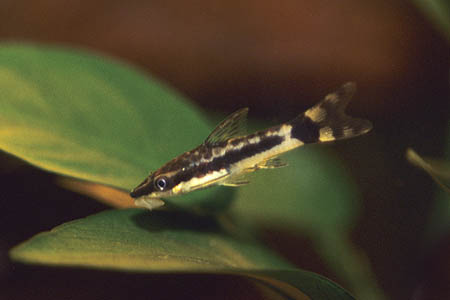
Otocinclus macrospilusOto
Eigenmann & Allen, 1942
Max length35mm SL1.4in SLTank45 × 30cm18 × 12inTemp21–26°C70–79°FpH5.5–7.5This is one of the commoner "otos" seen in the hobby, and is an ideal species for the planted aquarium. Unfortunately it can be quite delicate when first imported, and losses are not uncommon. This is usually down to lack of food, as it's a small fish and needs to feed almost constantly, so it's easily starved during transportation. As almost all otos are wild caught, they can be quite sensitive to water quality, too. Many hobbyists report fewer problems if the fish are added...
Otopharynx lithobatesSulphur-headed Hap
authority not recorded
Max length160mm SL6in SLTank90 × 45cm36 × 18inTemp24–28°C75–82°FpH7.6–8.8O. lithobates is a true rock dweller and is hardly ever seen in open water, even in aquaria. In fact, the scientific name lithobates literally translates as "rock dweller". Breeding males of this species rank among the most stunning of Lake Malawi Haplochromine cichlids. The three characteristic spots on the flanks disappear and are masked by a stunning neon blue patterning. Almost the entireand top of the head turn a deep yellow-orange colour. The most colourful variant is the "...
Oxyeleotris marmorataMarbled Goby
authority not recorded
Max length650mm SL26in SLTank150 × 60cm60 × 24inTemp22–28°C72–82°FpH6.5–7.5One of the largest goby species in the world, O. marmoratus is unsuitable for the vast majority of aquaria, but is an interesting oddball for the true enthusiast with the facilities to house it properly. It is a nocturnal ambush predator and generally remains motionless during daylight hours unless striking at food. It is a popular food fish in some of its native countries, where it is known as soon hock....
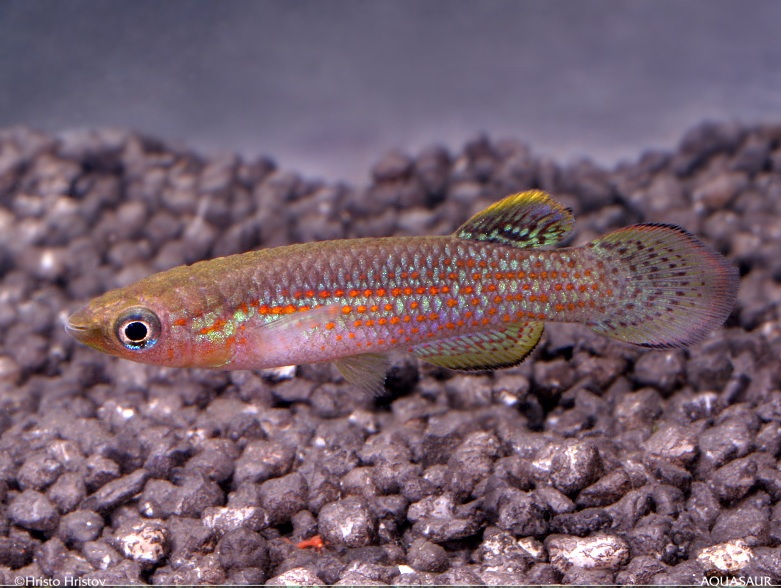
Pachypanchax playfairiiPlayfair's Panchax
Günther, 1866
Max length100mm SL3.9in SLTanknot recordedTemp18–24°C64–75°FpH6.0–8.0Type locality is given simply as 'Seychelles' and this species was originally endemic to the Granitic Seychelles, i.e., those islands in the centre of the group composed chiefly of granite rock. A translocated population now exists on Zanzibar while in the Seychelles it's known from the islands of Mahé, Praslin, Silhouette and La Digue.
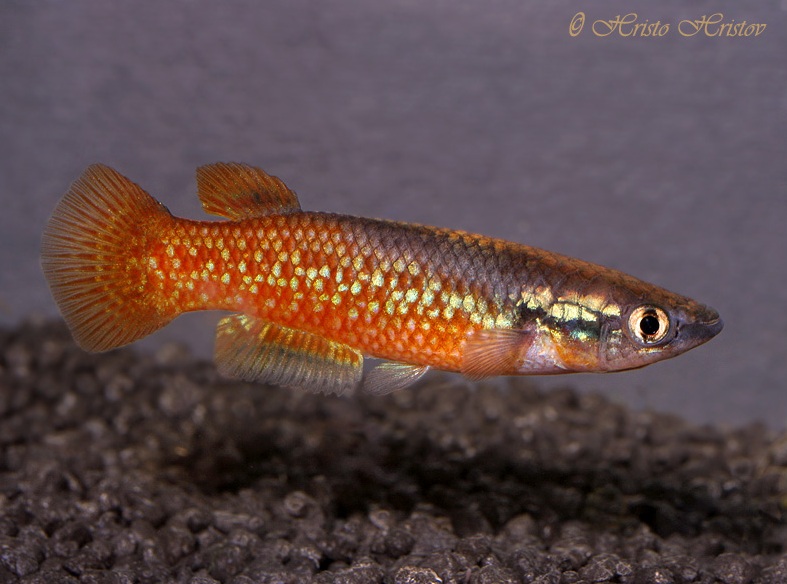
Pachypanchax sakaramyiMadagascar Panchax
Holly, 1928
Max length90mm SL3.5in SLTank90 × 30cm36 × 12inTemp20–24°C68–75°FpH6.5–7.5The majority of original populations have already been extirpated due to introduction of invasive species such as Gambusia holbrooki and Poecilia reticulata, ongoing deforestation of the Ambohitra Massif, and physical diversion of the source of the Sakaramy River for domestic use by locals. An additional population may exist in a stream on the southern slope of the Ambohitra Massif on the road between Bobasokoa and Anivorano, near the village of Andranotohiliny, but this requires verification.
Pangasius sanitwongseiParoon Shark
authority not recorded
Max length2500mm SL98in SLTanknot recordedTemp24–27°C75–81°FpH6.5–7.5In size and weight terms Pangasius sanitwongsei is second only to the giant Mekong catfish, Pangasianodon gigas in the family Pangasiidae, easily qualifying it as one of the largest freshwater fish species in the world. Alarmingly it's been exported for the trade in quite large numbers in recent years. It's usually seen for sale as a cute silvery 2-3" youngster, most often without adequate information regarding its long term care requirements and potential size. Unfortunately ...
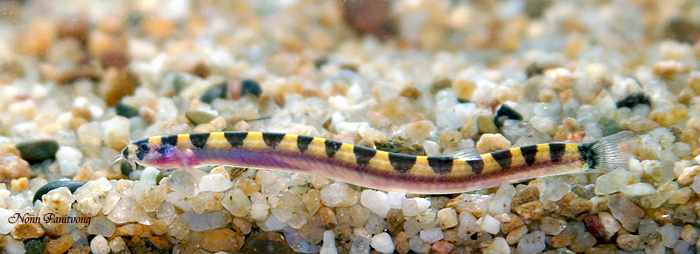
Pangio cuneovirgata
Raut, 1957
Max length40mm SL1.6in SLTank45 × 30cm18 × 12inTemp21–26°C70–79°FpH3.5–7.0Infrequently encountered in the aquarium trade, most often as bycatch among shipments of similar-looking congeners. It's included in the P. kuhlii group of closely-related species within the genus, and can be distinguished from other members by...
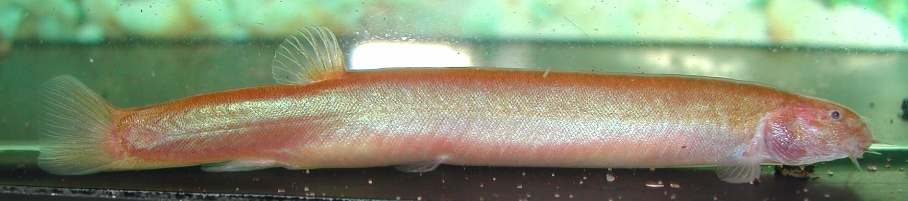
Pangio filinaris
Kottelat & Lim, 1993
Max length50mm SL2.0in SLTank45 × 30cm18 × 12inTemp21–26°C70–79°FpH5.0–7.0It's included in the P. kuhlii-oblonga group of closely-related species within the genus as per Bohlen et al. (2011) and can be...
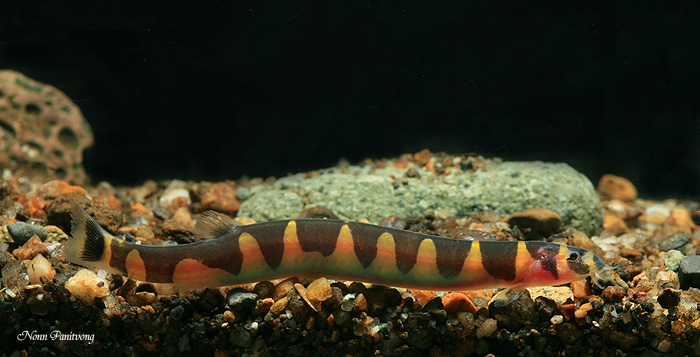
Pangio semicincta'Kuhli' Loach
Fraser-Brunner, 1940
Max length100mm SL3.9in SLTank60 × 30cm24 × 12inTemp21–26°C70–79°FpH3.5–7.0This species is among the most frequently-misidentified in the hobby, almost always being traded as P. kuhlii. However the latter is currently considered endemic to Java, from where commercial collections are almost unheard of, and has possibly never been seen in aquaria.
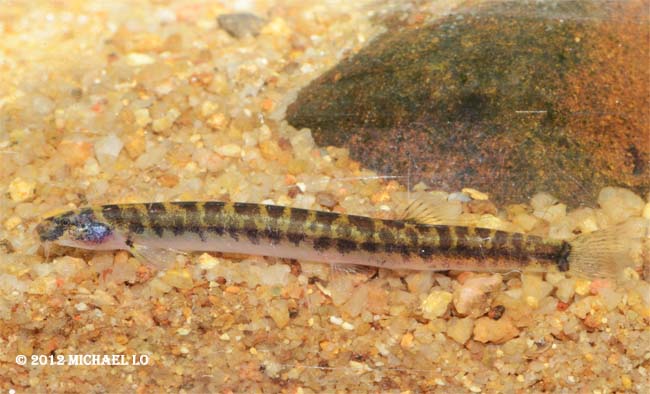
Pangio shelfordii
Popta, 1903
Max length80mm SL3.1in SLTank60 × 30cm24 × 12inTemp21–26°C70–79°FpH4.0–7.0Patterning is highly variable depending both within and between populations and the species may comprise an assemblage containing a number of taxa (Kottelat and Lim, 1993; Tan and Kottelat, 2009). For example, those from Singapore and Johor possessing intricate mottling on the dorsal surface while individuals from Terengganu have a series of saddle-like markings either alternating or connecting with the midlateral markings.
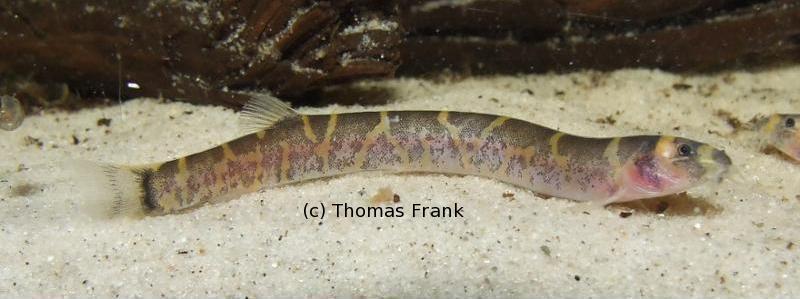
Pangio sp. 'PAN03'
authority not recorded
Max length80mm SL3.1in SLTank60 × 30cm24 × 12inTemp21–26°C70–79°FpH3.5–7.0Pangio species are often generically referred to as 'kuhli' or 'coolie' loaches in the aquarium hobby, the latter a variation of the former which was itself derived from the surname of German naturalist Heinrich Kuhl (1797-1821). Ichthyo...
Pantodon buchholziAfrican Butterfly Fish
authority not recorded
Max length120mm SL5in SLTank90 × 30cm36 × 12inTemp23–30°C73–86°FpH6.0–7.5The common name of this surface-dwelling species is derived from it's appearance when viewed from above, the large pectoral fins giving it the appearance of a butterfly. In reality, these fins serve a dual purpose. They help to camouflage the fish, making it look like a dead leaf floating on the surface, and along with the caudal fin, power the incredible jumps that it is capable of making. The fish jumps from the water to catch flying insects or to escape potential predators and it can mak...
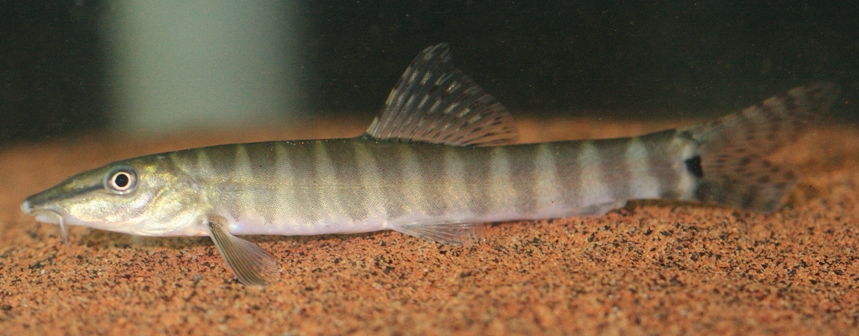
Parabotia fasciata
Dabry de Thiersant, 1872
Max length150mm SL6in SLTank120 × 45cm48 × 18inTemp20–24°C68–75°FpH6.0–7.5P. fasciata is rarely seen in the trade and is typically available only as bycatch among shipments of Sinibotia spp., particularly S. robusta. According to current classification numerous species from several genera are considered synonymous with it.
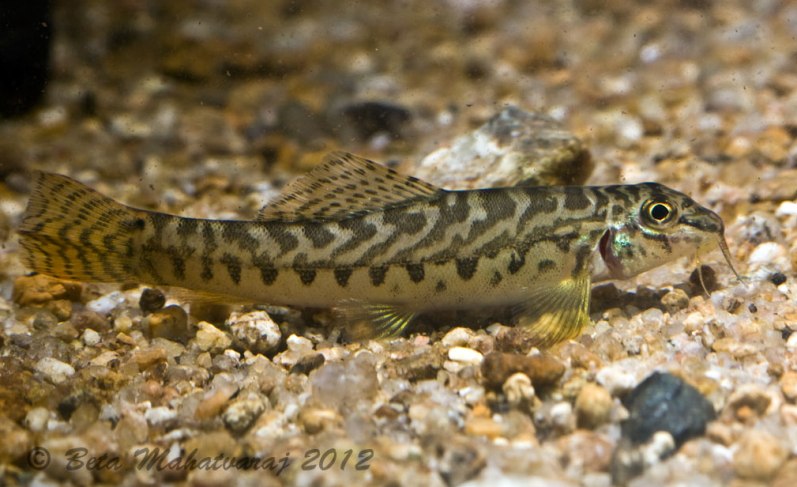
Paracanthocobitis botiaZipper Loach
Hamilton, 1822
Max length152mm SL6in SLTank75 × 30cm30 × 12inTemp21–26°C70–79°FpH6.0–7.5Traded under various names including 'mottled', 'eyepot', 'sand' and 'striped' loach. It's perhaps one of the better choices for those new to keeping nemacheilids being relatively hardy, peaceful and exhibiting some quirky behavioural traits. The characteristic ocellus, a dark marking at the top of the caudal peduncle that resembles an eye, is thought to have some function in predator distraction and is normally more intense in younger specimens.
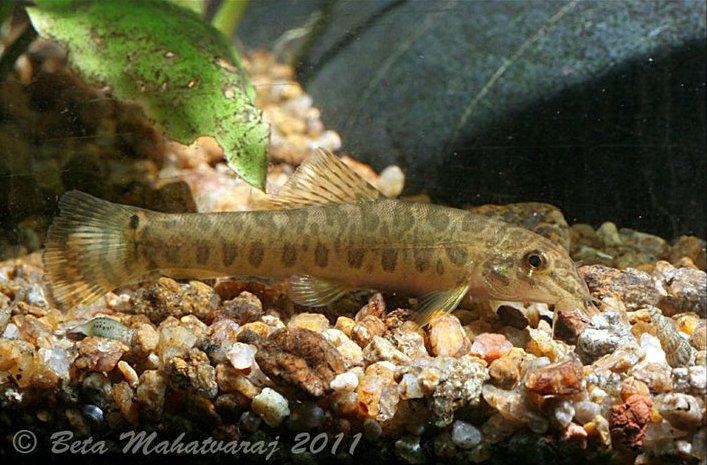
Paracanthocobitis mooreh
Sykes, 1839
Max length75mm SL3.0in SLTank75 × 30cm30 × 12inTemp20–26°C68–79°FpH6.0–7.5This species is still considered a member of the genus Nemacheilus by some sources, but it was reclassified and placed in Acanthocobitis by Grant (2008). Acanthocobitis sinuata, generally considered a junior synonym of A. mooreh (Kottelat, 2012b), also appears distinct and differs in geographical distribution plus number of dorsal-fin rays (2-3/9-10 in A. mooreh vs. 2/8-9 in A. sinuata) and some aspects of colour pattern.
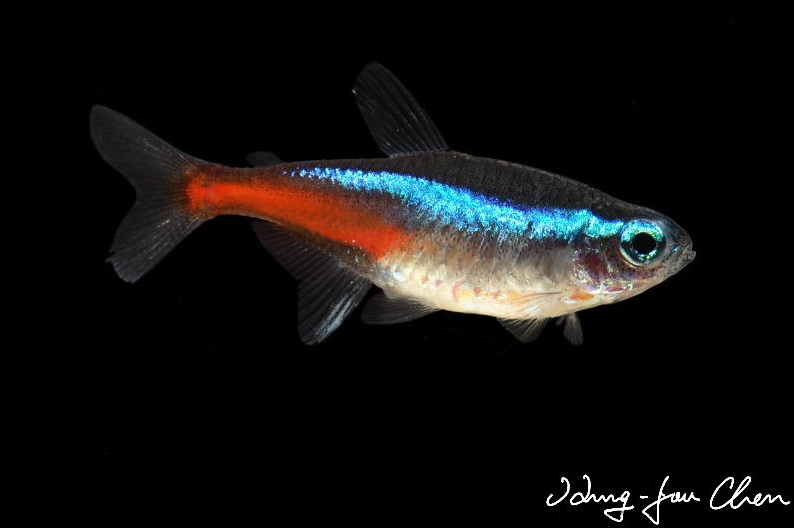
Paracheirodon innesiNeon Tetra
Myers, 1936
Max length30mm SL1.2in SLTank60 × 30cm24 × 12inTemp21–25°C70–77°FpH4.0–7.5One of the most popular and instantly recognisable fishes in the aquarium hobby, this species has been selectively-bred to produce a number of additional strains including albino, 'golden' (leucistic), short-bodied, long-finned and 'diamond' (in which the dorsal surface is covered in reflective scales). Unfortunately years of commercial breeding have somewhat affected the genetic vigour of the ornamental strain meaning morphological defects an...
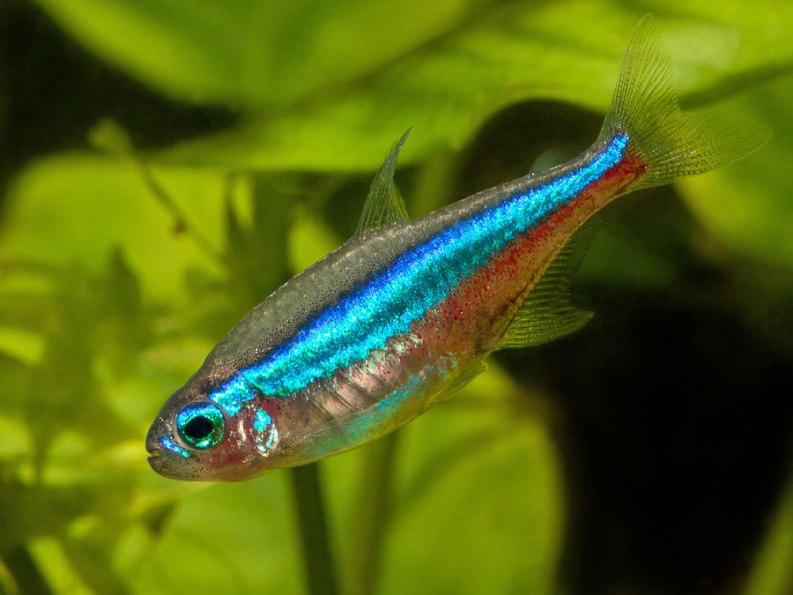
Paracheirodon simulansGreen Neon Tetra
Géry, 1963
Max length25mm SL1.0in SLTank45 × 30cm18 × 12inTemp21–35°C70–95°FpH3.0–6.5For aquarists perhaps more useful are the subtle differences in colour pattern with P. simulans differing from both P. innesi and P. axelrodi in possessing a greener (vs. bluer) lateral stripe which covers more (vs. less) of the eye/head and extends to the caudal-fin base (vs. terminating anterior to caudal-fin base), a lesser (vs. greater) amount of relatively duller (vs. brighter) red pigmentation on the flanks. The taxonomic history of all three species is complicated with earlier authors such as Géry (1960, 1977) ten...