Results for “genus”
Type a name: scientific, common, or one a species used to go by. Or narrow the catalogue with the filters.
Filters
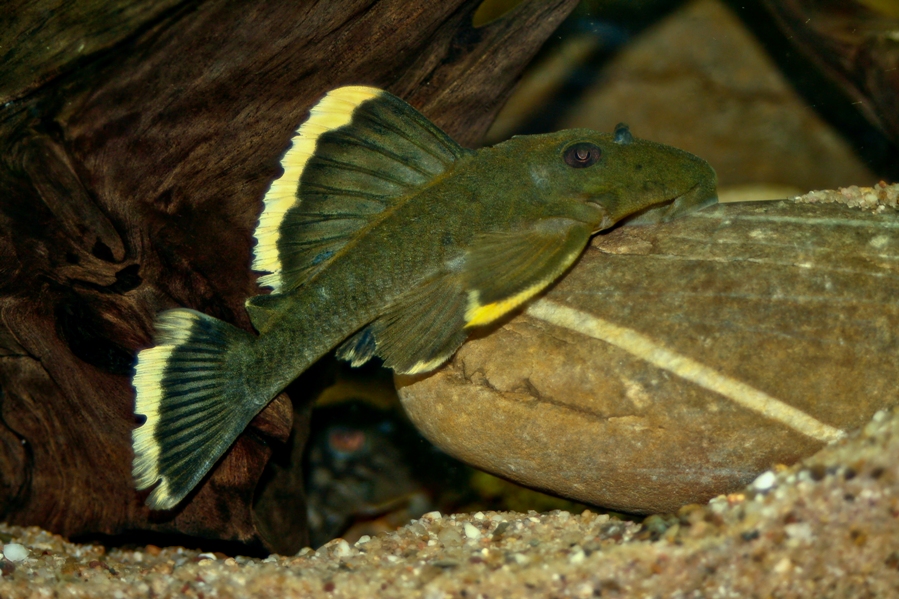
Baryancistrus chrysolomusMango Pleco
Rapp Py-Daniel, Zuanon & Ribeiro de Oliveira, 2011
Max length219mm SL9in SLTank120 × 45cm48 × 18inTemp27–32°C81–90°FpH6.0–7.5Prior to description this species was traded under the DATZ code L047 or the alternative vernacular name 'magnum pleco'. It can be distinguished from congeners by a combination of the following characters: presence of a broad, light-coloured (usually yellowish) distal band on the dorsal and caudal fins throughout life, slightly reduced in adults. The only other member of the genus to possess such bands is B. xanthellus but in that species they are reduced to small markings at the fin tips in adults, and the body is covered in pale, normally yellowish, spots.
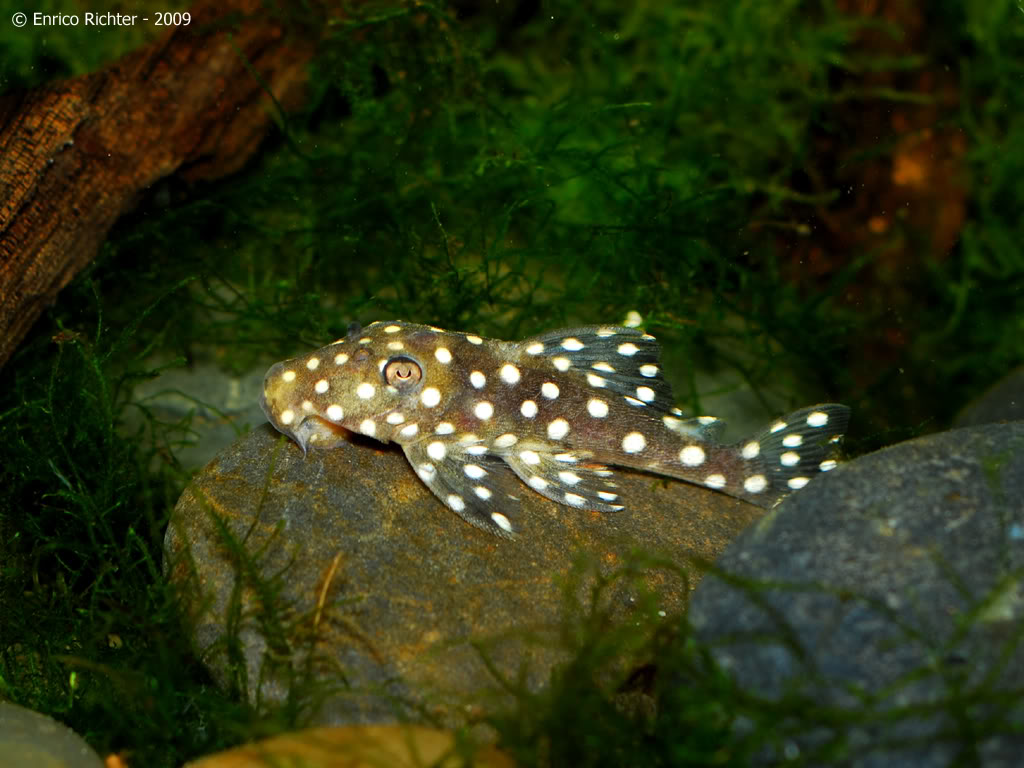
Baryancistrus sp. L142Big White Spot Pleco
authority not recorded
Max length250mm SL10in SLTank120 × 45cm48 × 18inTemp27–32°C81–90°FpH6.0–7.5The genus Baryancistrus can be distinguished from all other loricariids by possession of an enlarged membrane located posteriorly to the last branched dorsal-fin ray. This membrane may or may not reach the supporting structure of the adipose fin and in this way members can be told apart from the genera Oligancistrus, Parancistrus, and Spectracanthicus, in which the dorsal and adipose fins are completely connected, and Hemiancistrus...
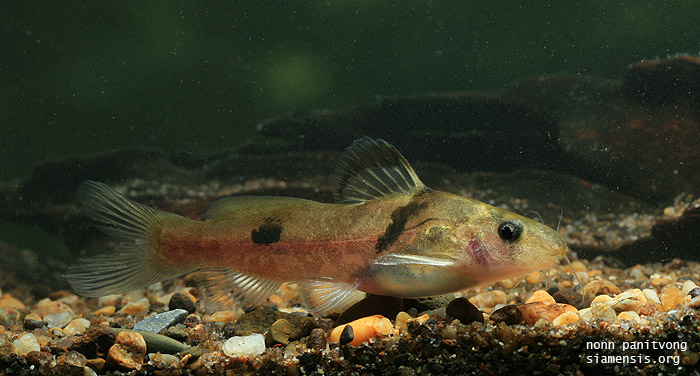
Batasio fluviatilis
Day, 1888
Max length72mm SL2.8in SLTank120 × 30cm48 × 12inTemp16–24°C61–75°FpH6.0–7.0Batasio havmolleri (Smith, 1931) is currently considered a junior synonym of B. fluviatilis. Members of the genus Batasio are characterised by the following combination of characters; laterally-compressed body shape; presence of large sensory pores on the head; a narrow mental region; a pair of prominent posterior proces...
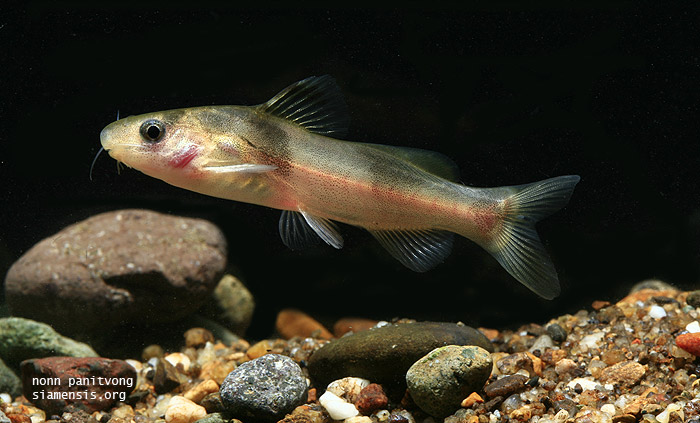
Batasio tigrinus
Ng & Kottelat, 2001
Max length80mm SL3.1in SLTank120 × 30cm48 × 12inTemp17–23°C63–73°FpH6.0–7.0Members of the genus Batasio are characterised by the following combination of characters; laterally-compressed body shape; presence of large sensory pores on the head; a narrow mental region; a pair of prominent posterior processes on the anterior portion of the vomer; a transversely elongated, bar-like entopterygoid; close contact between the metapterygoid and quadrate.
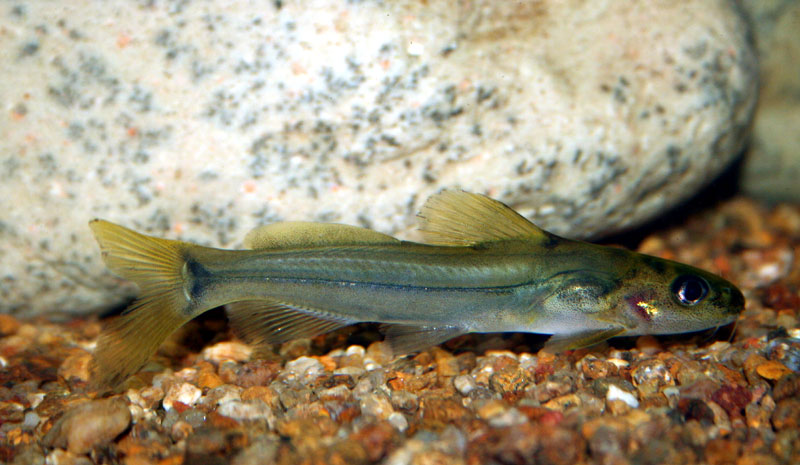
Batasio travancoriaMalabar Batasio
Hora & Law, 1941
Max length100mm SL3.9in SLTank120 × 30cm48 × 12inTemp18–25°C64–77°FpH6.0–7.0The only other described member of the genus native to southwestern India is B. sharavtiensis which occurs a little further north than B. travancoria in Karanataka state. The two are easily distinguished by colour pattern in that B. travancoria possesses a darkish midlateral stripe and a poorly-defined, but normally visible, post-opercular spot, whereas B. sharavtiensis has no such mark...
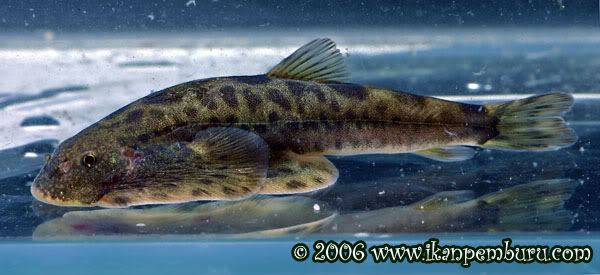
Beaufortia szechuanensis
Fang, 1930
Max length69mm SL2.7in SLTank75 × 30cm30 × 12inTemp16–24°C61–75°FpH6.5–8.0At time of writing there exist 18 recognised members of the genus though only B. kweichowensis is well-known in the trade with B. szechuanensis unlikely to have been exported. According to Chen, Huang and Yang (2009) it can be distinguished from similar congeners by the following suite of characters: 1 branched and 17-20 simple pectoral-fin rays...
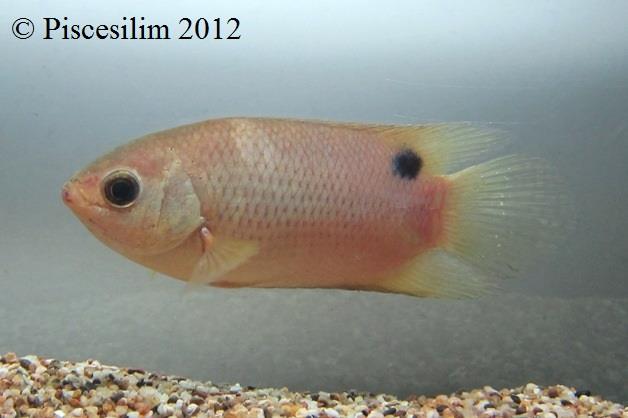
Belontia hasseltiJava Combtail
Cuvier, 1831
Max length200mm SL8in SLTank120 × 30cm48 × 12inTemp21–26°C70–79°FpH4.5–8.5This species is also referred to by the vernacular name 'Malay combtail'. In terms of external characters it differs most obviously from its only congener, B. signata by its overal brownish grey (vs. reddish) body colouration and presence of a mosaic-type patterning in the unpaired fins (vs. absence). The position of relatedness of the genus Belontia with respect to other anabantoids remains somewhat...
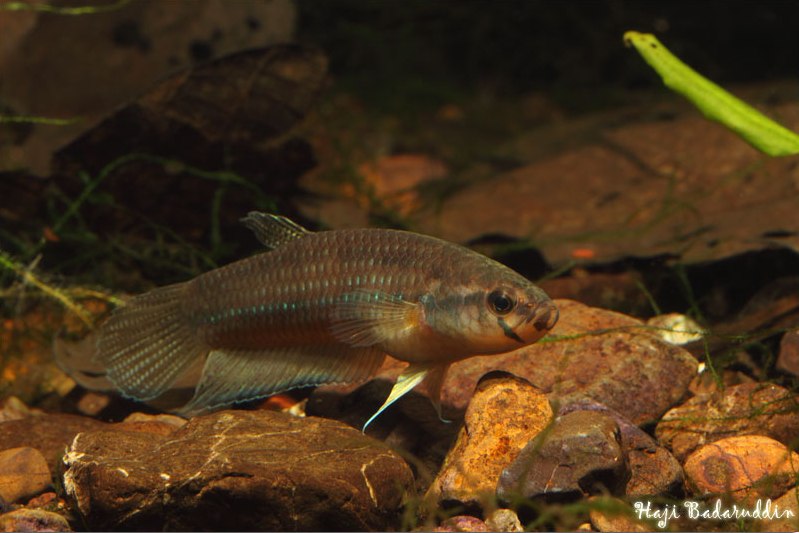
Betta antoni
Tan & Ng, 2006
Max length50mm SL2.0in SLTank60 × 30cm24 × 12inTemp22–27°C72–81°FpH5.5–7.0The genus Betta is the most speciose within the family Osphronemidae with almost 70 recognised members and looks set to grow further with new ones continuing to be described on a regular basis since the turn of the century. Member species have successfully adapted to inhabit a variety of ecological niches from stagnant ditches to flowing hill streams including some extreme environments such as highly acidic peat swamp forests.
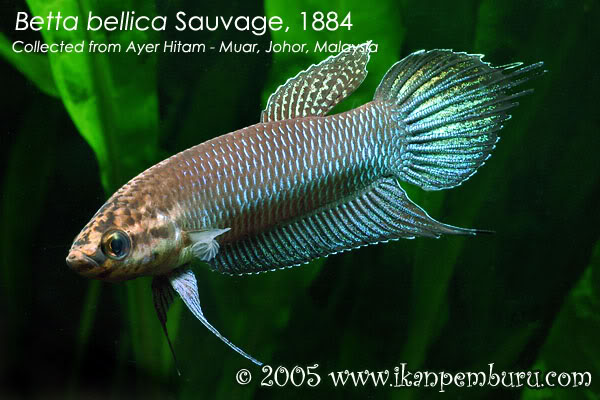
Betta bellicaSlender Betta
Sauvage, 1884
Max length90mm SL3.5in SLTank80 × 30cm31 × 12inTemp25–30°C77–86°FpH4.0–7.0This species lends it name to the B. bellica group/complex of closely-related species within the genus, an assemblage of which members share the following set of characters: long and slender body with dorsal and ventral margins almost parallel; body depth 23-28 % SL; 30-33 anal-fin rays; 11-13 dorsal-fin rays; 32-34 total vertebrae; body dark brown in colour with iridescent green markings on each individual scale.
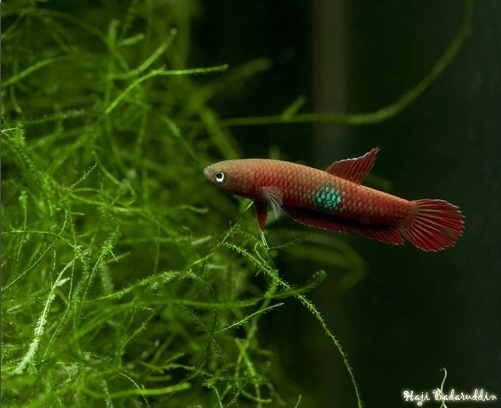
Betta brownorum
Witte & Schmidt, 1992
Max length30mm SL1.2in SLTank45 × 30cm18 × 12inTemp24–30°C75–86°FpH3.0–6.0B. brownorum is included in the Betta coccina group/complex of closely-related species within the genus. This assemblage mostly comprises small, red-coloured fishes with the exceptions of B. persephone and B. miniopinna which are darkish. Identifying some of the red ones correctly is not always easy as the patterning in them can be both similar and confusingly variable. In B. brownorum and B. livida, for example, both male and female individuals may or may not possess a green lateral blotch.
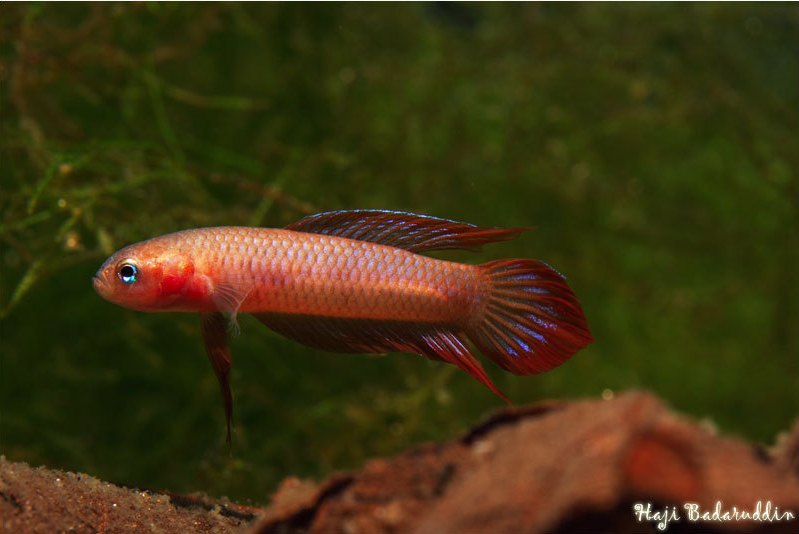
Betta burdigala
Kottelat & Ng, 1994
Max length35mm SL1.4in SLTank45 × 30cm18 × 12inTemp22–30°C72–86°FpH4.0–6.0B. burdigala is exceptionally rare in the hobby with many fishes traded or pictured as such being B. uberis or other congener. It's included in the Betta coccina group/complex of closely-related species within the genus. This assemblage mostly comprises small, red-coloured fishes with the exceptions of B. persephone and B. miniopinna which are darkish. Identifying some of the red ones correctly is not always easy as the patterning in them can be both similar and confusingly variable.
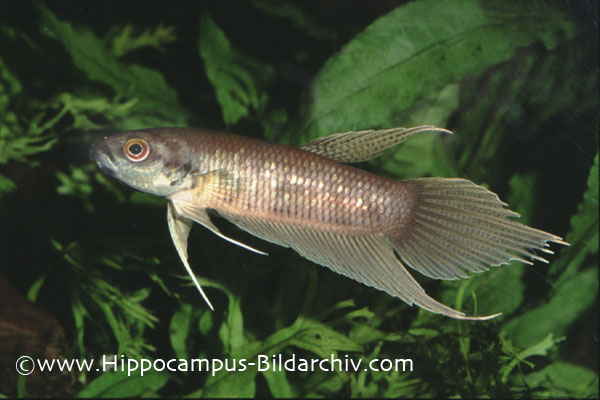
Betta chloropharynxGreen Throat Mouthbrooder
Kottelat & Ng, 1994
Max lengthnot recordedTank80 × 30cm31 × 12inTemp24–28°C75–82°FpH3.5–6.0B. chloropharynx is included in the Betta waseri group/complex of closely-related species within the genus, an assemblage which also includes a handful of potentially new species such as B. sp. 'Medas' on an unofficial basis. The easiest way to distinguish these is by examining the throat markings which vary according to species. In this case the lighter of these form a shape that roughly resembles a horizontal figure of ei...
Betta coccinaScarlet Betta
Vierke, 1979
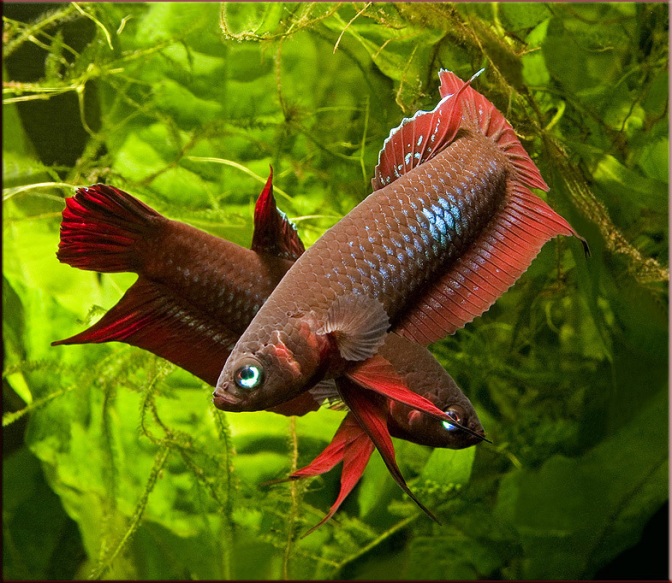
Max length40mm SL1.6in SLTank45 × 30cm18 × 12inTemp22–30°C72–86°FpH4.0–6.0B. coccina can be told apart from other members by the following combination of characters: iridescent green lateral blotch present in male, absent in female; body dark red in colour; no parallel vertical iridescent gold opercle bars; pelvic fin falcate with black filamentous tip, remainder red; median fins with discrete iridescent green spots; dorsal fin-rays 9-12; anal-fin rays 27-29; subdorsal scales 7-8; lateral scales 31-32; predorsal scales 18-21. The genus Betta is the most speciose within the family Osphronemidae with almost 70 reco...
Betta dennisyongi
Tan, 2013
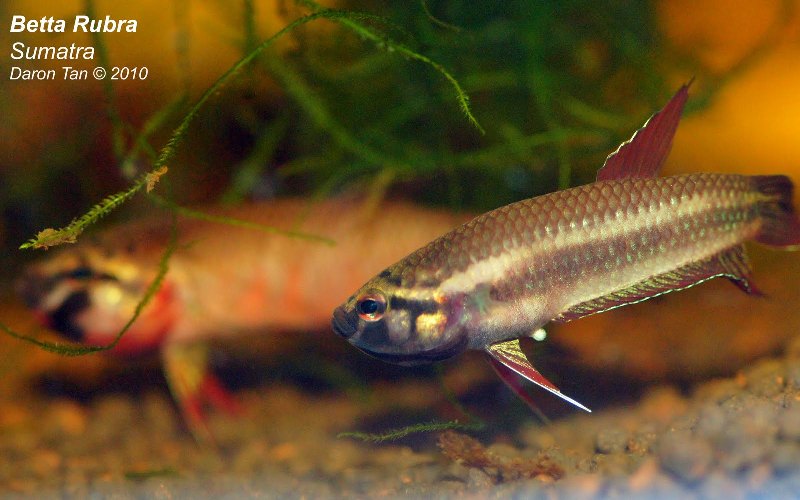
Max length36mm SL1.4in SLTank45 × 30cm18 × 12inTemp22–27°C72–81°FpH5.0–7.0This species is available in the aquarium hobby but is not traded in large numbers and may have been inadvertently hybridised with the similar-looking congener B. rubra prior to its description since they're typically exported mixed together. It's included in the B. rubra group of closely-related species within the genus, an assemblage erected by Schindler and van der Voort (2012) who...
Betta edithae
Vierke, 1984
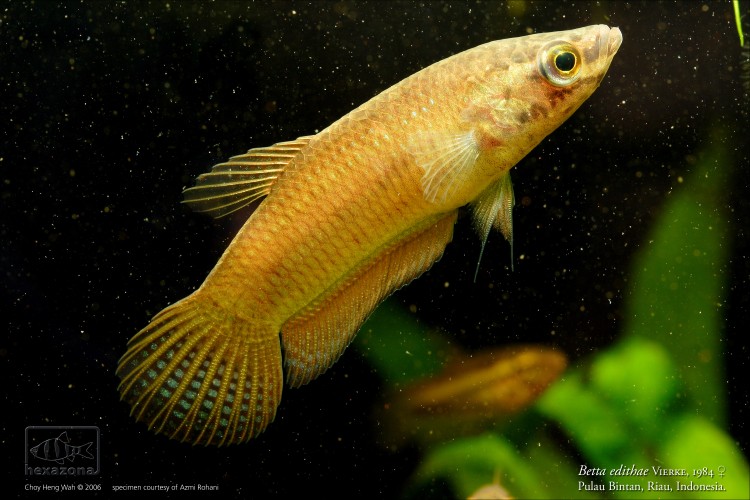
Max length60mm SL2.4in SLTank80 × 30cm31 × 12inTemp20–27°C68–81°FpH5.0–7.0This species is the only member of the B. edithae group within the genus, and separated from all other Betta spp. by the fact that the branchiostegal membrane and posterior portion of the opercle are opaque or translucent. The original diagnosis by Vierke also states that it has relatively small eyes and short fins with a typical pattern of partial barring.
Betta enisae
Kottelat, 1995
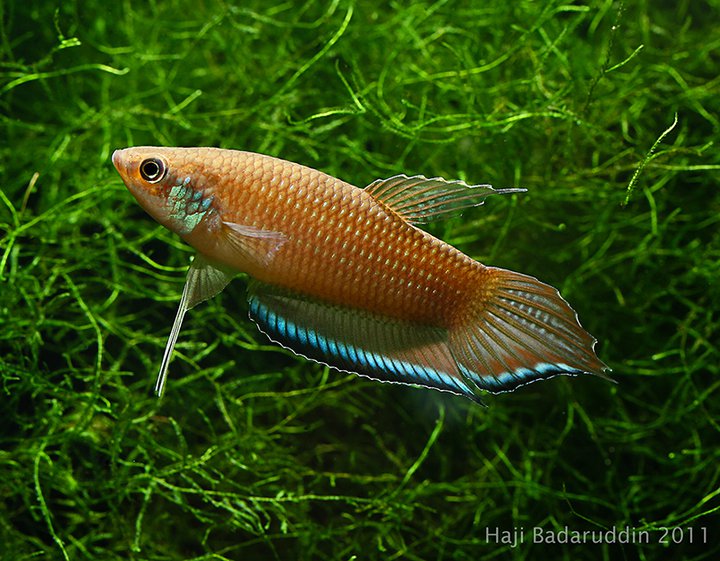
Max length60mm SL2.4in SLTank45 × 30cm18 × 12inTemp21–24°C70–75°FpH5.5–7.0This species is included in the B. pugnax complex of closely-related species within the genus, an assemblage of which members are notoriously difficult to tell apart from one another, but which can be characterised collectively by the following set of shared characters: relatively large head measuring 28-40% SL; live colouration usually brown with green or blue iridescent spots; male with similarly-coloured scales on opercle, sometimes extending to abdomen; juveniles and females usually brown with two central body stripes and a dark marking on the caudal peduncle; anal-fin in mature specimens pointed and often elongated; caudal-fin lanceolate.
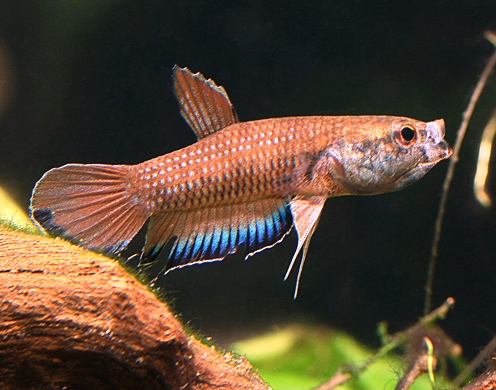
Betta falx
Tan & Kottelat, 1998
Max length50mm SL2.0in SLTank60 × 30cm24 × 12inTemp22–27°C72–81°FpH4.7–6.8B. falx is included in the Betta picta group/complex of closely-related species within the genus, an assemblage comprising species with the following shared characters: unpaired fins rounded (anal-fin sometimes tapering to a blunt point); anal-fin rays I-III, 18-24; dark marginal band on anal and caudal fins, more pronounced in mature males; presence of pre-orbital and post-orbital stripes; presence of chin bar on throat; iridescent green, gold, or blue scales on opercle.
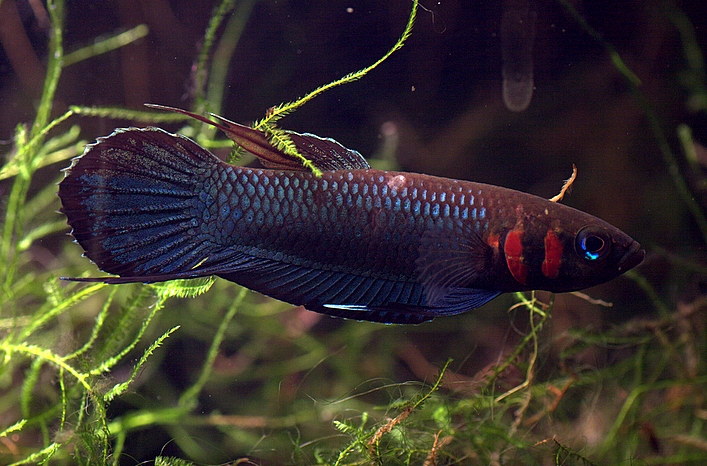
Betta foerschi
Vierke, 1979
Max length50mm SL2.0in SLTank60 × 30cm24 × 12inTemp22–28°C72–82°FpH4.0–6.0This species lends its name to the Betta foerschi group of closely-related species within the genus, of which members share the following set of characters: possession of iridescent blue or green unpaired fins; rays and interradial membranes in unpaired fins not contrasting; dorsal fin with thin, bright white distal band; opercle with two, reddish-yellow, vertical bars. Members are regarded as being closely-related to bubble nesting Betta specie...
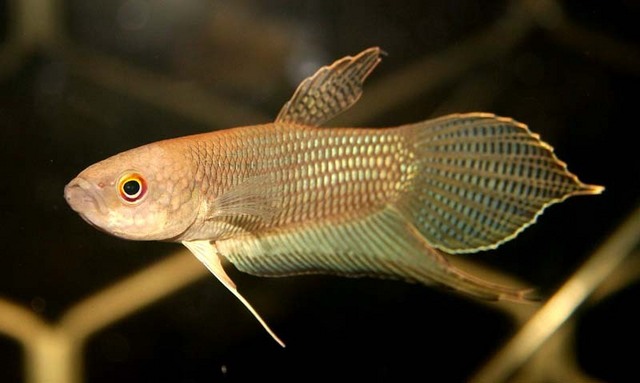
Betta ibanorum
Tan & Ng, 2004
Max length85mm SL3.3in SLTank80 × 30cm31 × 12inTemp24–28°C75–82°FpH4.0–7.0B. ibanorum is uncommon in the hobby and is apparently more frequently fished for food than the aquarium trade. It's included in the Betta akarensis group/complex of closely-related species within the genus, of which members share the following set of characters: possession of pre-orbital and post-orbital stripes (the post-orbital stripe is faint or interrupted in some species); chin bar present; caudal-fin lance...
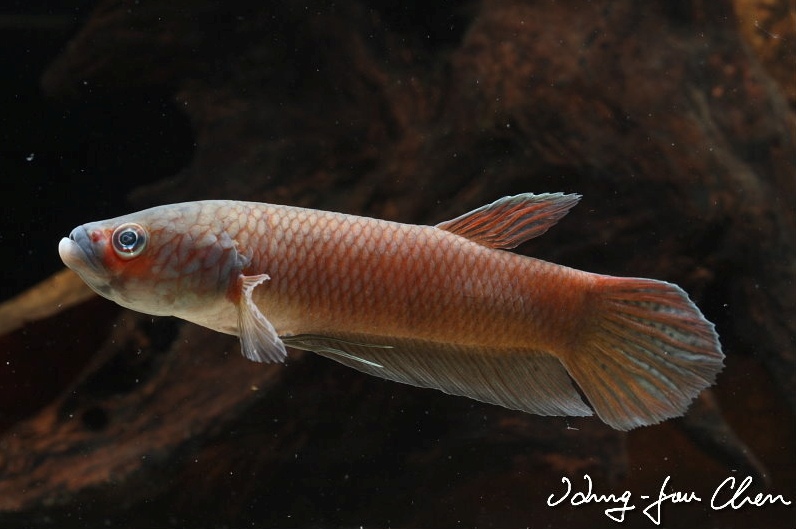
Betta ideii
Tan & Ng, 2006
Max length110mm SL4in SLTank90 × 30cm36 × 12inTemp20–26°C68–79°FpH5.5–7.5Prior to official description this species was traded as B. sp. 'Laut'. It's included in the Betta unimaculata complex of closely-related species within the genus, , of which members share the following set of characters: body long and slender with depth at dorsal fin origin 18-25 % SL; head large and blunt with width 19-24 % SL; long maxilla and lower lip with distance from tip of lower jaw to posterior end of maxilla 27-54 % HL; caudal-fin rounded in sha...