Results for “species name”
Type a name: scientific, common, or one a species used to go by. Or narrow the catalogue with the filters.
Filters
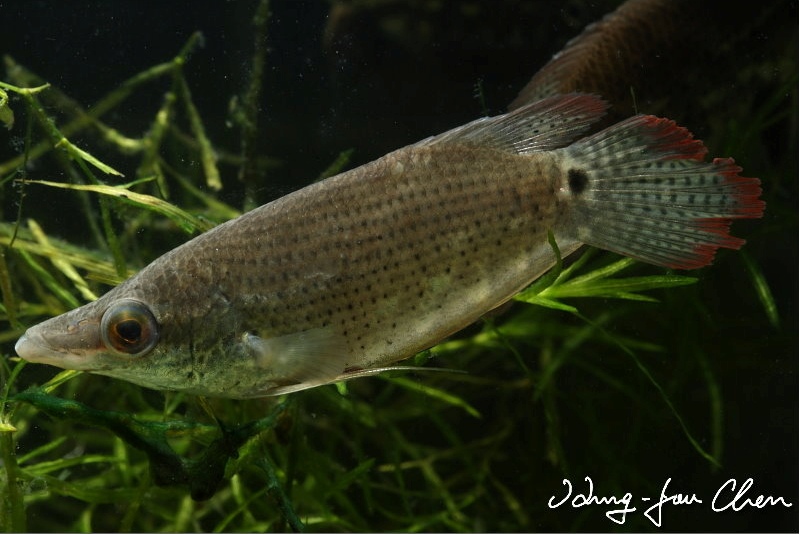
Ctenops nobilisFrail Gourami
McClelland, 1845
Max length100mm SL3.9in SLTank120 × 30cm48 × 12inTemp15–25°C59–77°FpH5.0–7.5This species is also referred to by the alternative vernacular name of 'noble gourami' and is currently the only recognised member of the genus Ctenops. It is usually regarded as being very difficult to keep whereas in reality it is quite adaptable once acclimatised but appears to react poorly to the export and shipping process meaning it is often seen on sale in poor condition and susceptible to or already infested with secondary health issues such as Oödinium, to which it appear...
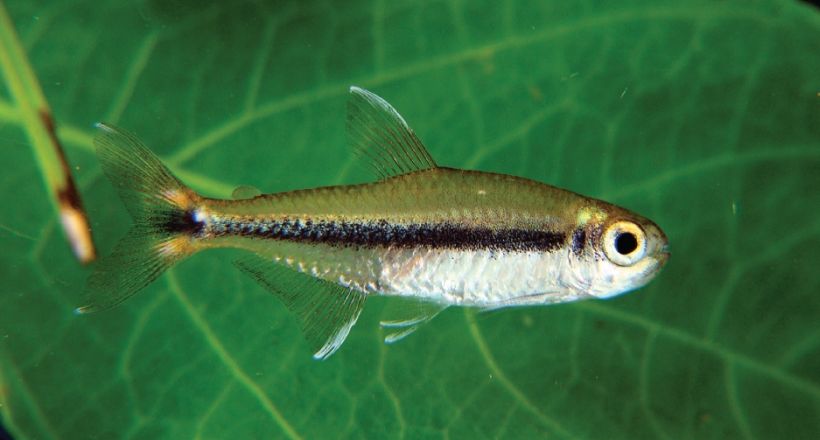
Hyphessobrycon stegemanniSavanna Tetra
Géry, 1961
Max length35mm SL1.4in SLTank60 × 30cm24 × 12inTemp20–25°C68–77°FpH5.5–7.5In the aquarium hobby the name Hyphessobrycon stegemanni has frequently been misapplied to a species that has been described as Hemigrammus ataktos Marinho, Dagosta, & Birindelli 2014. The reasons for this confusion are presumably that the two occur sympatrically in the rio Tocantins system and both possess a dark lateral stripe on the body.
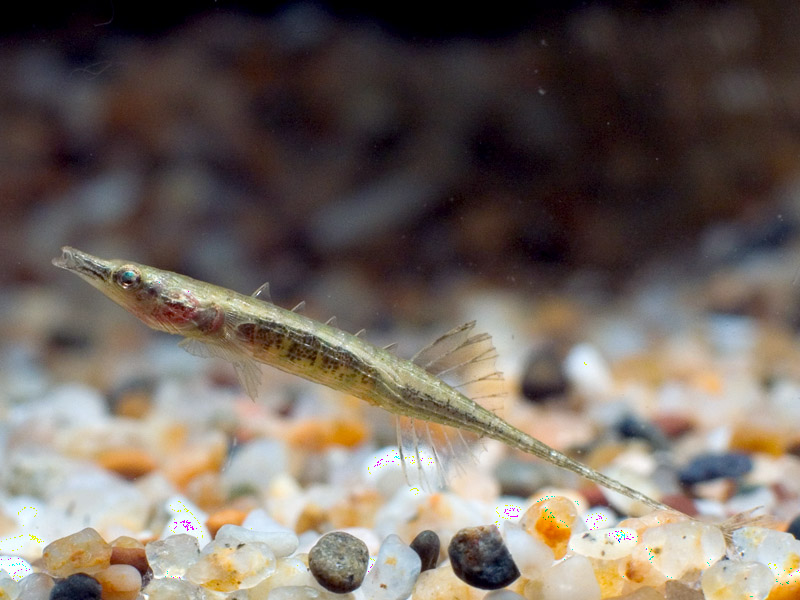
Indostomus paradoxusArmoured Stickleback
Prashad & Mukerji, 1929
Max length30mm SL1.2in SLTank40 × 20cm16 × 8inTemp22–27°C72–81°FpH6.5–7.5This species is rare in the aquarium hobby though its name is often misapplied to the closely-related I. crocodilus. It can be told apart from congeners by the following characters: dorsal and anal fins without dark markings, with a light brown bar in breeding males; ventral surface light brown; throat white, occasionally with a few brown spots; ridges of head bones weakly serrated or not serrated, depending on the bone. The family Indostomidae currently contains just a single genus with three species of which I. paradoxus is the type. It was raised alongside both family...
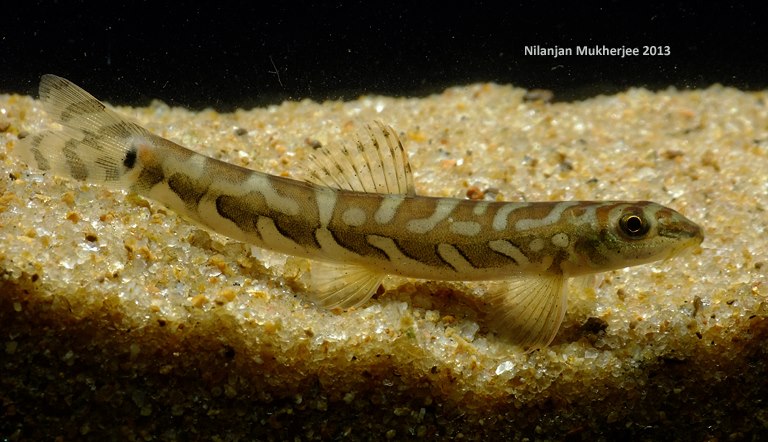
Mesonoemacheilus triangularisZodiac Loach
Day, 1865
Max length60mm SL2.4in SLTank75 × 30cm30 × 12inTemp18–25.5°C64–78°FpH6.0–7.5This species is also referred to by the alternative vernacular name 'Batik loach' and is the most-commonly traded member of the genus at present. It's easily-distinguished from congeners by body patterning which comprises a series of pale, oblique saddle-like markings edged in black and running along the dorsal surface, plus a similar set of bars originating from the otherwise plain ventral surface.
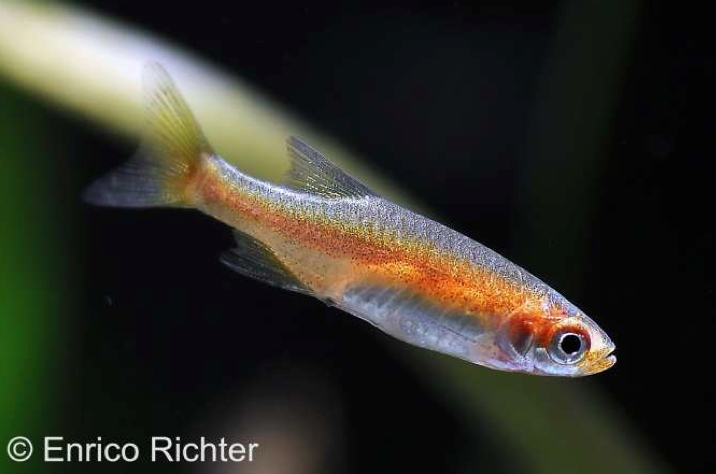
Microrasbora rubescensRed Dwarf 'Rasbora'
Annandale, 1918
Max length30mm SL1.2in SLTank60 × 30cm24 × 12inTemp20–24°C68–75°FpH6.0–8.0This species may be seen on sale under various trade names including 'red-line dwarf rasbora', 'emerald dwarf rasbora', or 'red dwarf rasbora'. A similar-looking, apparently undescribed congener has been collected near the town of Hopong, also in Shan State. It differs from M. rubescens by possessing a greenish to bluish lateral stripe plus a larger adult size, and is traded as Microrasbora cf. rubescens, M. 'thuzari', M. sp. 'rose blue line', 'Asian Cardinal Rasbora', or 'flame red rasbora'.
Ctenopoma kingsleyaeTailspot Ctenopoma
authority not recorded
Max length250mm SL10in SLTanknot recordedTemp25–28°C77–82°FpH6.0–8.0This species can be exceptionally long-lived and there are reports of specimens surviving in aquaria for over 30 years. It is named after the explorer Mary Kingsley, and often goes by the common name of Kingsley's climbing perch. While Ctenopoma are closely related to the Asian climbing perch (Anabas sp.), they are not known to have the ability to cross areas of land like this species. Like others in the suborder Anabantoidei, the species possesses an accessory breathing organ known as t...
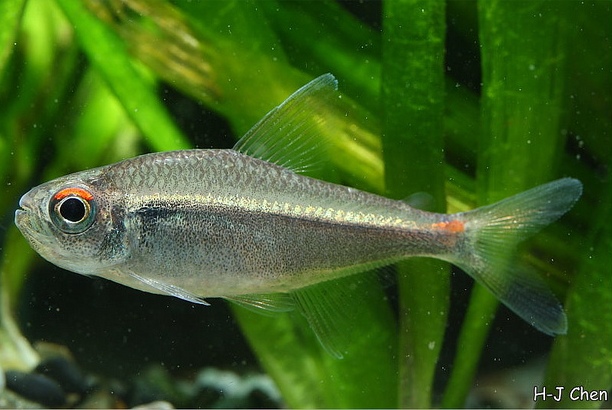
Hyphessobrycon agulha
Fowler, 1913
Max length42mm SL1.7in SLTank80 × 30cm31 × 12inTemp20–28°C68–82°FpH5.5–7.5This species is relatively rare in the aquarium hobby but is occasionally traded as 'red-tailed flag tetra'. It lends its name to the H. aghula group of closely-related species within the genus as proposed by Géry (1977, see below) of which members share the following characters which set them apart from other characids: lower half of the body dark, especially above the anal-fin; usually possessing a laterally-elongate humeral spot, more-or-less united wit...
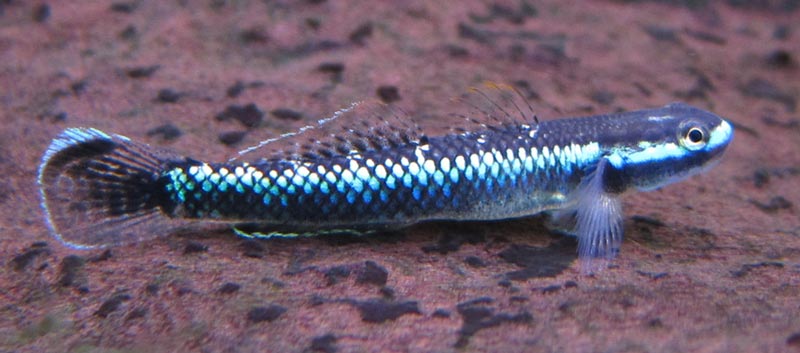
Stiphodon atropurpureusBlue Neon Goby
Herre, 1927
Max length50mm SL2.0in SLTank60 × 30cm24 × 12inTemp22–26°C72–79°FpH6.5–7.5This species is available occasionally, though not always under the correct name. We've seen it on sale as S. elegans on numerous occasions, for example, and other trade names include 'Sumatran blue neon goby' (it's not found on Sumatra), 'cobalt blue goby' and 'freshwater neon goby'. Further...
Synodontis notataOne-spot Synodontis
authority not recorded
Max length275mm SL11in SLTank120 × 30cm48 × 12inTemp22–25°C72–77°FpH6.5–7.5Also known as the Domino Synodontis or the One-spot Squeaker, several regional variants of S. notata are known, some of which have 3, 6 or 12 spots and others none at all. Some of these are seen for sale under the invalid name S. ocellata. It is also often imported with similar species such as S. nummifer or S.congica. These are usually then all sold as notata. S. notata is more active during the day than many Syno species and therefore makes a good addition to aquariums with more boisterous...
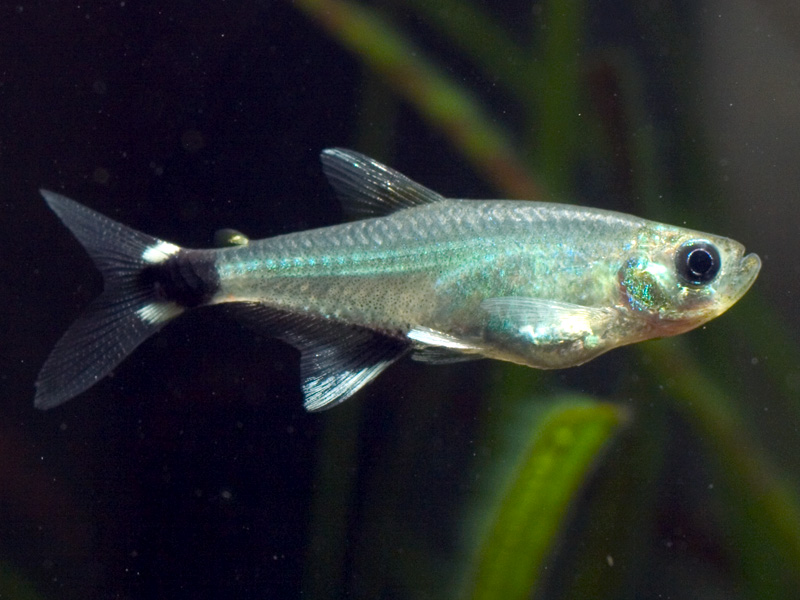
Aphyocharax nattereriDawn Tetra
Steindachner, 1882
Max length35mm SL1.4in SLTank60 × 30cm24 × 12inTemp22–27°C72–81°FpH5.5–7.5This species is normally referred to as A. paraguayensis, but that name has been considered a synonym of A. nattereri since 2003. Confusion remains however, as the type locality for the latter is 'Villa Bella', now known as Parintins, a settlement on the main Amazon river channel between Manaus and Santarém and many kilometres away from the majority of confirmed localities.
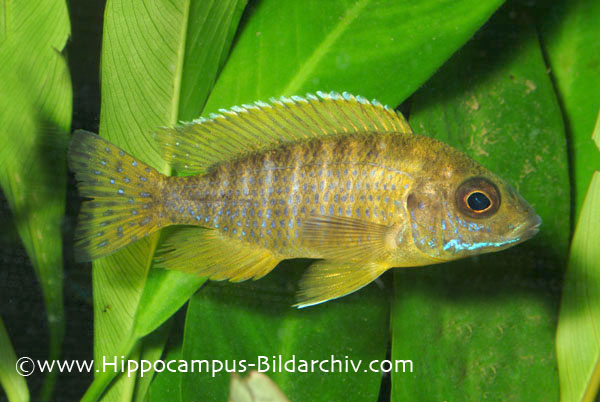
Aulonocara sp. 'stuartgranti maleri'Sunshine Peacock
authority not recorded
Max length120mm SL5in SLTank120 × 45cm48 × 18inTemp25–29°C77–84°FpH7.5–9.0It remains unclear whether this fish represents an as yet undescribed species or not but in either case the unofficial, vernacular name is confusing due to it being based on that of a described taxon. As a result it is often referred to as A. stuartgranti 'Maleri' or 'Maleri Islands', either through error or because some authors believe it to be conspecific with A. stuartgranti. The population from the Maleri Islands is traded as 'yellow regal peacock' (not to be confused with the 'new yellow regal peacock', i.e., A. baenschi) and the one from Chidunga Rocks as 'sunshine peacock' or 'orange peacock'.
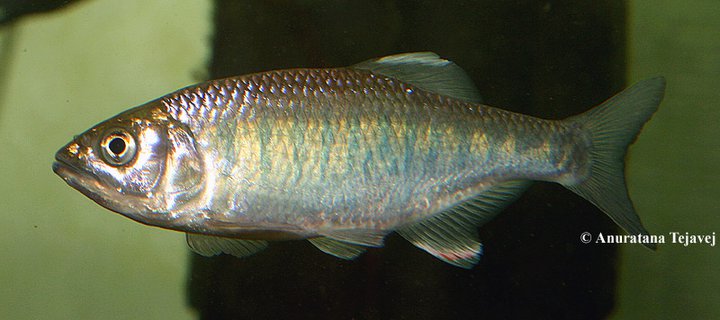
Barilius gatensisMalabar Baril
Valenciennes, 1844
Max length130mm SL5in SLTank150 × 60cm60 × 24inTemp18–26°C64–79°FpH6.0–7.5This species is traded very occasionally, sometimes under the alternative vernacular names of 'river baril, 'river carp-baril', or 'striated hill trout'. It can be told apart from congeners by the following combination of characters: 1 pair of minute rostra...
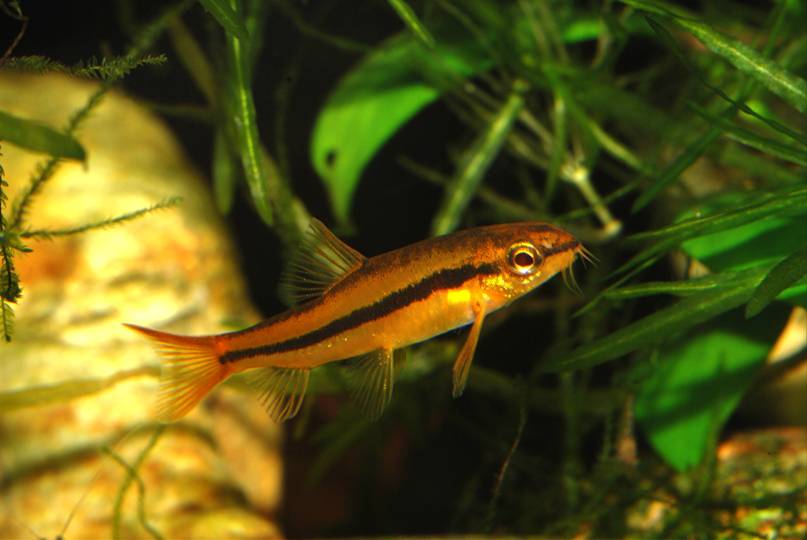
Petruichthys sp. 'rosy'Rosy Loach
authority not recorded
Max length30mm SL1.2in SLTank60 × 30cm24 × 12inTemp20–26°C68–79°FpH6.5–8.0This species continues to be referred to by the fictitious scientific name 'Tuberoschistura arakensis' but actually appears to be an undescribed Yunnanilus sp. and is also sometimes traded as Y. sp. 'orange' or 'Burmese pink loach' but appears to be a member of the genus Petruichthys as per Kottelat (2012). There exist more than 30 described Yunnanilus spp., the...
Rasbora caudimaculataGreater Scissortail Rasbora
authority not recorded
Max length150mm SL6in SLTank150 × 45cm60 × 18inTemp20–26°C68–79°FpHnot recordedThis striking species may also be seen on sale with the trade name of 'red scissortail'. It can be distinguished from the similar-looking R. trilineata by the presence of orange/red colouration in the with other diagnostic features including black tips to the caudal lobes, 11-12 predorsal scale rows and a dark reticulated pattern to the edges of the scales. The 'scissortail' moniker is derived from the characteristic twitching motion of the when the fish is at rest. Rainb...
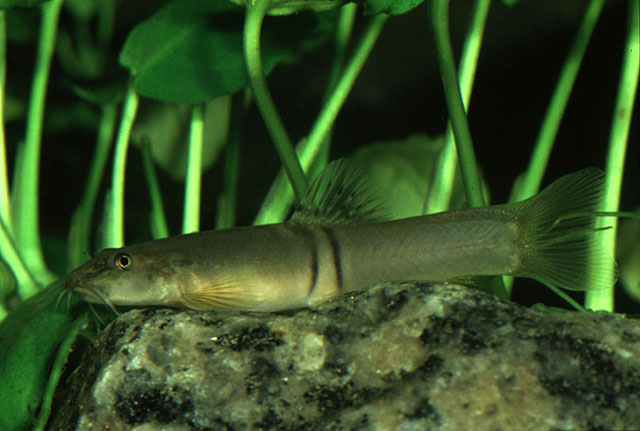
Schistura balteataSumo Loach
Rendahl, 1948
Max length80mm SL3.1in SLTank90 × 30cm36 × 12inTemp22–26°C72–79°FpH6.0–7.5This species is quite uncommon in the aquarium hobby although its name is sometimes used in reference to the similar-looking, apparently undescribed congener S. cf. balteata, and both are also traded as 'sumo loach', 'tri-banded sumo loach', and 'orange saddle-back loach'. Following Kottelat (1990) it's diagnosed by the following combination of characters: unique colour pattern consisting of two da...
Lamprologus speciosus
authority not recorded
Max length65mm SL2.6in SLTanknot recordedTemp23–27°C73–81°FpH7.5–9.0This species is very similar to L. ocellatus and often carries the trade name "black ocellatus". It is found living alongside L. stappersi in nature....
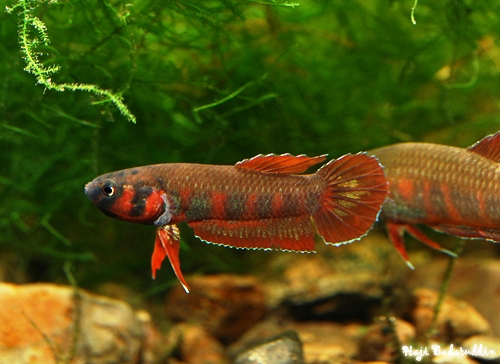
Betta rubra
Perugia, 1893
Max length42mm SL1.7in SLTank45 × 30cm18 × 12inTemp22–27°C72–81°FpH5.0–6.5This species was previously included in the Betta foerschi group of closely-related species within the genus, but following its redescription in 2012 now lends its name to the B. rubra group. It was first placed into its own species group by Witte and Schmidt (1992), primarily on the basis of a triangular marking that appears below the eyes of the fish, although Tan and Ng (2005) suggested that this feature is insufficient to warrant the fo...
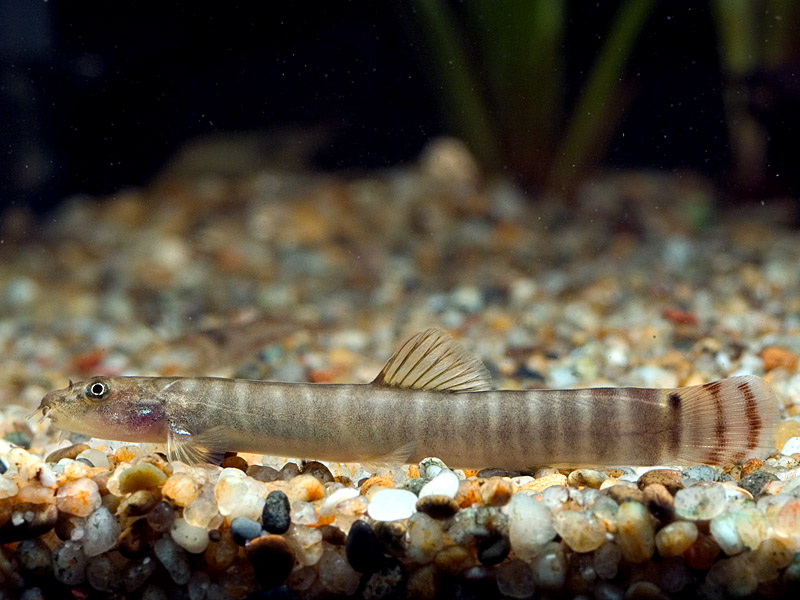
Aborichthys sp. 'AR01'
authority not recorded
Max length55mm SL2.2in SLTank60 × 30cm24 × 12inTemp21–26°C70–79°FpH6.0–7.5This fish is usually traded as A. elongatus but that species appears endemic to higher altitude waters of the Brahmaputra drainage in Darjeeling District which borders Jalpaiguri to the north east. These flow down from the Sivalik Hills whereas the Raidak I originates in Bhutan. Only three species of Aborichthys have been officially described to date meaning this is likely to represent an undescribed species. It was pictured in Tekriwal and Rao (1999) under the name 'A. bijulensis' but...
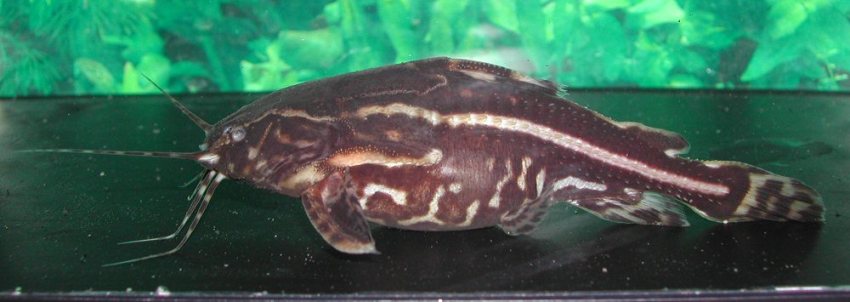
Acanthodoras cataphractusChocolate Talking Catfish
Linnaeus, 1758
Max length115mm SL5in SLTank120 × 30cm48 × 12inTemp22–26°C72–79°FpH6.0–7.5This species, which may also be referred to by the alternative vernacular names 'spiny catfish', 'painted talking catfish' or 'chocolate raphael', isn't particularly common in the trade and most often exported only as bycatch among shipments of Platydoras armatulus. It appears very similar to the congener A. spinosissimus with the most useful external distinguishing character being the presence of pale blotches on the dorsal surface, between the dorsal and caud...
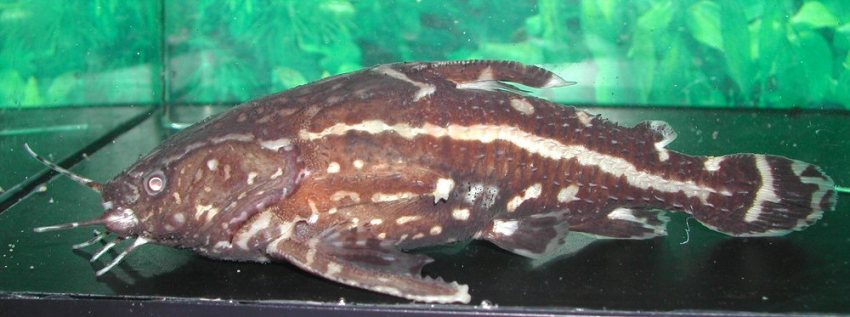
Acanthodoras spinosissimusChocolate Talking Catfish
Eigenmann & Eigenmann, 1888
Max length137mm SL5in SLTank120 × 30cm48 × 12inTemp22–26°C72–79°FpH6.0–7.5This species, which may also be referred to by the alternative vernacular names 'spiny catfish', 'painted talking catfish' or 'chocolate raphael', isn't particularly common in the trade and most often exported only as bycatch among shipments of Platydoras armatulus. It appears very similar to A. cataphractus with the most useful external distinguishing character being the presence of pale blotches on the dorsal surface, between the dorsal and caudal fins, in....