Results for “sp.”
Type a name: scientific, common, or one a species used to go by. Or narrow the catalogue with the filters.
Filters
Melanochromis cyaneorhabdos
authority not recorded
Max length100mm SL3.9in SLTank90 × 45cm36 × 18inTemp24–28°C75–82°FpH7.6–8.8M. cyaneorhabdos was formerly known as M. "maingano", after a village located on the shore off which it is found. It can be distinguished from the similar M. johanni by the overall blueish colouration of dominant males, as opposed to the more black patterning of johanni. It is sometimes incorrectly sold as "electric blue" johanni. Do not keep it with other Melanochromis species as they may hybridise....
Melanotaenia affinisNew Guinea Rainbowfish
authority not recorded
Max length120mm SL5in SLTank120 × 30cm48 × 12inTemp20–30°C68–86°FpH6.5–8.0M. affinis was one of the first rainbowfish species to be imported for the hobby in any numbers. There are several geographical variants, three of which can be found in the hobby. The "standard" form has a large natural range and is the most commonly encountered. The "Pagwi" form has a very limited distribution, being known only from a tributary of the Sepik River in New Guinea, while the "Bluewater Creek" form has only been collected from a single location close t...
Melanotaenia herbertaxelrodiLake Tebera Rainbowfish
authority not recorded
Max length90mm SL3.5in SLTank90 × 30cm36 × 12inTemp20–26°C68–79°FpH7.0–8.0One of the more beautifull-coloured rainbowfish available when mature, M. herbertaxelrodi is probably at risk from overfishing, but not enough data is available to consider it an endangered species as yet....
Melanotaenia trifasciataBanded Rainbowfish
authority not recorded
Max length150mm SL6in SLTank120 × 30cm48 × 12inTemp24–33°C75–91°FpH6.5–8.0M. trifasciata exhibits a wide variation in colour and patterning depending on locality, and it's very important that the different morphs are not mixed in the aquarium, as they will hybridise freely. These different forms are often distinguished by the addition of the name of collection locality being added to the scientific name of the fish. It's thought that several species may in fact be in evidence here, and a reclassification will probably occur at some point As with many othe...
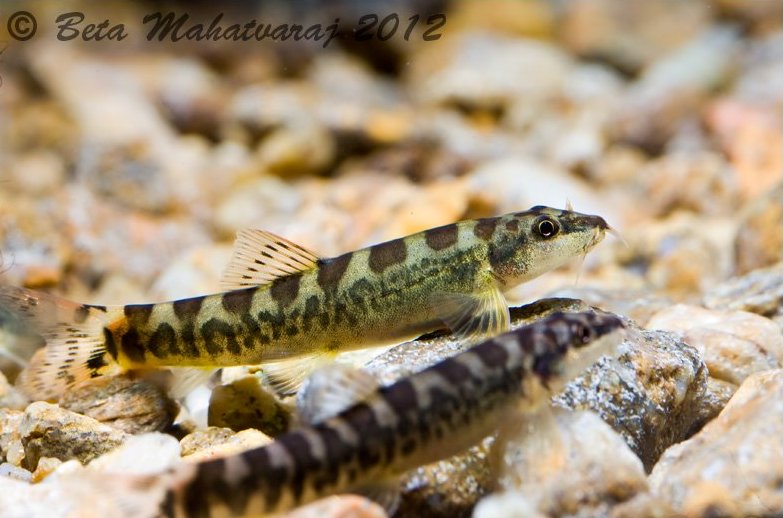
Mesonoemacheilus petrubanarescui
Menon, 1984
Max length50mm SL2.0in SLTank60 × 30cm24 × 12inTemp18–25.5°C64–78°FpH6.0–7.5Type locality is 'Netravati River, Dharmasthala, Karnataka State, India', with the species subsequently recorded from the Kabini (aka Kabani) River basin and it may be endemic to these two drainages. While the Netraviti flows through Karnataka in its entirety before emptying into the Arabian Sea just south of the city of Mangalore, th...
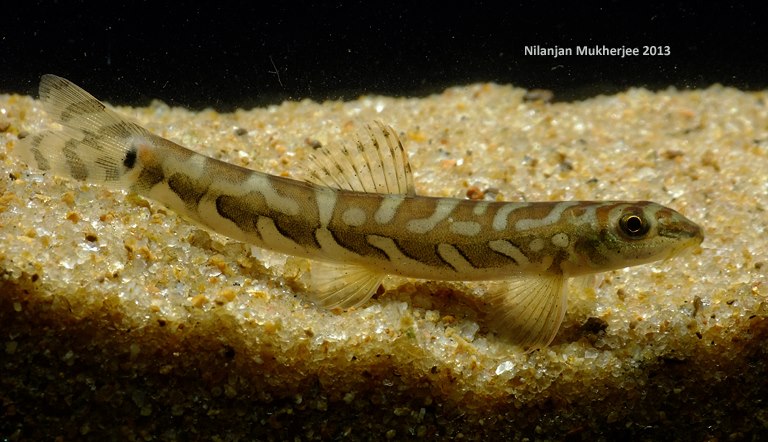
Mesonoemacheilus triangularisZodiac Loach
Day, 1865
Max length60mm SL2.4in SLTank75 × 30cm30 × 12inTemp18–25.5°C64–78°FpH6.0–7.5This species is also referred to by the alternative vernacular name 'Batik loach' and is the most-commonly traded member of the genus at present. It's easily-distinguished from congeners by body patterning which comprises a series of pale, oblique saddle-like markings edged in black and running along the dorsal surface, plus a similar set of bars originating from the otherwise plain ventral surface.
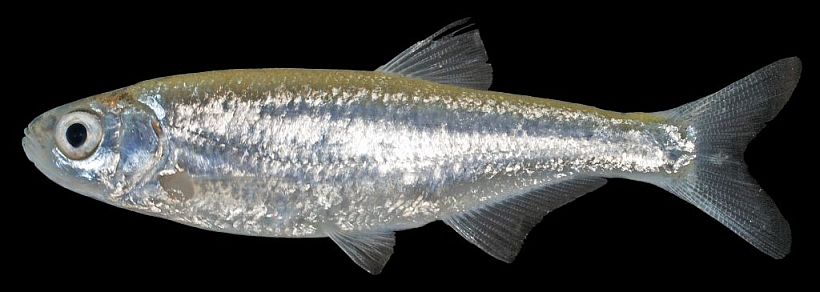
Metzia bounthobi
Shibukawa, Phousavanh, Phongsa & Iwata, 2012
Max length61mm SL2.4in SLTanknot recordedTempnot recordedpHnot recordedThis species can be distinguished from congeners by the following combination of characters: 18–20 (vs. 10-18) branched anal-fin rays; 49–55 (vs. 35-48) lateral-line scale rows; 33–36 (vs. 15-20) predorsal sca...
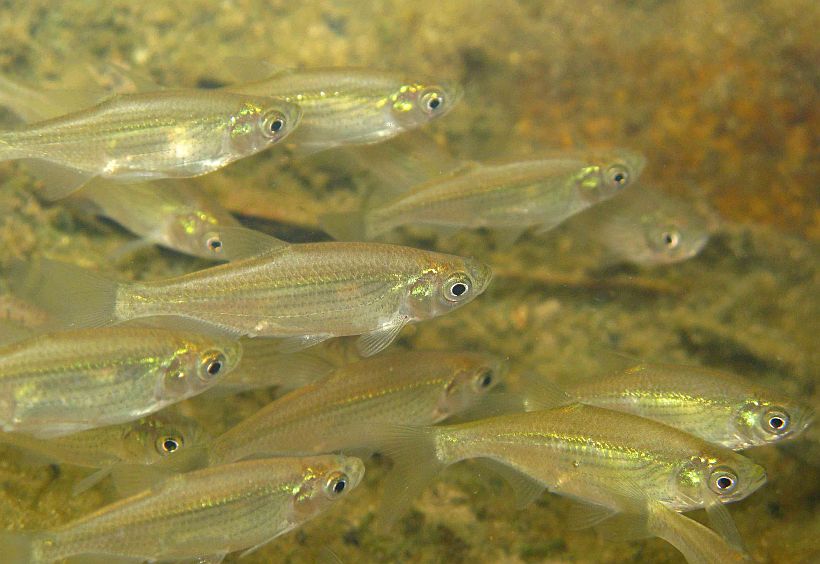
Metzia lineata
Pellegrin, 1907
Max length100mm SL3.9in SLTanknot recordedTempnot recordedpHnot recordedPopulations from the upper Pearl River (Nanpan Jiang basin) differ in several morphological characters from those inhabiting Guangdong, Guangxi, and Guizhou Provinces, and Hainan Island. Those from Vietnam also seem to be different (Gan et al., 2009), the implication being that there may be several species currently included under the name M. lineata.
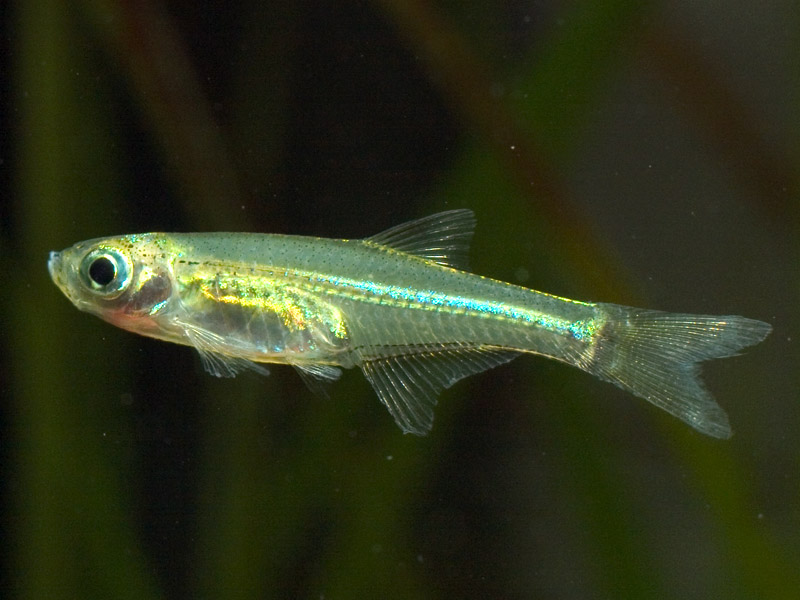
Microdevario gatesi
Herre, 1939
Max length23mm SL0.9in SLTank45 × 30cm18 × 12inTemp20–27°C68–81°FpH6.0–7.5The genus Microdevario was raised by Fang et al. (2009) after phylogenetic analyses revealed that some species formerly included in Microrasbora to be more closely allied with Devario and in need of reclassification. Microdevario is largely separated from Devario and other closely related genera such as Chela and Laubuca by virtue of internal characters but also the following: small adult size; anal and dorsal fins with concave-shaped distal margin; absence of barbels; absence of perforated scales; 9-10 branched anal-fin rays; 7 branched dorsal-fin rays; less abdominal than caudal vertebrae.
Micronema bleekeriBleeker's Sheatfish
authority not recorded
Max length600mm SL24in SLTank180 × 60cm72 × 24inTemp22–27°C72–81°FpH6.0–7.0An irregular import, this species is often confused with some of its congeners. It makes an interesting addition to a community of larger fish.
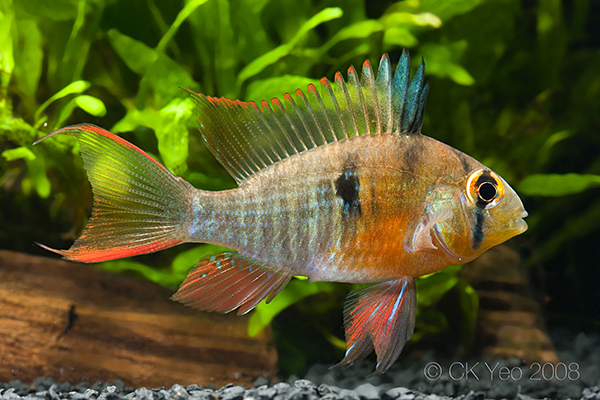
Mikrogeophagus altispinosusBolivian Ram
Haseman, 1911
Max length80mm SL3.1in SLTank90 × 45cm36 × 18inTemp24–28°C75–82°FpH6.0–7.5This species appears endemic to the upper rio Madeira basin in Bolivia and Brazil. Records exist from the Río Mamoré and Río Guaporé drainages in Bolivia (where the Guaporé is known as the Iténez) and Brazil plus the upper Río Orthon (ríos Tahuamanu and Manuripi). Type locality is 'sand-bank in the Rio Marm...
Monocirrhus polyacanthusSouth American Leaf Fish
authority not recorded
Max length100mm SL3.9in SLTank75 × 30cm30 × 12inTemp23–29°C73–84°FpH5.0–6.8An incredibly-adapted species, this fish is camouflaged to mimic a dead leaf, both in body shape and pattern. It can change colour to match its surroundings and has a projection from its bottom lip that resembles a leaf stalk. When hunting, it stalks its prey in a head-down stance, appearing to drift towards it like a dead leaf drifting in a current. In reality, the fish is propelled by tiny movements of its transparent fins. When it strikes at an item of prey the entire mouth protrudes outwards...
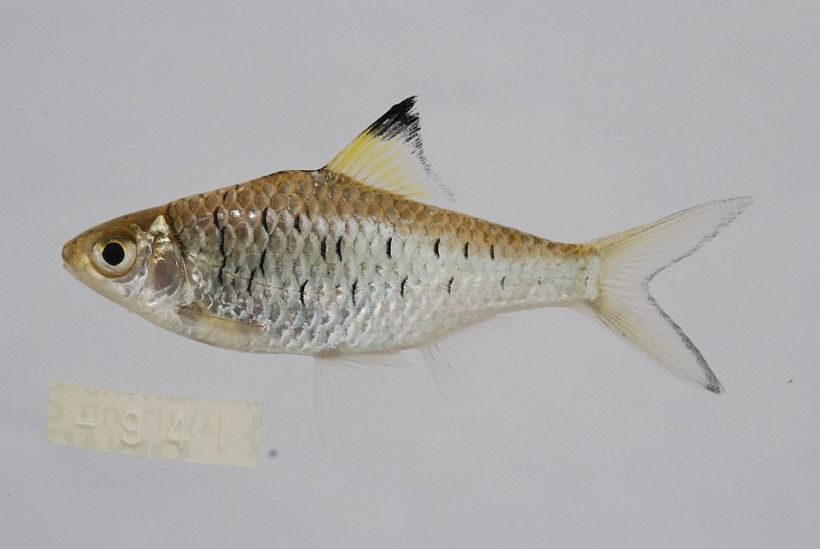
Mystacoleucus atridorsalis
Fowler, 1937
Max length80mm SL3.1in SLTanknot recordedTempnot recordedpHnot recordedThis species can be distinguished from congeners by the following combination of characters: body depth fits 2.5-2.7 times in SL; 28-31 +2-3 lateral line scales; 14-16 circumpeduncular scale rows; 5-5½ scale rows between the lateral line and dorsal-fin origin; a triangular distal blotch on the dorsal-fin; a few body scales with crescent-shaped black edges; a thin dark margin on the dorsal-fin, posterior to the distal blotch; a dark posterior margin on the caudal-fin; normally a single pair of rudimentary barbels present.
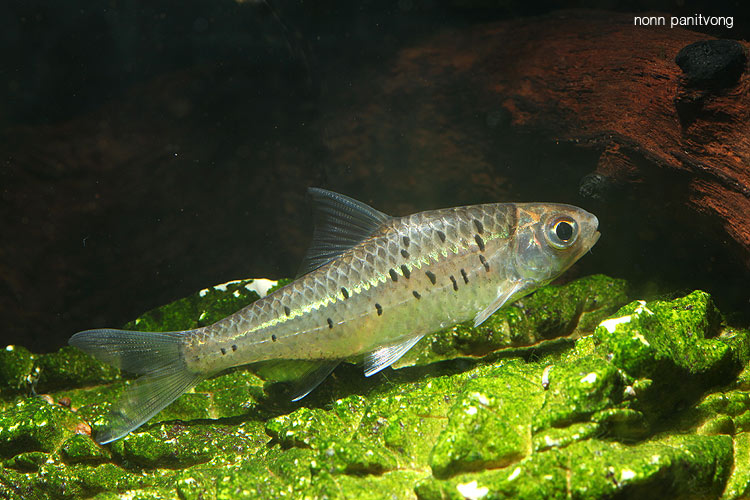
Mystacoleucus greenwayi
Pellegrin & Fang, 1940
Max length100mm SL3.9in SLTank120 × 45cm48 × 18inTemp20–27°C68–81°FpH6.0–7.5Predominantly a riverine fish favouring clear, well-oxygenated, running water with substrates of sand or gravel and often present in rock and boulder-filled headwater streams. In the Mun River, close to the Pak Mun dam, Thailand, sympatric species included Hampala dispar, Cyclocheilichthys apogon, Osteochilus hasseltii,...
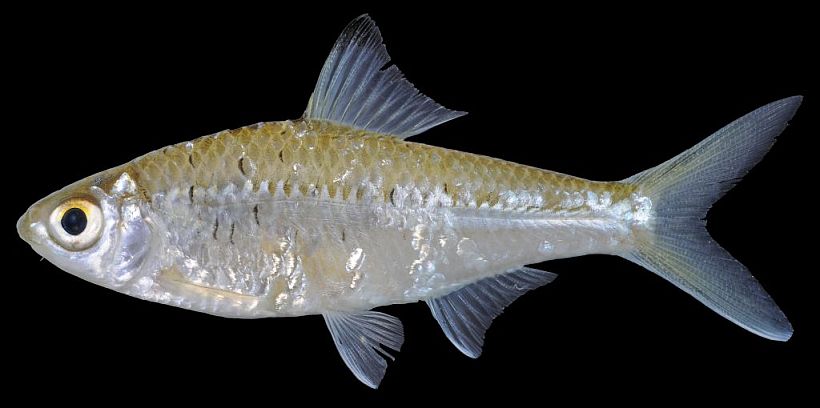
Mystacoleucus lepturus
Huang, 1979
Max length95mm SL3.7in SLTanknot recordedTempnot recordedpHnot recordedThis species can be distinguished from congeners by the following combination of characters: body relatively slender, depth fitting 3.4-3.8 times in SL; 32-33 + 2 lateral line scales; 14 circumpeduncular scale rows; presence of a single pair of barbels; black distal margin on dorsal-fin; numerous body scales with dark, crescent-shaped markings.
Mystus bleekeriDay's Mystus
authority not recorded
Max length155mm SL6in SLTank120 × 30cm48 × 12inTemp18–26°C64–79°FpH5.8–8.0This species superficially resembles the more common (in the hobby) M. vittatus, but can be distinguished by its larger adult size and much longer adipose fin. It is an ideal peaceful catfish for larger communities and as with many other bagrids, is in our opinion somewhat underrated in the hobby....
Mystus singaringan
authority not recorded
Max length300mm SL12in SLTank120 × 45cm48 × 18inTemp22–27°C72–81°FpH5.6–7.0This large Mystus is not often seen in the hobby. It makes a fine bottom dweller for communities containing other robust species. It is used as a food fish in many of it's native countries....
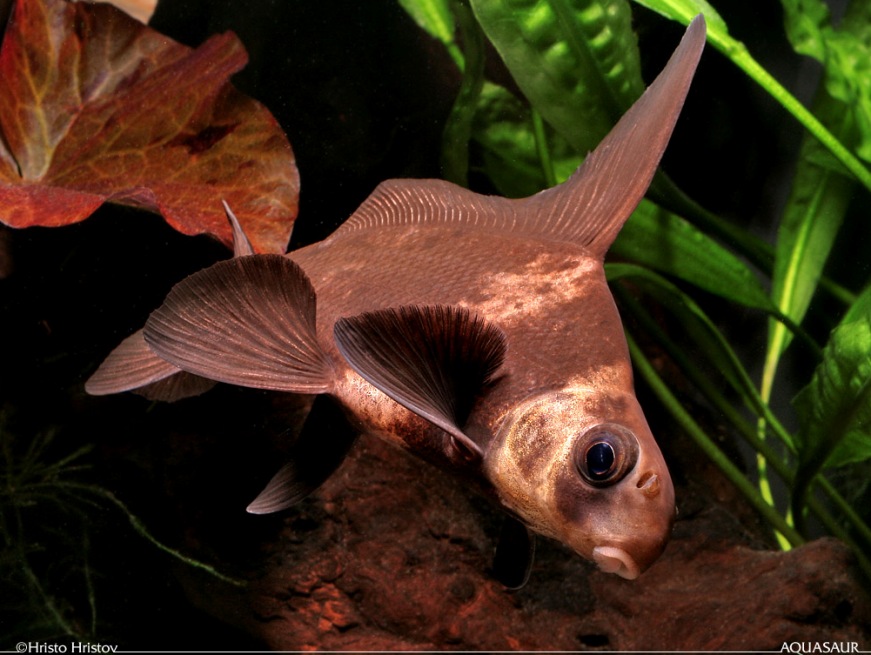
Myxocyprinus asiaticusChinese Sailfin Sucker
Bleeker, 1864
Max length900mm SL35in SLTanknot recordedTemp15.5–21°C60–70°FpH6.0–8.0This species is traded under various names including 'Chinese banded shark', 'Chinese sucker', 'freshwater batfish', 'high-fin banded loach', etc. It's currently illegal to import or own privately in several countries, including the UK, but continues to be available with only the attractive juvenile form traded, and almost always without information regarding adult size of almost a metre or potential lifepan of 25 years+. Myxocyprinus is a monotypic genus and the only Asian representative of the family Cato...
Nannacara anomalaGolden Dwarf Cichlid
authority not recorded
Max length76mm SL3.0in SLTank46 × 38cm18 × 15inTemp22–25°C72–77°FpHnot recordedNannacara Anomala are widely available in the trade, and are generally regarded as an excellent beginner's fish. If a beginner is interested in keeping Cichlids and learning about breeding, then these fish are absolutely ideal. Anomala are attractive, hardy and usually quite cheap to purchase. Like some species of the Apistogramma genus, the mother may use fascinating body language to communicate with her fry when she is caring for them. If there is more than one male in a tank smalle...
Nannacara taeniaStriped Dwarf Cichlid
authority not recorded
Max length50mm SL2.0in SLTank60 × 38cm24 × 15inTemp22–28°C72–82°FpH6.0–7.0Nannacara taenia is rarely seen for sale in local aquatic stores. Largely, because it is a fairly unremarkable fish, tending towards a drab brown appearance. You are more likely to obtain this fish through specialist cichlid dealers or amateur enthusiasts....