Results for “barb”
Type a name: scientific, common, or one a species used to go by. Or narrow the catalogue with the filters.
Filters
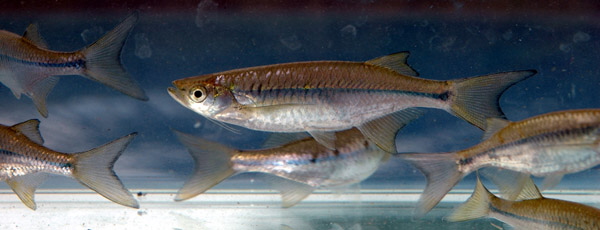
Nematabramis borneensis
Inger & Chin, 1962
Max length105mm SL4in SLTanknot recordedTempnot recordedpHnot recordedIt looks particularly similar to N. alestes with both species possessing a colour pattern comprising a dark lateral stripe on the body, but can be distinguished immediately by possessing barbels longer than the head (vs. shorter than the head in N. alestes).
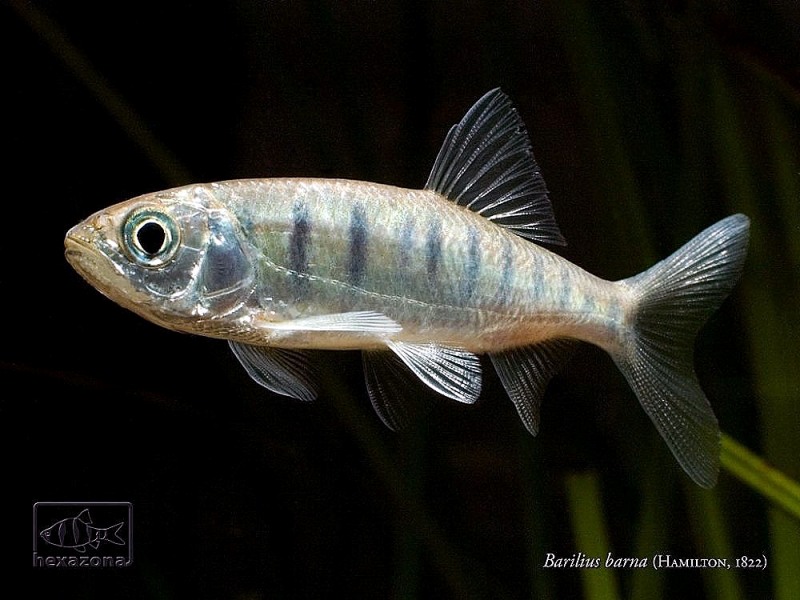
Opsarius barna
Hamilton, 1822
Max length130mm SL5in SLTank150 × 60cm60 × 24inTemp16–24°C61–75°FpH6.0–8.0This species occasionally appears in the ornamental trade, usually as 'striped hill trout' or 'banded hill trout'. It can be distinguished from congeners by the following combination of characters: lateral line complete with 40-42 scales; barbels absent; 10-13 anal-fin rays; body with 9-11 dark blue vertical bars; last dorsal-fin ray extending to caudal-fin base.
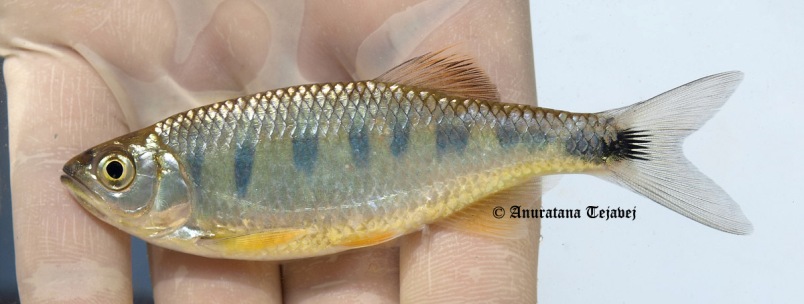
Opsarius signicaudus
Tejavej, 2012
Max length100mm SL3.9in SLTank120 × 45cm48 × 18inTemp18–26°C64–79°FpH6.0–8.0O. dogarsinghi and O. bernatziki are the only two Southeast Asian congeners to possess a large blotch at the caudal-fin base but in the former the blotch is vertically-orientated and hardly extends onto the fin itself (vs. laterally-elongate and extending onto the basal fin rays) and long (vs. short) barbels, while th...
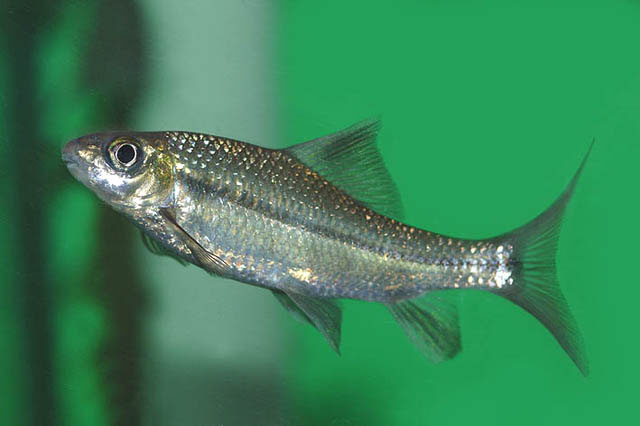
Osteochilus nashii
authority not recorded
Max length180mm SL7in SLTank120 × 45cm48 × 18inTemp22–25°C72–77°FpH6.5–7.5This species is very scarce in the trade indeed and you're most likely to see it on sale as a contaminant among import of other Indian species. There are currently 34 described species of Osteochilus although none can be considered popular in the aquarium hobby. According to Rainboth's 'Fishes of the Cambodian Mekong' members of the genus are characterised by lack of aspine, presence of 11-18rays, large rostral and maxillary barbels, papillae on both upper and lower lips,...
Pangasianodon gigasGiant Mekong Catifish
authority not recorded
Max length3000mm SL118in SLTanknot recordedTemp20–28°C68–82°FpH6.5–7.5Pangasianodon is separated from other pangasiid generea primarily on the basis of some morphological differences including a lack of teeth and massively reduced barbels in adult specimens. Sadly it's numbers are declining rapidly in nature, through a combination of unsustainable fisheries, damming and habitat destruction. Since 1990 wild stocks are thought to have undergone a decrease of over 80%. From an annual catch of over 60 specimens in 1990, only 8-11 were being caught per year in ...
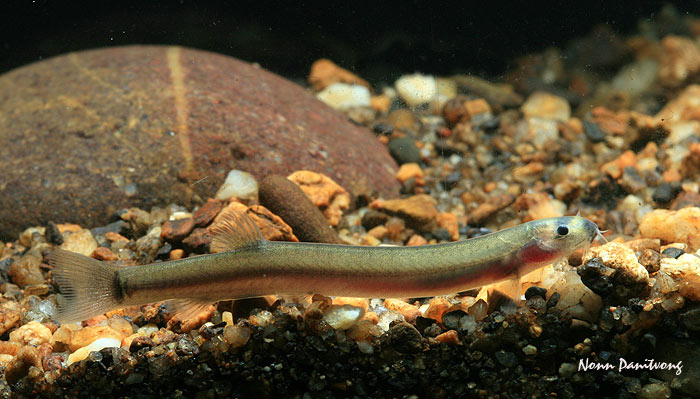
Pangio sp. 'PAN04'Panda Loach
authority not recorded
Max length80mm SL3.1in SLTank60 × 30cm24 × 12inTemp21–26°C70–79°FpH3.5–7.0This unidentified species has been traded since the mid-00s and appears to be a member of the P. khulii-oblonga species group as per Bohlen et al. (2011). There are two similar-looking forms; one has a darker body, dark pigmentation in the pectoral fins and barbels and a blue sheen on the head, while the...
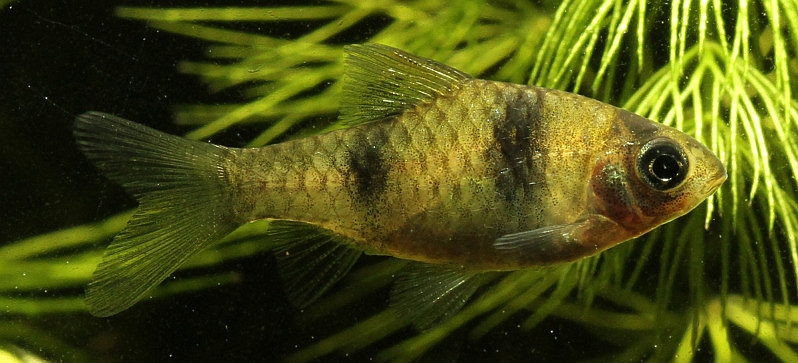
Pethia sp. 'Myanmar'
authority not recorded
Max length55mm SL2.2in SLTank75 × 30cm30 × 12inTemp18–24°C64–75°FpH6.0–7.5This fish has been widely misidentified and sold as the congener P. tiantian and its vernacular name of 'Burmese bumble-bee barb' but actually appears to be an undescribed member of the genus Pethia. This assemblage was erected by Pethiy...
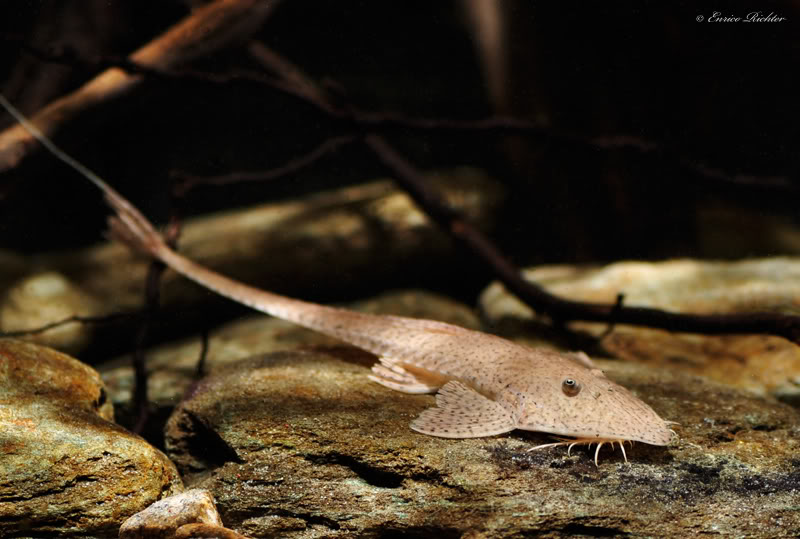
Pseudohemiodon laticepsGiant Whiptail Catfish
Regan, 1904
Max length300mm SL12in SLTank180 × 60cm72 × 24inTemp18–24°C64–75°FpH6.0–7.5A paternal 'lip brooder' which has been bred in aquaria. Post-spawning the male carries the eggs attached to his labial barbels for a period of 12-14 days after which the fry hatch with a large yolk sac attached, this being absorbed over the next 48 hours or so. During incubation the behaviour of the male i...
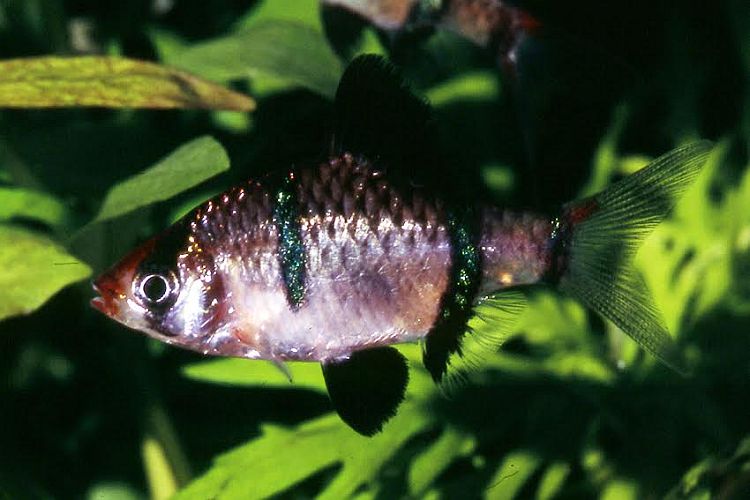
Puntigrus pulcher
Rendahl, 1922
Max length60mm SL2.4in SLTank80 × 30cm31 × 12inTemp20–26°C68–79°FpH5.0–7.5This species occasionally appears in the aquarium hobby, but the trade is largely reliant on commercially-produced 'tiger barbs' of questionable origin. It was considered a synonym of P. anchisporus for a number of decades following Alfred (1963), but revalidated by Kottelat and Tan (2011).
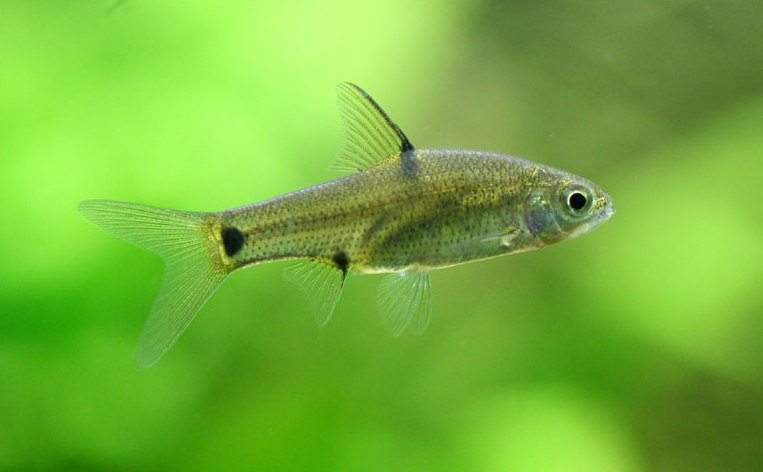
Puntius sharmai
Menon & Rema Devi, 1993
Max length40mm SL1.6in SLTank60 × 30cm24 × 12inTemp20–26°C68–79°FpH5.5–7.5This species is almost unheard of in the aquarium hobby outside of India but is maintained by some private collectors. It's distinguished from similar species by possessing a single pair of maxillary barbels, a relatively elongate body, and distinctive black spot above the anterior anal-fin base. The genus Puntius was for a number of years viewed as a polyphyletic catc...
Rasbora paucisqualis
authority not recorded
Max length40mm SL1.6in SLTank60 × 30cm24 × 12inTemp22.2–25.6°C72–78°FpHnot recordedRainboth's 'Fishes of the Cambodian Mekong' characterised members of Rasbora by possession of an unbranched, non-spiny firstray and seven soft dorsal rays, origin of thein the middle of the body, five branchedrays, a small mouth not extending below the eye and a lack of barbels. It's long been recognised as a polyphyletic lineage as noted by Kottelat (1999) amongst others, and in 2010 the results of a phylogenetic analysis by T. Y. Liao et al. suggested a number of changes in...
Rasbora rasboraGangetic Scissortail Rasbora
authority not recorded
Max length130mm SL5in SLTank120 × 45cm48 × 18inTemp20–25°C68–77°FpHnot recordedThis species is rarely seen in the trade and little has been written regarding its captive care. It's possible that several colour forms may exist depending on collection locality. Rainboth's 'Fishes of the Cambodian Mekong' characterised members of Rasbora by possession of an unbranched, non-spiny firstray and seven soft dorsal rays, origin of thein the middle of the body, five branchedrays, a small mouth not extending below the eye and a lack of barbels. It's long b...
Rhynchodoras woodsiParrot Doradid
authority not recorded
Max length110mm SL4in SLTank90 × 38cm36 × 15inTemp24–26°C75–79°FpH5.8–7.0An interesting but rare species in the hobby, R. woodsi is nicknamed the "parrot doradid" due to its inquisitive feeding habits, and the curious bony growth extending from the upper mouthparts. The precise use of the bony growth isn't known, although one theory suggests it provides protection for the delicate barbels. Another hypothesis considers that it's some sort of feeding tool, possibly being used to lever aquatic invertebrates from crevices in submerged logs and roots....
Scleropages jardiniiAustralian Arowana
authority not recorded
Max length900mm SL35in SLTank180 × 60cm72 × 24inTemp24–29°C75–84°FpH6.8–7.5Although S. jardinii superficially resembles its Asian cousins, it is not considered as desirable an aquarium inhabitant, nor is it classed as being at risk in nature. It can be easily distinguished from the asian species by its much smaller scale size, greater lateral scale count (32-35 as opposed to 21-25 in the asian aros) and duller patterning. It differs from its Australian relative S. leichardtii by its more sloping head, downward-pointing barbels and patterned gill covers. The base colour...
Scleropages leichardtiSpotted Australian Arowana
authority not recorded
Max length900mm SL35in SLTank180 × 60cm72 × 24inTempnot recordedpH6.8–7.5Although S. leichardtii superficially resembles its Asian cousins, it is not considered as desirable an aquarium inhabitant, nor is it classed as being at risk in nature. It can be easily distinguished from the asian species by its much smaller scale size, greater lateral scale count (32-35 as opposed to 21-25 in the asian aros) and duller patterning. It differs from its Australian relative S. jardinii by its spotted scales, forward-pointing barbels, lack of sloping head and unpatterned gill cov...
Synodontis albertiHigh-fin Synodontis
authority not recorded
Max length200mm SL8in SLTank90 × 30cm36 × 12inTemp21–25.5°C70–78°FpH6.0–8.0S. alberti possesses an incredible set of barbels that are the longest of any Synodontis. It is also very hardy and adaptable and is therefore an ideal beginner's Syno. It has very large eyes exemplifying its nocturnal nature and also prefers cooler conditions to other members of the genus. This fish has a few common names including Bigeye Squeaker and Albert's Synodontis, though it is usually referred to as the High-fin Synodontis....
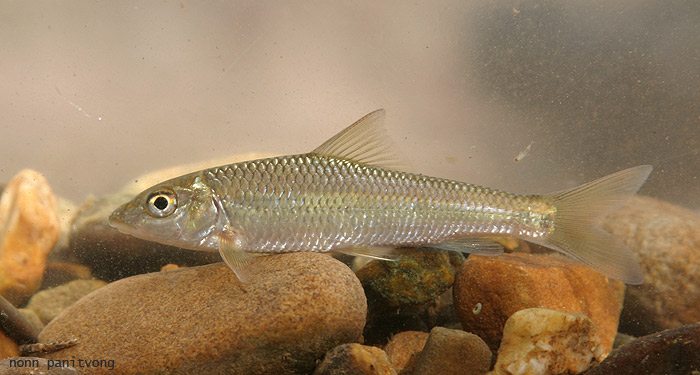
Folifer brevifilis
Peters, 1881
Matched on Barbus brevifilis, a name it was formerly known by
Max length300mm SL12in SLTank240 × 60cm96 × 24inTemp20–26°C68–79°FpH6.0–8.0This species is widely-distributed in the Mekong river system in Thailand, Laos, and Vietnam, Salween and Ayeyarwaddy rivers in southern China, Myanmar, and Thailand, plus various smaller basins in Vietnam and China. It has also been recorded from the islands of Hainan and Hong Kong. Type locality is given as 'China: sent from Hong Kong'.
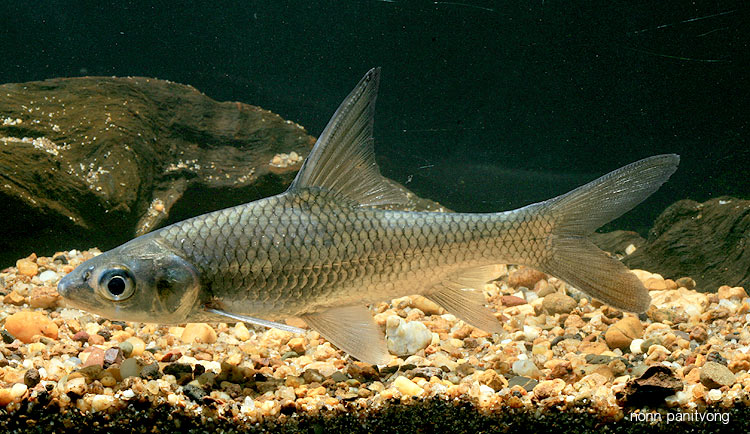
Cyclocheilos enoplos
Bleeker, 1849
Matched on Barbus enoplos, a name it was formerly known by
Max length750mm SL30in SLTanknot recordedTemp20–26°C68–79°FpH6.0–8.0In the Mekong, it has been observed to migrate upstream from Phnom Penh to Khone Falls between November and February, returning downstream between May and August. The downstream migration ends in the Mekong delta area in Vietnam, where the fish remain until the floods reach their peak in October and November. These lower Mekong migrations mostly comprise juveniles and sub-adults, whereas above Khone Falls...
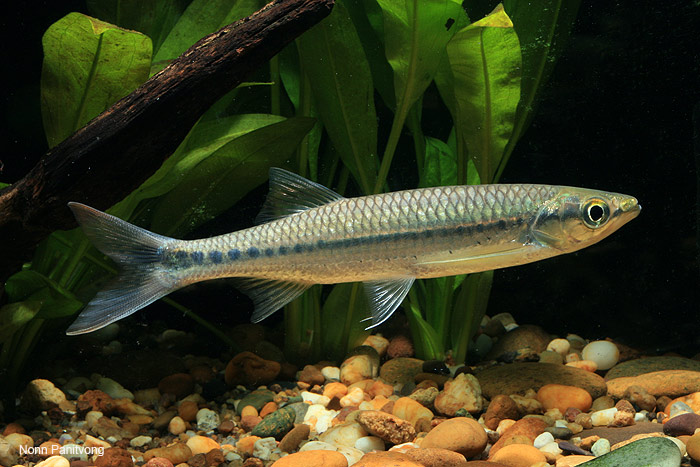
Luciosoma setigerumApollo Shark
Valenciennes, 1842
Matched on Barbus setigerus, a name it was formerly known by
Max length220mm SL9in SLTank240 × 60cm96 × 24inTemp20–26°C68–79°FpH6.0–8.0There is a fish of unknown geographical origin which matches the majority of diagnostic features for L. setigerum with the exception that the dark lateral stripe is absent in the anterior portion of the body and is not composed of interconnected spots. It is relatively common in the aquarium trade and included here as L. cf. setigerum until a confirmed identity is established.
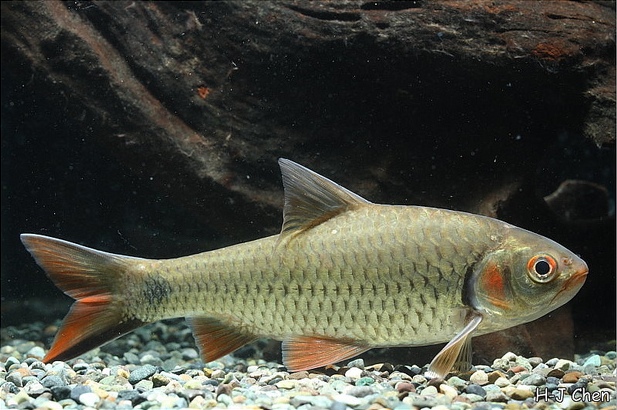
Systomus orphoides
Valenciennes, 1842
Matched on Barbus orphoides, a name it was formerly known by
Max length250mm SL10in SLTank200 × 60cm79 × 24inTemp18–26°C64–79°FpH6.0–8.0The genus Puntius is currently viewed as something of a catch-all for well over 100 species of small to mid-sized cyprinid. Most experts agree that a full revision is required with the likely outcome that many species will be placed into new or different genera since it is clearly polyphyletic. When describing the grouping in 1822 Hamilton identified the defining characteristics as: presence or absence o...