Results for “ex gr.”
Type a name: scientific, common, or one a species used to go by. Or narrow the catalogue with the filters.
Filters
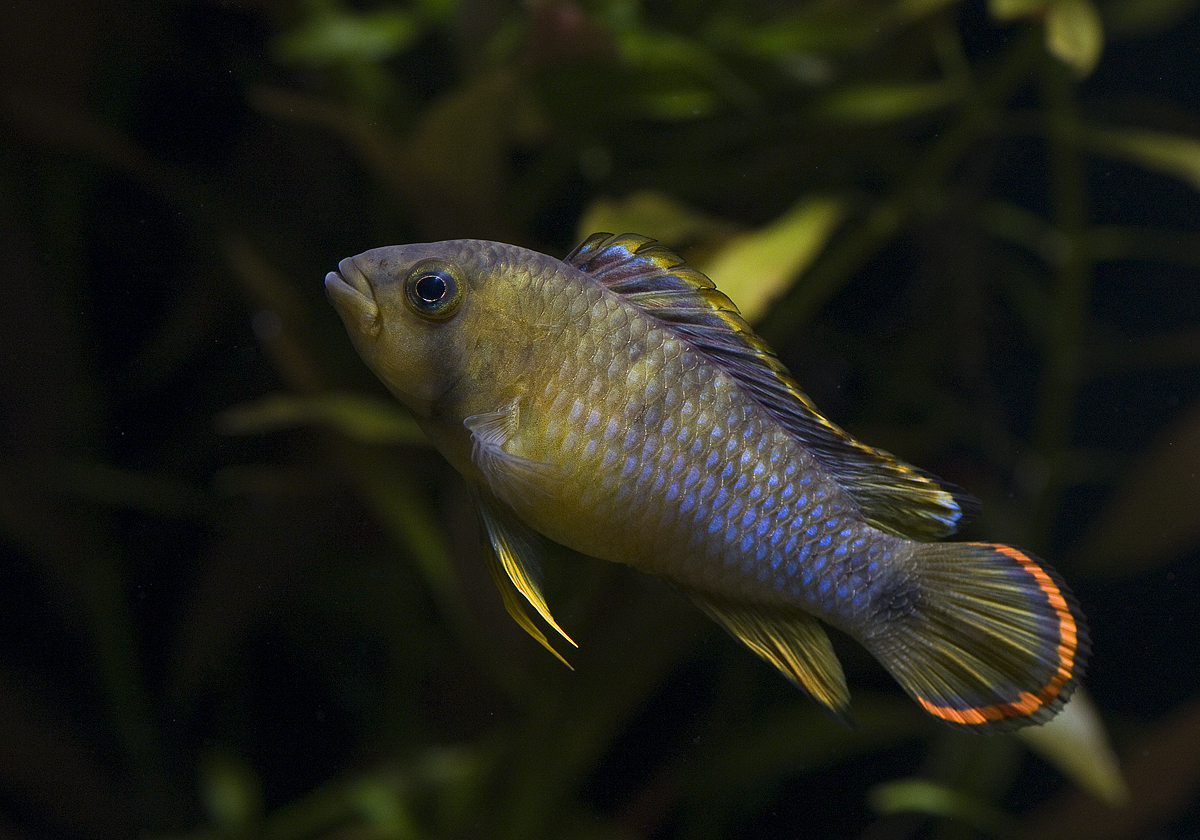
Apistogramma nijsseni
Kullander, 1979
Max length♂ 85 · ♀ 70mm SL♂ 3.3 · ♀ 2.8in SLTank60 × 30cm24 × 12inTemp24–28°C75–82°FpH5.0–6.5The genus Apistogramma is among the most speciose of South American cichlid genera with around 70 species valid at present but many more awaiting description. In addition many species exist in two or more geographical colour forms which may or may not turn out to be distinct in the future. Hobbyists tend to label these with collection data if available in order to avoid mixing them and the potential of hybridisation. Member species have also been organised into a series of species lineages, complexes and groups by authors in order to better separate them. Such lists have been augmented by fish that have appeared in the aquarium trade and are in a state of near-constant flux
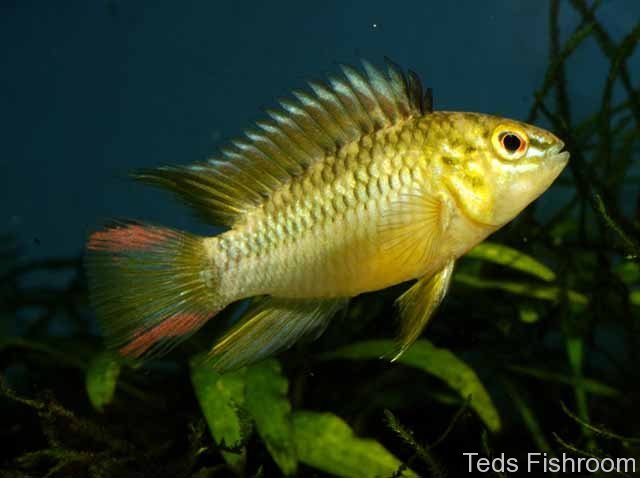
Apistogramma hoignei
Meinken, 1965
Max length60mm SL2.4in SLTank45 × 30cm18 × 12inTemp23–29°C73–84°FpH5.0–7.0The genus Apistogramma is among the most speciose of South American cichlid genera with around 70 species valid at present but many more awaiting description. In addition many species exist in two or more geographical colour forms which may or may not turn out to be distinct in the future. Hobbyists tend to label these with collection data if available in order to avoid mixing them and the potential of hybridisation. Member species have also been organised into a series of species lineages, sublineages, complexes and groups by authors in order to better separate them.
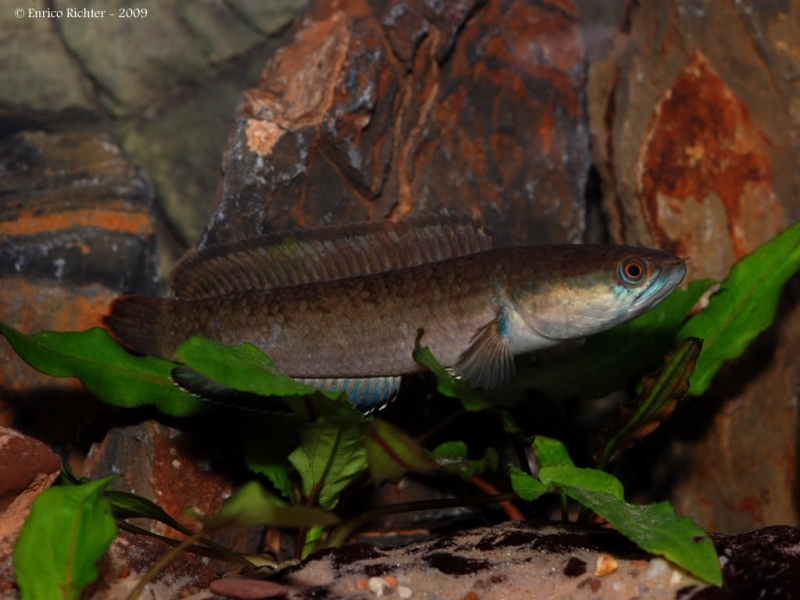
Channa gachuaDwarf Snakehead
Hamilton, 1822
Max length200mm SL8in SLTank120 × 45cm48 × 18inTemp18–28°C64–82°FpH5.0–8.0Generally considered to have an enormous natural range extending from Iran to Taiwan and Bali, with records existing from Iran, Iraq, Afghanistan, Pakistan, Nepal, India, Sri Lanka, Bangladesh, Bhutan, China, Myanmar, Thailand, Laos, Cambodia, Vietnam, Malaysia, Indonesia, and Singapore. However there exists significant evidence to suggest that C. gachua as currently understood represents a complex of similar-looking species, and a taxonomic review of the group is clearly required.
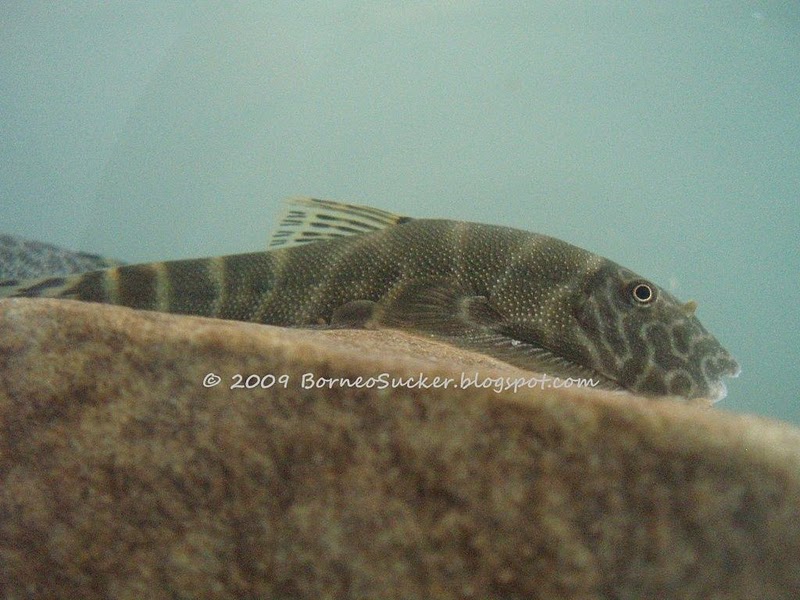
Gastromyzon extrorsus
Tan, 2006
Max length80mm SL3.1in SLTank75 × 30cm30 × 12inTemp20–24°C68–75°FpH6.0–8.0This species has probably not been seen in the aquarium trade yet but has been maintained by a few private collectors. It can be distinguished from congeners by the following combination of characters: secondary rostrum present; complete postoral pouch present; body colour brown with up to 9 thin gold stripes; head dorsum dark brown with gold reticulate pattern; subopercular groove absent; gill slit vertical; sublacrymal groove present; sno...
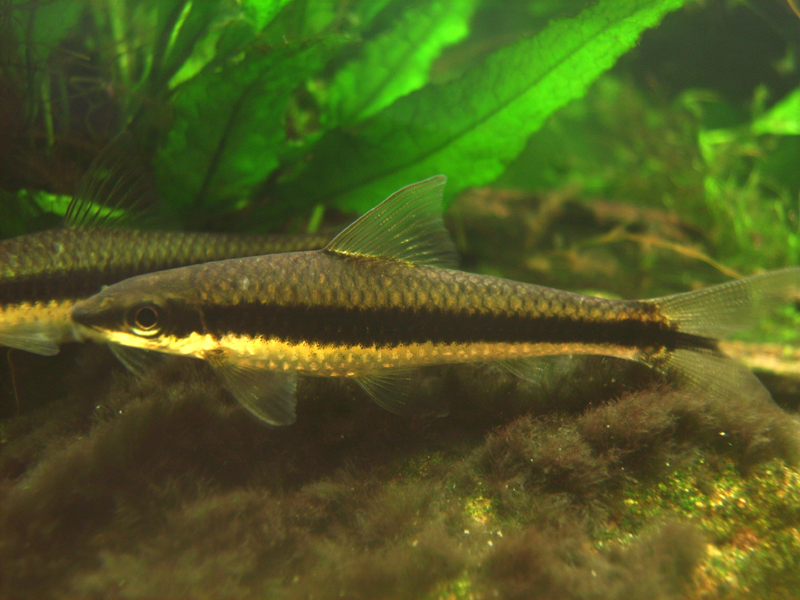
Crossocheilus langeiSiamese Algae Eater
Bleeker, 1860
Max length150mm SL6in SLTank150 × 45cm60 × 18inTemp20–26°C68–79°FpH6.0–7.5C. oblongus is another name widely misused in the trade but that species has seemingly never been exported and was described as a blueish fish with yellow fins. It's native to streams of Gunung Salak mountain in Bogor Regency, West Java, Indonesia where collecting of ornamental fishes is almost non-existent. Other species of laterally-striped Crossocheilus also exist and may be available from time-to-time but are more easily told apart from the group described above.
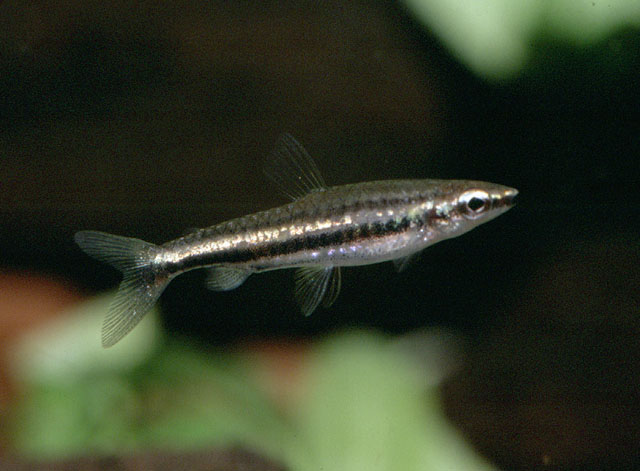
Nannostomus marilynaeGreenstripe Pencilfish
Weitzman & Cobb, 1975
Max length35mm SL1.4in SLTank60 × 30cm24 × 12inTemp21–28°C70–82°FpH4.0–6.5This species is also known as 'Marilyn's pencilfish'. It's rarely traded in numbers and more often seen as bycatch among shipments of other species, particularly Paracheirodon axelrodi. It can be identified by the following combination of characters: three dark lateral stripes (sometimes referred to as primary, secondary, and tertiary); nocturnal oblique bars relatively narrow, with the anterior bar reaching, but not extending past, the anterior base of the dorsal-fi...
Serrasalmus rhombeusBlack Piranha/Rhom
authority not recorded
Max length450mm SL18in SLTank210 × 45cm84 × 18inTemp22.2–27.8°C72–82°FpHnot recordedThere are in excess of 30 described species of Serrasalmus many of which appear superficially similar and have confusing taxonomic histories. S. rhombeus is among the most convoluted of all with numerous synonyms of which S. niger is the most well-known. There has also been a muddle surrounding the common names "white" and "black" piranha, both of which have been used to describe the species. Of greater interest to both scientists and hobbyists has been the discovery of n...
Xenotilapia melanogenysBlack-Chinned Xenotilapia
authority not recorded
Max length160mm SL6in SLTank120 × 38cm48 × 15inTemp24–27°C75–81°FpH7.5–9.0This fish feeds in a similar way to Geophagus species in that it will sift sand through its gills to extract invertebrates and morsels hidden in the substrate. It was until recently classified in the genus Enatiopus and is still named as such in much of the available literature. There are slight geographical variations in colour but these are not major. Interestingly, the shoals in which these fish live in nature appear to be fixed. That is, that an individual will remain in the same group for ...
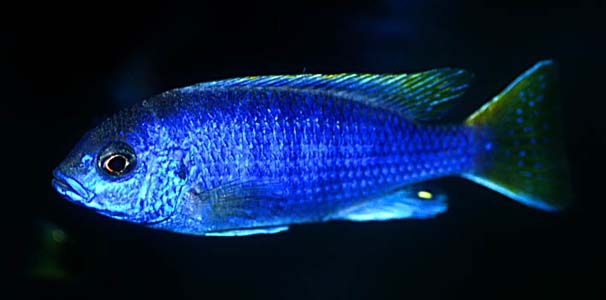
Pseudotropheus sp. 'acei'
authority not recorded
Max length125mm SL5in SLTanknot recordedTemp24–28°C75–82°FpH7.6–8.8This is an excellent beginner's species as it is relatively peaceful and easily bred. Despite being undescribed to science it is widely available in the hobby. It is sometimes sold as Gephyrochromis acei. Several colour forms are available, including "yellow tail acei" and "white tail acei". None of these should be kept together in aquaria to prevent hybridisation. In nature it feeds specifically on algae and other organisms growing on submerged wood, and is the only ...
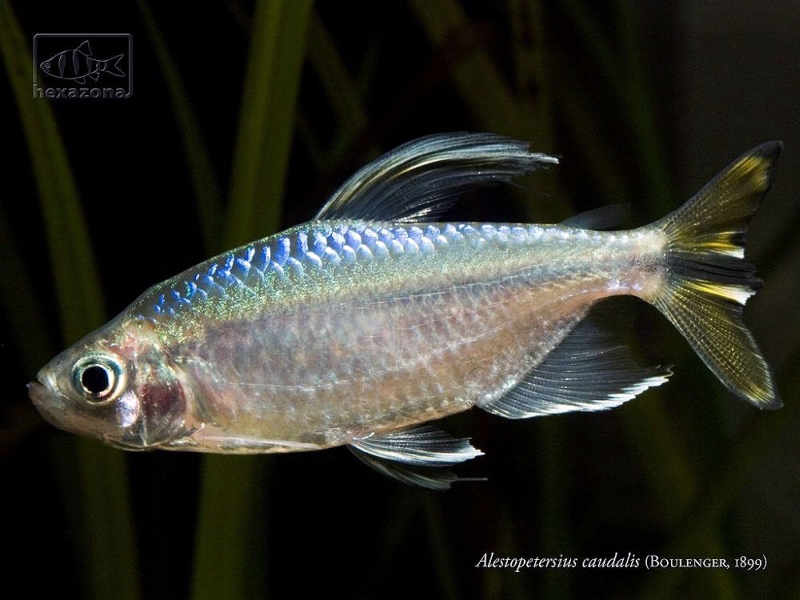
Alestopetersius caudalisYellow-Tailed Congo Tetra
Boulenger, 1899
Max length60mm SL2.4in SLTank120 × 30cm48 × 12inTemp22–26°C72–79°FpH5.0–7.5This species is also traded as 'yellow-finned', 'yellowtail' or 'blue Congo' tetra and is occasionally bred on a commercial basis, although not on a scale comparable to its better-known relative Phenacogrammus interruptus. No recent key to the genus exists but based on Géry (1977) and images in Mbimbi Mayi Munene and Stiassny (2012) it can be told apart from congeners by a combination of: extended median caudal-fin rays in adult males; absence of prominent dar...
Hemigrammus hyanuaryJanuary Tetra
authority not recorded
Max length40mm SL1.6in SLTank60 × 38cm24 × 15inTemp23–27°C73–81°FpH6.0–7.0Also known as the costello or green neon tetra, this species is seen much less often in the hobby than it used to be. It's occasionally confused with the common head and tail light tetra, H. ocellifer, as it resembles an elongated version of that species. Like all Hemigrammus, its taxonomic status is currently Incertae Sedis, meaning uncertain. The genus is currently used as something of a catch-all for over 70 species of small characin. Most experts agree that a full revision is require...
Melanochromis chipokae
authority not recorded
Max length120mm SL5in SLTank120 × 45cm48 × 18inTemp24–28°C75–82°FpH7.6–8.8This species belongs to the group of Melanochromis often called "Pike Auratus". These species predate on the fry of other species, although M. chipokae will also eat crustaceans and algae. Female and juvenile male M. chipokae are easily confused with M. auratus. However, it can be distinguished by its noticeably more pointed mouth, denoting the predatory nature of this species (auratus has a rounded mouth which is designed for feeding on algae). The striped patterning in the also exten...
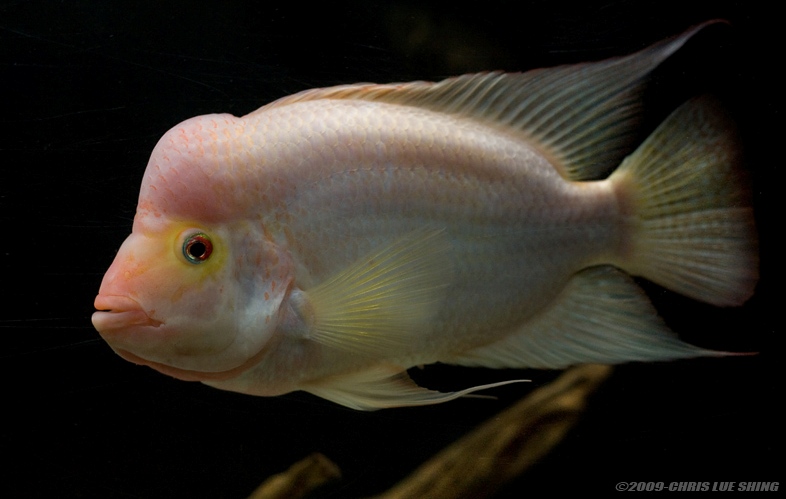
Amphilophus citrinellusMidas Cichlid
Günther, 1864
Max length350mm SL14in SLTanknot recordedTemp21–26°C70–79°FpH6.0–8.0Previously included as a member of the genus Cichlasoma, the midas cichlid is often confused with the red devil, A. labiatus. The two can be distinguished through differences in morphology. As suggested by its scientific name, A. labiatus often possesses characteristically large lips, although this is variable and should not be used as a defining indicator of species. More reliable differences include the bigger nuchal hump and more thick-set appearance in A. citrinellus. The midas exists in many n...