Results for “várzea”
Type a name: scientific, common, or one a species used to go by. Or narrow the catalogue with the filters.
Filters
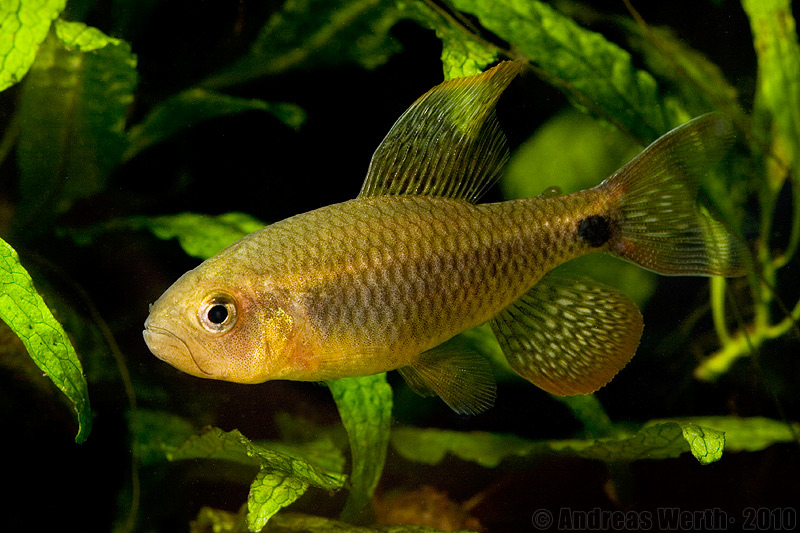
Crenuchus spilurusSailfin Characin
Günther, 1863
Max length70mm SL2.8in SLTank75 × 30cm30 × 12inTemp20–28°C68–82°FpH4.0–6.5This species is currently the only described member of its genus although colour pattern and morphology vary considerably across its range. You may see reference to this species being the only fish species to possess infra-red vision, but other species also possess this ability and we suspect that infra-red plays an important role in the reproductive cycle of many fishes.
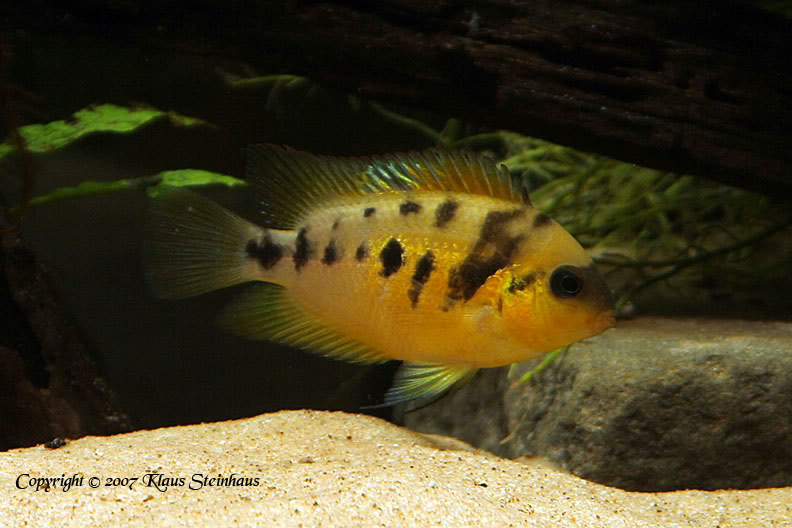
Cryptoheros nanoluteus
Allgayer, 1994
Max length65mm SL2.6in SLTank90 × 30cm36 × 12inTemp23–26°C73–79°FpH5.0–7.5Inhabits moderate to fast-flowing, well-oxygenated, lowland streams and rivers with pH measured to range between 5.4 and 8.0 and temperature 22-31°C/71.6-87.8°F, while conductivity at one habitat was 600 µS. Substrates may be composed of open mud or sand, or strewn with variably-sized boulders depending on locality, while aquatic plants have not been observed. It occurs sympatrically with the convict cichlid, Amatitlania nigrofasciata with oth...
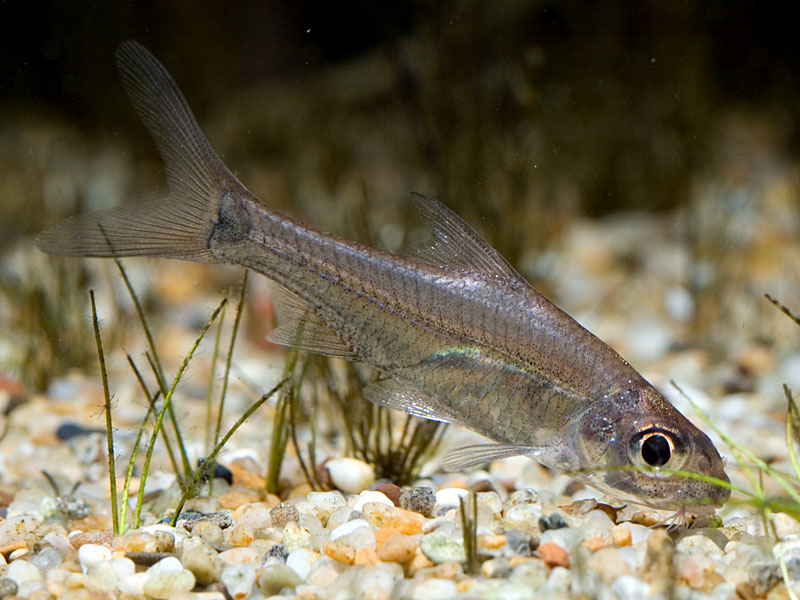
Cyclocheilichthys heteronema
Bleeker, 1854
Max length120mm SL5in SLTank120 × 45cm48 × 18inTemp21–26°C70–79°FpH6.0–7.5This species is currently understood to have a considerable natural range extending eastwards from Myanmar via Thailand, Laos, Cambodia as far as Vietnam and to the south through Peninsular Malaysia and into the Greater Sunda Islands of Borneo and Sumatra. It thus occurs in the Mekong, Mae Klong and Chao Phraya drainages as well as a host of other river basins, lakes and reservoirs including the Tonlé Sap river...
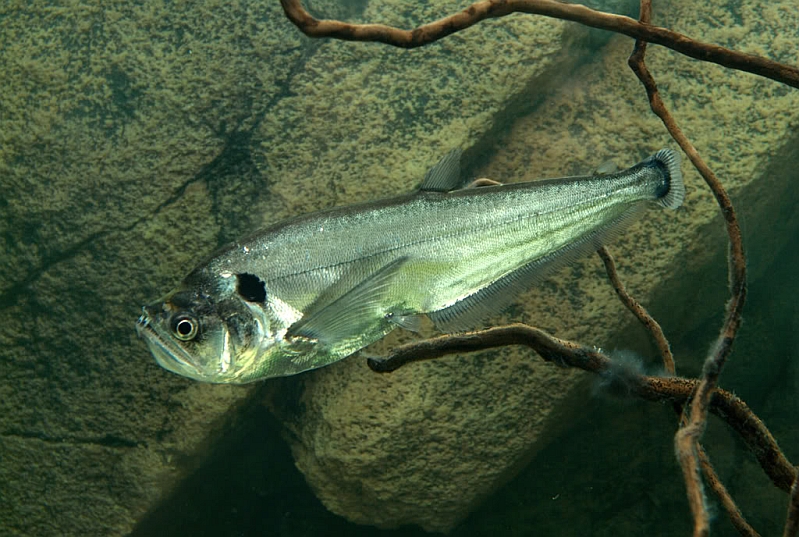
Cynodon gibbus
Agassiz, 1829
Max length280mm SL11in SLTank210 × 75cm84 × 30inTemp24–28°C75–82°FpH6.0–8.0This species is rare in the aquarium trade but is arguably more suitable for the home aquarium than some of its better-known relatives given its adult size and relatively docile behaviour. Other vernacular names include 'Dientón' (Peru), 'Perrito' (Ecuador), 'Payara-chata' or 'Payarin' (Venezuela) and 'Icanga', 'Minguilista' or 'Peice-cachorro' (Brazil), some of which are also applied to related species.
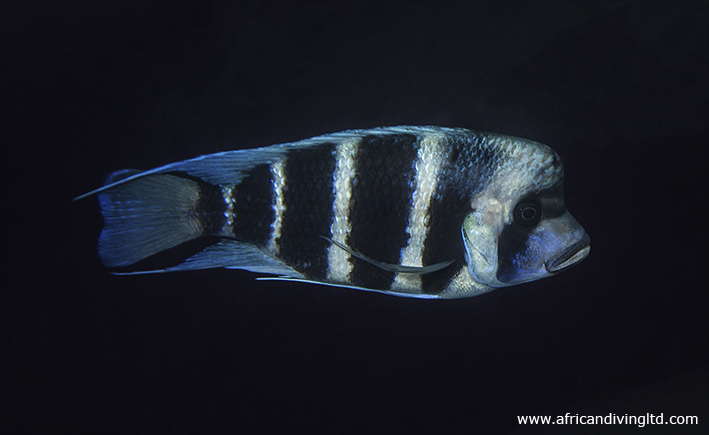
Cyphotilapia gibberosa
Takahashi & Nakaya, 2003
Max length255mm SL10in SLTank240 × 60cm96 × 24inTemp23–27°C73–81°FpH8.0–9.0Prior to the description of C. gibberosa in 2003 the genus Cyphotilapia was considered monotypic for almost a century. Members are separated from other cichlid taxa inhabiting Lake Tanganyika by possession of a hump on the forehead and broad vertical bands on the body, although the latter tend not to be visible in large males.
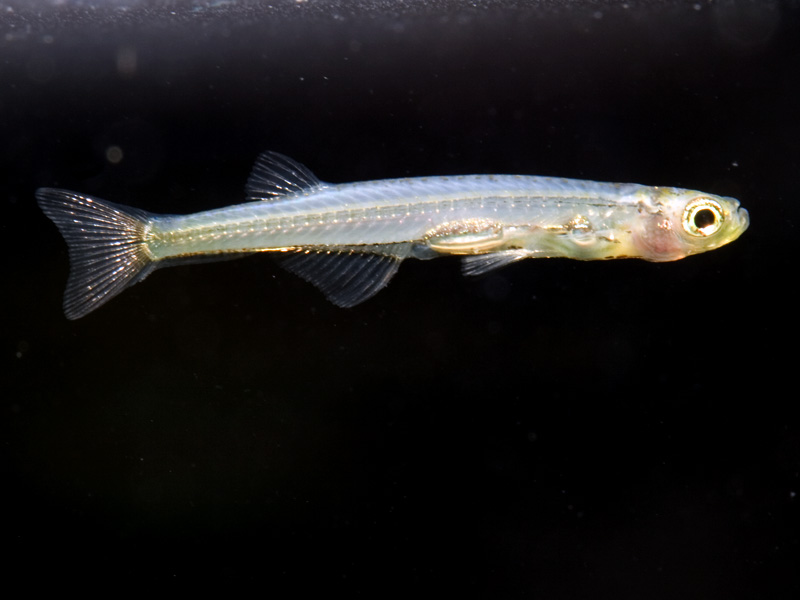
Danionella translucida
Roberts, 1986
Max length11mm SL0.4in SLTank45 × 30cm18 × 12inTemp18–24°C64–75°FpH6.0–8.0The anatomical structure of miniaturised cyprinids can vary greatly; there are two putative groups with some species possessing intermediate features to some degree. The first contains those fishes which though small are essentially proportionally dwarfed versions of their larger relatives. The other includes those in which anatomical development stops at a point where adult still resemble a larval form of their larger ancestor, as in...
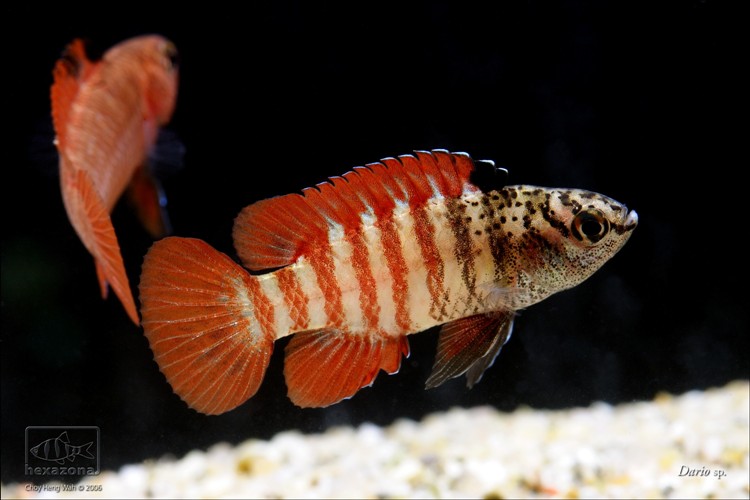
Dario sp. 'Myanmar'Black Tiger Dario
authority not recorded
Max length35mm SL1.4in SLTank45 × 30cm18 × 12inTemp20–24°C68–75°FpH7.0–9.0This fish first became available to hobbyists in 2005 and has also been referred to as Dario sp. 'pyjamas' or 'fire red tiger badis'. Despite the striking differences in colour pattern it's officially recognised as a colour form of D. hysginon as per Kullander and Britz (2002) although D. sp. 'Myanmar' is now known to have an appreciably larger adult size (S. van der Voort, pers. comm.).
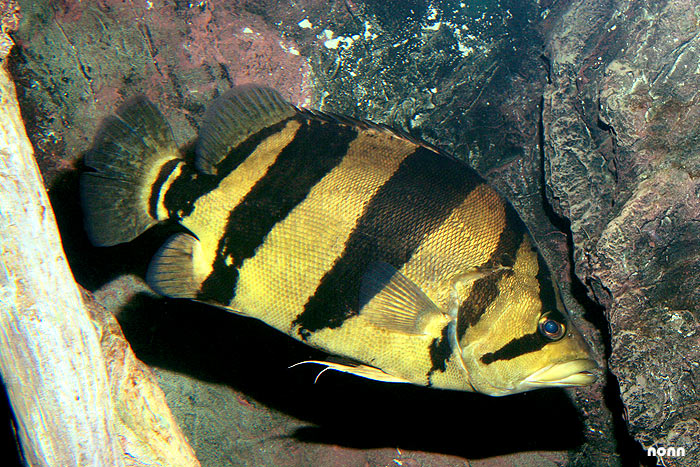
Datnioides pulcherSiamese Tiger Perch
Kottelat, 1998
Max length400mm SL16in SLTanknot recordedTemp20–28°C68–82°FpH5.5–7.5The massive decline in wild populations, hypothesised to be in excess of 90% since the mid-1980s, is thought to have been caused by a variety of factors, including habitat alteration due to construction of dams and other infrastructure, removal of riparian vegetation, and urban pollution, plus over fishing for both human consumption and the aquarium trade.
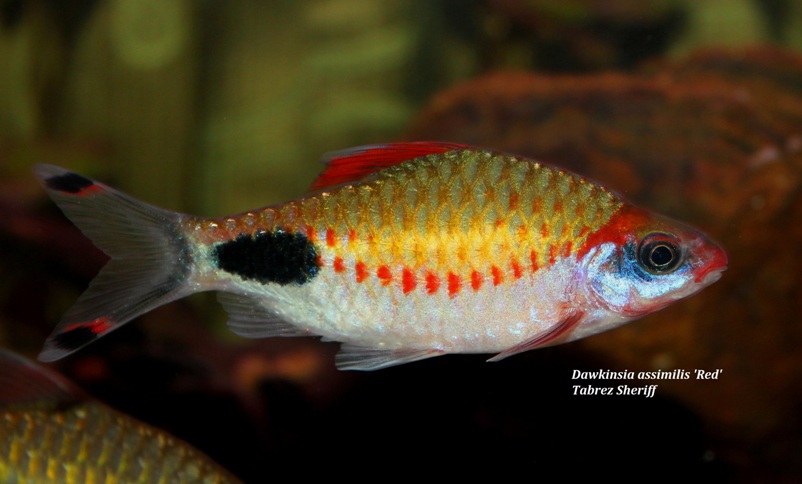
Dawkinsia assimilisMascara Barb
Jerdon, 1849
Max length120mm SL5in SLTank120 × 45cm48 × 18inTemp19–25°C66–77°FpH6.0–7.0D. assimilis has been misidentified as Puntius mahecola (Valenciennes 1844) in the past but the identity of both species was resolved by Pethioyagoda and Kottelat (2005 a, 2005b). They inspected the syntypes of P. mahecola and concluded that though valid it isn't closely related to any Dawkinsia (then the Puntius filamentosus group) but is rather a smaller, silvery fish with a single dark blotch on the caudal peduncle, located entirely posterior to the anal-fin. It's wi....
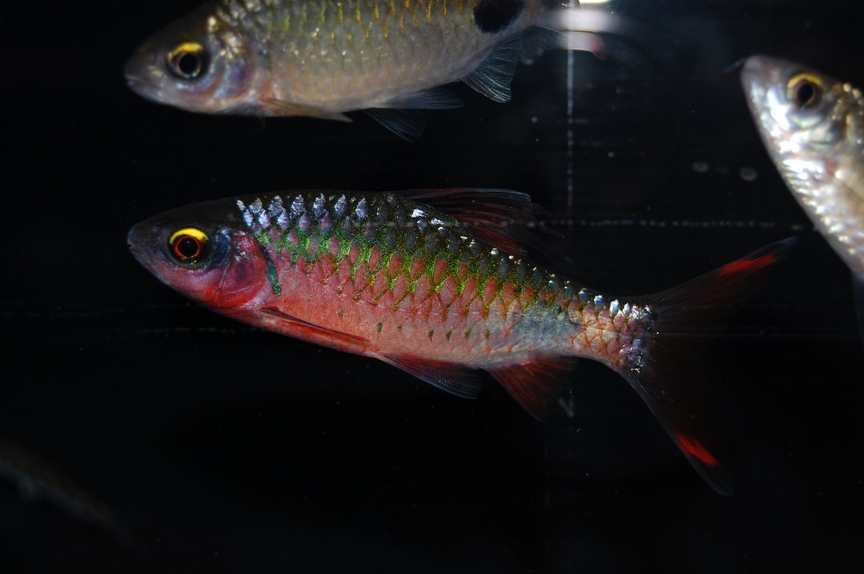
Dawkinsia filamentosaFilament Barb
Valenciennes, 1844
Max length120mm SL5in SLTank120 × 45cm48 × 18inTemp20–25°C68–77°FpH6.0–7.0Not difficult to keep in a well-maintained set-up, though we recommend aquascaping the tank to resemble a flowing stream/river with a substrate of variably-sized, water-worn rocks, sand, fine gravel and perhaps some small boulders. This can be further furnished with driftwood roots or branches, and while the majority of aquatic plants will fail to thrive in such surroundings hardy types such as Microsorum, Bolbitis or Anubias spp. can be grown attached to the décor.
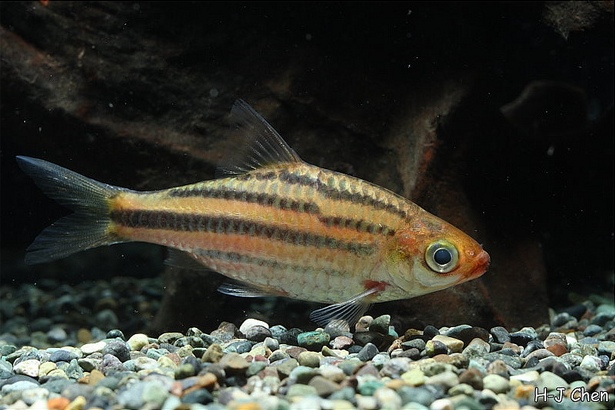
Desmopuntius trifasciatus
Kottelat, 1996
Max length100mm SL3.9in SLTank120 × 45cm48 × 18inTemp20–25°C68–77°FpH5.0–7.0This species is one of three similar-looking members of the genus alongside D. johorensis and D. trifasciatus, while it may also be confused with Striuntius lineatus. Juveniles of all except S. lineatus exhibit a vertically-barred rather than laterally-striped colour pattern, the metamorphosis to adult patterning beginning at around 20 mm SL and normally being complete by 30-40 mm.
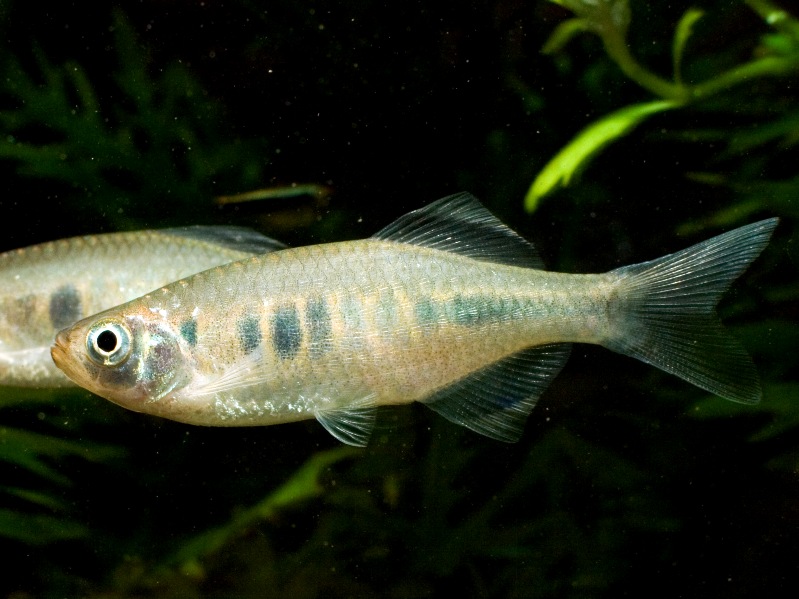
Devario xyropsBlue Moon 'Danio'
Fang & Kullander, 2009
Max length80mm SL3.1in SLTank120 × 45cm48 × 18inTemp18–26°C64–79°FpH6.0–8.0Thrives in an aquarium set up to resemble a flowing stream or river with a substrate of variably-sized, water-worn rocks, sand, fine gravel and perhaps some small boulders. This can be further furnished with driftwood roots or branches, and while the majority of aquatic plants will fail to thrive in such surroundings hardy types such as Microsorum, Bolbitis or Anubias spp. can be grown attached to the décor.
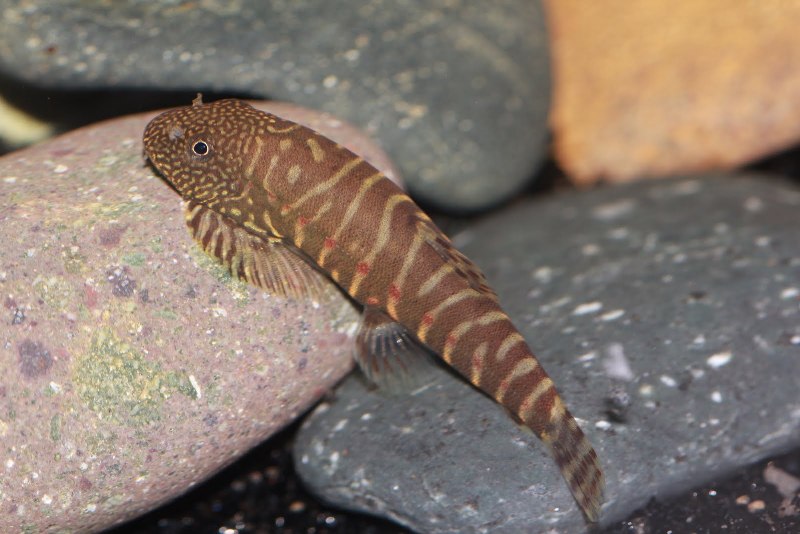
Erromyzon sp. 'ER02'
authority not recorded
Max length50mm SL2.0in SLTank60 × 30cm24 × 12inTemp18–24°C64–75°FpH6.5–8.0This fish remains in need of identification, and we've chosen to list unidentified members of the genus using an 'ER' numbering system in the absence of definitive information. It's quite easy to distinguish from congeners since it's the only species known to possess a colour pattern comprising a dark base colour and series of thin, paler vertical bars on the body and similarly-coloured spots on the head.
Erythrinus erythrinusRed Wolf Fish
authority not recorded
Max length200mm SL8in SLTank120 × 30cm48 × 12inTemp22–26°C72–79°FpH5.5–7.5A species for the specialist, E. erythrinus is also known as the rainbow wolf fish or red hi-fin wolf fish. It is quite variable in colour and pattern depending on collection locality. There is a variant from Peru that has a bright orange belly. Recent studies have highlighted genetic differences in these different populations, suggesting that E. erythrinus is actually a species complex, rather than a single species. There is currently one other recognised species in the genus, E. kessleri, but ...
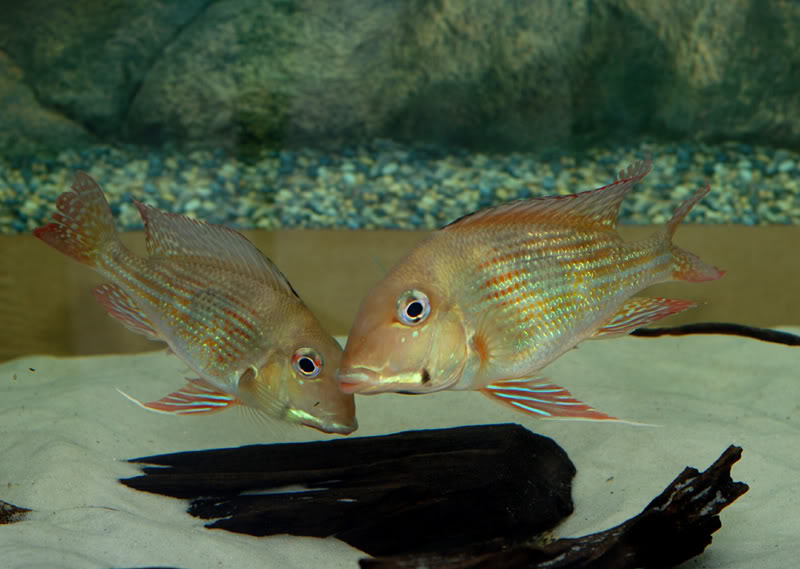
Geophagus brachybranchus
Kullander & Nijssen, 1989
Max length200mm SL8in SLTank180 × 60cm72 × 24inTemp26–30°C79–86°FpH5.0–7.0This species is generally rare in the aquarium hobby though oddly appears to be one of the commoner species in Australia where it's often referred to by the vernacular name 'black-throated eartheater'. It's a member of the nominal G. surinamensis 'group' of closely-related species within the genus and can be identified by a combination of characters including: presence of dark preopercular markings; no vertical bars on the flanks even when stressed/preserved; base of filaments on the first gill arch mostly covered by a flap of skin; exposed part of bra...
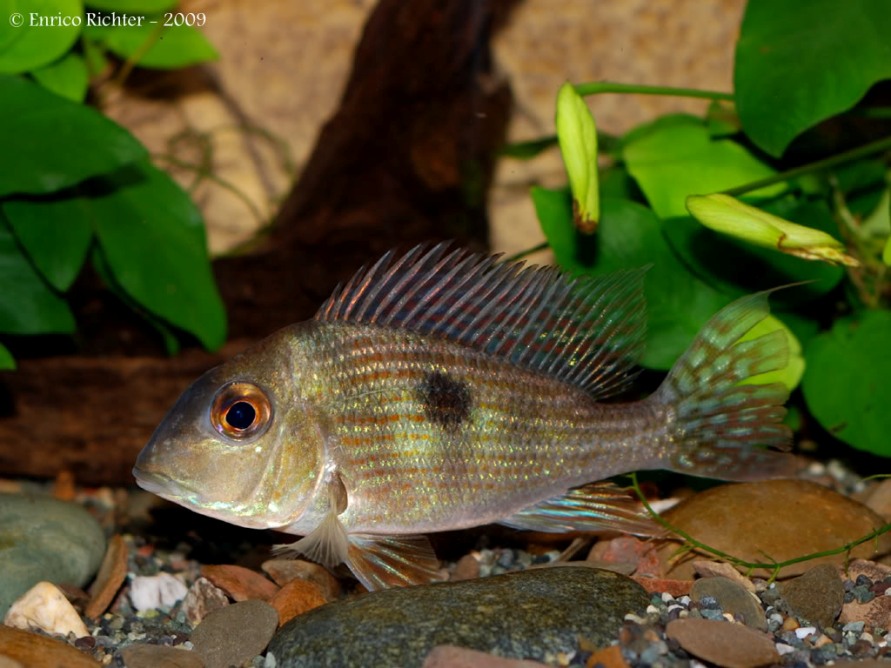
Geophagus sp. 'Pindaré'
authority not recorded
Max length150mm SL6in SLTank150 × 45cm60 × 18inTemp26–29°C79–84°FpH6.0–7.0Known only from the rio Pindaré in Maranhão state, north-eastern Brazil which drains into the Baía de São Marcos (St. Mark's Bay) along with the rios Mearim, of which it is sometimes considered a tributary, and Grajaú. Some sections of the Pindaré have been heavily degraded via removal of riparian vegetation for agriculture and habitats destroyed due to resultant siltation. The river is poorly-studied and the conservation status of its fishes mostly unconfirmed so su...
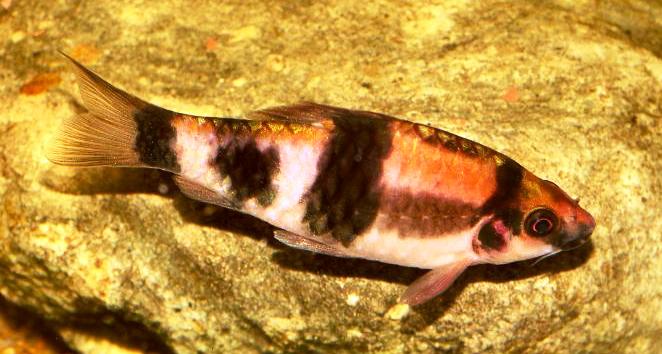
Haludaria fasciataMelon Barb
Jerdon, 1849
Max length70mm SL2.8in SLTank90 × 30cm36 × 12inTemp22–26°C72–79°FpH6.0–7.5This species is traded under various vernacular names including 'ember barb', 'banded barb' and 'black spot barb', and is perhaps among the more undervalued small cyprinids in the aquarium hobby being peaceful, relatively hardy, colourful, and of interesting behaviour. It exists in a number of colour for...
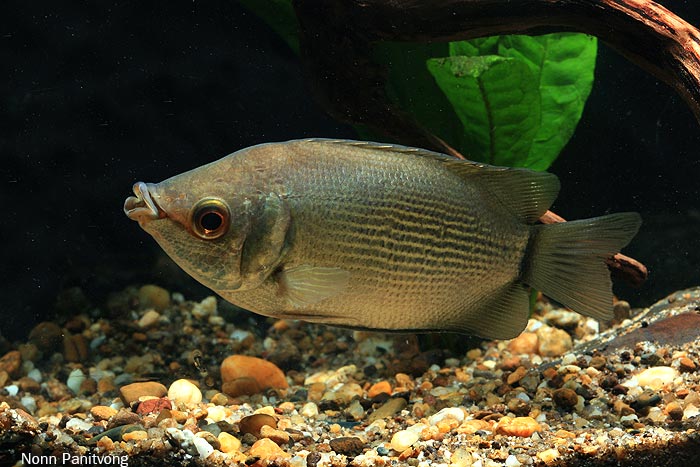
Helostoma temminkiiKissing Gourami
Cuvier, 1829
Max length250mm SL10in SLTank150 × 45cm60 × 18inTemp22–30°C72–86°FpH6.0–8.0The pinkish-white form of this species is among the most widely-traded aquarium fishes in the world but does not occur naturally and is in fact a leucistic variant bred specifically for ornamental purposes. The 'short-bodied' or 'balloon' variety also continues to be fashionable but under no circumstances do we recommend the purchase of these intentionally disfigured animals which tend to have much shorter life spans than the naturally-shaped fish. There also exists a less-po...
Herichthys cyanoguttatusTexas Cichlid
authority not recorded
Max length300mm SL12in SLTanknot recordedTempnot recordedpH6.0–7.5Like many cichlids, members of the genus Herichthys share something of a confused taxonomic past. Erected in 1854 with H. cyanoguttatus the type species, its members were moved into Cichlasoma by Regan in 1905. However following a reclassification of Cichlasoma by Kullander in 1983 it was once again deemed valid. In 1996 Kullander suggested Herichthys should only contain species "sharing a colour pattern of short vertical bars or black spots posteriorly from the middle of the side, and a un...
Herichthys pearsei
authority not recorded
Max length425mm SL17in SLTank240 × 60cm96 × 24inTemp24–30°C75–86°FpH7.2–8.5Like many cichlids, members of the genus Herichthys share something of a confused taxonomic past. Erected in 1854 with H. cyanoguttatus the type species, its members were moved into Cichlasoma by Regan in 1905. However following a review of Cichlasoma by Kullander in 1983 it was once again deemed valid. In 1996 Kullander suggested Herichthys should only contain species "sharing a colour pattern of short vertical bars or black spots posteriorly from the middle of the side, and a unique breed...