Results for “species”
Type a name: scientific, common, or one a species used to go by. Or narrow the catalogue with the filters.
Filters
Pseudogastromyzon laticeps
authority not recorded
Max length67mm SL2.6in SLTank75 × 30cm30 × 12inTempnot recordedpH6.0–7.5It appears that this species has not yet appeared in the western hobby, probably because commercial fish collections don't normally take place in its native waters although the goby Rhinogobius zhoui has been available occasionally. We're unable to provide details of distinguishing characters since no diagnostic key to the genus exists in English at time of writing, but based on the images available it does appear to possess reddish dorsal and caudal fins. The specimens pictured were i...
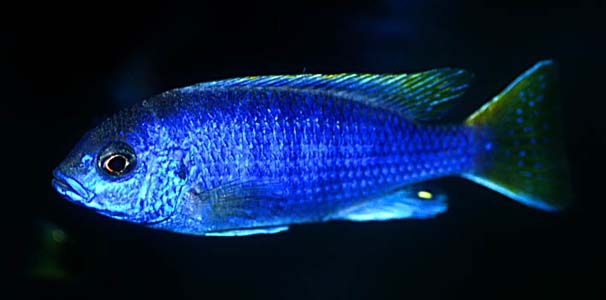
Pseudotropheus sp. 'acei'
authority not recorded
Max length125mm SL5in SLTanknot recordedTemp24–28°C75–82°FpH7.6–8.8This is an excellent beginner's species as it is relatively peaceful and easily bred. Despite being undescribed to science it is widely available in the hobby. It is sometimes sold as Gephyrochromis acei. Several colour forms are available, including "yellow tail acei" and "white tail acei". None of these should be kept together in aquaria to prevent hybridisation. In nature it feeds specifically on algae and other organisms growing on submerged wood, and is the only ...
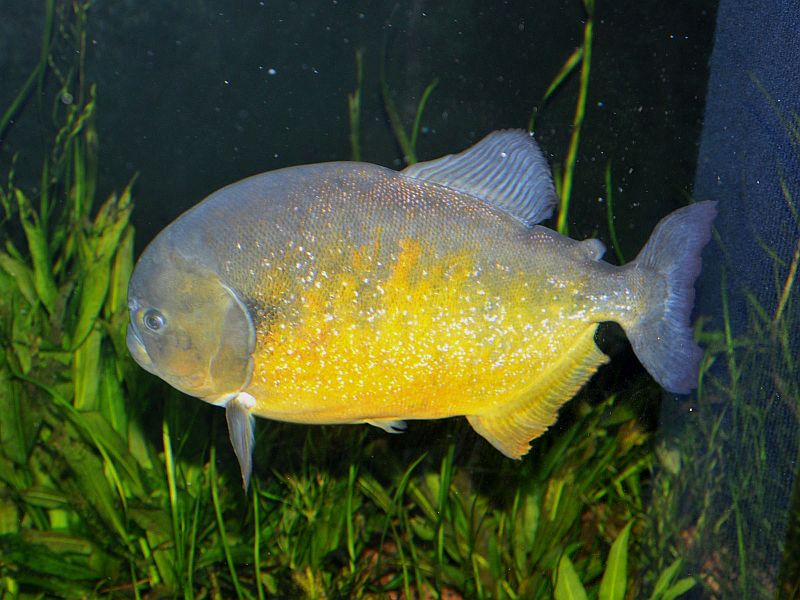
Pygocentrus pirayaPiraya
Cuvier, 1819
Max length350mm SL14in SLTanknot recordedTemp20–28°C68–82°FpH6.0–8.0Following Fink (1993), P. piraya can be distinguished from congeners by the following combination of characters: adipose fin with rays in larger specimens (vs. always without rays in other Pygocentrus species); branched dorsal-fin rays 15-18, usually 16 (vs. 14-18, usually 15); usually 7 neural spines anterior to first pterygiophore (vs. usually 6); vertebrae 36-39, usually 38 (vs. 35-38, usually 36). It can also be identified by colour pattern since it possesses distinctive bright yellow-orange pigmentation on the lower jaw, opercle and lateral body in life.
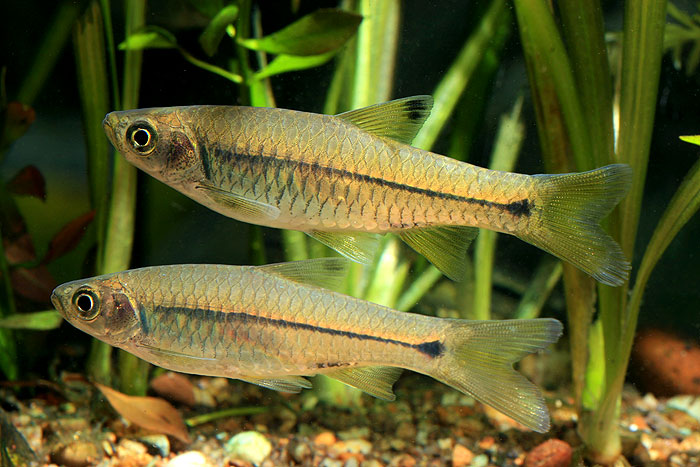
Rasbora dorsinotata
Kottelat, 1987
Max length43mm SL1.7in SLTank90 × 30cm36 × 12inTemp20–25°C68–77°FpH6.0–7.5Type locality is 'Mae Nam Huey Bon, kilometer 45 on road from Amphoe ThaWang Pha to Amphoe Chiang Kham, Chiang Rai Province, Thailand', and this species appears restricted to the Mekong and upper Chao Phraya river basins in northern Thailand and northern Laos. The specimens pictured here were collected from th...
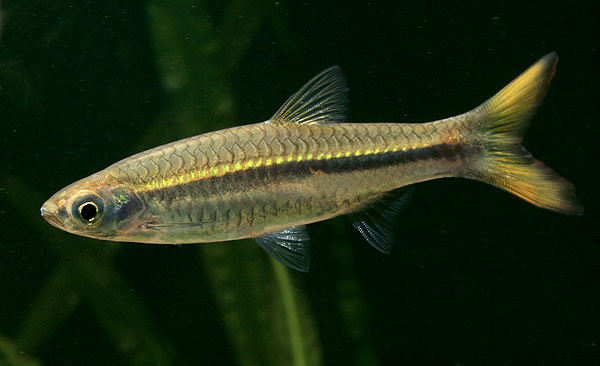
Rasbora dusonensis
Bleeker, 1850
Max length162mm SL6in SLTank120 × 30cm48 × 12inTemp20–26°C68–79°FpH4.0–7.5The identity of this species was unclear for a number of decades prior to its redescription by Ng and Kottelat (2013). The confusion originated with Brittan (1954) who misidentified specimens of R. tornieri as R. dusonensis and was exacerbated by Alfred (1963) who concluded that the holotype of R. dusonensis was conspecific with R. myersi.
Rasbora lacrimulaRed Cherry Rasbora
authority not recorded
Max length31mm SL1.2in SLTank45 × 30cm18 × 12inTemp22.2–25.6°C72–78°FpHnot recordedThis species is also traded as 'Bornean redfin rasbora', 'sunshine rasbora' and 'dwarf volcano rasbora' and first appeared in the hobby during the latter part of 2010. It can be told apart from all other members of the genus by a combination of the following characters: possession of small tubercules on the dorsal surface, posterior to theand continuing onto the upper part of caudal fin, visible as an irregular 'crest' when a specimen is viewed laterally; ...
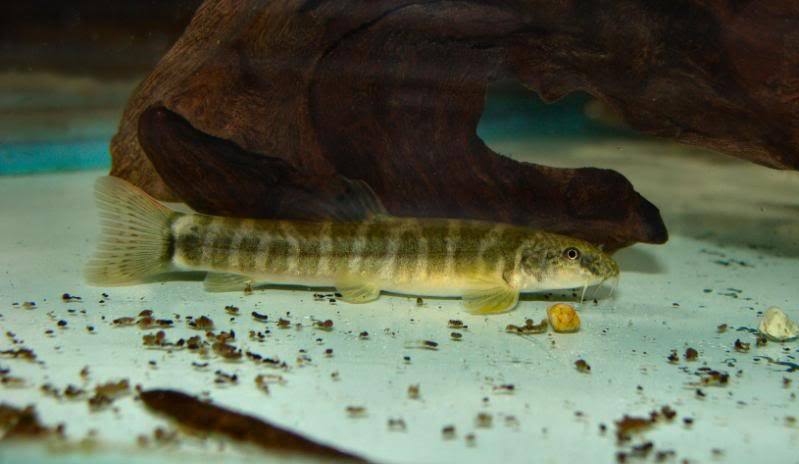
Schistura sp. 2Laos Redtail Loach
authority not recorded
Max length45mm SL1.8in SLTank80 × 30cm31 × 12inTemp20–26°C68–79°FpH6.0–7.5The identity of this fish is unclear but it has been traded as S. sp. 'Laos redtail'. Schistura is the most species-rich genus among nemacheilid loaches with some 190 members and it continues to grow with over 100 having been described since 1990. It may repre...
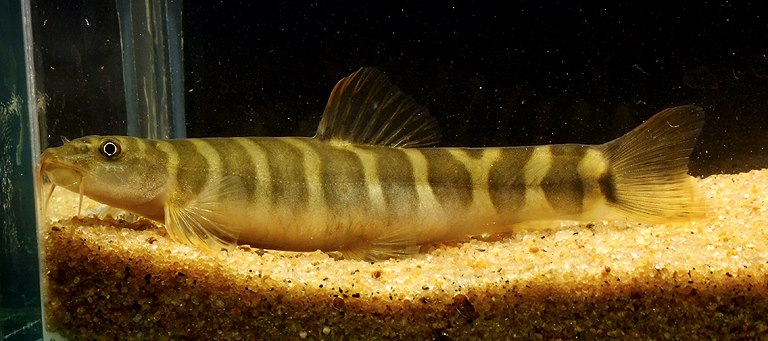
Schistura sp. 7
authority not recorded
Max length50mm SL2.0in SLTanknot recordedTempnot recordedpHnot recordedThis fish was collected for the aquarium trade during 2012 but its identity has not yet been established. Schistura is the most species-rich genus among nemacheilid loaches with some 190 members and it continues to grow with over 100 having be...
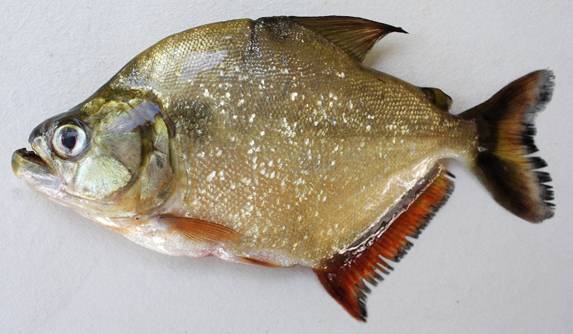
Serrasalmus brandtiiWhite Piranha
Lütken, 1875
Max length250mm SL10in SLTank150 × 60cm60 × 24inTemp20–26°C68–79°FpH5.0–8.0A number of sources state that S. brandtii can be identified by the relatively anterior position of the anal-fin origin beneath the first few dorsal-fin rays. However, images of specimens collected from the rio São Francisco, where it is the only member of the genus present, suggest that this is not always the case and this is also supported by the figure from Eigenmann (1915). No recent diagnosis of the species is available.
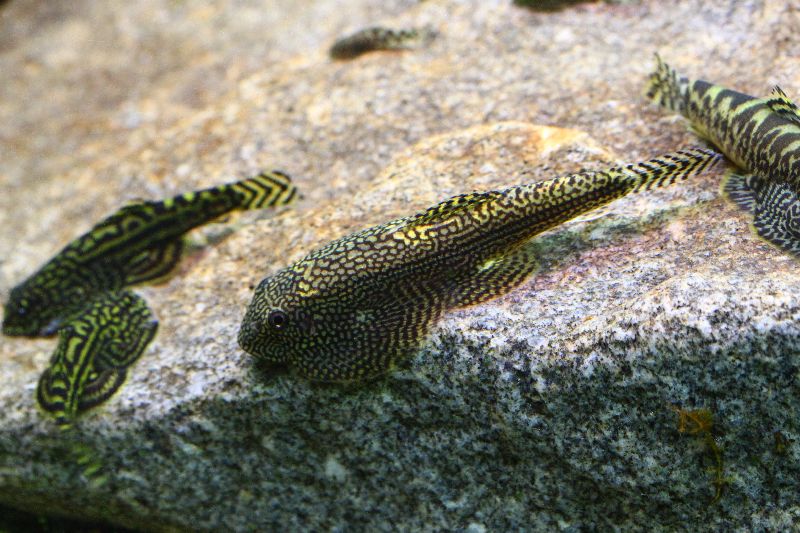
Sewellia albisuera
Freyhof, 2003
Max length70mm SL2.8in SLTank90 × 30cm36 × 12inTemp18–24°C64–75°FpH6.0–7.5It's been suggested that these two may represent the same species but this appears not to be the case. When describing S. albisuera Freyhof (2003) used a series of specimens collected in 2000 plus some larger, spotted fish which had been collected in 1999 and preserved in New York. Although he noticed differences in dorsal patterning between the two series these weren't considered sufficient to s...
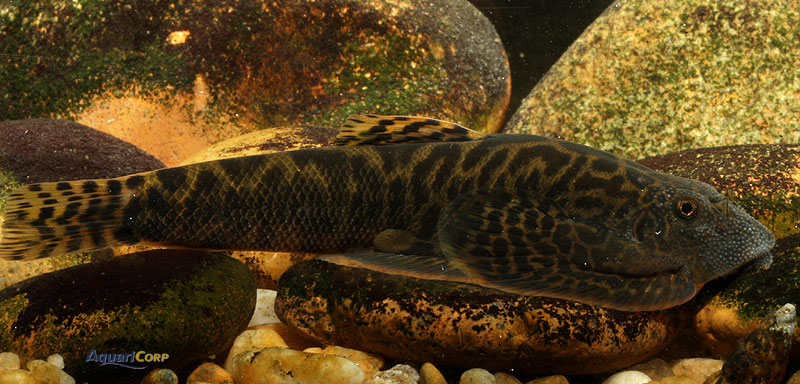
Sewellia elongata
Roberts, 1998
Max length75mm SL3.0in SLTank90 × 30cm36 × 12inTemp20–24°C68–75°FpH6.0–7.5This species appeared in the trade during 2010 and its identity has been confirmed to us by Thai exporter and aquarist Kamphol Udomritthiruj who collects it from the Se Kong system for the aquarium hobby. To date only subadult specimens have reached the western market.
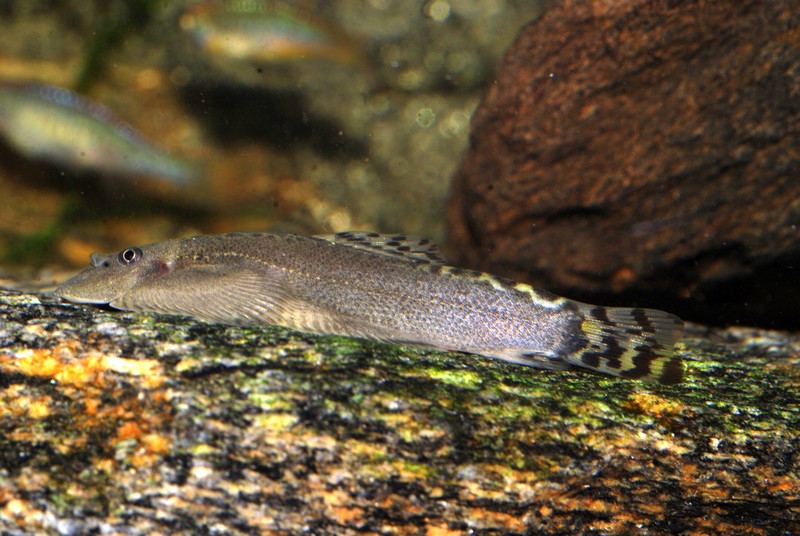
Sinogastromyzon puliensis
Liang, 1974
Max length80mm SL3.1in SLTank75 × 30cm30 × 12inTemp20–24°C68–75°FpH6.0–8.0This species is a relatively recent addition to the hobby but considering the number of specimens allowed to be collected for scientific research is highly restricted by the Taiwanese Council for Agriculture it seems odd that it's become available at all. Indeed it appears that those in the trade are collected and exported on an illegal basis (T-Y Liao, pers. comm.)...
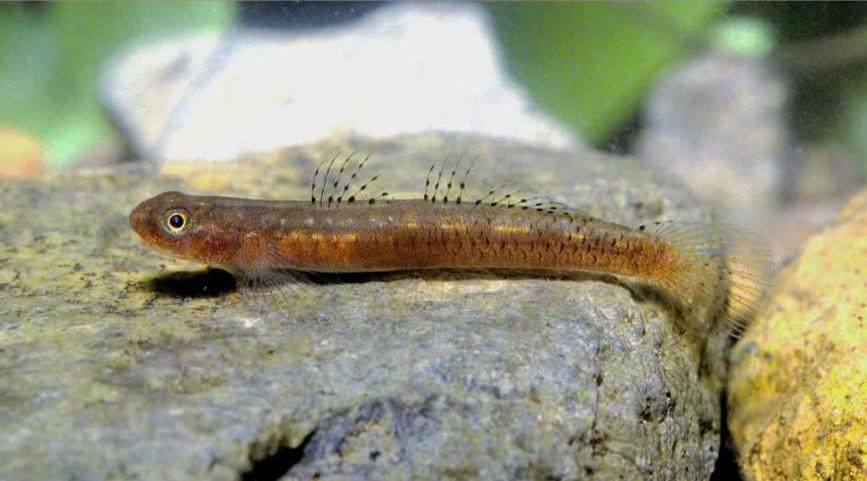
Stiphodon birdsong
Watson, 1996
Max length23mm SL0.9in SLTank60 × 30cm24 × 12inTemp22–28°C72–82°FpH6.5–7.5This species probably hasn't been seen in the trade yet but should make an interesting aquarium fish if it ever becomes available. Within the genus it's most similar to S. surrufus and S. mele from which it differs only in terms of meristics. In description it's distinguished from the former only by possession of more teeth in the upper jaw although images of live specimens depict S. surrufus as a more intensely-coloured, reddish fi...
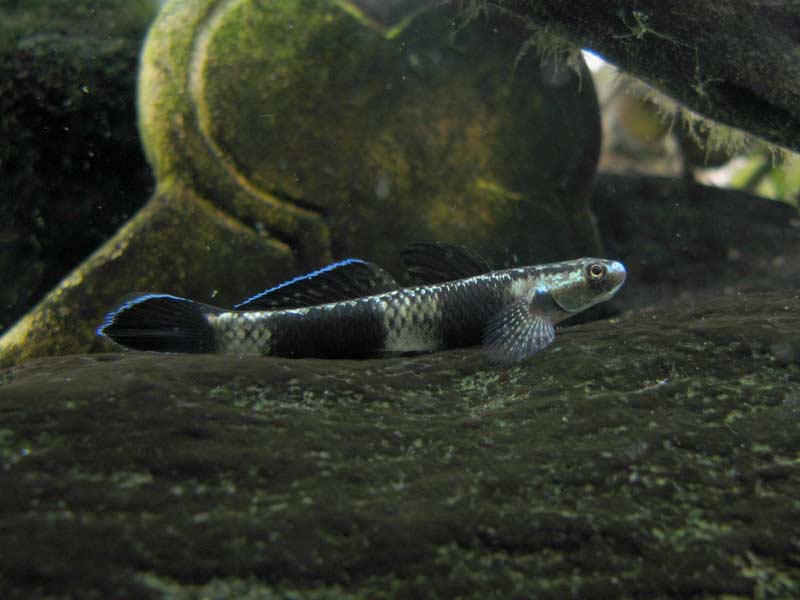
Stiphodon pelewensis
Herre, 1936
Max length45mm SL1.8in SLTank60 × 30cm24 × 12inTemp22–28°C72–82°FpH6.5–7.5This species seems not to have appeared in the trade and is similar to several congeners in appearance, most notably S. weberi which is native to the Maluku archipelago and other islands around the coast of Papua (formerly Irian Jaya). The two are said to be most easily-distinguished by examination of the belly which is fully-scaled in S. pelewensis but lacks scalation in S. weberi. The Gobiidae is the most speciose vertebrate family and notoriously problematic in terms of identifying fishes down to sp...
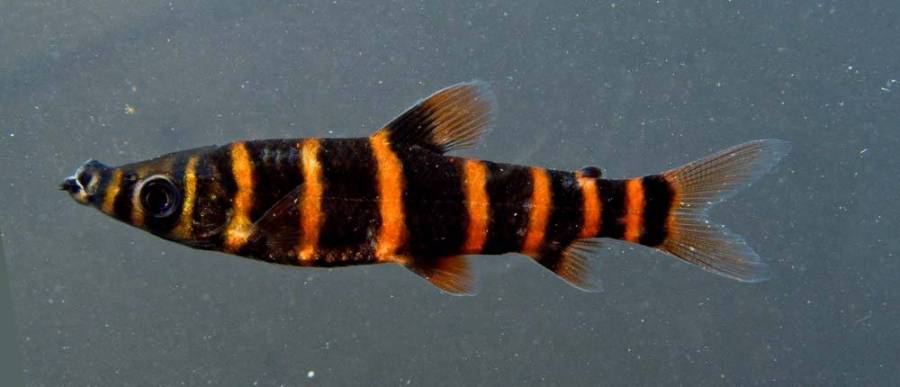
Synaptolaemus latofasciatus
Steindachner, 1910
Max length110mm SL4in SLTank120 × 45cm48 × 18inTemp20–28°C68–82°FpH5.0–7.5This species was described from a single specimen and included in the genus Leporinus until 2011 at which point the holotype was examined and recognised as corresponding to the fish described as Synaptolaemus cingulatus (Myers & Fernández-Yépez, 1950).
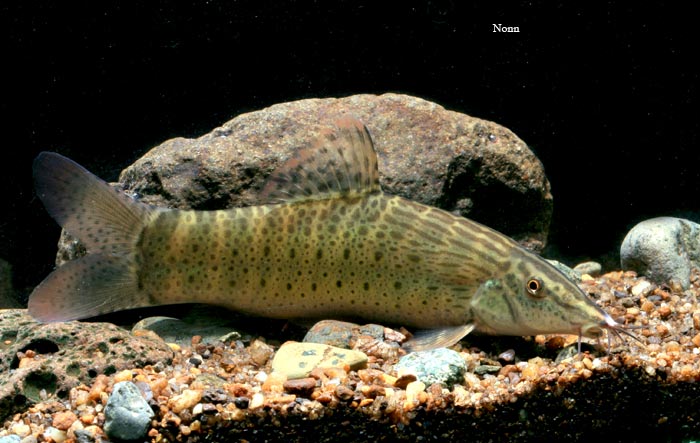
Syncrossus beaufortiChameleon Loach
Smith, 1931
Max length250mm SL10in SLTank150 × 45cm60 × 18inTemp22–30°C72–86°FpH6.0–7.5This species is very similar in appearance to S. berdmorei which is native to India and Myanmar, and has been widely mislabelled under that name in older aquarium literature. The two can appear identical on first glance but there are some notable differences, most obviously possession of 9-10 branchedrays in S. beauforti vs. 11-14 in S. bermorei, and the fact that even young specimens of S. beauforti exhibit laterally-orientated rows of small, dark markings running across the ...
Synodontis nigritaFalse Upside-down Catfish
authority not recorded
Max length175mm SL7in SLTank90 × 30cm36 × 12inTemp21–28°C70–82°FpH6.0–7.8This is one of the most common Synos seen in dealers' tanks and is often incorrectly labelled "Upside-down catfish". The true upside-down catfish is S. nigriventris and S. nigrita inverts far less frequently than that species although it does often rest in this position. Moreover, S. nigrita grows far larger than S. nigriventris and it is a common sight to see several adult specimens in shops that have been returned by unsuspecting owners. S. nigrita is often confused with the...
Taeniacara candidi
authority not recorded
Max length64mm SL2.5in SLTank45 × 38cm18 × 15inTemp27–30°C81–86°FpH4.5–5.8Taeniacara Candidi are the source of much discussion amongst dwarf cichlid keepers. They are a highly attractive species, but require very specific water parameters and as such are seen as a challenge amongst even experienced south american cichlid keepers. Candidi are renowned for not liking water changes - they will commonly get "moody" after a water change, and will sulk at the bottom of the tank for over a day in some cases. Try to keep new water at the same temperature as the C...
Telmatochromis vittatus
authority not recorded
Max length85mm SL3.3in SLTank75 × 30cm30 × 12inTemp23–27°C73–81°FpH8.0–9.5Similar in lifestyle to Julidochromis species, Telmatochromis vittatus is ideal for the smaller Tanganyikan community and is also a good choice for the beginner. It can be distinguished from the similar T. brichardi and T. bifrenatus primarily by its larger size, smaller eyes and more rounded nose. Like other Lamprologines, Telmatochromis have fang-like, caniform teeth, which they use for scraping microrganisms from rock surfaces. On adult specimens these are clearly visible....
Theraps bocourtiChisel-tooth cichlid
authority not recorded
Max length300mm SL12in SLTank150 × 60cm60 × 24inTemp26–28°C79–82°FpHnot recordedA rather elusive species in the hobby, this beautiful cichlid is sometimes referred to as the "Chisel-toothed" cichlid. Despite being described in 1902 it was not until the mid-1990s that it appeared in the aquarium trade, wild specimens being collected by American aquarists Ross Socolof, Harry Specht, and Rusty Wessel in 1994....