Results for “Maracyn-2”
Type a name: scientific, common, or one a species used to go by. Or narrow the catalogue with the filters.
Filters
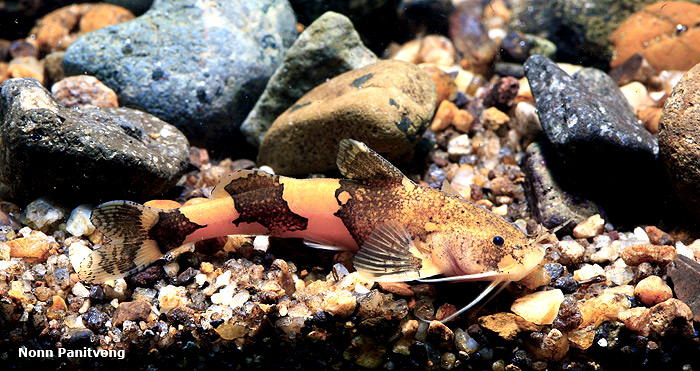
Akysis pulvinatusKra Stream Catfish
Ng, 2007
Max length30mm SL1.2in SLTank45 × 30cm18 × 12inTemp16.5–23.5°C62–74°FpH6.0–7.2This species has been exported for the aquarium hobby on an extremely limited basis. It can be differentiated from all other Akysis species by the following combination of characters: head length 27.6–29.8% of standard length (SL); head width 21.9–25.1% SL; caudal peduncle depth 9.4–10.3% SL; length ofbase 23.0–25.2% SL; nasal barbel len...
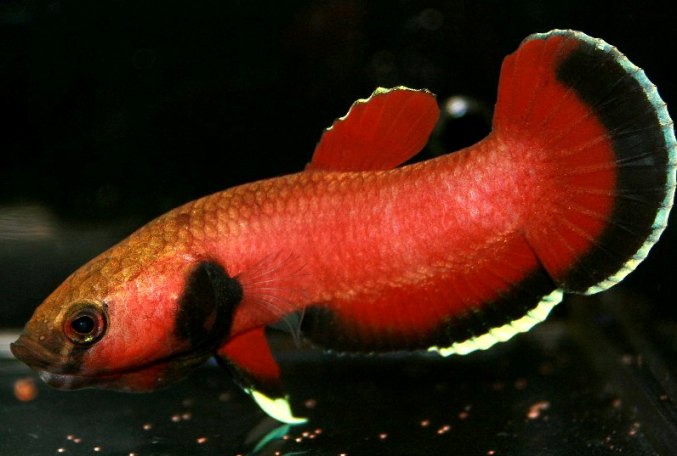
Betta channoidesSnakehead Betta
Kottelat & Ng, 1994
Max length40mm SL1.6in SLTank45 × 30cm18 × 12inTemp23–30°C73–86°FpH4.0–6.5B. channoides and B. albimarginata together comprise the Betta albimarginata group/complex of closely-related species within the genus, these differing from all other members of the genus in colour pattern and by possession of 9-12 anal-fin spines (vs. 0-4). They look very similar to one another but differ in the following characters: anal fin spines 9-11 in B. albimarginata vs. 12 in B. channoides; anal fin rays 21-23 vs. 23-25; lateral scale rows 26-27 vs. 27.5-28; trans...
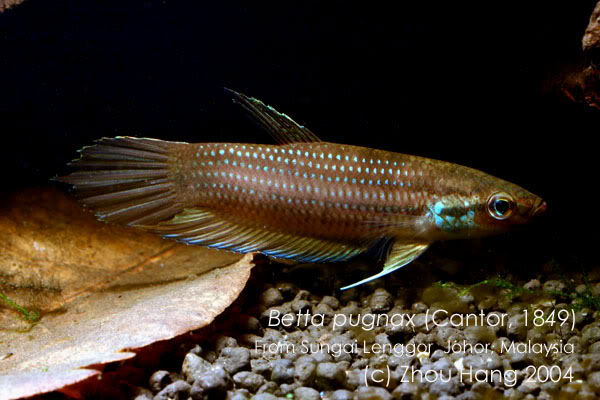
Betta pugnax
Cantor, 1849
Max length70mm SL2.8in SLTank80 × 30cm31 × 12inTemp22–28°C72–82°FpH4.0–7.5It can be told apart from other members of the B. pugnax group by the following characters: chin bar present; no complete second postorbital stripe on opercle; presence of transverse bars in caudal-fin of males; caudal-fin in males broadly lanceolate; opercle scales iridescent blue; anal-fin with reddish subdistal band and black margin; caudal-fin without dark margin; 25-28 anal-fin rays; 28-31 lateral scales; 11-12 postdorsal scales; length of pelvic fins 26.6-43.8 % SL; length of head 27.5-35.2 % SL; inter-orbital width 32.4-53.0 % HL.
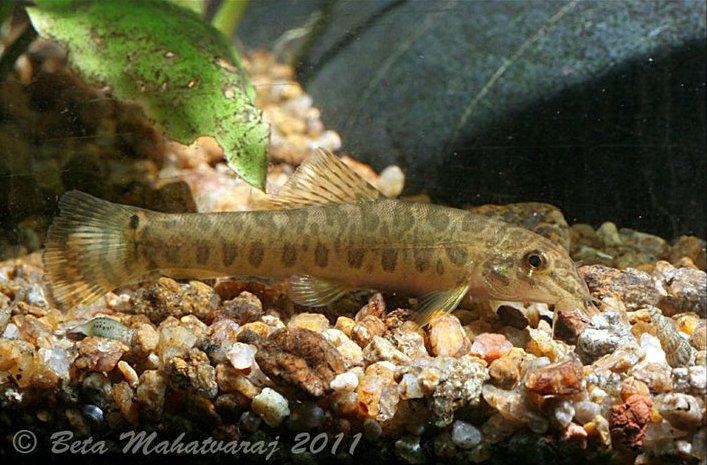
Paracanthocobitis mooreh
Sykes, 1839
Max length75mm SL3.0in SLTank75 × 30cm30 × 12inTemp20–26°C68–79°FpH6.0–7.5This species is still considered a member of the genus Nemacheilus by some sources, but it was reclassified and placed in Acanthocobitis by Grant (2008). Acanthocobitis sinuata, generally considered a junior synonym of A. mooreh (Kottelat, 2012b), also appears distinct and differs in geographical distribution plus number of dorsal-fin rays (2-3/9-10 in A. mooreh vs. 2/8-9 in A. sinuata) and some aspects of colour pattern.
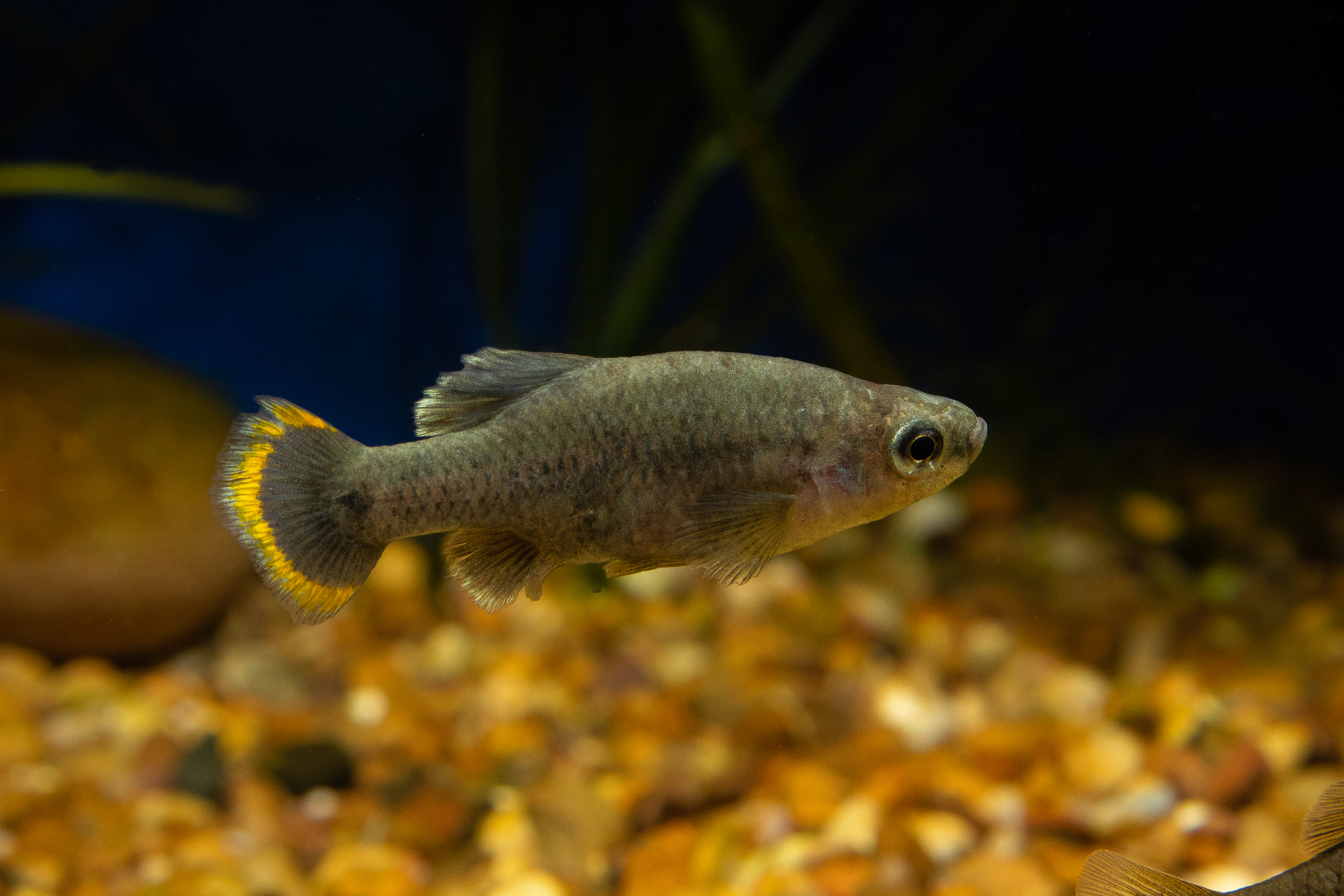
Zoogoneticus tequilaTequila Splitfin
Webb & Miller, 1998
Max length♂ 30 · ♀ 50mm SL♂ 1.2 · ♀ 2.0in SLTank90 × 30cm36 × 12inTemp17–27°C63–81°FpH6.8–7.6A single male of the Tequila Splitfin was sampled in 1955 by Miller and Greenbank, but identified erroneously as Zoogoneticus quitzeoensis, with which species it was collected and found sympatrically . Many years later, the mistake was detected, the fish identified as a new species and finally, 43 years after the first capture, described by Webb and Miller. In 2001, a wild population of this species was rediscovered in a very small spring pool (3 x 4m in diameter). The population there was composed of only a handful of adult fish and a few tens of juveniles (De la Vega-Salazar et al., 2003). In 2007, N. W. Bailey et al showed, that the allelic richness of this population (though it was comparable in size to an aquatic stock) was higher than in any aquatic stock. In 2013 the loss of this population was reported (pers. comm. Domínguez), so there is not much hope that this species is still persisting in the wild.
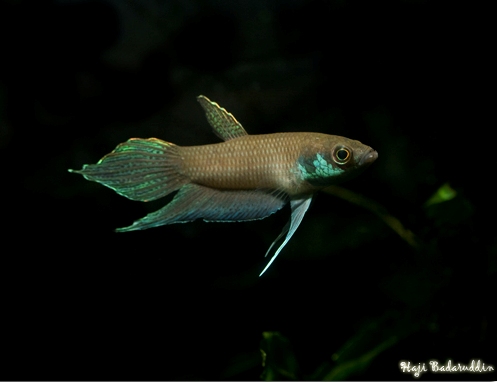
Betta lehi
Tan & Ng, 2005
Max length61mm SL2.4in SLTank60 × 30cm24 × 12inTemp22–27°C72–81°FpH4.0–7.0It can be told apart from other members of the B. pugnax group by the following characters: chin bar absent; prsence of transverse bars in the dorsal-fin; no transverse bars in caudal-fin; green iridescent scales present on opercle and body; anal fin with iridescent, light blue distal band; a pair black markings below the postorbital stripe on the opercle of females and juveniles; anal-fin rays 25-29 (mode 28); lateral scales 28-30 (mode 29); postdorsal scales 10-11 (mode 12); pelvic-fin length 34.8-50.6% SL; head length 33.4-36.8% SL; inter-orbital width 31.7-37.4% HL.
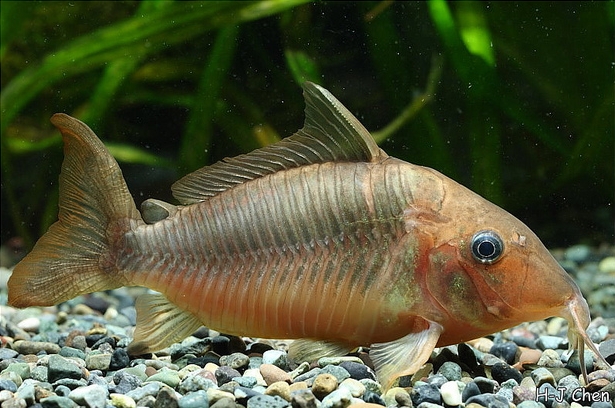
Corydoras britskiiGiant Brochis
Nijssen & Isbrücker, 1983
Max length90mm SL3.5in SLTank120 × 45cm48 × 18inTemp20–26°C68–79°FpH6.0–7.0Brochis was first synonymised with Corydoras by Britto (2003), since the latter genus cannot be considered monophyletic if the former is accepted as valid. This decision has been supported in subsequent phylogenetic studies by Shimabukuro-Dias et al. (2004) and Alexandrou et al. (2011), although the name Brochis is still common in aquarium literature. It is likely that the genus will be revalidated and expanded in the future following a required taxonomic review of the subfamily Corydoradinae as suggested by Alexandrou and Taylor (2011).
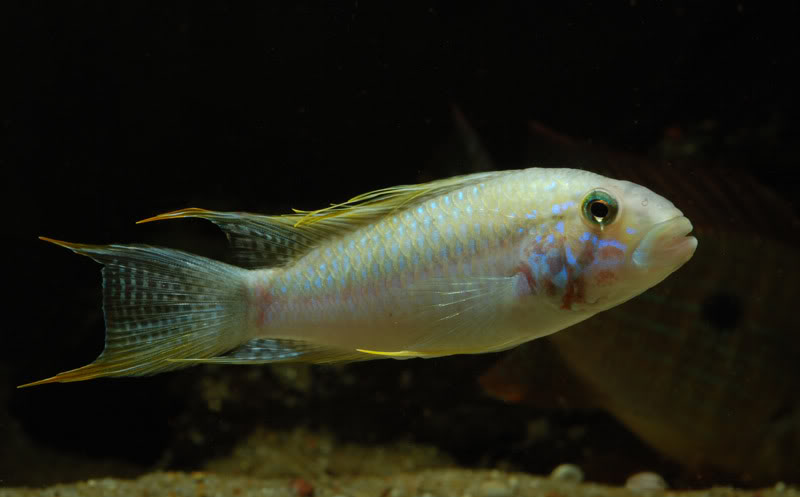
Apistogramma sp. 'Kelleri'
authority not recorded
Max length♂ 80 · ♀ 65mm SL♂ 3.1 · ♀ 2.6in SLTank60 × 30cm24 × 12inTemp22–29°C72–84°FpH4.0–6.0This undescribed species was first collected and subsequently appeared in the aquarium hobby during 2008. It was exported again in late 2009 and early 2010 under the names A. sp. 'Jutai' and A. sp. 'diamond face', and said to have been collected in the Río Jutai, Amazonas state, Brazil. The Jutai is a south bank tributary of the Solimões but lies several hundred kilometres downstream of Leticia so this information, from a purportedly trustworthy source, initiall...
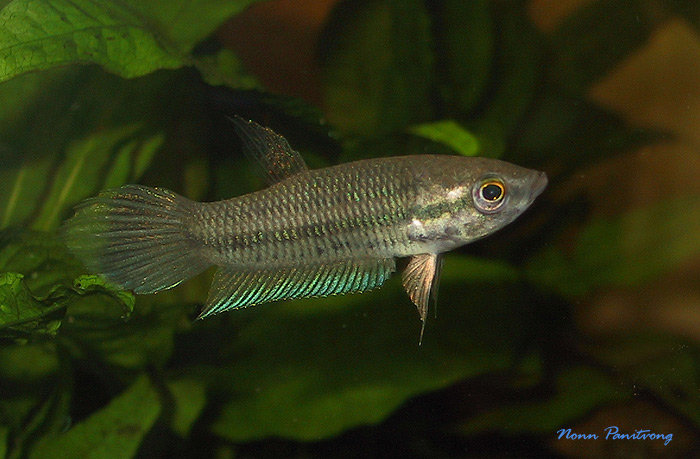
Betta pallida
Schindler & Schmidt, 2004
Max length40mm SL1.6in SLTank60 × 30cm24 × 12inTemp22–27°C72–81°FpH5.5–7.0Has been collected from a slowly-moving creek which ranged in depth from 20-50 cm. The water was clear and slightly-stained with tannins and the subtrate was covered by a layer of leaf litter. PH was 6.3, conductivity 82 µS/cm and water temperature 25.5°C. At another locality pH was 6.5, conductivity 69 µS/cm and water temperature 26.6 °C.
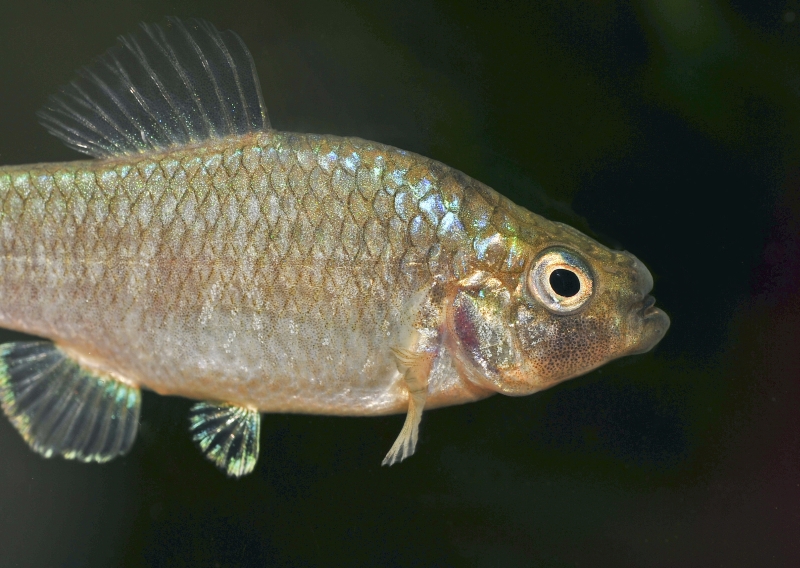
Cyprinodon brontotheroidesDurophage Pupfish
Martin & Wainwright, 2013
Max length36mm SL1.4in SLTanknot recordedTempnot recordedpHnot recordedEndemic to San Salvador Island in the Bahamas where it's known from six hypersaline lakes; Crescent Pond, Osprey Lake, Oyster Lake, Little Lake, Wild Dilly Pond and Moon Rock Pond. Type locality is 'San Salvador Island, Bahamas: Crescent Pond, 1 km SE of the Gerace Research Centre, lat 24°06'45"N, long 74°27'28"W'.
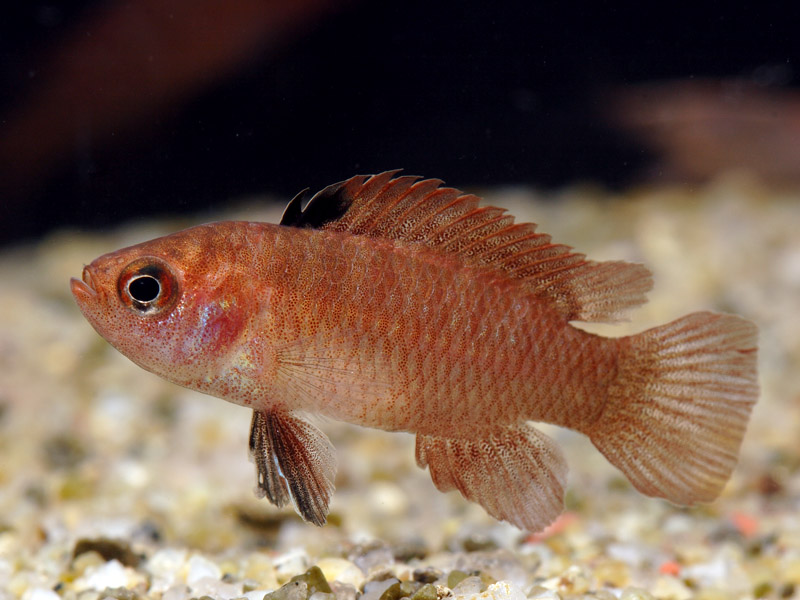
Dario hysginon
Kullander & Britz, 2002
Max length20mm SL0.8in SLTank45 × 30cm18 × 12inTemp20–24°C68–75°FpH6.5–7.5This species is traded under various names such as 'red melon Dario' or 'flame red Dario'. Among congeners D. dayingensis is most similar since it differs only in a few meristic counts and by its slightly larger adult size. D. hysginon can be told apart by possessing 22-24, usually 23, lateral scales (vs. 24-25 in D. dayingensis), 8½ (vs. 9½) scales in the transverse scale row, a...
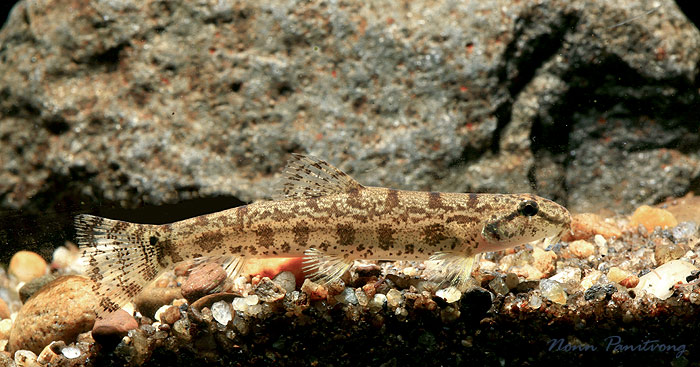
Lepidocephalichthys micropogon
Blyth, 1860
Max length55mm SL2.2in SLTank60 × 30cm24 × 12inTemp20–25°C68–77°FpH6.0–7.5According to Kottelat (2012) L. manipurensis Arunkumar, 2000, which was described from Moreh, Manipur state, northeastern India, close to the border with Myanmar, is a syonym of L. micropogon. Havird and Page (2010) differentiate the two based on caudal-fin patterning, predorsal length and ver...
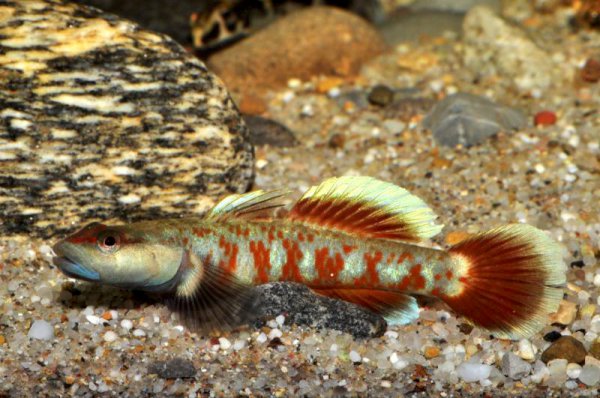
Rhinogobius zhoui
Li & Zhong, 2009
Max length36mm SL1.4in SLTank60 × 30cm24 × 12inTemp19–24°C66–75°FpH7.0–7.8This species has been in the aquarium trade since 2010 and is sold under several names including 'Chinese vermilion goby', 'Zhou's scarlet goby', 'scarlet goby', and 'flame goby'. It can be told apart from congeners by the following combination of characters: second dorsal-fin rays I, 8-9; anal-fin rays I, 7-8; pectoral-fin rays 16-18; longitudinal scale series 29-31; predorsal scales 10-12; vertebral count 10+16=26.
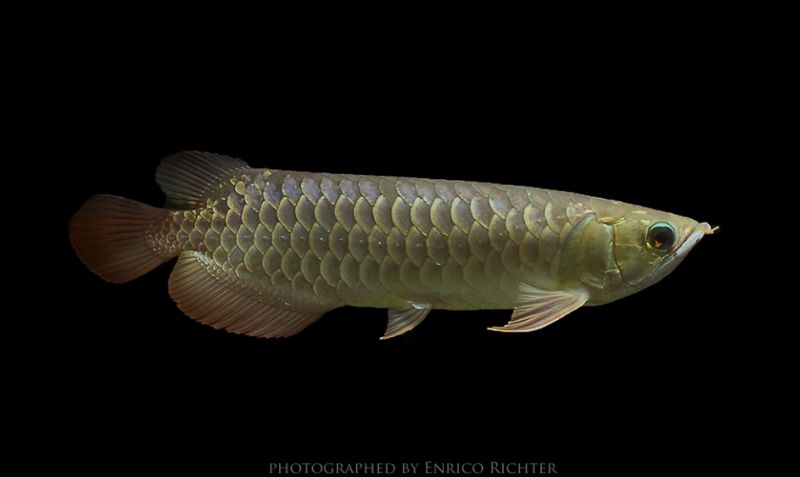
Scleropages formosusAsian Arowana
Müller & Schlegel, 1840
Max length900mm SL35in SLTanknot recordedTemp22–28°C72–82°FpH5.0–8.0This species is distinguished from its Australian congeners S. jardinii and S. leichardti by possessing a lower number of lateral line scales (21-26 vs 32-36). It occurs naturally in a number of colour forms of which three were elevated to distinct species status in 2003, but the current majority view is that all represent S. formosus pending a detailed review. Kottelat (2013) mentions that the red form may...
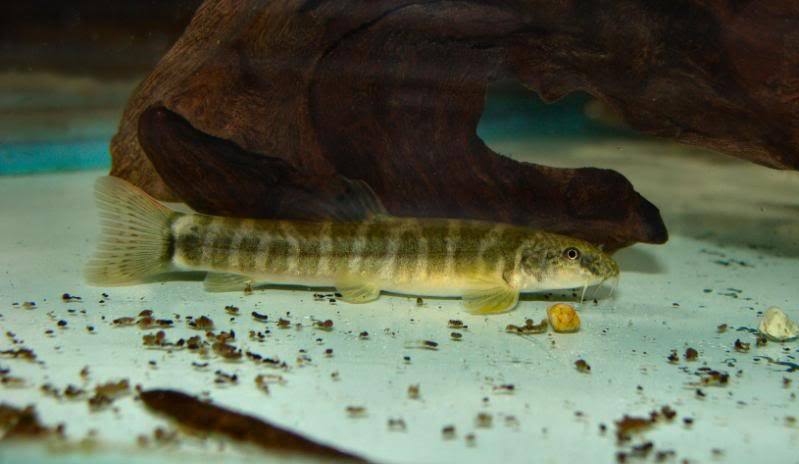
Schistura sp. 2Laos Redtail Loach
authority not recorded
Max length45mm SL1.8in SLTank80 × 30cm31 × 12inTemp20–26°C68–79°FpH6.0–7.5The identity of this fish is unclear but it has been traded as S. sp. 'Laos redtail'. Schistura is the most species-rich genus among nemacheilid loaches with some 190 members and it continues to grow with over 100 having been described since 1990. It may repre...
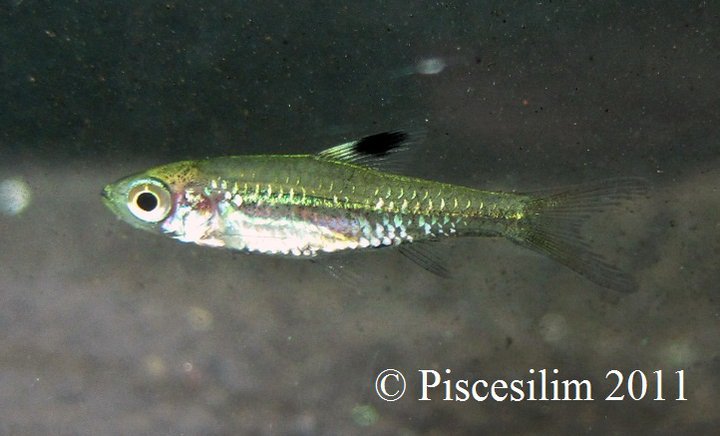
Brevibora cheeya
Liao & Tan, 2011
Max length55mm SL2.2in SLTank80 × 30cm31 × 12inTemp20–25°C68–77°FpH4.0–7.0This species is very rare in the trade and is normally imported only as bycatch among shipments of other fishes. It can be told apart from its well-known congener B. dorsiocellata by a combination of characters as follows: lateral line complete (25-30 pored scales vs. 4-9); more scales in the lateral row (29-32 vs. 25-27); larger adult siz...
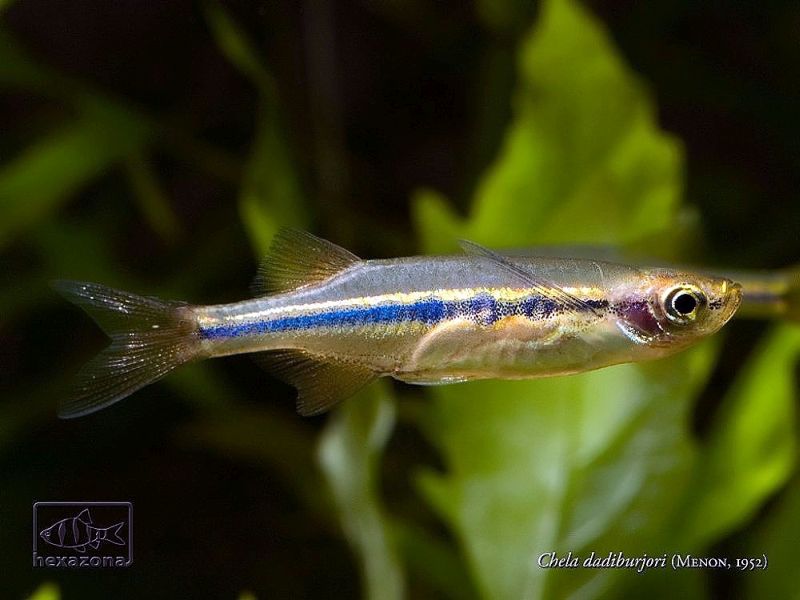
Laubuka dadiburjoriDadio
Menon, 1952
Max length30mm SL1.2in SLTank90 × 30cm36 × 12inTemp20–24°C68–75°FpH6.0–7.5It can be distinguished from other members of the genus by the following characters: lateral line absent or perforating only 2-5 scales; pharyngeal teeth hooked; body size small, not exceeding 30 mm SL; body depth less than 25 % SL; colour pattern comprising a dark bluish lateral stripe extending from the eye to the caudal peduncle, typically, but not always, forming 2-5 circular spots along its length.
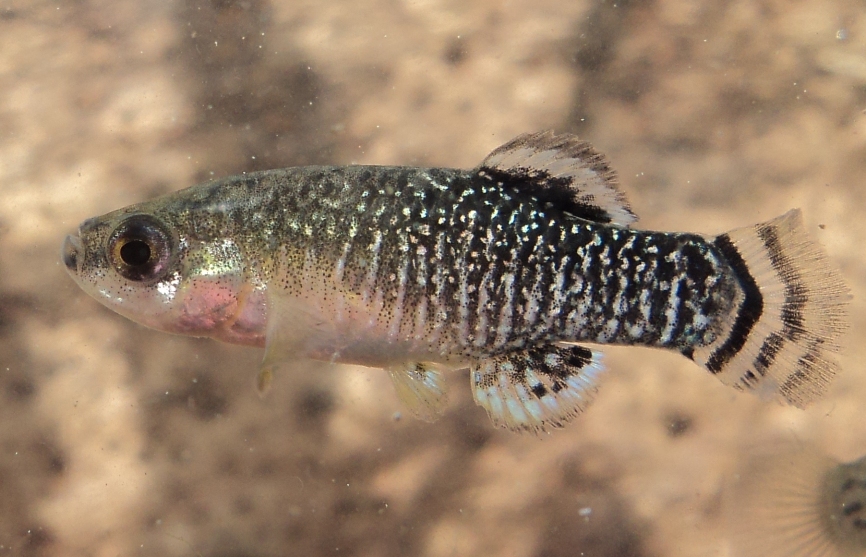
Apricaphanius iberusSpanish Toothcarp
Valenciennes, 1846
Max length50mm SL2.0in SLTank120 × 30cm48 × 12inTemp2–30°C36–86°FpH7.0–9.0Populations of Aphanius from Spain's southern, Atlantic coastline and Algeria previously considered representative of A. iberus have now been elevated to full species status with the names A. baeticus (Doadrio, Carmona & Fernández-Delgado, 2002) and A. saourensis (Blanco, Hrbek & Doadrio, 2006), respectively. All three species look broadly similar although A. saourensis can be easily identified as the patterning in males is mottled and does not form vertical bars, while femal...
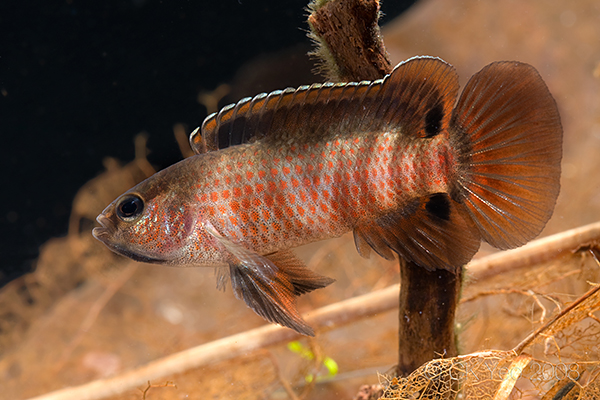
Badis sp. 'Buxar'
authority not recorded
Max length50mm SL2.0in SLTank60 × 30cm24 × 12inTemp15–25°C59–77°FpH6.5–7.5This undescribed species has been available in the aquarium hobby since 2006. It may also be seen on sale with the name Badis sp. 'flame dot' in reference to the body scales which in males possess a bright red centre or B. sp. 'red' as it appeared in a 2007 German magazine article. It appears to belong to the B. corycaeus group of species (see below). Since the species Badis singenensis was...
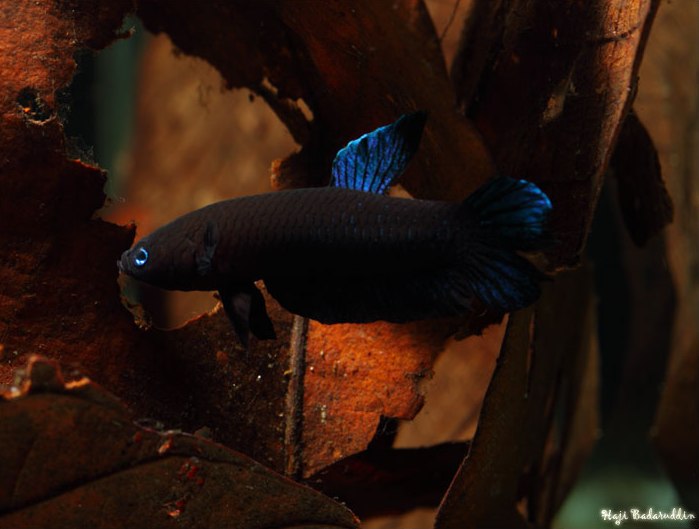
Betta persephone
Schaller, 1986
Max length35mm SL1.4in SLTank45 × 30cm18 × 12inTemp22–28°C72–82°FpH4.0–6.0B. persephone can be told apart from other members of the group by the following characters: no lateral blotch; body blackish; dorsal surface of head posterior to eye sloping gently; no parallel vertical iridescent gold opercle bars; pelvic-fin falcate with white filamentous tip, remainder black to reddish; median fins covered diffusely with light green iridescence; dorsal fin-rays 9; anal-fin rays 24-27; subdorsal scales 6-7; lateral scales 27-29; predorsal scales 17-18.