Results for “abdomen”
Type a name: scientific, common, or one a species used to go by. Or narrow the catalogue with the filters.
Filters
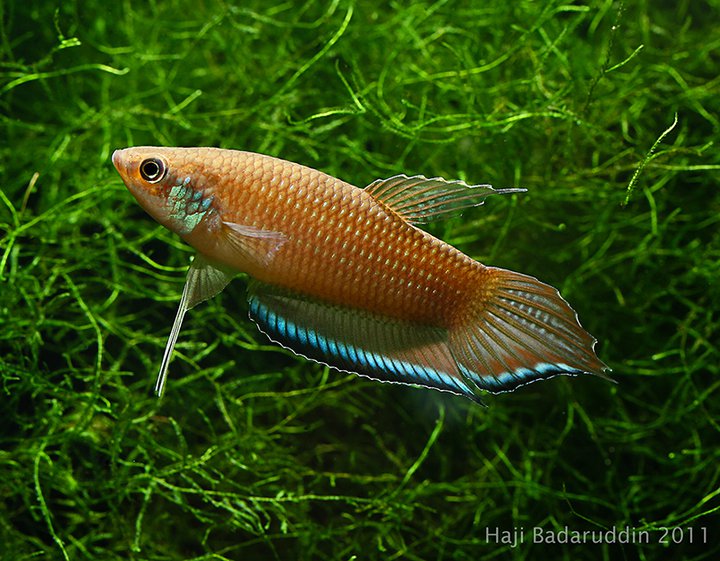
Betta enisae
Kottelat, 1995
Max length60mm SL2.4in SLTank45 × 30cm18 × 12inTemp21–24°C70–75°FpH5.5–7.0This species is included in the B. pugnax complex of closely-related species within the genus, an assemblage of which members are notoriously difficult to tell apart from one another, but which can be characterised collectively by the following set of shared characters: relatively large head measuring 28-40% SL; live colouration usually brown with green or blue iridescent spots; male with similarly-coloured scales on opercle, sometimes extending to abdomen; juveniles and females usually brown with two central body stripes and a dark marking on the caudal peduncle; anal-fin in mature specimens pointed and often elongated; caudal-fin lanceolate.
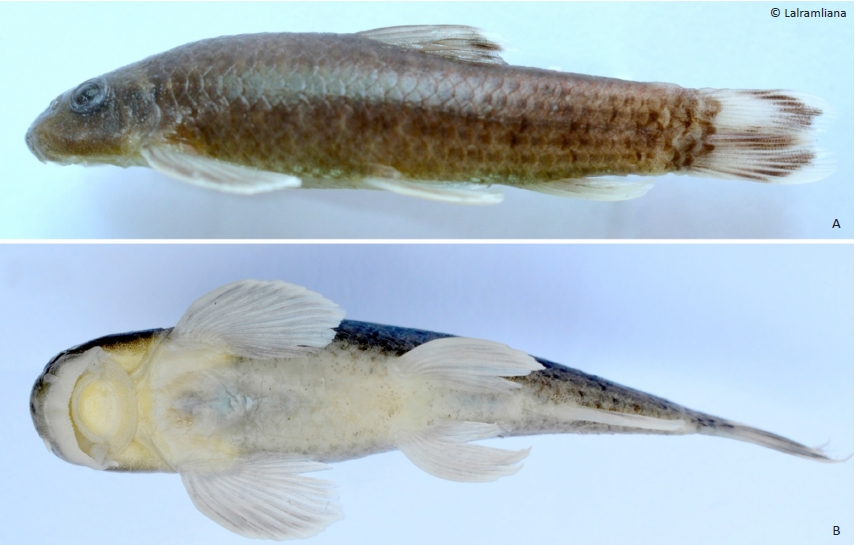
Garra dampaensis
Laironunga, Lainuntluanga & Lairamliana, 2013
Max length55mm SL2.2in SLTanknot recordedTempnot recordedpHnot recordedThis species can be told apart from Indian congeners by the following combination of characters: no transverse groove or proboscis on the snout; tip of dorsal fin falcate; long axillary scale present at the base of pelvic fin, reaching base of last pelvic fin ray; 27–29 lateral-line scales, 10–11 regularly arranged predorsal scales; W-shaped black band across middle of caudal fin; presence of scales on the abdomen.
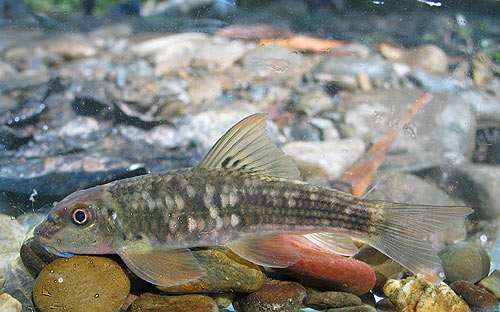
Garra notata
Blyth, 1860
Max length120mm SL5in SLTanknot recordedTempnot recordedpHnot recordedG. notata is one of a number of congeners to lack both a transverse groove and a proboscis on the snout. It also possesses 33-34 lateral line scales and a series of dark spots at the base of the dorsal-fin rays, and lacks scales on the lower portion of the body and abdomen. The genus Garra is a particularly enigmatic grouping with new taxa...
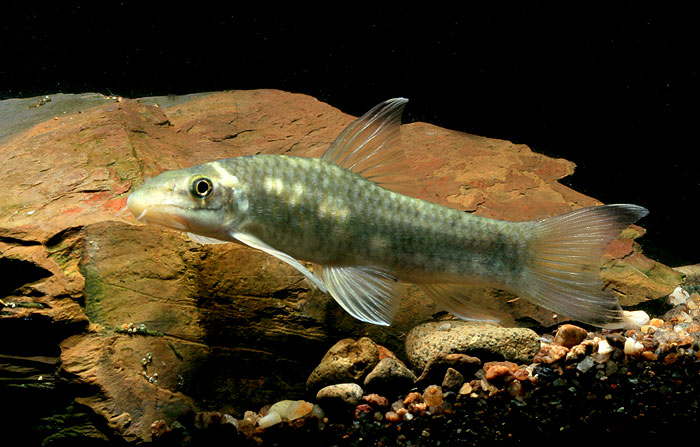
Garra rakhinica
Kullander & Fang, 2004
Max length60mm SL2.4in SLTanknot recordedTempnot recordedpHnot recordedG. rakhinica can be distinguished from other members of the genus by the following combination of characters: rostral furrow shallow and snout tip smoothly rounded; rostral lobe present, proboscis absent; scaled predorsal region, chest, and abdomen; two pairs of barbels; 28 lateral line scales; 16 circumpeduncular scale rows; colour pattern almost uniform greyish on body and caudal-fin; a dark spot immediately posterior to the upper extremity of the...
Gastromyzon cornusaccus
Tan, 2006
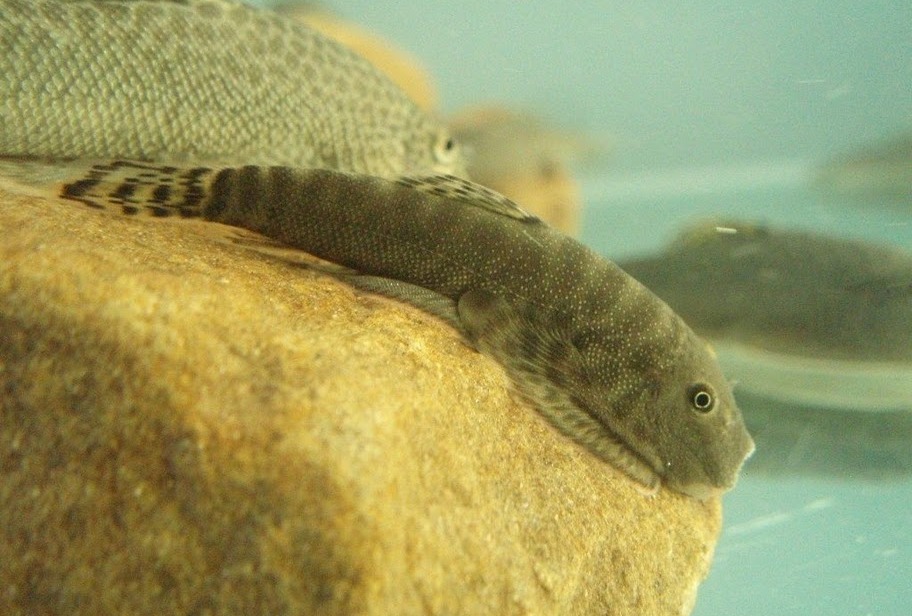
Max length50mm SL2.0in SLTank75 × 30cm30 × 12inTemp20–24°C68–75°FpH6.0–8.0G. cornusaccus can be distinguished from congeners by the following combination of characters: secondary rostrum present; incomplete postoral pouch present reduced to pockets located posterior to mouth corners; sublacrymal groove present and visible when viewed laterally; juveniles with thick, cream-coloured bars and blotches on body, adults uniformly-coloured; head dorsum plain; subopercular groove absent; gill slit vertical; snout truncate when viewed dorsally; no scales on abdomen; 55-61 lateral line scale...
Labeo angra
Hamilton, 1822
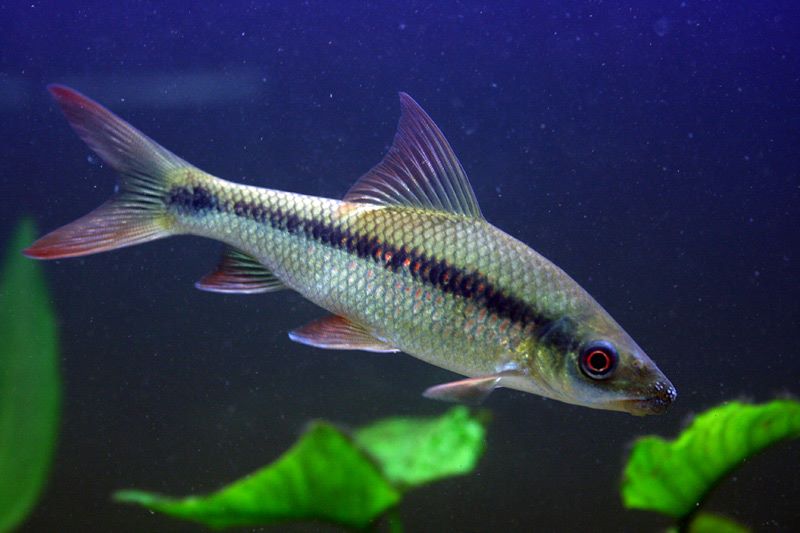
Max length200mm SL8in SLTanknot recordedTempnot recordedpHnot recordedThis species can be identified by colour pattern comprising a brownish dorsal surface, yellowish flanks and abdomen, and a black to bluish lateral stripe extending from the eye to the caudal-fin base.