Results for “algae”
Type a name: scientific, common, or one a species used to go by. Or narrow the catalogue with the filters.
Filters
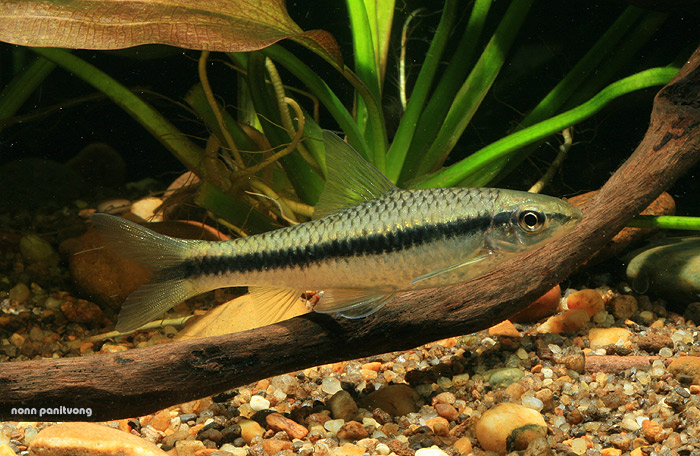
Crossocheilus atrilimesSiamese Algae Eater
Kottelat, 2000
Matched on the common name Siamese Algae Eater
Max length75mm SL3.0in SLTank120 × 30cm48 × 12inTemp20–26°C68–79°FpH6.0–7.5This species is among a handful of near-identical congeners that are traded as 'Siamese algae-eater' (often abbreviated to 'SAE'), 'Siamese flying fox' and 'Crossocheilus siamensis'. The latter name is not valid, however, and is a synonym of Epalzeorhynchos siamensis which is itself a synonym of Crossocheilus oblongus, a species described from Java. C. oblongus is currently accepted to...
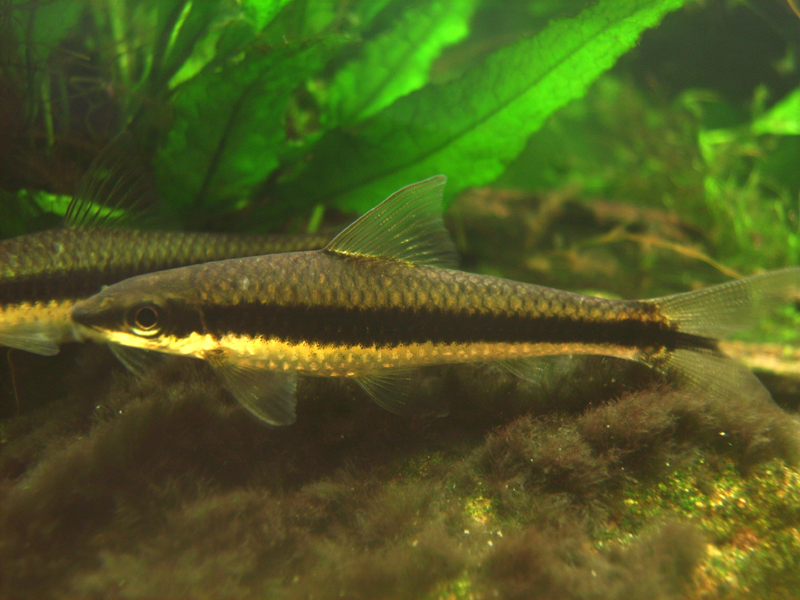
Crossocheilus langeiSiamese Algae Eater
Bleeker, 1860
Matched on the common name Siamese Algae Eater
Max length150mm SL6in SLTank150 × 45cm60 × 18inTemp20–26°C68–79°FpH6.0–7.5C. oblongus is another name widely misused in the trade but that species has seemingly never been exported and was described as a blueish fish with yellow fins. It's native to streams of Gunung Salak mountain in Bogor Regency, West Java, Indonesia where collecting of ornamental fishes is almost non-existent. Other species of laterally-striped Crossocheilus also exist and may be available from time-to-time but are more easily told apart from the group described above.
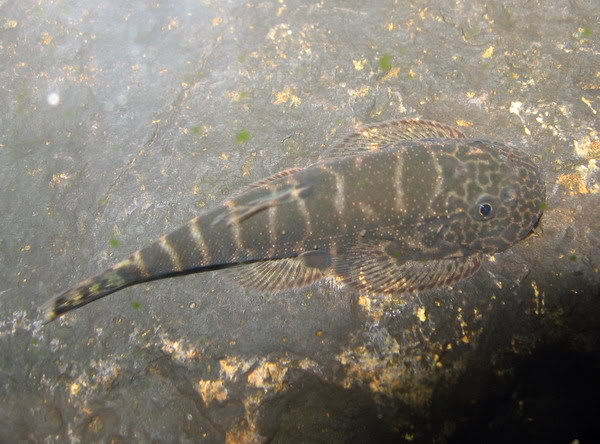
Gastromyzon sp. 'SK04'
authority not recorded
Max length65mm SL2.6in SLTank75 × 30cm30 × 12inTemp20–24°C68–75°FpH6.5–8.0For long-term success it's best to provide a mature aquarium with a plentiful supply of algae-covered rocks and other surfaces. If unable to grow sufficient algae in the main tank or you have a community containing numerous herbivorous fishes which consume what's available quickly it may be necessary to maintain a separate tank in which to grow algae on rocks and switch them with those in the main tank on a cyclical basis.
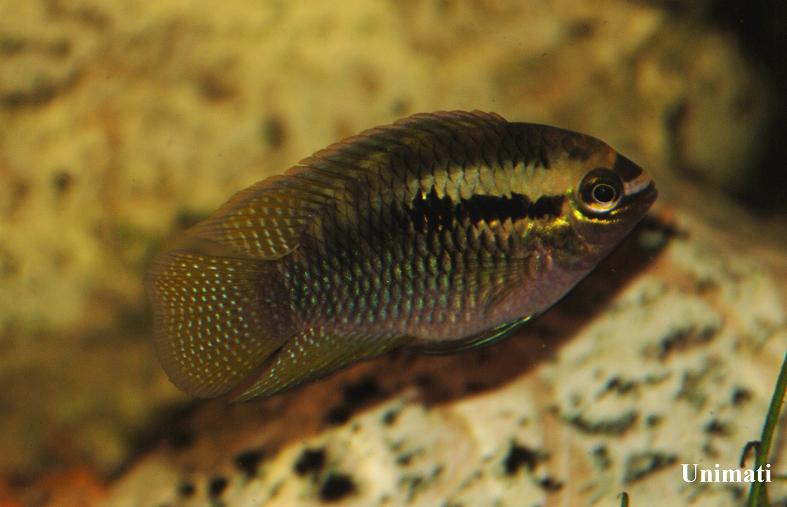
Laetacara dorsigeraRedbreast Acara
Heckel, 1840
Max length37mm SL1.5in SLTanknot recordedTemp20–28°C68–82°FpH5.0–7.5Wild fish are probably foragers feeding on algae, organic detritus, small insects, worms, crustaceans, and other zooplankton. In the aquarium it's easily-fed but the best condition and colours offer regular meals of small live and frozen foods such as bloodworm, Daphnia, and Artemia, alongside good quality dried flakes and granules, at least some of which should include additional plant or algal content.
Labeotropheus fuelleborniFuelleborn's Cichlid
authority not recorded
Max length175mm SL7in SLTank90 × 45cm36 × 18inTemp24–28°C75–82°FpH7.6–8.8This species has the characteristic overhanging snout possessed by all three members of the genus. It has chisel-shaped teeth which are designed for grazing algae off rocks. These physical adaptations allow it to graze algae from rocks situated in very shallow water which other species cannot reach. The position of the mouth allows the fish to remain parallel to the rock surfaces, thus enabling it to cope with the turbulence in these areas. L. fuelleborni exists in many different colour forms in...
Melanochromis chipokae
authority not recorded
Max length120mm SL5in SLTank120 × 45cm48 × 18inTemp24–28°C75–82°FpH7.6–8.8This species belongs to the group of Melanochromis often called "Pike Auratus". These species predate on the fry of other species, although M. chipokae will also eat crustaceans and algae. Female and juvenile male M. chipokae are easily confused with M. auratus. However, it can be distinguished by its noticeably more pointed mouth, denoting the predatory nature of this species (auratus has a rounded mouth which is designed for feeding on algae). The striped patterning in the also exten...
Petrochromis famula
authority not recorded
Max length150mm SL6in SLTank120 × 30cm48 × 12inTemp24–27°C75–81°FpH7.5–9.0The mouthparts of this species are highly specialised, reflecting its natural feeding habits of rasping algae and other organisms from rock surfaces. It feeds almost exclusively on unicellular algae and has very thick, extended lips and brush-like, mobile pads of teeth. The mouthparts thus form a rasping 'plate', used when the fish is feeding. It is somewhat rare in the hobby, perhaps due to its violent reputation or the fact that this is not a particularly gregarious species in nature...
Placidochromis milomoSuper VC 10 Hap
authority not recorded
Max length250mm SL10in SLTank120 × 45cm48 × 18inTemp24–28°C75–82°FpH7.6–8.8Wild caught specimens of this fish possess a truly amazing set of lips! They are massively enlarged and designed for scraping algae and invertebrates from rock surfaces. In nature, these actually develop in direct proportion to the amount of turbidity in a given locality. Fish inhabiting more turbulent waters have larger lips, as the algae in these areas is anchored to the rocks more firmly. In the aquarium, the lips usually recede or, in tank bred fish, do not develop at all, as they are not re...
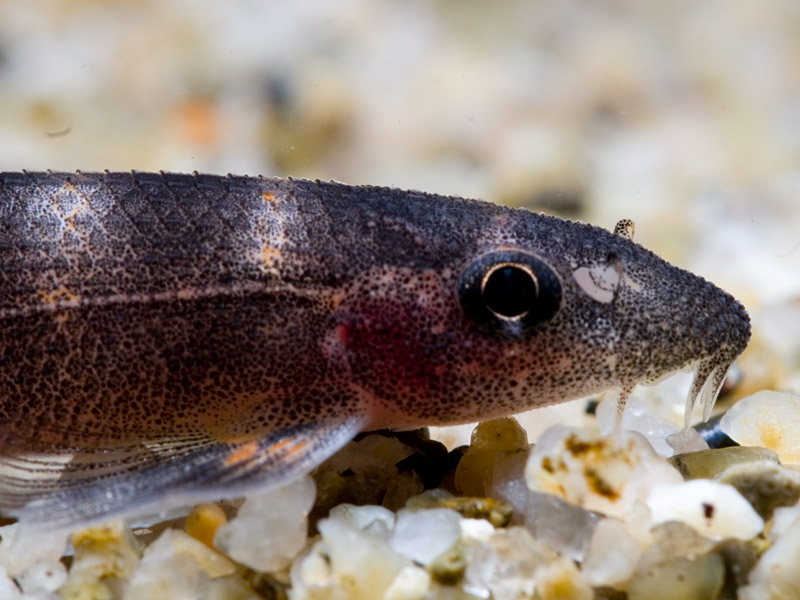
Balitoropsis zollingeri
Bleeker, 1853
Max length70mm SL2.8in SLTank60 × 30cm24 × 12inTemp20–25.5°C68–78°FpH6.0–7.5An obligate dweller of swiftly-flowing streams and headwaters containing clear, oxygen-saturated water. It often inhabits riffles and runs and is likely to show a preference for shallower zones. Substrates are generally composed of gravel, rocks, boulders or bedrock carpeted with a rich biofilm formed by algae and other micro-organisms. Juveniles are often found in slower-moving stretches with gravel substrate and submerged tree roots. In both cases patches of aquatic plants are only occasionally pres...
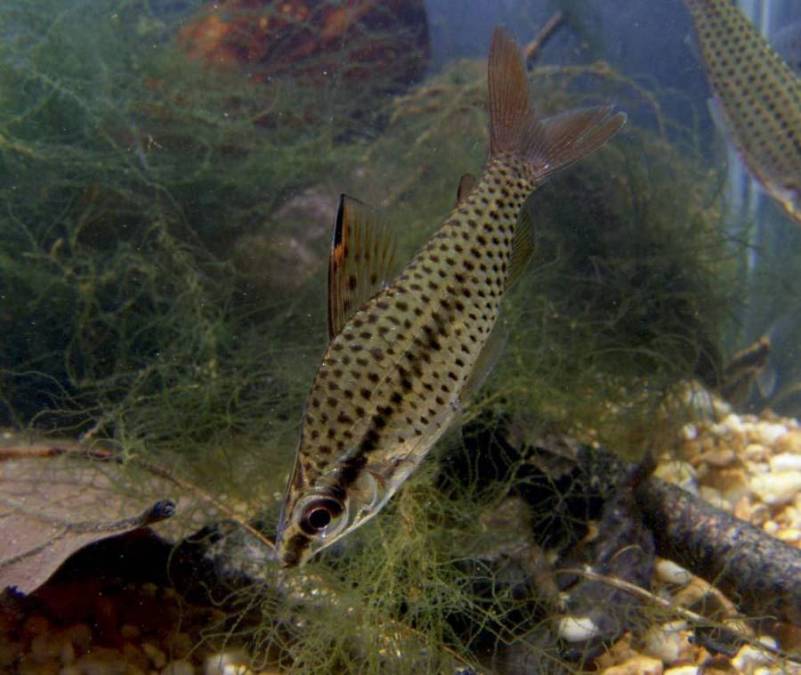
Chilodus punctatusSpotted Headstander
Müller & Troschel, 1844
Max length80mm SL3.1in SLTank90 × 30cm36 × 12inTemp20–28°C68–82°FpH5.0–7.5Omnivorous and will accept most foods offered, with the stomach contents of wild specimens varying on a seasonal basis but mostly comprising insects and insect larvae (orders Trichoptera, Hemiptera, Homoptera) plus some terrestrial fruits and even scales of other fishes (Sánchez et al., 2003). In the aquarium offer live Daphnia, Artemia, Moina, bloodowrm, etc., vegetable matter in the form of blanched spinach, lettuce, cucumber, fruit, algae wafers, etc., and good quality, sinking dried foods.
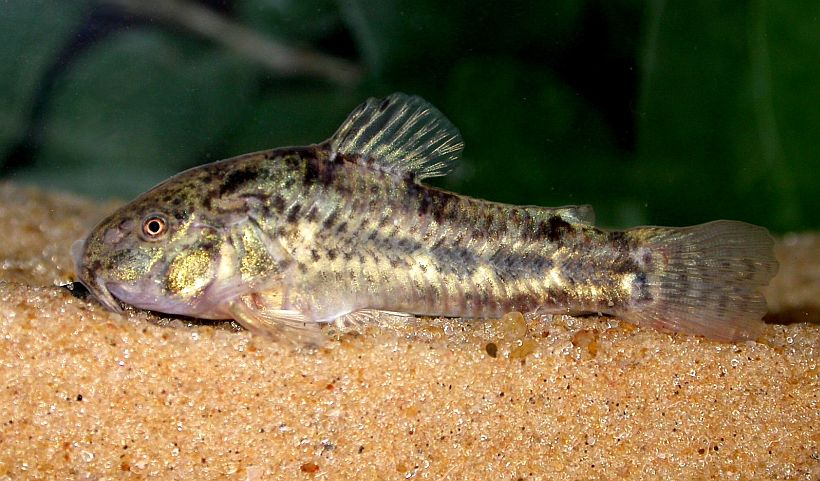
Corydoras gladysae
Calviño & Alonso, 2010
Max length38mm SL1.5in SLTank60 × 30cm24 × 12inTemp8–16°C46–61°FpH7.5–8.5The Río Calchaquí rises at almost 6000 m AMSL and flows swiftly through a mountainous valley where it is largely fed by snow melt. The climate is semi-arid and cool with an air temperature of 12-18°C, while rainfall is largely concentrated during summer when the flow can be torrential. The water is hard and rich in salts, with pH measured at 8.04 during the month of August. Aquatic vegetation and filamentous algae grow around the margins and in tributaries.
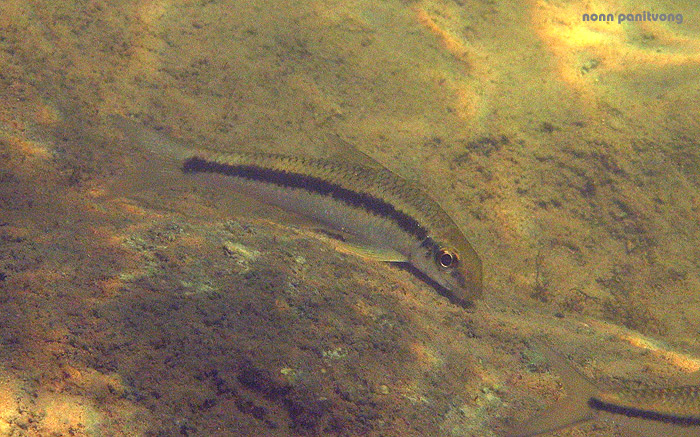
Crossocheilus burmanicus
Hora, 1936
Max length120mm SL5in SLTank150 × 45cm60 × 18inTemp20–26°C68–79°FpHnot recordedWe've been unable to obtain a diagnosis for this species to date but it can at least be distinguished from those congeners traded as 'Crossocheilus siamensis' (an invalid name synonymous with C. oblongus, which is itself of questionable identity), 'Siamese algae eater', or 'SAE' by the fact that the dark lateral stripe does not extend into the caudal-fin. Members of Crossocheilus are characterised by...
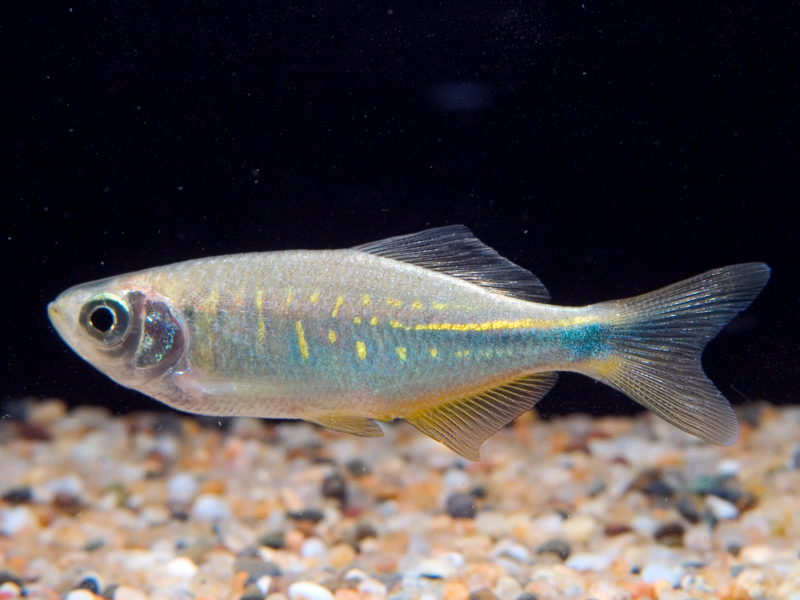
Devario devarioBengal Danio
Hamilton, 1822
Max length80mm SL3.1in SLTank120 × 45cm48 × 18inTemp15–26°C59–79°FpH6.0–8.0Ecological studies have revealed this species to be more of a generalist than its chiefly insectivorous congeners. Aquatic and terrestrial insects form a significant proportion of the diet, but substantial amounts of filamentous algae and diatoms are consumed with water mites, fish scales, isopods, nematodes and detritus also taken occasionally. In the aquarium it's largely unfu...
Eretmodus cyanostictusStriped Goby Cichlid
authority not recorded
Max length80mm SL3.1in SLTank90 × 30cm36 × 12inTemp24–28°C75–82°FpH8.0–9.0Also known as the Tanganyikan Clown, this is one of the so-called Tanganyikan goby cichlids. They occur only in the upper few feet of water around rocky shores, also known as the surge zone, where they scrape algae from the rocks with their specialised teeth. This habitat is typified by breaking waves and strong currents. They have a few adaptations allowing them to inhabit such an environment. The swim bladder is rendered useless to reduce their buoyancy. They also have a longand a laterally co...
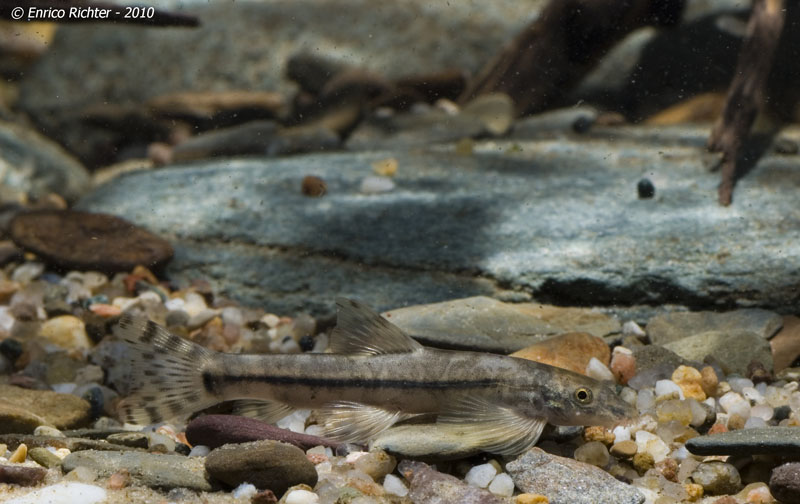
Formosania lacustrisTasseled-mouth Loach
Steindachner, 1908
Max length120mm SL5in SLTank120 × 30cm48 × 12inTemp20–24°C68–75°FpH6.0–7.5An obligate dwellers of swiftly-flowing streams and headwaters containing clear, oxygen-saturated water. It inhabits riffles and runs and according to studies shows a preference for shallower zones. Substrates are generally composed of gravel, rocks, boulders or bedrock carpeted with a rich biofilm formed by algae and other micro-organisms. Aquatic plants are uncommon and while riparian/streamside vegetation may be present...
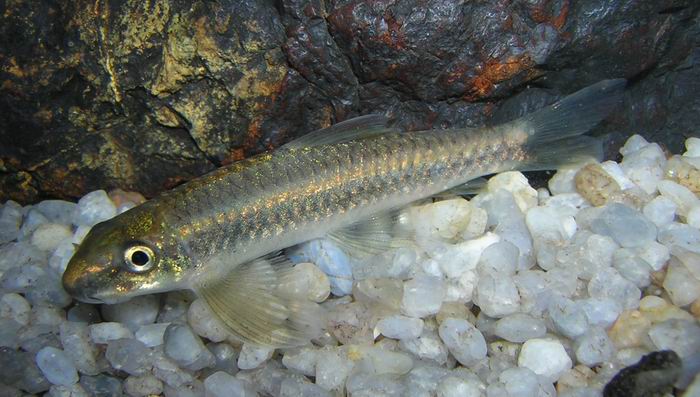
Garra borneensis
Vaillant, 1902
Max length115mm SL5in SLTanknot recordedTempnot recordedpHnot recordedSubstrates are generally composed of gravel, rocks, boulders or bedrock carpeted with a rich biofilm formed by algae and other micro-organisms. At a habitat in the Mendawai river basin in central Kalimantan, H. borneensis was collected from a foothill stream running swiftly over a rock and gravel substrate with clear water of pH 6.4.
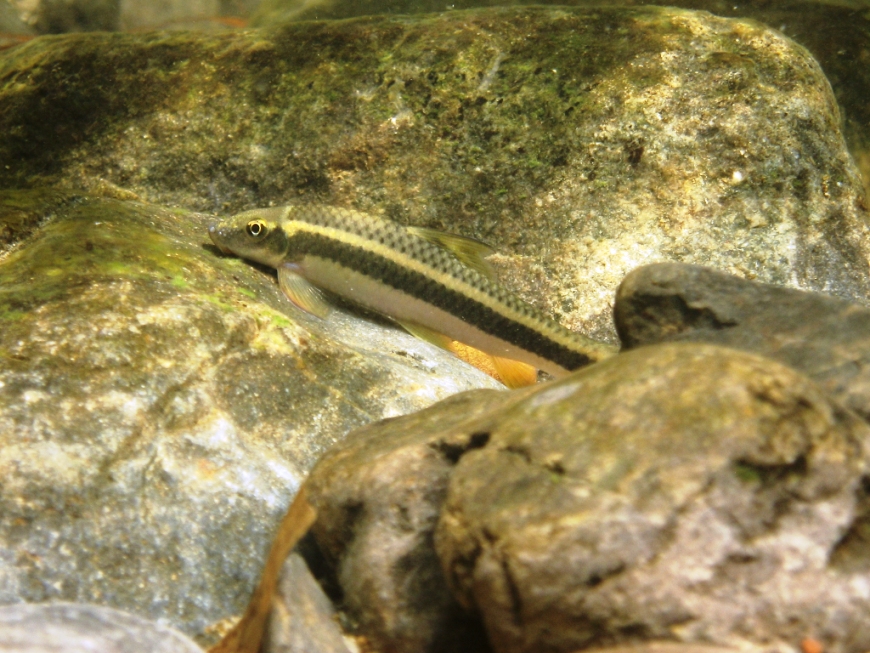
Garra cambodgiensisFalse SAE
Tirant, 1883
Max length150mm SL6in SLTank120 × 45cm48 × 18inTemp20–27°C68–81°FpH6.0–7.5Also known by the vernacular names ''black band garra', 'stone-lapping minnow' or 'false flying fox' and continues to be traded as Garra taeniata, an invalid name synonymous with G. cambodgiensis. It is often confused with those laterally-striped members of the genus Crossocheilus sold as 'Siamese algae eater' or 'Siamese flying fox', but in those species the dark lateral body stripe continues into the caudal-fin whereas in G. cambodgiensis it terminates...
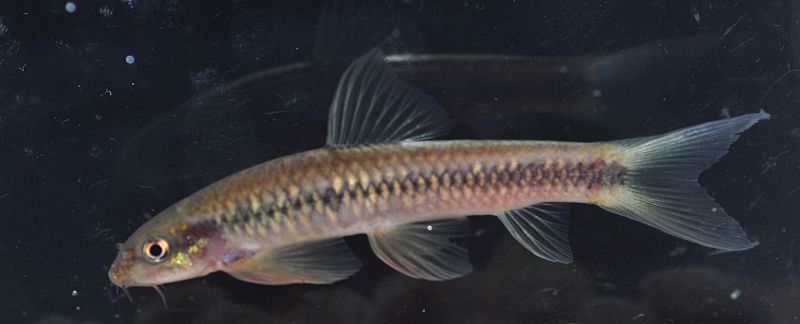
Garra hughiCardamom Garra
Silas, 1955
Max length155mm SL6in SLTanknot recordedTempnot recordedpHnot recordedG. hughi is occasionally available in the ornamental trade and may be labelled 'chocolate algae eater'. The original diagnosis of this species by Silas states that it can be identified by the following combination of characters: elongate body form; broad head...
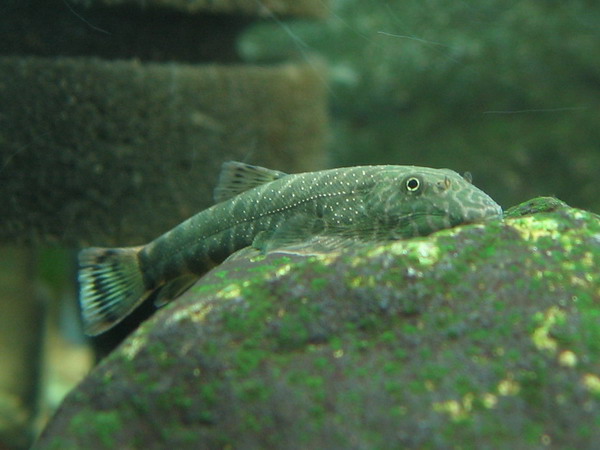
Gastromyzon sp. 'SK03'
authority not recorded
Max length50mm SL2.0in SLTank60 × 30cm24 × 12inTemp20–24°C68–75°FpH6.5–8.0Gastromyzon spp. are obligate dwellers of swift, shallow streams containing clear, oxygen-saturated water and have been recorded from sea level to 1350 m amsl throughout hill regions of Borneo. They typically inhabit riffles and runs and are often found above or below cascades and waterfalls. Substrates are generally composed of gravel, rocks, boulders or bedrock carpeted with a rich biofilm formed by algae and other micro-organisms.
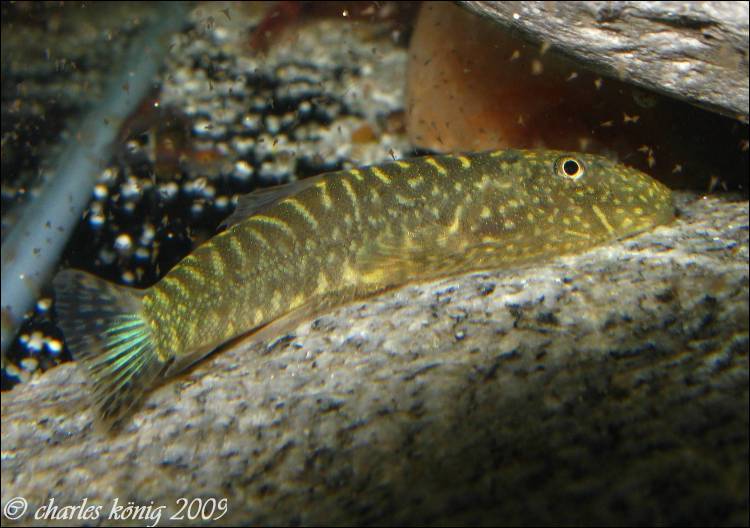
Gastromyzon zebrinus
Tan, 2006
Max length61mm SL2.4in SLTank75 × 30cm30 × 12inTemp20–24°C68–75°FpH6.0–7.5Much of the natural diet is likely to be composed of benthic algae plus associated micro-organisms which are rasped from solid surfaces. In captivity it will accept good-quality dried foods and meatier items like live or frozen bloodworm but may suffer internal problems if the diet contains excessive protein. Home-made foods usi...