Results for “annual fish”
Type a name: scientific, common, or one a species used to go by. Or narrow the catalogue with the filters.
Filters
Fundulopanchax walkeri
authority not recorded
Max length65mm SL2.6in SLTank45 × 25cm18 × 10inTemp20–23°C68–73°FpH6.0–7.0There exist many different populations of this species in nature, some of which are now threatened or extinct, due to rapid human development in Ghana and the Ivory Coast in recent years. It is not a common fish in the hobby. Interestingly, it appears that F. walkeri occurs as both an annual and non-annual fish. This adaptation allows it to inhabit many different habitats, as it is able to breed in both permananent and temporary bodies of water. Note that this fish prefers cooler temperatures t...
Aphyosemion ogoenseBroken-Line Lyretail
Pellegrin, 1930
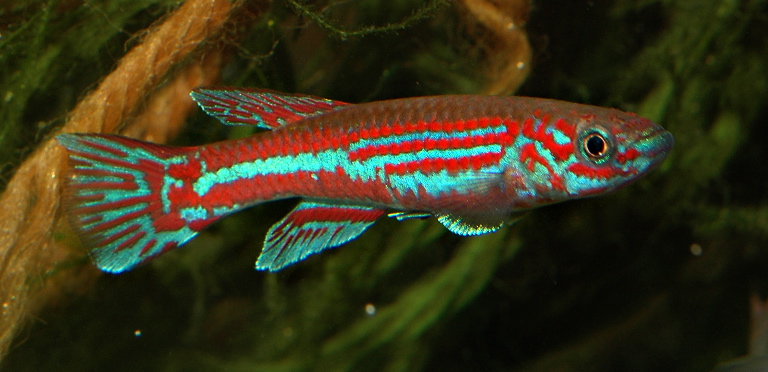
Max length50mm SL2.0in SLTank45 × 25cm18 × 10inTemp18–22°C64–72°FpH5.0–6.5This species is not an annual fish, being found in permanent bodies of water in nature. Over 20 different forms of it have been discovered at different localities and a handful have been given subspecific names. The most popular in the aquarium hobby include A. o. ottogartneri and A. o. pyrophore, both of which were initially described as separate species.
Fundulopanchax marmoratusMarbled Lyretail
authority not recorded
Max length60mm SL2.4in SLTank45 × 25cm18 × 10inTemp21–24°C70–75°FpH6.0–7.0Note the cooler temperatures required by this rare species. It is not an annual fish, occuring only in permanent bodies of water.
Pangasianodon gigasGiant Mekong Catifish
authority not recorded
Max length3000mm SL118in SLTanknot recordedTemp20–28°C68–82°FpH6.5–7.5Pangasianodon is separated from other pangasiid generea primarily on the basis of some morphological differences including a lack of teeth and massively reduced barbels in adult specimens. Sadly it's numbers are declining rapidly in nature, through a combination of unsustainable fisheries, damming and habitat destruction. Since 1990 wild stocks are thought to have undergone a decrease of over 80%. From an annual catch of over 60 specimens in 1990, only 8-11 were being caught per year in ...