Results for “aquarium”
Type a name: scientific, common, or one a species used to go by. Or narrow the catalogue with the filters.
Filters
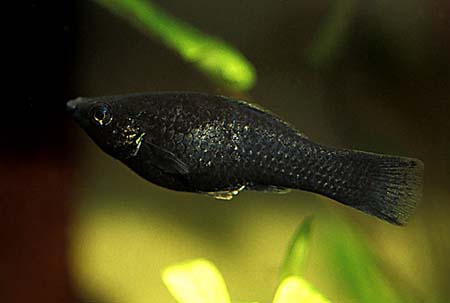
Poecilia sphenopsShort-finned Molly/Black Molly
Valenciennes, 1846
Max length80mm SL3.1in SLTank90 × 30cm36 × 12inTemp21–28°C70–82°FpH7.0–8.5A hugely popular aquarium fish. Many aquarium-bred colour morphs of this species are available, including the ubiquitous black molly. There are also Gold, Green, Lyretail, Silver and Dalmation varieties. Some of these are the results of P. sphenops being crossed with P. latipinnis. The 2 species will also interbreed readily in the aquarium and in order to avoid this we suggest keeping only one of them per tank. There also exists a (in our opinion) grotesque 'balloon' variety of this fi...
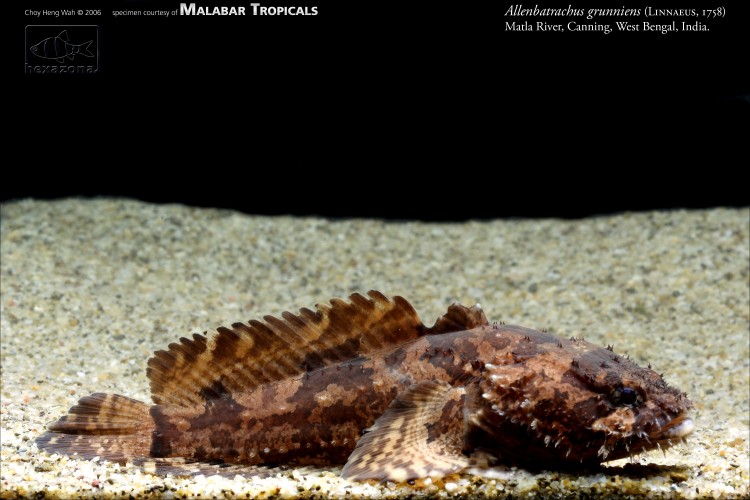
Allenbatrachus grunniensFreshwater Toadfish
Linnaeus, 1758
Max length300mm SL12in SLTanknot recordedTemp23–28°C73–82°FpH7.5–9.0This species is relatively common in the aquarium hobby but contrary to popular belief is not venomous in any way. Its dorsal and opercular spines can pierce the skin, however, meaning extreme caution is necessary when netting it or performing aquarium maintenance. The genus Allenbatrachus was erected in 1997 to accom...
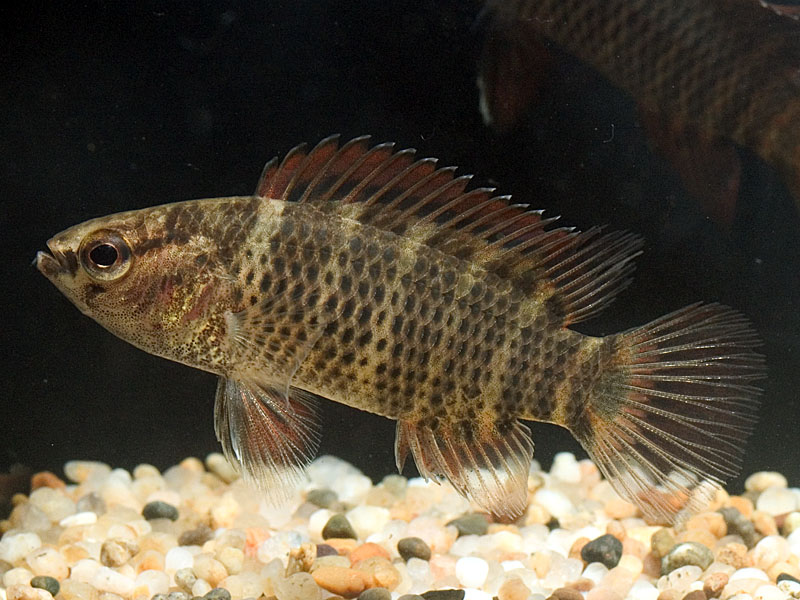
Badis corycaeus
Kullander & Britz, 2002
Max length60mm SL2.4in SLTank60 × 30cm24 × 12inTemp15–25°C59–77°FpH6.5–7.5Like most badids this species is poorly documented and has yet to find significant popularity in the aquarium hobby. Within the genus it is most closely-related to B. pyema but the two are unlikely to be confused as B. corycaeus is much the deeper, darker-bodied fish. Prior to 2002 the family Badidae included just five species of which only B. badis and, to a lesser extent, Badis dario (referred to as B. bengalensis by some sources) were popular in the aquarium hobby. However an extensive rev...
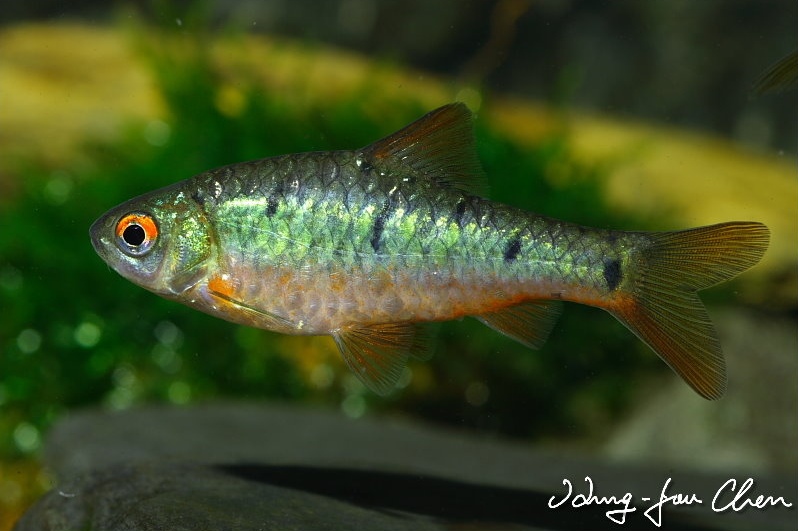
Barbodes semifasciolatusGolden Barb*
Günther, 1868
Max length75mm SL3.0in SLTank90 × 30cm36 × 12inTemp16–24°C61–75°FpH6.0–8.0This species is also known by the alternative names 'green' or 'Chinese' barb. The natural 'green' form is an infrequent find in the aquarium trade whereas the selectively-bred 'golden' variant is farmed in huge numbers and is among the most popular of freshwater aquarium fish. The latter was first produced in the 1960s and is now so ubiquitous that many hobbyists are initially unaware that it is not the natural form.
Colossoma macropomumBlack Pacu
authority not recorded
Max length600mm SL24in SLTank300 × 90cm118 × 36inTemp22–28°C72–82°FpH5.5–7.5Known as the tambaqui in its native countries, this is the second largest species of scaled fish found in the Amazon basin. This alone should tell you much of what you need to know about its suitability as an aquarium inhabitant. In reality, it's debatable as to whether the species should be considered an aquarium subject at all. While pacu rarely reach their maximum size in captivity, they're still easily capable of growing to a couple of feet in length. The myth that fish will only g...
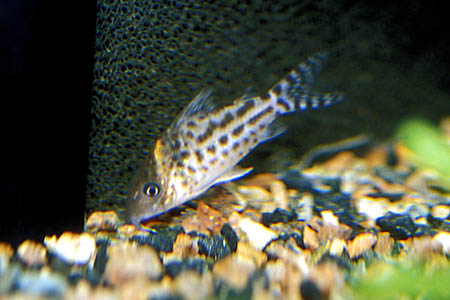
Corydoras incolicanaC001
Burgess, 1993
Max length80mm SL3.1in SLTank120 × 30cm48 × 12inTemp20–26°C68–79°FpH4.0–7.0C. incolicana was the first recipient of a 'C' number (see below) in 1993 and was described the same year. Unfortunately its description was published in an aquarium hobbyist magazine, and we have been unable to obtain a copy to date meaning its diagnosis is unavailable. It is therefore difficult to identify accurately, not least because its type locality is in a relatively remote area, and there exist a number of superficially similar Corydoras species or populations in the aquarium trade.
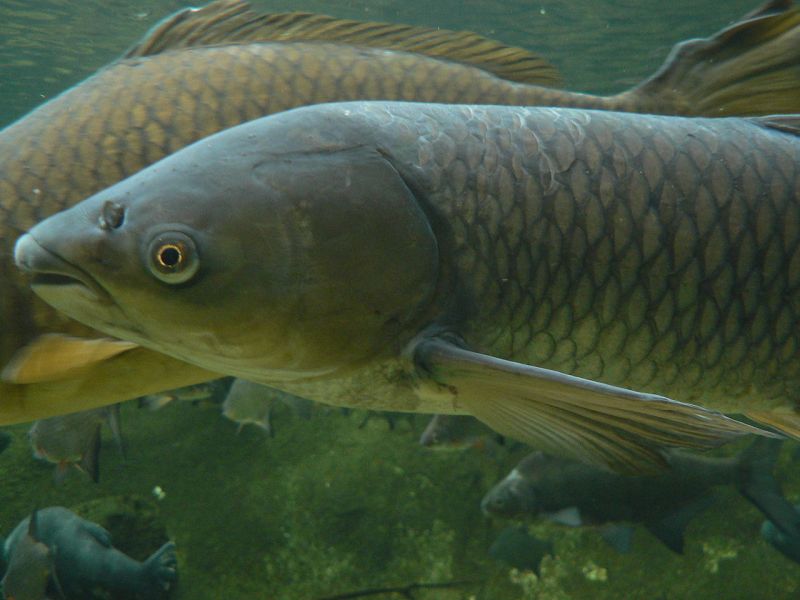
Ctenopharyngodon idellaGrass Carp
Valenciennes, 1844
Max length1200mm SL47in SLTanknot recordedTemp0–33°C32–91°FpH6.0–9.0Despite being a wholly unsuitable aquarium subject, C. idella is often traded as such, with an albino form having been developed specifically for the ornamental market. Individuals which have outgrown their aquarium or pond should never be released into natural waters, either, since this species has proven capable of causing serious environmental damage under a wide range of climatic conditions.
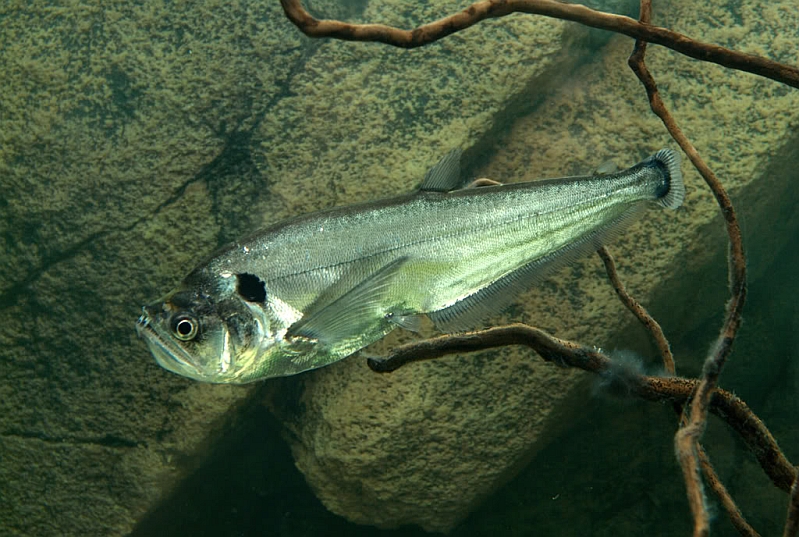
Cynodon gibbus
Agassiz, 1829
Max length280mm SL11in SLTank210 × 75cm84 × 30inTemp24–28°C75–82°FpH6.0–8.0This species is rare in the aquarium trade but is arguably more suitable for the home aquarium than some of its better-known relatives given its adult size and relatively docile behaviour. Other vernacular names include 'Dientón' (Peru), 'Perrito' (Ecuador), 'Payara-chata' or 'Payarin' (Venezuela) and 'Icanga', 'Minguilista' or 'Peice-cachorro' (Brazil), some of which are also applied to related species.
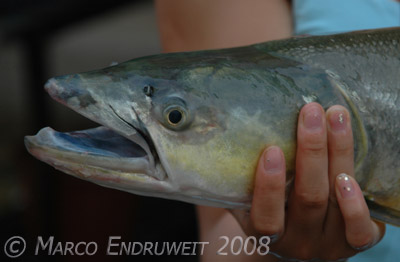
Elopichthys bambusa
Richardson, 1845
Max length2000mm SL79in SLTanknot recordedTempnot recordedpHnot recordedThe adult size and power of this impressive predator preclude it from consideration as an aquarium species, but young individuals are nevertheless available in the ornamental trade on an irregular basis therefore it is included here. It is an entirely unsuitable choice for the home aquarium and the majority of zoos and public aquaria would probably struggle to maintain it in adequate conditions.
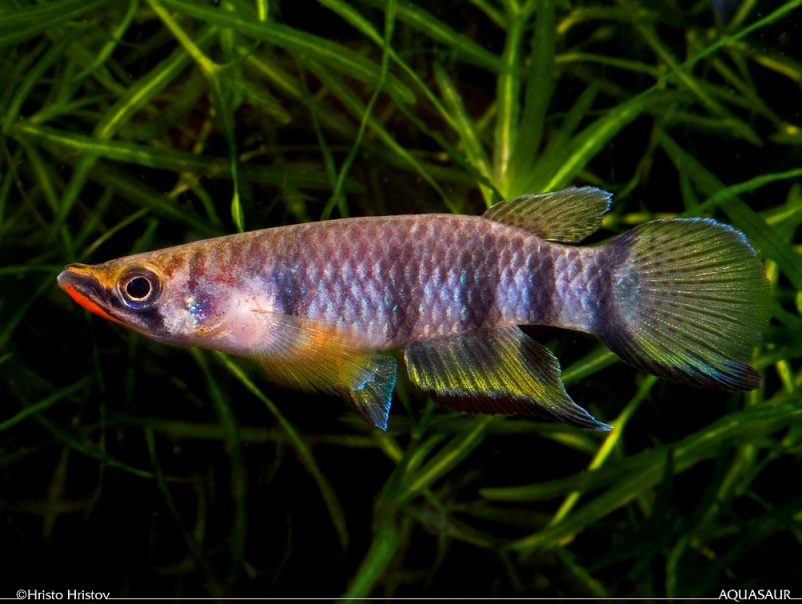
Epiplatys dagetiRed-chinned Panchax
Poll, 1953
Max length45mm SL1.8in SLTank60 × 30cm24 × 12inTemp20–30°C68–86°FpH5.0–7.0This species is also known as 'Daget's panchax', 'black-lipped panchax', 'orange-throated panchax' or 'firemouth killifish' and is an aquarium stalwart with the red-throated form having first been exported in 1908. It's an excellent choice for those new to killifishes or egg-laying species in general since the aquarium strain is well-established, quite hardy and easy to breed. There was some initial confusion after Belgian ich...
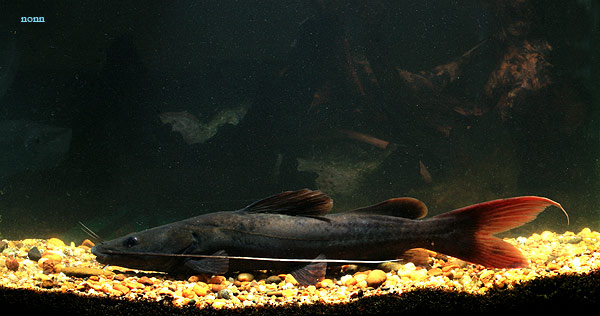
Hemibagrus wyckioidesAsian Red Tailed Catfish
Fang & Chaux, 1949
Max length1300mm SL51in SLTanknot recordedTemp19–29°C66–84°FpH6.0–8.0Juvenile specimens are sometimes available in the aquarium trade although their purchase is strongly discouraged, and this species probably shouldn't be considered a home aquarium subject at all given its eventual size plus the fact it can live for several decades. H. wyckioides can be told apart from mos...
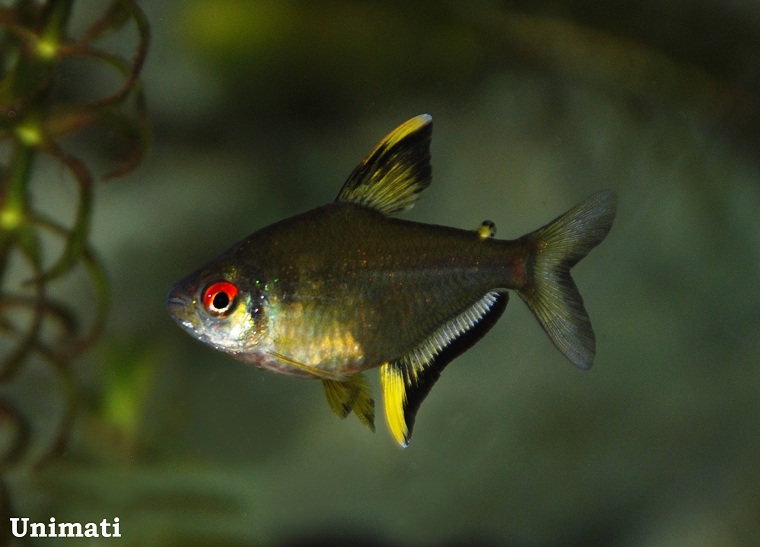
Hyphessobrycon pulchripinnisLemon Tetra
Ahl, 1937
Max length40mm SL1.6in SLTank80 × 30cm31 × 12inTemp20–28°C68–82°FpH5.0–7.5This species is a popular aquarium fish and is bred on a commercial basis in several countries, with a selectively-bred albino form also available. Wild specimens are rarely collected due to the low price of the farmed fish, but the origin of the commercial strain is questionable. The species was considered endemic to the rio Tapajós basin, but in the early 1990s fish appearing identical to the aquarium form were photographed in the...
Lophiobagrus cyclurusAfrican Bullhead
authority not recorded
Max length100mm SL3.9in SLTank75 × 30cm30 × 12inTemp23–26°C73–79°FpH7.5–9.0An interesting addition to the Tanganyikan community that is not often seen in the hobby. There is a rumour that this cat can secrete a poisonous mucous when stressed that can kill other fish in the aquarium but this has not yet been 100% confirmed. It may be wise to keep it in as large an aquarium as possible just in case. There are currently just 4 species of Lophiobagrus described. All are from Lake Tanganyika....
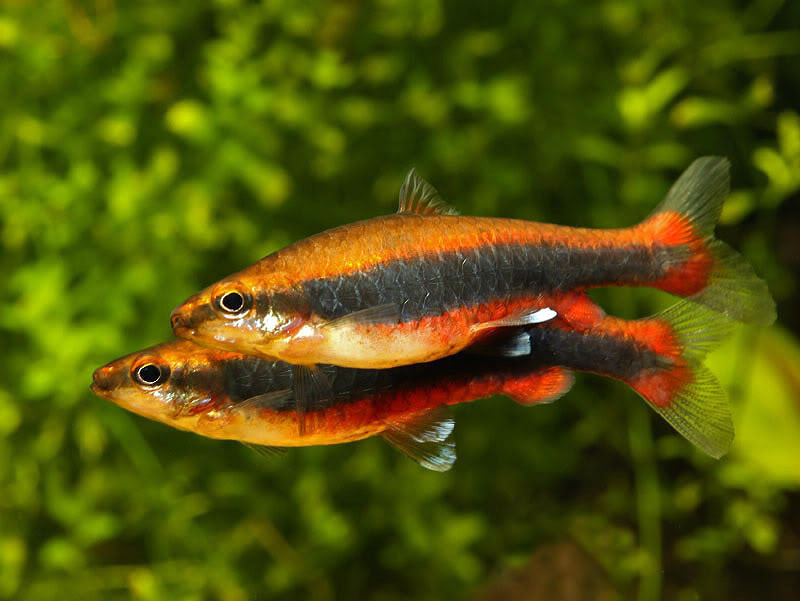
Nannostomus beckfordiGolden Pencilfish
Günther, 1872
Max length65mm SL2.6in SLTank45 × 30cm18 × 12inTemp21–27°C70–81°FpH5.0–8.0This is the type species of the genus, fairly ubiquitous in the aquarium trade, and represents an excellent choice for the newcomer to fishkeeping since it's less demanding than most congeners. It's sometimes referred to as 'Beckford's pencil fish' or 'brown pencilfish'. Don't worry if your fish look different when you switch on the aquarium lights after dark or in the morning as like most Nannostomus species it assumes a cryptic, vertically-barred colour pattern at ni...
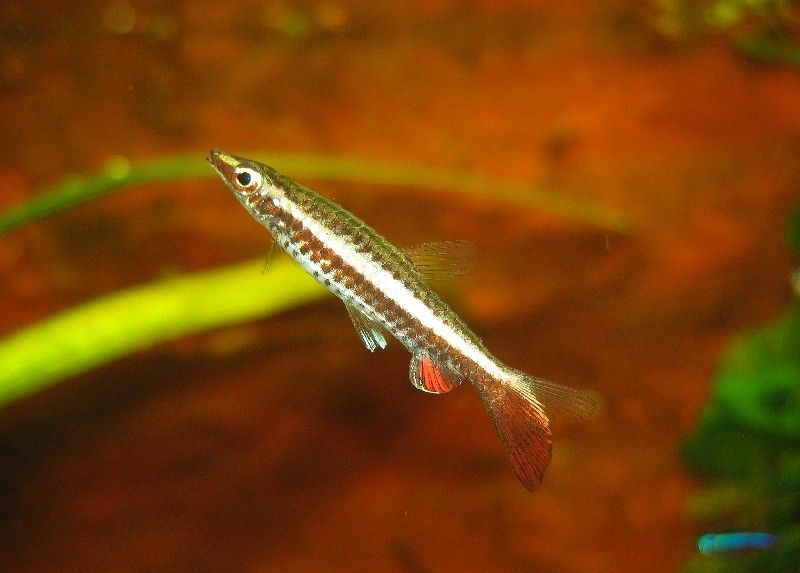
Nannostomus equesHockeystick Pencilfish
Steindachner, 1876
Max length35mm SL1.4in SLTank60 × 30cm24 × 12inTemp22–28°C72–82°FpH4.5–7.5This species has been referred to the genera Poecilobrycon and Nannobrycon in the past and in the aquarium hobby is also known as 'rocket', 'brown', 'brown-tailed', 'diptail', or 'tubemouth' pencilfish.It's a popular aquarium fish and has an interesting oblique swimming-style, a behavioural trait shared only with N. unifasciatus among congeners. In the original description the colour pattern is given by Steindachner as a brown lateral stripe exte...
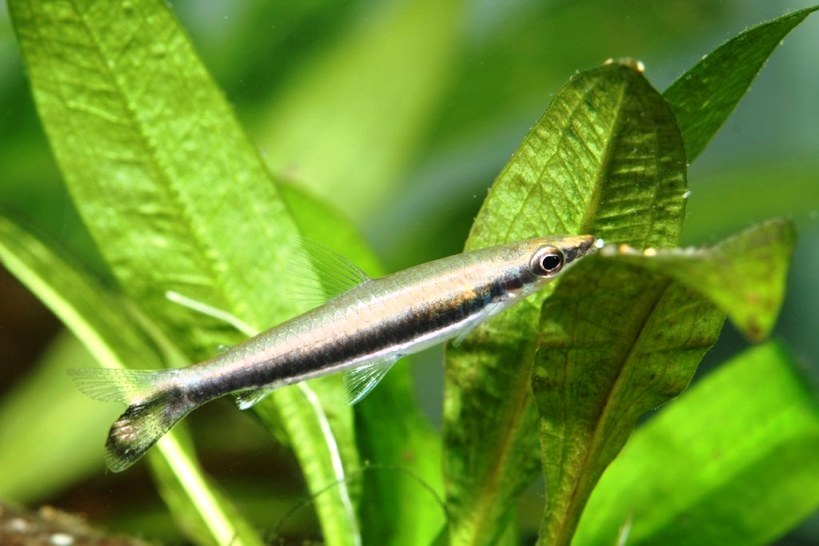
Nannostomus unifasciatusOne-lined Pencilfish
Steindachner, 1876
Max length40mm SL1.6in SLTank75 × 30cm30 × 12inTemp23–28°C73–82°FpH4.0–7.0This species has been referred to the genera Poecilobrycon and Nannobrycon in the past and in the aquarium hobby is also known as 'oneline' or 'red fin' pencilfish. It's a popular aquarium fish and has an interesting oblique swimming-style, a behavioural trait shared only with N. eques among congeners. The most recent diagnosis of the species appears to be that giv...
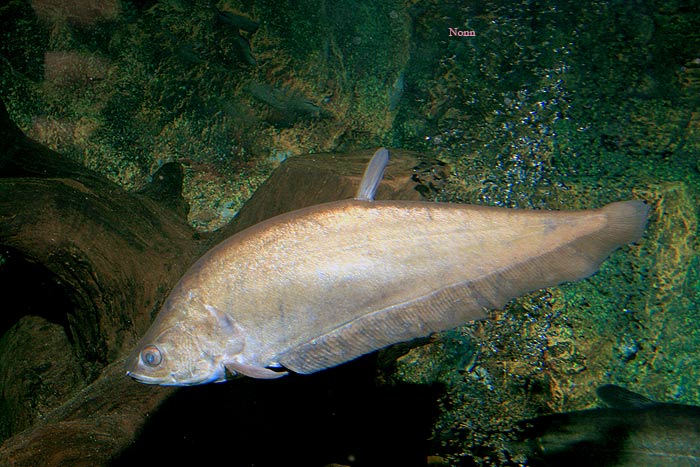
Notopterus notopterusBronze Featherback
Pallas, 1769
Max length600mm SL24in SLTanknot recordedTemp20–28°C68–82°FpH6.0–8.0This species is also referred to as 'Asian knifefish' or 'ghost knifefish' in the aquarium trade in the aquarium trade but arguably has no place in the ornamental hobby given its adult size and specialised requirements. It is sometimes confused with the African species Xenomystus nigri but is easily told apart by its larger adult size and presence (vs. absence) of a dorsal fin.
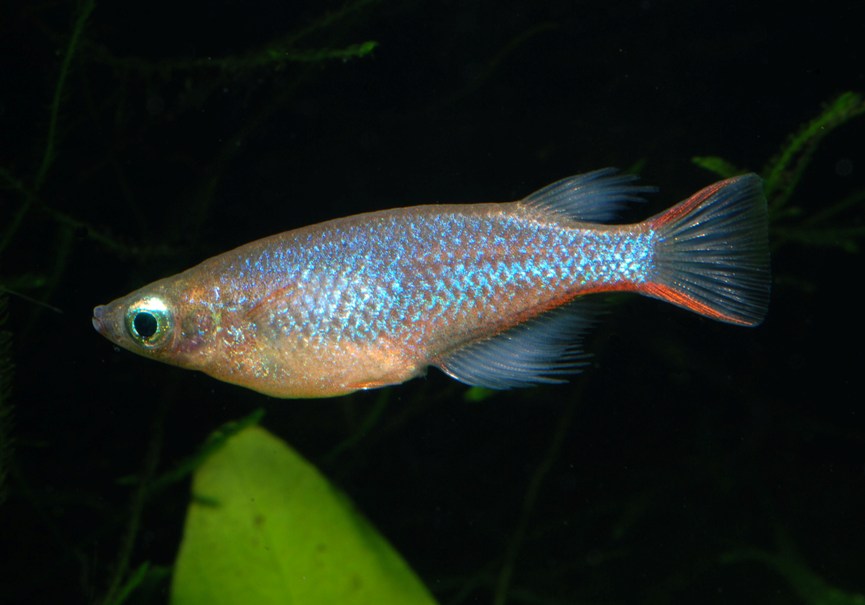
Oryzias wolasiWolasi Ricefish
Parenti, Hadiaty, Lumbantobing & Herder, 2013
Max length35mm SL1.4in SLTank45 × 30cm18 × 12inTemp23–27°C73–81°FpH7.0–8.0This species was discovered in 2009 and as far as we know it has only been collected for the aquarium hobby on a single occasion to date, by Jeffrey Christian of Maju Aquarium, Frank Evers and Hans-Georg Evers. Prior to description it was referred to as O. sp. 'Kendari', O. sp. 'neon' or O. sp. 'Sulawesi'.
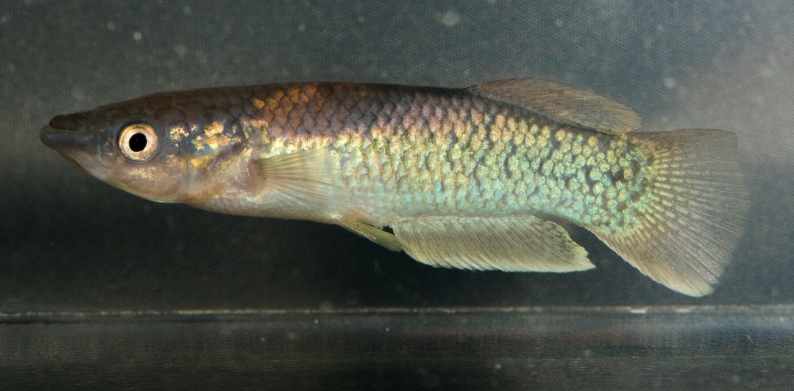
Pachypanchax arnoulti
Loiselle, 2006
Max length80mm SL3.1in SLTank90 × 30cm36 × 12inTemp20–28°C68–82°FpH6.0–7.5P. arnoulti has been in the aquarium hobby for many years but was identified as the congener P. omalonotus prior to its description. It appears in the majority of older aquarium literature under that name and as a result a degree of hybridisation has undoubtedly occurred.
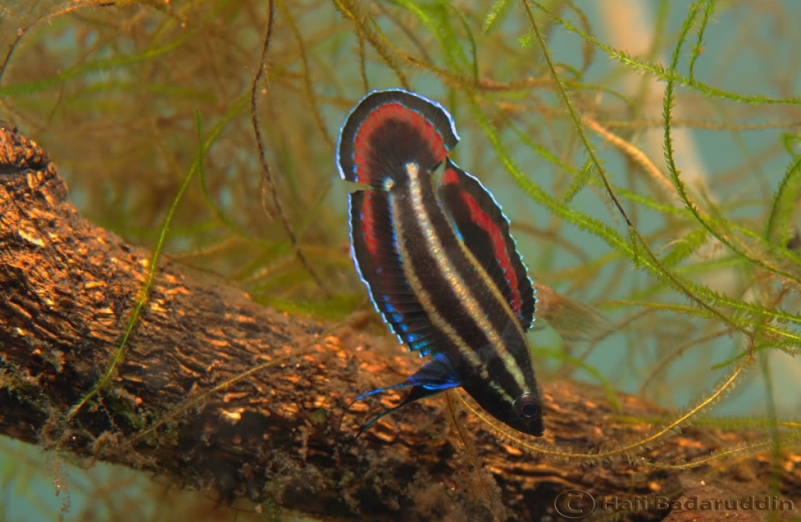
Parosphromenus tweediei
Kottelat & Ng, 2005
Max length35mm SL1.4in SLTank40 × 20cm16 × 8inTemp22–28°C72–82°FpH3.0–6.5This species has been known in the aquarium hobby since the mid-twentieth century but has almost always been identified as the congener P. deissneri and appears as such in the majority of aquarium literature. It can be told apart from congeners by the colour pattern in adult males (see 'Sexual Dimorphism') plus possession of 11-12 spinous dorsal-fin rays, 13-14 spinous anal-fin rays and 6-8 segmented anal-fin rays.